Author: Jessica

  • Where to Stay in Chios: Chios Town, Karfas, Mesta, Volissos or South Coast?

    Where to Stay in Chios: Chios Town, Karfas, Mesta, Volissos or South Coast?

    Choosing where to stay in Chios matters more than on a compact Cycladic island because the island is large enough for your base to shape the whole holiday. A waterfront hotel in Chios Town is excellent for ferries and restaurants but does not give you the same evening atmosphere as Mesta or the same beach convenience as Karfas.

    For a first trip of a week, I often prefer either one central base plus a car or a split stay: Chios Town/Kampos for the south and centre, then Volissos for the north. The right answer depends on whether beaches, villages, nightlife or minimal driving comes first.

    Quick planning summary

    QuestionPractical answer
    Best all-round baseChios Town or Kampos
    Best beach convenienceKarfas
    Best historic atmosphereMesta
    Best for north ChiosVolissos

    Chios Town: best for convenience

    Choose Chios Town if you want ferries, airport access, restaurants, shopping and the easiest public transport. It is the strongest base for a short stay and for travellers without a car. The trade-off is that you will drive to the island’s most atmospheric villages and best-known beaches.

    The practical approach is to keep this stop connected to the surrounding region rather than crossing the island for one item on a checklist. Build the day around nearby villages, food and coastline, then leave enough space for an unplanned coffee, swim or viewpoint when conditions are good.

    Kampos: best for atmosphere near town

    Kampos gives you gardens, historic estates and a quieter mood only a few kilometres from the capital. It suits couples, drivers and travellers who enjoy boutique guesthouses. Ask about parking and dinner options because the area is more spread out than central Chios Town.

    The practical approach is to keep this stop connected to the surrounding region rather than crossing the island for one item on a checklist. Build the day around nearby villages, food and coastline, then leave enough space for an unplanned coffee, swim or viewpoint when conditions are good.

    Karfas: best for easy beach holidays

    Karfas works well for families and anyone who wants a conventional beach close to accommodation. You can still reach town easily, but the holiday feels more resort-oriented. It is less ideal if your priority is being inside the mastic villages or reducing drives to the north.

    For beach planning, check the wind on the day rather than assuming the most famous name will be the most comfortable choice. Chios has enough coastline to switch regions when conditions change. Carry water and shade for remote beaches, and keep valuables simple when you expect to move between swimming and village stops.

    Mesta: best for medieval village atmosphere

    Staying in Mesta lets you experience the village before and after day-trippers and puts the south-western Mastichochoria on your doorstep. Restaurants and stone guesthouses create a memorable evening setting. For a full-island itinerary, however, several nights here can make north-Chios drives tiring.

    The practical approach is to keep this stop connected to the surrounding region rather than crossing the island for one item on a checklist. Build the day around nearby villages, food and coastline, then leave enough space for an unplanned coffee, swim or viewpoint when conditions are good.

    Volissos: best for quiet north-west Chios

    Volissos is the obvious second base for travellers who want Amani, north-west beaches and a slower rhythm. Two nights here can save several hours of repeated driving. It is not the best choice for a first night after a late flight or for travellers who want daily nightlife.

    The practical approach is to keep this stop connected to the surrounding region rather than crossing the island for one item on a checklist. Build the day around nearby villages, food and coastline, then leave enough space for an unplanned coffee, swim or viewpoint when conditions are good.

    Komi, Emporios and the south coast

    A south-coast stay makes sense for a beach-first holiday or a second base after cultural sightseeing. Komi has more services; Emporios is better for Mavra Volia access and a smaller-scale atmosphere. Check how seasonal your chosen area is if travelling outside peak summer.
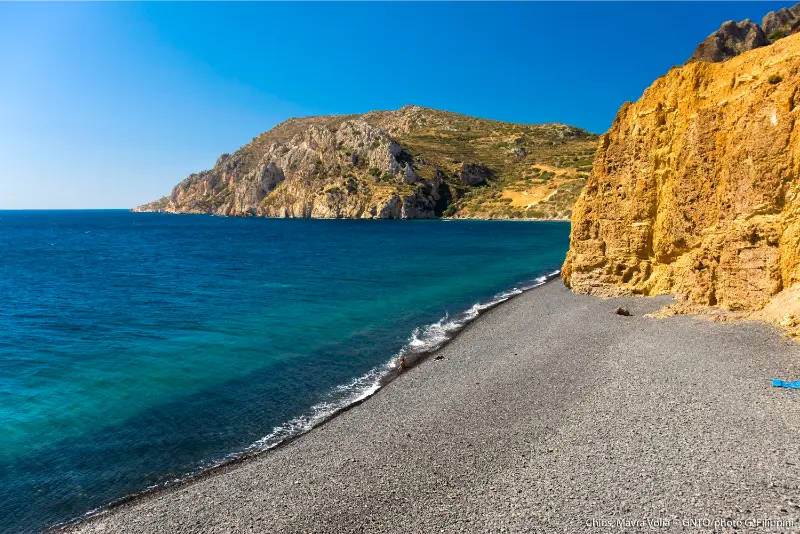
    Chios Mavra Volia

    The practical approach is to keep this stop connected to the surrounding region rather than crossing the island for one item on a checklist. Build the day around nearby villages, food and coastline, then leave enough space for an unplanned coffee, swim or viewpoint when conditions are good.

    How I would split a seven-night trip

    For a first visit, try four or five nights in Chios Town, Kampos or Karfas and two or three nights in Mesta or Volissos depending on your interests. This keeps airport and ferry logistics simple while giving you at least one region-specific stay where evenings do not require driving back across the island.

    The practical approach is to keep this stop connected to the surrounding region rather than crossing the island for one item on a checklist. Build the day around nearby villages, food and coastline, then leave enough space for an unplanned coffee, swim or viewpoint when conditions are good.

    How much time should you allow?

    For a week, one central base works if you enjoy driving; a two-base trip is better if you want both southern villages and north-west Chios at a relaxed pace. Chios is larger and more varied than it looks on a simple island map, and the most enjoyable days usually combine one main cultural area with one beach or meal stop rather than several distant targets. Driving times, village walks and slow lunches add up quickly, so leave enough margin to enjoy what you came to see.

    If you are building a week-long trip, keep at least one flexible half-day. Wind direction can change which beach feels best, a museum or monastery may have seasonal hours, and a village that looks like a thirty-minute stop can easily become the place where you want to stay for lunch. That flexibility is especially valuable on Chios because north, centre and south have very different characters.

    Chios Greece Street View From Pyrgi Chios Island Geece With Woman Which Sitting Chair

    Getting there and getting around

    Travellers without a car should prioritise Chios Town or Karfas; drivers have far more freedom to choose atmospheric inland bases. Chios has an airport close to Chios Town and ferry connections with Piraeus and other Aegean destinations. For a short break, flying can save time; for a longer North Aegean route, ferries can make more sense. Always check the exact service for your dates because frequencies and vessel types change by season.

    A rental car is the easiest way to connect the mastic villages, west-coast viewpoints and northern settlements. If you prefer not to drive, base yourself in Chios Town, use buses for the most useful corridors and book an organised excursion for the south or central villages. Do not assume that every small beach or mountain village has frequent public transport, especially outside July and August.

    Best time to visit

    In July and August almost every area feels active; in shoulder season, larger settlements are safer choices for dependable restaurants and services. May, June and September are particularly comfortable for combining sightseeing with swimming. July and August provide the widest choice of seasonal services but bring stronger heat and more demand. Spring is excellent for walking, flowers and village exploration; autumn can be rewarding for food and slower travel as long as you accept a little more weather uncertainty.

    Whatever the month, plan archaeological sites, castles and exposed village walks for the cooler part of the day. The Aegean wind can make one coast much more comfortable than another, so ask locally before driving across the island purely for a beach. In high summer, carry water and do not rely on shade at remote coves.

    Who this part of Chios suits best

    There is no single best area: the right base depends on car use, beach priorities, evening atmosphere and how much of the island you plan to explore. The island rewards travellers who enjoy mixing cultural detail with everyday village life. It is less about rushing from one headline sight to another and more about noticing architecture, food, working landscapes and the relationship between inland settlements and the sea.

    Families can enjoy Chios too, especially with a sensible base and shorter drives, but the island is not uniformly stroller-friendly: medieval lanes, cobbles and steep viewpoints appear often. Couples and solo travellers usually appreciate the freedom to linger in villages, while photographers and food-minded visitors will find material well beyond the classic beach season.

    Olympoi Medieval Village Chios Island Greece Traditional Architecture Narrow Alley Stone Walls Arch

    Budget and booking strategy

    Chios can be good value compared with the most internationally famous Greek islands, but the total cost still depends heavily on transport. A cheaper room far from your planned sights can be false economy if it creates long daily drives. Compare parking, breakfast, beach access and evening dining options as part of the accommodation price rather than looking at the room rate alone.

    In peak summer, reserve well-located accommodation, rental cars and any must-do guided experience earlier. In shoulder season, you can often keep more flexibility, but confirm whether smaller museums, tavernas and beach services are operating on your travel dates. For cultural attractions, always check current hours rather than relying on an old blog post.

    What to pack

    • Shoes with grip for stone lanes, castle paths and uneven archaeological ground.
    • A refillable water bottle, hat and high-SPF sunscreen for exposed summer days.
    • A light layer that covers shoulders and knees for monasteries and churches.
    • Water shoes if you prefer them on Chios’s pebble and volcanic beaches.
    • Offline maps or downloaded route information for rural areas with weaker signal.

    Common mistakes to avoid

    • Treating Chios as a tiny island and planning north and south on the same rushed day.
    • Assuming every museum, monastery or cave follows the same seasonal opening pattern.
    • Choosing a famous beach without checking wind, shade and the needs of your group.
    • Driving long distances for lunch when the village already in front of you has good local food.
    • Leaving fuel, water or return transport decisions until late in the day in quieter areas.

    More Chios guides

    Chios Town Guide: Castle, Museums, Waterfront, Food and Where to Stay; Pyrgi, Mesta and Olympi Chios Guide: Mastic Villages, Xysta, Caves and Medieval Streets; Nea Moni, Anavatos and Avgonyma Chios Guide: UNESCO Monastery, Medieval Villages and Sunset; Kampos Chios Guide: Citrus Estates, Mansions, Cycling and Museum; Volissos and Amani Chios Guide: Castle, Villages, Beaches and North-West Road Trip; Mavra Volia and South Chios Beaches Guide: Emporios, Komi, Vroulidia and Swimming; Chios Mastiha Guide: Museum, Villages, Harvest, Products and What to Buy; Best Beaches in Chios: 15 Beaches for Black Pebbles, Families, Snorkelling and Quiet Coves; Chios Road Trip: A Realistic 7-Day Itinerary for Mastic Villages, Beaches and North Chios; Where to Stay in Chios: Chios Town, Karfas, Mesta, Volissos or South Coast?. Start with the Chios Travel Guide for the island overview.

    Frequently asked questions

    Do I need a car for this Chios trip?

    A car is strongly recommended for most village, beach and north-island itineraries. Chios Town can be explored without one, and organised tours are a useful alternative for the Mastichochoria or central heritage routes.

    How many days should I spend on Chios?

    Five days gives you a useful introduction, but seven is much better for combining the south, centre and north without spending every day in the car. Beach-focused or hiking trips can easily justify longer.

    Is Chios good in September?

    Yes. September often combines warm sea temperatures with easier sightseeing than peak August. Seasonal services are still active in many places, but ferry, bus and attraction schedules should be checked for the exact dates.

    What should I check before leaving the hotel?

    Check wind, heat, current opening hours, fire-risk restrictions if you plan to hike, and return transport if you are not driving. Keep one nearby alternative so a closure or rough sea does not waste the day.

    Can I combine Chios with another North Aegean island?

    Yes when ferry schedules align, especially with Lesvos or Samos, but connections vary by season. Build the route from real timetables rather than assuming geographically nearby islands connect every day.

    Check official information before you go

    For current destination information use the official source for this Chios area or attraction and the official Chios tourism portal. Opening hours, transport and seasonal services can change, so verify the specific detail you need shortly before travel.

    Final planning advice

    Chios is most rewarding when you plan by region and leave room for local decisions. Use the major sights as anchors, not as a race. A village lunch, a sudden change of beach because the wind shifts, or an extra hour in a quiet square can become the part of the trip you remember most.

    If this is your first visit, resist the urge to see the whole island in three days. Chios has enough depth for a week, and the contrast between mastiha country, central Byzantine heritage, the west coast and the north is exactly what makes the island worth exploring slowly.
  • Mykonos Without a Car: Buses, SeaBus, Beach Transport and Practical Routes

    Mykonos Without a Car: Buses, SeaBus, Beach Transport and Practical Routes

    You can visit Mykonos without renting a car, and for many first-time travellers that is actually the easier choice. The island has two main bus departure areas around Chora, frequent seasonal routes to several major beaches, airport and port links, plus a SeaBus between Tourlos New Port and the town waterfront. The limitation is not whether public transport exists; it is whether your hotel and daily plans align with the routes.

    The two bus hubs you need to understand

    Fabrika, on the south side of Chora, is the key departure point for routes toward Ornos, Agios Ioannis, Platis Gialos, Paradise, Paraga and the airport. The Old Port/New Peripheral side serves routes toward Ano Mera, Elia, Kalafatis, Panormos, Agios Stefanos and the New Port. You do not need to memorise every route, but you do need to know which side of town your bus uses.

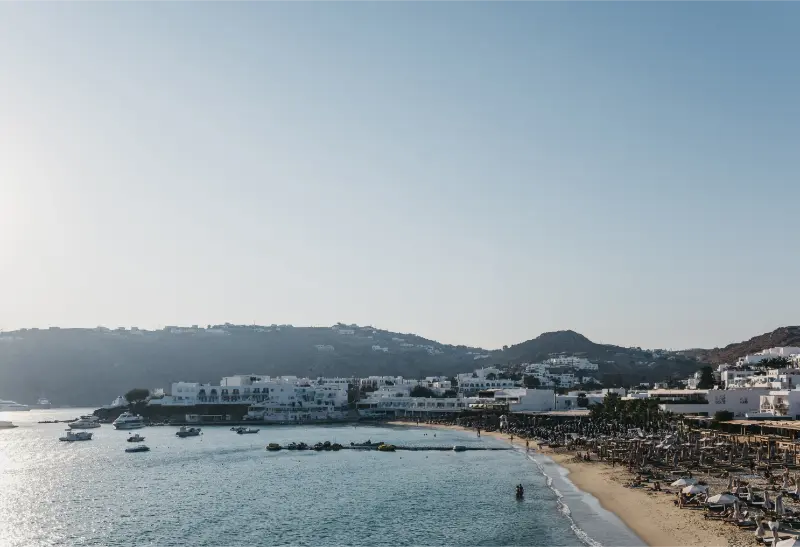
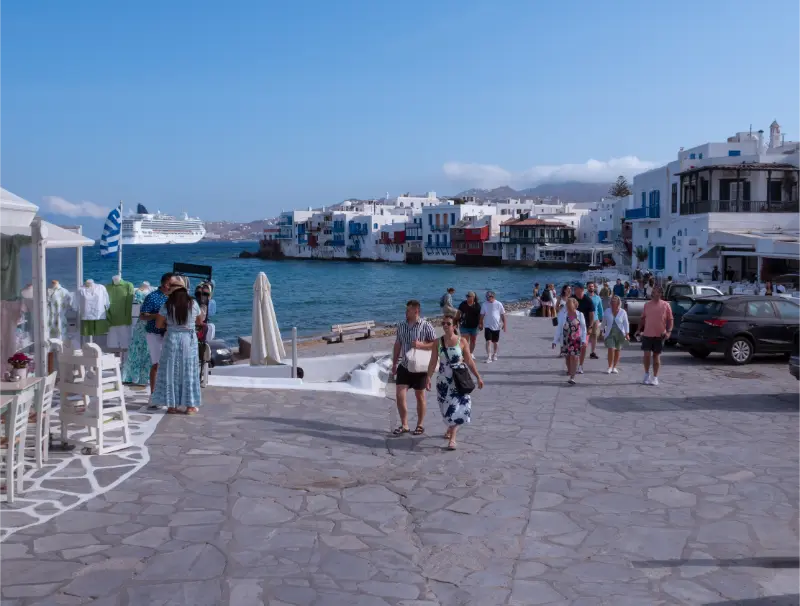
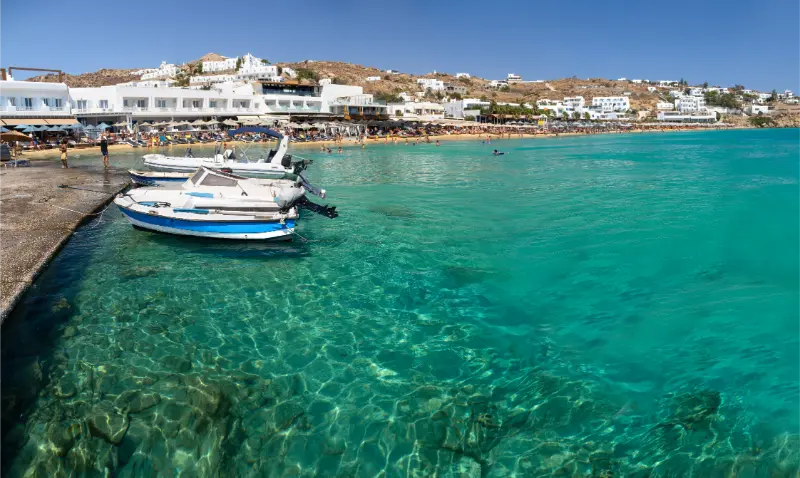
    Panoramic View Platis Gialos Beach Island Mykonos Greece

    2026 public-bus network

    The official Mykonos Bus timetable for 2026 lists services to major destinations including Ornos, Agios Ioannis, Paradise, Paraga, Super Paradise, Ano Mera, Elia, Kalafatis, Panormos, Agios Stefanos, the airport and ports. Some services are very frequent in high season; others have only a handful of departures. Use both the timetable page and route search for the exact travel date.

    New Port to Chora: SeaBus

    The Mykonos SeaBus publishes a frequent New Port–Old Port/Mykonos Town connection and notes that luggage and baby strollers can be carried. For ferry passengers staying in or near Chora, this can remove the need to sit in road traffic immediately after arrival.

    Airport connections

    The seasonal bus timetable includes Fabrika–Airport services and Airport–New Port services on published dates. Flights outside the active schedule, very early departures or late arrivals may still require a taxi or pre-arranged transfer. Never assume a public bus will match a 6 a.m. flight just because there is an airport route during the day.

    Best beaches without a car

    • Ornos and Agios Ioannis: straightforward from Fabrika and useful for families.
    • Platis Gialos: practical beach base and a useful starting point for south-coast boat services.
    • Paradise and Paraga: frequent seasonal buses during the active summer schedule.
    • Elia: served from the Old Port/New Peripheral side in season.
    • Panormos: possible on seasonal routes, but check frequency carefully.

    Places that are harder without a car

    Armenistis Lighthouse, Agios Sostis, Fokos and scattered rural viewpoints are less convenient by scheduled bus. That does not mean you need a rental car for the entire holiday. A one-day rental, taxi tour or small-group island tour can cover the places where public transport is weakest while the rest of the trip remains car-free.

    Where to stay for a car-free trip

    Chora is the most flexible base because you can walk to both the old town and bus hubs, but it may be noisy and expensive in high season. Ornos and Platis Gialos are strong alternatives if beach time matters more than late-night old-town wandering. Always check the walking route to the bus stop, not just the straight-line distance shown by a booking site.

    A sample 4-day car-free structure

    • Day 1: Mykonos Town on foot and the Archaeological Museum.
    • Day 2: Delos excursion from the town harbour, followed by Little Venice at sunset.
    • Day 3: Bus to Ornos/Agios Ioannis or Paradise according to your travel style.
    • Day 4: Bus to Ano Mera and Elia, or join an island tour for the lighthouse and remote coast.

    Getting around Mykonos in practice

    Mykonos looks small on a map, but summer traffic, limited parking and the shape of the road network can make short distances take longer than expected. Public buses are genuinely useful when your route matches the network. The operator currently publishes seasonal services from Fabrika and the Old Port/New Peripheral toward Ornos, Agios Ioannis, Platis Gialos, Paradise, Super Paradise, Ano Mera, Elia, Kalafatis, Panormos, the airport and the ports. Check the official Mykonos Bus timetable shortly before every journey because schedules change during the season rather than staying fixed for the whole year.

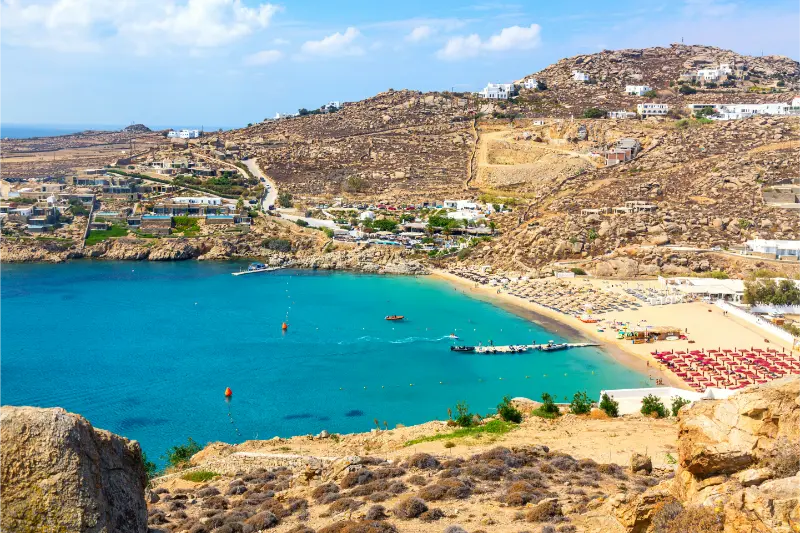
    Super Paradise Beach Mykonos Island Greece

    For ferry arrivals at Tourlos, the Mykonos SeaBus is often simpler than joining road traffic: its published service connects the New Port with the Old Port/Mykonos Town area and is designed to carry luggage and pushchairs. If you rent a car, treat it as a tool for selected days—Ano Mera, remote beaches, lighthouse viewpoints—rather than assuming you need it every day. Staying near a bus corridor can save money and reduce the stress of parking close to Chora.

    Accessibility and comfort

    Accessibility changes dramatically from one part of Mykonos to another. Waterfront promenades and some modern beach facilities may be relatively straightforward, while Chora lanes, monastery steps, rocky coves and lighthouse ground can be difficult for wheelchairs, pushchairs or anyone with limited mobility. Ask hotels and attractions for the exact route, surface and number of steps rather than relying on the phrase “close to the centre”.

    The SeaBus specifically notes easy wheelchair access on its main connection, but onward routes and old-town streets still require individual assessment. Heat is another accessibility issue: even a short exposed walk can be demanding in mid-summer. Morning visits, shaded breaks and realistic taxi or bus transfers can make a major difference.

    Budget and booking strategy

    Mykonos can be expensive, but the biggest costs are usually accommodation, private transport, premium beach seating and nightlife—not the act of walking through Chora, visiting a monastery or laying a towel on public beach space. Decide which experiences matter enough to pay for and keep the rest simple. A hotel on a useful bus route can be better value than a cheaper room that forces several taxis every day.

    During the busiest weeks, reserve accommodation, high-demand restaurants and any tour with limited capacity in advance. For ordinary beach time, keep some flexibility so you can change coast when the wind changes. Prices, minimum spends and sunbed policies at commercial venues change quickly, so verify them directly rather than building a budget around an old screenshot or social-media post.

    How to plan the day without rushing

    A common mistake on Mykonos is to schedule too many famous places in a single day. The island is compact, but parking, buses, lunch reservations, beach access and slow pedestrian streets add hidden time. A better formula is one major objective in the morning, one nearby beach or village in the afternoon and one evening area. That leaves space for a swim, a long meal and the delays that are normal in peak season.

    In July and August, start cultural visits and scenic drives earlier than you think. Use the hottest hours for lunch, shade or the beach rather than exposed walking. In June and September the same itinerary feels much easier, and May or October can be excellent for sightseeing if you accept that some seasonal beach businesses and late services operate at reduced levels.

    Wind, swimming conditions and the meltemi

    Mykonos is known as the Island of the Winds for good reason. During summer, the meltemi often blows from the north and can transform the character of a beach. South-facing bays are usually the safer default for a calm swimming day, while north-coast beaches can be magnificent when the wind is light and uncomfortable when it is strong. Do not decide purely from photographs or a general island forecast: look at the water, ask locally and keep a second beach in mind.

    Wind matters even when you are not swimming. It increases dehydration, can make an exposed viewpoint feel much cooler than town and can turn an umbrella into a hazard. For families, older travellers and anyone who wants a relaxed sea day, flexibility is more useful than a rigid itinerary. One of the easiest ways to enjoy Mykonos is to treat the wind as a planning variable instead of trying to force the same beach plan in every condition.

    High Angle View Platis Gialos Beach Coast Mykonos Greece

    Tours and activities

    For one day outside the bus network, a guided island tour can be more efficient than keeping a rental car for the entire stay. Compare pickup points carefully if your hotel is outside Chora.

    Frequently asked questions

    Do I need a car in Mykonos?

    No. A first trip focused on Chora, Delos and major beaches can work very well with buses, SeaBus and occasional taxis.

    Where do buses leave from?

    Main routes use Fabrika or the Old Port/New Peripheral area, depending on destination.

    Can I get from the New Port to town without a taxi?

    Yes. The SeaBus connects Tourlos New Port with the Old Port/Mykonos Town waterfront.

    Can I reach Paradise by bus?

    Yes. Seasonal Fabrika–Paradise services are among the island’s better-served beach routes.

    What is the hardest place without a car?

    Remote north and north-west locations such as Agios Sostis and Armenistis Lighthouse are less convenient on scheduled public transport.

    More Mykonos guides for the same trip

    Continue planning with Ano Mera, Armenistis Lighthouse, Ornos and Agios Ioannis, Paradise and Super Paradise, Elia and Agrari, plus the main Mykonos travel guide, the Mykonos Town guide and the Mykonos beaches guide.

    Final thoughts

    A car-free Mykonos trip works when accommodation and daily geography are chosen together. Stay near a useful bus corridor, use the SeaBus for the port and buy private transport only for the places that genuinely need it. You avoid parking stress without giving up the island’s most important experiences.

  • Visiting the Acropolis in Athens: Tickets, Best Times and a Practical Walking Plan

    Visiting the Acropolis in Athens: Tickets, Best Times and a Practical Walking Plan

    The Acropolis is the sight most first-time visitors associate with Athens, but the quality of the experience depends much more on timing and pacing than on how many monuments you try to squeeze into one morning. The hill is exposed, the stone can be slippery, and the most famous viewpoints become busy quickly. I prefer to treat the Acropolis as the centrepiece of a wider walk rather than as a single box to tick. That gives the ruins context and makes the day feel like an exploration of Athens rather than a queue followed by a photograph.

    If this is your first trip, start with my broader Athens travel guide and the Greece itinerary ideas. The Acropolis fits naturally into the first full day in the city, when your energy is high and you can connect it with Plaka, Anafiotika, the Ancient Agora and the Acropolis Museum without spending much time on transport.

    What the Acropolis actually includes

    The Acropolis is the fortified limestone hill above central Athens. The Parthenon is its most famous building, but it is only one part of the archaeological complex. As you climb, you encounter the monumental Propylaea gateway, the small Temple of Athena Nike, the Erechtheion with its famous Caryatid porch, and viewpoints over the Theatre of Dionysus and the city. The monuments are close together, yet the details reward a slower visit.

    One mistake is to arrive expecting a perfectly preserved ancient city. What makes the Acropolis powerful is the combination of surviving architecture, restoration work, landscape and scale. Read a little beforehand or use an official guide so the fragments make sense. Even a basic understanding of why the Parthenon was built and how the hill changed over centuries transforms the visit.

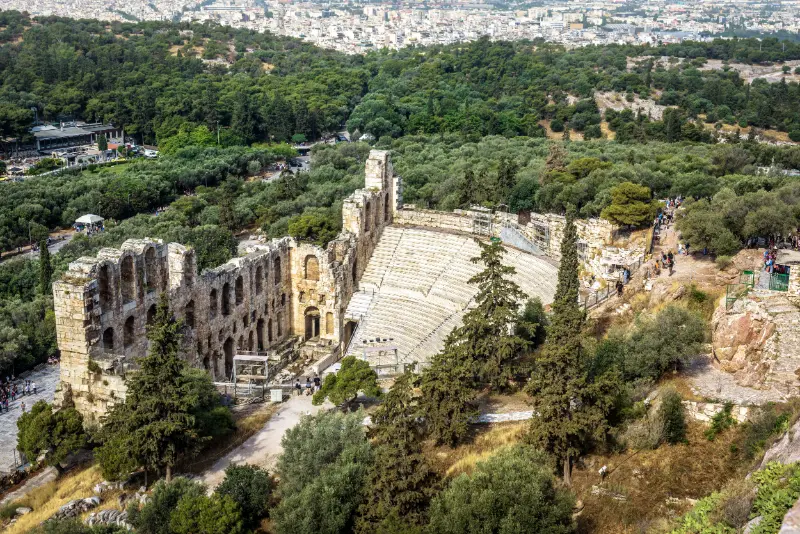
    Parthenon Herodeion Arches Acropolis Hill Athens Greece Ancient Stone Walls Arcades Blue Sky

    The best time of day to visit

    In warm months, early morning is usually the easiest choice. Temperatures are lower, the light is softer and you avoid spending the middle of the day on an exposed hill. Late afternoon can also be beautiful, especially when the sun begins to soften, but opening hours and last-entry rules vary seasonally. Always confirm the current time slot and entry conditions on the official ticketing information before your visit.

    I would not design the day around the idea of being completely alone at a world-famous monument. Instead, aim for a comfortable visit. Have water before you enter, eat something beforehand and keep the schedule around the Acropolis flexible. If your chosen time is busy, a ten-minute pause at a viewpoint can be more enjoyable than pushing through the densest group.

    Tickets and reservations: keep the plan simple

    Ticketing systems for major Greek archaeological sites can change, including prices, time slots and combination products. Buy from the official channel or a clearly identified authorised provider, and read what is actually included before paying. If you use a guided tour, check whether admission is bundled or must be purchased separately. This small detail causes many avoidable problems.

    Save the ticket offline on your phone and take a screenshot of the relevant booking information. Do not plan a tight airport, ferry or long-distance bus connection immediately after a timed attraction. The Acropolis deserves a buffer, and Athens traffic or summer heat can slow down even a simple walk.

    What to wear and bring

    Comfortable footwear matters more here than stylish shoes. Some stone surfaces have been polished by millions of footsteps and can feel slick, especially on slopes. In summer I would choose light clothing, a hat and sun protection. A small bottle of water is useful, but avoid carrying more than you need because the climb feels longer with a heavy daypack.

    The hill is visually open and shade is limited in places. Families should plan more pauses than adults travelling alone. For anyone with reduced mobility, check the latest accessibility arrangements in advance because lifts, routes and assistance procedures can be affected by maintenance or operating conditions.

    A practical Acropolis walking route

    I like to begin from the southern side when it fits the ticket and access arrangements, because the approach helps connect the Acropolis with the Theatre of Dionysus and the Odeon of Herodes Atticus. From there, continue upward to the main summit area, take time at the Propylaea and then circle the Parthenon rather than rushing directly to one photo point.

    After the Erechtheion, walk toward the viewpoints over Athens. Look for the green National Garden, Mount Lycabettus, the dense neighbourhoods below and the hills to the west. The city suddenly becomes easier to understand geographically. Leave enough time for the descent: tired visitors often hurry on the smooth stone, which is exactly when you should slow down.

    Pair the Acropolis with the museum

    The Acropolis Museum is the most logical second half of the experience. Seeing sculptures, architectural fragments and explanations indoors after walking among the monuments gives structure to what you have just seen. It also provides an air-conditioned break on hot days. I would not cram another major museum immediately afterwards unless museums are the main purpose of your trip.

    A simple rhythm works well: Acropolis early, coffee or a light meal, museum, then an unhurried walk through Plaka. If you prefer museums first, reverse the order on a cooler day. The important point is to avoid turning both places into a race.

    Plaka and Anafiotika after the ruins

    Plaka sits directly below the Acropolis and is one of the easiest places to continue on foot. The main lanes can be busy and commercial, but a few turns away there are quieter stairways, neoclassical houses and small churches. Anafiotika, tucked against the slope, has a very different atmosphere with narrow passages and whitewashed houses that recall the Cyclades.

    These neighbourhoods are best enjoyed without a strict checklist. Give yourself permission to wander for forty minutes, stop for a drink and then continue toward Monastiraki or Syntagma depending on the rest of the day. For transport details, see my guide to getting around Greece and Athens.

    Should you add the Ancient Agora on the same day?

    Yes, if you enjoy archaeology and still have energy. The Ancient Agora provides a different perspective because it was tied to civic, political and social life rather than the sacred monumental setting of the Acropolis. The walk between the two is short enough to make sense, and the Temple of Hephaestus is one of the most complete ancient temples in Greece.

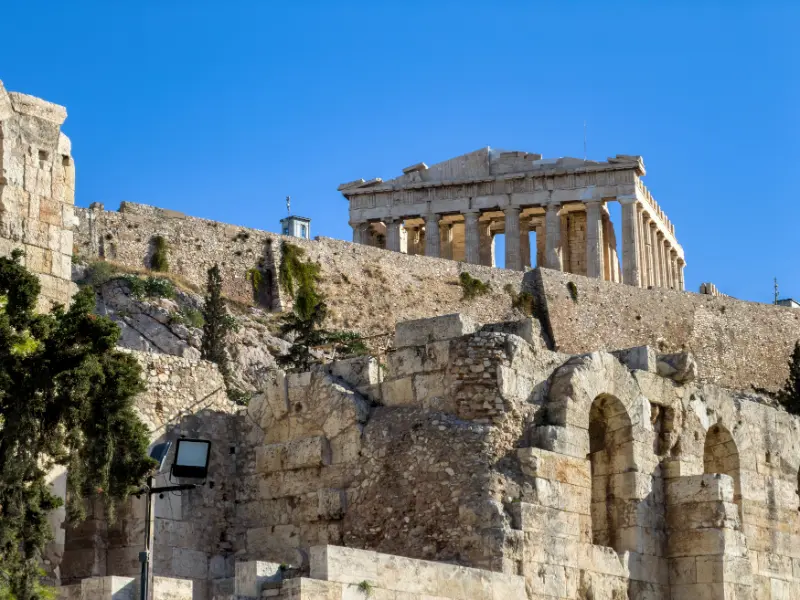
    Parthenon Temple Sunset Ancient Greek History Parthenon Hill Acropolis Athens Greece

    However, families with young children or travellers visiting in high heat may enjoy the day more by choosing either the Agora or the museum as the second major stop, not both. Athens rewards repeat visits and flexible afternoons. Seeing fewer places properly is often better than collecting entry scans.

    Photography without letting the camera take over

    The classic Acropolis photographs are easy to find, but the best memories often come from the changing angles as you move around the hill. Morning light can bring out the texture of the marble, while later light creates a warmer city panorama. Be mindful of restricted areas, barriers and other visitors who are also trying to enjoy the space.

    For wider views of the Acropolis itself, photograph it from outside the site. Philopappos Hill, Areopagus and several rooftop areas offer strong perspectives. That means you do not need to spend the entire archaeological visit searching for the perfect frame.

    Visiting with children

    The Acropolis can work very well with children if you turn it into a story rather than a lecture. Pick two or three things to look for: the columns of the Parthenon, the Caryatids and the theatre below, for example. Explain one myth or one piece of history in simple language and let the physical scale do the rest.

    Avoid the hottest part of the day, carry water and build in a reward afterwards such as ice cream in Plaka or time in a shady square. Strollers are not practical on every section, so families with very young children should check current access information and choose equipment accordingly.

    How much time should you allow?

    For the Acropolis itself, many visitors are comfortable with roughly one and a half to two hours, but there is no ideal universal duration. History enthusiasts can stay longer; fast walkers may feel satisfied sooner. Add the museum and a neighbourhood walk and you have an excellent half day or relaxed full day.

    The key is not to schedule by the minute. Security checks, heat, photographs and short rests all affect the pace. Keep one flexible block in the afternoon so the day can expand naturally.

    Common mistakes to avoid

    • Arriving at midday in summer without shade, water or a plan.
    • Buying a ticket from an unclear reseller without checking what is included.
    • Wearing smooth or unstable footwear on polished stone.
    • Scheduling the Acropolis between two tight transport connections.
    • Looking only at the Parthenon and missing the Erechtheion, theatres and city views.
    • Trying to visit every major archaeological site and museum in one exhausting day.

    Frequently asked questions

    Is the Acropolis worth visiting if I do not know much about ancient history?

    Absolutely. The setting and views are impressive even without deep historical knowledge. A short introduction before you go, or a good guide, makes the architecture much easier to understand and usually increases the value of the visit.

    Do I need a guided tour?

    No, but a good guide can add context that is difficult to get from looking at ruins alone. Independent travellers can also have an excellent visit with a reliable audio guide or a little preparation. Choose based on how much detail you enjoy rather than because you feel a tour is compulsory.

    Can I visit the Acropolis and leave Athens on the same day?

    Yes, but only if your onward departure is comfortably later. I would avoid combining a timed morning visit with a connection that leaves no room for delays. If you are catching a ferry or flight, use the transport planning advice in my Greece transport guide.

    View Acropolis Athens Greece

    What else should first-time visitors do in Athens?

    Beyond the archaeological core, make time for the National Garden, local food, a neighbourhood evening and at least one elevated city view. My first-time Athens guide puts these pieces into a practical plan.

    My preferred way to experience the Acropolis

    I would build the day around one simple idea: arrive with energy, move slowly on the hill, learn enough to understand what you are seeing and then continue on foot through the city below. The Acropolis is not isolated from Athens; it is the landmark that helps the rest of central Athens fall into place. Give it space in the itinerary and it will feel less like an obligatory attraction and more like the starting point for understanding Greece.

  • Folegandros Without a Car: Buses, Boats, Walking, Taxis and the Best Bases

    Folegandros Without a Car: Buses, Boats, Walking, Taxis and the Best Bases

    Folegandros is one of the Cyclades islands where travelling without a car is not only possible but often pleasant. The main settlements sit on a simple spine: Karavostasis at the port, Chora in the centre and Ano Meria farther north-west, with Agali reached by a branch toward the coast. Local buses connect these points and small boats serve some remote beaches in season.

    Yacht Moored Karavostasi Folegandros Island Port Cyclades Greece

    The trade-off is flexibility. Without your own vehicle, you plan around the bus and boat network and walk more. On Folegandros that can be a positive because the old paths and compact villages are part of the appeal. It becomes a problem only if you book isolated accommodation or expect to visit several remote beaches in one day.

    Best no-car baseChora for overall convenience
    Best port baseKaravostasis
    Best beach baseAgali
    Best rural baseAno Meria if accommodation is close to the bus
    Key toolsLocal bus, taxi, walking and seasonal beach boats

    How the bus network works

    The official island visitor information states that buses connect Karavostasis with Chora, Ano Meria and Agali, and that buses meet ferry arrivals. This is enough to build a complete trip. What changes is frequency: seasonal timetables should be checked after arrival or shortly before the trip.

    Photograph the current timetable and note the last useful return, especially for dinner in Chora. Do not assume a route runs equally late every month. If you miss the final bus, a taxi may solve the problem, but the island has limited taxi capacity in peak demand.

    Best base: Chora

    Chora is the easiest no-car base because evenings require no transport. You can bus to Agali for a beach day, ride to Ano Meria for hiking and return to the port for ferries. Restaurants and basic services are concentrated around the pedestrian core.

    The only inconvenience is luggage: vehicles do not enter the traditional centre. Ask the accommodation for the closest drop-off and whether someone can help with bags.

    Karavostasis without a car

    Karavostasis is ideal for short stays and ferry days. Several small beaches are walkable, Katergo boats depart here and Chora is a straightforward bus ride away. It is less attractive if your priority is late evening atmosphere every night.

    Agali without a car

    Agali works for a beach-first holiday. The bus reaches the bay, short paths lead to Fira and Galyfos, and boats can connect to Agios Nikolaos or Livadaki. You can spend two relaxed days with very little transport. For dinner variety, however, Chora still wins.

    Ano Meria without a car

    Ano Meria can work if your room is genuinely near the bus route. The settlement is dispersed, so “in Ano Meria” can still mean a long walk from a stop. Ask for the exact walking time with luggage. Hikers may love the location because several paths begin nearby.

    Beaches you can reach without a car

    • Agali by local bus
    • Fira and Galyfos on foot from Agali
    • Agios Nikolaos and Livadaki by seasonal boat from Agali
    • Vardia and port coves on foot from Karavostasis
    • Katergo by boat from Karavostasis or on foot from Livadi
    • Livadi by bus/road corridor plus walking depending on current service

    When a taxi is worth the money

    Use taxis strategically rather than as your default transport: late arrival with heavy luggage, a dinner that finishes after the final bus, or a trailhead that does not align with the schedule. In high season, arrange the pickup ahead because a small island cannot supply an unlimited fleet.

    Do you need to rent a scooter instead?

    A scooter gives freedom but should not be treated as a shortcut if you are inexperienced. Wind, unfamiliar roads and loose roadside surfaces can make island riding harder than a city rental. If you are not already comfortable on two wheels, use the bus and taxi network instead.

    A 4-day no-car plan

    • Day 1: arrive at Karavostasis, bus to Chora, evening in Kastro and Panagia
    • Day 2: bus to Agali, walk to Fira or Galyfos, optional beach boat
    • Day 3: bus to Ano Meria, Ecomuseum or hiking depending on season, return to Chora
    • Day 4: bus to port, Katergo boat if conditions and ferry time allow, then departure

    How I would plan a day around a car-free Folegandros trip

    The easiest way to enjoy a car-free Folegandros trip is to give it a clear role in the day rather than squeezing it between unrelated stops. Choose one base for short stays and let buses position you for walks instead of changing hotels. Folegandros is small on a map, but heat, wind, footpaths and waiting for a bus or boat can make short distances feel longer. Build the day around one coast or one walking corridor and keep a second option for changing conditions.

    The official island portal confirms the core bus links and ferry-arrival buses; beach boats and taxis fill the gaps. I would avoid making a tight sequence of reservations around transport that is seasonal or weather-dependent. A slower plan is not wasted time here: coffee in a square, a swim that lasts an hour longer than expected, or an early dinner after a hike is part of the reason to choose Folegandros over a larger resort island.

    Who this experience suits best

    A car-free trip suits couples, solo travellers, hikers and anyone happy to plan around a simple seasonal network. It is less suitable for travellers who need a long list of organised attractions every day. Folegandros works best when you are comfortable with simple routines, walking and choosing quality over quantity.

    Karavostasi Village Folegandros Greece

    What to carry

    • Water in a reusable bottle, with extra capacity for remote beaches or trails
    • Sun protection: hat, sunglasses and high-SPF sunscreen
    • Shoes with grip if the plan includes old paths or rocky approaches
    • A light layer for windy evenings or exposed boat rides
    • Offline maps or screenshots of the return route and current transport information
    • Cash as a backup for small seasonal services or boat tickets

    Common mistakes to avoid

    Do not book remote accommodation before checking the exact distance to the nearest bus stop and how you will manage luggage at night. Another common mistake is assuming that a place described as “close” is effortless to reach. On Folegandros, 2–4 km can involve strong sun, exposed paths, steep gradients or a bus that runs only at certain times. Match the day to your actual fitness and the weather, not to the map scale.

    A final mistake is overplanning sunset. The island has beautiful evening light from many places, but racing from a beach to a famous viewpoint can turn a relaxed day into a stressful one. If the day is already working, stay where you are and enjoy the light there.

    Continue planning your Folegandros trip

    Use these guides together rather than as isolated checklists. Start with the main Folegandros Travel Guide and then open the specialist pages that match the way you want to travel: Chora Folegandros Guide; Karavostasis Folegandros Guide; Ano Meria Folegandros Guide; Agali Folegandros Guide; Katergo Beach Folegandros Guide; Livadaki Beach Folegandros Guide; Best Beaches in Folegandros; Folegandros Hiking Guide; Where to Stay in Folegandros.

    Useful official sources before you go

    For destination details I cross-check the official Folegandros visitor portal and Visit Greece. Beach boats, local buses, ferry schedules, museum hours and seasonal businesses can change, so verify time-sensitive details shortly before travel. The official useful-contacts page confirms bus links from Karavostasis to Chora, Ano Meria and Agali and notes that buses meet ferry arrivals.

    Frequently asked questions

    Do I need a car in Folegandros?

    No. Buses connect the main settlements and Agali, while walking, taxis and seasonal boats cover many other trips.

    What is the best base without a car?

    Chora is the easiest all-round base because evenings are walkable and buses serve the main directions.

    Can I reach Katergo without a car?

    Yes, by seasonal boat from Karavostasis or by hiking from Livadi.

    Can I stay in Ano Meria without a car?

    Yes, but choose accommodation close to the bus route and confirm the exact walking distance.

    Are buses year-round?

    Core transport exists, but useful tourist frequencies are seasonal, so check the current timetable.

    Best time to visit and how season changes the plan

    May, June and September are the easiest months for balancing walking, swimming and village time. Paths are more comfortable outside the strongest heat, while most seasonal transport and restaurants are active. July and August bring the fullest island atmosphere and the widest choice of services, but shade is limited and accommodation should be booked earlier. In peak summer I would start any exposed walk before breakfast or immediately after it, then use the hottest hours for a long lunch or rest.

    April and October can be excellent for quiet travel, but do not assume every beach boat, museum or seasonal taverna follows a summer timetable. The sea can also feel cooler and weather changes become more relevant. Winter is a different kind of trip: the island remains inhabited, yet tourism infrastructure and ferry frequency are reduced, so plan it as a local-life visit rather than a conventional beach holiday.

    How to fit this into a first Folegandros itinerary

    For a four-night first trip, I would use Chora as the main base and divide the island by direction. Give one day to the Agali side, one day to Ano Meria and a western-coast walk, and one day to Karavostasis/Katergo or another beach chosen by conditions. Keep arrival and departure days light. This structure avoids crossing the island repeatedly and leaves enough room to change plans if wind affects a beach boat.

    Folegandros Sandy Beach Agkali White Buildings Blue Sky Cyclades Greece

    With six nights, add a second slower beach day, a proper village lunch and one sunset that is not attached to a schedule. The extra time is particularly valuable for walkers because you can avoid doing a long hike in poor conditions simply because it is the only free day. Folegandros is small enough to understand quickly but rewarding enough that one unscheduled afternoon never feels wasted.

  • Naoussa Paros Guide: Harbour, Beaches, Restaurants and a 3-Day Stay

    Naoussa Paros Guide: Harbour, Beaches, Restaurants and a 3-Day Stay

    Naoussa is one of the most attractive bases in the Cyclades because it combines a genuinely pretty fishing harbour with excellent food, beaches, buses, boat trips and a polished evening scene. It can feel fashionable in summer, but the village still rewards slow exploration: white lanes climb away from the waterfront, fishing boats sit beside restaurant terraces, and the remains of the small Venetian fortress mark the entrance to the old port. It is a place where three nights can disappear quickly because the best experiences are simple and close together.

    This guide is designed to help you decide not only what to see at Naoussa Paros Guide, but how to fit it into a wider Greece itinerary without wasting time. For the bigger picture, use the Paros Travel Guide. You can also continue with the Antiparos Travel Guide when it matches your route.

    Why Naoussa Paros Guide is worth adding to your trip

    The strongest reason to include Naoussa Paros Guide is that it offers a very specific experience rather than another generic stop. The landscape, local rhythm and practical details are different enough to justify dedicated time. It also works well as part of a larger route, so you do not need to build your entire holiday around it. The key is to give the place enough time to move beyond the first photograph: walk a little farther, arrive outside the busiest hour and leave space for a meal, swim, museum room or viewpoint that is not dictated by a checklist.

    Paros Island Panoramic View Naoussa Village Cyclades Greece Calm Sea Blue Sky

    Top things to see and do

    • the old fishing harbour and Venetian remains
    • whitewashed backstreets around the centre
    • Kolymbithres and Monastiri beaches
    • Santa Maria and the northeast coast
    • Lefkes as an inland day trip
    • evening dining and bars around the harbour

    The old fishing harbour and venetian remains

    The old fishing harbour and venetian remains is one of the defining parts of the visit. Rather than treating it as a five-minute photo stop, look at how it fits the setting around it. Arriving earlier or later than the main rush usually changes the experience significantly. Take time to notice access, shade, wind, pedestrian routes and where people naturally congregate; moving just a short distance from the obvious focal point often gives you a quieter view and a better understanding of the place.

    Whitewashed backstreets around the centre

    Whitewashed backstreets around the centre is one of the defining parts of the visit. Rather than treating it as a five-minute photo stop, look at how it fits the setting around it. Arriving earlier or later than the main rush usually changes the experience significantly. Take time to notice access, shade, wind, pedestrian routes and where people naturally congregate; moving just a short distance from the obvious focal point often gives you a quieter view and a better understanding of the place.

    Kolymbithres and monastiri beaches

    Kolymbithres and monastiri beaches is one of the defining parts of the visit. Rather than treating it as a five-minute photo stop, look at how it fits the setting around it. Arriving earlier or later than the main rush usually changes the experience significantly. Take time to notice access, shade, wind, pedestrian routes and where people naturally congregate; moving just a short distance from the obvious focal point often gives you a quieter view and a better understanding of the place.

    Santa maria and the northeast coast

    Santa maria and the northeast coast is one of the defining parts of the visit. Rather than treating it as a five-minute photo stop, look at how it fits the setting around it. Arriving earlier or later than the main rush usually changes the experience significantly. Take time to notice access, shade, wind, pedestrian routes and where people naturally congregate; moving just a short distance from the obvious focal point often gives you a quieter view and a better understanding of the place.

    Lefkes as an inland day trip

    Lefkes as an inland day trip is one of the defining parts of the visit. Rather than treating it as a five-minute photo stop, look at how it fits the setting around it. Arriving earlier or later than the main rush usually changes the experience significantly. Take time to notice access, shade, wind, pedestrian routes and where people naturally congregate; moving just a short distance from the obvious focal point often gives you a quieter view and a better understanding of the place.

    Where to stay

    For a first stay, choose somewhere within a ten-minute walk of the harbour but not directly above the busiest late-night streets. This gives you the atmosphere without committing to noise every evening. A car is useful for remote beaches and villages, but it is not essential for a short stay because buses and taxis connect Naoussa with Parikia and several popular beaches.

    When comparing accommodation, look at walking time and road access rather than distance in a straight line. On Greek islands, a hotel that appears close on a map can involve a steep climb, a busy road or difficult parking. For short stays, convenience is usually worth more than a small saving. For longer stays, choose a base that makes your most important day trips easy rather than trying to be equally close to everything.

    Best time to visit

    Late May through June and September are especially attractive. The village is lively, the sea is suitable for swimming and restaurant reservations are easier than in peak August. July and August suit travellers who actively want the social scene, but book accommodation and popular dinner tables early.

    Weather in Greece can change the character of a day even in summer. Wind is especially important on exposed islands and beaches, while heat matters at archaeological sites and on steep walking routes. Check the forecast the evening before and be willing to swap beach, museum and village days. Shoulder season travellers should also verify seasonal buses, boats and restaurant opening days because services are less frequent than in July and August.

    How to get there and get around

    For Naoussa Paros Guide, transport should be planned around the wider region rather than in isolation. Rental cars offer flexibility for beaches and villages, but they are unnecessary in compact pedestrian centres. Buses can be excellent on popular summer routes but are less useful for combining several remote stops in one day. Taxis solve short gaps but become expensive if used as a substitute for a full-day car. If boats are part of the experience, confirm departure point, return time and cancellation policy before committing to the rest of your itinerary.

    Naoussa Paros Greece

    A realistic day plan

    On day one, explore the harbour, lanes and nearby beach at a slow pace. Use day two for Kolymbithres, Monastiri or a boat outing, returning to Naoussa for sunset and dinner. On day three, take a bus or car inland to Lefkes and another village before returning for a final waterfront evening.

    Keep at least one flexible hour in the plan. That buffer absorbs parking delays, a longer lunch, a change in sea conditions or simply the discovery of a place where you want to stay. Greece rewards travellers who protect the essential logistics but do not schedule every thirty minutes. The goal is a day that feels full without becoming a race.

    Food and drink

    Do not choose a restaurant at Naoussa Paros Guide only because it occupies the most photogenic terrace. Walk one or two streets away from the busiest viewpoint and compare menus, local clientele and whether dishes are cooked to order. Look for seasonal vegetables, grilled fish where appropriate, local cheeses, pies and regional wine. A long Greek lunch can be part of the sightseeing rather than a break from it, especially during the hottest hours of the day.

    Fishboats Yachts Moored Naoussa Port Paros Island Greece View Dock Boats Yachts Bright

    What to pack

    • refillable water bottle
    • sun hat and high-SPF sunscreen
    • comfortable shoes with grip
    • light layer for wind or evening
    • swimwear and quick-drying towel when relevant
    • offline map and enough phone battery
    • small amount of cash for minor purchases

    Footwear matters more than many visitors expect. Whitewashed towns can have polished stone, archaeological sites are uneven, and beach access may involve rough paths or stairs. Pack for the actual terrain rather than the photograph. In high summer, carrying water is not optional, particularly where natural shade is limited.

    Common mistakes to avoid

    • arriving at the same peak hour as everyone else
    • assuming parking will be easy in July or August
    • ignoring wind and sea conditions
    • trying to combine too many distant stops
    • booking transport without checking the return journey
    • treating protected natural or archaeological areas like ordinary leisure spaces

    The most common planning mistake at Naoussa Paros Guide is overestimating how much fits into one day. Distances on a map are only part of the calculation: summer traffic, queues, steep access and the simple desire to stop for a swim or meal all add time. Build a route around two or three priorities and let secondary stops remain optional.

    Is it good for families?

    In most cases, yes, provided you adapt the day to heat, walking distance and water conditions. Families should start earlier, schedule shade and food before children are tired, and avoid building a day around a difficult late-afternoon return. Beaches with open sea require active supervision regardless of how clear the water looks. At museums and archaeological sites, a shorter focused visit is often more successful than trying to see every gallery or ruin.

    Is it worth visiting without a car?

    Often yes, but the answer depends on your base and season. Compact towns and major sights can be easier without a vehicle, while remote beaches and multi-stop road trips favour a car. If you prefer not to drive, design the itinerary around one well-connected base and use buses, organised excursions, boats or occasional taxis instead of trying to reproduce a driving itinerary with public transport.

    FAQ

    How much time do I need?

    Allow at least half a day for a focused visit and longer if you are combining it with swimming, a museum, a boat trip or a long meal.

    Do I need to book in advance?

    For accommodation, popular summer restaurants, major museums and organised boat trips, advance booking is sensible in peak season. Simple beach visits and town walks usually do not require reservations.

    What is the best time of day?

    Early morning is usually best for lower temperatures and fewer people. Late afternoon can offer beautiful light, but always consider transport, wind, closing times and the journey back.

    Can I visit in the shoulder season?

    Yes. May, June, September and early October are often excellent, although seasonal transport and businesses may operate on reduced schedules outside the core summer months.

    Should I trust old prices and timetables online?

    No. Entrance fees, boat schedules, buses and access rules can change. Recheck official or local information shortly before the visit.

    Final advice

    Build your visit to Naoussa Paros Guide around the conditions you actually find rather than a rigid online itinerary. Arrive with two or three priorities, verify any time-sensitive access information, and leave enough space to enjoy the setting. That approach gives you better photographs, calmer meals and a much more convincing sense of place than trying to collect every attraction in the shortest possible time.

    More Paros in-depth guides

    Continue planning Paros with Parikia; Ekatontapyliani; Paros Park; Golden Beach; Santa Maria and Lageri; Piso Livadi and Marpissa; Alyki; Paros marble quarries; Best beaches in Paros; Paros road trip.

  • Palaiochora Crete Guide: Beaches, Venetian Castle, Hiking and Where to Stay

    Palaiochora Crete Guide: Beaches, Venetian Castle, Hiking and Where to Stay

    Palaiochora is one of the strongest all-round bases on Crete’s southwest coast because it combines a real small town with beaches on both sides of a peninsula. You can walk to dinner, choose between sandy and pebbly swimming, use seasonal boats along the south coast and start serious hikes without giving up practical services such as supermarkets, pharmacies and a wide choice of rooms.

    The town also sits at an interesting crossroads. West are Elafonissi and Kedrodasos; east are Sougia, Lissos and the E4; offshore routes connect the car-free south coast. This makes Palaiochora a better multi-night base than a one-photo stop. I would give it at least three nights if hiking or ferry day trips are part of the plan.

    Why this place is worth adding to your Crete itinerary

    Choose Palaiochora if you want beaches and independence without being isolated. It works for couples, families, hikers and travellers without a car better than many smaller south-coast villages. It is also one of the most practical bases for combining western Crete beaches with the coastal E4.

    Beach Palaiochora Town Crete Island Greece Aerial Drone View Aegean Crystal Clear Sea Water

    At a glance

    • Best for: travellers who want a slower, place-specific experience rather than only the classic north-coast highlights.
    • Ideal stay: usually 2–4 nights, depending on hiking, beach time and day trips.
    • Transport: a car gives the most flexibility, but some routes also work with buses and seasonal boats.
    • Best months: May, June, September and early October for a balance of warm weather and easier sightseeing.
    • Peak-summer rule: start exposed walks early and keep a wind or heat backup plan.
    • Planning rule: recheck seasonal transport, archaeological hours and weather shortly before travel.

    What to see and do

    Pachia Ammos

    The broad sandy beach on the west side of town is the obvious choice when wind and sea conditions cooperate. Because Palaiochora lies on a peninsula, conditions can differ between the west and east sides. Check both rather than deciding the whole day from one beach.

    Do not rush pachia ammos. The south and west of Crete reward early starts, shade breaks and time to adapt to weather. If conditions are poor, move the activity to another day rather than forcing a plan that looked good on a map.

    The eastern seafront and pebble beaches

    The east side offers a different shoreline and is useful when wind direction makes the west side uncomfortable. This two-coast layout is one of Palaiochora’s biggest practical advantages. You can change your swimming plan without getting into a car.

    Do not rush the eastern seafront and pebble beaches. The south and west of Crete reward early starts, shade breaks and time to adapt to weather. If conditions are poor, move the activity to another day rather than forcing a plan that looked good on a map.

    Venetian castle hill

    The remains above town are not a huge monument, but the site gives excellent context and views. Go near sunset rather than at midday. The walk is short enough to combine with an evening in the pedestrianised centre.

    Do not rush venetian castle hill. The south and west of Crete reward early starts, shade breaks and time to adapt to weather. If conditions are poor, move the activity to another day rather than forcing a plan that looked good on a map.

    Gialiskari and Anydri

    East of town, Gialiskari beaches and the Anydri area add variety for walkers and drivers. They are also part of the logic of the E4 route toward Sougia. Take water if walking in summer because exposed sections feel much longer in heat.

    Do not rush gialiskari and anydri. The south and west of Crete reward early starts, shade breaks and time to adapt to weather. If conditions are poor, move the activity to another day rather than forcing a plan that looked good on a map.

    South-coast ferries

    Palaiochora participates in the south-coast ferry network and can be used for routes toward Sougia, Agia Roumeli and Gavdos depending on the current schedule. Treat boats as a travel system with weather constraints, not as guaranteed metro-style transport.

    Agia Roumeli Village Base Steep Rugged Mountains Along Southwest Coast Crete Island Greece View From Seaside

    Do not rush south-coast ferries. The south and west of Crete reward early starts, shade breaks and time to adapt to weather. If conditions are poor, move the activity to another day rather than forcing a plan that looked good on a map.

    A realistic itinerary

    • Day 1: explore the peninsula, swim on the calmer side, visit the castle hill and eat in the centre.
    • Day 2: walk or drive to Gialiskari and Anydri, keeping the afternoon flexible for wind.
    • Day 3: take a ferry excursion or hike part of the E4 toward Sougia and Lissos.
    • With extra time, add Elafonissi as a separate early-start day rather than combining it with a long hike.

    This pace deliberately leaves empty space. Road distances in Crete can be deceptive, and a beach day often becomes more enjoyable when it is not preceded and followed by two major sights. If you have only two nights, keep the first two priorities and remove the rest rather than compressing everything.

    Where to stay

    For most travellers, staying within walking distance of the centre and beaches is worth more than a remote sea view. The town is compact enough to live without a car once you arrive. If you have a rental car, confirm parking arrangements because central streets become busy in summer evenings.

    When comparing rooms, check parking, steps, shade, air conditioning, late check-in and the real walking route to dinner. On steep or roadless parts of southern Crete, a property that looks 300 metres away on a map can involve a much more demanding walk than the distance suggests.

    For current accommodation, compare options on Booking.com. I would use the map view and recent reviews rather than choosing only by headline price.

    Getting there and getting around

    Palaiochora is reached by road from Chania across western Crete. Buses make it possible to stay without a car, but a car helps for Elafonissi, mountain villages and scattered beaches. Ferries add another layer of mobility along the south coast. Always check current schedules before building a through-route.

    Agia Roumeli Village Base Steep Rugged Mountains Along Southwest Coast Crete Island Greece View From Seaside

    If you rent a car, photograph the vehicle at pickup, confirm insurance and fuel policy, and avoid choosing the smallest possible transfer window on departure day. Mountain roads, goats, road works, beach traffic and ferry movements can all add time. If you do not drive, build the trip around confirmed services rather than assuming every village has frequent buses.

    Best time to visit

    May and June are excellent for walking, flowers and long daylight. September is one of the best all-round months because the sea is warm and the strongest summer crowds have usually eased. Early October can still be very good, but shorter days and changing weather require more flexibility. July and August offer the most reliable beach weather, yet exposed hikes can become unsafe in the middle of the day.

    Wind matters as much as temperature on the Libyan Sea and open west-facing beaches. A forecast showing strong wind can completely change swimming conditions without making the day a failure. Use that time for villages, museums, food, sheltered coves or an early-evening walk.

    What to eat

    The town has enough restaurants to reward several nights. Mix seafood and Cretan dishes with inland products such as cheese, greens and slow-cooked meats. Do not eat every meal on the most obvious waterfront table; side streets and nearby villages can offer a quieter experience.

    A useful habit is to ask for the day’s cooked dishes before ordering. Cretan food is strongest when it follows season and place: greens in spring, tomatoes and vegetables in summer, local cheese, olive oil, pulses, goat or lamb inland, and fish where there is a working harbour. Save room for fruit, yoghurt, honey or a small sweet instead of turning every meal into a huge checklist.

    Is it good for families?

    Palaiochora is one of the easier southwest bases with children because services are close and you can choose between beaches without driving. The main caution is wind and sun. Keep a backup plan for rough water and avoid making a young child’s holiday depend on a long exposed hike.

    For family days, alternate one active morning with one simple swim rather than stacking several attractions. Bring more water than you expect to need, use water shoes where the shore is pebbly, and remember that strong wind can make a normally easy beach unsuitable for small children.

    Costs and practical planning

    Accommodation prices vary sharply by month and exact location. Remote south-coast rooms can be good value, but you may spend more on transfers, taxis or a rental car. Beach access itself is often free, while sunbeds, boat trips, archaeological sites and parking can add daily costs. Keep a cash reserve because very small businesses and remote areas may not be as card-friendly as the major cities.

    Do not rely on a single online source for opening hours or transport. Recheck official or operator information a few days before travel, especially for ferries, archaeological sites, protected areas and hiking routes affected by fire risk or extreme weather.

    How to connect this stop with nearby Crete

    Continue planning with Elafonissi Beach guide; Sougia and Lissos guide; Gavdos travel guide; Chania travel guide. These guides are designed to work as one internal route rather than as isolated pages.

    Common mistakes

    • Using Palaiochora only as a sleeping stop on the way to Elafonissi.
    • Ignoring the second coast when the first beach is windy.
    • Planning ferry connections with no weather buffer.
    • Starting the E4 late in the day without enough water.
    • Booking accommodation far outside town when you actually want a car-free evening.

    Frequently asked questions

    How many nights should I stay?

    Two nights is enough for a focused visit, but three or four gives you room for weather changes, a beach day and one meaningful excursion without rushing.

    Do I need a rental car?

    Not always, but a car is the easiest option for most south and west Crete itineraries. Roadless villages and ferry routes are the exception, where boats and walking become part of the plan.

    Can I visit in July or August?

    Yes, but start hikes and archaeological visits early, book popular accommodation ahead and keep the middle of the day for shade, lunch or swimming where conditions are safe.

    Is this area suitable without hiking?

    Yes. Every destination in this cluster can be enjoyed through beaches, villages, food and short walks. The longer E4 or gorge routes are optional, not mandatory.

    What should I recheck before departure?

    Current bus and ferry schedules, archaeological opening hours, wind and fire-risk conditions, road access to remote beaches and any protected-area restrictions.

    Useful official source

    For information that can change, use Incredible Crete – Palaiochora to Sougia E4 and recheck local transport, site access, weather and seasonal services shortly before travel.

    Final advice

    The strongest trips in southern and western Crete are built around geography and conditions, not around the number of sights completed. Choose a sensible base, start important outdoor activities early, leave room for wind and heat, and allow one meal or swim to last longer than planned. That slower rhythm is usually where this part of Crete becomes memorable.

  • Karpathos Windsurfing Guide: Afiartis, Chicken Bay, Wind, Lessons and Where to Stay

    Karpathos Windsurfing Guide: Afiartis, Chicken Bay, Wind, Lessons and Where to Stay

    Karpathos is one of the Aegean’s best-known windsurfing destinations because the south of the island channels strong, reliable summer wind. The municipality identifies Afiartis near the airport as the main centre and names Makry Gialos/Chicken Bay, Vatha, Pounta, Valias and Agrilaopotamos among important windsurf locations. The right beach depends on your level, not simply on where the wind is strongest.

    This article complements the Karpathos Travel Guide rather than repeating it. Karpathos is long, mountainous and more spread out than its map can suggest, so the useful question is not simply what is beautiful, but what fits together in one realistic day. I also link to the Olympos Karpathos Guide where the northern traditions need more detail.

    Olympos Village Cascading Down Mountainside Karpathos Island Greece

    Quick planning summary

    • Afiartis is the main windsurfing zone in southern Karpathos, close to the airport.
    • Municipal information describes summer wind in the area ranging roughly from 2 to 7 Beaufort.
    • Chicken Bay/Makry Gialos is associated with shallow water and lessons as well as rental equipment.
    • Vatha, Pounta, Valias, Makris Gialos and Agrilaopotamos are also cited as windsurf locations.
    • Beginners should use a school and a spot suited to instruction rather than choosing the strongest wind.
    • Non-surfing companions may prefer a base with easier restaurants and sheltered swimming, such as Ammoopi or Pigadia.
    Planning pointPractical approach
    BaseChoose the area that matches your main priority instead of changing hotels every night.
    TransportA car gives the widest freedom; buses, taxis and summer boats work best with a narrower plan.
    WindUse daily wind and sea conditions to decide between exposed and sheltered coasts.
    PaceTwo or three well-chosen stops usually work better than a long checklist.

    Why the wind is so important

    Karpathos is nicknamed for its wind for good reason. The municipality describes the Afiartis area as especially favourable because summer wind direction, speed and local terrain work together. That reliability has supported international windsurf events and a mature school-and-rental scene.

    Reliable does not mean identical every day. Wind strength can rise quickly, and one bay can be much more demanding than another. Use local school advice rather than relying only on a general forecast app.

    For non-windsurfers, the same wind that creates perfect sport conditions can make a beach day uncomfortable, so mixed groups should plan parallel options.

    Chicken Bay and Makry Gialos

    Makry Gialos, commonly called Chicken Bay in the windsurf community, is one of the best-known learning areas. Municipal information highlights shallow water and access to rental equipment and lessons.

    A lesson is the fastest route to enjoying the spot safely. Beginners need help with right-of-way, launching, stopping and understanding gusts before they are surrounded by faster riders.

    Book lesson times around wind forecasts rather than around a rigid sightseeing timetable if windsurfing is the main purpose of the trip.

    Agrilaopotamos

    Agrilaopotamos is a smaller southern beach known for wind and a relaxed surf atmosphere. The municipality describes shallow water, strong wind and limited facilities.

    It can feel more elemental than an organised resort beach. Bring water, secure belongings and expect blowing sand on strong days.

    Beginners should confirm whether conditions are suitable before launching; a shallow shore does not automatically mean beginner-level wind.

    Other Afiartis spots

    Vatha, Pounta, Valias and other southern locations expand the windsurfing options around Afiartis. The important difference is exposure and rider level rather than the short road distance between them.

    Ask a local centre which spot is appropriate for your skill and the day’s wind direction. Experienced riders may seek stronger conditions while learners need space and control.

    Do not switch to an unfamiliar spot alone just because it looks less crowded.

    When to go

    Summer is the core windsurfing season because the meltemi is most dependable, with July and August often strong. June and September can provide a more balanced holiday for mixed groups while still offering good sport conditions.

    Bay Greece Holiday Karpathos

    If you are travelling specifically for windsurfing, build several possible riding days into the trip. If you only want one lesson, keep the schedule flexible so the school can place you in suitable conditions.

    Shoulder season also makes village and hiking days more comfortable when the wind drops.

    Lessons and rental

    A proper windsurf centre can match board volume, sail size and spot to your level. Rental is most useful for independent riders who already understand local traffic and self-rescue basics.

    Ask what insurance, rescue support and equipment damage terms are included. The cheapest rental is not necessarily the best value if the support structure is weak.

    Families should ask about minimum ages and how children’s lessons adapt to wind strength rather than assuming adult programmes simply scale down.

    Safety and etiquette

    Windsurfers share the water with swimmers, other riders and sometimes kites or windfoils. Respect launch zones, right-of-way rules and any locally marked corridors.

    Use sun protection that will stay on in water, hydrate more than you think necessary and stop before fatigue damages technique. Strong Aegean wind can hide how much heat and sun exposure you are accumulating.

    If you are separated from equipment or pushed downwind, follow the local centre’s safety procedures instead of improvising.

    Where to stay for windsurfing

    Afiartis is the obvious base for a sport-first holiday because it keeps you close to the wind. Ammoopi is a useful compromise for couples or families who want sheltered swimming and restaurants. Pigadia has the broadest evening choice and services but requires a daily drive south.

    For a one-week mixed trip, staying in Ammoopi or Pigadia can make more sense than isolating the whole group beside the surf spots. Dedicated riders may prefer the opposite.

    Choose accommodation after deciding whether windsurfing is the purpose of the holiday or one activity within it.

    What non-surfers can do

    The south includes beaches, airport-side coves and easy access to Menetes and Pigadia. A non-surfing partner can spend part of the day at a sheltered beach or explore villages while a rider takes a lesson.

    Avoid forcing everyone to sit on a windy beach for hours. A rental car makes parallel plans much easier.

    Meet later for dinner in Pigadia, Ammoopi or a west-coast village rather than treating the surf centre as the entire holiday.

    A four-day active plan

    Use day one for a lesson and gear setup, day two for a longer session, day three for villages or an east-coast beach, and day four for another wind day if conditions are good. This pattern creates flexibility instead of betting the whole trip on one forecast.

    Experienced riders can reverse the balance and surf daily, but even then a rest day helps shoulders and hands recover.

    If the wind fails, Karpathos still offers hiking, beaches and cultural routes strong enough to fill the day.

    Aerial Shot Houses Beach By Calm Ocean Captured Karpathos Greece

    Tours and activities

    Availability changes through the season, especially for boat trips and outdoor activities. Compare departure points, cancellation terms and the exact beaches or villages included before booking. The widget below is useful for seeing what is actually running for your dates rather than assuming that every summer excursion operates every day.

    Useful official sources

    Continue planning Karpathos

    For the rest of the island, continue with these dedicated guides: Pigadia Karpathos Guide: Harbour, Beach, Museum, Food and Where to Stay; Arkasa and Finiki Karpathos Guide: Paleokastro, Beaches, Sunset and Where to Stay; Lefkos and Mesochori Karpathos Guide: Beaches, Village Walks, Sokastro and Where to Stay; Karpathos Mountain Villages Guide: Aperi, Othos, Volada, Pyles and Menetes; Apella, Kyra Panagia and Achata Karpathos Guide: Access, Swimming and Boat Trips; Best Beaches in Karpathos: 15 Beaches for Families, Snorkelling, Wind and Scenery; Karpathos Hiking Guide: Best Trails, Lastos, Olympos, Diafani and Saria; Karpathos Windsurfing Guide: Afiartis, Chicken Bay, Wind, Lessons and Where to Stay; Karpathos Without a Car: Buses, Boats, Taxis and the Best Bases; Where to Stay in Karpathos: Pigadia, Ammoopi, Arkasa, Lefkos or Diafani?. The two existing cornerstone articles remain the Karpathos Travel Guide and the Olympos Karpathos Guide.

    Frequently asked questions

    Is Karpathos good for beginner windsurfers?

    Yes, especially with professional instruction at a spot selected for learning. Beginners should not simply choose the windiest beach.

    Where is the main windsurfing area?

    Afiartis in the south, close to the airport, is the island’s main centre, with Makry Gialos/Chicken Bay among the best-known spots.

    How strong is the wind?

    Municipal tourism information describes conditions in the Afiartis area ranging roughly from 2 to 7 Beaufort, but daily conditions vary.

    Where should a mixed group stay?

    Ammoopi or Pigadia often works better for a group that includes non-surfers, while Afiartis is best for a dedicated windsurf holiday.

    Final planning advice

    Karpathos rewards travellers who leave room for the island to set the pace. Distances, mountain roads, wind and boat conditions can change the value of a plan from one day to the next. A flexible itinerary makes it easier to move a beach day, stay longer in a village or choose a sheltered coast when the Aegean is rough.

    For a first trip, I would prioritise one strong base, one mountain-village day, one east-coast beach day, one west-coast day and at least one experience that reflects the island’s character beyond the sea. That might be a hike, a windsurf lesson, a slow meal in a fishing village or an overnight in the north. The result feels much more like Karpathos than racing from viewpoint to viewpoint.

  • Kalymnos Travel Guide: Climbing, Beaches, Telendos and a 5-Day Itinerary

    Kalymnos Travel Guide: Climbing, Beaches, Telendos and a 5-Day Itinerary

    Kalymnos is one of the most distinctive islands in the Dodecanese. Its identity is tied to sponge diving, colourful Pothia and a dramatic limestone landscape that has turned the island into an international climbing destination. Even if you never touch a climbing rope, those cliffs shape the scenery and make the west coast unforgettable.

    I would choose Kalymnos for an active island holiday rather than a polished resort escape. It pairs naturally with nearby Kos and offers a completely different mood from Symi or Patmos.

    Why visit Kalymnos?

    The island has a strong lived-in character. Pothia is a real port town with workshops, cafés and traffic, while Massouri and Myrties cater more directly to visitors. The contrast keeps Kalymnos from feeling like a single-purpose beach resort.

    Kalymnos Pothia Greece

    Climbing is the headline activity, but sea kayaking, diving, hiking, boat trips and quiet beach days all fit naturally into the same trip. The short crossing to Telendos adds an easy car-free island day.

    Where to stay

    Where you stay changes the trip more than on many islands because Pothia and the west coast have different rhythms.

    Pothia

    Best for port life, museums and local atmosphere. It is practical for arrivals but busier than the resort coast.

    Massouri

    The classic base for climbers and visitors who want restaurants, sunset views and easy access to western crags and beaches.

    Myrties

    A slightly quieter base beside Massouri and the departure point for frequent small boats to Telendos.

    Vathy

    Choose Vathy for a greener valley, a protected inlet and a quieter experience away from the main climbing zone.

    Best things to do

    Explore Pothia

    Walk the waterfront and back streets, visit collections related to island history and pay attention to the neoclassical and Italian-era architectural details.

    Learn about sponge diving

    Kalymnos’s maritime history is essential to understanding the island. Museums, shops and local stories preserve a tradition that shaped generations of families.

    Try climbing with a qualified guide

    Beginners can book an introductory session, while experienced climbers come for the vast range of limestone routes. Use reputable local operators and appropriate safety equipment.

    Visit Telendos

    Take the short boat ride from Myrties for a day without cars. Walk, swim and stay into the evening if boat schedules allow.

    See Vathy

    The fertile valley and narrow inlet create a striking contrast with the island’s otherwise rocky terrain.

    Watch sunset on the west coast

    Massouri and Myrties face Telendos and deliver beautiful evening light. Build at least one unhurried sunset dinner into the trip.

    Beaches and nature

    Beaches tend to be smaller than on islands famous for long sandy bays, but the clear water and cliff backdrop are excellent. Choose beaches based on wind and access rather than trying to rank them absolutely.

    The rock landscape is the real natural signature. Even non-climbers should take a drive or bus along the west coast to appreciate the scale of the cliffs and the view toward Telendos.

    Food and local character

    Seafood naturally features strongly, and sponge-diving culture has long connected the island to the wider eastern Mediterranean. Look for local cheeses, grilled octopus, fish and simple meze.

    Climbing villages have international cafés and casual options, while Pothia provides a more local everyday food scene. Eat in both to understand the island better.

    How to get there

    Kalymnos has a small airport with domestic services and is also reached by ferry. Many travellers arrive via Kos, using the nearby port of Mastichari for a relatively short sea crossing.

    Greece Kalymnos Island Charming Vlichadia Village Beach With Crystal Sea

    Which route is best depends on flight times and seasonal ferry schedules. Leave margin between separate tickets; a delayed flight should not force you into a missed final boat.

    Getting around

    Buses serve key settlements, and the west coast is relatively easy to navigate without a car. A scooter or rental car adds flexibility for Vathy, remote beaches and trailheads.

    Climbers should consider accommodation close to the crags they plan to use rather than crossing the island daily with equipment.

    How many days do you need?

    Five days is a strong first visit. Climbers can easily stay one or two weeks because weather, rest days and route variety justify a longer base.

    A balanced 5-day Kalymnos itinerary

    Day 1 – Pothia

    Arrive and explore the port town, focusing on the sponge-diving story and waterfront atmosphere.

    Day 2 – West coast

    Move toward Massouri and Myrties, swim and watch sunset over Telendos.

    Day 3 – Climbing or outdoor day

    Book a guided climbing session, dive or hike depending on your interests and experience.

    Day 4 – Telendos

    Take the small boat to Telendos, walk between the settlement and beaches, and enjoy a slower car-free day.

    Day 5 – Vathy and final swim

    Explore Vathy and choose a final beach before returning toward Pothia or your departure port.

    Best time to visit

    Spring and autumn are especially important for climbing because temperatures are more comfortable. Summer is best for classic beach weather but can be very hot on exposed rock.

    If climbing is your priority, plan around shade, route orientation and local advice rather than simply choosing the warmest month.

    Is it a good choice for families?

    Kalymnos can work well for active families, particularly with older children. Telendos, short boat rides and easy swims add variety.

    For climbing, use qualified instructors and age-appropriate equipment. With toddlers, choose accommodation with straightforward beach and restaurant access.

    Budget and booking tips

    Accommodation prices change sharply with season, location and room type. I prefer to compare a few bases before booking rather than choosing the first hotel that looks inexpensive. A cheaper room far from the places you actually want to see can cost more once transport, parking and lost time are included.

    For ferries, flights, rental cars, boat trips and guided activities, treat schedules and prices as dynamic. Check the operator again shortly before travel, especially outside July and August. Weather can affect sea transport, while seasonal businesses may open later in spring or close earlier in autumn.

    Mistakes to avoid

    Do not assume climbing areas are casual tourist attractions. Falling rock, steep approaches and technical equipment require real attention even if you are only watching.

    Do not stay only in Massouri and skip Pothia. The island’s history and everyday character are far clearer in the capital.

    Who Kalymnos suits best

    Kalymnos works best for travellers who are comfortable giving a destination enough time to reveal its character. If your priority is to collect as many islands or regions as possible in a single week, this may feel slower than expected. If instead you enjoy mixing beaches or landscapes with local food, village walks, cultural stops and unplanned pauses, the trip becomes much more rewarding. Couples can build quiet evenings around scenic towns, solo travellers gain flexibility to follow weather and transport conditions, and repeat visitors to Greece will appreciate seeing a side of the country that is less dominated by the most internationally famous stops.

    It is also a strong choice for independent travellers who like making decisions day by day. A rental vehicle can open up more options, but it should not turn the holiday into a driving challenge. Pick one main objective for each day, then add nearby stops only if time and energy allow. That approach keeps the itinerary useful for different ages and budgets and reduces the temptation to race from viewpoint to viewpoint.

    Planning the pace of your trip

    My preferred way to plan this kind of Greece trip is to separate transfer days from sightseeing days. Arrival and departure always take longer than the timetable suggests once luggage, check-in, parking, meals and possible delays are included. Treating those hours as real travel time makes the itinerary far more realistic. On full days, start early for exposed archaeological sites, long drives or hikes, then reserve the hottest part of the afternoon for lunch, swimming or rest.

    Keep at least one half-day flexible. Wind, heat, ferry changes or a beach you unexpectedly love can easily change priorities. A flexible block prevents one cancelled boat trip or poor-weather morning from becoming a problem. It also leaves space for the experiences that are difficult to schedule in advance: a village festival, a recommendation from a hotel owner, a quiet cove discovered on the road or simply the decision to stay longer over lunch.

    How to combine Kalymnos with the rest of Greece

    Kalymnos pairs naturally with Kos and can also fit a wider Dodecanese route including Symi, Patmos or Astypalaia, depending on ferries.

    If you want another outdoors-focused Greek island, compare it with Andros, where hiking rather than climbing is the defining activity.

    Frequently asked questions

    Is Kalymnos only for climbers?

    No. Climbing is famous, but beaches, sponge-diving history, Telendos and local food make it worthwhile for non-climbers.

    Where should I stay?

    Massouri or Myrties for the west coast; Pothia for town life and transport convenience.

    Can beginners climb?

    Yes, with a reputable guide or climbing school and proper equipment.

    How many days?

    Five days is excellent for general sightseeing; climbers often stay much longer.

    Can I visit Telendos easily?

    Yes. Small boats operate from Myrties, subject to current schedules and weather.

    Practical final advice

    Build your days around geography rather than a checklist. Group nearby beaches, villages and sights together, leave room for a long lunch or an unexpected swim, and avoid crossing the same area repeatedly. This matters even more on islands and mountain roads, where short distances can take longer than they appear on a map.

    Carry water, sun protection and shoes suitable for uneven ground. Download an offline map before remote drives or hikes, and do not rely on mobile coverage in every cove or mountain village. If a route uses an unpaved road, confirm the conditions locally and check whether your rental agreement permits it.

    Most importantly, allow the destination to feel different from the headline islands. The value of this trip is not in reproducing Santorini or Mykonos somewhere else, but in experiencing its own landscapes, food, architecture and daily rhythm. A slower itinerary usually produces a better trip than adding another island simply because it fits on the map.

    Useful official information

    For destination updates and inspiration, consult the Greek National Tourism Organisation: Visit Greece – Kalymnos. Always recheck transport timetables and seasonal opening details close to your travel dates.

    More detailed Kalymnos guides

    Continue planning with these dedicated guides: Pothia Kalymnos Guide; Massouri and Myrties Kalymnos Guide; Telendos Island Guide; Vathy and Rina Kalymnos Guide; Kalymnos Climbing Guide; Best Beaches in Kalymnos; Kalymnos Hiking Guide; Kalymnos Diving and Sponge Heritage Guide; Kalymnos Without a Car; Where to Stay in Kalymnos.

    Related itinerary: Kos, Nisyros and Kalymnos in 10 Days: Dodecanese Island-Hopping Itinerary.

    Climbers planning the island should also read Rock Climbing in Greece for season, safety and route-planning context.

  • Trikala Corinthias Guide: Three Villages, Mount Ziria, Skiing, Hiking and Where to Stay

    Trikala Corinthias Guide: Three Villages, Mount Ziria, Skiing, Hiking and Where to Stay

    Trikala Corinthias is not one village but a mountain destination spread across three neighbourhoods—Kato, Mesea and Ano Trikala—on the slopes of Mount Ziria. At more than 1,000 metres in its upper sections, the area feels completely different from the Corinthian Gulf only a short drive away. Fir forests, stone guesthouses, fireplaces and mountain tavernas make it one of the Peloponnese’s classic winter escapes, while spring and autumn are excellent for hiking.

    Visit Greece specifically identifies the three settlements and describes Trikala as a gateway to Mount Ziria, the second-highest mountain of the Peloponnese. The nearby small ski centre adds winter appeal, but the destination works best when you see it as a year-round mountain base rather than a ski resort alone.

    Why this Corinthia stop is worth your time

    This is the right choice for travellers who want cool nights, mountain food, forest walks and a slower village rhythm. It is romantic in winter, comfortable for families who like snow play, and rewarding for hikers in shoulder seasons. The trade-offs are car dependence, steep roads and weather variability. A mountain weekend here should be planned around conditions, not a fixed checklist.

    Quick planning summary

    • Best all-round seasons: April to June and September to October for sightseeing, walking and comfortable road trips.
    • July and August: best for a classic beach holiday, but start archaeological visits early and expect more traffic on weekends.
    • Winter: excellent for Trikala Corinthias, Ziria and Feneos when roads are clear; snow equipment may be necessary at altitude.
    • Transport: coastal towns are reachable by bus or rail in several cases, while mountain routes and Perachora are much easier with a car.
    • Driving: motorway distances are short, but mountain roads are slower than map estimates suggest.
    • Always recheck: archaeological hours, KTEL or rail timetables, ski-centre operation, wildfire restrictions and mountain-road conditions.

    What to see and do

    Kato Trikala

    The lower settlement is the easiest introduction and has traditional houses, a central square and access toward the coast. It can suit travellers who want mountain atmosphere without the highest, coldest roads. Walk the lanes slowly and compare restaurant menus rather than treating each neighbourhood as a drive-through photo stop.

    Allow more time than the map suggests. Corinthia changes quickly from motorway and coast to narrow village roads, archaeological paths or mountain terrain, so one well-planned stop is usually more satisfying than three rushed ones.

    Mesea Trikala

    The middle settlement is the most active for tavernas and guesthouses. It works well if you want to walk to dinner and still have a broad accommodation choice. Winter weekends are busy, so book early but verify cancellation terms because snow and storms can affect road plans.

    Allow more time than the map suggests. Corinthia changes quickly from motorway and coast to narrow village roads, archaeological paths or mountain terrain, so one well-planned stop is usually more satisfying than three rushed ones.

    Ano Trikala

    Upper Trikala gives the strongest mountain feeling and broad views. Nights are cooler even outside winter. Choose it if quiet and scenery matter more than immediate access to every service. In icy conditions, follow local advice on chains or winter tyres rather than assuming a normal city rental car is enough.

    Trikala Neraidochori Old Vlachostrata

    Allow more time than the map suggests. Corinthia changes quickly from motorway and coast to narrow village roads, archaeological paths or mountain terrain, so one well-planned stop is usually more satisfying than three rushed ones.

    Mount Ziria

    Ziria provides the natural backdrop for hiking, scenic drives and seasonal outdoor activities. Route difficulty varies greatly. Use mapped trails, check weather and avoid committing to a summit-style outing based on distance alone; altitude, wind and cloud can turn a simple-looking route into a serious day.

    Allow more time than the map suggests. Corinthia changes quickly from motorway and coast to narrow village roads, archaeological paths or mountain terrain, so one well-planned stop is usually more satisfying than three rushed ones.

    Ziria Ski Centre

    Visit Greece places the ski centre around 12 km from Trikala Corinthias. It is smaller than Greece’s major ski resorts, which can be an advantage for a relaxed snow day. Operations depend on snow and weather, so check the centre’s own daily updates before driving up.

    Trikala Pindos

    Allow more time than the map suggests. Corinthia changes quickly from motorway and coast to narrow village roads, archaeological paths or mountain terrain, so one well-planned stop is usually more satisfying than three rushed ones.

    Mountain food and winter evenings

    The appeal of Trikala is also indoors: long lunches, local meat dishes, pies, soups, dairy products and fireplaces. Build time for this into the itinerary. Rushing back to the coast after a hike misses half the reason to stay overnight.

    Trikala Pertouli

    Allow more time than the map suggests. Corinthia changes quickly from motorway and coast to narrow village roads, archaeological paths or mountain terrain, so one well-planned stop is usually more satisfying than three rushed ones.

    A realistic itinerary

    • Day 1: arrive before dark, explore the three neighbourhoods and choose a long dinner near your guesthouse.
    • Day 2: hike or visit Ziria depending on season and weather, then keep the afternoon flexible for cafés and village walks.
    • Day 3: descend toward Lake Doxa and Feneos or return via Xylokastro for a coastal walk.

    Keep at least one part of the day flexible. Wind can change the best swimming coast, heat can make an exposed archaeological site unpleasant, and mountain weather can close or slow roads. A backup lunch, village walk or seaside stop is more useful than a rigid minute-by-minute schedule.

    Where to stay

    Mesea Trikala is the easiest all-round base for restaurants and guesthouses. Ano Trikala suits travellers prioritising views and quiet; Kato Trikala is practical for lower-elevation access. In winter, ask explicitly about parking gradient, heating, fireplace rules and road access before booking.

    Before booking, check the exact pin on the map rather than relying only on the destination name. Coastal listings can stretch along several kilometres, while mountain properties may be on steep lanes. Confirm parking, heating or air conditioning, and whether dinner is realistically walkable.

    For accommodation, compare current options on Booking.com. Map view and recent reviews are especially useful for parking, road noise, beach access and winter heating.

    Getting there and getting around

    A car is by far the easiest option. Bus connections exist but are less useful for combining villages and trailheads. Winter visitors should check road reports before departure and carry legally required equipment. Do not wait until you reach a snowy incline to learn how chains fit your vehicle.

    Corinthia is close to Athens, but that does not mean every attraction is easy by public transport. The Athens–Corinth–Kiato corridor is the simplest without a car. Perachora, wineries, Acrocorinth and the highlands require more planning. If you drive, use legal parking and never block emergency or forest access.

    Best time to visit

    Spring is excellent for archaeological sites, wildflowers, hiking and mountain driving, although canyon routes can carry more water. June and September balance warm sea temperatures with easier sightseeing. July and August suit beach-focused trips but require early starts. Autumn is strong for food, wine and forest colour, while winter belongs to the mountain villages and occasional snow around Ziria and Feneos.

    Microclimates matter. Loutraki can be mild while Trikala Corinthias is cold and cloudy; a calm gulf morning can turn windy by afternoon. Check both coastal and mountain forecasts when the itinerary changes altitude.

    Food and local products

    Order mountain dishes rather than defaulting to the same coastal menu: slow-cooked meat, soups, pies, cheeses, beans, wild greens and mushrooms in season. Portions can be generous. A long lunch after a morning outside is often better than trying to fit two distant attractions into one winter day.

    Corinthia sits between sea, vineyards and mountain agriculture. Across the region look for fresh fish, olive oil, citrus, raisins, honey, cheeses, pies and Agiorgitiko wines from Nemea. The best meal is often a simple taverna dish that matches the landscape you are visiting rather than a generic tourist menu.

    Travelling with children

    Families can enjoy snow play, short forest walks and village squares, but weather is the controlling factor. Choose accommodation where children can reach dinner without repeated car trips on icy roads. For sledding or ski activities, use designated areas and proper equipment.

    For family trips, alternate ruins with water, forest or village time. Shade is limited at many archaeological sites, and mountain roads can cause motion sickness. Carry water and snacks, avoid the strongest midday heat, and choose one main objective per half-day.

    Costs and practical details

    Corinthia can be good value because many landscape attractions cost little or nothing. Budget separately for archaeological tickets, spa sessions, wine tastings, organised canyoning, ski activities, tolls and fuel. Carry some cash in mountain villages and do not assume every small seasonal business accepts cards during network outages.

    How this guide fits the wider region

    Continue planning with Xylokastro guide; Lake Doxa and Feneos; Corinthia road trip; Peloponnese road trip. These pages are designed as one Corinthia cluster so you can move from coast to archaeology and mountains without duplicating research.

    Common mistakes

    • Booking upper-village accommodation without checking winter-road access.
    • Assuming the ski centre operates every winter day.
    • Planning a high mountain hike from a city weather forecast.
    • Driving between all three villages repeatedly instead of choosing a walkable base.
    • Skipping the area outside winter when spring and autumn hiking can be excellent.

    Frequently asked questions

    How many days do I need in Corinthia?

    Three days can cover the canal, Ancient Corinth and one coast or mountain area. Five days gives enough time to include Loutraki, Perachora, Nemea, western Corinthia and the Feneos highlands without constant driving.

    Can I visit without a car?

    Yes for Corinth, Loutraki, Kiato and parts of Xylokastro, using rail, KTEL and taxis. A car becomes much more useful for Perachora, Acrocorinth, wineries, Ziria and Lake Doxa.

    Is Corinthia only a stop between Athens and Nafplio?

    No. The region combines major archaeology, thermal tourism, gulf beaches, Nemea wine country and high mountains. It can easily fill a dedicated long weekend or a five-day road trip.

    What is the biggest planning risk?

    Trying to combine coast, archaeology and mountains in one day because distances look small. Road type, heat and opening hours matter more than kilometres.

    What should I verify shortly before travelling?

    Archaeological opening hours and ticket rules, current public-transport timetables, ski-centre operation, wildfire or trail restrictions, road conditions in the highlands and marine weather for swimming or boat activities.

    Useful official source

    For details that can change, check Visit Greece – Trikala Corinthias and confirm current access, opening hours or transport close to your travel date.

    Final advice

    Corinthia rewards travellers who stop thinking of it as the first motorway section after Athens. Use the short distances intelligently: stay on the coast when you want easy evenings, dedicate a full day to the mountains, visit archaeological sites early, and leave room for a long lunch or unexpected viewpoint. That slower rhythm is what turns a transit region into a memorable part of a Greece trip.

  • Hydra Town Guide: Harbour, Mansions, Museums, Art and Where to Stay

    Hydra Town Guide: Harbour, Mansions, Museums, Art and Where to Stay

    Hydra Town is one of those places where arrival is part of the experience. The ferry turns into a compact stone harbour framed by mansions, church towers, café terraces and steep lanes that climb immediately into the hills. There is no conventional road traffic to dilute the scene, so the sounds are ropes against boats, footsteps on stone and the movement of people around the waterfront. That absence of cars is not a gimmick; it changes how you explore the town and how much detail you notice.

    I would not treat Hydra Town as a pretty harbour to photograph before heading to the beach. The historic houses, museums, contemporary art spaces, upper neighbourhoods and coastal walks deserve a full day, while the harbour after the last wave of day-trippers has a completely different rhythm. Use this guide for the town itself, then connect it with the Hydra beaches guide and getting around Hydra guide for the rest of the island.

    At a glance

    Best forArchitecture, history, art, restaurants and a car-free stay
    Ideal timeAt least one full day and one evening
    Easy swimSpilia and the rocks west of the harbour
    Good extensionWalk to Kamini and Vlychos
    Car needed?No — motor traffic is heavily restricted and the town is made for walking

    Understand the harbour before you climb

    Start with one slow circuit of the harbour rather than rushing uphill. The waterfront is both transport hub and social centre: ferries, water taxis, small boats, cafés and the facades of historic homes all meet here. Look back frequently as you walk because the amphitheatre shape of the settlement becomes clearer from the opposite side. Early morning gives you deliveries and local routines; late afternoon gives softer light and more movement around the boats.

    Climb into the lanes, not just the shopping streets

    The best part of Hydra Town begins a few minutes behind the waterfront. Whitewashed walls give way to stone staircases, small courtyards, churches and houses that feel increasingly residential. Navigation is less about following one perfect route than about moving gradually uphill, using the harbour as your orientation point. Wear shoes with grip: polished stone and irregular steps are part of the town, and summer heat makes even a short climb feel steeper than it looks on a map.

    Historic mansions and the maritime story

    Hydra became wealthy through shipping and played a major role in the Greek War of Independence. The town’s large stone mansions are the most visible expression of that maritime history. Rather than seeing them only as elegant architecture, connect them with the families, ships and political influence that shaped the island. Several historic houses are now museums or cultural spaces, but opening patterns can change seasonally, so check the specific venue before building a day around one interior.

    Museums worth making time for

    The Historical Archives–Museum of Hydra near the port is the obvious starting point for the island’s naval and revolutionary history. The Lazaros Kountouriotis Historical Mansion adds a domestic and political layer. There are also ecclesiastical collections and smaller cultural spaces. If you normally skip island museums, Hydra is a place to reconsider: the collections explain why the harbour looks the way it does and why the island has attracted artists, writers and collectors for generations.

    Port Hydra Greece

    Contemporary art is part of the destination

    Hydra has a cultural identity that goes far beyond heritage displays. Seasonal exhibitions appear in historic buildings and dedicated art spaces, while the DESTE Foundation’s project space in the former slaughterhouse has become one of the island’s best-known contemporary venues. Visit Greece also highlights spaces such as the Red House in Kamini, the Tombazis Mansion and Hydra School Projects. Check current exhibition dates rather than assuming every venue operates daily throughout the year.

    Where to swim without leaving town

    You can swim close to the harbour without dedicating half a day to transport. The rocky swimming areas around Spilia and the western edge of town are convenient for a quick dip, but they are not classic sandy beaches and entry can involve ladders, platforms or rocks. For a more conventional beach day, continue on foot toward Kamini and Vlychos or use a water taxi. The best beaches in Hydra guide compares the options.

    Where to stay in Hydra Town

    Staying near the harbour is unbeatable for ferries, restaurants and evening atmosphere, but the most central rooms can pick up late-night activity and early-morning harbour noise. Higher lanes can be quieter and more atmospheric, though every suitcase then has to negotiate steps. Before booking, ask exactly how the property handles luggage from the port. The where to stay in Hydra guide compares the harbour with Kamini, Vlychos and quieter alternatives.

    A realistic one-day town plan

    Begin early with the harbour and upper lanes, then visit one major museum before lunch. Use the hottest part of the day for a shaded meal, museum or rest. In late afternoon, walk west toward Kamini or take a short swim close to town, then return for sunset and dinner. This order avoids turning the day into a museum checklist and lets you experience the town in three very different moods: working morning, quiet afternoon and lively evening.

    Best time to plan Hydra Town guide

    Spring and autumn are particularly comfortable for a trip built around Hydra Town guide because walking is easier and the island is less dominated by midday heat. Summer gives the fullest range of beach boats, restaurants and seasonal cultural activity, but it also demands an early-start/late-afternoon rhythm. Winter is quieter and can be rewarding for walkers, though ferry frequency, beach services and exhibition schedules are reduced. Always check the exact services that matter to your plan rather than assuming peak-season operating patterns apply year-round.

    Heat, wind and sea conditions

    Hydra is rocky and exposed, so weather changes the practical difficulty of even a simple plan. In July and August, avoid turning a short uphill route into a midday endurance test. Wind can affect small boats and the comfort of exposed beaches without necessarily making the whole island unusable. Ask locally which coast is sheltered and keep one town-based alternative available. The Hydra Town Guide is especially useful as a backup when swimming or boating conditions are poor.

    Greek Islands Panorama Hydra Saronic Gold Greece

    What to pack for Hydra

    Bring supportive walking shoes, a hat, high-SPF sunscreen, a refillable water bottle and water shoes if you dislike pebbles or rocky entries. A small daypack is more useful than carrying beach gear by hand on steep lanes. Keep a light layer for evening boat rides and shoulder-season wind. Because you cannot put spare equipment in a rental car, organise each day before leaving your room: water, medication, charger, swimwear and ferry tickets should travel with you.

    Costs and booking strategy

    Hydra can be expensive in peak summer, particularly for harbour-view accommodation and private water taxis. Save money by booking rooms early, using scheduled beach boats where practical, walking short distances and eating some meals away from the prime waterfront tables. Do not sacrifice location blindly for a cheaper room: a difficult luggage transfer or repeated water taxi can erase the saving. Reserve critical ferries and accommodation first; ordinary walking and swimming days can remain flexible.

    Responsible travel on a car-free island

    The car-free character works because public space is shared by residents, workers, pedestrians and service animals. Keep narrow lanes clear, step aside for people carrying loads and avoid treating working animals as scenery. Reduce luggage, use professional transfer arrangements and carry your own small day bag. On beaches, take rubbish back with you when bins are limited. On trails, stay on marked routes and respect temporary restrictions connected with heat, fire risk or maintenance.

    How this guide fits the wider Hydra cluster

    For a first trip, use the main Hydra travel guide as the overview, then choose two or three specialist guides rather than reading every page as a separate checklist. Useful companions are Best Beaches in Hydra, Kaminia and Vlychos Guide, Mandraki Guide, Profitis Ilias and Mount Eros Hike. The goal is to build one coherent holiday: town time, one or two swimming days and, if you enjoy walking, a mountain or long coastal route.

    Official sources and current checks

    For destination background, use Visit Greece – Hydra. For hiking, Visit Greece – Hiking on Hydra describes the five main route directions, while the Municipality of Hydra hiking map gives route distances and mapped walking times. Cultural programmes and ferry schedules can change, so verify the specific museum, exhibition or operator close to your travel date.

    Frequently asked questions

    Is Hydra Town walkable?

    Yes, but it is hilly. The harbour is flat, while many hotels, churches and viewpoints require stairs or steep paved lanes.

    Argosaronic Golf Hydra

    How long should I spend in Hydra Town?

    One full day gives you the core sights, but staying overnight is what reveals the quieter evening and early-morning atmosphere.

    Can I swim near the harbour?

    Yes. Rocky swimming spots such as Spilia are close, while Kamini and Vlychos offer a more beach-like experience farther west.

    Is Hydra Town good without a car?

    It is designed around walking and boats; conventional visitor car use is not part of the island experience.

    What should I book in advance?

    Peak-season accommodation and key ferry connections matter most. Museum and exhibition hours should be checked close to the visit.

    Final planning advice

    Hydra Town Guide works best when you leave enough space for Hydra’s slow rhythm. Do not schedule every hour. The island’s strongest moments often happen between the formal sights: a quiet harbour before breakfast, a swim after a walk, an unexpected exhibition or the light changing on the stone houses. Secure the non-negotiables—ferry, room and any time-sensitive boat—then let weather and energy decide the exact order of the rest.