Author: Jessica

  • Corfu with Kids: Best Beaches, Easy Days, Transport and Family Planning Tips

    Corfu with Kids: Best Beaches, Easy Days, Transport and Family Planning Tips

    Corfu can be an excellent family island because you can combine beaches, short cultural stops, boat trips and villages without needing a new hotel every night. The key is to reduce transfers. A family holiday becomes much easier when you choose one or two bases, build days around the heat and accept that the most photogenic beach is not always the best beach for small children.

    Corfu’s coast is varied. Some beaches are broad and sandy, others are pebble coves with quick drop-offs, and scenic places such as Porto Timoni require a real hike. Match the beach to the age and confidence of your children. The island has enough choice that you never need to force a difficult access route just because it appears on every social-media list.

    Start with the best beaches in Corfu guide and then use this article to decide how to structure the days around naps, shade, food and transport.

    Family choices at a glance

    NeedGood starting point
    Sandy organised beachGlyfada or Agios Gordios, depending on sea conditions
    Easy town cultureOld Fortress/Spianada area and short Old Town walks
    Short scenic outingKanoni and Vlacherna
    Boat dayPaleokastritsa or a local coastal cruise in calm weather
    Car-free baseCorfu Town or a well-connected east-coast resort

    Choosing the right family base

    Corfu Town is best if you want restaurants, walks and public transport, but it is not a classic beach-resort base. Dassia, Ipsos and parts of the east coast offer easier bus connections and beach access. Glyfada or west-coast resorts can feel more holiday-focused but make cultural trips longer.

    Before booking, check the actual walking route to the beach, not just the straight-line distance. Hills, steps and narrow roads matter with a stroller. Also verify whether a hotel pool has fencing and what the room layout is like; those details are more important than an extra half-star in the review score.

    Best types of beaches for children

    Broad sandy beaches are usually easiest for sand play and long stays, but you still need to judge waves. Glyfada and Agios Gordios are useful options when the west is calm. On the east, more sheltered conditions can be attractive on windy days, and organised beaches make food and toilets simpler.

    Pebble coves around Kassiopi or Barbati can be beautiful for older children who swim confidently. Bring water shoes and do not assume a clear entry stays shallow. Choose based on the actual sea that morning.
    Airports By Sea Aircraft Landing Water Aircraft Tracking Point Corfu Island Greece

    Cultural stops that do not require a museum marathon

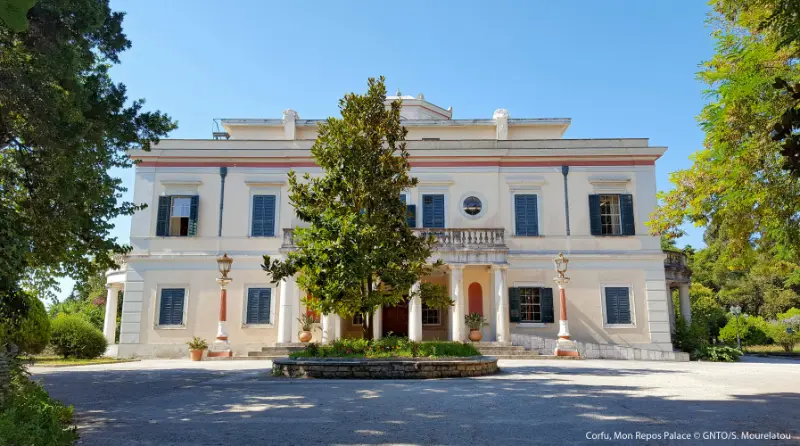
    Kanoni, Vlacherna and Mon Repos work well because the day combines views, outdoor walking and short pieces of history. Use the Kanoni and Mon Repos guide for a half-day route. In Corfu Town, break the Old Town into short loops rather than expecting children to enjoy three consecutive hours of churches and museums.

    Fortresses can appeal to school-age children because the space feels exploratory, but watch edges, stairs and heat. Pack water and use shaded squares for frequent pauses.

    Boat trips with children

    Choose short or half-day boat trips before committing to a full-day cruise. Ask about shade, toilets, life jackets, swimming stops and the return time. A smaller child who loves the first hour may still find six hours on a boat exhausting.

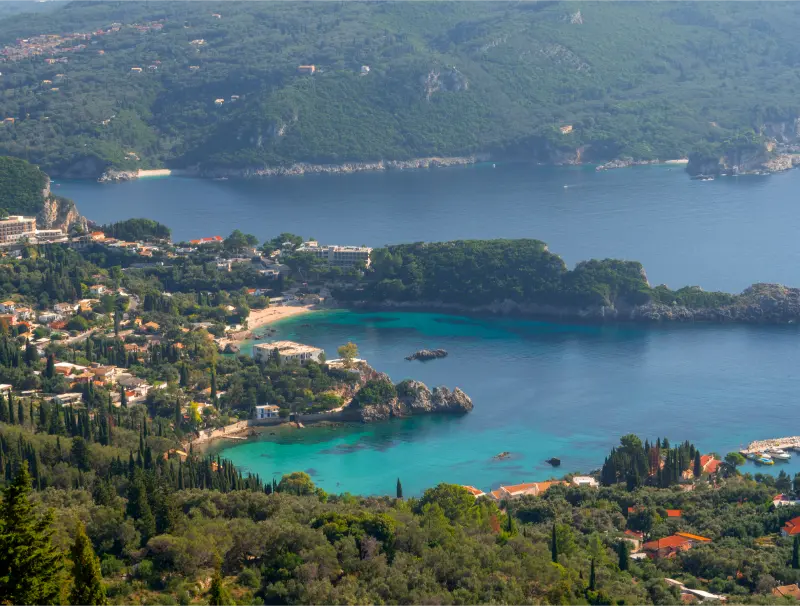
    Sea conditions matter more than the brochure. If wind is strong, move the boat trip to another day. Paleokastritsa is useful because you can still have a good beach day if the boat portion is cancelled.

    Porto Timoni, Pantokrator and other harder family days

    Porto Timoni is not a stroller beach and the return climb can be tough in heat. Active older children may enjoy it, but read the Porto Timoni guide before deciding. Mount Pantokrator is easier as a scenic drive than as a midday family hike.

    Old Perithia can be a good village lunch stop, but combine it with only one other major activity. Children often enjoy travel more when there is time to settle into a place rather than repeatedly getting in and out of the car.

    Heat, meals and the family rhythm

    Use mornings for castles, hikes or exposed viewpoints. Let the hottest part of the day be beach shade, pool time, lunch or a hotel break. Return outside for a village walk or town promenade in the early evening. This rhythm sounds slower but usually lets families do more over the week because nobody is exhausted by day three.

    Keep emergency snacks and water in the car, but never leave food melting in direct heat. A small insulated bottle and dry snacks solve many late-afternoon problems.

    A flexible 5-day family plan

    If you have seven days, add one village/mountain day and one completely unstructured beach or pool day. Family itineraries need recovery space more than adult checklist trips.

    DayLow-stress plan
    1Corfu Town in short loops + early dinner
    2Easy sandy beach day
    3Paleokastritsa beach + optional short boat trip
    4Kanoni, Mon Repos and pool/rest afternoon
    5North or west coast based on weather; keep it flexible

    Safety basics

    • Use appropriate child seats in rental cars and confirm availability before arrival.
    • Never leave children unattended near pools or the sea.
    • Use hats, high-SPF sunscreen and shade during peak UV hours.
    • Carry water on every walk, even short castle climbs.
    • Check boat life-jacket arrangements before departure.
    • Choose beaches by daily conditions, not by a fixed ranking.

    Eating out with children

    Greek dining times can be flexible, but children may not want to wait until late evening. Many tavernas are accustomed to families and can serve simple grilled foods, pasta, potatoes, salads and yoghurt alongside local dishes. Keep one familiar snack with you so a delayed table does not become a crisis.

    Encourage children to try small portions of local food rather than ordering a large unfamiliar dish. Corfu’s kumquat products, ginger beer and baked sweets can be fun introductions, though check alcohol content in liqueurs and allergies in sweets.

    Rainy-day and windy-day alternatives

    Corfu is green because it receives more rain than many Aegean islands. If a beach day collapses, use museums, the Old Fortress, cafés, a short town walk between showers or a drive to a village restaurant. Strong wind can also make one coast rough while another is usable.

    Keep one indoor or low-exposure idea saved for every two or three beach days. Families cope much better with weather changes when the backup feels like a real activity rather than punishment.

    One more practical planning note

    When planning Corfu with Kids, keep the day deliberately flexible. Corfu rewards travellers who respond to wind, heat and traffic rather than following a fixed checklist. Confirm opening or transport information on the morning itself, carry water, save important locations offline and avoid adding a distant attraction just because there is an empty hour on paper. The island is most enjoyable when each day has one clear geographical focus, enough time for a meal and enough margin to change the plan if a beach is rough, a road is congested or a cultural site has temporary access restrictions.

    I also recommend building a deliberate pause into the middle of the day. In peak summer, a shaded lunch, swim or hotel break is not wasted time; it protects the part of the afternoon when you are more likely to enjoy a village, viewpoint or coastal walk. If you are driving, refill water before leaving a larger resort area and keep fuel comfortably above empty, because small mountain and coastal roads do not always have services exactly when you need them.
    Panoramic View Viewpoint Resort Town Paleokastritsa Corfu Greece

    Finally, check the return route before sunset. Corfu roads can be slower after dark, and bus frequencies often thin out in the evening. If a place is especially beautiful late in the day, consider staying nearby for dinner rather than immediately crossing the island. That simple decision often turns a rushed sightseeing day into a much more memorable travel experience.

    Timing, comfort and local conditions

    Corfu changes character through the day, so timing deserves as much attention as the list of places. Early morning is best for exposed walks, castles and viewpoints; the middle of the day is better for swimming, lunch and shade; late afternoon works well for villages and west-facing scenery. This rhythm is particularly useful in July and August, but it also makes shoulder-season days feel less rushed because you can spend longer where the conditions are best.

    If you are using a rental car, keep the route geographically compact and avoid relying on the fastest navigation estimate. Village traffic, scooters, narrow bends and summer parking can add time that does not appear on the map. If you are using buses, verify the current return service before leaving the main town and save the timetable offline in case mobile data becomes unreliable at a remote stop.

    A good Corfu day also needs a backup. Strong wind can change a beach, cloud can hide a mountain view and restoration work can affect access to a monument. Choose an alternative in the same part of the island so a change of plan costs twenty minutes rather than two hours. This is one of the easiest ways to travel more comfortably and still see a lot.

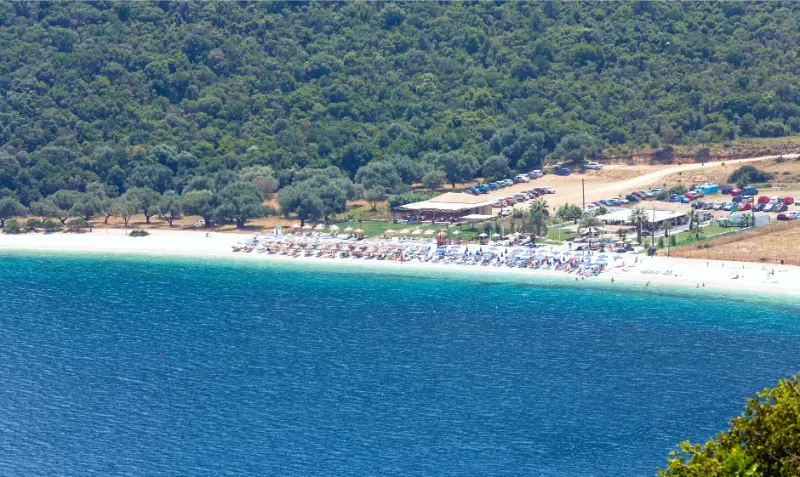
    Saint Gordios Beach Agios Gordios Island Corfu Greece

    Frequently asked questions

    Is Corfu good for toddlers?

    Yes, if you choose an easy-access base and sandy or organised beaches and avoid overly ambitious day trips.

    Which area is easiest without a car?

    Corfu Town has the best overall transport connections; some east-coast resorts also work well on city-bus routes.

    Is Porto Timoni suitable for young children?

    It is a rough, steep trail and not stroller-friendly. Older active children may manage with supervision and proper shoes.

    Are boat trips suitable for families?

    Often yes, but choose a duration that matches the children and verify shade, life jackets and sea conditions.

    How many bases should a family use?

    One base is easiest for a week; two bases can work for longer trips if they meaningfully reduce driving.

    Final thoughts

    Corfu with children works best when you use the island’s variety to reduce pressure, not increase it. Pick an easy base, choose beaches by conditions, keep cultural stops short and interesting, and protect the middle of the day from heat. The result is a holiday the adults can enjoy too.
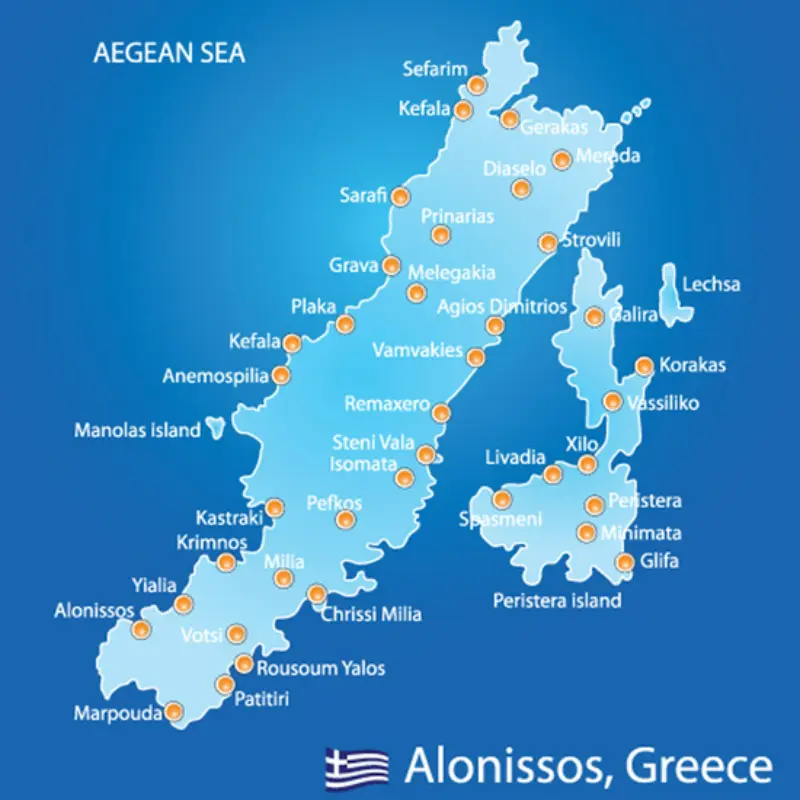
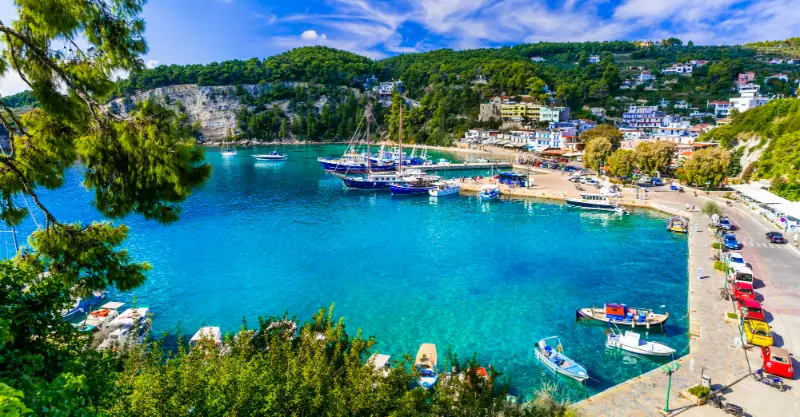
  • Old Village of Alonissos Guide: Chora Views, Castle Lanes and a Slow Evening

    Old Village of Alonissos Guide: Chora Views, Castle Lanes and a Slow Evening

    The Old Village of Alonissos, often called Old Chora, sits high above the island and feels completely different from the port at Patitiri. Stone lanes, restored houses and wide sea views make it one of the easiest places to understand the island’s older settlement pattern and quieter character.

    The village works best late in the day, when the light softens and restaurants begin to fill. It is not a place that needs a checklist of monuments; the reward comes from wandering. For the island as a whole, start with the Alonissos travel guide.

    Why this place deserves more than a quick stop

    Alonissos is often chosen for beaches and the marine park, yet the Old Village gives the trip cultural depth. It shows how island life was organized before the modern port became the main arrival point and before tourism reshaped the coast.

    Visit Greece describes the village as a scenic hilltop settlement with views toward Skopelos, Skiathos and Mount Pelion on clear days, and notes that summer cultural events bring additional life to the old streets.

    At a glance

    Best forSunset, village atmosphere, short walks, food and photography
    Ideal timeHalf day or evening; 1 night if you want quiet atmosphere
    Main basePatitiri for transport convenience or Old Village for ambience
    TransportBus, taxi or car from Patitiri; walking inside the village
    Pair it withPatitiri, marine park excursions and island beaches

    What to see and do

    The village is compact enough to explore without a map, which is exactly how I would do it.

    • Walk the main lanes slowly and take side turns.
    • Look for broad sea views from the upper settlement.
    • Stop at small cafés or shops rather than rushing through.
    • Return after sunset if you are staying nearby.
    • Notice how restored homes coexist with older stone fabric.

    Why the village sits above the coast

    Older Aegean settlements were often placed away from exposed shorelines for security and practical reasons. Alonissos’ hilltop Chora reflects that pattern, while modern Patitiri developed as the island’s main port. Understanding that relationship makes the two settlements feel complementary rather than competing.

    Alonissos In Greece

    The Old Village suffered major damage in the 1965 earthquake, after which many residents moved toward Patitiri. Restoration and new uses later brought life back. Today the village combines historical memory, local residences, tourism and seasonal activity.

    Views, cafés and evening atmosphere

    The views are not limited to one terrace. As you move through the upper lanes, openings reveal different directions across the Aegean. Clear conditions can extend sightlines toward neighbouring Sporades islands and Pelion.

    Evening is especially appealing because heat falls and the village becomes a dining destination. If you are driving, arrive before the main dinner rush so parking and orientation are easier.

    A practical route that works

    A simple loop leaves enough time for unplanned stops.

    1. Arrive in late afternoon and orient yourself at the village entrance.
    2. Walk upward through the main lanes, taking side turns toward viewpoints.
    3. Stop for a drink or sweet before sunset.
    4. Choose dinner in the village rather than rushing back to Patitiri.
    5. If transport permits, linger after dark when the streets become quieter.

    In hot weather, this timing is far more comfortable than arriving in the middle of the day simply because the village is “on the list.”

    Getting there

    Urban KTEL bus routes connect Patitiri with the Old Village, according to Visit Greece, making this one of the easiest inland experiences on Alonissos without a car. Seasonal frequency can vary.

    Votsi Island Of Alonissos Greece

    Taxis and rental vehicles provide flexibility for combining the village with beaches or viewpoints. If you drive, park where signed and walk the rest rather than trying to enter narrow lanes.

    Getting around

    Inside the village, walking is essential. Expect uneven surfaces, stairs and gradients typical of a historic hill settlement.

    Travellers with limited mobility should ask about the most accessible drop-off and restaurant areas instead of assuming the entire village is step-free.

    Where to stay

    Staying in the Old Village gives you atmosphere after day visitors leave and beautiful mornings, but it separates you from the port’s immediate transport connections.

    Patitiri is more practical for ferries and boat trips. A good first-trip strategy is to stay there and spend one long evening in the Old Village.

    Food and local rhythm

    The village has seasonal cafés and tavernas where the setting is part of the meal. Avoid choosing solely by the widest view; look for a menu that suits you and an atmosphere where you want to spend time.

    Local sweets, seafood and traditional Greek dishes fit naturally into a slow evening. Booking can be sensible in peak August if a particular restaurant matters to you.

    Best time to visit

    Late spring through early autumn is ideal for evening village life. July and August are busiest, especially around cultural events and the Dormition period.

    Outside summer the village is much quieter, and not every seasonal business will be open. That can be peaceful but changes the experience substantially.

    How long do you need?

    Two or three hours are enough for a walk and drink. Add dinner and the village naturally becomes a half-day experience.

    One overnight is worthwhile for travellers who value atmosphere over port convenience, but unnecessary for most short island itineraries.

    A realistic mini-itinerary

    1. Late afternoon: travel from Patitiri and explore the upper lanes.
    2. Sunset: find a viewpoint or terrace without blocking paths.
    3. Evening: dinner and a slow walk through illuminated streets.
    4. Next morning if staying: quiet coffee before returning to the coast.

    Mistakes to avoid

    • Visiting only at midday when the village is hottest and least atmospheric.
    • Driving into lanes not intended for visitor traffic.
    • Expecting a large museum-style attraction.
    • Leaving immediately after sunset and missing the evening mood.

    The village is about pace, not quantity. A few unplanned hours are more rewarding than a twenty-minute photo stop.

    Responsible travel and practical etiquette

    People live in the Old Village. Keep photographs respectful, avoid peering into private homes and limit late-night noise in residential alleys.

    Use established bins and avoid leaving cigarette butts or glass in dry summer conditions. Hill settlements can be vulnerable to fire, and local restrictions should be taken seriously.

    How to combine it with the rest of Greece

    Pair the village with the National Marine Park of Alonissos guide for a trip that balances cultural landscape and protected nature.

    Embankment Island Alonissos Northern Sporades Greece

    If you are island hopping, connect Alonissos with Skopelos or Skiathos rather than adding distant island groups to a short itinerary.

    Useful official information

    Visit Greece has a dedicated Old Village of Alonnisos page, including bus information and cultural context.

    FAQ

    Is the Old Village the same as Patitiri?

    No. Patitiri is the modern port and capital, while the Old Village is the historic hilltop settlement inland.

    Can I get there by bus?

    Yes, seasonal local bus services connect Patitiri and the Old Village; verify the current timetable.

    When is the best time to go?

    Late afternoon through evening is ideal for cooler temperatures, sunset light and dinner.

    How long do I need?

    Allow two to four hours, longer if you plan dinner.

    Is it worth staying overnight?

    Yes for atmosphere and quiet mornings, but Patitiri is more convenient for ferries and marine excursions.

    Final thoughts

    The Old Village is one of those places where Alonissos becomes more than a beach-and-boat destination. Its lanes and views add a human history to the island’s strong nature identity.

    Give it an evening rather than a rushed midday stop. That single decision makes the village feel lived-in and memorable instead of simply picturesque.

    Extra planning notes

    Before locking in accommodation, compare the real transfer sequence for your dates rather than relying on a generic map. Greek island and regional travel is often simple once you are there, but seasonal timetables, wind, road conditions and the location of your hotel can change how a day feels. I prefer to leave one part of the itinerary intentionally flexible: a beach can move to another day, a hike can start earlier, and a boat trip can shift when the sea is calmer. This is especially useful in places where the landscape is the attraction, because forcing an activity in poor conditions rarely creates the experience you imagined.

    A second practical rule is to plan around energy as much as distance. A short drive followed by stairs, heat or a long swim may be more tiring than a longer transfer on paper. Build in shade, water, unhurried meals and time to return to your base before dinner. That slower rhythm is not wasted time; it is often what separates a holiday that feels like a sequence of logistics from one that actually feels like Greece.

    Practical pacing for a better trip

    One final detail that improves this trip is to keep the day deliberately under-filled. Leave room for a delayed bus, a longer meal, a change in wind or a viewpoint that deserves more time than expected. In Greece, the most frustrating itineraries are often the ones that look perfectly efficient on paper. A realistic plan has enough slack to move an outdoor activity, return to the hotel for a break or stay longer in a village without creating a chain of missed reservations.

    If you are travelling in the busiest summer weeks, start earlier than you think you need to and avoid making the hottest part of the afternoon your most demanding walking period. Carry water, use sun protection and check local advice for fire risk, trail access and sea conditions. These small choices are more useful than adding another attraction to the schedule, and they make the destination feel more relaxed and personal.

  • Arcadia Road Trip: 7-Day Itinerary from Tripoli to Mainalo, Kynouria and Leonidio

    Arcadia Road Trip: 7-Day Itinerary from Tripoli to Mainalo, Kynouria and Leonidio

    Arcadia is one of the rare Greek regions where a single road trip can move from ancient city-states to high fir forest and then descend to a warm Aegean-facing coast. The mistake is trying to compress that contrast into three frantic days. A week gives you enough time to use Tripoli as the central hinge, spend two nights in the Mainalo–Gortynia mountains and finish along Kynouria and Tsakonia.

    This itinerary assumes a rental car and moderate sightseeing pace. It deliberately avoids changing hotels every night. The roads are generally manageable, but mountain distances are slow and the best stops—villages, tavernas, viewpoints—rarely fit a rigid timetable.

    At a glance

    • Duration: 7 days / 6 or 7 nights.
    • Best for: first-time Arcadia road trips, couples, active families and independent travellers.
    • Suggested bases: Tripoli, Vytina or Dimitsana, then Tyros or Leonidio.
    • Best seasons: late spring, early summer and September–October.
    • Winter version: possible, but mountain-weather flexibility is essential.

    Day 1: arrive in Tripoli

    Use Tripoli as the practical first base. Walk Areos Square, visit one museum and have an Arcadian dinner rather than immediately driving into the mountains.

    If you arrive early, add a relaxed central walk. Save Tegea and Mantineia for daylight the next day; archaeological sites are more enjoyable when you are not tired from a long transfer.

    Day 2: Tegea, Mantineia and Kapsia

    Start with Ancient Tegea, including the museum. Then cross the basin toward Mantineia. If you booked a winery, keep the tasting modest or use a designated driver. Finish at Kapsia Cave if the current tour schedule fits.

    This is the fullest day of the itinerary. If you prefer slow travel, choose Tegea or Mantineia rather than forcing all three anchors.

    Day 3: Tripoli to Vytina and Mainalo

    Drive west into the mountains and base yourself in Vytina. Walk the village, buy local products and take a short forest walk. If weather is good, explore one nearby Mainalo viewpoint or trailhead.

    Stay in Vytina or continue to Dimitsana if you prefer a more dramatic stone-village setting. Do not add Lagkadia, Stemnitsa and Dimitsana simply because the map shows them within the same area.

    Day 4: Dimitsana, Stemnitsa and Lousios

    Use the existing Dimitsana and Stemnitsa guide for a full mountain day. The Lousios landscape, monasteries and village architecture deserve time. Hikers can sample part of the Menalon Trail.

    A museum or monastery plus one village walk is often enough. Leave space for lunch and the slow road between viewpoints.

    Day 5: Magouliana, Valtesiniko and the eastward turn

    Follow the mountain sequence through Magouliana and Valtesiniko. If you enjoy stone architecture, add Lagkadia before turning back east, but be realistic about the driving time.

    For a faster transition toward the coast, return through Vytina and the Tripoli side of Arcadia, then continue toward Astros. This avoids ending a long mountain day on unfamiliar minor roads after dark.

    Paralio Astros Port Arcadia Peloponnese Greece Aerial Drone View Village Moored Boat Sea

    Day 6: Astros and Tyros

    Spend the morning between Astros and Paralio Astros, then drive south to Tyros. Swim, walk the seafront and stay on the coast.

    This day is intentionally lighter. After several mountain days, the coast works best when you let it feel like a holiday rather than another chain of attractions.

    Day 7: Kastanitsa or Leonidio

    Choose one direction. For forest and village culture, make the mountain excursion to Kastanitsa. For cliffs, Tsakonian food and a larger town, continue to Leonidio.

    If you have an eighth day, do both and stay another night on the eastern side of Arcadia. The extra day dramatically improves the balance of the trip.

    Where to sleep

    Use two or three bases rather than six. Tripoli provides logistics; Vytina/Dimitsana provide the mountain experience; Tyros/Leonidio provide the coast. This keeps packing under control and gives you evenings in places that deserve them.

    When comparing hotels, check parking and road access. A romantic mountain property can be perfect, but not if it requires a difficult late-night arrival after a long driving day.

    How much driving is realistic

    Arcadian roads are not difficult everywhere, but they are often winding. A route that looks like 45 km can take much longer than expected once you add village traffic, photo stops and mountain bends.

    I plan at most two main attractions per day in the mountains. The road itself is part of the trip, and overloading the schedule removes the reason to be in Arcadia.

    Food strategy

    Use Tripoli for a broad introduction to Arcadian food, mountain villages for stews, pasta, cheese and honey, Mantineia for wine, and the Kynouria coast for seafood. Around Leonidio and Tsakonia, look for dishes using the local PDO eggplant.

    Avoid turning every meal into a restaurant search. Some of the most memorable stops are bakeries, village cafés and simple tavernas recommended that morning by your guesthouse.

    Seasonal adjustments

    In July and August, start mountain walks early and keep beach afternoons easy. In October, chestnut forests and harvest-season food become major attractions. In winter, shorten driving days and treat snow as a planning factor rather than a surprise.

    Spring is probably the easiest all-round season for archaeology, green mountain scenery and comfortable temperatures, though sea swimming may still be cool.

    Where to stay

    For current accommodation options, compare properties on Booking.com. In Arcadia I choose the base by the next morning’s route rather than by headline room price: mountain roads can make a short straight-line distance much slower than it looks on a map.

    If you have only five days

    Compress the plan by using Tripoli for two nights, Vytina or Dimitsana for two nights and Tyros or Leonidio for one. Skip either Tegea or Mantineia, choose one Menalon village day and make the coast your final transition rather than a full beach stay.

    Do not try to save time by sleeping in a different place every night. In Arcadia, the repeated packing and mountain check-ins cost more usable time than a slightly longer morning drive.

    Astros Arcadia Peloponnese Greece Aerial Drone Panoramic View Village Castle Sea Blue Sky

    One more practical planning note

    A final planning point for Arcadia Road Trip: leave margin around the most variable part of the day. In Arcadia that may be a museum opening, a cave tour, a winery appointment, a mountain road or the weather on a hiking section. I would rather arrive early and spend twenty minutes over coffee than build an itinerary where one small delay removes lunch or forces a drive after dark. Keep water in the car, download offline maps, carry a light layer in the mountains and ask your accommodation for same-day local advice. That combination of preparation and flexibility is more useful here than trying to follow an exact minute-by-minute schedule. It also gives you space to stop at a bakery, viewpoint or village square that was never part of the original plan, which is often where an Arcadia road trip becomes memorable.

    Frequently asked questions

    Can I do Arcadia in three days?

    Yes, but focus on one half: either Tripoli plus Mainalo/Gortynia or Tripoli plus Kynouria. A full mountain-and-coast circuit deserves closer to a week.

    Where should I base myself?

    Tripoli for central archaeology, Vytina or Dimitsana for the mountains, and Tyros or Leonidio for the eastern coast.

    Do I need a car?

    For this itinerary, yes. Public transport does not provide the flexibility needed for caves, villages, wineries and mountain trailheads.

    What is the best month?

    May, June, September and October are especially versatile. The exact choice depends on whether swimming, hiking or autumn mountain scenery matters most.

    Useful internal guides

    Use the detailed guides to Tripoli, Menalon Trail, Astros, Tyros and Kastanitsa.

    Final advice

    The best Arcadia itinerary is not the one with the most pins. Use a few strong bases, keep one optional stop each day and let the landscape change gradually from plateau to fir forest to coast. That rhythm is what makes the region feel coherent rather than fragmented.

    Continue exploring Arcadia with Ancient Orchomenos, Lake Ladon, Arcadia food guide.

    Continue planning Arcadia with Mount Parnon, Moustos Lagoon, where to stay in Arcadia.

  • Firopotamos and Mandrakia Guide: Milos Fishing Villages, Syrmata and Coastal Photography

    Firopotamos and Mandrakia Guide: Milos Fishing Villages, Syrmata and Coastal Photography

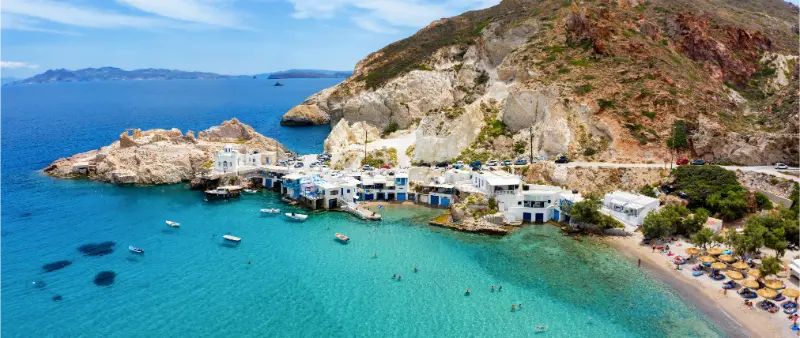
    Firopotamos and Mandrakia are two of the small coastal settlements that make Milos feel more intimate than its famous beaches suggest. Both have syrmata—traditional boat-storage buildings built directly beside the water—but the villages have different moods. Firopotamos combines a tiny beach and whitewashed church with a compact bay, while Mandrakia feels more like a pocket-sized fishing harbour carved into volcanic rock.

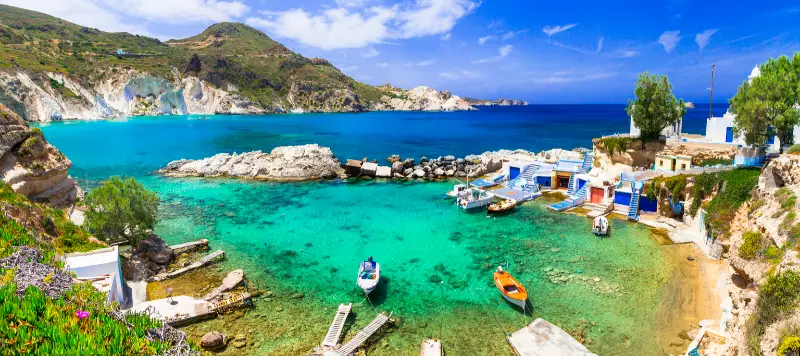
    Mandrakia Village Milos Greece

    These are not places where you need a long checklist. Their value is scale: a short walk, the colour of the boat doors, reflections on calm water and the relationship between houses and sea. I would visit as part of a scenic half-day rather than driving across the island for one photo. Pair them with Sarakiniko, Plaka or Klima depending on wind and your route.

    For the bigger picture, start with my Milos Travel Guide. Milos is easiest to enjoy when each day follows geography and wind rather than a rigid checklist, so this article focuses only on the details that matter for this particular stop.

    Quick planning facts

    • Firopotamos and Mandrakia are small coastal settlements in northern/western Milos.
    • Both feature forms of syrmata associated with boat storage at the water’s edge.
    • Parking is limited and village roads are narrow.
    • These are living settlements, not dedicated tourist attractions.
    • Wind direction strongly affects whether the small bays feel calm or exposed.

    Why this place is worth adding to a Milos itinerary

    Milos rewards travellers who separate sightseeing from beach time. A morning archaeological visit, a slow village evening or one carefully chosen cove usually works better than trying to fit four corners of the island into the same day. Roads are not long in absolute distance, but parking, wind, heat and narrow approaches can make a packed schedule feel much more demanding than it looks on a map.

    The other reason to plan selectively is that Milos changes character from coast to coast. The north can be dramatically exposed when the meltemi blows, while the south may be calmer; a village can feel almost empty at midday and crowded at sunset; a tiny harbour that looks like a ten-minute stop can become the place where you want to sit for an hour. Use the weather and your own energy as planning tools.

    What to see and what to pay attention to

    Firopotamos bay

    The combination of a small beach, church and colourful waterfront gives Firopotamos a compact postcard quality. It is best when you have time to sit rather than simply photograph.

    Mandrakia harbour

    Mandrakia is smaller and more harbour-focused. The boat doors and volcanic rock create strong compositions for photography, especially in softer light.

    Traditional maritime architecture

    The syrmata make sense only when you remember their function: fishermen needed to protect boats from sea and weather while keeping them immediately accessible.

    Low-key swimming

    Firopotamos can work for a swim when conditions are calm, but neither village should replace a dedicated beach day if swimming is your priority.

    Respectful photography

    Stay on public routes, avoid blocking doorways and do not treat private terraces as viewpoints. Drones may also disturb residents and are subject to flight rules.

    A realistic way to structure the visit

    Start with whichever village is most sheltered that day, spend forty-five minutes to an hour and continue to the second. Add Sarakiniko only if wind conditions suit the north coast; otherwise move inland to Plaka or Tripiti. This keeps the day flexible rather than forcing exposed coast in poor conditions.

    I would keep at least one flexible block in every two days on Milos. Wind can cancel or reroute boat trips, parking can become difficult at famous beaches, and you may simply discover that one place deserves more time than expected. A flexible afternoon lets you swap a north-coast stop for the south, move a sunset village to another day or take a longer lunch without breaking the entire itinerary.

    Getting there and transport

    A car or scooter is easiest. The final roads and parking areas are small, so large vehicles require patience. If spaces are full, do not create your own parking spot on a turning area or access lane.

    If transport is a major concern, also use my Greece ferry guide for inter-island planning and the Greek island-hopping guide if Milos is part of a longer Cyclades route. Ferry times, local bus frequency and excursion departures are seasonal, so always verify the current timetable rather than relying on a screenshot from an older trip.

    Who this is best for

    These villages are excellent for photographers, couples and travellers who enjoy small-scale architecture. They are less useful for visitors looking for extensive shops, facilities or organised beach services.

    Best time of day and season

    June and September are often excellent for balancing warm sea temperatures with slightly less pressure than peak August, while May and October can be very rewarding for walking and villages if your priority is not guaranteed beach weather. In July and August, start exposed walks and archaeological sites early, keep midday for swimming or shade, and approach sunset hotspots with extra parking time. Outside the main season, confirm restaurants, buses and visitor sites before building a day around them.

    Wind matters as much as temperature. Milos is an Aegean island, and the same beach can look completely different on two consecutive days. Check a reliable marine forecast, ask locally and move to a more sheltered coast when needed. This is especially important for cliff-backed coves and boat excursions, where rough sea or falling material can create genuine safety issues.

    Parking, roads and practical comfort

    Do not underestimate short island drives. The main roads are manageable, but final approaches to fishing villages and beaches can be narrow, dusty or crowded. Park legally even if it means walking farther, never block turning space, and avoid taking a rental vehicle onto tracks your contract excludes. Carry water, sun protection and secure footwear in the car so a spontaneous stop does not become uncomfortable.

    If you travel without a car, base selection becomes more important. Adamas gives the strongest transport flexibility, while Pollonia is convenient for Kimolos and north-east Milos. Taxis are useful for sunset evenings when parking pressure is high, but availability can tighten in summer, so arrange important rides in advance rather than assuming a car will appear immediately.

    Food, water and a slower rhythm

    One of the easiest ways to improve a Milos itinerary is to stop treating meals as interruptions. Villages such as Plaka, Pollonia and Adamas are more enjoyable when you sit down before you are exhausted. Carry water to beaches and archaeological sites, but use lunch or an early dinner as a deliberate rest period. Local dishes, cheeses, pies and seafood can vary by restaurant and season, so ask what is genuinely available rather than ordering only from a pre-made online list.

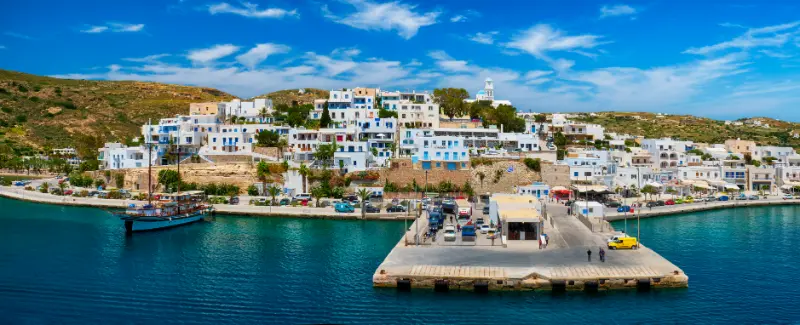
    Adamantas Adamas Harbor Town Milos Island Greece

    Photography without making the trip miserable

    The island photographs beautifully because volcanic rock, white villages and blue water create strong contrast, but the best light often comes with the biggest crowds. Arrive early or stay later instead of fighting for the same viewpoint. Never cross barriers, climb unstable cliffs or enter private terraces for a marginally better angle. At fishing villages, remember that coloured doors and waterfront steps may belong to somebody’s home or working space.

    Common mistakes to avoid

    • Planning the island as if every famous beach must be visited regardless of wind.
    • Arriving at sunset hotspots at the last minute and expecting easy parking.
    • Wearing flip-flops for archaeological paths, steep village steps or difficult beach access.
    • Treating small fishing settlements as photo sets instead of residential places.
    • Booking a critical onward ferry immediately after a weather-sensitive boat excursion.
    • Trying to combine the far west, north coast and south coast in one rushed day.

    What to combine nearby

    Depending on your route, useful related guides include Sarakiniko Beach guide, Kleftiko boat trip guide, Kimolos Travel Guide. The goal is not to do all of them together, but to group stops by geography and weather so you spend more time experiencing Milos and less time driving back and forth.

    Current information and official sources

    For details that can change—opening hours, admission, access restrictions or local notices—check the official source used for this guide shortly before your visit. Milos is a living island, not a static attraction, and weather or operational changes can matter more than what any travel article said months earlier.

    Frequently asked questions

    Which is better, Firopotamos or Mandrakia?

    Firopotamos is better for combining a swim with village scenery; Mandrakia is more compact and harbour-focused.

    How much time do you need?

    Around one hour per village is plenty for most travellers.

    Can you combine them with Sarakiniko?

    Yes, geographically it makes sense, but only if wind and sea conditions are comfortable.

    Are the houses private?

    Many are private or used as accommodation, so respect doors, terraces and residents.

    Is parking easy?

    It can be limited in high season. Arrive early or be prepared to walk from a legal space.

    Final thoughts

    Firopotamos and Mandrakia Guide works best when you give it a clear role in the day instead of squeezing it between unrelated stops. Build around one main experience, leave room for weather and parking changes, and keep the pace slow enough to notice why Milos feels different from the other Cyclades.

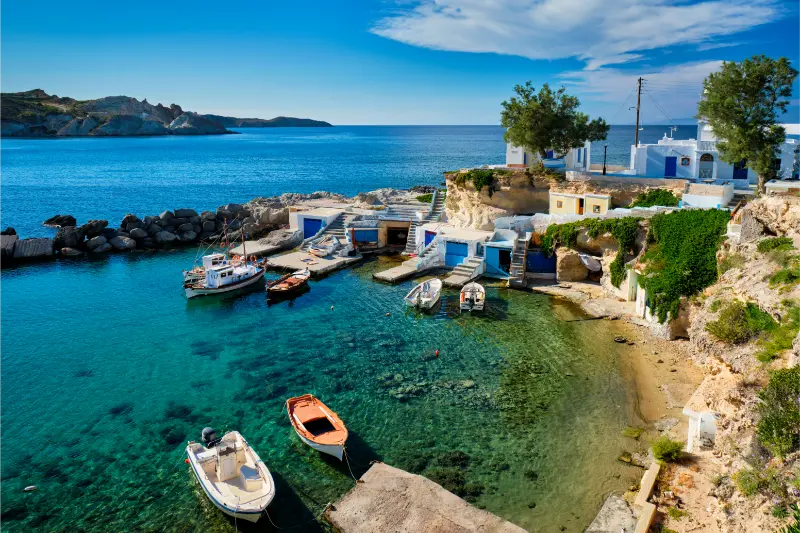
    Mandrakia Village Milos Island Greece

    That approach also keeps the site more useful for future trips: one day can be geology and beaches, another archaeology and villages, another a boat trip, and another Kimolos or the quieter north-east. Milos does not need to be conquered in a checklist. It rewards travellers who let the island’s wind, landscape and small settlements shape the route.

  • Kamares Sifnos Guide: Port, Beach, Buses, Pottery and Where to Stay

    Kamares Sifnos Guide: Port, Beach, Buses, Pottery and Where to Stay

    Kamares is the arrival point for almost every ferry visitor to Sifnos, but it is more than a place to drag a suitcase through. The island’s main port sits on a broad sandy bay with cafés, bakeries, accommodation, pottery workshops and one of the easiest beach routines on the island. For travellers without a car or families who want a flat, convenient base, Kamares deserves serious consideration.

    This guide explains how the port, beach and two sides of the bay fit together, what Kamares is like after the ferries leave, how to connect with Apollonia and the rest of Sifnos, and when staying here makes more sense than choosing an inland village.

    Kamares at a glance

    Best forFerry convenience, families, easy beach days
    Distance from ApolloniaAbout 5 km
    BeachLong sandy bay
    ServicesHotels, restaurants, bakeries, shops, pottery, tourist services
    Good without a car?Yes

    Understanding the bay

    Kamares is the island’s main port and its largest coastal settlement. The ferry quay, shops and much of the commercial activity sit on one side; across the beach, the Agia Marina/Pera Panta area creates a quieter counterpart. The broad bay makes it easy to stay close to the water without feeling trapped inside a tiny resort strip.

    Ferry movements add activity, but the beach is long enough that daily life does not feel identical to standing beside the ramp. When choosing accommodation, check the exact side of the bay and walking route to the port rather than assuming every “Kamares” room is equally convenient with luggage.

    Kamares Beach

    The municipality describes Kamares as a sandy beach bordered by native vegetation, reed beds, coastal lagoons and dunes, with sand lilies appearing in August. The shallow-looking shore and easy access make it popular with families, although wind and wave conditions can still change from day to day.

    Do not choose a swimming spot solely by proximity to the ferry quay. Walk along the bay, observe where local bathers are entering and respect any marked port or boat areas. The beach’s main strength is convenience: you can swim, return to your room, eat and catch transport without a long transfer.

    Who should stay in Kamares

    Kamares is particularly strong for a short stay, late ferry arrival, early departure, families with a lot of luggage and travellers who do not want to rent a car. It also suits people who want a beach outside the door but still expect to explore the island by bus.

    It is less ideal if your priority is the most atmospheric evening village. For that, Apollonia and Artemonas offer a richer inland atmosphere and wider nightlife. The choice is not about better or worse; it is about whether beach-and-port convenience beats central-village character for your trip.

    Arriving by ferry

    Keep the first hour simple. Ferries can unload quickly, taxis become busy and buses may be timed around arrivals. If you are staying in Kamares, walk only if your accommodation confirms the route is practical with luggage. If you are continuing elsewhere, identify the bus stop or taxi rank before stopping for a meal.

    On departure day, being based in Kamares reduces stress. If you stay elsewhere, arrive with a buffer rather than planning a final beach swim right up to boarding time. Wind and ferry operations are part of island travel, and schedules can change.

    Buses to the rest of Sifnos

    Seasonal bus timetables connect Kamares with Apollonia and Artemonas, where you can change or continue toward other villages and beaches depending on the schedule. Service levels vary significantly between spring, peak summer and shoulder season. The municipality publishes updated timetables, so use the current notice rather than an old timetable saved from a previous year.

    For a trip built mainly around buses, pair Kamares with the planning advice in Sifnos Without a Car.

    Pottery and local culture

    Sifnos has a living pottery tradition, and Kamares contains several workshops. The official tourism site lists fifteen pottery workshops across the island, with multiple names in Kamares. A visit is more meaningful if you ask about the functional vessels used in Sifnian cooking—especially the mastelo—rather than treating the shops as generic souvenir stores.

    Pottery also helps explain the island’s food. The vessel, oven and recipe developed together, which is why a Sifnos food guide belongs naturally in the same trip as a workshop visit.

    Hiking from Kamares

    The port is also a trailhead. Routes lead toward old mining areas, churches and the NATURA-protected landscape, while another connection heads inland toward the central settlements. The exposed terrain can become demanding in summer heat, so morning starts and enough water matter more than the short distances may suggest.

    Restaurants and evenings

    Kamares has enough tavernas, cafés and bakeries to stay comfortably without travelling for every meal. The evening mood is relaxed and oriented around the waterfront rather than nightlife. If you want a bus into Apollonia for dinner, check the last return before ordering, not after dessert.

    A simple two-day Kamares plan

    • Arrival day: check in, swim close to the hotel and keep the evening local.
    • Morning two: pottery workshop or a short hike before heat builds.
    • Afternoon: beach and rest.
    • Evening: bus or taxi to Apollonia for a different atmosphere, returning according to the current timetable.

    Official information

    The Municipality of Sifnos page for Kamares covers the port, beach, services and local trails. Use the municipality’s latest transport notice for current bus times.

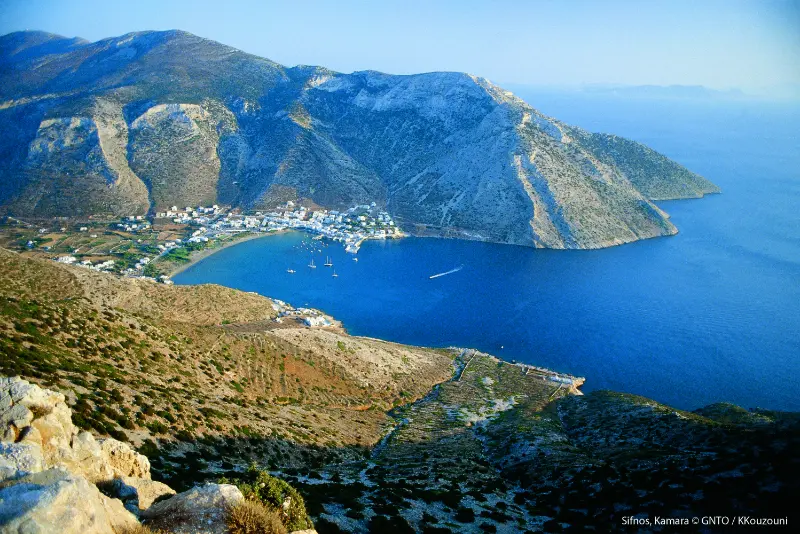
    Sifnos Kamares

    Tours and activities

    If you want a guided walk, food experience, boat trip or another organised activity, compare what is available for your exact dates. On a small Cycladic island the choice can change by season, so check the meeting point, duration, language, cancellation terms and whether transport is included before booking.

    Frequently asked questions

    Is Kamares a good place to stay?

    Yes, especially for ferry convenience, families, beach access and travellers without a car.

    Is the beach sandy?

    Yes. Kamares has a long sandy bay with easy access from the settlement.

    How far is Kamares from Apollonia?

    About 5 km by road.

    Can I explore Sifnos by bus from Kamares?

    Yes, but routes and frequency are seasonal. Connections through Apollonia and Artemonas are important.

    Is Kamares noisy because of the port?

    Activity increases around ferry arrivals, but the bay is larger than the quay area and accommodation experiences vary by location.

    Should I stay here for the whole trip?

    It can work very well if convenience and beach access are priorities; travellers focused on village evenings may prefer the centre.

    Final practical advice

    Do not dismiss Kamares as “just the port”. It is one of the easiest bases on Sifnos and can remove several layers of transport stress. Choose it deliberately for the beach, luggage convenience and bus access, then use the rest of the island for history, food and hiking.

    Kamares Town With Traditional White Houses Sifnos Island Sunset Greece

    Planning details that are easy to overlook

    Build each day around geography rather than a list of saved pins. Sifnos is compact, but repeated returns through the central road network can still waste time. Group central villages together, south-coast beaches together and Kastro with the eastern side. This leaves more time for meals and swimming, which are not empty gaps in a Sifnos itinerary but part of the experience.

    In July and August, heat changes the order of the day. Walk early, swim through the hottest hours and return to villages in late afternoon. In May, June, September and October, longer daytime walks become more realistic, but ferry and bus frequency may be lower. Always verify the transport that operates on your exact dates before making a non-refundable plan around it.

    Carry a refillable bottle, sun protection and shoes with grip even on days that are not labelled “hiking”. Stone lanes can be polished, coastal paths can be dusty and a five-minute viewpoint detour can become uncomfortable in smooth sandals. A light layer is useful for wind on evening terraces and ferry decks.

    For churches and monasteries, dress respectfully and avoid entering during services simply to take photographs. For pottery workshops, ask before photographing artisans at work. For beaches, leave stones, plants and shells where they are and take rubbish back to a serviced settlement if there are no bins.

    Finally, keep one flexible half-day in the itinerary. Wind, a changed bus timetable, a festival or a restaurant recommendation may give you a better plan than the one you made months earlier. Sifnos rewards travellers who organise the essentials but leave enough room for the island to change the schedule.

    A realistic pace for the day

    Avoid planning Sifnos as a sequence of ten-minute stops. Roads are short, but parking, bus waits, stone lanes, meals and beach access all add time. A realistic day normally has one main village or walk, one swim and one unhurried meal. This rhythm also makes it easier to adapt when wind changes the beach choice or when a small museum has different seasonal hours than expected.

    If you are combining this area with another part of the island, choose the nearest logical neighbour rather than crossing Sifnos repeatedly. Keep Kastro with the eastern side, Faros and Chrysopigi with the south-east, Platis Gialos with the south and Kamares with ferry-day logistics. This simple approach reduces unnecessary transfers and creates more time for the experiences that make the island distinctive.

    Beach Of Kamares In Island Of Sifnos Greece
  • Oia Santorini Guide: Best Views, Sunset, Ammoudi Bay and Where to Stay

    Oia Santorini Guide: Best Views, Sunset, Ammoudi Bay and Where to Stay

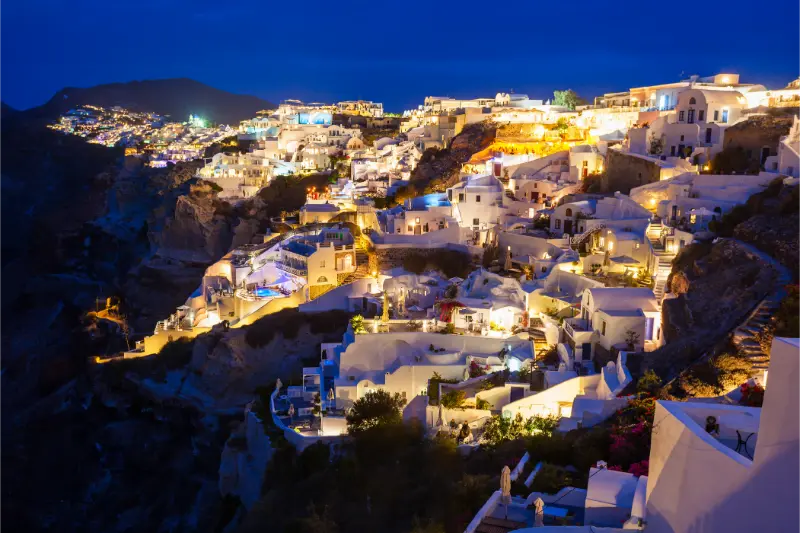
    Oia Santorini Guide is the focus of this guide. Oia is the Santorini that appears on postcards: white cave houses, blue domes, windmills and terraces balanced on the caldera rim. It is also one of the busiest small villages in Greece, so the quality of a visit depends less on ticking off viewpoints and more on timing your walks, choosing the right base and understanding how the village changes between early morning, cruise-ship hours and sunset.

    The best way to enjoy Oia is to treat it as a lived-in cliffside village rather than a single sunset stop. Stay long enough to walk it before breakfast, descend to Ammoudi when the lanes are busy, and return after sunset when day visitors begin to leave. That rhythm creates a much calmer experience than arriving at 17:00 with everyone else.

    At a glance

    Best forCouples, first-time Santorini visitors, photographers and travellers who enjoy walking
    Ideal stay2 nights in Oia, or a half-day plus sunset if based elsewhere
    Car needed?No for the village itself; useful only for exploring the wider island
    Main challengeCrowds, steps, heat and expensive caldera-view accommodation

    Why this place deserves time in your Greece itinerary

    A good visit is less about collecting landmarks and more about understanding how the destination works. Oia is the Santorini that appears on postcards: white cave houses, blue domes, windmills and terraces balanced on the caldera rim. It is also one of the busiest small villages in Greece, so the quality of a visit depends less on ticking off viewpoints and more on timing your walks, choosing the right base and understanding how the village changes between early morning, cruise-ship hours and sunset.

    My planning approach here is simple: build the day around the strongest local experiences, leave breathing room for weather and crowds, and use nearby destinations only when they add something genuinely different. The best way to enjoy Oia is to treat it as a lived-in cliffside village rather than a single sunset stop. Stay long enough to walk it before breakfast, descend to Ammoudi when the lanes are busy, and return after sunset when day visitors begin to leave. That rhythm creates a much calmer experience than arriving at 17:00 with everyone else.

    What to see and do

    Caldera lanes and blue-domed viewpoints

    Start with the upper pedestrian lanes while they are quiet. The famous blue-domed views are beautiful, but the real pleasure is the sequence of small churches, hidden terraces, stairways and changing angles across the caldera. Keep noise low around private homes and do not climb onto roofs or church property for photographs.

    Photography is easiest early in the morning, when the light is softer and the lanes are less congested. In the middle of the day, use the side streets behind the caldera rim to move through the village; they are less scenic but much faster.

    Oia Castle and sunset strategy

    The ruins of the Venetian castle are the classic sunset gathering point. The view is broad and memorable, but the area becomes extremely crowded in high season and the narrow approaches can bottleneck. Arriving early helps, although waiting an hour or more is not always the best use of a short trip.

    A smarter alternative is to choose a less famous section of the caldera rim, book a terrace for dinner, or watch the light change from a walking route before returning to the village after dark. Sunset in Oia is an atmosphere, not one compulsory square metre of pavement.

    Ammoudi Bay

    Ammoudi sits below Oia at the base of the cliffs. The descent is scenic and gives you a completely different perspective on the village. The harbour is known for waterfront tavernas and boat departures, and the rocks beyond the harbour are popular with confident swimmers when sea conditions are suitable.

    Remember that the stairs back to Oia feel much harder in heat than they do on the way down. Carry water, wear proper shoes and avoid planning the climb at the hottest point of the afternoon. A taxi transfer can save energy if you are not comfortable with the ascent.

    Foinikia and the quieter side of Oia

    Foinikia, immediately east of Oia, is one of the easiest ways to experience Santorini architecture with fewer people. The village has cave houses, narrow lanes and a slower residential feel, while still being close enough to walk into Oia.

    Staying here can also lower accommodation costs compared with the most famous caldera addresses. It is a particularly useful compromise for travellers who want Oia at sunrise and after dark without paying for a front-row sunset terrace.

    Oia to Fira hike

    The cliff path between Oia and Fira is one of Santorini’s signature walks. The full route is exposed, includes uneven surfaces and is best tackled in cooler hours. If you do not want the entire walk, even a shorter out-and-back section from Oia provides excellent views over the caldera.

    For a full-day walking plan, read the Fira guide as well as the complete Santorini travel guide.

    Where to stay

    Caldera rim

    Choose this if the view is the point of the trip and the budget allows it. Check the number of steps carefully; “central” does not mean easy access in a cliffside village.

    Eastern and upper Oia

    A little less dramatic but often easier for luggage, buses and taxis. It works well for short stays and travellers who plan to explore the whole island.

    Foinikia

    The best balance for many travellers: quieter, more local in feel and still walkable to Oia. It is also more practical for longer stays.

    When choosing accommodation, look beyond the marketing label and check the exact map position, stairs, parking or transfer access, and walking time to the places you will use most. On Greek islands in particular, two hotels described as being in the same village can offer very different daily experiences because of gradients, pedestrian lanes or spread-out coastal development.

    How to get there and get around

    Buses connect Oia with Fira, where you can change for many other parts of Santorini. Taxis and private transfers are useful with luggage because vehicle access inside the pedestrian core is limited. If you rent a car, treat it as transport for the island rather than for Oia itself; parking near the village can be frustrating at peak times.

    Oia Town Aerial Panoramic View Sunset Oia Ia Small Town Santorini Island Cyclades Greece

    For short stays, it is usually better to choose one transport strategy rather than mixing a rental car, taxis and tours every day. If the destination is walkable, keep car days for the places that genuinely need one. If you do rent, photograph the vehicle at collection, understand fuel and insurance conditions, and never assume an attractive coastal track is suitable for a standard rental car.

    A realistic itinerary

    Day 1

    Arrive before late afternoon if possible, settle in, walk the caldera lanes and choose a sunset location away from the most congested pinch points. Have dinner after the sunset rush rather than trying to leave immediately.

    Day 2

    Walk Oia early, photograph the village in soft light, descend to Ammoudi for lunch or a boat outing, and explore Foinikia later in the day. If you enjoy hiking, replace the afternoon with part of the Oia–Fira trail.

    Day 3

    If you have a third day, use it for Akrotiri, the volcanic beaches or a caldera cruise. The Akrotiri guide helps turn the archaeological site into a realistic half-day plan.

    Best time to visit

    May, early June, late September and October usually provide the best balance of warm weather and somewhat lighter pressure. July and August are beautiful but intense: plan outdoor walking in the morning and late afternoon, and assume the sunset area will be busy. Winter is much quieter, although some tourism businesses operate reduced schedules.

    Weather is only one part of timing. Ferry frequency, boat excursions, seasonal restaurants and opening hours can also change outside the main summer period. In peak season the opposite problem appears: almost everything is operating, but parking, restaurant reservations and popular viewpoints require more patience. Build flexibility into the plan rather than trying to optimise every hour.

    Food and evenings

    Oia has everything from casual bakeries to high-end tasting menus. For a more relaxed meal, look beyond the most photographed caldera terraces and consider Ammoudi for seafood or the back lanes for simpler tavernas. Reservations matter at popular sunset restaurants; spontaneous dining is easier if you eat earlier or later than the main rush.

    A useful rule for a better Greece trip is to separate the places you choose for a view from the places you choose for food. Sometimes they are the same restaurant, but not always. Walk one or two streets away from the most obvious waterfront or viewpoint, read the menu before sitting down, and leave room for a bakery breakfast, a simple taverna lunch and one longer dinner rather than making every meal an event.

    Practical tips for different travellers

    Couples

    Couples can make the destination feel more relaxed by avoiding the most obvious sunset rush and booking one slower evening with no transport after dinner. A room with a view is worthwhile only if you will actually spend time there; otherwise put the budget into location, a boat trip or a special meal.

    Families

    Families should check gradients, shade, beach entry and transfer logistics before booking. A beautiful old-town room can become inconvenient with a stroller, while a resort outside the centre may require repeated taxis. Keep the hottest hours simple and build in a swim, playground or rest period rather than expecting children to follow an adult sightseeing pace.

    Solo travellers

    Solo travellers benefit from walkable bases and public transport, but should still plan the last connection of the day rather than assuming buses or boats run late. Joining a small-group excursion can be useful for remote sights, while self-guided mornings are ideal for photography and museums.

    Road-trip travellers

    If this stop is part of a larger road trip, resist the temptation to check out every morning. Two or three nights in one base often saves more time than it costs because packing, parking and check-in repeatedly can consume the best hours of the day.

    Common mistakes to avoid

    • Arriving only for the final hour before sunset and judging Oia entirely by the crowd.
    • Booking a cave hotel without checking stairs, porter access and the exact route from the drop-off point.
    • Trying to drive through or park directly beside the pedestrian core in peak evening hours.
    • Climbing onto private roofs, churches or restricted terraces for photographs.
    • Underestimating the climb back from Ammoudi in summer heat.

    How to combine it with the rest of Greece

    Oia works best as one piece of a broader Santorini itinerary. Pair it with Fira for museums and transport connections, Akrotiri for archaeology, and the Santorini guide for beaches, wineries and island-wide planning.

    Windmill Oia Village Santorini Island Greece

    The most efficient itinerary usually moves geographically rather than bouncing back and forth. Check ferry days, driving times and airport locations before fixing hotel dates. On an island trip, one extra night in a well-connected hub is often more valuable than adding another island simply to increase the destination count.

    FAQ

    Is Oia worth staying overnight?

    Yes if you value quiet early mornings and evenings. Day visitors see the village at its busiest; overnight guests get its best hours.

    How long do you need in Oia?

    A half-day covers the main lanes and sunset, but two nights make the experience far more relaxed.

    Can you visit Oia without a car?

    Yes. Buses, taxis and transfers are enough, and most of Oia is explored on foot.

    Is Oia suitable with children?

    It can be, but steps, unprotected edges, heat and crowds require closer supervision. A flatter base elsewhere may be easier with a stroller.

    Where is the best sunset spot?

    There is no single best place. The castle is famous, but quieter caldera viewpoints and terraces can be more enjoyable.

    Final advice

    Plan enough structure to protect the important parts of the trip, but leave room to change the order when weather, crowds or local advice suggest a better option. That flexibility is often what turns a busy Greece itinerary into a trip that actually feels like a holiday.

  • Kefalonia Travel Guide: Myrtos, Assos, Fiskardo, Caves and a 7-Day Road Trip

    Kefalonia Travel Guide: Myrtos, Assos, Fiskardo, Caves and a 7-Day Road Trip

    Kefalonia is the largest of the Ionian Islands and one of the places where a rental car transforms the trip. Distances are greater than they first appear, mountain roads slow you down, and the island’s highlights are spread between Argostoli, the dramatic western coast, the northern villages, cave systems and Mount Ainos. Try to see everything in three days and you will spend too much time driving; give it a week and the geography begins to make sense.

    Official Visit Greece information highlights Kefalonia’s combination of lush vegetation, emerald water, Mount Ainos and villages around a deeply indented coastline. The island feels greener and more mountainous than the Cyclades, with a road-trip character that pairs naturally with nearby Lefkada or Ithaca.

    Argostoli: the practical capital

    Argostoli is the island’s capital and the easiest base for services, restaurants, shopping and airport access. The waterfront is pleasant for evening walks, and the lagoon area is associated with loggerhead sea turtles, though sightings are never guaranteed and wildlife should be observed without crowding or feeding animals.

    For first-time visitors staying a week, Argostoli works well for the southern half of the island. The northern sights are farther away, so some travellers prefer to split the stay with a second base around Assos, Fiskardo or Agia Efimia.

    Myrtos Beach

    Myrtos is the beach most closely associated with Kefalonia: a sweeping bay beneath steep pale cliffs, with water that can shift from deep blue to turquoise depending on light and conditions. The road viewpoint above the beach is spectacular, but the shoreline itself is exposed and conditions can become rough.

    Do not assume the sea is always calm because photographs show perfect water. Follow lifeguard guidance where available, pay attention to flags and be cautious with children when waves are strong. The beach surface is more pebble than soft sand, so water shoes may be useful.

    Assos

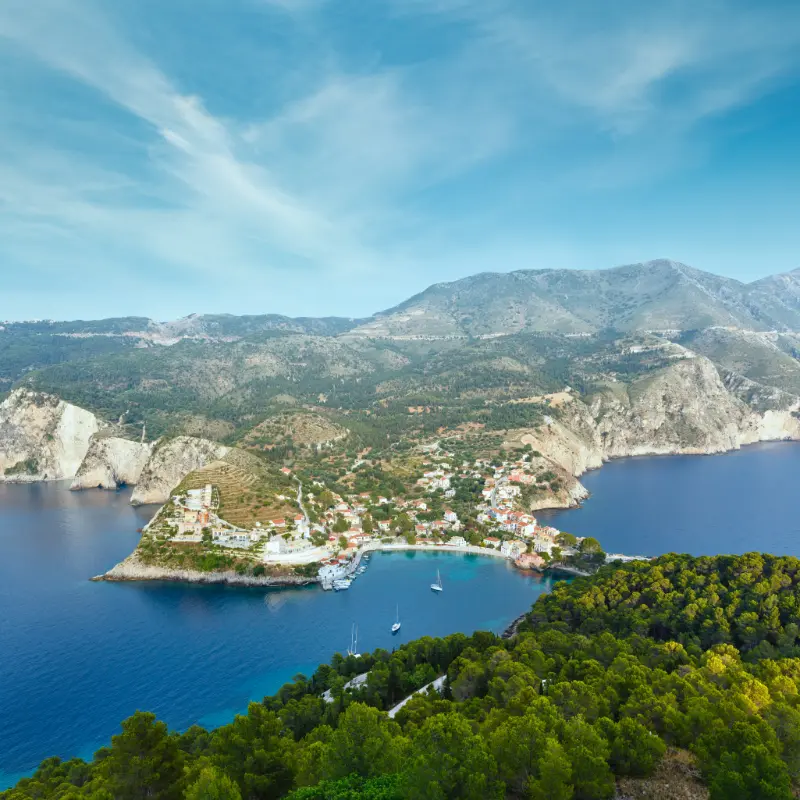
    Assos is one of the most photogenic villages on the island, built around a small bay beneath a Venetian fortress. The pastel houses and calm waterfront create a very different mood from Argostoli. Parking can be limited in high season, so arriving earlier makes the visit more pleasant.

    Walk toward the fortress if temperatures allow, then have lunch or swim in the bay. Assos is small; it is better enjoyed slowly than treated as a twenty-minute photo stop between Myrtos and Fiskardo.

    Fiskardo

    Fiskardo sits at the northern tip of Kefalonia and is known for its harbour, colourful buildings, yachts and preserved architecture. It feels more polished and cosmopolitan than many other villages. Dinner by the water can be lovely, but prices often reflect the location.

    The surrounding north coast also has small beaches and coves worth exploring. If you stay here, you gain quiet mornings and evenings after day visitors leave, but you are far from Argostoli and the airport.

    Melissani Cave Lake

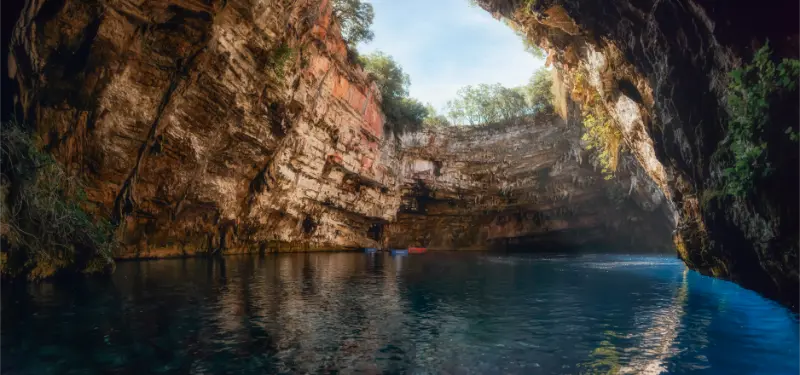
    Melissani is one of Kefalonia’s best-known natural attractions. Visitors enter the cave and take a short boat ride across the underground lake. When sunlight enters through the collapsed roof, the water can glow intensely blue. The visual effect depends on time, season and weather, so do not expect every visit to look identical to edited photographs.

    Queues can build in summer. Go earlier or accept that the visit may involve waiting. Combine Melissani with nearby Sami and Drogarati rather than driving across the island for one short boat ride.

    Drogarati Cave

    Drogarati offers a different underground experience, with a large chamber and formations developed over thousands of years. Steps and humidity make footwear important. The cave stays cooler than outside, which makes it a useful midday stop in summer.

    Pairing Drogarati and Melissani creates an easy half-day from Sami or Agia Efimia, leaving the afternoon for a beach.

    Melissani Cave Melissani Lake Near Sami Town Kefalonia Island Greece

    Mount Ainos

    Mount Ainos National Park gives Kefalonia a mountainous interior that many beach-focused visitors never see. The endemic Kefalonian fir is a defining feature of the landscape. Hiking conditions vary with weather and route, so use current trail information and do not treat mountain walks as casual beach detours.

    Even a drive through the higher roads can add variety to the trip. On clear days, views extend across the island and Ionian Sea.

    Where to stay

    **Argostoli and Lassi** are practical for first-time visitors, airport access and southern beaches. **Sami** or **Agia Efimia** suit travellers who want central access to caves, east-coast routes and ferries. **Assos** is romantic and small. **Fiskardo** works for a refined northern stay and sailing atmosphere. **Skala** in the southeast has a resort feel and a long beach.

    For seven nights, I like the idea of splitting the island: four nights around Argostoli or Lassi and three nights in the north or east. For four nights, one central base reduces packing and hotel changes.

    Driving in Kefalonia

    A car is the easiest way to see the island, but the roads demand patience. Mountain sections twist, villages narrow suddenly and goats may appear where you least expect them. Never build an itinerary around map-app driving times alone; add buffers and avoid planning multiple distant highlights every day.

    Fuel stations become less frequent away from the main towns. Refill before long northern or mountain days. Parking near famous beaches can be competitive in July and August.

    Beaches beyond Myrtos

    Kefalonia has enough coastline to match different preferences. Antisamos, near Sami, is a dramatic pebble beach backed by green hills. Makris Gialos near Lassi is convenient and organized. Petani on the western peninsula has a beautiful setting and can be combined with a drive through Paliki.

    View Assos Peninsula Greece Kefalonia

    Choose beaches according to wind and the day’s route. Driving an hour across the island for a single “best beach” is not always necessary when another excellent option is nearby.

    A seven-day Kefalonia itinerary

    Day 1: Argostoli and Lassi

    Settle in, walk the waterfront and spend the afternoon at a nearby beach. Keep the first day light after travel.

    Day 2: Myrtos and Assos

    Drive north early, stop at the Myrtos viewpoint and spend time at the beach if conditions are safe. Continue to Assos for lunch, swimming and the fortress walk.

    Day 3: Fiskardo and the north

    Explore Fiskardo, then choose one or two northern coves. Do not turn the day into constant driving; stay for dinner if you are comfortable returning later.

    Day 4: Melissani, Drogarati and Sami

    Visit the caves, have lunch in Sami and swim at Antisamos. This is one of the easiest days geographically.

    Day 5: Mount Ainos and villages

    Drive into the interior, add a short hike if conditions are suitable and stop in villages for lunch. Return to the coast in the late afternoon.

    Day 6: Paliki Peninsula or boat day

    Use the day for Petani and western villages, or choose a boat trip if you want a break from driving.

    Day 7: flexible beach day

    Repeat your favourite area, shop for local products and leave enough time for the airport or ferry.

    Kefalonia with children

    Families do well when they reduce daily driving. Choose accommodation near an easy beach, then plan only two or three full exploration days. The caves can be exciting for children, while Mount Ainos and village stops break up the beach routine.

    At exposed pebble beaches, check sea conditions carefully. A famous beach is not automatically the safest choice for young swimmers on a windy day.

    Food and Robola wine

    Kefalonia is associated with Robola wine, produced from a local grape variety on the island. Wineries and village tavernas can add a culinary dimension to a road trip. Local pies, cheeses, meat dishes and seafood all appear across menus.

    Antisamos Beach View Greece Kefalonia All People Identifiable

    If you visit wineries, designate a driver or use a tour. Road conditions are not the place to combine tastings with casual driving.

    Island hopping

    Kefalonia connects with nearby Ionian destinations by seasonal ferry routes, including links involving Lefkada, Ithaca and Zakynthos depending on current schedules. These routes can change year to year. Confirm the exact departure port because Kefalonia has several ports and they are not interchangeable.

    For a two-island trip, compare my Lefkada guide and Zakynthos guide.

    Best time to visit

    May and June offer green landscapes, pleasant sightseeing temperatures and lower demand. July and August have the most reliable summer atmosphere but also the strongest traffic around famous beaches. September remains warm and is one of my favourite periods for a road trip because the sea is still inviting.

    Common mistakes

    • Trying to drive the entire island every day.
    • Staying in one corner without checking distances to the sights you care about.
    • Treating Myrtos as safe in all sea conditions.
    • Booking ferry connections without confirming the correct port.
    • Underestimating how long mountain roads take.

    Frequently asked questions

    How many days do you need in Kefalonia?

    Five days is a good minimum; seven is much better for a balanced road trip with beach time.

    Do you need a car?

    A car is highly useful unless you plan to stay in one resort and use organized excursions. The island is large and major attractions are spread out.

    Which is better, Kefalonia or Corfu?

    Kefalonia feels more road-trip oriented and nature-focused; Corfu has a larger historic town and stronger Venetian urban character. See my Corfu guide for comparison.

    Is Myrtos sandy?

    It is primarily a pebble beach, and the sea can become deep and rough quickly in certain conditions.

    Why Kefalonia deserves a week

    Kefalonia rewards travellers who stop chasing a checklist. One day can be a dramatic cliff beach, the next a cave and village, the next a mountain road through fir forest. That variety only becomes relaxing when you give the island enough time. A week lets you drive less, swim more and remember places rather than parking lots.

  • Kea Travel Guide: Ioulida, Beaches, Hiking and a 5-Day Tzia Itinerary

    Kea Travel Guide: Ioulida, Beaches, Hiking and a 5-Day Tzia Itinerary

    Kea, often called Tzia, sits close to Attica but feels very different from the postcard stereotype of the Cyclades. Oak-covered slopes, stone paths, farm landscapes and a surprisingly serious hiking network make it one of the best islands for travellers who want more than beach time.

    This guide is designed for independent travellers who want a realistic pace. Instead of treating the destination as a collection of photo stops, the plan leaves time for beaches, meals, transport delays and the simple pleasure of returning to the same square or waterfront more than once.

    Why this destination is worth adding to a Greece trip

    Kea, often called Tzia, sits close to Attica but feels very different from the postcard stereotype of the Cyclades. Oak-covered slopes, stone paths, farm landscapes and a surprisingly serious hiking network make it one of the best islands for travellers who want more than beach time. It is particularly rewarding if you already know the most famous Greek destinations and want a trip with a stronger local rhythm.

    Kea Tzia Island Cyclades Greece Spathi Bay Beach Aerial Drone View

    The key is to match the destination to the right traveller. If your priority is nonstop nightlife, luxury shopping or a long list of major monuments, another Greek base may suit you better. If you value landscape, food, walking and days that are not over-scheduled, it can be an excellent choice.

    How to get there and plan the arrival

    Kea is normally reached by ferry from Lavrio, the port southeast of Athens. That makes airport-to-port planning different from a Piraeus departure. Leave a generous buffer if you are landing the same day, and check both the ferry schedule and ground transport before booking a tight connection.

    Ferry Boat Leaving Kea Tzia Island Port Greece Aerial Drone View

    I would avoid booking a tight international-flight-to-ferry or long-distance-bus connection on the same day. Greek transport is generally straightforward, but weather, traffic and seasonal timetables can turn an elegant spreadsheet into a stressful holiday. One buffer night is often worth more than an extra attraction.

    Where to stay

    Ioulida (Ioulis)

    The hilltop capital, best for stone lanes, evening atmosphere and access to the lion of kea. Choose this area if it matches the part of the trip you care about most; changing accommodation every night is rarely necessary.

    Korissia

    The main port and the simplest base for ferry logistics. Choose this area if it matches the part of the trip you care about most; changing accommodation every night is rarely necessary.

    Vourkari

    A polished waterfront village with restaurants, sailing activity and easy evening walks. Choose this area if it matches the part of the trip you care about most; changing accommodation every night is rarely necessary.

    Koundouros

    A beach-oriented southwest base that works best with a car. Choose this area if it matches the part of the trip you care about most; changing accommodation every night is rarely necessary.

    Otzias

    A northern bay useful for families and travellers wanting beach access without staying in the busiest harbour area. Choose this area if it matches the part of the trip you care about most; changing accommodation every night is rarely necessary.

    Best things to do

    Walk to the Lion of Kea

    The ancient stone lion near Ioulida is one of the island’s most distinctive landmarks and an easy way to combine village exploration with a short walk.

    Hike toward ancient Karthea

    Kea is exceptional in the Cyclades for walking. The official tourism organisation describes a network of twelve paths covering more than 80 kilometres, linking ancient cities, chapels, springs and coast.

    Spend an evening in Vourkari

    The small harbour is one of the best places to understand Kea’s sailing culture and is especially pleasant when day temperatures begin to fall.

    Explore Ioulida after dark

    Cars stay outside much of the traditional centre, so the capital becomes more atmospheric in the evening when you are not focused on reaching the next beach.

    Look beyond the surface at Kea’s maritime history

    The waters around the island include historically important wreck sites. Diving is specialised and regulated, but even non-divers can appreciate how strongly Kea’s identity is tied to the sea.

    Beaches and swimming

    Beach conditions in Greece are shaped by wind as much as by sunshine. A beach that is perfect one morning can be exposed the next day, so ask locally and keep an alternative coast in mind. Water shoes can be useful on pebbly entries, and shade should never be assumed.

    Koundouros

    One of the island’s best-known beach areas, with organised options and attractive coves. In July and August, arrive earlier if parking or limited shade is a concern.

    Otzias

    A broad bay that can work well for families. In July and August, arrive earlier if parking or limited shade is a concern.

    Gialiskari

    Convenient between korissia and vourkari. In July and August, arrive earlier if parking or limited shade is a concern.

    Greece Kea Tzia Island Vourkari Marina Gialiskari Village Aerial Drone View

    Spathi

    A more remote-looking option reached by a road that rewards careful driving. In July and August, arrive earlier if parking or limited shade is a concern.

    Getting around

    For a short stay, the best transport choice depends on where you sleep. Central bases reduce the need for a vehicle, while beaches, trailheads and scattered villages often make a rental car useful. Before renting, read our guide to renting a car in Greece and driving in Greece guide.

    Do not rent a scooter simply because it looks convenient. Wind, uneven road surfaces, heat and unfamiliar traffic can make two-wheel travel demanding. Use only a vehicle covered by your licence and insurance, wear proper protection and choose the slow option when conditions feel marginal.

    What and where to eat

    Kea has enough agricultural character that meals feel connected to the island rather than imported from a generic resort formula. Look for local cheeses, meat dishes, seasonal vegetables, honey and simple taverna cooking. Ioulida and Vourkari are particularly good for building dinner into an evening walk.

    A useful rule is to separate “view meals” from “food meals”. A waterfront table can be worth choosing for atmosphere, while a backstreet taverna may offer better value and a more local menu. Over several days, do both rather than expecting one restaurant to deliver every part of the experience.

    A realistic itinerary

    • Day 1: arrive at Korissia, settle in and spend the evening in Vourkari.
    • Day 2: explore Ioulida and walk to the Lion of Kea, then enjoy a nearby beach.
    • Day 3: dedicate the day to Koundouros and the southwest coast.
    • Day 4: hike one of the signed historic routes, ideally with Karthea as the main objective if conditions and fitness suit you.
    • Day 5: keep the morning flexible for Otzias or Gialiskari before returning to Lavrio.

    The itinerary is intentionally not packed from breakfast to midnight. Build in one slow period every day. In Greece, the memorable part is often the hour you did not schedule: a swim after the wind drops, a village coffee, or a longer dinner because the light is beautiful.

    Best time to visit

    Spring is especially appealing for hikers because the landscape is greener and temperatures are kinder. Early summer and September balance swimming with exploration. High summer works well for beaches but makes long exposed walks less comfortable, so start early and carry more water than you think you need.

    For any shoulder-season trip, verify accommodation, ferry or bus frequency and museum opening days before paying for non-refundable bookings. Small destinations can feel wonderfully local outside summer, but that also means fewer services designed specifically for visitors.

    Travelling without a car

    A car-free trip is possible if you choose a central base and accept that you will see less of the destination. Build days around walking, local buses, taxis and boats instead of trying to reproduce a driving itinerary. Our Greece without a car guide explains how to design the wider trip around that idea.

    Families, couples and solo travellers

    Families should prioritise simple transfers, shade and accommodation within walking distance of food. Couples often get more from a quieter village base and late dinners than from trying to visit every beach. Solo travellers benefit from staying near the main settlement, where transport and evening dining are easier without a car.

    For children, alternate sightseeing with swimming rather than scheduling several cultural stops in a row. For adults, remember that heat changes everyone’s patience and energy: a shorter plan executed comfortably is usually a better holiday than a “complete” itinerary completed exhausted.

    Budget planning

    The biggest variables are accommodation, vehicle rental and transport to the destination. Food can remain reasonable if you mix tavernas with bakeries and simple lunches. Book peak-summer rooms early, but compare cancellation terms rather than choosing the lowest headline price automatically. See our Greece on a budget guide for a broader strategy.

    What to pack

    Bring breathable clothing, strong sun protection, a reusable water bottle, swim shoes if you dislike rocky entries and at least one pair of footwear suitable for uneven lanes or trails. A light layer is useful on windy ferries and in shoulder season. For a complete checklist, use our Greece packing list.

    Responsible travel tips

    Water and waste management are real constraints in many Greek destinations. Use refillable bottles where safe, avoid unnecessary linen changes, never leave rubbish at remote coves, and stay on established paths in fragile landscapes. At archaeological and religious sites, follow local rules even when other visitors ignore them.

    Useful nearby guides

    If you are building a longer itinerary, these guides connect naturally with this destination: island-hopping guide, Cape Sounion guide, best Greek islands guide.

    For the wider trip, start with the Greece travel guide for first-time visitors and then use the 7-, 10- and 14-day Greece itineraries to keep transfer time realistic.

    Common mistakes to avoid

    • Trying to see every beach or village in one day instead of choosing a coherent area.
    • Assuming ferry, bus or museum schedules stay identical all year.
    • Underestimating heat, wind and the time needed for uphill walking.
    • Booking a rental vehicle before checking licence, insurance and parking conditions.
    • Leaving no flexibility for weather-dependent boat trips or outdoor plans.
    • Choosing accommodation only by price without checking how you will reach dinner, beaches and the departure port.

    Frequently asked questions

    Is Kea the same as Tzia?

    Yes. Tzia is the name commonly used by Greeks, while Kea is widely used internationally.

    Which port serves Kea?

    Lavrio is the key mainland gateway for most visitors, not central Piraeus.

    Do I need a car?

    A car greatly improves access to beaches, trailheads and scattered accommodation, although a short stay around Korissia, Vourkari and Ioulida can be managed more simply.

    Is Kea good for hiking?

    Yes. It has one of the most substantial historic path networks in the Cyclades, but summer heat makes early starts important.

    Final advice

    The best version of this trip is not the one with the most pins saved on a map. Choose a sensible base, protect the middle of the day from excessive driving or hiking, and leave enough space to repeat the places you genuinely enjoy. That slower rhythm is often what turns a Greece itinerary into a holiday rather than a logistical exercise.

  • Chora and Kapsali Kythira Guide: Castle, Twin Bays, Chytra and Where to Stay

    Chora and Kapsali Kythira Guide: Castle, Twin Bays, Chytra and Where to Stay

    Chora and Kapsali are the easiest places to understand Kythira’s south in one day. Chora sits above the coast with white lanes and a Venetian castle, while Kapsali spreads around two bays directly below. Together they combine the island’s strongest classic view, a practical swimming stop and one of the best evening atmospheres.

    I would not treat them as two separate sightseeing jobs. Start high in Chora when the lanes and castle are cooler, then descend to Kapsali for lunch, swimming and the late-afternoon light. If sea conditions cooperate, a boat trip toward Chytra adds a very different perspective on the coast.

    Quick planning summary

    QuestionPractical answer
    Best forChora And Kapsali Kythira travellers and first-time visitors
    Car needed?Very useful for broad island exploration; selected bases can work without one
    Best timingMorning and late afternoon for walking; beach or shade around midday in summer
    What to verifySeasonal hours, road access, wind and local transport close to the travel date

    Why Chora deserves more than a quick photo stop

    The official destination site describes Chora as the capital established in its present role during Venetian rule. The castle above the settlement was built in 1503 on earlier fortifications, and the lanes below combine Aegean forms with Venetian and later British influences. That mixture is exactly why I would walk rather than drive from one pinned sight to another.

    Chora has two principal squares and a compact network of churches, small shops and viewpoints. The best experience is unstructured: walk toward the castle, look back over the roofs, then return through side lanes rather than retracing the fastest route. Early morning gives clearer streets; late afternoon gives warmer light.

    The Venetian castle and the view over Kapsali

    The castle is the visual anchor of southern Kythira. From the ridge you understand how Chora, Kapsali and the sea fit together, and why the settlement was positioned above the coast. Wear shoes with grip because old stone can be polished and uneven, and check current access locally if you are travelling outside the main season.

    Do not rush the viewpoint. The twin bays of Kapsali, the surrounding hills and open sea are more useful for planning the rest of the day than a dozen map screenshots. On a clear afternoon, this is also one of the most satisfying places to watch the island change from bright midday colour to softer evening tones.

    Kapsali: twin bays, swimming and an easy evening

    Kapsali is the harbour settlement below Chora and is built around two photogenic bays. The waterfront has the practical ingredients most travellers want after sightseeing: swimming, cafés, restaurants and a promenade. It is one of the easiest places on Kythira to let the afternoon run without a strict plan.

    Kythira Island Greece Aerial Drone View Kapsali Twin Bay Coast Beach Village

    Families often find the organised parts of Kapsali easier than wilder coves because food and facilities are close. Conditions still matter, so judge the sea on the day. If you want a quieter swim, ask locally about nearby Sparagario and other small coves rather than assuming the main bay is the only option.

    Chytra islet and the sea cave

    One of the classic boat experiences from Kapsali heads toward Chytra, the rocky islet offshore. Local tourism information highlights the sea cave, where reflected light can create striking water colours when conditions are suitable. Boat trips are weather-dependent, so I would never schedule one immediately before a ferry departure or a fixed dinner reservation.

    Ask exactly what the trip includes: duration, swimming stop, shade, life jackets and whether the boat actually enters or only approaches the cave. Sea state determines what is possible, and responsible operators will change the plan when conditions are not safe.

    A realistic half-day and full-day plan

    For a half-day, arrive in Chora early, walk the castle and lanes, then move to Kapsali for lunch and a swim. For a full day, add a Chytra boat trip or a second nearby cove and stay through sunset. I would avoid adding Avlemonas or Mylopotamos to the same day unless you genuinely enjoy long driving loops.

    If you sleep in Chora, reverse the rhythm: use the beach earlier, return uphill to shower, then enjoy the capital after day-trippers have dispersed. If you sleep in Kapsali, the advantage is immediate sea access and a flatter evening routine, while Chora gives a quieter historical atmosphere.

    Where to stay: Chora or Kapsali?

    Choose Chora for atmosphere, architecture and cooler evenings; choose Kapsali for swimming, waterfront meals and an easier holiday rhythm. Couples often enjoy Chora’s lanes, while families and travellers who want to walk to the beach may prefer Kapsali. Neither is automatically better—the right choice depends on whether you want your first daily step to lead toward a castle or the sea.

    Before booking, check parking, stairs and the exact route from the room to restaurants. Some properties that look close on the map sit on a slope. If mobility matters, ask the host to describe the approach rather than relying only on distance.

    How Kythira changes the way you plan a Greek-island day

    Kythira is not a compact resort island where every attraction sits around one bay. Villages, beaches and historical sites are spread across a rugged landscape, so the best days normally focus on one side of the island rather than crossing from north to south several times. I plan mornings around one anchor place, add a nearby beach or village, and leave dinner close to wherever the afternoon naturally ends.

    The island also rewards flexibility. Wind can change which beach feels comfortable, a waterfall can be less dramatic after a dry period, and seasonal businesses do not all keep the same hours outside the busiest weeks. Treat the itinerary as a framework, not a contract. One unhurried village, one swim and one meaningful cultural stop often produce a better day than a long checklist.

    Driving, parking and realistic travel time

    Even when map distances look short, allow extra time for bends, village streets, parking and short walks from the road. Kythira is manageable by car, but it is not an island where I would schedule activities back-to-back. In popular places such as Chora, Kapsali, Kaladi or Mylopotamos, arriving earlier also makes parking and photography noticeably easier.

    If you rent a car, choose a vehicle you are comfortable using on narrow roads and never assume that every road to a remote beach has the same surface. Ask locally about the final approach before committing to an isolated cove, especially after unusual weather. For no-car travel, build the holiday around a strong base and use taxis or seasonal public transport selectively rather than trying to imitate a full road trip.

    Best season and daily rhythm

    Late spring and early autumn are especially attractive if walking, villages and archaeology matter as much as swimming. July and August deliver the warmest sea and the widest choice of seasonal services, but they also require earlier starts, more careful parking and a serious approach to shade and hydration. September is often a useful compromise for travellers who want warm water without the same daytime intensity.

    In summer, I keep exposed walks, castles and viewpoints for morning or late afternoon. Midday is better for a shaded lunch, a protected beach or a long break. Kythira’s most memorable places are often atmospheric rather than monumental, so giving them time is part of the experience rather than wasted schedule space.

    Food, water and what to carry

    Kythira is known for products such as thyme honey, local rusks and the aromatic Fatourada liqueur, but the practical food rule is simpler: eat where the day already takes you. A lunch in Mylopotamos, a waterfront meal in Kapsali or Avlemonas, and a village dinner in the north all make more sense than driving across the island for one saved restaurant pin.

    For remote beaches and trails, carry water, sun protection and at least a small snack. Some coves have seasonal facilities while others have none. I also keep swim shoes, a light shoulder cover for churches and monasteries, and an offline map on my phone. Small preparations matter more here than on an island built around organised beaches.

    Accessibility and slower travel

    Historic settlements, castle approaches, waterfall paths and rocky coves can involve steps or uneven ground. Travellers with limited mobility should ask accommodation hosts very specific questions about stairs, parking distance and the route to the nearest restaurant or beach. A beautiful room can be inconvenient if every outing begins with a steep climb.

    Slow travel works exceptionally well on Kythira. Staying longer in one area reduces driving and makes room for repeat swims, village cafés and weather changes. If you have only three nights, do less. With a week, divide the island into south, east, west/inland and north rather than changing hotels repeatedly.

    Common mistakes to avoid

    The most common mistake is underestimating how spread out the island feels. The second is treating every beach recommendation as suitable in every wind direction. Other avoidable errors include wearing sandals on rough trails, arriving at a cave or museum without checking seasonal hours, and assuming a waterfall will look identical in late August and after spring rain.

    I would also avoid booking accommodation solely on a low map price. Location affects almost every day on Kythira. A base with dinner, a swim and a useful road connection nearby can save enough driving and taxi time to be worth a slightly higher room rate.

    How this fits into a complete Kythira trip

    Use this guide as one part of a regional plan. The existing Kythira Travel Guide gives the island-wide overview, while the dedicated guides below let you plan the areas and travel styles in more detail. I would normally combine one cultural or walking focus with one beach area each day rather than criss-crossing the island.

    Continue planning with Chora and Kapsali Kythira Guide: Castle, Twin Bays, Chytra and Where to Stay; Avlemonas and Paleopolis Kythira Guide: Coves, History, Beaches and Where to Stay; Agia Pelagia Kythira Guide: Beaches, North Coast, Food and Where to Stay; Mylopotamos Kythira Guide: Kato Chora, Watermills, Waterfall and Village Life; Kythira Waterfalls and Caves Guide: Fonissa, Watermills and Agia Sophia; Best Beaches in Kythira: 15 Beaches for Families, Snorkelling and Wild Scenery; Kythira Hiking Guide: Best Kythera Trails, Gorges, Villages and Safety; Kythira Without a Car: Taxis, Buses, Transfers and the Best Bases; Kythira with Kids: Family Beaches, Easy Days and Practical Tips; Where to Stay in Kythira: Chora, Kapsali, Avlemonas, Agia Pelagia or Mylopotamos?.

    Kapsali Kythera Greece Aerial Drone Panorama Kythira Twin Bay Coast Harbor Beach Village

    Chora And Kapsali Kythira Guide FAQ

    Can I walk between Chora and Kapsali?

    There are walking routes between the two areas, including the signed M1 trail, but heat and elevation matter. In summer, use cooler hours.

    Is Chora worth visiting if I do not like museums?

    Yes. The castle, architecture, lanes and views are the main experience.

    Can I take a boat to Chytra from Kapsali?

    Seasonal boat trips are commonly offered when sea conditions allow. Confirm locally.

    Kapsali Bay Kithira Island Greece

    Which is better for families?

    Kapsali is usually easier for immediate beach access and meals, while Chora is stronger for atmosphere and history.

    How long do I need?

    A half-day covers the essentials; a full day allows a swim and boat trip without rushing.

    Useful official information

    For stable background information I use Visit Kythera – Chora and the official tourism information for Kapsali. Recheck boat departures, castle access and seasonal businesses shortly before the day you visit.

    Opening times, local road conditions, public transport, boat trips and seasonal businesses can change. Recheck anything time-sensitive shortly before you use it, especially outside July and August or after unusual weather.

  • Kalamata Old Town and Museums Guide: Castle, Archaeological Museum, 1821 History and a Walking Route

    Kalamata Old Town and Museums Guide: Castle, Archaeological Museum, 1821 History and a Walking Route

    Kalamata deserves more than a seafront evening. Its historic centre sits inland beneath the castle and contains the best concentration of museums, churches, squares and small streets for understanding the city’s identity. A focused Old Town day also works well when beach weather is poor or when you want a break from driving around Messinia.

    The easiest plan is to move downhill: start near the castle, walk through the historic centre, visit one or two museums, continue toward the central market or Aristomenous Street, then finish at the waterfront later in the day. This keeps the visit coherent rather than bouncing between isolated sights.

    Quick planning summary

    • Best cultural walking area in Kalamata
    • Archaeological Museum currently lists €10 admission
    • Visitor Center: Aristomenous 28
    • Allow most of a day if you include two museums

    Kalamata Castle and the upper Old Town

    The castle rises above the historic centre and gives useful orientation over the modern city and Messinian Gulf. The site has medieval layers associated with Frankish rule, but the hill’s history is older. Even when you are not doing a detailed castle study, the viewpoint explains Kalamata’s position between sea, plain and Taygetos.

    Opening access can vary with events and maintenance. Wear shoes suitable for uneven ground and avoid the hottest part of a summer day. The castle works best as the starting point for a downhill walk rather than a rushed add-on after hours on the seafront.

    23rd March Square and Agioi Apostoloi

    At 23rd March Square, the small Church of the Holy Apostles is closely tied to Kalamata’s memory of the Greek War of Independence. The official city tourism site presents the square and church as central symbols of the events of March 1821 and the city’s liberation.

    This is a place where modern cafés and historical memory overlap. Pause long enough to read the context rather than treating the church as a quick photograph. The surrounding lanes are among the best parts of the Old Town for a slow walk.

    Archaeological Museum of Messenia: the essential indoor stop

    The Archaeological Museum of Messenia occupies the reconstructed old municipal market building and organises its collection geographically: Kalamata, Messini, Trifylia and Pylos. That structure is ideal if your trip includes sites such as Ancient Messene, the Palace of Nestor, Peristeria or Thouria.

    Kalamata Marina Port Aerial Kalamata City Blue Long Beach Messenia Peloponnese Greece

    The official museum portal currently lists €10 admission. For the summer season it lists 08:00–20:00, with Tuesday 12:30–20:00; winter is 08:30–15:30 with Tuesday closed. Confirm before arrival because state-museum schedules can be adjusted.

    Historical and Folklore Museum

    The Historical and Folklore Museum in the Benakeion building focuses on local history, everyday life, costumes, tools, photographs and social traditions rather than monumental archaeology. It is a useful counterpoint to the Archaeological Museum.

    If you only have time for one museum, choose archaeology when your wider trip is site-heavy and folklore when you want to understand nineteenth- and twentieth-century local life. With a full day, the two work well together because they answer different questions.

    Ypapanti, Kalograion and the religious landscape

    Ypapanti Cathedral is the major religious landmark of the historic centre. Nearby, the Kalograion Monastery is associated with a silk-weaving tradition and the Kalamata silk scarf. These sites add craft and religious history to a walk otherwise dominated by archaeology and 1821.

    Remember that active religious sites are not simply museums. Dress respectfully, keep voices low and do not assume every part of a monastery is open to visitors.

    The Visitor Center and practical orientation

    Kalamata’s official visitor centre is in the Historic Town Hall at Aristomenous 28. The city lists free admission and Monday–Friday opening from 08:00–21:00, alongside maps, local-product displays and digital interpretation.

    It is worth stopping early in your stay, especially if you are planning day trips. Current local information about events, road conditions and seasonal museum changes is often more valuable than adding another generic attraction to your itinerary.

    A realistic one-day walking plan

    Start at the castle before the heat, descend through Ypapanti and the Old Town, spend late morning in the Archaeological Museum, then stop for lunch around the historic centre or market. Use the afternoon for the folklore museum, shopping or a break before heading to the seafront.

    This walking day pairs well with a separate beach day or with Ancient Thouria on another morning. See the full Kalamata and Messinia guide for broader transport, beaches and regional planning.

    Best time to visit

    For most of Messinia, May, June, September and early October give the best balance of warm weather, comfortable sightseeing and functioning seasonal services. July and August are ideal for beach-focused travel but bring stronger heat and heavier demand. Archaeological sites, gorges and hill towns are much easier early in the day during midsummer.

    Winter can be excellent for Kalamata, archaeology, food and quiet road trips, but some beach businesses, boat excursions and smaller visitor services operate on reduced schedules. Nature sites such as gorges require extra caution after heavy rain. Always let the actual forecast and local conditions override a fixed itinerary.

    Getting there and getting around

    Kalamata is the main transport hub for Messinia, with road connections to Athens and the rest of the Peloponnese. A car gives the greatest flexibility for beaches, archaeological sites and small villages because regional attractions are spread widely and public transport is not designed around a tourist circuit.

    Peloponnese Kalamata

    If you travel without a car, build the trip around one or two walkable bases and use intercity buses, local taxis or organised excursions selectively. Confirm the return journey before leaving for a remote site, and download maps for rural areas where signal can be inconsistent.

    How much time to allow

    Messinia rewards slower planning. Distances may look short, but castle walks, parking, mountain bends, beach stops and long meals add time. I prefer one major attraction plus one lighter stop in the same geographic area rather than crossing the region several times in a single day.

    For a broader regional trip, five to seven nights let you combine Kalamata, archaeology, Navarino/Pylos, one castle coast and either Messinian Mani or Trifylia without changing hotel every night. Shorter trips should choose one side of the region and accept that the rest belongs to a future visit.

    Where to stay

    Choose the base that matches the next morning rather than the most famous town name. Kalamata works for flights, museums and central/eastern Messinia; Pylos or Gialova suit Navarino and Voidokilia; Finikounda works for the south-west coast; Stoupa or Kardamyli are best for Messinian Mani; Kyparissia or Marathopoli reduce driving in Trifylia.

    Check current accommodation options

    Useful internal guides

    Continue planning with Kalamata and Messinia travel guide, Ancient Thouria Guide, Messinia Food Guide, Ancient Messene guide and Palace of Nestor and Chora Guide.

    Practical mistakes to avoid

    • Trying to combine attractions on opposite sides of Messinia because the straight-line distance looks short.
    • Trusting old museum hours, ticket prices, boat timetables or seasonal opening information without checking again.
    • Underestimating heat and sun exposure at archaeological sites, castles and beaches with little natural shade.
    • Parking in narrow village streets or on protected dune and wetland areas instead of using appropriate spaces.
    • Assuming every beach, gorge or archaeological site has water, toilets, lifeguards or staffed facilities.
    • Leaving a boat trip or weather-dependent activity as the only plan for the day without a realistic backup.

    Responsible travel

    Messinia combines active agricultural land, archaeological sites, wetlands, beaches, fishing villages and mountain landscapes. Stay on marked routes, never move archaeological material, protect dunes and nesting or wetland habitat, and treat working harbours and farms as workplaces rather than attractions staged for visitors.

    Spending locally is one of the simplest ways to improve the trip: buy from bakeries and producers, eat in village tavernas, use locally based guides when you need one and choose accommodation that keeps you close to the places you plan to explore.

    Frequently asked questions

    How much is the Archaeological Museum of Messenia?

    The official museum portal currently lists €10 admission. Check again before travel.

    What are the museum hours?

    The current official listing gives summer hours 08:00–20:00, with Tuesday 12:30–20:00; winter is 08:30–15:30 with Tuesday closed.

    Is Kalamata Old Town walkable?

    Yes, but the castle and upper streets involve slopes. A downhill route from the castle is the easiest way to organise the day.

    Where is the official visitor centre?

    At the Historic Town Hall, Aristomenous 28. The city currently lists free admission and weekday opening 08:00–21:00.

    Useful official and specialist sources

    For current details and deeper background, use Visit Kalamata – Old Town, Ministry of Culture – Archaeological Museum of Messenia, Visit Kalamata Visitor Center.

    Port Of Kalamata Marina Aerial View Of City Of Kalamata Long Beach Blue Messenia Peloponnese Greece

    For details that can change, I check an official source again shortly before travel. Museum and archaeological-site hours, seasonal boat trips, road access, water conditions and organised-beach services can all change after publication. Useful starting points are Visit Peloponnese – Messinia, Ephorate of Antiquities of Messenia and Hellenic Heritage.

    Final advice

    The strongest Messinia itineraries are regional rather than frantic. Build each day around one landscape — Kalamata and the plain, Navarino and the west coast, Trifylia, the castle coast or Messinian Mani — and let meals, swims and small discoveries fill the gaps instead of turning the journey into a checklist.

    That approach also makes the information in this guide more useful: opening hours and famous sights matter, but the quality of the trip is determined by how realistically you connect them.