Author: Jessica

  • Thessaloniki 3-Day Itinerary: History, Food, Ano Poli and the Waterfront

    Thessaloniki 3-Day Itinerary: History, Food, Ano Poli and the Waterfront

    Three days is an excellent amount of time for Thessaloniki. It is long enough to understand the city’s Roman, Byzantine, Ottoman, Jewish and modern layers without turning every hour into a sprint, yet short enough that you can stay central and do almost everything on foot or with a few simple metro/bus rides.

    The key is not to organise the itinerary by a random “top ten” list. Thessaloniki works better when each day has a geographic and historical logic. Day one focuses on the seafront and museums, day two on Roman and Byzantine central monuments, and day three on Ano Poli, markets, Jewish history and food. You can swap days for weather, but keep the clusters intact.

    Why this deserves a place in your Thessaloniki itinerary

    A three-day structure prevents the most common mistake: combining the White Tower, Ano Poli, two museums, several churches and Ladadika into one exhausting day because the map makes the centre look small. Distances are manageable, but museum time, heat and steep streets still matter.

    It also leaves room for the city’s strongest non-monument experiences—coffee, market browsing, long meals and the waterfront at sunset. Those pauses are not wasted time; they are part of the reason Thessaloniki feels different from a destination built around one archaeological zone.

    At a glance

    Best forFirst-time visitors, couples, food lovers and culture-focused city breaks
    Time neededThree full days plus arrival/departure time if possible
    Best timeSpring, early summer and autumn; year-round with weather adjustments
    AreaCentral Thessaloniki with one upper-city day
    Pair it withHalkidiki, Pella, Aigai, Mount Olympus or Kavala before/after

    What to see and focus on

    The itinerary is intentionally selective. It includes enough history to understand the city without making every day museum-heavy.

    • White Tower and seafront.
    • Archaeological Museum and Museum of Byzantine Culture.
    • Rotunda, Galerian Complex and Agios Dimitrios.
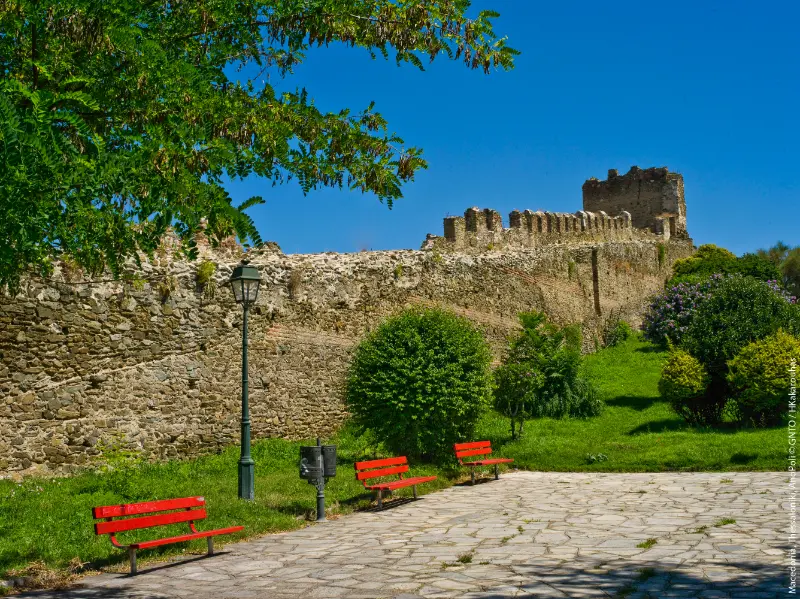
    • Ano Poli, walls and Heptapyrgion.
    • Kapani, Modiano, Ladadika and Jewish heritage context.

    How to think about Thessaloniki in three layers

    The first layer is the Roman and Byzantine city: Galerius, the Rotunda, churches, walls and museums. The second is the port and commercial city shaped by Ottoman rule, Jewish life, refugees and trade. The third is modern Thessaloniki—the waterfront, food, nightlife, universities and neighbourhood culture.

    Macedonia Thessaloniki Rotunda

    A good itinerary lets those layers overlap rather than assigning each one to a separate lecture. You can eat beside an Ottoman-era market after visiting a Byzantine church and end the same day by the modern waterfront. That coexistence is the city’s strength.

    Day 1: museums and the seafront

    Start at the Archaeological Museum while your concentration is fresh, then move to the Museum of Byzantine Culture if you enjoy museums. If two large museums feel excessive, choose one and give the saved time to the waterfront. Continue to the White Tower and walk the seafront toward sunset.

    Dinner can be in Ladadika if you want energy and convenience, or in a quieter central side street if you prefer a more relaxed first evening. Do not stay out too late if day two includes a full historical walk.

    A practical route that works

    Use this three-day sequence as a framework and adjust for opening days.

    1. Day 1: Archaeological Museum, Museum of Byzantine Culture or one of the two, White Tower and waterfront, Ladadika dinner.
    2. Day 2: Galerian Palace, Kamara, Rotunda, Agios Dimitrios, central coffee, optional Roman Agora and evening food in the centre.
    3. Day 3: Bus/taxi uphill to Heptapyrgion, descend through Ano Poli, visit Jewish Museum or central heritage sites, browse Kapani/Modiano and finish with a long meal.
    4. Optional evening: return to the seafront for sunset or drinks.
    5. If you have a fourth day, use it for Pella, Aigai, Halkidiki or Mount Olympus rather than adding more central monuments.

    Check Tuesday closures for several archaeological monuments before locking the order. If day two falls on a closure day, swap it with day one or three.

    How to get there and move around

    A central hotel around Aristotelous, the waterfront or the commercial centre keeps this itinerary simple. Most day-one and day-two sights are walkable, while Ano Poli is easier with transport uphill and walking downhill.

    Use the metro for cross-centre movement when useful, but do not overuse transport. Thessaloniki’s street life is part of the experience, and many distances are short enough that walking is faster than waiting.

    Best time of day and season

    Spring and autumn offer the easiest walking weather. Summer requires earlier starts, museum time during midday heat and a slower afternoon. Winter needs shorter outdoor blocks and more flexible plans around rain.

    If your trip includes a Sunday or Tuesday, check museum and monument schedules carefully. Different institutions follow different closure patterns, so one old timetable can distort the whole itinerary.

    Tickets, opening hours and 2026 planning

    Current 2026 visitor information lists the Archaeological Museum at €10 general admission, the Museum of Byzantine Culture at €10, the Rotunda at €10 and Heptapyrgion at €10. These are separate admissions and can change, so budget for the attractions you genuinely want rather than trying to enter everything.

    Use the official museum and Hellenic Heritage pages linked in the individual guides on this site for same-day confirmation. Thessaloniki has enough free public-space experiences that a good itinerary does not need to be ticket-heavy.

    Macedonia Thessaloniki Kamara

    Food and coffee nearby

    Build food into the geography. Have bougatsa or koulouri near the centre, use Kapani and Modiano during daytime, and save Ladadika for one evening rather than eating there every night.

    One long meal per day is usually enough. The rest can be coffee, pastry and small snacks, which leaves both time and appetite for the city.

    Is it worth it with children?

    With children, shorten the museum blocks and keep the waterfront as a daily reset. Day three’s upper-city slopes are much easier if you take transport uphill.

    Do not make children complete every church and museum. Choose one strong historical story each day and balance it with open space, food and rest.

    Accessibility and physical effort

    The flat waterfront and central museums are relatively easy. Ano Poli and fortress areas require more planning because of gradients, stairs and uneven paving.

    Travellers with limited mobility can adapt day three by using taxis between viewpoints and prioritising accessible museums and monuments in the lower city.

    How to combine it with the rest of Thessaloniki

    Use the detailed guides to adjust each day: Archaeological Museum, Museum of Byzantine Culture, Galerian Complex, Agios Dimitrios and Heptapyrgion.

    For food and neighbourhood rhythm, add Kapani and Modiano, Ladadika and the Thessaloniki food guide.

    Mistakes to avoid

    • Putting Ano Poli and two major museums on the same summer day.
    • Ignoring Tuesday closures.
    • Eating every dinner in Ladadika because it is famous.
    • Skipping the Jewish history of the city.
    • Treating the waterfront only as a route between attractions.

    Three days is enough only if you accept that you will not see everything. The goal is a coherent city experience, not a completed spreadsheet.

    A slower version of the visit

    A slower itinerary can remove one museum and one minor monument. Use that time for coffee in a neighbourhood, a longer lunch and a second waterfront walk after dark.

    If you fall in love with one period—Roman, Byzantine, Jewish or modern—follow that interest instead of returning to the master plan. A personal itinerary is better than a perfectly balanced one.

    Practical packing and small details

    • Comfortable shoes for long urban walks.
    • A light layer for museums and sea breeze.
    • Water bottle and sun protection.
    • Offline map.
    • A list of official opening pages saved on your phone.

    Travel light each day. Thessaloniki has cafés, shops and services everywhere in the centre, so there is no need to carry a heavy daypack.

    New Year In Thessaloniki Greece

    Responsible travel and local etiquette

    Respect active churches, memorial sites and residential areas in Ano Poli. Not every beautiful doorway or courtyard is a public attraction.

    Use public transport or walking rather than repeated short taxi rides when practical. The city is compact enough that low-impact movement is often the easiest option too.

    FAQ

    Is three days enough for Thessaloniki?

    Yes. Three full days are enough for the main museums, historic monuments, Ano Poli, markets, food and waterfront at a comfortable pace.

    Where should I stay?

    A central base near Aristotelous Square, the waterfront or the commercial centre makes this itinerary easiest.

    Do I need a car?

    No. A car is unnecessary inside central Thessaloniki and is more useful only for regional day trips.

    What should I do if museums are closed Tuesday?

    Swap the museum-heavy and outdoor-focused days after checking current official schedules.

    What is the best day trip after three days in the city?

    Pella, Aigai, Halkidiki, Mount Olympus or Kavala all work depending on your interests and transport.

    Final thoughts

    Three days lets Thessaloniki breathe. You can understand the history, eat well, climb into Ano Poli and still have time to walk by the sea without watching the clock.

    Keep each day geographically coherent, confirm opening hours and leave enough blank space for the city to surprise you.

    Continue planning with our new Thessaloniki guides: best day trips from Thessaloniki, Thessaloniki on a budget, solo travel in Thessaloniki.

  • Neos Marmaras Halkidiki Guide: Beaches, Parthenonas, Porto Carras and Where to Stay

    Neos Marmaras Halkidiki Guide: Beaches, Parthenonas, Porto Carras and Where to Stay

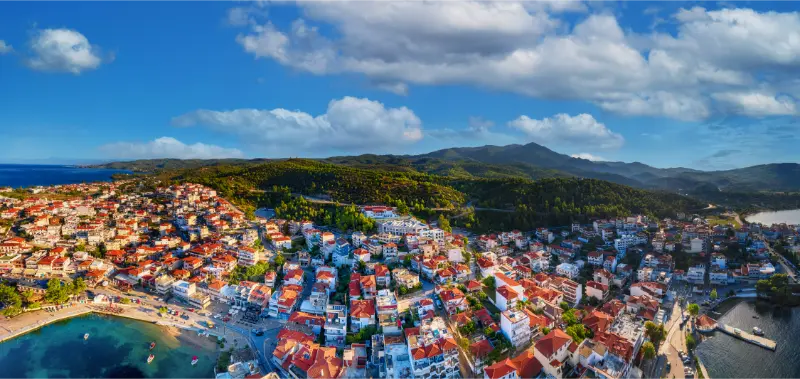
    Neos Marmaras is one of Sithonia’s largest and most cosmopolitan resort towns, built amphitheatrically around the coast with a harbour, beaches, restaurants and a broad range of accommodation. The official tourism portal notes that the settlement was founded in 1922 by refugees from the island of Marmara in Asia Minor and highlights its connection with the traditional mountain village of Parthenonas.

    For travellers who find tiny coves beautiful but logistically tiring, Neos Marmaras can be the solution. You can stay somewhere with supermarkets and evening life, then drive to quieter beaches by day. It also gives easy access to Porto Carras, vineyards, Kelyfos boat trips and sunset in Parthenonas.

    Why this Halkidiki stop is worth your time

    Choose Neos Marmaras if you want a full-service Sithonia base with more nightlife and dining than Nikiti or Vourvourou, while keeping good access to beaches. It works for couples, groups of friends and families who value practical services.

    Quick planning summary

    • Best season: late May to June and September for warm weather with easier parking and sightseeing.
    • Peak season: July and August bring the widest services but also the heaviest beach and road pressure.
    • Transport: a car is the easiest way to combine villages and beaches, while KTEL buses work best between larger settlements.
    • Trip style: choose one peninsula or one local cluster per day instead of trying to cross the whole region.
    • Safety: wind, heat, currents, roadside parking and forest-fire restrictions can change the best plan for a given day.
    • Variable information: recheck beach access, archaeological hours, boat departures and bus timetables shortly before travel.

    What to see and do

    Harbour and town

    The harbour is the natural starting point for evening walks and boat departures. The town is hilly, so accommodation location matters more than a simple distance number.

    Build time around this stop rather than squeezing it between several distant beaches. Halkidiki looks compact on a map, but summer traffic, parking and winding peninsula roads make a slower schedule far more enjoyable.

    Neos Marmaras Beach

    The main beach north of town is sandy and organised. The tourism portal describes gradual depth and some natural shade, which can make it family-friendly, though conditions always depend on wind and crowding.

    Build time around this stop rather than squeezing it between several distant beaches. Halkidiki looks compact on a map, but summer traffic, parking and winding peninsula roads make a slower schedule far more enjoyable.

    Neos Marmaras Chalkidiki Greece

    Parthenonas

    The restored traditional village in the hills above Neos Marmaras is one of the best sunset excursions in Sithonia. Visit late afternoon, walk the stone lanes and stay for dinner or a drink with views over Toroneos Gulf.

    Build time around this stop rather than squeezing it between several distant beaches. Halkidiki looks compact on a map, but summer traffic, parking and winding peninsula roads make a slower schedule far more enjoyable.

    Porto Carras area

    South of town, the Porto Carras area includes beaches, marina facilities and vineyards. Access conditions to individual resort facilities can change, so confirm before planning around a specific beach entrance or tasting.

    Build time around this stop rather than squeezing it between several distant beaches. Halkidiki looks compact on a map, but summer traffic, parking and winding peninsula roads make a slower schedule far more enjoyable.

    Kelyfos Island

    Kelyfos is the small rocky island offshore, often included in boat trips and snorkelling excursions. Choose a trip with realistic swimming time rather than a packed itinerary of distant stops.

    Build time around this stop rather than squeezing it between several distant beaches. Halkidiki looks compact on a map, but summer traffic, parking and winding peninsula roads make a slower schedule far more enjoyable.

    West Sithonia road trip

    Neos Marmaras is well placed for Lagomandra, Kalogria, Toroni and Porto Koufo. One or two beaches per day is enough; driving the entire peninsula just to tick boxes defeats the reason to stay here.

    Build time around this stop rather than squeezing it between several distant beaches. Halkidiki looks compact on a map, but summer traffic, parking and winding peninsula roads make a slower schedule far more enjoyable.

    A realistic itinerary

    • Day 1: explore town and harbour, swim at the main beach and stay local for dinner.
    • Day 2: morning beach south of town, afternoon wine or Porto Carras area, sunset in Parthenonas.
    • Day 3: choose a boat trip to Kelyfos or drive toward Toroni and Porto Koufo.

    This itinerary is intentionally conservative. If you have an extra day, repeat the beach or village you liked most rather than adding another two-hour return drive. A holiday here becomes much better once you stop treating every famous cove as mandatory.

    Where to stay

    Choose central town for nightlife and walking to restaurants, the beach side for easier swimming, or a property toward Porto Carras for resort-style space. Check elevation and parking: a short map distance can involve steep streets.

    Check the exact map position before booking. In Halkidiki, the same resort name can cover a surprisingly long stretch of coast. Also confirm parking, road gradient, air conditioning and whether restaurants are realistically walkable after dark.

    For accommodation, compare current options on Booking.com. Use map view and recent reviews, especially for noise, parking and beach access.

    Getting there and getting around

    A car is useful but not essential for staying in town. KTEL services connect Neos Marmaras, while boats operate seasonally. Drivers should be cautious after sunset on hill roads and avoid drinking if they plan to return from Parthenonas by car.

    Thessaloniki Airport is the main gateway for most international visitors. Visit Greece notes regular intercity KTEL connections to principal Halkidiki towns, but buses are easier for staying in one base than for visiting remote coves. If you drive, avoid illegal verge parking and never block forest or emergency access.

    Best time to visit

    June and September are the easiest all-round months for many travellers: the sea is usable, restaurants and excursions are active, and the most famous beaches are less pressured than in August. July and August are excellent for a classic summer holiday but require early starts for parking. May can be beautiful for walking and villages, while October becomes more weather-dependent.

    Wind direction matters. A beach that is perfect one day may be choppy the next, while a cove on the opposite side of a peninsula can be comfortable. Check a local marine forecast in the morning and be willing to change beaches.

    Food and local products

    The town has one of the broadest restaurant selections in Sithonia. Seafood is an obvious choice, but also look for local wine, honey and olive products. Parthenonas is a good place for a slower mountain-village dinner.

    Across Halkidiki, look for olives and olive oil, honey, local wine, seafood and simple grilled dishes. Inland villages add meat, pies and mountain produce. Ask what is local and seasonal rather than ordering the same tourist menu at every beach.

    Travelling with children

    Families benefit from supermarkets, pharmacies and organised beach options. The main consideration is hills; choose a lower location if you will push a stroller or make multiple beach trips each day.

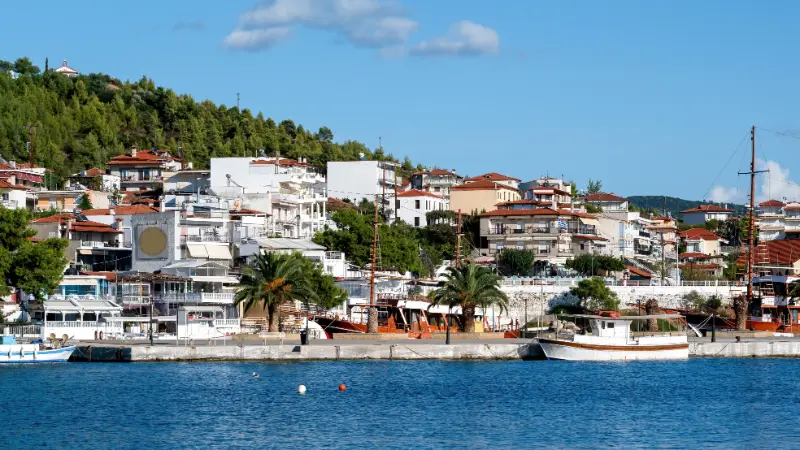
    Two Moored Sailboats Near Pier Neos Marmaras Buildings Hill With Multiple Greenery Greece

    For children, shade and access matter more than fame. Bring water shoes where rock entries are common, use reef-safe sun protection, and avoid the strongest midday sun. On long beach days, a nearby supermarket or taverna can be more valuable than one extra viewpoint.

    Costs and practical details

    The biggest cost differences come from accommodation style, beach clubs and car rental. Many beaches remain free to access, but organised sunbeds, parking, boat trips and resort facilities add up quickly. Carry some cash for small businesses and keep a little flexibility in the budget for a boat or activity that looks worthwhile once you arrive.

    How to connect this article with the rest of Halkidiki

    Continue planning with Sithonia guide; Nikiti guide; Sarti guide; Best beaches in Halkidiki. These pages are designed to work as one Halkidiki cluster rather than isolated guides.

    Common mistakes

    • Booking a room on a steep hill without realising the walking effort.
    • Skipping Parthenonas because it is not on the beach.
    • Assuming Porto Carras access and services never change.
    • Doing too many beach stops in one west-coast drive.
    • Choosing a boat trip without checking shade and swimming duration.

    Frequently asked questions

    How many nights should I stay?

    Three or four nights is a useful minimum for one peninsula or local cluster. A full week lets you split the trip between Kassandra and Sithonia or add the Mount Athos area without rushing.

    Do I need a rental car?

    Not for every trip, but a car is the most flexible choice for beaches. Without one, choose a larger base such as Nikiti, Sarti or Neos Marmaras and use buses, taxis and organised excursions selectively.

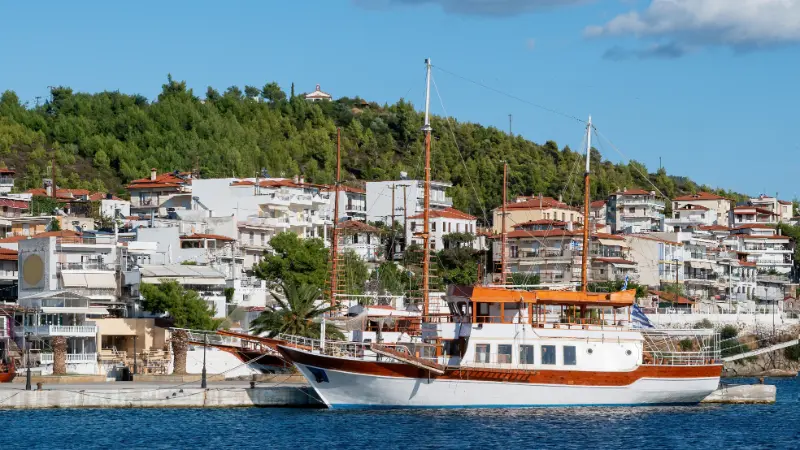
    Buildings Hill With Multiple Greenery Pier With Moored Boats Foreground Neos Marmaras Greece

    Is August too crowded?

    August is busy, but it is manageable if you start early, stay near the beaches you actually want and avoid driving across the region at peak times.

    Are beaches good for children?

    Many are excellent, especially shallow sandy options in Sani, Nikiti, Sarti and Paliouri. Tiny rock coves are beautiful but often less convenient for toddlers.

    What should I verify before the trip?

    Current KTEL schedules, boat departures, archaeological opening hours, beach or resort access, fire-risk restrictions and marine weather for the days you plan to swim or sail.

    Useful official source

    For information that may change, use Visit Halkidiki – Neos Marmaras village and recheck local access, opening hours and transport close to your travel date.

    Final advice

    The best Halkidiki trips are local rather than exhaustive. Pick a base that matches your style, arrive at famous beaches early, keep a second option for wind or parking, and leave enough time for a long lunch or sunset. The region becomes much more rewarding when you stop racing between the three peninsulas.

  • Imerovigli Santorini Guide: Caldera Views, Skaros Rock and Where to Stay

    Imerovigli Santorini Guide: Caldera Views, Skaros Rock and Where to Stay

    Imerovigli occupies one of the most dramatic positions on Santorini’s caldera rim. Visit Greece includes it among the island’s linear cliff-top settlements and calls it the “Balcony to the Aegean,” a nickname that makes sense once you see how directly the village faces the caldera. It is quieter than Fira and usually calmer than Oia, which makes it particularly attractive to couples and travellers who want views without constant street traffic.

    This guide is designed for travellers who want to use the area well rather than simply photograph it. For wider planning, keep Santorini Travel Guide, Fira to Oia Hike Guide, Oia Santorini Guide open in another tab so you can see how this stop fits into the rest of the trip.

    Why this place deserves its own guide

    A destination becomes much easier to enjoy when you understand its scale, the best time of day and the trade-offs between convenience and atmosphere. The most common planning error in Greece is not choosing the wrong attraction; it is stacking too many good places into one day. The sections below focus on the practical decisions that make the experience calmer, more flexible and more rewarding.

    What to see and do

    The caldera rim

    The main experience is simply walking the lanes along the rim. Hotels, churches and terraces are built into the slope, so viewpoints appear and disappear as you move. Respect private hotel spaces: the most photogenic terrace is often somebody’s room or restaurant table, not a public lookout. Public paths provide more than enough views without stepping onto private roofs or walls.

    Skaros Rock

    Skaros Rock is the village’s defining landmark. A path descends from Imerovigli and then climbs toward the rock, with exposed sections and many steps. The route feels harder on the return because you must regain the elevation you lost. Wear real shoes, carry water and avoid the hottest hours. The small Theoskepasti church beyond the main rock is rewarding, but the extra descent and climb should not be underestimated.

    Sunset without the Oia crush

    Imerovigli can be an excellent sunset base because the caldera-facing position gives wide views and the village does not funnel everyone into one tiny castle area. Exact visibility of the setting sun changes by season and by the orientation of your terrace or path, so do not assume every hotel room has a perfect sunset. Ask specifically when booking if direct sunset matters.

    The Fira–Oia trail

    The famous caldera hike passes through Imerovigli, making the village a practical starting or stopping point. Walking only the Fira–Imerovigli section is a good option for travellers who do not want the full hike. If you plan to continue to Oia, start early, carry more water than you think you need and remember that shade is limited once you leave the built-up villages.

    Churches and quiet lanes

    Small churches and whitewashed lanes give Imerovigli much of its character. The village rewards slow wandering in the morning, when delivery traffic and photo sessions are less intrusive. Unlike Fira, it has less conventional shopping, which is a strength if you want tranquillity but a limitation if you enjoy browsing shops late into the evening.

    Best time to visit

    May, June, September and early October offer a strong balance of weather and manageable crowds. July and August bring full services but also high accommodation prices and strong sun. Winter can be beautiful but many hotels and restaurants close. For Skaros or the Fira–Oia trail, early morning matters more than the month: exposed volcanic terrain can feel severe under midday sun.

    Whatever the month, use the weather you actually have. Strong wind, heat, rough sea or a local event can matter more than the seasonal average. On exposed walks, beaches and archaeological terrain, an early start often improves both comfort and photography. Keep one flexible block in the day so a delay does not force you to rush the experience you came for.

    How to get there and move around

    Imerovigli sits just north of Fira and is connected by road and bus, though schedules vary by season. Taxis and private transfers are useful with luggage because caldera hotels can involve steps that vehicles cannot reach. If you arrive by bus, confirm the exact stop and walking route to your hotel. On foot, Fira is close enough for a scenic walk, but luggage changes the equation completely.

    Do not judge transport only by kilometres. Island roads, central-city traffic, parking searches and walking access can turn a short map distance into a much longer transfer. When public transport is part of your plan, recheck the current timetable close to travel day. When driving, save the parking point in advance and avoid entering pedestrian lanes simply because navigation software suggests the shortest line.

    Where to stay

    Stay on or near the caldera rim if the view is the main reason you chose Imerovigli, but understand that dramatic hotels often involve stairs. Inland rooms can offer better value and easier vehicle access. Couples usually appreciate the quiet; travellers who want bars, late shopping and constant activity may prefer Fira. Families should check pool barriers, cliff-edge terraces and stair access carefully before booking.

    Before booking, zoom in on the exact property location rather than trusting the neighbourhood name. Check stairs, road access, bus stops, late-night noise and the walk back after dinner. A room that looks only 500 metres from a beach or landmark can feel very different when the route is steep, unlit or exposed to traffic. Location should support the way you actually plan to spend your days.

    Food and evening atmosphere

    Imerovigli has excellent restaurants, including many with caldera views, but dining here can be expensive. Reserve sunset tables well ahead in high season if the view matters. For more casual variety, walk or take a short ride to Fira. A smart approach is to choose one special caldera dinner and keep the rest flexible rather than paying a view premium for every meal.

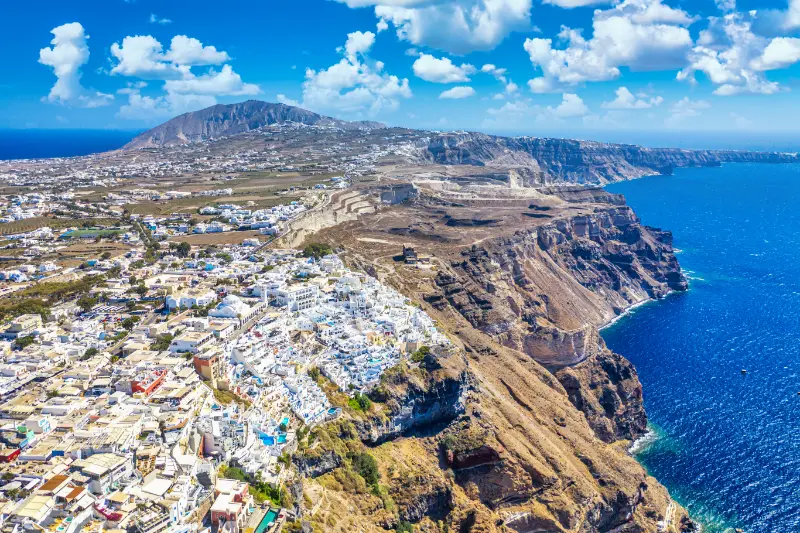
    Aerial View Imerovigli Village Santorini Island Greece

    Greek travel is better when meals are given enough time. Avoid planning dinner as a 45-minute gap between attractions. Sit down after the hottest part of the day, order at the pace of the place and keep room for an unplanned walk afterwards. In heavily visited areas, moving one or two streets away from the obvious viewpoint often changes both prices and atmosphere.

    A realistic one-day plan

    Arrive or wake early, walk the caldera lanes and tackle Skaros before the heat builds. Return for a long breakfast or lunch and rest during the brightest part of the day. In late afternoon, walk part of the trail toward Firostefani or settle at a public viewpoint. Have dinner locally and enjoy the village after day visitors leave. On the next morning, start the full Fira–Oia hike or transfer elsewhere on the island.

    Build the day around one priority and one secondary activity. If the priority takes longer, drop the secondary stop without regret. This is especially important on islands, where parking, buses, wind or heat can alter timing. A good itinerary should survive a 30-minute delay without collapsing into stress.

    Families, mobility and accessibility

    Families should plan around shade, toilets, meal timing and realistic walking stamina rather than adult sightseeing speed. For travellers with reduced mobility, accessibility varies sharply between modern promenades and historic lanes, rocky beaches or stair-heavy villages. Contact accommodation or the relevant site directly if step-free access is essential; generic labels such as “easy walk” are not precise enough for important mobility decisions.

    Common mistakes to avoid

    • Booking a “caldera view” without confirming sunset orientation
    • Attempting Skaros in flip-flops
    • Underestimating the uphill return from the rock
    • Expecting Fira-level nightlife and shopping
    • Dragging heavy luggage down long stairways without arranging hotel assistance

    Most of these mistakes come from the same habit: planning from a map without considering how the place behaves in real life. A few minutes spent checking terrain, weather, parking and current access rules can save hours of frustration. Keep screenshots of essential transport information, but do not rely on an old screenshot when conditions or seasonal schedules may have changed.

    What to combine with it

    Use Imerovigli with Santorini Travel Guide, Fira to Oia Hike Guide and Oia Santorini Guide to decide whether you want a quiet caldera base or a busier village.

    Panorama Imerovigli Santorini Greece

    Try to combine places that sit naturally on the same route. Crossing an island twice in one day or zigzagging through central Athens wastes energy that could be spent walking, swimming or eating. If two attractions pull you in opposite directions, split them across separate days even if a map makes them look close.

    FAQ

    How much time should I allow?

    A focused visit usually needs at least half a day once transport, walking, breaks and a meal are included. If this is one of your main priorities, protect most of a day instead of squeezing it between two distant attractions.

    Do I need a rental car?

    Not always. Central Athens neighbourhoods and well-connected island resorts can work very well without a car, while rural viewpoints and multi-stop island days are easier with one. Rent only for the days when it adds real flexibility.

    Is it suitable for families?

    Usually yes, but the right version of the day depends on age, heat and terrain. Beach facilities, shaded breaks and shorter walks matter more with young children than completing every viewpoint or monument.

    Should I book in advance?

    Book accommodation and high-demand experiences early in peak season. Ordinary walks and beaches generally do not need reservations, but organised loungers, popular restaurants, boat trips and guided visits can fill up.

    Can I trust old prices and timetables?

    No. Transport frequency, ticket systems, road access and seasonal services can change. Check official or local information shortly before the visit, especially if the entire day depends on one bus, boat or opening window.

    Final advice

    Use this guide as a framework rather than a timetable you must obey minute by minute. The best travel days in Greece usually have a clear structure but enough empty space for a longer swim, an unexpected church, a café you like or a sunset that convinces you not to move. Plan the logistics carefully, then give the place room to surprise you.

    More Santorini in-depth guides

    Continue planning Santorini with Fira to Oia Hike Santorini Guide; Firostefani Santorini Guide; Emporio Santorini Guide; Megalochori Santorini Guide; Vlychada Santorini Guide; Museum of Prehistoric Thera Guide; Best Beaches in Santorini; Santorini Without a Car; Santorini with Kids; Santorini 4-Day Itinerary.

  • Kimolos Day Trip from Milos: Pollonia Ferry, Chorio, Prassa and a Realistic Plan

    Kimolos Day Trip from Milos: Pollonia Ferry, Chorio, Prassa and a Realistic Plan

    Kimolos is close enough to Milos to tempt almost every traveller into a day trip, especially if they are staying in Pollonia. The islands are neighbours, but the best day is not created by cramming every famous beach and village into a few hours. Kimolos is small, quiet and best experienced with enough buffer around the boat connection to avoid turning the return journey into the main memory.

    I would choose a day trip if you already have at least four or five nights on Milos and want a contrast in pace. If you have only two or three nights on Milos, there is already more than enough to see without adding another island. If Kimolos itself is a major interest, staying overnight is much better than treating it as a side excursion.

    For the bigger picture, start with my Milos Travel Guide. Milos is easiest to enjoy when each day follows geography and wind rather than a rigid checklist, so this article focuses only on the details that matter for this particular stop.

    Quick planning facts

    • Pollonia is the usual Milos-side departure area for the short local connection toward Kimolos.
    • Boat schedules vary by season, weather and operator; confirm the same day.
    • Chorio is the main settlement on Kimolos and deserves time beyond a quick transfer.
    • Prassa is one of the island’s best-known beaches, but reaching it depends on transport and road conditions.
    • A day trip needs a generous return buffer because small-vessel services are weather-sensitive.

    Why this place is worth adding to a Milos itinerary

    Milos rewards travellers who separate sightseeing from beach time. A morning archaeological visit, a slow village evening or one carefully chosen cove usually works better than trying to fit four corners of the island into the same day. Roads are not long in absolute distance, but parking, wind, heat and narrow approaches can make a packed schedule feel much more demanding than it looks on a map.

    The other reason to plan selectively is that Milos changes character from coast to coast. The north can be dramatically exposed when the meltemi blows, while the south may be calmer; a village can feel almost empty at midday and crowded at sunset; a tiny harbour that looks like a ten-minute stop can become the place where you want to sit for an hour. Use the weather and your own energy as planning tools.

    What to see and what to pay attention to

    The crossing

    The short sea crossing is part of the appeal, but never build a zero-margin itinerary around the final boat if you have a flight or major ferry later the same day.

    Chorio

    The main village is worth a slow walk through lanes, small churches and squares. Have coffee or lunch rather than treating it only as a transit point.

    Beach choice

    Choose one beach rather than chasing three. Prassa is famous, but a closer option can produce a better day if transport timing is awkward.

    Scooter, car or local transfer

    Your best transport depends on season and confidence. A day trip becomes inefficient if most of it is spent waiting for a vehicle or searching for parking.

    Why an overnight can be better

    Staying one night lets you experience Chorio after day visitors leave and removes pressure from the return connection. For slow travellers, that can be worth more than another Milos beach.

    A realistic way to structure the visit

    Take an early connection from Pollonia if available, go first to Chorio, then choose one beach or coastal area for the middle of the day. Return to the port with a generous buffer and avoid booking a critical onward ferry from Adamas immediately after your Kimolos return. If schedules look unreliable or wind is increasing, simplify the day rather than gambling on the final boat.

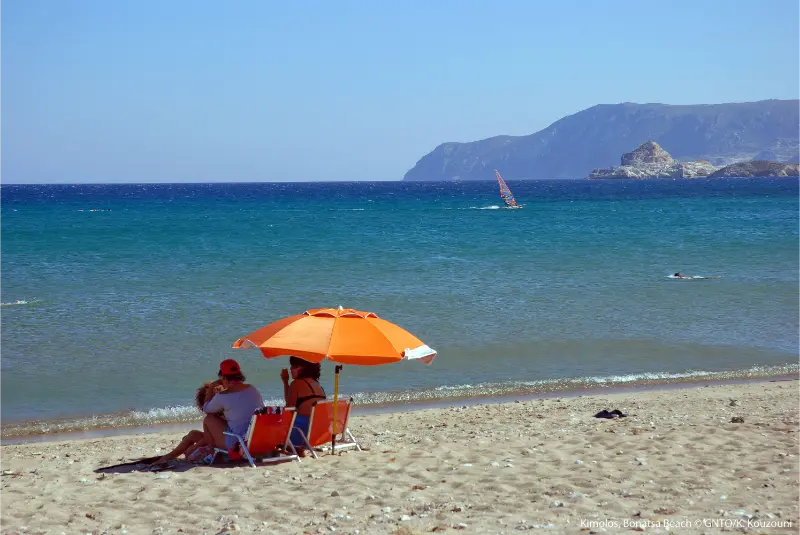
    Kimolos Bonatsa Beach

    I would keep at least one flexible block in every two days on Milos. Wind can cancel or reroute boat trips, parking can become difficult at famous beaches, and you may simply discover that one place deserves more time than expected. A flexible afternoon lets you swap a north-coast stop for the south, move a sunset village to another day or take a longer lunch without breaking the entire itinerary.

    Getting there and transport

    Reach Pollonia from your Milos accommodation with enough time for parking or bus delays. Confirm exactly where the boat departs and how tickets are handled. On Kimolos, pre-plan whether you will walk, use local transport or rent a vehicle; availability can be limited in peak periods.

    If transport is a major concern, also use my Greece ferry guide for inter-island planning and the Greek island-hopping guide if Milos is part of a longer Cyclades route. Ferry times, local bus frequency and excursion departures are seasonal, so always verify the current timetable rather than relying on a screenshot from an older trip.

    Who this is best for

    The day trip is best for travellers with a longer Milos stay, island-hopping fans and anyone curious about a quieter Cycladic atmosphere. It is not ideal on a tight two-day Milos itinerary or immediately before a flight.

    Best time of day and season

    June and September are often excellent for balancing warm sea temperatures with slightly less pressure than peak August, while May and October can be very rewarding for walking and villages if your priority is not guaranteed beach weather. In July and August, start exposed walks and archaeological sites early, keep midday for swimming or shade, and approach sunset hotspots with extra parking time. Outside the main season, confirm restaurants, buses and visitor sites before building a day around them.

    Wind matters as much as temperature. Milos is an Aegean island, and the same beach can look completely different on two consecutive days. Check a reliable marine forecast, ask locally and move to a more sheltered coast when needed. This is especially important for cliff-backed coves and boat excursions, where rough sea or falling material can create genuine safety issues.

    Parking, roads and practical comfort

    Do not underestimate short island drives. The main roads are manageable, but final approaches to fishing villages and beaches can be narrow, dusty or crowded. Park legally even if it means walking farther, never block turning space, and avoid taking a rental vehicle onto tracks your contract excludes. Carry water, sun protection and secure footwear in the car so a spontaneous stop does not become uncomfortable.

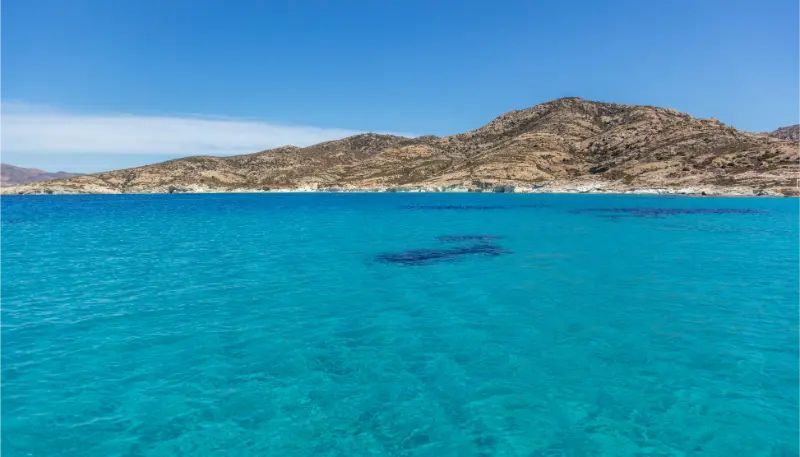
    Cyclades Islands Kimolos Coastline Clear Transparent Water Greece

    If you travel without a car, base selection becomes more important. Adamas gives the strongest transport flexibility, while Pollonia is convenient for Kimolos and north-east Milos. Taxis are useful for sunset evenings when parking pressure is high, but availability can tighten in summer, so arrange important rides in advance rather than assuming a car will appear immediately.

    Food, water and a slower rhythm

    One of the easiest ways to improve a Milos itinerary is to stop treating meals as interruptions. Villages such as Plaka, Pollonia and Adamas are more enjoyable when you sit down before you are exhausted. Carry water to beaches and archaeological sites, but use lunch or an early dinner as a deliberate rest period. Local dishes, cheeses, pies and seafood can vary by restaurant and season, so ask what is genuinely available rather than ordering only from a pre-made online list.

    Photography without making the trip miserable

    The island photographs beautifully because volcanic rock, white villages and blue water create strong contrast, but the best light often comes with the biggest crowds. Arrive early or stay later instead of fighting for the same viewpoint. Never cross barriers, climb unstable cliffs or enter private terraces for a marginally better angle. At fishing villages, remember that coloured doors and waterfront steps may belong to somebody’s home or working space.

    Common mistakes to avoid

    • Planning the island as if every famous beach must be visited regardless of wind.
    • Arriving at sunset hotspots at the last minute and expecting easy parking.
    • Wearing flip-flops for archaeological paths, steep village steps or difficult beach access.
    • Treating small fishing settlements as photo sets instead of residential places.
    • Booking a critical onward ferry immediately after a weather-sensitive boat excursion.
    • Trying to combine the far west, north coast and south coast in one rushed day.

    What to combine nearby

    Depending on your route, useful related guides include Sarakiniko Beach guide, Kleftiko boat trip guide, Kimolos Travel Guide. The goal is not to do all of them together, but to group stops by geography and weather so you spend more time experiencing Milos and less time driving back and forth.

    Current information and official sources

    For details that can change—opening hours, admission, access restrictions or local notices—check the official source used for this guide shortly before your visit. Milos is a living island, not a static attraction, and weather or operational changes can matter more than what any travel article said months earlier.

    Frequently asked questions

    Can you visit Kimolos as a day trip from Milos?

    Yes, commonly from Pollonia, but the exact schedule must be checked for your date and weather.

    Kimolos Greece

    How much time do you need?

    A full day is much better than a rushed half-day because you need buffer around the boat crossing.

    Should you take a car?

    It can help, but vehicle transport and rental logistics vary. For a simple day, local transport plus one beach may be easier.

    Is Prassa essential?

    No. It is beautiful, but a day trip should not become stressful just to reach one beach.

    When should you stay overnight instead?

    Stay overnight if you want slow village evenings, multiple beaches or a less schedule-dependent experience. See the full Kimolos guide for a longer plan.

    Final thoughts

    Kimolos Day Trip from Milos works best when you give it a clear role in the day instead of squeezing it between unrelated stops. Build around one main experience, leave room for weather and parking changes, and keep the pace slow enough to notice why Milos feels different from the other Cyclades.

    That approach also keeps the site more useful for future trips: one day can be geology and beaches, another archaeology and villages, another a boat trip, and another Kimolos or the quieter north-east. Milos does not need to be conquered in a checklist. It rewards travellers who let the island’s wind, landscape and small settlements shape the route.

    If your day trip makes you want to stay longer, continue with our where to stay in Kimolos, Kimolos beaches guide and 2026 Kimolos ferry guide.

  • Santorini with Kids: Best Bases, Easy Beaches, Activities and Family Tips

    Santorini with Kids: Best Bases, Easy Beaches, Activities and Family Tips

    Santorini can work very well with children, but it is not the Greek island I would call automatically easy for every family. Caldera villages involve stairs, cliff edges, narrow lanes and hotels designed around views rather than strollers. The beaches are volcanic rather than soft pale sand. Once you plan around those realities, however, families can combine archaeology, swimming, boat views, villages and short walks without needing to copy an adult honeymoon itinerary.

    The most important family decision is accommodation. A beautiful cliff hotel with 80 steps may be memorable for the wrong reasons with a toddler. A beach base in Kamari or Perissa can simplify everyday life, while Fira is useful for older children because transport and museums are close. This guide focuses on reducing friction rather than adding more attractions.

    For the wider island picture, keep the Santorini travel guide open alongside this page. The Oia guide, Fira guide, Akrotiri guide, Imerovigli guide and Santorini wine guide cover the main places and experiences in more depth, so you can build a route without repeating the same stops.

    Best Santorini bases for families

    BaseWhy families like itWatch for
    KamariFlat seafront, restaurants, beach, easy daily routineAirport-side location; beach pebbles/black sand.
    PerissaLong beach, space, food, relaxed staysTravel to caldera sights usually goes through Fira.
    FiraBuses, museums, restaurants, central locationCrowds, stairs and traffic around the centre.
    FirostefaniQuieter than Fira with caldera accessHotel stairs and cliff-edge layouts.
    OiaIconic scenery and special staysCrowds, steps, high prices and limited stroller convenience.

    Why Kamari and Perissa are often easiest

    A beach-side base removes the need to organise a major excursion every day. Children can swim in the morning, rest at the hotel, eat nearby and go out again later. The Kamari and Perissa guide compares the two areas. Bring water shoes because dark volcanic sand and pebbles can become hot and uncomfortable.

    Caldera hotels: questions to ask before booking

    • How many steps are there from the road/drop-off point to the room?
    • Are terrace walls high enough for young children?
    • Is the plunge pool private, gated or directly accessible from the room?
    • Can a stroller reach reception?
    • Does the hotel accept children of your age? Some romantic properties are adults-only.
    • Is porter help available for luggage and pushchairs?

    Akrotiri with children

    Akrotiri is one of the best major sights for school-age children because the archaeological site is protected by a large roof, creating more shade than an exposed ruin. Streets and buildings make it easier to imagine a real town than a field of foundations. Keep explanations simple: this was a Bronze Age settlement preserved by volcanic material, and many objects are now displayed in Fira.

    Pair the site with the Museum of Prehistoric Thera either before or afterward. The wall paintings are colourful and visually accessible, and the indoor museum makes a good midday activity when the beach sun becomes intense.

    Panoramic View Oia Village With Traditional White Architecture Windmills Santorini Island Aegean Sea Sunset Santorini Thera Greece

    Best beaches for families

    Perissa, parts of Perivolos and Monolithos are sensible starting points, but the best family beach is the one with manageable sea conditions on the day. Wind can change comfort quickly. Look for toilets, shade, easy food and a water entry that suits your children rather than chasing the most photographed beach.

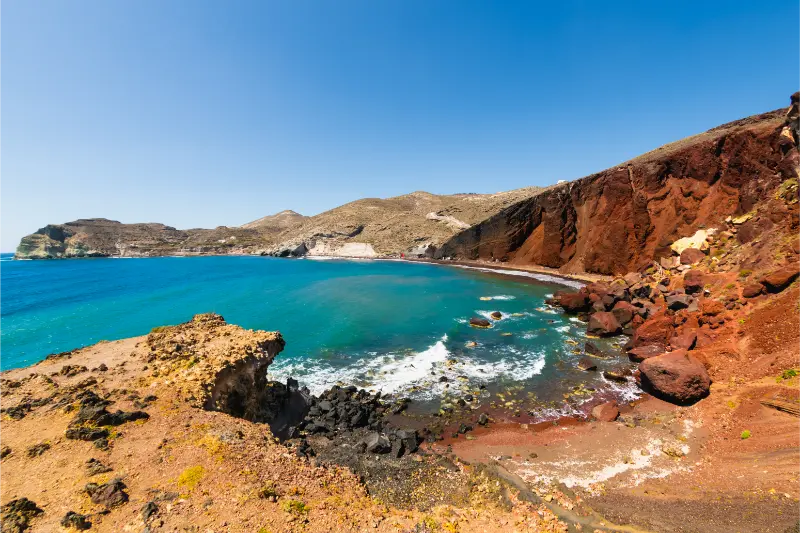
    I would not make Red Beach the centre of a young-child beach day. The area is famous for geology, but rockfall risk and access conditions require caution. Follow current signs and restrictions. For a relaxed swim, use a more straightforward organised beach.

    Boat trips with children

    A caldera cruise can be memorable for older children who are comfortable on boats. Before booking, check boat size, shade, toilet facilities, swim-stop depth, life jackets and how passengers board. A “sunset cruise” can return late for younger children, so a daytime sailing may be easier.

    Families prone to seasickness should pay attention to wind forecasts and ask the operator about cancellation or rescheduling policies. The Aegean can be lively even when the sky is clear.

    The Fira to Oia hike: family version

    The full hike is long, exposed and largely unshaded, so I would reserve it for older children who genuinely enjoy walking. With younger children, use the Fira–Firostefani–Imerovigli section instead. You get dramatic views, can stop for snacks and have multiple exit points. See the Fira to Oia hike guide for distances and heat considerations.

    Vlychada and the Tomato Industrial Museum

    This is one of my favourite family combinations. The beach has extraordinary volcanic cliffs, while the Tomato Industrial Museum in Vlychada offers an indoor cultural stop with machinery, audiovisual stories and a more hands-on industrial theme. The museum states that its areas are accessible to strollers and wheelchairs.

    Buses, car seats and transport

    Families can use KTEL buses for simple routes, especially if staying in Fira, Kamari or Perissa. For airport and ferry transfers with younger children, pre-booking a vehicle that can provide an appropriate child seat may be worth the cost. Always request the seat explicitly; do not assume one will appear automatically.

    If renting a car, reserve child seats in advance and inspect them before leaving. Santorini roads can be busy and parking around famous villages stressful, so renting a car for only one or two days may be enough.

    Heat strategy for families

    The difference between a good and bad family day is often timing. Do outdoor sightseeing early, return to the hotel or museum around midday and resume activities later. Children dehydrate quickly, and dark beaches reflect heat. Carry water, hats and sunscreen even for “short” village walks.

    A realistic 4-day family plan

    1. Day 1: settle into Kamari/Perissa or Fira, keep the first afternoon local and easy.
    2. Day 2: Akrotiri in the morning, lunch and a simple beach afternoon.
    3. Day 3: Fira + Museum of Prehistoric Thera, then short caldera walk to Firostefani.
    4. Day 4: choose either a family-friendly boat trip or Oia early in the day, not both if the children are tired.

    Food with children

    Greek tavernas are generally easy for families because meals can be shared. Grilled meats, potatoes, pasta, bread, yogurt, fruit and simple fish dishes provide familiar options alongside local foods. Dinner often starts later than young children prefer, so choose an early seating and do not plan a long sunset dinner after an exhausting sightseeing day.

    Tours and family activities

    Private or small-group tours can be useful when they reduce transfers and waiting. Choose tours with realistic durations and clear pickup arrangements. A shorter archaeology-and-village tour may be better than a 10-hour island marathon, especially for children who need breaks.

    Nap and rest planning

    Young children rarely care that Santorini is expensive enough to justify full-day sightseeing. Protect their normal rest window. A hotel near the beach or in Fira makes it much easier to return for a nap than a remote cliff property reached by long stairs.

    Strollers versus baby carriers

    A stroller is useful on flatter promenades in Kamari and some parts of Fira, but stairs and uneven lanes make a baby carrier more practical in Oia, Imerovigli and older villages. Families with both often have the most flexibility.

    Teaching children about the volcano

    Use the landscape itself: point out dark beach material, caldera cliffs and the islands inside the caldera, then connect those features to Akrotiri and the museum. Turning geology into a simple story can make the trip more engaging than presenting monuments as isolated stops.

    Santorini Greece Panorama With Skaros Rock Caldera Blue Sea Volcano Island

    One final practical planning note

    Before finalising the day, recheck transport, weather and any seasonal opening information for your exact travel date. Santorini changes character dramatically between spring, peak summer and late autumn: buses run at different frequencies, restaurants and beach services may alter their hours, and strong wind can make a plan that looked perfect on paper uncomfortable in practice. Build a little spare time between major stops, carry water, and avoid treating short driving distances as proof that you can fit unlimited sightseeing into one day. The most enjoyable Santorini itineraries leave enough room to stop for a meal, change coast when conditions are better elsewhere, or simply stay longer in a place that turns out to be more interesting than expected.

    Frequently asked questions

    Is Santorini good for toddlers?

    It can be, but accommodation choice is critical because many caldera properties have stairs and exposed terraces. Beach bases are usually easier.

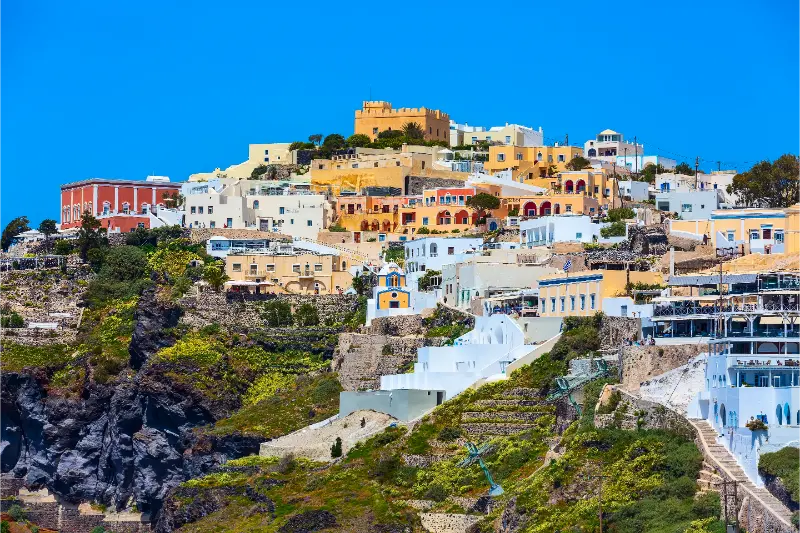
    Charming View Fira Village Santorini Island Greece Traditional Blue Dome Church Caldera Aegean Sea Traditional Blue White Cyclades

    Which beach is best for children?

    Perissa, Perivolos and Monolithos are practical options when sea conditions are calm. Facilities and shade matter as much as the beach name.

    Can children do the Fira to Oia hike?

    Older, experienced walkers can; younger children are better suited to the shorter Fira–Firostefani–Imerovigli section.

    Do Santorini hotels provide child seats for transfers?

    Some transfer companies can, but you should request the correct child seat in advance rather than assume availability.

    How many days do families need?

    Four days is a comfortable first visit because it allows sightseeing and beach time without making every day a transfer marathon.

    Final thoughts

    Santorini with children is best when you slow the island down. Choose an easy base, protect midday for rest, use archaeology and museums as real experiences rather than obligations, and treat Oia as one part of the trip rather than the entire goal. The family version of Santorini can be calmer and more varied than the standard honeymoon itinerary.

  • Thassos with Kids: Best Family Beaches, Easy Bases, Short Trips and Practical Tips

    Thassos with Kids: Best Family Beaches, Easy Bases, Short Trips and Practical Tips

    Thassos is a strong family island because it combines short ferry access, a circular road, sandy beaches and enough villages and cultural sights to break up a week of swimming. The main planning mistake is assuming every famous beach is equally easy with children. Golden Beach can be straightforward; Marble Beach involves rougher access; Giola requires more walking and is not a conventional beach; mountain hikes need a completely different level of preparation.

    Aerial View Marble Beach To Thassos Island Greece

    A family trip becomes much easier when you choose one or two bases and use the best beaches guide by access and sea conditions rather than fame. For younger children, Golden Beach, parts of the north-west coast and organised south-coast beaches are usually more practical than chasing remote coves every day.

    Quick planning snapshot

    Easiest beach baseGolden Beach / Skala Potamia
    Good town basesLimenas, Limenaria, Potos depending travel style
    Best family rhythmOne main activity + long swim + early dinner
    Car useful?Yes, especially with beach gear
    Main cautionsHeat, rough roads, waves, long drives, limited shade

    Choosing the right family base

    Golden Beach is the simplest first choice for many families because the beach is long, sandy and supported by restaurants and accommodation. Limenas is better if transport and cultural sights matter, while Limenaria and Potos work well for the south coast and walkable evenings.

    Before booking, check parking, stair access, road noise and the real walking route to the beach. A property advertised as “near the sea” can still involve a steep hill that becomes unpleasant with a pushchair.

    Family beaches: choose easy access first

    Golden Beach is the obvious all-rounder. Pachis and some organised north-west beaches can also be convenient, while Pefkari and Psili Ammos make sense from the south. The right beach is the one that gives your family shade, food, toilets and comfortable water conditions on that day.

    Saliara is visually spectacular but should be treated as a special excursion because of road conditions. Giola is a rocky natural pool area, not a classic sandy family beach, and the walk plus heat can be difficult for small children.

    Villages and culture with children

    Panagia works well as a short late-afternoon walk after Golden Beach. Limenas offers the Archaeological Museum and visible ancient remains, which can become a useful half-day when the beach is windy or everyone needs a break from sun exposure.

    Theologos is best approached as a food-and-walk stop rather than a long museum-style visit. Give children a clear reward—lunch, dessert or a short waterfall walk if conditions and access are suitable—instead of expecting them to appreciate architecture for hours.

    Ferries, driving and motion sickness

    The short Keramoti–Limenas ferry is convenient for families arriving from northern Greece, and frequent summer service reduces the pressure to catch one single sailing. Even so, leave buffer time around flights and long mainland drives.

    On the island, the coastal road is straightforward by Greek-island standards, but mountain roads are winding. If a child is prone to motion sickness, avoid crossing the island repeatedly and cluster days by region.

    Heat, shade and a realistic daily rhythm

    Children tire faster in Mediterranean heat than adults expect. Start early, swim before the strongest sun, eat lunch slowly and use the afternoon for rest. A second short swim near your accommodation is often better than another hour in the car.

    Carry water, hats, high-SPF sunscreen, snacks, water shoes and a dry change of clothes. For toddlers, a portable shade solution is more valuable than another beach toy.

    What to pack for children

    Beyond sunscreen, bring water shoes, a compact shade option, refillable bottles, a small basic first-aid kit and familiar snacks for ferry or mountain-road days. A light layer is useful on breezy evenings and boat trips. If your child uses medication, carry more than the exact trip amount and keep it in hand luggage rather than a car boot sitting in the sun.

    Food, naps and expectations

    Greek meal times can run later than some young children prefer. Families often have a better trip when they eat lunch generously, rest in the afternoon and choose an earlier dinner rather than forcing everyone to stay awake for a 22:00 taverna experience. Apartments with a small kitchen or fridge can be practical even if you plan to eat out most of the time.

    Getting there and moving around

    A rental car is useful for families because it carries gear and lets you change plans quickly, but check child-seat arrangements in advance. If you prefer not to drive, stay at Golden Beach or Limenas and use buses plus a few taxis.

    Keep one weather-flexible day. If the sea is rough, switch to Limenas culture, a village lunch or a sheltered beach rather than forcing the planned famous beach.

    Best time to go

    June and September are excellent for preschool families because temperatures are easier and the island is still active. July and August suit school holidays but require earlier starts and more attention to heat.

    Late May and early October can be calm and good value, but sea temperature and seasonal services are less predictable. Check whether your chosen resort is fully operating.

    Who this plan works best for

    Thassos suits families who enjoy beaches, short road trips and a relaxed pace. It is less ideal for a family that wants theme-park-style attractions or a highly urban resort with constant organised entertainment.

    A realistic way to plan the day

    A realistic family day from Golden Beach is morning swimming, lunch, rest, Panagia in late afternoon and dinner near the hotel. From Potos, use a nearby beach in the morning and Theologos for an early evening meal.

    Limit major excursions such as Marble Beach, Alyki/Giola or Ipsarion-area walks to separate days. Children experience the island better when the schedule leaves space.

    Common mistakes to avoid

    • Choosing a hotel by map distance without checking slopes and roads.
    • Taking toddlers to every difficult-access beach because it is famous.
    • Skipping midday rest in July or August.
    • Driving across the island twice a day.
    • Assuming a natural pool or hiking trail is automatically child-friendly.

    Useful official context

    The official Visit Greece Thassos page describes the island as the northernmost Greek island, green and mountainous, with a coastal road linking beaches and inland villages. For hiking, the Discover Greece hiking guide identifies Mount Ipsarion as the island’s highest peak at 1,204 metres and describes the popular route from Potamia. Because local access can change during periods of very high fire risk, especially on forest roads and trails, check municipal notices before setting out in summer.

    Tours and activities

    Boat trips, guided excursions and local experiences can be useful when they replace an awkward drive or help you reach coves and viewpoints more efficiently. Compare the exact departure point, duration, transport included and cancellation conditions before booking, because availability changes through the season.

    Frequently asked questions

    Is Thassos good for families?

    Yes. It has easy sandy beaches, short ferry access and compact distances, provided you choose child-friendly bases and avoid over-planning.

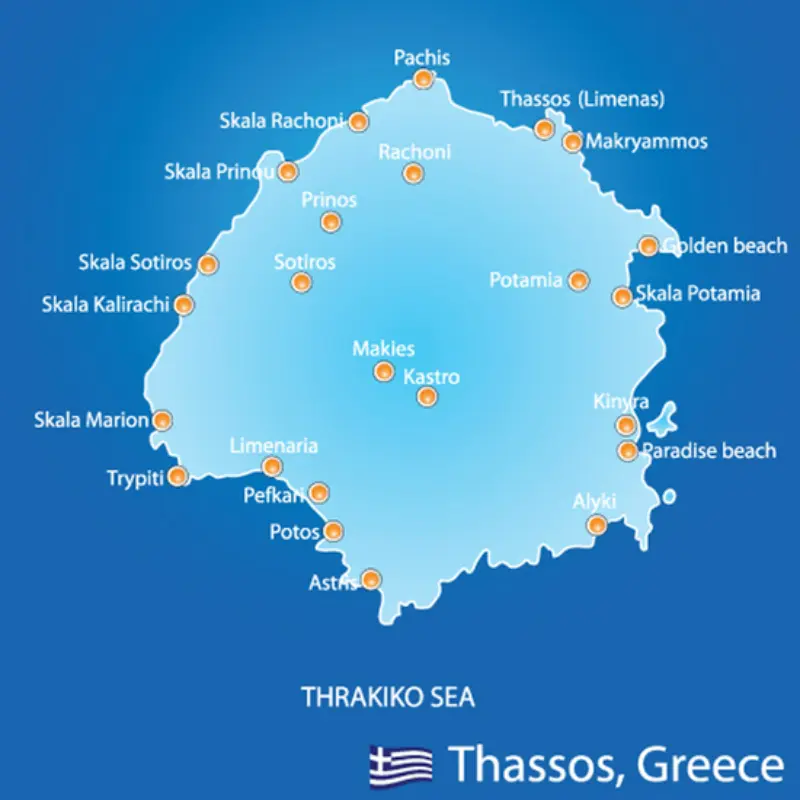
    Map Of Thassos

    What is the best family beach?

    Golden Beach is the strongest all-round choice for many families because of sand, space, services and accommodation.

    Do families need a car?

    A car is very useful for carrying gear and exploring. A car-free family stay is still possible from Limenas or Golden Beach with careful planning.

    Is Marble Beach good with young children?

    The water and scenery can be beautiful, but rough road access makes it less effortless than Golden Beach. Check road conditions and your rental agreement first.

    Continue planning your Thassos trip

    For the overall island plan, start with the Thassos travel guide. The Alyki and Giola guide is the best companion for the south-east coast, while the new cluster links beaches, villages, hiking and archaeological sights into realistic day plans. The Golden Beach guide is the best place to start if you are choosing a family base.

    Final practical advice

    Thassos with children works best when you stop trying to see the whole island every day. Choose easy beaches, short drives and one memorable activity at a time.

    The island’s strength is variety without huge distances. Use that advantage to reduce stress, not to fill every hour.

    Extra planning notes

    A final planning detail is to keep the day flexible around local conditions. On Thassos, a short distance can still involve parking, a winding road or a seasonal access change. Check the weather before leaving, keep drinking water in the car, download the route while you have reliable signal and avoid building the schedule around a single irreplaceable stop. If a beach is crowded, the road is uncomfortable or a forest area is restricted because of fire risk, change the plan early rather than after losing an hour. The island has enough beaches, villages and cultural sights that a backup plan does not feel like a compromise. This is particularly valuable in July and August, when heat and traffic magnify small delays. In June and September, the same flexible approach lets you take advantage of quieter beaches and cooler inland walks. For any time-sensitive detail—bus departures, ferry times, museum hours, boat trips or road access—verify the information again close to the day you travel.

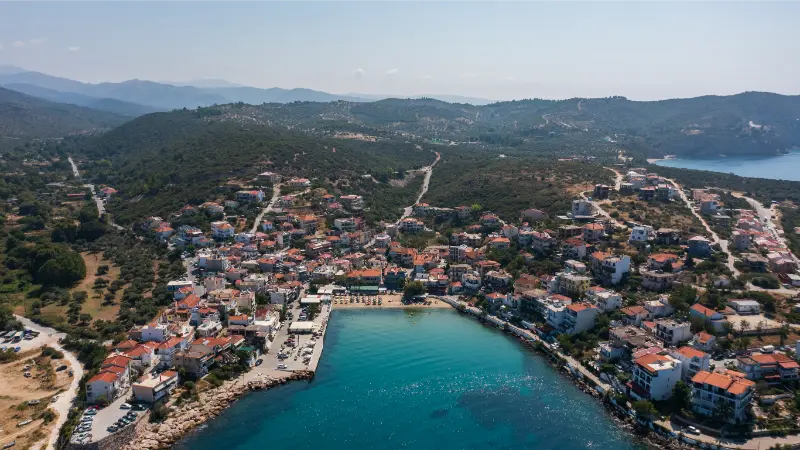
    High Aerial View Skala Marion Beach Thassos Island Greece
  • Skopelos Chora Guide: Castle Views, Churches, Harbour Walks and a 2-Day Stay

    Skopelos Chora Guide: Castle Views, Churches, Harbour Walks and a 2-Day Stay

    Skopelos Chora rises from the harbour in layers of white houses, tiled roofs, churches and narrow lanes. It is the island’s practical centre, but its real appeal appears when you leave the waterfront and climb gradually into the old settlement, where viewpoints open between houses and the pace becomes quieter.

    The town deserves at least one evening and one unhurried morning even if your trip is mainly about beaches. For the whole island, use the Skopelos travel guide; this article focuses on how to experience Chora itself rather than using it only as a ferry stop.

    Why this place deserves more than a quick stop

    Skopelos Chora gives you the island’s strongest combination of architecture, food, harbour life and walkability. It is also useful logistically: ferries, buses, taxis, rental services and excursion boats converge nearby, making it a practical base for travellers without a car.

    Visit Greece highlights the island’s traditional architecture and the way pine-covered landscapes meet the sea. Chora expresses the cultural side of that identity through dense lanes and religious architecture rather than through a single monumental attraction.

    At a glance

    Best forArchitecture, evening walks, food, car-free stays and first-time visitors
    Ideal time1–2 days in town; longer as an island base
    Main baseHarbour area for convenience or higher old-town lanes for atmosphere
    TransportOn foot in Chora; buses, taxis or car for the island
    Pair it withAgios Ioannis Kastri, beaches and Glossa

    What to see and do

    The town rewards slow exploration. The aim is not to follow one rigid route but to climb gradually, pause at viewpoints and return to the waterfront by a different lane.

    • Walk the harbour early and again after sunset.
    • Climb toward the castle area and upper viewpoints.
    • Notice the density of small churches and traditional houses.
    • Explore side lanes rather than following only shopping streets.
    • Have at least one meal away from the immediate ferry quay.

    From the harbour to the upper town

    The harbour gives a clear view of how the town rises uphill. Start here for orientation, then move into the interior before the day becomes hot. The climb is not a mountain hike, but repeated steps and uneven lanes make supportive shoes more comfortable than beach sandals.

    As you gain height, views back over the port become part of the experience. Do not rush to one “best” viewpoint. Small openings between houses create changing compositions, especially in early morning and late afternoon light.

    Churches, architecture and everyday life

    Skopelos is known for its many churches and chapels, and Chora contains a remarkable concentration. You do not need to enter every building. The value is in seeing how religious spaces, homes, courtyards and lanes form one urban fabric.

    Photograph respectfully and remember that many lanes are residential. Doorways, terraces and courtyards are not public sets. A quieter approach also helps you notice architectural details that disappear when you move through the town as quickly as possible.

    A practical route that works

    A half-day loop can cover the main layers of Chora without reducing it to a checklist.

    1. Start at the harbour before mid-morning.
    2. Climb gradually through the old lanes toward the castle area.
    3. Pause at viewpoints and churches rather than trying to visit everything.
    4. Descend on a different route and stop for lunch.
    5. Return to the waterfront at sunset when the town becomes more social.

    Repeat part of the route the next morning if you stay overnight; Chora feels completely different before shops and excursion traffic fully start.

    Getting there

    Most visitors arrive on Skopelos by ferry because the island has no commercial airport. Skiathos is a common air gateway, with onward ferries operating seasonally. Other mainland and island connections depend on the timetable for your dates.

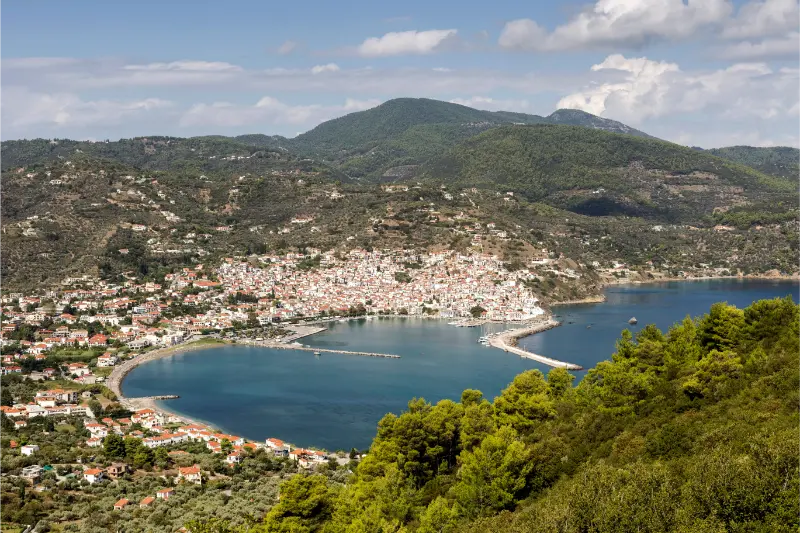
    Glossa Skopelos Greece

    If your ferry arrives at another Skopelos port, plan the onward road transfer before assuming you can simply walk to your accommodation in Chora.

    Getting around

    Inside Chora, walking is the only sensible way to explore the historic lanes. A car becomes useful for remote beaches and inland routes but can be a burden if your accommodation does not include convenient parking.

    Buses can work well for major beach corridors in season. Travellers without a car should choose accommodation based on both the harbour and bus access, not just a pretty view on a booking map.

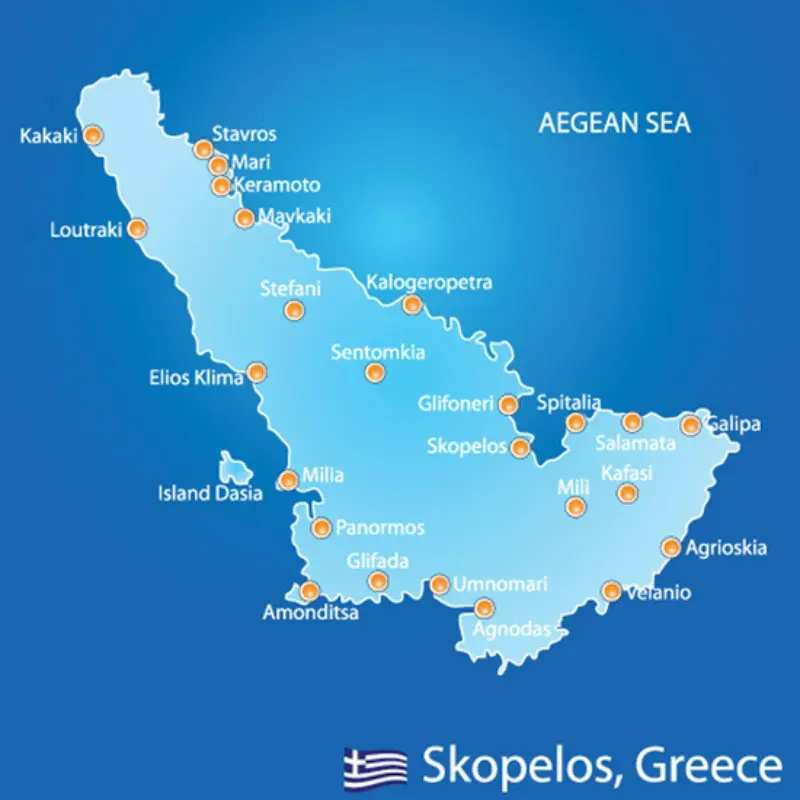
    Map Of Skopelos

    Where to stay

    The harbour area is best for very short stays, ferry connections and level access to restaurants. It can also be busier and noisier.

    Higher lanes offer atmosphere and views but may involve stairs with luggage. Ask the property for the actual walking route before booking if mobility or heavy bags are concerns.

    Food and local rhythm

    Chora is the easiest place on Skopelos to sample local dishes without planning every meal around a driving route. Skopelos cheese pie is the obvious local speciality, but use it as a starting point rather than the entire food experience.

    Lunch can be simple; save one evening for a slower taverna meal after the day-trippers and beach crowds settle. The harbour is attractive, but inland lanes often provide a calmer atmosphere.

    Best time to visit

    May, June and September are excellent for walking. High summer brings more ferries, visitors and nightlife, but also more heat during the uphill parts of town.

    If you visit outside the main season, expect a quieter island and fewer seasonal services. That can be appealing, but confirm ferries and accommodation before building a tight island-hopping route.

    How long do you need?

    One full day covers the main town experience. Two nights are better because you can see both evening and early-morning Chora.

    Four or five nights make sense if you use Chora as your base for beaches and island excursions rather than changing accommodation.

    A realistic mini-itinerary

    1. Day 1: harbour orientation, old-town climb, lunch, relaxed afternoon and sunset walk.
    2. Day 2: early lanes, local breakfast, then a beach or island excursion before returning for dinner.
    3. Extra day: road trip to Glossa and Agios Ioannis Kastri.

    Mistakes to avoid

    • Dragging large luggage through upper lanes without checking access.
    • Trying to explore at the hottest time of day.
    • Parking as close as possible to the old lanes instead of using practical parking areas.
    • Assuming the harbour alone represents the town.

    The best Chora experience comes from giving yourself permission to wander rather than optimizing every minute.

    Responsible travel and practical etiquette

    The old town is a living settlement. Keep voices low late at night in residential lanes, avoid blocking steps for photographs and do not enter private courtyards for a better angle.

    In summer, water use and waste pressure rise sharply on islands. Refill where possible, carry your rubbish to proper bins and support local businesses beyond the busiest harbour frontage.

    How to combine it with the rest of Greece

    Pair Chora with the Agios Ioannis Kastri guide for the island’s most famous cliff-top church setting.

    Skopelos also combines naturally with Skiathos and Alonissos when ferry schedules make a multi-island Sporades trip realistic.

    Useful official information

    The official Visit Greece Sporades page highlights Skopelos for its pine forests, traditional architecture and Ai Giannis at Kastri.

    FAQ

    Is Skopelos Chora worth staying in?

    Yes. It is the most convenient base for ferries, restaurants and evenings on foot, especially on a first trip.

    Is Chora steep?

    Parts of the old settlement involve steps and uphill lanes. The harbour itself is much easier and flatter.

    How long do I need?

    One day is enough for sightseeing, but two nights give you the best early-morning and evening atmosphere.

    Do I need a car?

    Not for Chora. A car is useful for beaches and wider island exploration.

    Is it the same as Skopelos Town?

    Yes. Chora is the traditional Greek term commonly used for the island’s main town.

    Final thoughts

    Skopelos Chora is not a town to rush through on the way to a famous beach. Its harbour, steps, churches and rooflines provide the cultural counterweight to the island’s green coast.

    Stay long enough to climb the lanes twice—once in daylight and once after the heat fades—and the town becomes one of the most memorable parts of a Sporades trip.

    Extra planning notes

    Before locking in accommodation, compare the real transfer sequence for your dates rather than relying on a generic map. Greek island and regional travel is often simple once you are there, but seasonal timetables, wind, road conditions and the location of your hotel can change how a day feels. I prefer to leave one part of the itinerary intentionally flexible: a beach can move to another day, a hike can start earlier, and a boat trip can shift when the sea is calmer. This is especially useful in places where the landscape is the attraction, because forcing an activity in poor conditions rarely creates the experience you imagined.

    Woman Sunbathing Reading Book Beach By Sea Sunset St Skopelos Island Greece

    A second practical rule is to plan around energy as much as distance. A short drive followed by stairs, heat or a long swim may be more tiring than a longer transfer on paper. Build in shade, water, unhurried meals and time to return to your base before dinner. That slower rhythm is not wasted time; it is often what separates a holiday that feels like a sequence of logistics from one that actually feels like Greece.

  • Museum of Cycladic Art Athens Guide: Figurines, Tickets, Hours and Highlights

    Museum of Cycladic Art Athens Guide: Figurines, Tickets, Hours and Highlights

    The Museum of Cycladic Art is one of Athens’ most focused museums, and that is exactly why it works so well in a busy itinerary. Instead of trying to cover every period of Greek history, it concentrates on Cycladic culture, ancient Greek art and ancient Cypriot material. The famous marble figurines are the visual hook, but the museum is more rewarding when you slow down enough to understand the islands, burial practices, trade networks and daily life behind those simplified forms.

    I especially like this museum for travellers who are going on to Naxos, Paros, Milos, Santorini or other Cycladic islands. Seeing the objects in Athens before boarding a ferry makes the landscape feel more connected to the archaeology. It also works in the opposite direction: after an island trip, the museum can help you place local sites into a larger Aegean story.

    Traditional Cycladic Stone Houses Paros Island Greece

    For wider planning, use my Athens Travel Guide and Best Neighborhoods in Athens. This guide stays focused on one part of the city so you can decide whether it genuinely fits your trip rather than adding it simply because it appears on a checklist.

    Quick planning facts

    • The museum is in central Athens near Kolonaki and the National Garden.
    • Current general admission is €10, with reduced admission listed at €7.
    • It is closed on Tuesdays.
    • Thursday currently has extended opening until 20:00; most other opening days close at 17:00.
    • The museum states that its permanent collections include about 3,000 Cycladic, ancient Greek and ancient Cypriot artefacts.

    Why this stop deserves time in an Athens itinerary

    Athens becomes much more rewarding when the itinerary alternates between archaeology, museums, neighbourhood life and open-air breaks. This stop earns its place because it adds a different layer rather than repeating what you already learn at the Acropolis. Think about what question you want the visit to answer: how Greeks understood history, how modern Athenians use public space, how food reaches the city, or how a neighbourhood’s identity developed. That simple question makes the experience more focused.

    It also helps with pacing. Four days of temples and galleries can become surprisingly tiring even for travellers who love history. Pairing one concentrated cultural visit with a market, garden, hill or café district keeps attention high. I prefer to plan one major anchor in each half-day and leave enough time to walk between nearby places. Athens rewards transitions: the streets between attractions often explain the city as clearly as the attractions themselves.

    What to focus on

    Cycladic figurines

    The clean geometry of the marble figures is instantly recognisable, but the most useful labels explain that their original meanings are not fully known. Look at size, posture and traces of pigment rather than treating every figure as an identical icon.

    Early Cycladic vessels and tools

    Bowls, containers and tools give the figurines practical context. They remind you that island communities were connected by seafaring, raw materials and exchange.

    Ancient Greek daily life

    The Greek collection broadens the visit beyond island sculpture and helps explain food, athletics, warfare, religion and domestic routines through objects rather than monumental architecture.

    Cypriot collection

    Cyprus adds a different eastern Mediterranean perspective and shows how styles and ideas moved through trade routes.

    Stathatos Mansion

    The connected historic mansion gives the museum a different architectural mood and is often used for exhibitions, making the visit feel more varied than a single modern gallery sequence.

    A practical way to structure the visit

    Begin with the Cycladic galleries while your attention is fresh, then move into ancient Greek and Cypriot material. If a temporary exhibition is running, decide in advance whether it is central to your interests; otherwise it can turn a compact visit into a much longer one. The museum is small enough that a second loop through the figurines at the end can be more valuable than trying to memorise every object on the first pass.

    Cycladic Chapel Overlooking Aegean Sea

    Do not judge the success of the visit by how many rooms, monuments or streets you cover. Choose a small number of details to remember and give yourself time to notice how the place connects to the rest of Athens. If a temporary exhibition, event or closure changes your plan, adapt rather than forcing the original schedule. The city has enough alternatives within a short distance that a changed plan rarely needs to become a lost day.

    Getting there and what to combine nearby

    The location is ideal for a museum district day. The Benaki Museum and Byzantine and Christian Museum are close, while Evangelismos metro station and Syntagma are both practical access points. Kolonaki cafés make an easy break between cultural stops. If you combine museums, plan an outdoor interval so the day does not become six straight hours under gallery lighting.

    Useful nearby reading: Athens Travel Guide; Best Neighborhoods in Athens; National Archaeological Museum guide. These guides make it easier to build a route that stays in one part of Athens instead of wasting time zigzagging across the city.

    How much time to allow

    Most visitors can see the core collection in 90 minutes to two hours. The museum currently notes that renovation work affects the main entrance, with visitors welcomed through the Stathatos Mansion entrance, so check the official page close to your visit because construction arrangements can change.

    Add a buffer rather than scheduling the next reservation at the exact moment you expect to finish. Security lines, a room that interests you more than expected, a coffee stop or simply heat can all change the pace. My preferred approach is to keep at least thirty minutes of slack between a major cultural visit and the next fixed-time activity. That small margin makes Athens feel much less stressful.

    Best time of day and seasonal strategy

    In summer, outdoor walking is usually easiest early and late, while museums and indoor cultural spaces are valuable during the hottest hours. In spring and autumn, the city is more forgiving and you can walk longer between stops. Winter brings shorter days and occasional rain but can make museums, markets and neighbourhood cafés especially enjoyable. Always check the current official opening page near your visit because Athens attractions can use seasonal hours, holiday closures or temporary access rules.

    For the latest practical details, use the official visitor information. Prices, entrance arrangements and temporary closures can change after an article is published, so the official source should win if it conflicts with an older travel guide.

    Accessibility, families and comfort

    Athens is improving accessibility, but the experience varies sharply between a modern museum and an ancient hill. If step-free access is essential, check the venue’s current accessibility page rather than assuming a route is barrier-free. Families should plan shorter focused visits, regular water and snack breaks, and one outdoor space where children can move. Older travellers may prefer taxis for short transfers that look walkable on a map but involve heat, traffic or steep pavements.

    Comfort also includes mental pace. A child who remembers one object, a couple who spend twenty quiet minutes over coffee, or a solo traveller who pauses to sketch a view may get more from Athens than someone who races through twenty landmarks. Build the itinerary around how you actually travel, not around the maximum number of pins that can fit into a day.

    Photography and respectful visiting

    Photography rules vary. Museums may restrict flash, tripods or photography in temporary exhibitions; religious or commemorative spaces deserve additional sensitivity; markets and neighbourhoods are workplaces and homes rather than sets. Photograph architecture and public space freely where permitted, but ask before taking close portraits of vendors or residents. In crowded places, step aside before stopping for a photo so you do not block doors, paths or working areas.

    Common mistakes to avoid

    • Adding the stop only because it is famous, without deciding what you want to learn or experience.
    • Planning several major museums or archaeological sites back-to-back with no outdoor break.
    • Relying on old opening hours instead of checking the official page close to the visit.
    • Underestimating heat, hills and walking time between places that look close on a map.
    • Trying to photograph everything instead of slowing down for a few memorable details.
    • Ignoring the neighbourhood around the attraction and travelling immediately to the other side of the city.

    Most of these mistakes are easy to fix: reduce the number of fixed stops, group attractions geographically and let one or two places be the centre of the day. Athens is compact enough that you do not need to optimise every minute, but large enough that poor sequencing can still waste energy. The best itineraries feel deliberate without feeling rigid.

    Connecting the collection with the Cyclades

    Travellers heading to Naxos, Paros, Milos or Santorini should pay particular attention to maps, chronology and material culture rather than only to the most famous figurines. Ferry travel can make the islands feel separate today, but prehistoric communities were linked through sea routes and exchange. The museum gives you a mental map that makes later archaeological sites, local museums and even the geography of small island harbours more intelligible.

    Frequently asked questions

    Are the Cycladic figurines originals?

    The museum displays important original Cycladic antiquities within its permanent collection, alongside other objects from the ancient Aegean and Cyprus.

    How much time should I allow?

    Around 90 minutes is enough for a focused visit, while two hours allows more time for the Greek and Cypriot collections.

    Is it better before or after visiting the Cyclades?

    Either works. Before the islands it gives context; afterwards it helps you connect places you saw with the wider prehistoric Aegean.

    Is the museum good in hot weather?

    Yes. It is one of the easiest high-value indoor stops to use during the hottest part of an Athens day.

    Can I combine it with the Benaki Museum?

    Yes, because they are close and complementary, but schedule a café or garden break between them so the second museum does not feel rushed.

    Final thoughts

    Museum of Cycladic Art Athens Guide is most rewarding when it is treated as part of the wider Athens story rather than an isolated attraction. Give the visit enough time to understand its character, connect it with one nearby neighbourhood or outdoor stop, and leave room for the city to interrupt your schedule with a café, a view or a street you did not plan to explore.

    Athens National Museum Of Contemporary Art

    That balance is what I would keep throughout an Athens trip: one serious cultural experience, one walkable neighbourhood and enough unplanned time to notice how ancient, Byzantine, modern and contemporary Athens overlap. It produces a much stronger memory of the city than a checklist of ticket gates.

  • Loutra Edipsou Guide: Evia Hot Springs, Seafront Baths and a Wellness Stay

    Loutra Edipsou Guide: Evia Hot Springs, Seafront Baths and a Wellness Stay

    Loutra Edipsou is one of Greece’s best-known thermal destinations, where hot mineral water emerges close to the coast and in places flows directly toward the sea. The town is not a polished island postcard in the Cycladic sense; its appeal is wellness, history and the unusual experience of warm springs beside salt water.

    Use Edipsos as a short restorative stop within a northern Evia route rather than expecting a conventional beach-resort holiday. For driving context and other regions of the island, read the Evia travel guide.

    Why this place deserves more than a quick stop

    Thermal bathing here has centuries of history. Visit Greece notes that the springs were known in antiquity and mentions Aristotle, while the area today combines public hydrotherapy facilities, hotel spas and naturally emerging waters along the seafront.

    The town works for couples, older travellers, wellness trips and anyone who wants a slower break between road-trip days. It can also be combined with forests and coastal excursions in northern Evia.

    At a glance

    Best forThermal bathing, wellness, slow travel and northern Evia road trips
    Ideal time2–3 days
    Main baseLoutra Edipsou seafront
    TransportCar or bus; ferry approach possible via nearby mainland connections depending on route
    Pair it withNorth Evia, Lichadonisia and Chalkida

    What to see and do

    The core experience is water rather than sightseeing, so build the day around bathing, rest and a few coastal walks.

    • See where thermal water meets the sea along the coast.
    • Choose between public hydrotherapy facilities and private spa treatments.
    • Walk the seafront before and after bathing.
    • Use the stay as a recovery day on a longer road trip.
    • Explore a nearby northern Evia village or coastal stop if you have a car.

    Natural hot water by the sea

    Visit Greece describes more than 80 hot springs in the wider Edipsos area. Some hot water reaches the coast directly, creating striking mineral-stained formations and warm-water spots beside the sea.

    Do not assume that every natural outflow is suitable for prolonged soaking or that hotter is better. Water temperature varies and can be very high near outlets. Enter gradually, avoid blocking channels and follow local safety signs.

    Spa facilities versus informal bathing

    Formal hydrotherapy centres offer controlled pools, treatments and facilities that natural seafront spots do not. They are the better choice if you want a structured wellness day or have health concerns that require professional guidance.

    Informal seafront bathing can be memorable, but it should not be presented as medical treatment. If you have cardiovascular, pregnancy, mobility or other health considerations, ask an appropriate clinician before using very hot thermal water.

    Motorcycle Cruiser Stands Waterfront Spa Resort Loutra Edipsou Greece

    A practical route that works

    A slow two-day stay fits the destination better than a rushed checklist.

    1. Arrive and walk the seafront to understand the spring areas.
    2. Book one formal spa or hydrotherapy session if that interests you.
    3. Use the cooler part of the day for another coastal walk or nearby excursion.
    4. On day two, enjoy a shorter thermal session and a relaxed meal before continuing your road trip.

    Alternating heat, rest and hydration is more sensible than spending hours continuously in very warm water.

    Getting there

    Edipsos lies in north-west Evia. Visit Greece notes regular bus connections from Chalkida and other parts of the island; road travel from Chalkida is substantial because Evia is long.

    Depending on your wider mainland route, ferry connections toward north-western Evia can reduce driving. Check current schedules rather than planning from an old timetable.

    Getting around

    The spa town itself is walkable. A car is useful only if you want to explore northern Evia beyond the immediate seafront.

    Port Spa Resort Loutra Edipsou Island Evia Euboea Aegean Sea Greece

    Parking and access can be busier in summer and weekends. Choose accommodation where you can leave the car and walk to baths and restaurants.

    Where to stay

    A seafront hotel or apartment makes sense because the point of the stay is to move slowly between bathing, rest and meals.

    If you want medical-style hydrotherapy, choose accommodation or facilities based on the services you need, not only on sea view or star rating.

    Food and local rhythm

    A wellness stop does not need complicated dining. Fresh fish, simple Greek cooking and long lunches fit the pace of the town.

    Hydration matters around hot-water bathing. Drink water before and after sessions and moderate alcohol until you are finished with the thermal experience for the day.

    Best time to visit

    Unlike a pure beach resort, Edipsos can make sense in cooler months because hot water is the attraction. Spring and autumn are particularly appealing for combining thermal bathing with road trips.

    Summer is livelier and allows easy sea swimming, but very hot afternoons make long thermal sessions less comfortable.

    How long do you need?

    Two nights are ideal for a first wellness break. One night feels rushed once check-in and onward driving are considered.

    Three nights work if you want multiple treatments or a quiet pause in a longer Greece trip.

    A realistic mini-itinerary

    1. Day 1: arrival, seafront orientation, light thermal session and dinner.
    2. Day 2: formal spa or hydrotherapy experience, rest, coastal walk and relaxed meal.
    3. Day 3 morning: final short soak or coffee, then continue through northern Evia.

    Mistakes to avoid

    • Treating extremely hot water as automatically therapeutic.
    • Skipping hydration.
    • Expecting a luxury-spa atmosphere everywhere in town.
    • Driving from southern Evia and back in one day without appreciating the distance.

    Edipsos works best when you stop trying to maximize sights and let the stay function as deliberate downtime.

    Responsible travel and practical etiquette

    Natural thermal outlets are part of a sensitive coastal environment. Do not alter channels, leave cosmetics or litter in the water, or monopolise small pools when others are waiting.

    Health claims around thermal water are often overstated online. Enjoy the springs as a wellness and cultural experience without substituting them for professional medical care.

    How to combine it with the rest of Greece

    Combine Edipsos with Chalkida if entering Evia by road from Athens, allowing enough time for the long drive north.

    Waterfront Spa Resort Town Loutra Edipsou Island Evia Greece

    For a full island plan, the Evia guide explains why northern and southern Evia are best treated as separate bases.

    Useful official information

    Visit Greece has a dedicated Loutra Edipsou page describing the thermal springs, spa facilities and transport context.

    FAQ

    Are the Edipsos springs natural?

    Yes. Hot mineral water emerges naturally in the area, with some outlets visible along the coast.

    Are there free places to bathe?

    Natural seafront spots exist, while formal facilities charge for services. Conditions and access can change.

    How hot is the water?

    Temperatures vary widely and can be very hot near outlets. Enter cautiously and follow local guidance.

    How many days do I need?

    Two nights are ideal for a relaxed first stay.

    Is Edipsos only for older travellers?

    No. It increasingly attracts couples, wellness travellers and road trippers of different ages.

    Final thoughts

    Loutra Edipsou offers something that many island itineraries lack: a reason to slow down completely. The springs turn a road-trip stop into a physical pause rather than another sightseeing day.

    Come for the unusual meeting of hot mineral water and sea, stay long enough to rest, and continue through Evia feeling that the slower day was part of the journey rather than time lost.

    Extra planning notes

    Before locking in accommodation, compare the real transfer sequence for your dates rather than relying on a generic map. Greek island and regional travel is often simple once you are there, but seasonal timetables, wind, road conditions and the location of your hotel can change how a day feels. I prefer to leave one part of the itinerary intentionally flexible: a beach can move to another day, a hike can start earlier, and a boat trip can shift when the sea is calmer. This is especially useful in places where the landscape is the attraction, because forcing an activity in poor conditions rarely creates the experience you imagined.

    A second practical rule is to plan around energy as much as distance. A short drive followed by stairs, heat or a long swim may be more tiring than a longer transfer on paper. Build in shade, water, unhurried meals and time to return to your base before dinner. That slower rhythm is not wasted time; it is often what separates a holiday that feels like a sequence of logistics from one that actually feels like Greece.

    Practical pacing for a better trip

    One final detail that improves this trip is to keep the day deliberately under-filled. Leave room for a delayed bus, a longer meal, a change in wind or a viewpoint that deserves more time than expected. In Greece, the most frustrating itineraries are often the ones that look perfectly efficient on paper. A realistic plan has enough slack to move an outdoor activity, return to the hotel for a break or stay longer in a village without creating a chain of missed reservations.

    If you are travelling in the busiest summer weeks, start earlier than you think you need to and avoid making the hottest part of the afternoon your most demanding walking period. Carry water, use sun protection and check local advice for fire risk, trail access and sea conditions. These small choices are more useful than adding another attraction to the schedule, and they make the destination feel more relaxed and personal.

    If you are extending the trip beyond the thermal springs, the Limni and Rovies guide and Lichadonisia day-trip guide are the most natural next reads.

    For more detailed Evia planning, continue with Istiaia, Oreoi and Pefki.

  • Samos Town and Vathy Guide: Waterfront, Archaeological Museum, Malagari and Where to Stay

    Samos Town and Vathy Guide: Waterfront, Archaeological Museum, Malagari and Where to Stay

    Samos Town—often called Vathy in transport information—does not deliver the instant beach-resort image that many visitors expect from a Greek island, but it is one of the most useful bases on Samos. The capital wraps around a large bay, combines a working town with neoclassical architecture, and gives you access to the island’s main bus hub, services, museums and the Malagari wine area.

    It is especially useful for travellers without a car, history-focused visitors and anyone arriving or departing through Vathy port. The key is to stay in the right part of town and understand that the best beach days usually involve leaving the urban centre. In return, you gain the easiest logistics on the island.

    The waterfront and central Samos Town

    Start along the bayfront rather than trying to identify a single “old town” entrance. The harbour road, public squares, cafés and commercial streets show how the capital actually functions. Early morning is best for observing the town before traffic builds, while evening brings a more social atmosphere to the waterfront.

    Samos Town suffered significant damage in the 2020 earthquake, and restoration has been an ongoing reality in parts of the island. That means individual buildings or routes can change status. Treat the town as a living place rather than an open-air museum frozen in one condition.

    Ano Vathy

    The older settlement climbs above the modern waterfront and rewards travellers who are comfortable with uphill walking. Narrow lanes, older houses and views over the bay create a different impression from the flat commercial centre below. Go early or late in summer because the climb can feel far hotter than its distance suggests.

    If mobility is limited, use a taxi to gain elevation and walk downhill rather than forcing a steep ascent. Good travel planning is not about proving you can walk every hill; it is about saving energy for the parts you actually want to enjoy.

    Archaeological Museum of Samos

    The official Archaeological Museum of Samos page is one of the strongest reasons to spend real time in Vathy. The museum occupies two buildings and presents finds from the Heraion and the wider island, including major Archaic sculpture. The official museum page currently lists a general ticket of €10 and a Tuesday closure; opening arrangements can change, so verify again shortly before visiting.

    The museum works particularly well before or after the Heraion and Pythagoreion sites. Seeing sculpture, votive objects and archaeological context turns the outdoor ruins from isolated stones into evidence of a wealthy and internationally connected ancient island.

    Malagari and the Samos Wine Museum

    Across the bay in Malagari, the Samos Wine Cooperative operates its wine museum and tasting experiences. In 2026 the cooperative lists the museum as open from 1 April with general admission of €5; reservations are available through the cooperative. This is one of the easiest ways to understand why Muscat is central to Samos rather than treating local wine as a souvenir bought at the airport.

    Do not combine tasting with a driving-heavy afternoon. Use a taxi, designated driver or structure the visit around a return to town. The museum is close enough to Vathy that responsible planning is simple.

    Using Vathy as a transport base

    The KTEL station in Vathy is the island’s main public-transport hub, which makes the capital the strongest no-car base for travellers who want to reach several different areas. The trade-off is that not every beach or village has a frequent direct service, and evening returns can be limited outside peak season.

    If you are relying on buses, build each day around the return time first. A beautiful beach is not useful if the last bus leaves before you planned to finish swimming. Buy or confirm tickets as instructed by the operator and arrive with enough time to locate the correct stop.

    Where to stay in Samos Town

    AreaBest forTrade-off
    Central waterfrontNo-car travel, restaurants, short staysTraffic and urban feel
    Side streets behind centreValue and quieter nightsLess immediate view
    Higher VathyAtmosphere and viewsSteep walking
    Malagari sideWine museum, quieter settingLess convenient for central evenings

    Who should choose Vathy?

    • Travellers without a car who want the widest bus options.
    • Visitors interested in archaeology and local museums.
    • Short-stay travellers using Vathy port.
    • People who prefer a working Greek town to a purpose-built resort.
    • Digital nomads or longer-stay visitors who value services and supermarkets.

    How Samos Town and Vathy fits into a wider Samos trip

    Use this page together with the Samos travel guide, Pythagoreion and Heraion UNESCO guide, Kokkari, Samos Town and Vathy, Karlovasi and Potami, Manolates and Vourliotes, Marathokampos and Votsalakia, Samos wine, best beaches, hiking, Samos without a car and where to stay. The strongest Samos itineraries are built by geography: combine the north coast with mountain villages, the west with Karlovasi or Marathokampos, and the south-east with Pythagoreio and Heraion. That avoids spending the best part of the day repeatedly crossing an island whose roads are far more winding than its map distances suggest.

    Potami Beach Samos Island Greece

    Vathy is the island’s most practical base for public transport, services and museums. It is less suitable for travellers whose only priority is stepping directly from the hotel onto a classic beach.

    Getting around and checking transport

    The capital is the main KTEL hub and the easiest place to combine buses with taxis. If your trip is built around remote west-coast beaches or daily mountain hiking, a rental car still saves substantial time.

    For buses, use the official KTEL Samos website close to the day you travel. KTEL Samos operates from Vathy and publishes routes and online ticketing; seasonal frequency changes, so an old screenshot should never be treated as a permanent timetable. If one specific connection matters—for example a last bus after a beach day—verify it the same morning and have a taxi number as backup.

    Marathokampos Samos Greece

    Heat, wind and realistic daily pacing

    Samos rewards early starts. In July and August, use the cooler morning for village walks, archaeological sites or hiking, keep the hottest hours for swimming or shade, and return to sightseeing in late afternoon. The north coast can be breezy, while inland roads and trails may feel much hotter than the waterfront. A flexible plan works better than forcing a fixed beach or mountain day in poor conditions.

    Tours and activities

    Boat trips, wine experiences and guided excursions can be useful when they solve a transport problem or add local interpretation. Compare the real time spent at each stop, boat size, shade, swimming access, transfer arrangements and cancellation rules rather than choosing the excursion with the longest list of place names.

    Common planning mistakes

    • Expecting the capital to feel like a small beach resort.
    • Skipping the archaeological museum because the major ruins are elsewhere.
    • Driving after a wine tasting.
    • Booking high in Ano Vathy without considering the climb.
    • Assuming every village has a late evening bus back to town.

    Frequently asked questions

    Is Samos Town the same as Vathy?

    Visitors often use the names interchangeably for the capital area, while Ano Vathy refers to the older settlement higher on the slope.

    Is Samos Town good without a car?

    Yes. It is the strongest base on the island for public buses and taxis, though remote beaches still require planning.

    How long do you need for the Archaeological Museum?

    Allow roughly one to two hours depending on your interest, then connect the visit with the Heraion/Pythagoreion UNESCO sites on another day.

    Can you walk to the Wine Museum?

    Malagari is close to the capital but road layout and heat can make a taxi more comfortable. Avoid walking back after drinking more than a tasting amount.

    Is Vathy good for beaches?

    Not as a classic beach base. Use it for logistics and culture, then travel to north-, east- or south-coast beaches.

    Final practical advice

    Samos feels most rewarding when you leave room for one unplanned stop each day: a roadside viewpoint, a village square, a swim at a smaller cove or a long lunch. The island has enough variety that you do not need to “complete” it. Pick a strong base, cluster nearby experiences, check time-sensitive transport and opening information again shortly before departure, and let weather decide which day becomes the beach day and which becomes the mountain day.

    Market, services and practical errands

    Vathy is the place to solve practical travel tasks: pharmacies, supermarkets, banking, phone accessories, medical needs and transport questions are easier here than in a small resort. If you are staying elsewhere, combine errands with the museum instead of making a separate trip. This is particularly useful on a longer island stay or if you are travelling with children and need supplies that a beach mini-market may not stock.

    Port-day strategy

    If your ferry uses Vathy, keep the final day deliberately light. Store luggage with your accommodation if possible, have lunch near the waterfront and arrive at the port with margin. Samos has multiple ports, so the most important check is not “what time is the ferry?” but “which port does this exact sailing use?” Confusing Vathy with Karlovasi or Pythagoreio can create an expensive last-minute transfer.

    Samos Island Greece Pythagoreio Harbour View Pythagoreio Village Samos Island