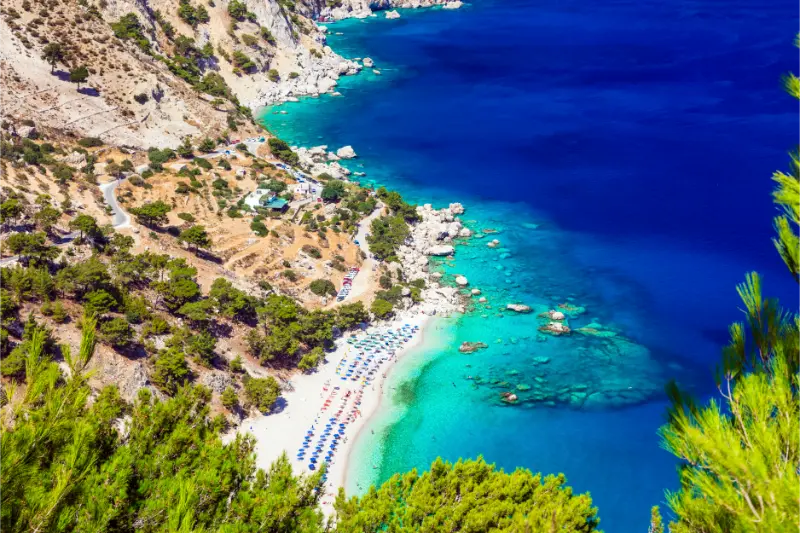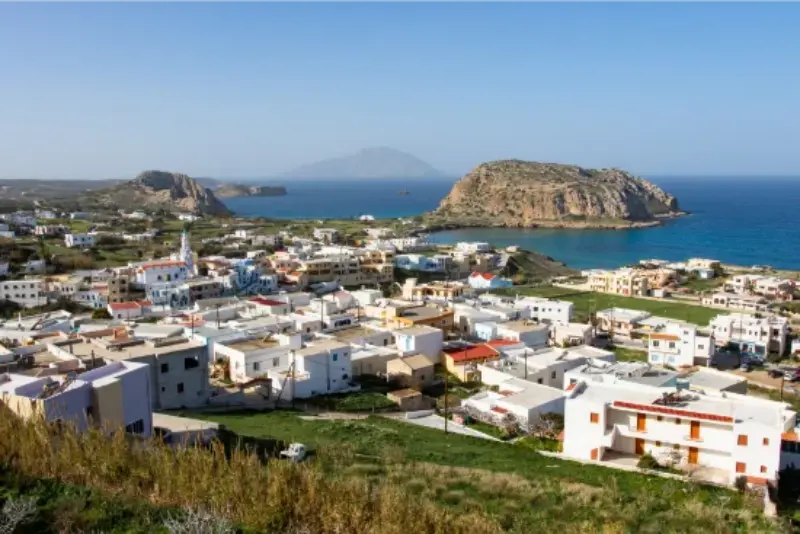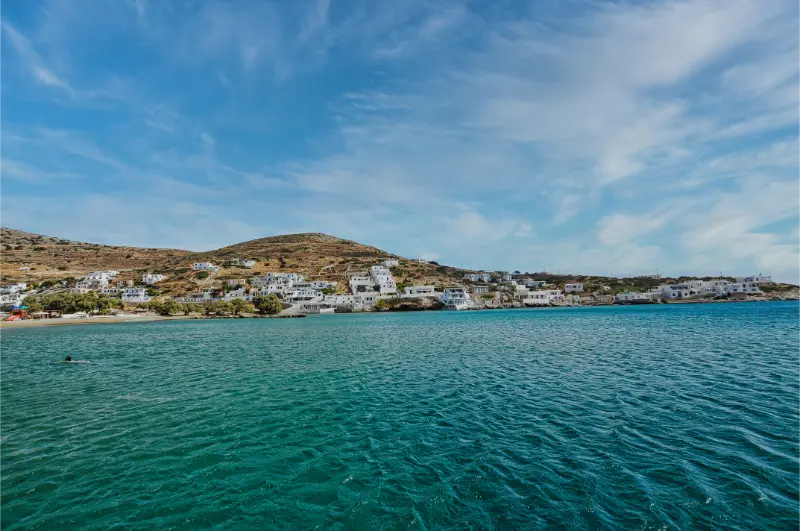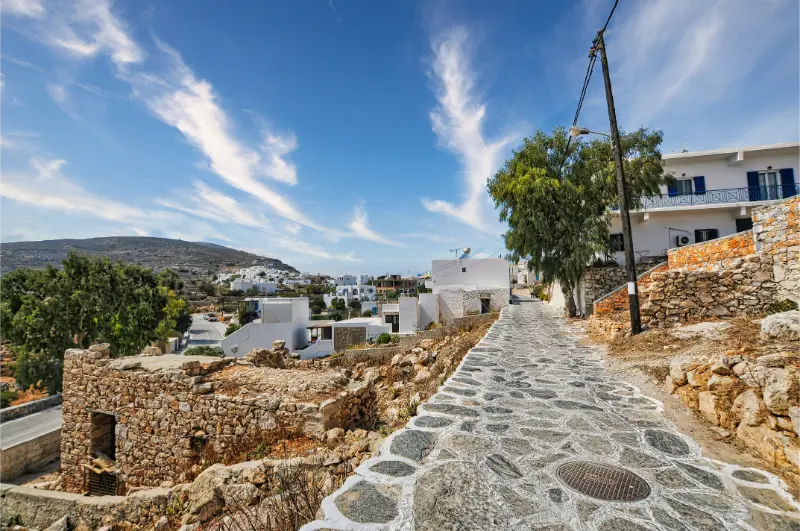
Author: Jessica

  • Katapola Amorgos Guide: Port, Xylokeratidi, Maltezi, Ancient Minoa and Where to Stay

    Katapola Amorgos Guide: Port, Xylokeratidi, Maltezi, Ancient Minoa and Where to Stay

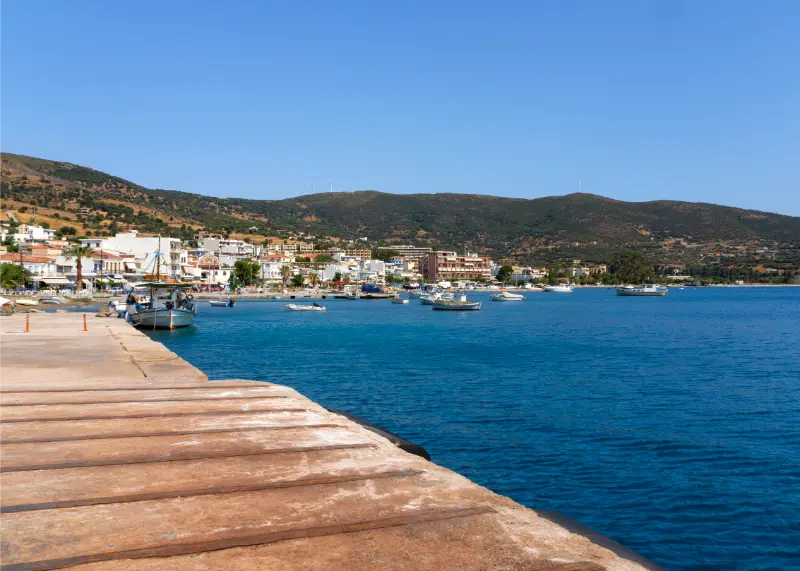
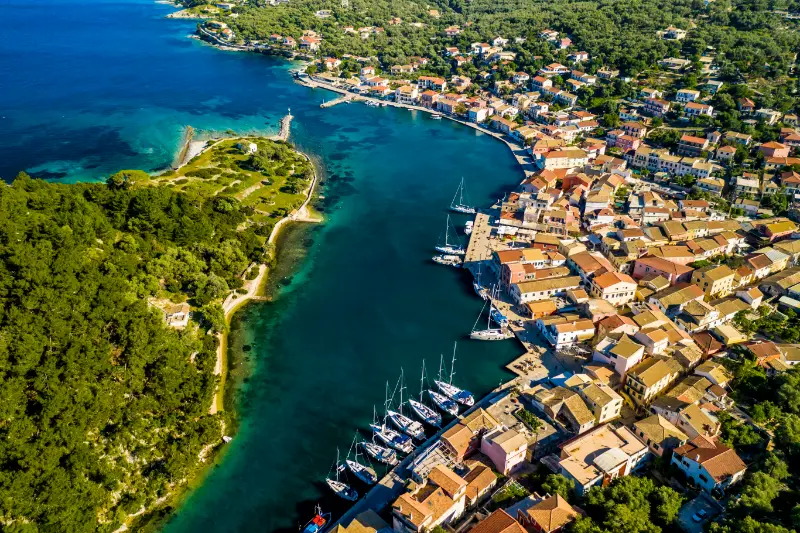
    Katapola is more than the place where the ferry door opens. Its deep natural harbour is divided into distinct waterfront areas, with Katapola village on one side and Xylokeratidi on the other. Boats, cafés and low white houses create an easy first impression, while Ancient Minoa rises on Moundoulia Hill above the bay and walking paths begin almost from the water.

    For travellers who dislike complicated arrival days, Katapola is one of the most practical bases on Amorgos. You can step off the ferry, reach many rooms on foot, connect by bus to Chora and Aegiali, and use local boats or paths for nearby beaches. It is not the island’s most dramatic village, but it often produces the smoothest trip.
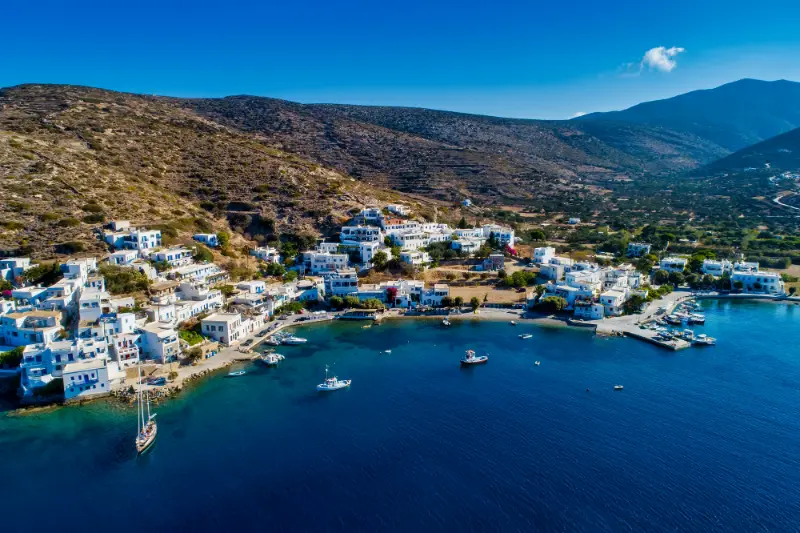
    Katapola Island Of Amorgos Cyclades Aegean Greece

    At a glance

    Best forFerry logistics, buses, harbour evenings
    To ChoraAbout 5.5 km
    To AegialiAbout 21 km
    Nearby historyAncient Minoa
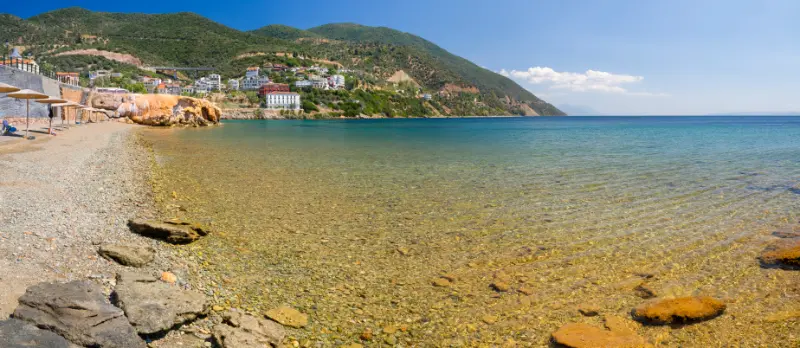
    Nearby swimMaltezi and harbour-area coves

    Understanding the harbour

    Katapola Bay is broad enough that “staying in Katapola” needs a little precision. The ferry quay and main village have practical services and transport, while Xylokeratidi across the bay has a quieter waterfront feel. Walking around the harbour helps you understand why many repeat visitors prefer one side over the other.

    If your ferry arrives late, choose accommodation that can explain the exact walking route and luggage transfer. The last few hundred metres matter more than the distance from the centre shown on a booking map.

    Xylokeratidi and the Evangelistria walk

    Xylokeratidi is the northern side of the bay and a good place for an evening stroll. From here, the marked Evangelistria route makes a compact introduction to Amorgos walking. The municipal trail description gives the circular route at about 3.7 km and roughly one hour, passing Nera, Vigla and the early Byzantine chapel of Evangelistria.

    This is a useful first hike because it is shorter and less committing than the island’s ridge routes. You still need proper shoes, water and sun protection; “easy” on a Cycladic path does not mean a flat paved promenade.

    Ancient Minoa above Katapola

    Ancient Minoa occupies Moundoulia Hill about 3 km above the port. The municipal guide describes occupation from the 11th century BC to the 4th century AD, with remains of defensive walls, a gymnasium, sanctuary structures and other buildings.

    The site can be reached by road or on foot; the municipality gives a walking time of about 35 minutes from Katapola. Go early in hot weather because the exposed hillside is part of the experience. Even when archaeological access is limited, the relationship between the hill and the natural harbour helps explain why the location mattered.

    Maltezi and nearby swimming

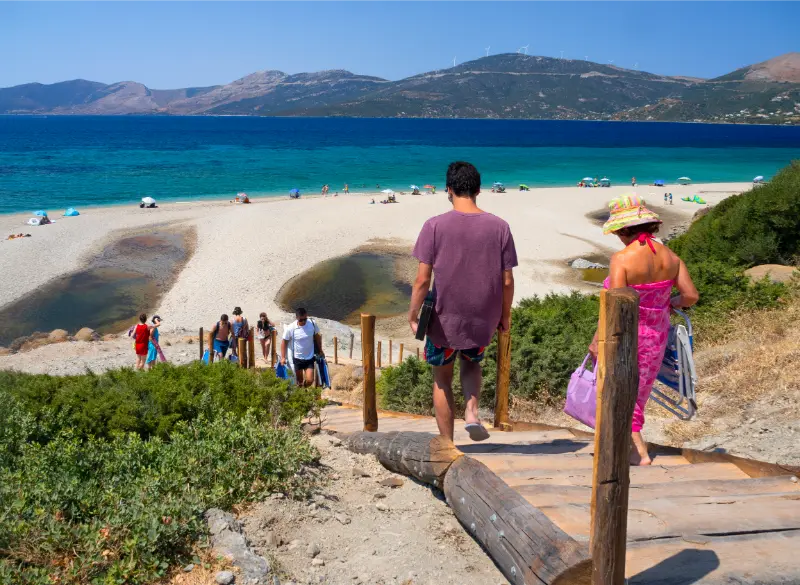
    Maltezi is one of the better-known sandy choices near Katapola and can be reached seasonally by local boat; walking options also exist depending on your route and conditions. Do not assume the boat runs on a fixed year-round timetable. Confirm locally, especially outside July and August.

    For a broader comparison, use Best Beaches in Amorgos. Katapola works best when you mix one easy local swim with day trips rather than expecting every famous Amorgos beach to be around the harbour.

    Beach Of Katapola Amorgos Greece

    Buses from Katapola

    Katapola is one of the main nodes in the seasonal bus network. Published timetables have included direct services toward Chora, Hozoviotissa/Agia Anna, Aegiali and parts of Kato Meria, but times and frequencies change. The bus company itself tells passengers to check again for route changes on arrival.

    That makes Katapola a strong base for Amorgos without a car, provided you design the itinerary around the current timetable instead of assuming a late bus will always exist.

    Where to stay around Katapola Bay

    Choose the ferry-side village for maximum convenience and the easiest access to buses, shops and arrivals. Choose Xylokeratidi for a calmer harbour atmosphere and immediate access to short walks. Both sides can work without a car.

    Check ferry noise, stairs, luggage access and the precise bus-stop distance before booking. Travellers with early departures often appreciate being able to walk to the quay rather than depending on a taxi before dawn.

    Food and evenings

    Katapola has enough waterfront dining to make evenings easy, but the best strategy is not to choose every meal by the closest sea-view table. Look for local dishes and ask what is cooked that day. Psimeni raki has a particularly strong association with the village: the local festival is held in Katapola on July 26.

    Read the Amorgos food guide before arriving if you want to recognise patatato, pasteli, anevates and the island’s distinctive liqueur rather than defaulting to the same dishes throughout Greece.

    Tours and experiences

    Organised activities on Amorgos are more limited than on Santorini or Mykonos, which is part of the island’s appeal. When a guided hike, boat trip or cultural tour fits the plan, compare the exact meeting point, duration, cancellation conditions and whether transport is included before booking.

    Frequently asked questions

    Is Katapola a good base without a car?

    Yes. It is one of the most practical bases because ferries, buses and harbour services meet here. Seasonal schedules still need checking.

    Can I walk to Ancient Minoa?

    Yes. The municipal guide describes a walk of about 35 minutes from Katapola, though heat and exposure can make it feel longer.

    Is there a beach in Katapola?

    There are swimming options around the bay, while Maltezi is a popular nearby sandy beach reached seasonally by boat or on foot routes.

    Katapola or Aegiali?

    Katapola is stronger for ferry logistics and central connections; Aegiali is stronger for a long sandy beach and access to Langada and Tholaria.

    How many nights should I stay?

    Three to five nights works well if Katapola is your only base. For a longer trip, some travellers split time with Aegiali.

    What is the easiest walk near Katapola?

    The Evangelistria circuit from Xylokeratidi is a good introduction, while other routes link toward Valsamitis and Chora.

    Planning details that make a real difference

    Amorgos looks compact on a map, but a stay based around Katapola Bay works best when you respect the island’s long, mountainous shape. Roads bend around ridges, buses are seasonal and several beaches or trailheads still require walking. Build the day around one part of the island instead of repeatedly crossing from north to south.

    In July and August, start exposed walks early and treat the middle of the day as swimming, lunch or shade time. The Meltemi can make the air feel cooler than it is, so do not use wind as a substitute for sun protection. In May, June, September and early October, walking is often more comfortable, but transport and boat services may run less frequently than at peak summer.

    Keep water, a hat and shoes with reliable grip in your day bag even when the plan does not sound like a hike. Many rewarding places on Amorgos are reached by stone steps, rough paths or steep village lanes. For remote beaches, assume there may be no shade, shower, shop or mobile signal exactly where you need it.

    Finally, leave some flexibility. Strong wind can change boat trips and beach conditions, a bus timetable can be revised, and a village festival may be a better evening than the restaurant reservation you planned months earlier. Organise the essential logistics, then allow the island to change the order of the day.

    Continue planning Amorgos

    For the rest of the island, continue with Chora Amorgos Guide; Aegiali, Langada and Tholaria Guide; Hozoviotissa Monastery Guide; Agia Anna and Mouros Beaches Guide; Best Beaches in Amorgos; Amorgos Hiking Guide; Amorgos Without a Car. These guides are designed to work together, so you can move from a general idea to the practical details of transport, beaches, walking and where to base yourself.

    Useful official resources

    For current destination information use Amorgos Municipality tourism guide. For public buses check the Amorgos Bus Company timetable page, which explicitly advises travellers to confirm route changes on arrival. For walking and beach overviews, Visit Greece hiking information and Visit Greece beaches of Amorgos are useful starting points. Recheck opening hours, buses and boat departures shortly before travel.

    Final practical advice

    Choose Katapola when port convenience, buses and a relaxed harbour matter more than having the island’s longest sandy beach outside the door. Stay long enough to see Xylokeratidi, walk one of the easy paths and climb toward Ancient Minoa; otherwise you have only used a real place as a transit lounge.

    How I would fit this into a first Amorgos trip

    For a first visit, I would avoid using this subject as an isolated checklist. Build it into a route that gives Chora, Katapola and the north enough time to feel different. A five- to seven-night stay can include one dedicated hiking day, two flexible swimming days, one cultural day around Hozoviotissa and Chora, and an evening in both a port and a mountain village. This balance is more revealing than trying to collect every beach and viewpoint in one loop.
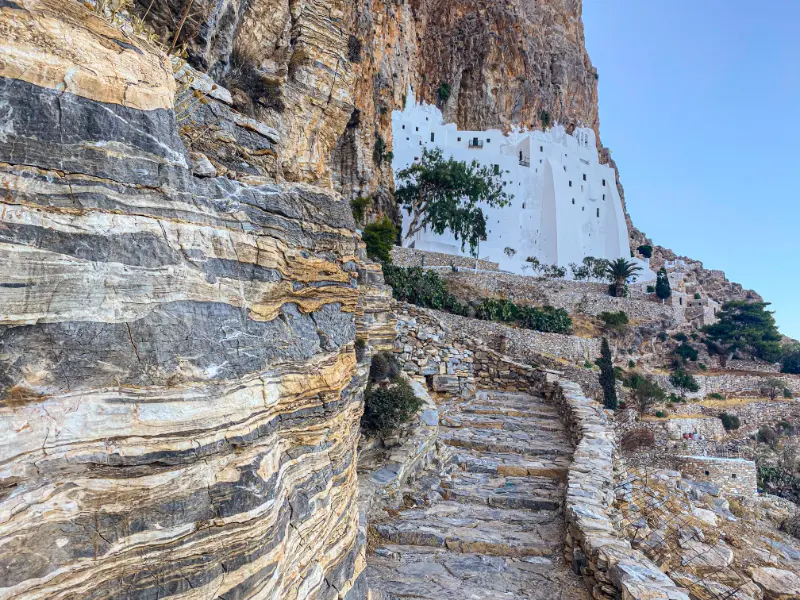
    Orthodox Monastery Panagia Hozoviotissa Amorgos Island Greece Cyclades

    Ferry times should shape the first and last day. If you arrive in Katapola, keep the first evening local instead of immediately crossing the island. If you arrive in Aegiali, enjoy the north first. The same logic applies on departure: sleep where the morning connection is easiest when the ferry is early, rather than creating a stressful taxi transfer simply to spend one final night in a prettier village.

    Amorgos also rewards seasonal thinking. May and early June suit walking and flowers but the sea may feel cool; July and August bring the broadest visitor services plus stronger heat and wind; September often combines warm water with better hiking temperatures, although bus and boat frequencies can begin to ease. October can be beautiful for independent travellers who accept a quieter island and fewer daily connections.

    Budget for occasional taxis even if you plan to use buses. One well-timed taxi can protect a hiking plan, solve an early ferry connection or let you eat in another village after the last convenient bus. That is usually better value than renting a car for an entire week if you only need private transport twice.

  • Crete Travel Guide: Best Places, Beaches and a 7-Day Itinerary

    Crete Travel Guide: Best Places, Beaches and a 7-Day Itinerary

    Crete is not an island you “do” in a weekend. It is the largest Greek island, and its scale is part of the appeal: Venetian harbour towns, Minoan archaeology, mountain roads, gorges, famous beaches, quiet villages, olive groves and a food culture strong enough to shape the whole trip. The first planning decision is not which beach to visit; it is which part of Crete to base yourself in.

    For a first visit I recommend at least five nights, preferably seven or more. If you have a week, focus mainly on western Crete or split the trip between Heraklion/central Crete and Chania. Trying to cover the entire island from one hotel creates too much driving.

    The four main regions

    Chania in the west is popular for its beautiful old harbour, access to famous beaches and mountain scenery. Rethymno offers an attractive old town and a useful central-west location. Heraklion is the main urban and transport hub for central Crete and the natural base for Knossos and important museums. Lasithi in the east includes Agios Nikolaos, Elounda and a different rhythm from the west.

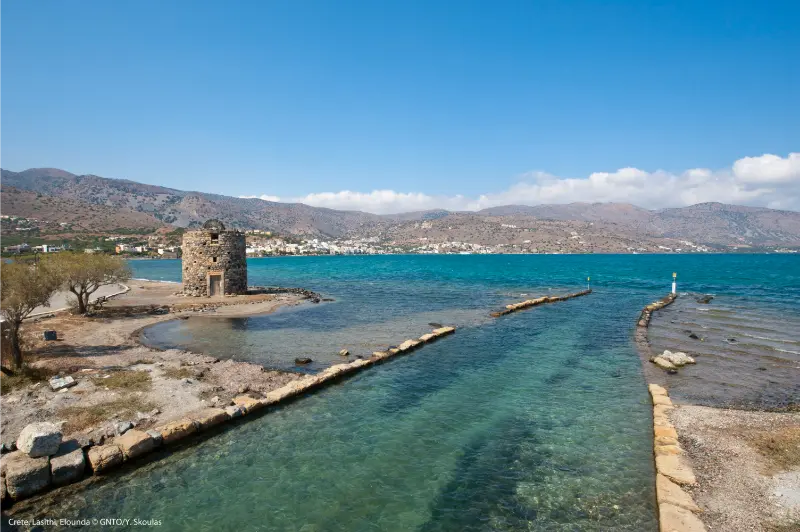
    Crete Lasithi Elounda

    Where should a first-time visitor stay?

    If you want the classic mix of charming town, beaches and road trips, Chania is hard to beat. If archaeology is central, give Heraklion at least two nights. If you prefer a resort-style stay with easy evenings, areas around Agios Nikolaos or the north coast may suit you. Rethymno can work as a compromise when you want access in both directions without changing hotels too often.

    Chania

    Chania’s old harbour is one of the most attractive urban settings in Greece, particularly early in the morning and after the busiest daytime hours. The lanes behind the waterfront reward slow walking, and the city is a good base for western excursions. Staying in or near the old town is atmospheric, but check parking and luggage access if you have a rental car because historic streets are not designed around modern vehicles.

    Heraklion and Knossos

    Heraklion is often treated as an airport stop, but it deserves more credit. The Archaeological Museum is a major reason to stay, especially when paired with Knossos. Visiting the museum and site with enough time gives Minoan Crete context that a rushed bus tour cannot. The city also has excellent food and a working urban atmosphere beyond tourism.

    Rethymno

    Rethymno combines an old town, Venetian and Ottoman layers, a long beach and a location between Heraklion and Chania. It can be a smart base for travellers who dislike constant hotel changes. The trade-off is that headline western beaches may still involve significant driving, so “central” on the map does not always mean short travel times on Cretan roads.

    Agios Nikolaos and eastern Crete

    Eastern Crete is a good choice for travellers who have already seen the west or prefer a slightly different landscape and pace. Agios Nikolaos is built around a picturesque lake and seafront, while nearby Elounda is associated with resort stays and access toward Spinalonga. The east also opens routes toward less-visited villages and beaches.

    Crete’s beaches: choose by region

    Crete has enough coastline that “best beach” lists can be misleading. Balos and Elafonissi are famous in the west, but both require planning around access, crowds and conditions. Falassarna offers a different western experience. The south coast has remote beaches and villages that can feel far from the north-coast resorts. In the east, palm-fringed and rocky landscapes create another style altogether.

    Do not design the entire trip around one famous beach photo. Weather, wind, parking and road time can change the day. Keep a second option in the same region.

    Do you need a car in Crete?

    You can visit Crete without a car if you base yourself in main towns and use buses or organised excursions. A car becomes much more valuable for villages, remote beaches and flexible day trips. The distances are larger than many first-time visitors expect, and roads can be winding. Build realistic driving times and avoid making every day a two-hour-each-way expedition.

    If you rent, choose the smallest vehicle that comfortably fits your group and luggage, check insurance terms and confirm parking at accommodation. The general Getting Around Greece guide covers rental-car planning in more detail.

    A 7-day Crete itinerary

    DayPlan
    1Arrive Heraklion; city dinner
    2Knossos + Heraklion Archaeological Museum
    3Drive/bus toward Chania with a stop in Rethymno
    4Chania Old Town + nearby beach
    5Western beach day
    6Mountain/village day or gorge/boat excursion
    7Flexible morning and departure

    If you fly in and out of Chania, use the whole week in western Crete instead. If you have ten days, add eastern or southern Crete rather than racing through all four regions.

    Hiking and gorges

    Crete is outstanding for active travel. The Samaria Gorge is the famous name, but it is not the only route. Hikes require more planning than a casual beach walk: seasonal opening, heat, water, footwear and onward transport matter. For any gorge, verify official access and weather conditions shortly before setting out.

    Food in Crete

    Food is one of the best reasons to travel slowly in Crete. Look for dakos, local cheeses, greens, pies, lamb or goat dishes, seasonal vegetables, olive oil and regional wines or spirits. The most memorable meals are often outside headline tourist zones, in places where the menu follows local products rather than a universal resort template.

    Landscape Near Georgioupoli Village Chania Regional Unit Crete Island Greece

    Do not arrive with a list of ten “must-eat” dishes and ignore what is seasonal. Ask what is good that day. A village lunch can become the centre of an excursion rather than something squeezed between beaches.

    Crete with children

    Crete is one of my strongest Greek-island choices for families because you can rent one apartment or hotel for several nights and still create different days. Choose a base near a family-friendly beach, keep drive times moderate and alternate cultural sights with swimming. Young children may enjoy Chania or Rethymno evenings more than long archaeological days, so adjust the balance to the family.

    Crete for couples

    Couples can combine a beautiful old-town hotel with a few nights in a quieter coastal or mountain property. Crete rewards road trips, so one of the most romantic versions of the island is not a luxury resort alone but the freedom to stop in villages, wineries and beaches that were not on the original plan.

    When to visit Crete

    Crete has a long season and is especially attractive in spring and autumn. Summer is reliable for beach holidays but can be hot, particularly for archaeological sites and hiking. Spring brings greener landscapes; September keeps warm sea temperatures while the peak pressure begins to ease. For the broader weather picture, see Best Time to Visit Greece.

    Common mistakes

    • Trying to visit Chania, Elafonissi, Knossos, Agios Nikolaos and the far south from one hotel in three days.
    • Underestimating mountain-road travel time.
    • Booking an old-town property with a car but no parking plan.
    • Treating Heraklion only as an airport.
    • Doing a major gorge hike without checking access and return transport.
    • Changing hotels too often on a one-week trip.

    How long should you stay?

    NightsRecommendation
    3–4Choose one region only
    5–7Excellent for one main region + limited second base
    8–10Comfortable two-base trip
    14Enough time for a broader road trip without rushing

    Is Crete a good first Greek island?

    Absolutely, especially for travellers who want more than a postcard island. Crete offers beaches, cities, archaeology, nature and food in one place, which can simplify a first trip. It is also a good answer for travellers who dislike ferry hopping. The only requirement is to respect its scale and resist the urge to see the entire island in a few days.

    For official regional information, seasonal events and destination ideas, see Incredible Crete. It describes Crete as Greece’s largest island and provides material across Chania, Rethymno, Heraklion and Lasithi.

    Crete FAQ

    Which airport is better: Chania or Heraklion?

    Choose the airport that matches your route rather than the one with the cheapest fare in isolation. Chania Airport is convenient for western Crete, while Heraklion is better for Knossos, central Crete and many eastern connections. An open-jaw trip—arriving at one and leaving from the other—can reduce backtracking if flight schedules and rental-car rules work.

    Can you stay in one place for a week?

    Yes. Chania, Rethymno or a well-chosen coastal base can support a full week, especially if you prefer slower days. The danger is using one base to attempt long cross-island drives every day. If several must-see places are on opposite sides of Crete, two bases are more efficient.

    Is Crete expensive?

    Crete covers a wide range of budgets. Luxury resorts and famous beachfront properties can be expensive, but the island also has apartments, family-run rooms and tavernas that make a moderate trip realistic. Car rental and fuel become important budget lines when you explore extensively.

    Tavernas Restaurants Old Town City Rethymno Crete Island Greece

    Can you visit Crete without beaches?

    Absolutely. Archaeology, cities, food, villages, hiking and mountain landscapes make Crete one of the strongest Greek islands outside a pure summer beach holiday. Spring and autumn are particularly attractive for travellers who want active days without peak heat.

    What should you book first?

    In high season, start with flights and the first/last accommodation, then the rental car if needed. Famous excursions and special hotels may also require advance planning. Keep ordinary beach days flexible because wind and driving conditions can change what makes sense on a given morning.

    A two-base rule that works well

    For a first week, two bases are usually enough. More than that creates repeated packing and check-in time; fewer than that can produce long drives if your interests are spread across regions. The exact pair depends on airports and priorities, but Heraklion + Chania or Rethymno + Chania are common logical structures.

  • Karpathos Travel Guide: Olympos, Beaches, Villages and a 7-Day Itinerary

    Karpathos Travel Guide: Olympos, Beaches, Villages and a 7-Day Itinerary

    Karpathos is one of the Greek islands where geography still shapes the trip in a very obvious way. Long and mountainous, it combines southern beaches and the main town of Pigadia with remote northern villages whose traditions developed in relative isolation. The result is an island that deserves far more than a quick beach weekend.

    Olympos is the headline village, and official Greek tourism material emphasises its distinctive cultural identity, music, customs and traditional dress. But Karpathos is equally compelling for hikers, windsurfers and travellers who enjoy driving through changing landscapes. If you already know Rhodes or Kos, this guide shows why Karpathos feels much wilder. See also my Rhodes guide and Kos guide.

    Olympos Village Cascading Down Mountainside Karpathos Island Greece

    Where to stay

    Pigadia, also called Karpathos Town, is the most practical base for a first visit. It has the widest choice of restaurants, shops, car rentals and services. Beach-focused travellers may prefer Amoopi to the south, while Lefkos on the west coast feels calmer and gives beautiful sunset light.

    For a week, I like the idea of splitting the stay: four or five nights in the south or centre, then two nights farther north if logistics work. That reduces long drives and lets you experience Olympos and Diafani after day visitors leave.

    Olympos: visit with respect

    Olympos is extraordinary because traditions remain part of daily life, not because the village exists as an open-air costume display. Approach it as a living community. Ask before photographing people closely, especially residents in traditional clothing, and spend money in local cafés, shops or tavernas rather than only taking pictures.

    The journey itself is part of the experience. Roads have improved compared with the past, but distances still take time. An organised excursion can be useful if you do not want to drive mountainous roads. Staying overnight gives the village a quieter atmosphere after excursion traffic leaves.

    Pigadia and the east coast

    Pigadia is not the most romantic Greek island capital, but it is useful and pleasant for evenings. The harbour, restaurants and waterfront make an easy base, and archaeological remains around the area remind you that Karpathos has a long history beyond its folk traditions.

    East-coast beaches such as Kyra Panagia and Apella are among the island’s famous landscapes. Access can involve winding roads and limited parking, so leave early in high season. Boat excursions are another way to see coves without driving every day.

    Best beaches

    Apella is the classic Karpathos beach image, backed by rugged slopes and clear water. Kyra Panagia has a striking setting beneath cliffs and a small church. Amoopi offers several accessible coves near accommodation. Lefkos gives a different west-coast atmosphere and works well on calmer days.

    Most Beaches Greece Apella Karpathos Island Dodecanese

    Wind matters enormously on Karpathos. The island is internationally known for windsurfing, particularly around the south. A beach that looks perfect online may be uncomfortable under strong wind, so ask locally each morning rather than forcing a fixed plan.

    Villages beyond Olympos

    Menetes, Aperi, Othos and other mountain settlements deserve time if you want to understand the island beyond beaches. They offer traditional architecture, churches, views and local food without the intensity of Olympos tourism.

    Plan villages geographically instead of zigzagging across the mountains. Two or three meaningful stops with a long lunch are better than six rushed parking exercises.

    Hiking and outdoor activities

    Karpathos has mountainous terrain and walking routes that reward experienced hikers, especially outside peak summer. Trails connect villages and cross landscapes that feel surprisingly rugged for an island holiday destination.

    Heat, wind and limited shade are serious considerations. For anything beyond a short village walk, start early, carry enough water and use reliable route information. Windsurfing and other water sports are best arranged with established local operators if you need equipment or instruction.

    Food and local traditions

    Karpathos has strong food traditions shaped by agriculture and village life. Look for handmade pasta dishes, breads, local cheeses, pies and seasonal vegetables. In smaller villages, menus may reflect what is available rather than a large standardized catalogue.

    Festivals and panigyria can be powerful cultural experiences, but remember that they are community events first. Participate respectfully, follow local cues and avoid treating religious celebrations as entertainment staged for visitors.

    Getting around

    A rental car is highly useful on Karpathos because attractions are spread over a long mountainous island. Choose a vehicle you are comfortable driving on winding roads and inspect tyres before leaving the rental office. Fuel up before remote northern excursions.

    Buses exist but are less flexible for a full-island itinerary. Boats can connect Pigadia with beaches and Diafani depending on season and weather. If you do not want to drive, combine a town base with organised day trips.

    A seven-day itinerary

    Day one: Pigadia and nearby beaches. Day two: Apella or Kyra Panagia. Day three: mountain villages such as Menetes and Othos. Day four: drive or tour north to Olympos and Diafani. Day five: west-coast beaches around Lefkos. Day six: hiking, windsurfing or a boat trip. Day seven: keep flexible for the beach or village you most want to revisit.

    With ten days, split accommodation between south/central Karpathos and the north. The island is too varied to improve by simply adding more daily driving.

    When to visit

    June and September are excellent for road trips and hiking with warm swimming conditions. July and August are hotter and windier, which is attractive for windsurfing but can change beach plans. May and October suit active travellers if seasonal services align with your needs.

    Karpathos has an airport, which can simplify a trip compared with ferry-only islands. Flight schedules vary by season, so compare air and sea options before building the rest of the itinerary.

    Frequently asked questions

    How many days do I need in Karpathos?

    A full week is ideal for a first visit because the island is long and mountainous. Ten days is even better if you want hiking and slower village stays.

    Do I need a car?

    For most independent visitors, yes. A car makes beaches and villages far easier to combine, although organised tours can cover Olympos.

    Is Olympos worth visiting?

    Yes, especially if you approach it as a living community rather than a photo attraction. Staying overnight can provide a quieter experience.

    Is Karpathos good for windsurfing?

    Yes. The island is known for strong winds, particularly in southern areas, and attracts experienced windsurfers as well as people taking lessons.

    Planning Karpathos in practice

    Karpathos is large enough that changing hotel once can improve the whole trip. Travellers who stay only around Pigadia often spend several hours driving on the day they visit Olympos. One or two nights in the north transforms that excursion into a slower experience and gives you access to Diafani after the boats leave.

    When renting a car, choose comfort and reliability over the lowest daily price. You will use mountain roads, and good air conditioning, tyres and brakes matter. Photograph the vehicle at pickup and understand the fuel policy before leaving the airport or town.

    Wind should shape your beach plan. Keep a shortlist on both east and west coasts rather than fixing one beach to one day months in advance. Local residents know which bays are protected under the current wind direction, and asking each morning is one of the simplest ways to improve the trip.

    If you attend a village festival, remember that music and dress are part of local culture, not a performance package. Buy food or drinks, follow the pace of the event and ask before taking close photographs. Respect is especially important in villages where traditional practices remain part of everyday identity.

    Village Arkasa Karpathos Island Greece

    Karpathos airport makes fly-and-drive itineraries possible, but always compare the car-return time with your flight. Small island airports can be efficient, yet summer rental desks and fuel stops still need margin.

    Travel days also deserve their own space in the itinerary. Leave time for breakfast, packing, transfers and delays instead of counting a ferry or drive as invisible time. This simple adjustment makes the entire Greece trip feel calmer and more realistic.

    Karpathos airport makes fly-and-drive itineraries possible, but always compare the car-return time with your flight. Small island airports can be efficient, yet summer rental desks and fuel stops still need margin.

    More detailed Dodecanese guides

    Continue with Olympos for more detailed planning.

    More detailed Karpathos guides

    For deeper trip planning, continue with these dedicated Karpathos guides: Pigadia Karpathos Guide: Harbour, Beach, Museum, Food and Where to Stay; Arkasa and Finiki Karpathos Guide: Paleokastro, Beaches, Sunset and Where to Stay; Lefkos and Mesochori Karpathos Guide: Beaches, Village Walks, Sokastro and Where to Stay; Karpathos Mountain Villages Guide: Aperi, Othos, Volada, Pyles and Menetes; Apella, Kyra Panagia and Achata Karpathos Guide: Access, Swimming and Boat Trips; Best Beaches in Karpathos: 15 Beaches for Families, Snorkelling, Wind and Scenery; Karpathos Hiking Guide: Best Trails, Lastos, Olympos, Diafani and Saria; Karpathos Windsurfing Guide: Afiartis, Chicken Bay, Wind, Lessons and Where to Stay; Karpathos Without a Car: Buses, Boats, Taxis and the Best Bases; Where to Stay in Karpathos: Pigadia, Ammoopi, Arkasa, Lefkos or Diafani?.

    Related itinerary: Rhodes and Karpathos in 10 Days: Dodecanese Island-Hopping Itinerary.

  • Where to Stay in Sikinos: Chora, Alopronia or the Quiet Countryside?

    Where to Stay in Sikinos: Chora, Alopronia or the Quiet Countryside?

    Compare the best areas to stay in Sikinos, including Chora, Alopronia and quieter countryside locations, with advice for couples, families, hikers and car-free travellers.

    Sikinos does not have a long list of resort zones, which makes accommodation choice simpler but more important. Most visitors will be happiest in Chora or Alopronia. The question is whether you want traditional village evenings and trail access or immediate ferry and beach convenience. A handful of quieter properties outside the main settlements suit travellers with transport and a preference for privacy.

    Quick planning notes

    • Choose Chora for atmosphere, restaurants, sunset walks and easier access to cultural sights and trails.
    • Choose Alopronia for ferry arrivals, easy swimming and minimal transfer stress.
    • Choose a countryside property only after checking road access, transport, groceries and evening logistics.
    • Book earlier for July and August because the island has a small accommodation inventory.

    Chora: best for first-time visitors who value atmosphere

    Chora is the most rewarding base if you want to experience Sikinos after the beach day ends. Kastro and Chorio provide the island’s strongest concentration of cafes, tavernas, traditional lanes and cultural sights. The monastery walk and several trail connections are also close, so days can begin on foot without first arranging transport.

    Kastro Sikinos Island Greece

    The main disadvantage is the transfer from the port and the possibility of steps or steep pedestrian lanes. Ask the accommodation exactly where a vehicle can stop. A “central” room may still require carrying luggage through a section inaccessible to cars.

    Alopronia: best for convenience and families

    Alopronia is ideal for travellers who want the simplest possible arrival. The ferry docks here, the island’s most accessible beach is beside the harbour and there are enough food and practical services for a low-stress stay. Families with young children often appreciate being able to swim without organizing transport.

    The trade-off is evening atmosphere. Chora is more attractive for long dinners and village walks, so you will need the bus or a taxi when you want that experience. Check the last return rather than assuming transport runs late.

    Countryside stays: best for privacy

    A rural room or house can provide silence, views and an even stronger sense of the island’s terraced landscape. This is attractive for couples, writers and longer-stay travellers who are comfortable shopping in advance and organizing transport. It can also put you closer to hiking routes or the winery.

    The same isolation becomes inconvenient if you want to eat out every night without driving. Ask about road quality, parking, walking safety after dark and the distance to the nearest shop. On a small island, 2 km can still be awkward if the route is steep, unlit or exposed.

    Best base for hikers

    Chora is the natural hiking base because the signed network radiates toward Alopronia, Zoodochos Pigi, Episkopi and other parts of the island. You can walk directly from breakfast rather than using a vehicle to reach every trailhead. This also makes one-way walks easier when paired with a bus or taxi.

    If your hiking priority is only one or two routes and you also want daily swimming, Alopronia can still work. Use morning transport uphill and walk down when temperatures are lower.

    Best base for couples

    Couples who imagine evenings in whitewashed lanes, wine with dinner and a short sunset walk will usually prefer Chora. The settlement has more atmosphere without requiring nightlife. A room with a terrace can be more meaningful here than a large hotel-style property because the village itself provides the experience.

    Couples prioritizing sea views and a beach before breakfast may prefer Alopronia or a quiet rural house. Decide whether your ideal final hour of the day is on a village square or beside the water; that answer usually resolves the accommodation choice.

    Best base for families

    Alopronia wins on pure logistics. The beach is easy, ferry days are simpler and children do not need a transfer every time they want to swim. Chora works for families who enjoy walking and can manage steps, but parents should check room access and transport carefully.

    For babies or toddlers, ask about cots, air conditioning, blackout shutters and the route from the nearest vehicle stop. Small-island charm can come with historic buildings and stairs that are not obvious in listing photos.

    How long to stay in one base

    Sikinos is too small to justify moving hotels during a normal three- to five-night visit. The time lost to packing is not worth saving a few bus journeys. Choose one base and use the island’s short distances to explore from there.

    Kastro Sikinos Island Greece

    Only consider a split stay if your ferry times make one night at the port unusually practical or if you are staying for a week or more and deliberately want two different rhythms. Even then, the advantage is experiential rather than logistical.

    Where to stay and when to book

    Sikinos has a much smaller accommodation supply than Santorini, Paros or Naxos. That is part of its appeal, but it also means that the best-located rooms in Chora and Alopronia can disappear early for July and August. Compare the exact position on a map, not only the property name, because a beautiful hillside room may involve steps, steep lanes or a walk that feels very different with luggage in midday heat. Check current Sikinos accommodation on Booking.com.

    For a short first visit, convenience usually matters more than a dramatic view. Chora is stronger for evenings, atmosphere and trail access, while Alopronia is easier for ferry days and quick swims. If you are travelling without a car, ask the host how far the nearest bus stop is and whether they can help with luggage when ferries arrive late.

    How to make the trip work in practice

    Sikinos works best when the itinerary follows the island rather than fighting it. Plan one main objective per half-day: a monument, a trail, a beach or a long meal. Boat-access beaches depend on wind, walking routes are exposed to sun, and small museums or churches may not operate with big-island opening patterns. Keep a second option ready and confirm local details after arrival.

    Carry water, sun protection and an offline map whenever you leave the two main settlements. Services are intentionally limited outside Chora and Alopronia. That does not make the island difficult; it simply rewards travellers who prepare before setting out and who leave enough time to enjoy a place instead of rushing between checkpoints.

    Frequently asked questions

    What is the best area to stay in Sikinos?

    For most first-time visitors, Chora is best for atmosphere and hiking, while Alopronia is best for beach and ferry convenience.

    Is it worth staying near the port?

    Yes if you have a short stay, children, a late arrival or an early ferry. Alopronia is not only a port; it also has the island’s easiest beach.

    Do I need to change hotels to see Sikinos?

    No. One base is enough for a normal visit because distances are short and the island can be explored by bus, taxi, walking and boat.

    Useful sources for current information

    For details that can change, use the Municipality of Sikinos, the official Visit Greece Sikinos page, the Visit Greece hiking guide and the official Sikinos beaches overview. Ferry routes and seasonal sailings should be checked again shortly before travel through the Fast Ferries Sikinos page or your booked operator.

    Related guides

    A slower rhythm is part of the destination

    One of the easiest mistakes on Sikinos is to judge the island by the number of formal attractions. Its strength is the relationship between Chora, terraced fields, dry-stone walls, chapels, old paths and small coves. A morning walk that ends with lunch can be a complete day rather than a gap between major sights. The same is true of an evening in Kastro: there is no need to add another excursion simply because the map looks small.

    Kastro Sikinos Island Greece

    This slower approach also protects the trip from weather changes. If wind makes a boat excursion unattractive, walk a signed trail or spend more time in Chora. If the afternoon is too hot for hiking, use the beach and move the trail to early morning. Travellers who leave this flexibility usually see more of the island in a meaningful way than those who try to complete a fixed checklist.

    Shoulder season deserves special planning. Walking temperatures can be excellent, but transport, tavernas and excursions may operate less frequently than in peak summer. Confirm what is open, buy water before long walks and avoid assuming that a service listed online runs every day. The reward is an even quieter version of an island that is already known for calm, traditional Cycladic life.

    Small-island details that make a difference

    Because Sikinos has few layers of backup infrastructure, simple preparation has an outsized effect on the quality of a day. Save important phone numbers offline, keep some cash, refill water whenever you pass an open shop and tell your accommodation if you are heading onto a remote path. None of these steps are dramatic, but together they prevent the common problems that arise when visitors apply big-island habits to a place with a much smaller service network.

    Also leave room for local advice. A host, taverna owner, driver or boatman can tell you whether a trail is especially hot, a cove is rough, a museum is opening later than usual or a ferry has changed berth. On Sikinos, current local information is often more useful than a rigid plan made months earlier. Use published guides to understand the island, then let real conditions shape the final details.

  • Best Beaches in Evia: Chiliadou, Agia Anna, Kalamos, Korasida, Marmari and More

    Best Beaches in Evia: Chiliadou, Agia Anna, Kalamos, Korasida, Marmari and More

    Evia has around 680 kilometres of coastline, so a list of “the best beaches” only makes sense if it also explains geography. The exposed Aegean side can be dramatic, with steep mountain backdrops and open-sea waves, while the gulfs on the western side often feel gentler and easier for casual swimming. South Evia adds windy capes, broad bays and ferry-accessible beach towns.

    Grand Sandy Beach Aegean Sea With Holidaymakers Tourists Greek Island Evia Greece

    The biggest planning mistake is trying to collect famous beaches from every part of the island in one day. Evia is long, roads are often winding, and a beach that looks 40 kilometres away may take much longer than expected. Choose beaches by region and by the wind forecast.

    Chiliadou: the dramatic central-east classic

    Chiliadou sits on the Aegean side below Mount Dirfys and is reached by a scenic mountain road through the Stropones area. The broad pebbled shore, cliffs and open-sea setting make it one of Evia’s most memorable beaches.

    The same exposure that creates the scenery can produce powerful waves. Check conditions before swimming, especially with children or weak swimmers. The drive is beautiful but tiring, so avoid pairing Chiliadou with a distant north- or south-island attraction on the same day.

    Agia Anna and the long north-east coast

    Agia Anna, also known as Agkali, has a very long beach on the north-eastern side. Its scale means you can usually find a section that fits your mood, from organised areas to quieter stretches.

    Because the coast faces the Aegean, wind and swell matter. A calm morning can feel different later in the day. If conditions become rough, switch to sightseeing or drive to a more sheltered coast rather than forcing a swim.

    Kalamos and Korasida

    Kalamos and Korasida on the eastern side are known for bright water and striking pebble-and-rock scenery. They are excellent choices when you are based around Kymi, Avlonari or central-southern Evia.

    Road access is part of the trip. Download offline maps, refuel before remote drives and avoid assuming every beach road has lighting at night. These are better as deliberate day trips than spontaneous detours during a long transfer.

    Mourteri and the Kymi coast

    Mourteri offers a long open beach south of Kymi and is useful when you want space rather than a compact cove. Nearby coastal villages give you options for lunch without driving back inland.

    Open Aegean beaches can have shore break. If the sea is rough, enjoy the view and move to a protected swimming area; there is no prize for entering water that looks uncomfortable.

    Marmari, Megali Ammos and South Evia

    The Marmari area gives South Evia a different beach personality. Megali Ammos is visually distinctive and can be windy, while smaller coves around the south offer alternatives. Karystos has its own accessible beaches and makes a practical base.

    View Beach Aegean Sea Near Town Marmari Greek Island Evia Greece

    South Evia is particularly good for travellers arriving through Marmari or combining beach time with Mount Ochi and Dimosari Gorge. Wind-sport conditions can be attractive to experienced users but less comfortable for families seeking flat water.

    Gulf-side beaches for easier days

    The western shores around Eretria, Amarynthos, Rovies and Edipsos often provide easier logistics: shorter walks from parking, nearby tavernas and more sheltered water on many days. They may not look as wild in photographs, but they can be better for a relaxed family afternoon.

    Use the gulf side strategically on windy Aegean days. Evia’s size means you cannot always cross the island quickly, so choose accommodation that gives you access to the style of beach you expect to use most.

    How much time should you allow?

    For best beaches in Evia, I would allow at least a full day if you are visiting from another part of Evia, and longer when the area itself is your base. Evia’s distances are deceptive because many roads cross mountains or follow indented coastlines. A schedule that looks efficient in kilometres can become rushed once you add parking, lunch, swimming and photo stops.

    If you have only one day, choose two priorities and leave the rest for another trip. With two or three days, you can add a slower beach afternoon, a local dinner and one inland or cultural excursion. That extra time is usually what turns an Evia visit from a driving exercise into an actual holiday.

    Beach With Healing Spring Spa Resort Loutra Edipsou Greek Island Evia Greece

    Best time to visit

    Late spring and early autumn are excellent for road trips because temperatures are usually more comfortable for walking and driving. July and August bring the warmest sea and the widest range of seasonal beach services, but also stronger sun, busier weekends and higher fire risk in dry landscapes.

    For hiking or exposed archaeological sites, start early even outside peak summer. For beach days, check wind as well as temperature: the Aegean coast can be rough while the gulf side is comfortable, or vice versa. In winter, Evia remains accessible by road, but seasonal accommodation, boat trips and beach businesses may close.

    Getting around this part of Evia

    A rental car is the most useful tool for exploring Evia beyond the main towns. Public buses connect important settlements, but they are not designed around a visitor trying to combine remote beaches, trailheads and villages in one day. Taxis work well for specific transfers but become expensive as a substitute for a car over long distances.

    Download offline maps before crossing the mountains, keep fuel above half a tank on remote drives and avoid planning unfamiliar rural roads after dark. If you are renting in Athens, check the company’s rules before taking the vehicle on any ferry route. Road conditions and temporary closures should be verified locally after severe weather or during periods of high fire danger.

    Where to stay and booking strategy

    For live availability, compare accommodation across Evia on Booking.com. On this island, the map pin matters as much as the hotel rating. A property advertised under a well-known town name may be several kilometres away on a hillside or rural coast.

    Before paying, check parking, road access, walking distance to dinner and whether air conditioning is included. If you are building a road trip, choose accommodation that shortens the next day’s drive instead of returning to the same base purely out of habit. Two well-chosen bases usually beat one central-looking base for a week.

    Eating well without overplanning

    Evia rewards simple meals: grilled fish on the coast, meat and pies in mountain villages, salads, local cheese, honey, figs and olive-oil-based dishes. Ask what is fresh and regional rather than ordering only the same famous Greek dishes at every stop.

    For restaurants that matter to you, book ahead on summer weekends. Otherwise, keep some flexibility and eat where the day naturally ends. Long evening drives on mountain roads are rarely worth it just to reach a restaurant with a slightly higher online score.

    Common planning mistakes

    • Treating North Evia, central Evia and South Evia as if they were one compact resort area.
    • Ignoring wind and sea conditions when choosing an Aegean-facing beach.
    • Scheduling a remote beach, a mountain hike and a long transfer on the same day.
    • Following an old boat or bus timetable without checking the current season.
    • Underestimating summer heat, fire restrictions and the lack of shade at exposed sites.
    • Booking accommodation without checking its exact road access and parking situation.

    A simple one-day plan

    Start early and make the main purpose of the day best beaches in Evia. Use the coolest morning hours for walking, archaeology or driving to a viewpoint. Break for a long lunch rather than adding another distant attraction, then use the afternoon for a swim, an easy town walk or a short coastal stop.

    Keep the last hour flexible. If the weather is good, stay for sunset or another swim. If wind rises or everyone is tired, return to your base before dark. This flexibility is especially valuable in Evia, where the best days often come from doing less driving than you originally planned.

    Useful official information

    For destination background, start with Visit Greece. For mountain routes around Steni, the official tourism site also publishes descriptions of the marked trail network and the Stropones Gorge. Always recheck opening hours, local transport, ferry departures and seasonal boat trips close to your travel date.

    Weather and fire-risk information are particularly important for mountain and forest areas. If a road, trail or beach access is officially closed, do not bypass barriers because an older map suggests a route continues.

    Tours and activities

    Organised experiences on Evia are more seasonal than on Santorini or Mykonos. The widget below is useful for checking whether boat trips, outdoor activities, food experiences or transfers are available on your dates. Verify meeting points and cancellation terms before paying.

    Continue planning your Evia trip

    Final advice

    Best Beaches in Evia works best when it is treated as part of Evia rather than an isolated attraction. Build the day around realistic road times, weather and one or two strong experiences. The island’s advantage is variety: when wind, heat or energy levels change, you can often switch from beach to village, mountain to waterfront, or archaeology to a long lunch without wasting the day.

    The most useful habit is to check tomorrow’s conditions each evening. Ten minutes spent confirming weather, transport and opening information can save hours of unnecessary driving. Leave room to change your mind, because Evia is large enough to reward a second trip rather than a first trip overloaded with every possible stop.

  • Where to Stay in Folegandros: Chora, Karavostasis, Agali or Ano Meria?

    Where to Stay in Folegandros: Chora, Karavostasis, Agali or Ano Meria?

    Where you stay in Folegandros changes the rhythm of the holiday more than it changes the distance. The island is compact, but Chora, Karavostasis, Agali and Ano Meria solve very different problems. Chora makes evenings effortless, the port simplifies ferries, Agali puts the beach outside the door and Ano Meria gives you rural quiet and hiking access.

    Chora Folegandros Island Greece

    For a first visit of three or four nights, I would usually choose one base rather than move luggage. The decision should come from what you want to do before breakfast and after dinner, not from which hotel photo has the best view.

    ChoraBest all-round base for atmosphere, restaurants and no-car travel
    KaravostasisBest for ferries, short stays and easy port beaches
    AgaliBest for a beach-first holiday and families
    Ano MeriaBest for hiking, quiet and rural character
    Short trip ruleUse one base; do not waste time changing rooms

    Chora: best for most first-time visitors

    Chora is the default recommendation because the pedestrian centre gives you restaurants, cafés, bars, Kastro, Panagia and bus connections without an evening transfer. It is especially strong for couples and travellers without a car. You can spend the day elsewhere and know the evening will be simple.

    The downside is beach access. Every serious beach day requires transport or a walk. Also check luggage access: a room “in Chora” can be several lanes and steps from the nearest vehicle drop-off.

    Karavostasis: best for ferry convenience

    Stay at the port if you have an early departure, arrive late, or are spending only one or two nights. Vardia and small coastal beaches make the area more than a transport zone, and Katergo boats leave from here.

    The compromise is atmosphere. Dinner options are more limited and the dramatic cliff-top village experience is in Chora. A good strategy is one final night at Karavostasis only when it solves a difficult ferry schedule.

    Agali: best for a beach-first stay

    Agali is the easiest base for swimming every day. The main sandy beach is steps away, Fira and Galyfos are short walks, and seasonal boats expand the coastline. Families and couples who care more about sea access than nightlife can be very happy here.

    You will have fewer evening choices than in Chora. Check the current bus schedule if you expect to eat in the capital every night; otherwise embrace the bay and keep evenings local.

    Greece Folegandros Island Traditional Outdoor Cafe Bar Tavern Chora Square

    Ano Meria: best for hikers and quiet

    Ano Meria gives you the most rural version of the island. It puts old paths, the Ecomuseum and western-coast hiking routes close to the room. Sunsets and silence can be excellent, but the settlement is dispersed and transport needs more thought.

    Without a car, only book after confirming the exact walking distance to a bus stop. With a car, check the final access road and parking. Remote views are not useful if every dinner requires a stressful drive in the dark.

    Best area without a car

    Chora is the easiest because you eliminate evening transport and the bus network radiates toward the port, Ano Meria and Agali. Karavostasis is second if ferries and Katergo matter more than nightlife. Agali works for a deliberately beach-focused stay.

    Best area for families

    Agali is strongest for immediate sand and a simple day rhythm. Karavostasis can also work because nearby beaches are easy and arrival logistics are flat. Chora suits families with older children who enjoy village evenings, but stroller users should ask about steps.

    Best area for couples

    Chora has the strongest overall atmosphere: sunset walk, dinner in the squares and no transport home. Agali is more romantic for a beach retreat. Ano Meria suits couples who prefer quiet, walking and a rural setting.

    Should you split your stay?

    With three or four nights, no. The island is too small to justify packing again. With five or six nights, a Chora + Agali split can make sense if you genuinely want two rhythms, or Chora + Karavostasis if an early ferry makes the final night practical.

    Avoid moving hotels simply to save a 15-minute bus ride. Check-in, check-out and luggage handling usually consume more time than the transport you were trying to avoid.

    Questions to ask before booking

    • How far is the room from the nearest vehicle drop-off or bus stop?
    • How many steps are involved with luggage?
    • Is air-conditioning included and adequate for peak summer?
    • Is the room directly over a busy square or road?
    • If staying at Agali or Ano Meria, what is the last practical return from Chora?
    • Can the property help arrange a taxi for an early ferry?

    How I would plan a day around your Folegandros base

    The easiest way to enjoy your Folegandros base is to give it a clear role in the day rather than squeezing it between unrelated stops. Choose the base that makes mornings and evenings easy, then day-trip to the rest of the island. Folegandros is small on a map, but heat, wind, footpaths and waiting for a bus or boat can make short distances feel longer. Build the day around one coast or one walking corridor and keep a second option for changing conditions.

    Buses make one-base trips practical, while taxis and seasonal boats fill specific gaps. I would avoid making a tight sequence of reservations around transport that is seasonal or weather-dependent. A slower plan is not wasted time here: coffee in a square, a swim that lasts an hour longer than expected, or an early dinner after a hike is part of the reason to choose Folegandros over a larger resort island.

    Who this experience suits best

    Chora suits most first visits; Agali suits beach holidays; Karavostasis solves ferry logistics; Ano Meria rewards walkers and quiet-seekers. It is less suitable for travellers who need a long list of organised attractions every day. Folegandros works best when you are comfortable with simple routines, walking and choosing quality over quantity.

    Port Town Karavostasis Folegandros Greece

    What to carry

    • Water in a reusable bottle, with extra capacity for remote beaches or trails
    • Sun protection: hat, sunglasses and high-SPF sunscreen
    • Shoes with grip if the plan includes old paths or rocky approaches
    • A light layer for windy evenings or exposed boat rides
    • Offline maps or screenshots of the return route and current transport information
    • Cash as a backup for small seasonal services or boat tickets

    Common mistakes to avoid

    Do not choose accommodation from the sea-view photo alone. Access, steps, bus distance and evening transport have more impact on the actual holiday. Another common mistake is assuming that a place described as “close” is effortless to reach. On Folegandros, 2–4 km can involve strong sun, exposed paths, steep gradients or a bus that runs only at certain times. Match the day to your actual fitness and the weather, not to the map scale.

    A final mistake is overplanning sunset. The island has beautiful evening light from many places, but racing from a beach to a famous viewpoint can turn a relaxed day into a stressful one. If the day is already working, stay where you are and enjoy the light there.

    Continue planning your Folegandros trip

    Use these guides together rather than as isolated checklists. Start with the main Folegandros Travel Guide and then open the specialist pages that match the way you want to travel: Chora Folegandros Guide; Karavostasis Folegandros Guide; Ano Meria Folegandros Guide; Agali Folegandros Guide; Katergo Beach Folegandros Guide; Livadaki Beach Folegandros Guide; Best Beaches in Folegandros; Folegandros Hiking Guide; Folegandros Without a Car.

    Useful official sources before you go

    For destination details I cross-check the official Folegandros visitor portal and Visit Greece. Beach boats, local buses, ferry schedules, museum hours and seasonal businesses can change, so verify time-sensitive details shortly before travel. The official island portal lists accommodation and access information by settlement, which is useful for checking how each base connects to buses, beaches and services.

    Frequently asked questions

    What is the best area for a first visit?

    Chora is the easiest all-round choice for atmosphere, food and bus connections.

    Where should families stay?

    Agali is excellent for immediate beach access; Karavostasis is also practical for easy logistics.

    Where should couples stay?

    Chora for atmosphere and dining, Agali for a beach retreat, or Ano Meria for quiet.

    Should I stay near the port?

    Karavostasis is useful for short stays, late arrivals and early ferry departures.

    Is it worth changing hotels?

    Usually not on a short trip. With five or six nights, a split can work if you want genuinely different beach and village rhythms.

    Best time to visit and how season changes the plan

    May, June and September are the easiest months for balancing walking, swimming and village time. Paths are more comfortable outside the strongest heat, while most seasonal transport and restaurants are active. July and August bring the fullest island atmosphere and the widest choice of services, but shade is limited and accommodation should be booked earlier. In peak summer I would start any exposed walk before breakfast or immediately after it, then use the hottest hours for a long lunch or rest.

    April and October can be excellent for quiet travel, but do not assume every beach boat, museum or seasonal taverna follows a summer timetable. The sea can also feel cooler and weather changes become more relevant. Winter is a different kind of trip: the island remains inhabited, yet tourism infrastructure and ferry frequency are reduced, so plan it as a local-life visit rather than a conventional beach holiday.

    How to fit this into a first Folegandros itinerary

    For a four-night first trip, I would use Chora as the main base and divide the island by direction. Give one day to the Agali side, one day to Ano Meria and a western-coast walk, and one day to Karavostasis/Katergo or another beach chosen by conditions. Keep arrival and departure days light. This structure avoids crossing the island repeatedly and leaves enough room to change plans if wind affects a beach boat.

    With six nights, add a second slower beach day, a proper village lunch and one sunset that is not attached to a schedule. The extra time is particularly valuable for walkers because you can avoid doing a long hike in poor conditions simply because it is the only free day. Folegandros is small enough to understand quickly but rewarding enough that one unscheduled afternoon never feels wasted.

  • North Ithaca Villages Guide: Stavros, Anogi, Exogi and Homeric Landscapes

    North Ithaca Villages Guide: Stavros, Anogi, Exogi and Homeric Landscapes

    Northern Ithaca is much more than Kioni’s harbour. Drive inland and the island changes into a landscape of high villages, cypress-covered slopes, old churches, archaeological sites and wide views toward Kefalonia and the mainland. Stavros, Anogi and Exogi are the key places to understand this interior. They are not attractions in the conventional sense; they work best as a sequence of slow stops connected by mountain roads and short walks.

    Stavros: the practical centre of the north

    Stavros is the largest settlement in northern Ithaca and a useful place for coffee, supplies and orientation. The square is the natural starting point. From here, roads branch toward Frikes, Exogi, Polis Bay and the central spine of the island. Give yourself time to sit rather than treating the village as a junction.

    Vathy The Capital Of Ithaca Island Greece

    The area around Stavros is strongly associated with archaeological investigations and the island’s Homeric identity. Displays and local references to Odysseus are part of that story, but archaeology and literary tradition should not be collapsed into one claim. Ithaca’s identification with Homeric Ithaca is ancient and culturally powerful; the precise interpretation of individual sites remains a subject for scholarship.

    Polis Bay and the archaeological landscape

    Polis Bay lies below Stavros and combines a sheltered shore with archaeological associations. Finds from the wider area have contributed to discussions about cult, navigation and the long occupation of northern Ithaca. It is an excellent example of how a beach day and history can coexist without building a theme-park version of Homer.

    If you swim here, keep the visit simple. Archaeological value does not mean every rock has a story that can be confidently identified. Read museum information, respect fenced or protected areas and enjoy the fact that the same bay can be both a living landscape and an ancient one.

    Exogi: a mountain village at the edge of the island

    Exogi sits high above the northern coast and feels far removed from the harbour villages despite the short map distance. The road climbs through green slopes to a settlement with dramatic views. It is a good place to experience Ithaca’s vertical geography and to understand why walking routes once mattered so much before modern roads connected the villages.

    Near Exogi, sites often promoted in connection with the palace or school of Homer attract visitors interested in Odysseus. Approach them with curiosity but also with archaeological caution. Use official signage and current access information; avoid presenting an interpretation as settled fact simply because a tourism leaflet uses a confident label.

    Anogi: stone, silence and the island’s interior

    Anogi is one of Ithaca’s highest villages. Its stone houses, old church and unusual monolithic stones in the surrounding landscape create a strong contrast with the sea-level harbours. The village is small enough to walk slowly, listen for church bells and notice how the terrain opens in multiple directions.

    The Church of the Dormition is an important cultural stop when open. Dress respectfully and check access rather than assuming a small village church functions like an all-day museum. The surrounding area also connects with walking routes, including paths that descend toward the coast.

    Driving the northern interior

    Roads are scenic but narrow and winding. Meet oncoming traffic patiently and use wider passing points rather than forcing both vehicles through. Goats can appear on or beside the road. At viewpoints, pull fully off the carriageway before taking photographs.

    Do not schedule this as a race from Vathy to five villages and three beaches. A good northern day needs time for stops that are not “sights”: a coffee in Stavros, a conversation at a bakery, waiting for a flock to move, or simply sitting above Exogi. Those unscheduled minutes are part of the experience.

    A realistic north-Ithaca route

    1. Leave Vathy after breakfast and drive north without stopping at every viewpoint.
    2. Explore Stavros and, if useful, the local archaeological context.
    3. Descend to Polis Bay for a short swim or continue directly toward Exogi.
    4. Visit Exogi while visibility is good and temperatures are manageable.
    5. Cross toward Anogi for the church, stone landscape and mountain atmosphere.
    6. Finish in Frikes or Kioni for a late lunch or early dinner rather than driving back immediately.

    Ithaca Kioni Greece

    How much walking is involved?

    You can see the villages with short walks from parking areas, but the terrain is rarely flat. Exogi and Anogi reward walkers who are comfortable with slopes, uneven paving and heat. For a true hiking day, use the Ithaca hiking guide instead of trying to convert a road trip into an improvised long trek.

    Best season and time of day

    May, June, September and early October are especially pleasant for village exploration because temperatures are more forgiving. In July and August, start earlier or leave the interior for late afternoon. Winter and shoulder-season visits can be wonderfully quiet, but restaurant openings and transport options are reduced.

    Visibility matters as much as temperature. If cloud covers the high ground, keep Exogi and Anogi flexible and spend more time by the coast. A clear mountain day is worth protecting.

    Who should prioritise this route?

    This is essential for travellers interested in walking, archaeology, photography, village life or the Homeric imagination of Ithaca. It is less important for a two-night beach break. Families with children can enjoy Stavros and selected viewpoints, but long winding drives may be tiring; choose two villages rather than trying to complete the entire loop.

    Booking accommodation and activities

    For accommodation, compare places to stay in Ithaca on Booking.com. Check the exact village rather than booking from the island name alone: Vathy, Kioni, Frikes and the northern villages create very different daily logistics.

    For organised activities and excursions, use the widget below as a starting point. Availability on Ithaca is seasonal and inventory can be limited, so verify the meeting point, cancellation terms and whether transfers are included before paying.

    Official resources to recheck before you go

    For an official destination overview, use Visit Greece’s Ithaca page. It describes Vathy, the fishing villages, pebbled coves and the island’s walking character, and it is a useful starting point before checking local conditions.

    For beaches, the official Visit Greece beaches of Ithaca page covers Filiatro, Dexa, Gidaki, Platia Ammos, Afales, Sarakiniko and Skinos. For local notices, municipal services and seasonal announcements, check the Municipality of Ithaca.

    For walking routes, the Municipality has promoted the Ithaca Trails network, described as roughly 110 km across the island. Use current route information because vegetation, signage and heat conditions can change.

    More Ithaca guides for planning the same trip

    Continue with Vathy Ithaca Guide · Kioni and Frikes Ithaca Guide · North Ithaca Villages Guide · Best Beaches in Ithaca · Ithaca Hiking and Odysseus Sites Guide · Ithaca Boat Trips Guide · Ithaca Without a Car · Where to Stay in Ithaca · Ithaca with Kids · How to Get to Ithaca. Start with the Ithaca Travel Guide if you need the island overview before choosing detailed day plans.

    Making the Homeric story useful rather than gimmicky

    Before the drive, read a short summary of Odysseus’ return to Ithaca rather than carrying a long list of “exact” locations. Then notice how the island hides harbours behind headlands and how quickly mountain villages lose sight of the sea. The geography itself is the most convincing interpretive tool.

    A museum label that says a site may correspond to a Homeric location is more valuable than a roadside claim of certainty. Preserve that distinction in your own travel notes and photographs.

    Coffee, water and services in the interior

    Carry water before leaving the coast. Village cafés and shops can have seasonal hours, and a route planned around a specific lunch stop may fail in shoulder season. A small picnic gives you freedom to stop at a viewpoint without racing to the next open kitchen.

    Fuel the car before a full north-island day if the gauge is low. The island is small, but driving back to Vathy only for petrol wastes the very slow-travel rhythm that makes the route worthwhile.

    Practical timing by season

    In May and early June, walking and village exploration are easier in cooler temperatures, but the sea is cooler and some seasonal services run less frequently. July and August bring the fullest transport and restaurant choice, along with stronger heat, parking pressure and demand for taxis and boats. September is often the best compromise for warm water and calmer roads, while October requires more careful checking of ferry frequencies and business opening days.

    Whatever the month, plan the following day with the actual wind and temperature forecast rather than using a fixed itinerary written weeks earlier. Ithaca is compact enough that changing from a north-coast beach to a Vathy day, or from hiking to a museum and long lunch, rarely ruins the trip. Flexibility is one of the island’s greatest advantages.

    Vathy Ithaca Island Greece Sunset

    Common planning mistakes

    The most common mistake is treating short distances as short journeys. Roads are narrow and winding, parking takes time and a spontaneous swim can easily add an hour. Do not schedule every meal, beach and village. Choose one main purpose for the day and let secondary stops remain optional.

    Another mistake is relying on a single old timetable or map review. Ferries, local buses, excursion boats and seasonal businesses change. Confirm anything time-critical close to travel and keep departure day simple. Finally, avoid judging the island only by famous names: a quiet unnamed cove or ordinary village square can be more memorable than a hurried checklist stop.

  • Lindos Travel Guide: Acropolis, Beaches, Village Walks and Practical Tips

    Lindos Travel Guide: Acropolis, Beaches, Village Walks and Practical Tips

    Lindos is one of those places that can look almost unreal from the road above the village: white cubic houses tumble down a dry hillside, the Acropolis rises on a rocky crown, and two sheltered bays curve into bright blue water below. It is also one of the busiest day-trip stops on Rhodes, so timing matters almost as much as the sights themselves.

    I would use Lindos as a focused half-day or full-day experience rather than rushing through it between unrelated stops. This guide complements my Rhodes Travel Guide: here the emphasis is on how to walk the village, visit the Acropolis, cool off at the beach and avoid turning a beautiful place into a queue-management exercise.

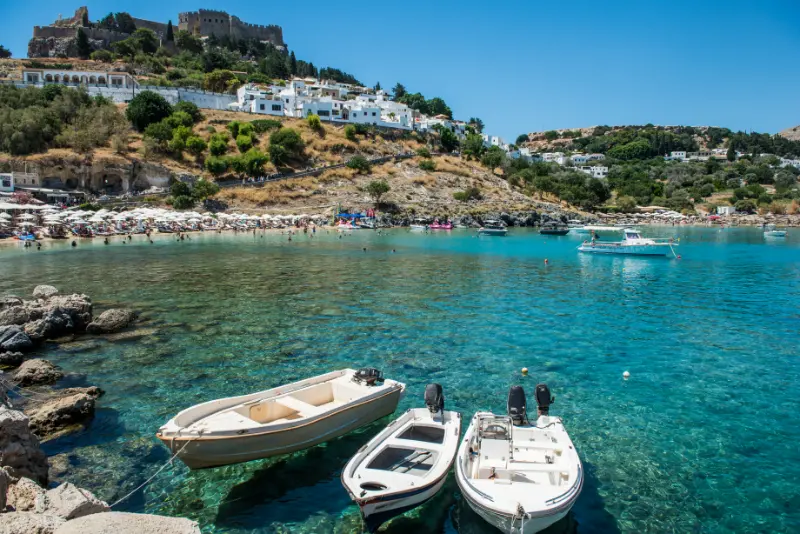
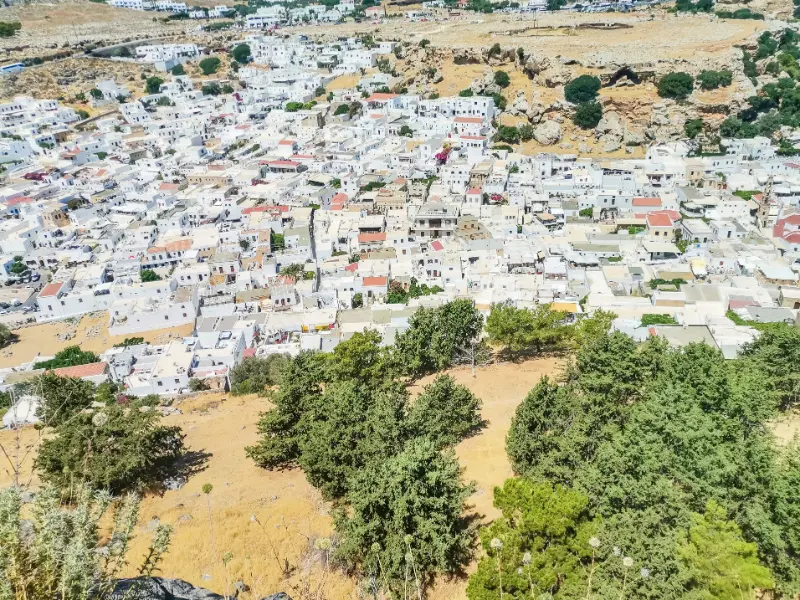
    Lindos Village Acropolis Beach Panoramic View Rhodes Island Greece

    Why this place deserves more than a quick photo

    The strength of Lindos is the way different layers sit on top of one another. The ancient sanctuary occupies the high rock, medieval fortifications frame parts of the summit, traditional houses fill the lanes below, and the sea is always visible through gaps between walls and terraces. You do not need to be an archaeology specialist to understand why the site feels important.

    It is also compact enough to explore on foot but not flat. The village lanes are pedestrian in character, while the climb to the Acropolis is exposed and can feel demanding in summer heat. A realistic plan alternates history with shade, food and water rather than treating every minute as sightseeing.

    A short history before you visit

    Lindos was one of the ancient cities of Rhodes and developed around the sanctuary of Athena Lindia. The site remained strategically significant through later periods, which is why the summit combines classical remains with fortifications associated with the medieval history of the island.

    What makes the experience memorable is not a single monument but the relationship between the sanctuary and the landscape. The ancient builders used the dramatic rock and sea views as part of the setting, and that spatial effect is still easy to appreciate today.

    For broader context, the official Greek tourism portal describes Rhodes as an island where ancient, medieval and later architectural layers coexist, and specifically highlights picturesque Lindos and its imposing Acropolis. Current destination information is available through Visit Greece – Rhodes.

    Ruins Acropolis Lindos View Rhodes Greece

    What to see: the essential highlights

    • The Acropolis of Lindos: the essential visit, with the sanctuary area, monumental approaches and wide views over the coast. Give yourself time to look outward as well as at the ruins.
    • The whitewashed village: narrow lanes, courtyards and traditional houses make the walk below the Acropolis part of the experience rather than merely the route to it.
    • St Paul’s Bay: a small, highly photogenic bay beside the village. It is especially beautiful from above, though the shoreline can be crowded in peak season.
    • Lindos main beach: useful after the climb when you want a swim and a longer break without moving the car again.
    • Viewpoints above the village: the classic panorama is from the approach road, where the shape of the settlement and Acropolis makes sense at a glance.
    • Evening atmosphere: after many day visitors leave, the lanes feel different. Staying for dinner—or overnight—shows a calmer version of Lindos.

    The route I would follow

    If I had one day, I would front-load the climb and leave the easier village wandering for later. The sequence below minimises backtracking and uses the coolest hours for the exposed section.

    1. Arrive early and pause at the panoramic viewpoint before descending toward the village.
    2. Walk directly to the Acropolis while the temperature and crowd level are still manageable.
    3. Return slowly through the village lanes, stopping at shaded courtyards and small squares.
    4. Have a long lunch or coffee break rather than continuing in the midday heat.
    5. Choose Lindos Beach or St Paul’s Bay for a swim.
    6. If you are staying late, return to the village for sunset light and dinner.

    If your main interest is archaeology, reverse the beach priority and spend longer on the summit. If you are travelling with children, keep the plan even simpler: Acropolis early, lunch, beach, then decide whether anyone has energy left for more walking.

    How much time do you need?

    A rushed stop can be done in three hours, but I would not recommend it unless Lindos is only one part of a tightly planned Rhodes road trip. Four to six hours gives enough time for the Acropolis, lanes and a meal. A full day allows you to add the beach without watching the clock.

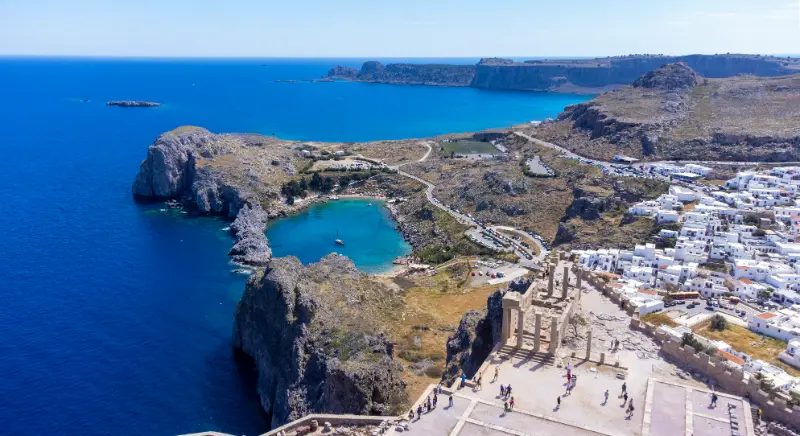
    Acropolis Lindos Rhodes Island Greece Saint Pauls Beach Lindos Acropolis Aerial Panoramic View

    An overnight stay is worthwhile if you like atmospheric villages. It removes the pressure to drive back immediately and lets you see the streets before the morning arrivals and after the late-afternoon departures.

    How to get there

    Lindos is on the east coast of Rhodes. Travellers commonly arrive by rental car, bus, taxi or organised excursion from Rhodes Town and resort areas. The final approach into the historic core is pedestrian, so even drivers should expect to park outside the tight village lanes and continue on foot.

    Do not judge the day only by road distance. Summer traffic, parking and the walk from the drop-off area all add time. If you are using buses, verify the current seasonal timetable before committing to a late return.

    Best time of day and best season

    Spring and autumn are excellent because the archaeological climb is more comfortable. Summer offers reliable beach weather but requires a disciplined early start, water and sun protection. I would avoid scheduling the Acropolis in the hottest part of a July or August afternoon.

    For photography, early morning gives cleaner light on parts of the village, while late afternoon softens the limestone and white walls. Evening is best for atmosphere in the lanes, even if you visited the Acropolis earlier.

    Tickets, opening hours and current information

    Ticket prices and opening hours for archaeological sites can change seasonally. I would check the official Hellenic cultural listings or the current destination information shortly before the visit instead of relying on an old screenshot. If timed admission or online booking is offered for your date, use the official channel.

    What to wear and what to bring

    • Comfortable shoes with grip; polished stone can be slippery.
    • At least one bottle of water per person in hot weather.
    • Hat, sunglasses and high-protection sunscreen.
    • A light layer for shoulder season or windy evenings.
    • Swimwear if the beach is part of the same day.

    Visiting with children

    Lindos can work well with children because the day can be split between a memorable historic site and the sea. The main challenge is the exposed uphill walking. Start before the heat builds and make the beach a reward rather than promising several additional attractions.

    A lightweight carrier can be more practical than a stroller on steps and uneven lanes. Older children often respond better when you explain that the Acropolis is a real fortified high point rather than presenting the visit as a long lesson in dates.

    Accessibility and physical effort

    The Acropolis involves climbing and uneven surfaces, so it is not a low-effort attraction. The village itself also has slopes, steps and irregular paving. Travellers with reduced mobility should research current access arrangements before arrival and focus on the parts that match their comfort level.

    Even visitors with good mobility should respect the heat. Shade is limited on the upper site, and the combination of sun, stairs and crowds is more tiring than the map suggests.

    Photography without missing the place itself

    The best Lindos photographs usually include context: the Acropolis with the bays, the village under the rock, or a lane that shows how tightly the houses fit together. A telephoto lens is useful from viewpoints; a phone is enough inside the narrow streets.

    Do not stop in the middle of bottleneck stairways for long photo sessions. Step aside, let people pass and then frame the image. The village is residential as well as touristic, so doorways and private courtyards deserve normal courtesy.

    What to combine with your visit

    Lindos fits naturally into the wider Rhodes itinerary. On the east coast, beaches such as Tsambika or Agathi can be paired with the village if you have a car, but I would resist adding three or four distant stops on the same day.

    If you are based in Rhodes Town, treat Lindos as the headline day trip. If you stay in the south or east of the island, it can be a slower morning or evening visit with less transfer time.

    Where to stay for the easiest visit

    Stay in Lindos if you value atmosphere, dinner in pedestrian lanes and early access before crowds. Choose Rhodes Town if you want museums, the medieval city, nightlife and easier connections for several different day trips.

    For a beach-focused holiday, accommodation elsewhere on the east coast can be a good compromise: you can visit Lindos once without paying the premium for its most central rooms.

    Common planning mistakes

    • Arriving at midday in peak summer and immediately attempting the exposed climb.
    • Assuming you can drive into the heart of the pedestrian village.
    • Wearing smooth sandals on polished stone and steep steps.
    • Trying to combine Lindos, Rhodes Old Town and multiple beaches in one rushed day.
    • Leaving the return transport decision until the final bus or taxi rush.

    A slower, better way to experience it

    The better version of Lindos is not complicated. Reach the top early, sit somewhere with a view, walk without a shopping checklist, and give yourself a real break by the water. The village rewards pauses because its charm is spatial: doorways, shadows, terraces and glimpses of the sea.

    If you stay overnight, walk the same lane twice—once in daylight and again after dinner. It is surprising how much the atmosphere changes when the hottest hours and largest excursion groups have gone.

    Frequently asked questions

    Is Lindos worth visiting if I am not interested in archaeology?

    Yes. The village, sea views and beaches are enough to justify the trip, while the Acropolis provides context and the best elevated perspective.

    How many hours do I need in Lindos?

    Four to six hours is a comfortable first visit. Add more time if you want a beach break or dinner.

    Can I visit Lindos without a car?

    Yes. Buses, taxis and excursions serve the area, but you should verify seasonal return times before travelling.

    Is Lindos very crowded?

    It can be, especially on summer days. Early arrival and an evening stay change the experience significantly.

    Which beach is easiest to combine with the village?

    Lindos Beach is straightforward for a swim after sightseeing; St Paul’s Bay is especially scenic but can feel busier and more compact.

    Final advice

    Lindos is at its best when you plan around heat and crowd flow rather than trying to conquer a checklist. The Acropolis gives the day meaning, the village gives it character, and the sea gives you the perfect excuse to slow down.

    For a first Rhodes trip, I would protect at least half a day for Lindos and preferably a full day. Arrive early, keep the afternoon flexible and let the place breathe.

  • Evia Travel Guide: Chalkida, Beaches, Hot Springs and a 7-Day Road Trip

    Evia Travel Guide: Chalkida, Beaches, Hot Springs and a 7-Day Road Trip

    Evia is Greece’s second-largest island, yet it often feels more like a mainland road-trip region because bridges connect it directly to Central Greece. That accessibility makes it easy to overlook, which is a mistake: the island stretches through beaches, mountains, thermal springs, archaeological sites and very different northern and southern landscapes.

    I would choose Evia for travellers who want to rent a car and explore without depending on ferries every few days. It works particularly well from Athens, but its size means a proper itinerary needs realistic distances and at least a week.

    Why visit Evia?

    Evia’s advantage is diversity and flexibility. Chalkida makes a convenient gateway, Eretria adds archaeology, Edipsos is known for thermal waters, the north has forested scenery and Lichadonisia boat trips, while Karystos opens the mountainous south around Mount Ochi.

    It is also easier to combine with mainland Greece than most islands. You can drive in, change regions during the trip and continue toward Pelion, Delphi or Athens without building everything around ferry departures.

    Where to stay

    For a seven-day trip, use at least two bases. Evia is far too large for daily out-and-back drives from one town.

    Chalkida

    The main gateway and a good first night from Athens. Its waterfront and Evripos tidal phenomenon make it more than a transit stop.

    Eretria

    A relaxed seaside base with ancient remains and easy access to central-southern Evia.

    Edipsos / north Evia

    Best for thermal-spring culture and exploring the north, including boat trips toward Lichadonisia.

    Edipsos Evia Greece

    Karystos

    The key southern base for beaches, Mount Ochi landscapes and Dimosari Gorge.

    Best things to do

    Watch the water at Chalkida

    The Evripos Strait is known for unusual tidal currents that change direction. The old bridge area is the best place to experience the city’s defining feature.

    Explore ancient Eretria

    Combine the archaeological site and museum area with a relaxed waterfront afternoon.

    Experience Edipsos

    The spa town is famous for thermal waters. Check current facilities and health guidance before choosing public or hotel-based bathing options.

    Take a Lichadonisia boat trip

    Seasonal excursions reach small islets off north-western Evia. Weather, boat type and departure point should guide your choice.

    Discover Karystos

    The southern town is an excellent base for a very different Evia, with mountains, beaches and outdoor activities.

    Aerial Drone Shot Karystos Harbour Sunrise Island Evia Greece

    Hike near Mount Ochi

    The Dimosari Gorge and Dragon House landscapes are highlights for experienced walkers. Use current local route advice and suitable footwear.

    Beaches and nature

    Evia’s coastline is enormous and includes both Aegean-facing beaches and calmer gulf-facing shores. Wind and road access vary greatly, so each region deserves its own beach strategy.

    Wildfires have affected parts of Evia in recent years, especially in the north. Landscapes continue to recover, and responsible travel means respecting closures, fire-risk restrictions and local guidance.

    Food and local character

    The island is strong in seafood, meat, dairy products, figs, honey and mountain produce. Culinary character changes between coastal towns and inland villages.

    Road trips are ideal for spontaneous taverna stops, but avoid driving long distances after heavy meals or alcohol, especially on winding mountain roads.

    How to get there

    Chalkida is connected to mainland Greece by bridges, so most road trippers simply drive from Athens. Additional ferry crossings can be useful for specific parts of the island, especially if approaching from different mainland coasts.

    Because you are not dependent on a ferry to enter through Chalkida, Evia is a useful backup when strong winds disrupt island-hopping plans elsewhere.

    Getting around

    A car is the best way to experience Evia. The island is long, and public transport is not designed for a visitor trying to connect remote beaches, spa towns and mountain villages.

    Avoid treating the entire island as a day trip from Athens. Chalkida can work as a day trip, but the wider island needs overnight stays.

    How many days do you need?

    Seven days is a realistic introduction. Ten to fourteen days is better if you want both far north and far south without spending every day in the car.

    A realistic 7-day Evia road trip

    Day 1 – Athens to Chalkida

    Drive to Chalkida, walk the waterfront and watch the strait near the old bridge.

    Day 2 – Eretria and central coast

    Visit ancient Eretria and continue to a nearby beach or village.

    Day 3 – Drive north

    Move toward Limni or Edipsos, stopping along the way rather than trying to reach the far north quickly.

    Day 4 – Edipsos and Lichadonisia area

    Use the day for thermal-spa culture or a seasonal boat excursion, depending on weather.

    Day 5 – Return toward central Evia

    Break the long drive with a beach or village stop and change base.

    Day 6 – Karystos region

    Explore the south around Karystos, focusing on coastline and mountain scenery.

    Day 7 – Final south-Evia day

    Choose a hike, beach or archaeological stop before returning toward Athens.

    Best time to visit

    Late spring and early autumn are excellent for road trips and hiking. Summer is ideal for beaches but can be hot, and fire-risk restrictions may affect forest access.

    Winter and spring make sense for spa towns and city breaks, while mountain areas can feel completely different from the summer island image.

    Is it a good choice for families?

    Evia is excellent for families with a car because you can choose easy beaches, apartments and flexible stops without ferry pressure.

    The main challenge is distance. Keep children comfortable by changing base rather than attempting very long day drives.

    Budget and booking tips

    Accommodation prices change sharply with season, location and room type. I prefer to compare a few bases before booking rather than choosing the first hotel that looks inexpensive. A cheaper room far from the places you actually want to see can cost more once transport, parking and lost time are included.

    For ferries, flights, rental cars, boat trips and guided activities, treat schedules and prices as dynamic. Check the operator again shortly before travel, especially outside July and August. Weather can affect sea transport, while seasonal businesses may open later in spring or close earlier in autumn.

    View Port Spring Kimi Euboea Greece

    Mistakes to avoid

    The biggest mistake is underestimating the island’s length. North and south Evia should be treated almost like separate regions.

    Do not rely only on famous beach photos. Road conditions, wind and seasonal access can make a less famous nearby beach the better choice on the day.

    Who Evia suits best

    Evia works best for travellers who are comfortable giving a destination enough time to reveal its character. If your priority is to collect as many islands or regions as possible in a single week, this may feel slower than expected. If instead you enjoy mixing beaches or landscapes with local food, village walks, cultural stops and unplanned pauses, the trip becomes much more rewarding. Couples can build quiet evenings around scenic towns, solo travellers gain flexibility to follow weather and transport conditions, and repeat visitors to Greece will appreciate seeing a side of the country that is less dominated by the most internationally famous stops.

    It is also a strong choice for independent travellers who like making decisions day by day. A rental vehicle can open up more options, but it should not turn the holiday into a driving challenge. Pick one main objective for each day, then add nearby stops only if time and energy allow. That approach keeps the itinerary useful for different ages and budgets and reduces the temptation to race from viewpoint to viewpoint.

    Planning the pace of your trip

    My preferred way to plan this kind of Greece trip is to separate transfer days from sightseeing days. Arrival and departure always take longer than the timetable suggests once luggage, check-in, parking, meals and possible delays are included. Treating those hours as real travel time makes the itinerary far more realistic. On full days, start early for exposed archaeological sites, long drives or hikes, then reserve the hottest part of the afternoon for lunch, swimming or rest.

    Keep at least one half-day flexible. Wind, heat, ferry changes or a beach you unexpectedly love can easily change priorities. A flexible block prevents one cancelled boat trip or poor-weather morning from becoming a problem. It also leaves space for the experiences that are difficult to schedule in advance: a village festival, a recommendation from a hotel owner, a quiet cove discovered on the road or simply the decision to stay longer over lunch.

    How to combine Evia with the rest of Greece

    Evia combines naturally with Pelion on a longer central-Greece road trip, though the exact route depends on which part of the island you finish in.

    It also works before or after Athens, especially for travellers who prefer driving to ferry-heavy island hopping.

    Frequently asked questions

    Is Evia really an island?

    Yes. It is an island, but bridges at Chalkida connect it directly to mainland Greece.

    Can I visit Evia without a ferry?

    Yes. You can drive across the bridges at Chalkida.

    How many days do I need?

    A week is a good introduction; longer is better for both north and south.

    Do I need a car?

    For a broad road trip, yes.

    Is Evia close to Athens?

    Chalkida is relatively close by road, but the island extends far beyond the gateway city.

    Practical final advice

    Build your days around geography rather than a checklist. Group nearby beaches, villages and sights together, leave room for a long lunch or an unexpected swim, and avoid crossing the same area repeatedly. This matters even more on islands and mountain roads, where short distances can take longer than they appear on a map.

    Carry water, sun protection and shoes suitable for uneven ground. Download an offline map before remote drives or hikes, and do not rely on mobile coverage in every cove or mountain village. If a route uses an unpaved road, confirm the conditions locally and check whether your rental agreement permits it.

    Most importantly, allow the destination to feel different from the headline islands. The value of this trip is not in reproducing Santorini or Mykonos somewhere else, but in experiencing its own landscapes, food, architecture and daily rhythm. A slower itinerary usually produces a better trip than adding another island simply because it fits on the map.

    Useful official information

    For destination updates and inspiration, consult the Greek National Tourism Organisation: Visit Greece – Evia. Always recheck transport timetables and seasonal opening details close to your travel dates.

  • Paxos Hiking Guide: Gaios to Lakka, Loggos Trails, Erimitis and Olive Groves

    Paxos Hiking Guide: Gaios to Lakka, Loggos Trails, Erimitis and Olive Groves

    Walk Paxos on historic paths through olive groves, with route ideas from Gaios to Lakka, Loggos to Orkos, Erimitis viewpoints, Tripitos and practical summer safety advice.

    Paxos is compact, but it rewards precise planning. Villages sit close together on a map while olive-grove lanes, steep western cliffs, irregular buses and boat-dependent sights can make two apparently simple days feel very different. This guide focuses on practical choices: where to base yourself, when walking is realistic, what changes with wind, and how to combine beaches, villages and sea excursions without turning the trip into a checklist.

    Aerial View Sailing Boats Turquoise Sea Paxos Greece

    Quick planning notes

    • Visit Greece highlights a roughly 12 km Gaios–Lakka route and a shorter Loggos–Orkos–Lakka route of about 5 km.
    • The old path network passes through olive groves and settlements, but waymarking quality can vary; carry offline navigation.
    • Summer heat is a bigger difficulty than altitude. Start early and avoid long exposed sections around midday.
    • Western cliff viewpoints are spectacular but require conservative behavior near edges, especially in wind.

    Why Paxos is a walking island

    Paxos’s road map makes the island look simple, but the old footpaths reveal a much richer landscape. Lanes weave between centuries-old olive trees, stone walls, chapels and small settlements that are easy to miss from a scooter. Walking also shows how close the villages really are when measured through traditional routes rather than modern road bends.

    Visit Greece describes an extensive network of footpaths and specifically promotes routes around Loggos, Lakka and the cross-island walk between Gaios and Lakka. You do not need to be a serious hiker to enjoy them, but good shoes and a realistic heat strategy are essential. The terrain is low, not effortless.

    Gaios to Lakka: the long island walk

    Visit Greece gives the distance between Gaios and Lakka at around 12 km and suggests roughly 2.5 hours of walking, with a maximum elevation around 241 m. Treat that as a fit-walker estimate rather than a promise. Navigation stops, photographs, heat and detours can easily extend the day.

    The route is most satisfying if you treat it as a landscape journey rather than a race. Olive groves, inland hamlets and occasional sea views build a gradual picture of the island. Arrange a taxi or bus return in advance if you do not want to walk back. In summer, carry substantially more water than you think a 12 km route should require.

    Loggos to Orkos and Lakka

    The shorter route from Loggos toward Orkos and Lakka is a better introduction for many visitors. Visit Greece describes a distance of about 5 km with modest elevation gain. The walk links village lanes with olive woodland and brings you close to Orkos, where a swim can turn the route into a relaxed half-day.

    Do not hike in beach sandals just because a swim is included. The paths can be stony, dry and uneven. Pack lightweight water shoes separately if you need them. If you plan to continue into Lakka for lunch, check the bus or taxi situation before leaving Loggos so the return does not become an improvised roadside wait.

    Erimitis, Kastanida and west-coast viewpoints

    The cliffs around Erimitis show the wild side of Paxos. Paths and lanes in the Magazia and Kastanida area reach viewpoints where the sunset drops beyond pale rock into open Ionian water. These are outstanding evening walks, but they demand more caution than the sheltered east coast.

    Keep well back from cliff edges, especially after rain, earthquakes or visible erosion. The beach below Erimitis formed through a landslide, which is a reminder that the geology is active rather than decorative. Carry a torch for the return and never rely on a phone screen as your only light source.

    Tripitos Arch on foot

    Tripitos Arch can be reached by paths from the southern interior, giving hikers a land-based alternative to seeing it by boat. The final approach is rougher than a village stroll and can be hot, so use offline mapping and ask locally about current path conditions. Do not climb onto the arch or approach unstable edges for photographs.

    This walk pairs naturally with a swim closer to Gaios or Mongonissi afterward. Trying to combine the arch with a long north-island hike on the same summer day adds unnecessary heat exposure. Paxos is small enough to divide experiences across several mornings.

    Paxos Greece

    Heat, navigation and trail etiquette

    The safest summer rhythm is to begin early, carry at least enough water for delays and keep the hottest hours for lunch or swimming. Olive shade helps, but many connecting roads and western sections are exposed. A hat and sunscreen matter even when the route looks green on satellite imagery.

    Close gates, respect private land, avoid picking fruit from cultivated trees and keep dogs controlled around livestock. Download maps before leaving your accommodation because signal can be inconsistent near cliffs and in dense groves. If a path looks abandoned or unsafe, turn back rather than creating a new track across private ground.

    Best seasons for hiking

    April, May, late September and October are generally more comfortable for longer walks than the hottest part of summer, assuming services and weather suit your trip. Spring adds flowers and fresher vegetation; autumn brings warm sea temperatures and softer light. Winter can be wet and some tourism infrastructure closes, so it is a different kind of visit.

    If you travel in July or August, walking is still worthwhile—just shorten the routes. A dawn loop, beach morning and evening viewpoint gives you the same sense of landscape without treating midday heat as a test of endurance.

    Accommodation and booking strategy

    Paxos has a limited accommodation supply compared with Corfu, and the most attractive village-centre rooms, waterfront apartments and family villas can sell early in July and August. Compare the exact location rather than only the property name: a room described as “Gaios” may sit well above the harbour, while a villa near Lakka may require a car or taxi after dinner. Check current Paxos accommodation on Booking.com.

    For a short first visit, prioritize convenience over a dramatic view. For a longer stay, a quieter villa can work well if you already know how you will reach groceries, beaches and evening restaurants. If mobility is limited, ask the host about gradients, stairs and the nearest point a taxi can reach; the island’s beautiful old lanes are not always stroller- or suitcase-friendly.

    Frequently asked questions

    Is Paxos good for hiking?

    Yes. The island has an extensive historic path network through olive groves, villages and coastal viewpoints, with both short walks and longer cross-island routes.

    Paxos Island Greece

    How long is the Gaios to Lakka walk?

    Visit Greece describes the route as roughly 12 km and around 2.5 hours for a fit walker, but allow extra time for heat, navigation and stops.

    Do I need hiking boots?

    Light hiking shoes or trail shoes are usually enough for the main routes. Avoid flip-flops on stony paths and exposed viewpoints.

    Useful official resources

    For information that can change after publication, check the Visit Paxos tourism portal, the official Paxos travel-information page and, for sea connections, the official getting-to-Paxos page. Hiking information is also available from Visit Greece. Ferry times and local transport can change with season, weather and operator, so verify the exact date before committing to a tight connection.

    Related Paxos guides

    A practical way to plan the day

    Build each day around one anchor rather than several fixed appointments. On a calm day, make the boat trip or exposed west-coast walk the anchor and keep the afternoon flexible. When wind is stronger, choose an east-coast beach, village lunch or short olive-grove walk. This approach suits Paxos because distances are small enough to change direction, while the most memorable experiences—clear water, cliff light, quiet lanes and village evenings—depend more on conditions than on an ambitious schedule.

    Keep water, sun protection, offline maps and a small cash reserve in your day bag. Mobile reception can vary near cliffs and remote coves, and not every beach has a bar or a reliable taxi pickup point. If you are using buses, photograph the current timetable after arrival and confirm the final return of the day. If you are using boats, ask what happens if wind forces a route change. Those simple checks remove most of the stress from an otherwise very easy island to enjoy.

    A final rule is to leave some room for repetition. Paxos is not an island where every hour needs a new attraction. Returning to the same waterfront for breakfast, repeating a beach that was exceptionally calm, or walking the same olive lane at sunset often produces a stronger sense of place than collecting ten different stops. The island is small enough that familiarity becomes part of the experience rather than a sign that you have run out of things to do.