Author: Jessica

  • Aegina Day Trip from Athens: Ferries, One-Day Itinerary, Costs and Practical Tips

    Aegina Day Trip from Athens: Ferries, One-Day Itinerary, Costs and Practical Tips

    Aegina is one of the easiest genuine island day trips from Athens because ferries leave from Piraeus and the crossing is short enough to preserve most of the day. Visit Greece currently lists typical crossing times of about 45 minutes on faster services and around 1 hour 10 minutes on slower ones. The mistake is assuming that easy access means you should try to see the entire island in a few hours.

    A successful day trip has one clear theme: town and archaeology, Aphaia plus Agia Marina, or a south-coast day around Perdika and swimming. You can combine two of those only with a very early ferry, efficient transport and enough seasonal daylight. The island becomes more enjoyable when you stop treating the ferry ticket as permission to sprint.

    Quick planning summary

    QuestionPractical answer
    Best forTravellers who want an easy Saronic-island trip combining culture, food and sea
    Ideal paceOne major sight or area plus one beach/meal rather than an island-wide checklist
    TransportFerry from Piraeus; buses, taxis and rentals on the island
    Best seasonsLate spring, summer and early autumn; cultural trips work year-round

    Step one: choose the ferry by total day, not just ticket price

    Compare departure port, check-in requirement, crossing time and final return before buying. A slightly more expensive fast ferry can be worth it when it adds meaningful hours on the island, but slower conventional services may offer better outdoor space or different departure times. Always check the operator’s current schedule because frequency changes through the year.

    Build a buffer before your final return to Piraeus. Do not arrive at the port from a distant beach with only a few minutes to spare. Weather, traffic and bus delays are real even on a short island trip. If you have a flight or important evening booking in Athens, take an earlier ferry back.

    Itinerary A: Aegina Town + Kolona + food

    This is the best car-free cultural day. Arrive, walk the harbour and market streets, visit Kolona and the Archaeological Museum, have lunch and add a short swim at Avra or Kolona if weather permits. It leaves enough flexibility for pistachio shopping and a coffee before the ferry.

    This plan is ideal outside midsummer because it does not depend on resort services or complex bus connections. It also works for travellers who have already seen many beaches and want an island experience with history and food.

    Itinerary B: Temple of Aphaia + Agia Marina

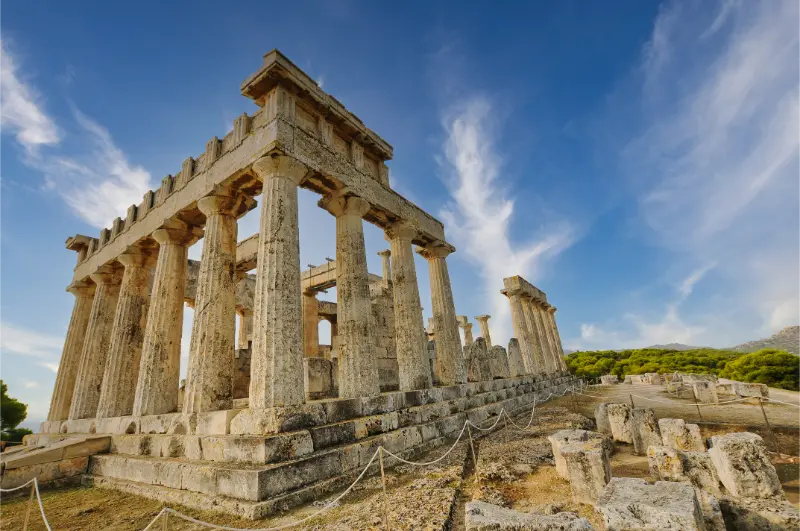
    Take a bus or taxi toward Aphaia early, visit the temple before the hottest part of the day, then continue to Agia Marina for lunch and swimming. This is the strongest first-time combination if you want one major ancient monument and one proper beach.

    Check the temple’s opening day before booking ferries; the current 2026 summer schedule lists Tuesday closed. Confirm the return bus from Agia Marina or arrange a taxi. Do not add Perdika as well unless you are using a private driver and consciously accepting a rushed day.

    Itinerary C: Perdika + Moni or south-coast swimming

    For a sea-focused day, head to Perdika and ask about seasonal boats to Moni. Spend a few hours swimming, return for a late lunch and then travel back to Aegina Town. If boats are not operating, use Marathonas or another south-coast beach instead.

    This itinerary is more weather-dependent than the cultural options. Keep enough time to return to the main port because the boat from Moni is not your ferry to Athens; you still need the road journey back to Aegina Town.

    Transport on the island

    Buses are the budget option, taxis save time, and a rental vehicle gives flexibility but can be overkill for a one-day visit. For two travellers, compare the price of several bus tickets plus waiting time against one or two strategic taxi rides. The goal is not to spend money unnecessarily; it is to preserve the part of the day you came to enjoy.

    If you rent a scooter or car, check licence requirements, insurance and return timing. Never plan the day so tightly that one parking delay threatens the ferry home.

    What a day trip costs

    Your main costs are the Athens–Aegina ferry, island transport, food, archaeological tickets and any beach or boat extras. Prices vary too much by ferry type and season to give one honest universal total. Instead, price the exact travel date and decide which paid activity matters most.

    A low-cost day can be ferry + walking + Kolona + simple lunch. A higher-cost day may use fast ferries, taxis, Aphaia and a boat trip. Both can be excellent; the expensive version is not automatically more authentic.

    When to stay overnight instead

    Stay overnight if you want sunset in Perdika, a relaxed beach day plus two cultural sites, or simply dislike watching the clock. Aegina Town is especially convenient because you can walk to the ferry the next morning. One night also lets you experience the harbour after most day-trippers have left.
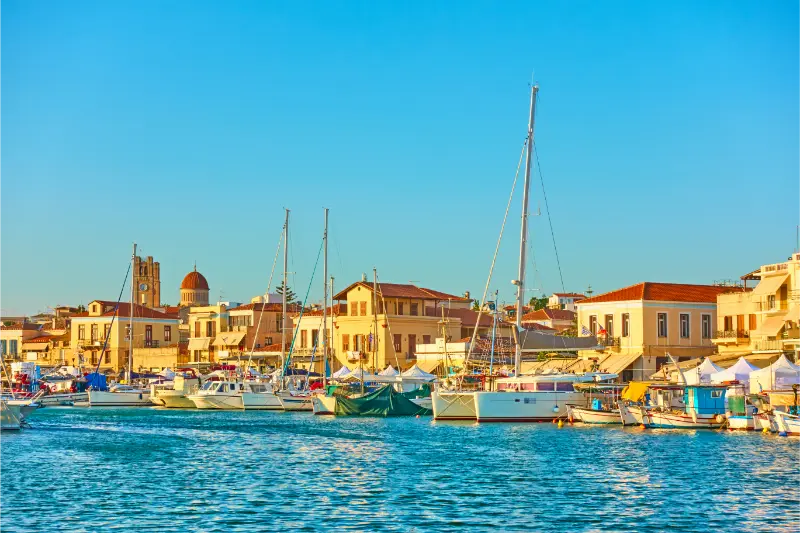
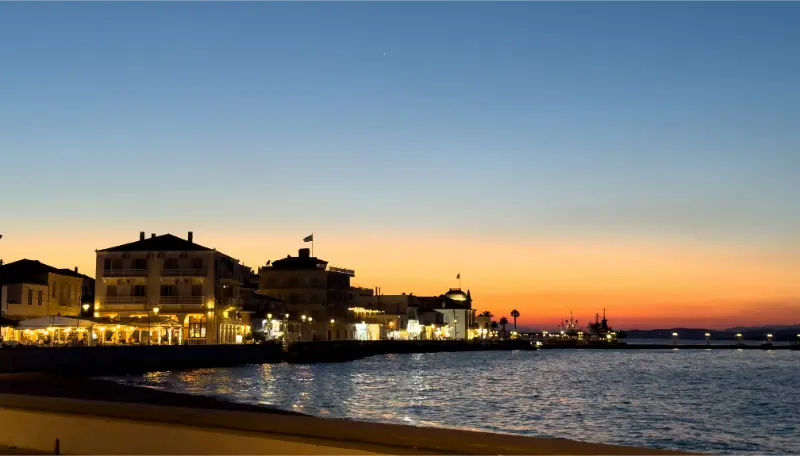
    Yachts Boats Harbour Waterfront Aegina Town Sunset Aegina Island Greece

    If you have only one free day in Athens and want an island, Aegina is still one of the most practical choices. If you want dramatic cliff scenery or a very remote island feeling, save that experience for a longer Greece itinerary.

    How to plan transport efficiently

    Think in zones. Aegina Town and Kolona are one zone; Aphaia and Agia Marina are another; Agios Nektarios and Paleochora form an inland cultural zone; Marathonas and Perdika form a south-coast zone. A good day normally combines places within one or two neighbouring zones instead of crossing the island repeatedly.
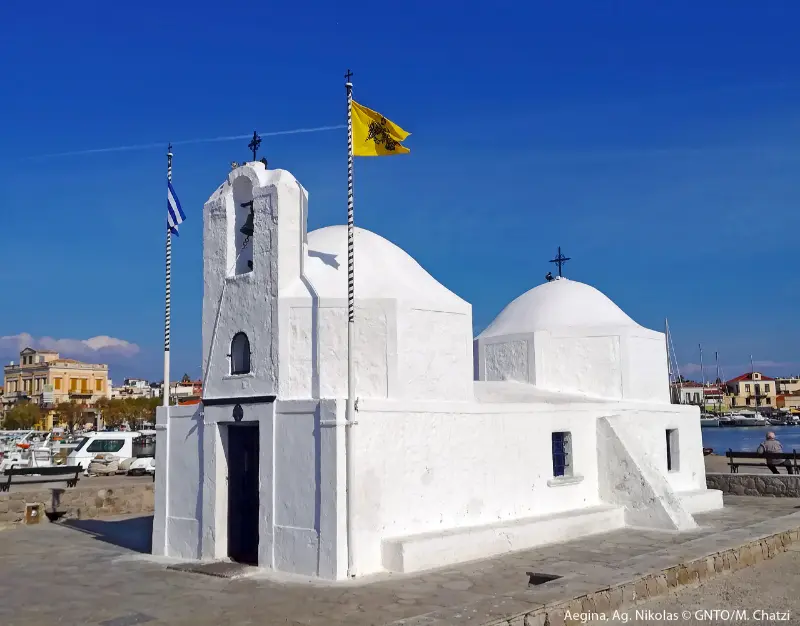
    Aegina Agios Nikolas

    Buses are useful but seasonal, taxis save time, and a rental vehicle creates flexibility for beaches and inland sights. If you are visiting only for a day, calculate how much of the visit you are willing to spend waiting or driving before choosing transport.

    What to pack for a short island stay

    Bring sun protection, water, shoes with grip for archaeological sites and a modest clothing layer for monasteries. A small dry bag is useful for Moni or beach days. If you are travelling on a fast ferry, keep medication and valuables in a small personal bag rather than buried in large luggage.

    Do not overpack beach equipment if you are using buses. Aegina is easy precisely when you stay mobile. Buy heavy water locally and keep one refillable bottle with you for cultural sites.

    Useful Aegina guides to read next

    Continue planning with Aegina Without a Car: Buses, Taxis, Ferries and the Best Car-Free Bases, Aegina with Kids: Family Beaches, Easy Sightseeing and Practical Tips, Where to Stay in Aegina: Town, Agia Marina, Souvala or Perdika?, Aegina Food Guide: Pistachios, Seafood, Local Products and What to Try, Aegina Town and Kolona Guide: Waterfront, Archaeology, Markets and Where to Stay.

    Frequently asked questions

    How long is the ferry from Piraeus?

    Visit Greece currently lists typical trips of about 45 minutes on faster services and around 1 hour 10 minutes on slower ones; check your operator.

    Can I see Aphaia and Perdika in one day?

    It is possible but usually rushed. Choose one side of the island unless you have private transport and a very early start.

    Do I need to prebook ferries?

    In busy periods it is sensible, especially for preferred fast-ferry times. Outside peak season, still check schedules because frequency may be lower.

    Is Aegina good for a winter day trip?

    Yes for town, food and archaeology, but beach services and bus frequencies are more limited.

    What is the easiest first-time itinerary?

    Aegina Town + Kolona for a relaxed day, or Aphaia + Agia Marina if archaeology and swimming are equally important.

    Check before you go

    For broad ferry-duration guidance and island highlights, use Visit Greece. Always book and reconfirm ferries directly with the operating company for your exact travel date.

    Final planning advice

    Aegina rewards realistic planning more than aggressive sightseeing. Keep your transport simple, leave a buffer before ferries and choose one or two experiences that match the day’s weather. The island’s great advantage is that history, sea and food are close enough to combine without turning the trip into a race.

    If this is your first Saronic-island trip, use Aegina as an easy introduction rather than trying to prove how much you can cover. A slower lunch, one archaeological site and one swim often create a stronger memory than five short stops. Save something for the next visit; the island is close enough to Athens that returning is realistic.

    One more practical detail

    For photography and comfort, early morning and late afternoon are usually more rewarding than the middle of a summer day. The island’s pale stone, pine-covered hills and harbour light can look flat at noon but much richer when the sun is lower. This also gives you a natural reason to reserve midday for lunch or swimming rather than another exposed walk.

    Extra planning note

    Budget planning should include island transport, not only ferry and hotel prices. A cheap room far from the places you want to visit can create repeated taxi costs, while a slightly more expensive central base may reduce daily spending. Compare the full trip pattern before deciding what counts as good value.

    Extra planning note

    If you are combining Aegina with Athens, keep the arrival or departure day deliberately light. Ferry travel is usually easy, but port transfers, luggage and weather can still add friction. One waterfront walk and dinner on arrival is often a better start than trying to squeeze in a major site before closing time.
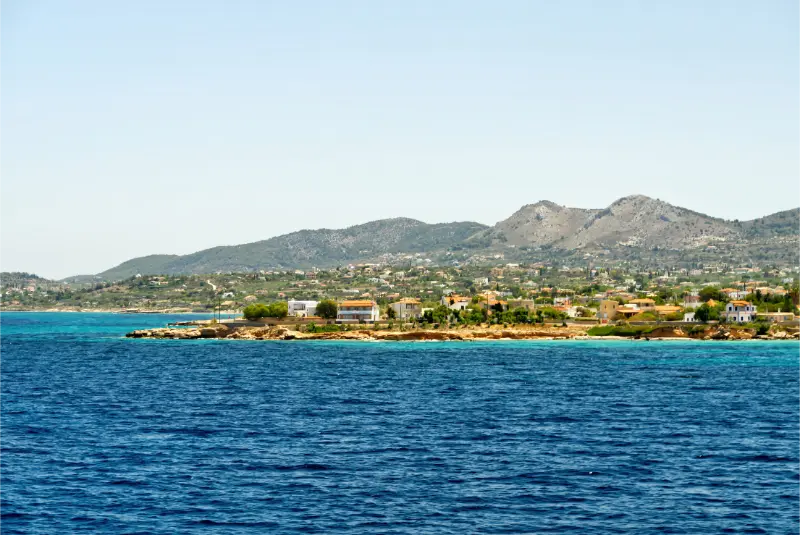
    View From Deck Ferry Sail Greece Greek Island Aegina
  • Where to Stay in Spetses: Dapia, Old Harbour, Kounoupitsa or Quiet Beaches?

    Where to Stay in Spetses: Dapia, Old Harbour, Kounoupitsa or Quiet Beaches?

    Where you stay in Spetses determines how much you walk, how easy your ferry days feel and whether your evenings are lively or quiet. Because visitors do not simply rent a car and drive between hotel and harbour, a kilometre on the map matters more here than on many islands. Dapia offers maximum convenience, Kounoupitsa balances calm and access, the Old Harbour has the strongest evening atmosphere, and remote beach areas trade services for privacy.

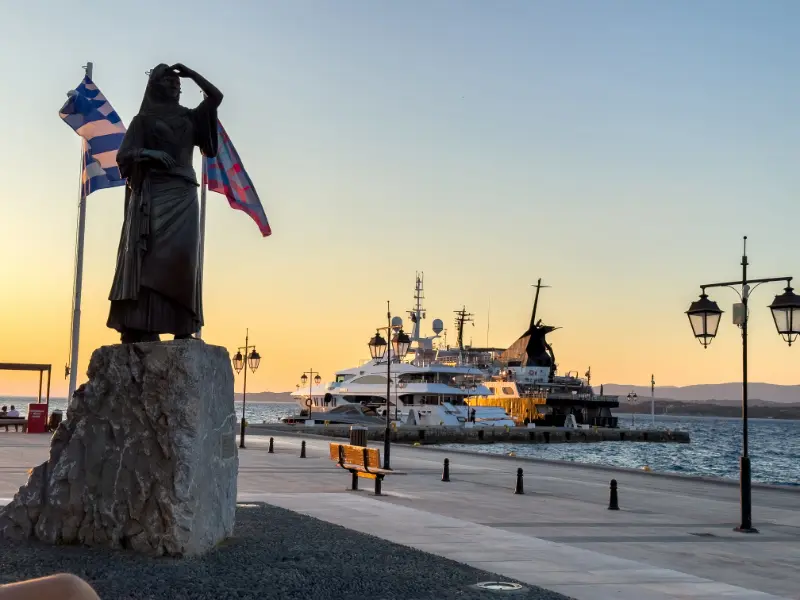
    Spetses Island Greece Laskarina Bouboulina Statue Old Historic Port

    The best base is not the most beautiful hotel photo. It is the place that fits what you plan to do before breakfast and after dinner. For a two-night first visit, stay central. For a week focused on swimming and slow mornings, a quieter property becomes more attractive.

    Quick planning overview

    AreaBest forMain compromise
    DapiaFirst trips, ferries, no-car convenienceBusier waterfront
    KounoupitsaCouples, families, quieter eveningsDaily walk to central transport
    Old HarbourAtmosphere, nightlife, architectureLess convenient with luggage
    Agia Marina/east sideBeach access and relaxed morningsFarther from central services
    Remote beach areasPrivacy and repeat visitorsTransport dependence

    Dapia: best for first-time convenience

    Dapia is where ferries arrive and where sea taxis, beach boats, agencies and central services concentrate. If you have only two or three nights, staying here protects usable holiday time. Early departures are easy and you can walk to museums, Agios Mamas and most restaurants.

    The compromise is activity. Waterfront properties can hear port movements, late conversations or festival events. A room one or two lanes inland often keeps the convenience while reducing noise.

    Kounoupitsa: best balance

    West of Dapia, Kounoupitsa is an excellent compromise for travellers who want a waterfront walk and restaurants without sleeping directly beside the ferry hub. It remains easy to reach the centre on foot and places you closer to Kaiki and Scholes beaches.

    Families often like this balance, but check the exact walking distance. The route that feels easy after breakfast can feel longer with a tired child after dinner.

    Old Harbour: best for atmosphere

    The Old Harbour is the romantic choice: working shipyards, historic houses, bars, restaurants and a more cinematic waterfront. Early morning can be wonderfully quiet, while evenings become one of the island’s main social scenes.

    The trade-off is ferry logistics. Large luggage from Dapia needs planning, and some properties sit on lanes unsuitable for direct vehicle access. Ask the hotel how bags arrive before you book.

    Agia Marina and the east side

    The east side works for travellers who want a proper beach close to the room and do not mind being farther from central transport. Agia Marina has organised facilities and gives the day a resort-like rhythm while still remaining connected to town.

    This is a good compromise for couples who plan several slow beach mornings. It is less ideal if museums, west-side beaches and frequent ferry connections are the priority.

    Remote beach stays

    Properties farther around the island can be peaceful and memorable, but they turn a spontaneous car-free holiday into a more structured one. Meals, town evenings and ferry transfers may require arranged transport.

    Choose seclusion only when that is the point of the trip. A first-time visitor who wants to explore museums, Old Harbour nightlife and different beaches usually gets more from a central base.

    Best area for couples

    Couples should decide whether the ideal evening means walking to a harbour dinner or returning to a quiet sea-view room. Old Harbour is strongest for atmosphere; Kounoupitsa is best for balance; a remote property is best for privacy.

    For anniversaries or special trips, split the budget toward room quality rather than assuming the most expensive central location is automatically the most romantic.

    Best area for families

    Dapia and Kounoupitsa are the easiest family bases because shops, food and simple beaches are close and transport is straightforward. A central location reduces the number of decisions required at the end of a tiring day.

    Ask about steps, stroller access, room configuration and whether street noise continues after children’s bedtime. “Family-friendly” is more meaningful when these details are answered clearly.

    Best area without a car

    Almost all visitors are effectively without a private car, but Dapia makes that reality easiest. Beach boats, sea taxis and central connections begin nearby, so you can decide each morning whether the day requires walking, bus or boat.

    Old Harbour is still a good no-car base, but plan luggage assistance. Remote stays are possible without a car only if the property helps with transfers and you are comfortable planning meals and beach movements in advance.

    Should you split your stay?

    With four nights or fewer, use one base. Moving bags across a small island creates more friction than benefit. With a week, a split between Dapia and a quiet beach property can work if the second half is deliberately about rest.

    Do not split Dapia and Old Harbour simply to change atmosphere; they are close enough to visit each other easily on foot. Save hotel changes for genuinely different experiences.

    How many days do you need?

    Two nights are enough to understand the shape of Spetses Town and enjoy one beach, but three or four nights are much more satisfying. A longer stay allows a museum morning, a slow Old Harbour evening, a remote-beach day and either a cycling or walking day without forcing every activity into the hottest hours.

    Spetses Greece

    If you are combining Spetses with Hydra or Poros, avoid changing islands every night. Three nights on one island usually feels richer than three separate one-night stops because ferry days eat into usable time and the best atmosphere on the Saronic islands often appears before day-trippers arrive or after they leave.

    When to visit

    May, June, September and early October offer the best balance for travellers who want beaches and walking in the same trip. July and August bring the strongest holiday atmosphere, more beach services and the highest demand, while midday heat makes cycling and inland walking less comfortable. Spring can be excellent for hiking and flowers, and the island remains attractive outside peak summer for history, architecture and quiet waterfront walks.

    September has an additional cultural dimension because of Armata, the annual commemoration of the 1822 naval battle. In 2026 the municipality scheduled the wider programme from 28 August to 13 September, with the main reenactment on 12 September. If you travel for Armata, book transport and accommodation early because this is not a normal quiet September weekend.

    What to pack

    Comfortable walking shoes matter more here than on a resort holiday because even a relaxed day involves waterfront promenades, lanes and museum visits. Add reef-safe sun protection, a refillable water bottle, a hat, swim shoes if you dislike pebbles and a light layer for breezy ferry decks or late evenings.

    Cyclists should bring or rent a helmet and carry more water than they expect to need. Families benefit from a compact beach shade for unorganised coves, while anyone staying in an old mansion or lane should pack luggage that is easy to carry over steps and uneven surfaces.

    Practical tips that make the trip easier

    • Ask every hotel how bags are transferred from Dapia and whether the final approach includes steps.
    • Check recent noise comments if the room faces Dapia or the Old Harbour in July, August or Armata week.
    • Confirm whether “sea view” means a balcony view or a distant glimpse over rooftops.
    • For a short trip, prioritise walking convenience over a remote pool or oversized room.
    • Families should ask about cots, connecting rooms and stroller access before booking, not at check-in.
    • If you plan early ferries, spend the whole stay in Dapia rather than moving hotels for the final night unless your original base is genuinely remote.
    • For late-night Old Harbour plans, consider whether you will be happy walking back to Kounoupitsa or Dapia afterward.
    • If accessibility matters, request a route description from the hotel because old-town lanes can include unexpected steps.
    • Book Armata dates early; major festival weekends can tighten accommodation availability far beyond normal September demand.
    • Read cancellation terms carefully when ferry connections are involved, especially for shoulder-season trips with fewer daily alternatives.

    Continue planning your Spetses trip

    Use these guides as one connected cluster rather than separate checklists: Spetses Travel Guide; Dapia and Spetses Town Guide; Old Harbour Spetses Guide; Bouboulina and Spetses Museums Guide; Best Beaches in Spetses; Spetses Without a Car; Spetses Cycling and Hiking Guide; Spetses with Kids; Where to Stay in Spetses; Spetses 4-Day Itinerary. For nearby alternatives, compare Hydra, Poros and Aegina.

    Useful official sources before you go

    For time-sensitive details I cross-check the Municipality of Spetses visitor portal, the official transport page, the official beach guide and Visit Greece. Ferry schedules, beach boats, bus frequencies, museum access and event programmes can change, so verify the details that affect a specific day shortly before travelling.

    Frequently asked questions

    What is the best area for a first trip to Spetses?

    Dapia is the easiest because the ferry, central services and several transport options are close together.

    Where should couples stay?

    Old Harbour for atmosphere, Kounoupitsa for balance, or a quiet beach property for privacy.

    Where should families stay?

    Dapia or Kounoupitsa usually minimise transport and make meals and beaches easier.

    Is the Old Harbour too far from the ferry?

    Not for most walkers, but luggage changes the calculation. Arrange bag transfer if you stay there.

    Should I stay near a remote beach?

    Yes only if seclusion is a main goal and you are comfortable planning transport and meals more carefully.

    Final planning advice

    On Spetses, convenience is part of the hotel experience because you cannot solve a poor location by renting a car. Choose the base that makes your ordinary moments easy—arrival, breakfast, dinner and the walk home—and the rest of the island becomes simple to explore.

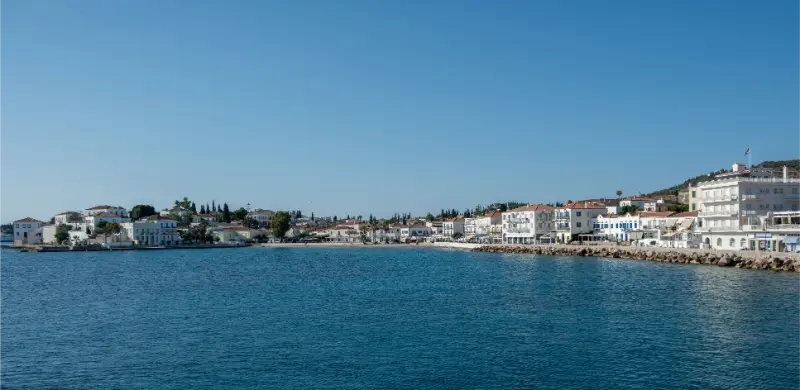
    Spetses Island Greece Seafront Buildings View From Sea
  • Lake Plastira Villages Guide: Neochori, Kalyvia Pezoulas, Morfovouni, Belokomiti and Kastania

    Lake Plastira Villages Guide: Neochori, Kalyvia Pezoulas, Morfovouni, Belokomiti and Kastania

    Lake Plastira is often described as a single destination, but the real experience comes from moving between villages with different elevations, views and access to the water. Neochori and Kalyvia Pezoulas provide the most tourism infrastructure, while Morfovouni, Belokomiti, Kastania and smaller settlements reveal the agricultural, historical and mountain character of the area. A circuit is more rewarding than driving to one viewpoint and leaving.

    Use our Lake Plastira travel guide for the overall destination, then use this article to choose where to stop and where to sleep. The region also has important religious monuments such as Petra Monastery, which the official tourism authority places east of the lake near Katafygio.

    Quick planning summary

    • Best base: Neochori for views or Kalyvia Pezoulas for lake access and activities.
    • Best approach: a full clockwise or counter-clockwise circuit rather than repeated out-and-back drives.
    • Allow: at least two nights if you want villages, walks and lake activities.
    • Road character: paved but winding, with slower travel than map distance suggests.
    • Good seasons: spring, early summer, autumn and snowy winter weekends with suitable conditions.

    Neochori: the classic panorama

    Neochori is one of the most popular bases because it sits above the reservoir and gives broad views toward the water and Agrafa mountains. Guesthouses, cafés and restaurants make it practical for a first visit, while nearby viewpoints work particularly well in the softer light of morning and late afternoon.

    Do not spend the entire visit at one panoramic terrace. Walk through the village and use Neochori as a launch point for short drives to quieter settlements. The lake’s shape changes constantly as the road bends around inlets and wooded slopes.

    Kalyvia Pezoulas and Pezoula

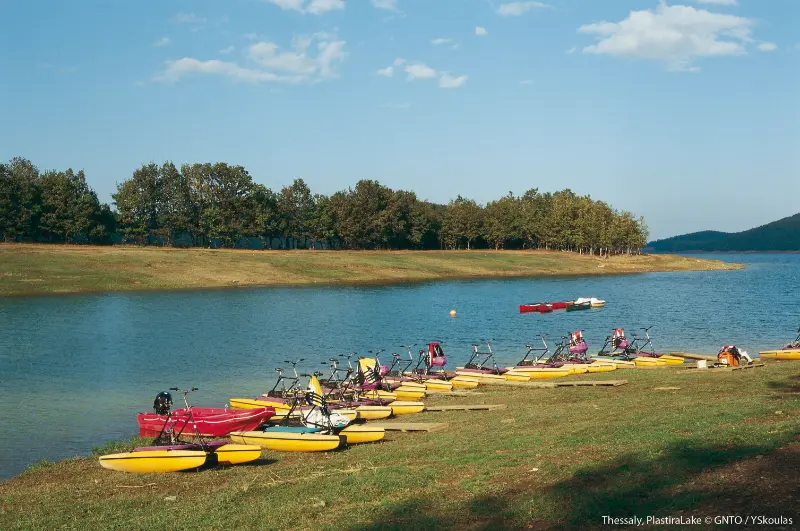
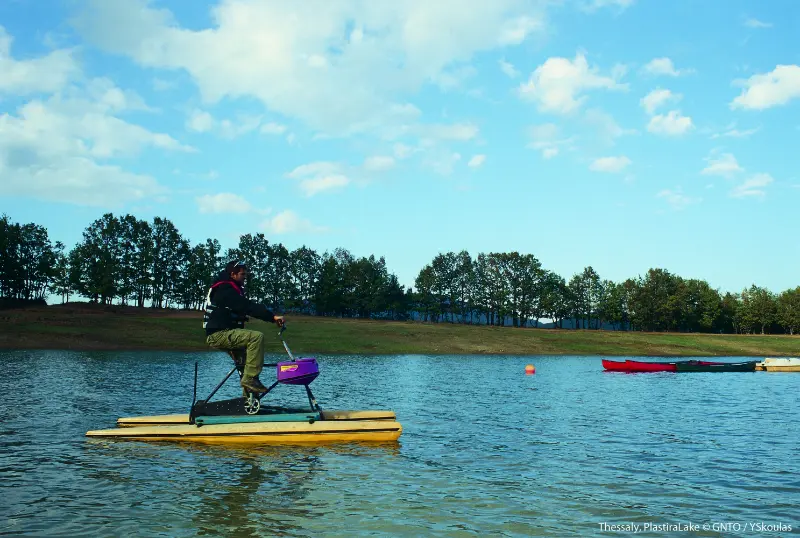
    Kalyvia Pezoulas lies closer to the water and is a natural choice for travellers interested in kayaking, pedal boats, cycling or simply easier lakeside access. Pezoula higher on the slope has a more traditional village feel and can be paired with the shoreline in the same half day.

    Activity availability depends on season, weather and individual operators. Use life jackets, follow age limits and do not assume calm-looking water is automatically safe for unsupervised swimming.

    Morfovouni and Plastiras history

    Morfovouni is associated with Nikolaos Plastiras, the military and political figure after whom the lake is named. The village gives historical context to a landscape that can otherwise feel purely recreational. It also sits on useful routes between Karditsa and the western side of the reservoir.

    A short cultural stop breaks up the drive and helps explain how the modern lake became part of the identity of the region. Combine it with coffee or lunch rather than treating every village as a five-minute photo stop.

    Belokomiti and the southern side

    Belokomiti sits toward the quieter southern section, where forested slopes and road bends create a more remote atmosphere. It is a good area for travellers who prefer walking and scenery to organised activities.

    The southern circuit can take longer than expected because there are fewer reasons to hurry and more viewpoints worth stopping for. Keep fuel and daylight in mind if continuing into more remote Agrafa roads.

    Kastania and living craft traditions

    Kastania is known through Visit Thessaly for a rare workshop producing traditional tsarouchia, a reminder that mountain villages are repositories of living craft as well as scenery. The regional tourism feature on the Kogias brothers documents a family tradition dating back more than a century.

    If you visit a working craft business, remember it is not a staged attraction. Ask before photographing people or workspaces, and buy directly when you genuinely value the product.

    Petra Monastery

    The Petra Monastery near Katafygio adds a major religious and architectural stop to the eastern side of the lake. The complex stands in a mountain setting and has strong associations with the Ottoman period and the Greek struggle for independence.

    Dress respectfully and remember that a monastery is an active religious space. Access and visiting conditions can change, so check current information rather than relying on a fixed timetable copied from an old article.

    Driving the complete lake circuit

    A full circuit is the best way to understand the reservoir because each side gives a different perspective. The road repeatedly climbs away from the water and returns, so average speed is low even when the route looks short on a map.

    Start with a full tank, avoid racing sunset on unfamiliar mountain roads and leave room for spontaneous stops. In winter, snow or ice can completely change the difficulty of the same route.

    How much time to allow

    For the villages of Lake Plastira, the right amount of time depends on whether you are treating it as a destination or as part of a wider Thessaly route. A rushed stop can cover the headline sights, but the character of the area appears in the quieter details: a village square, a short walk, a local museum, a stretch of coast or a meal that is not squeezed between two long drives. Two nights are the practical minimum for a relaxed circuit; three are better if you want hiking, cycling or water activities rather than only scenic driving.

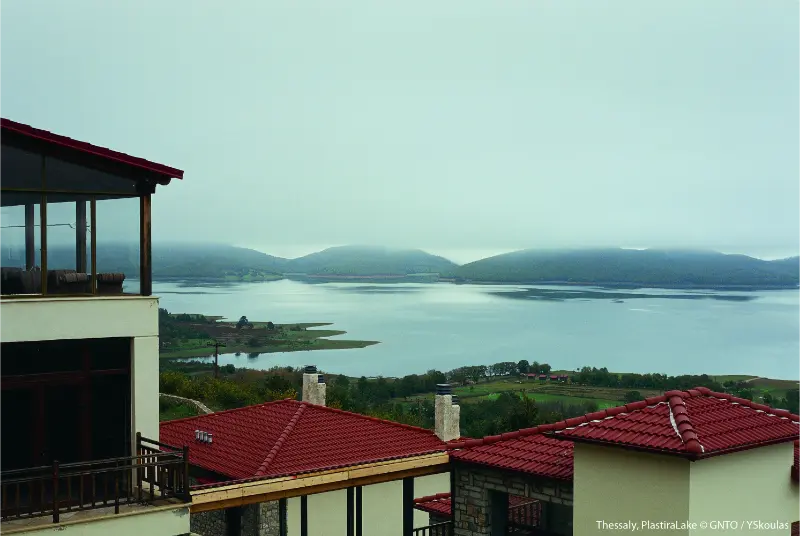
    Thessaly Plastira Lake

    Build the day around one or two priorities rather than a checklist. Thessaly is geographically compact on a map but mountain roads, river valleys and agricultural traffic can slow travel. If a visit starts feeling hurried, remove the least important detour rather than cutting time from the place you actually came to see.

    Getting there and getting around

    A car is strongly recommended. Karditsa is the main urban gateway, but once you reach the lake, village-to-village travel depends on winding mountain roads and there is no single convenient public-transport loop for sightseeing.

    A car gives the most flexibility, especially if you want to combine the villages of Lake Plastira with Karditsa, Mouzaki and Fanari. Public transport can work for larger towns, but small villages, trailheads, archaeological sites and remote beaches are harder to connect efficiently. Recheck road conditions after severe weather and never assume a mountain shortcut is faster than the signed main route.

    Where to stay

    Neochori suits travellers who want views and guesthouses, while Kalyvia Pezoulas works well for easier access to activities near the water. Smaller villages are better for quiet evenings but may have fewer restaurants and shops.

    For a broader trip, Neochori or Kalyvia Pezoulas is the most practical reference point. Choose accommodation for parking, realistic driving time and the kind of evenings you want, not only for a low room rate. In rural Thessaly, a beautiful guesthouse can be excellent, but confirm check-in arrangements, heating or air conditioning, stairs and food options if you are arriving late.

    Check accommodation around Lake Plastira on Booking.com.

    Best time to visit

    May, June, September and October are especially balanced. Autumn foliage can be excellent, summer evenings are cooler than the plain, and winter can be atmospheric when roads are safely passable.

    Spring and autumn generally reward travellers who want walking, archaeology and village life without peak heat. Summer is best when swimming or high mountain air is part of the plan, while winter can be atmospheric but requires more conservative driving and more attention to daylight, frost and snow. Always check the short-range forecast rather than planning only from seasonal averages.

    Food and local stops

    Look for pies, grilled meats, beans, local cheeses and seasonal mountain produce. Messenikolas wine belongs to the wider Lake Plastira area and can be a good regional choice for adults who are not driving.

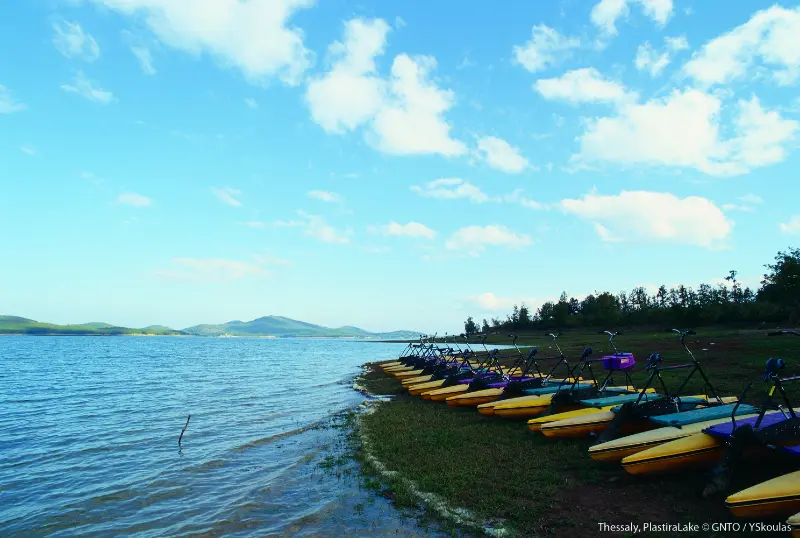
    Thessaly Plastira Lake

    Treat food as part of the route rather than a final obligation at the end of a long day. In smaller places, lunch may be the most reliable meal, while evening choice can be limited outside weekends or summer. Ask what is local and in season, and avoid assuming that every regional speciality is available in every taverna.

    Families and different travel styles

    Families can combine short village walks with lake activities and picnic-style stops. Reduce driving by choosing one side of the lake per day, and keep children supervised at unprotected viewpoints and near the water.

    Travellers who prefer slow travel should reduce the number of stops and spend more time in the forested roads and changing viewpoints around the reservoir. Photographers benefit from early and late light, while hikers need a separate time budget for route-finding and weather changes. Older travellers or anyone with limited mobility should verify gradients, steps and surface conditions at monasteries, old villages and archaeological sites before committing to a long circuit.

    Safety and responsible travel

    Mountain driving is the main practical risk: tight bends, fog, ice and fallen material after storms can all affect roads. On trails, use proper shoes and avoid entering forest areas during official wildfire or weather restrictions.

    Carry water, keep a charged phone and respect closures, barriers, private land and protected habitats. Do not enter unstable ruins or damaged buildings for photographs. In summer, wildfire restrictions can affect forest access; on the coast, wind and waves can change quickly; in mountain areas, fog and thunderstorms can reduce visibility far faster than on the plain.

    How to combine it with a Thessaly itinerary

    Approach from Karditsa or Mouzaki. If you are continuing east, Fanari Castle adds an excellent historical contrast to the lake landscape.

    If you are building a longer regional trip, connect this article with our Thessaly road-trip itinerary, where to stay in Thessaly and Thessaly with kids. Those guides help decide which stops belong in the same travel day and which are better treated as separate bases.

    Final advice

    The lake is most memorable when you stop treating it as one viewpoint and start treating it as a ring of communities. Choose fewer villages, stay longer in each and let the road itself become part of the experience.

    The best version of a visit to the villages of Lake Plastira is the one that leaves enough margin for the unexpected: a viewpoint, a conversation, a local product, changing weather or a road that takes longer than expected. That flexibility is not wasted time; it is often what turns a technically efficient itinerary into a trip that actually feels like Thessaly.

    Thessaly Plastira Lake

    Official information and planning checks

    For current regional ideas, use Visit Thessaly’s Petra Monastery page and local municipal or activity-provider information for seasonal road and lake conditions.

  • Symi Day Trip from Rhodes: Ferries, Gialos, Panormitis and a Realistic One-Day Plan

    Symi Day Trip from Rhodes: Ferries, Gialos, Panormitis and a Realistic One-Day Plan

    A Symi day trip is one of the most popular excursions from Rhodes because the islands are close enough for a meaningful visit without changing hotels. Visit Greece gives a typical Rhodes–Symi ferry journey of about 1 hour 30 minutes in its access guidance, but actual duration varies by vessel, route and whether an excursion includes Panormitis. The important planning question is not simply “how long is the ferry?” but “how many usable hours will I have on Symi?”

    Symi deserves several nights, but a well-designed day trip can still be excellent. The mistake is trying to combine Gialos, the full Kali Strata, multiple beaches, shopping, lunch and Panormitis in a few hours. Choose one version of the day: town-focused, town-plus-swim, or a boat itinerary that includes the monastery.

    Choose scheduled ferry or organised excursion

    A scheduled ferry gives more independence once you reach Gialos and can be ideal if the timetable provides a long stay. An organised excursion may simplify tickets and can include a second stop such as Panormitis, but the amount of free time in town can be shorter. Read the exact itinerary before paying.

    The Municipality of Rhodes lists Symi among ferry destinations served from Rhodes, but operators and seasonal frequencies change. Compare official schedules for your travel date. Do not assume the first search result is the fastest or the one with the longest island time.

    Use Gialos as your core experience

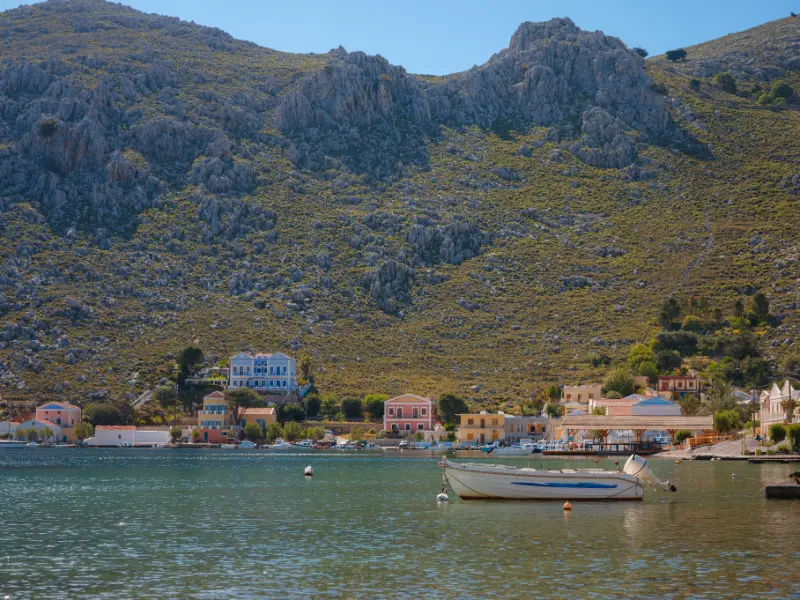
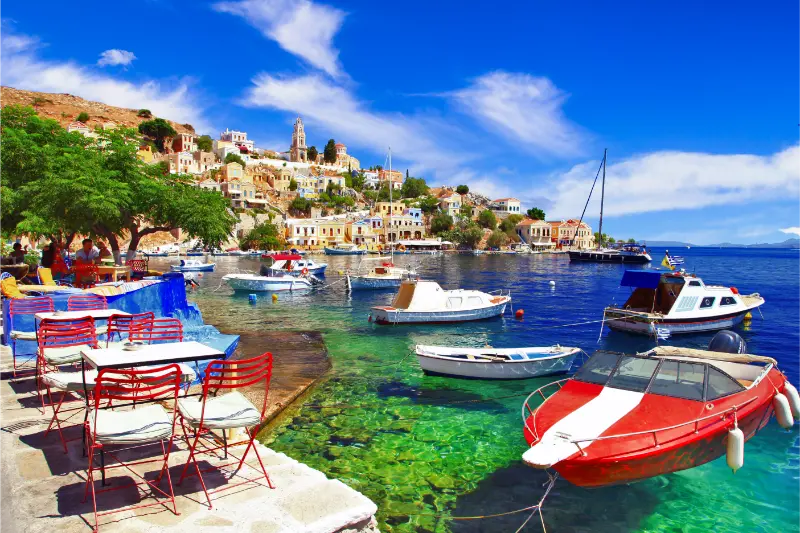
    If you only have a few hours, Gialos is enough to justify the trip. Walk the harbour beyond the ferry landing, look closely at the neoclassical houses, have coffee away from the boarding queue and explore side streets rather than spending the first hour shopping.

    Set an alarm for your return ferry and know the boarding point. The harbour is relaxing enough that it is easy to lose track of time, especially over lunch.

    Climb only as much of Kali Strata as your schedule allows

    The classic staircase toward Chorio has around 500 steps according to Visit Greece. On a day trip, you do not have to reach every upper viewpoint. Even a partial climb gives strong harbour views. If you have three or more free hours and reasonable fitness, continue into Chorio.

    Avoid the full climb at midday in intense heat. If the excursion reaches Symi during the hottest hours, use the harbour first and climb later, or take the local bus uphill and walk back down.

    Decide in advance whether Panormitis is essential

    Many Rhodes excursions combine Gialos with the Monastery of Archangel Michael at Panormitis. This is a good choice if religious heritage matters to you or if you want to see another side of the island. The trade-off is less free time in Gialos.

    If architecture, shopping and Chorio are your priorities, choose a route that maximises time at the main harbour instead. There is no universal best day trip; the best boat is the one whose time allocation matches what you actually want to see.

    Add a swim only if the timetable supports it

    Nos is the nearest easy beach to Gialos and can fit into a longer stop. Taxi-boat beaches are riskier on a short day because you depend on another transport timetable. Do not take a boat to a remote cove unless the return leaves a generous margin before your Rhodes ferry.

    A town-plus-swim itinerary works best with an early arrival and late departure. Otherwise, save the beaches for an overnight Symi stay and enjoy the town properly.

    Plan lunch around the ferry crowd

    Restaurants directly around the harbour can fill when several excursion boats arrive. Eating slightly earlier or later reduces waiting time. If you have a short visit, a long multi-course lunch may consume half of it; choose a simple taverna meal and keep some time for walking.

    Try Symi shrimp if you enjoy seafood, but ask about portion size and current price. If you have dietary restrictions, scan menus before committing because changing restaurants after ordering costs valuable time.
    Leave shopping until after your main walk

    Symi has attractive boutiques and local products, but shopping first is a common way to lose the best walking hour. Explore Gialos or Chorio while your energy is high, then browse near the harbour toward the end.

    Keep purchases portable. You still have a ferry, possible bus or transfer in Rhodes and perhaps a flight later in the trip. Fragile ceramics and glass need realistic packing.

    Build a return buffer in Rhodes too

    Your day does not end when the ferry docks in Rhodes. Depending on the port used, you may need a bus, taxi or walk back to your accommodation. If you have an evening flight, cruise departure or other non-refundable connection, a day trip on the same day is an unnecessary risk.

    Sea conditions and operations can delay ferries. Keep the excursion on a day with no critical connection afterward, especially in shoulder season.

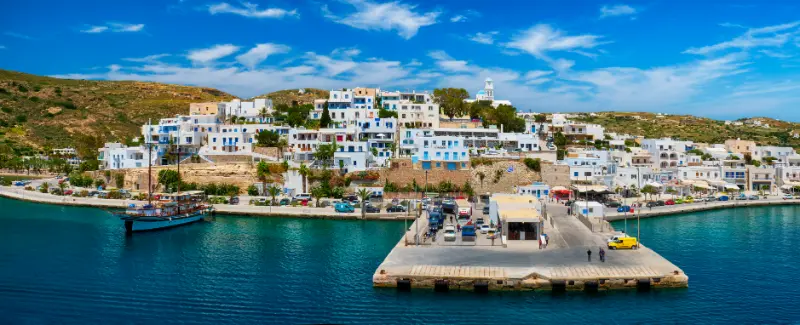
    Symi Island Greece Islands From Rhodos Aegean Sea

    Getting there and getting around

    Rhodes is the main gateway to Symi. Use the current ferry operator or excursion company schedule for your exact date and confirm the Rhodes departure port because services may use different facilities. Arrive early with identification and booking information ready.

    On Symi, most day visitors can walk Gialos and part of Kali Strata. The municipal bus connects Gialos, Chorio and Pedi, with a separate service listed toward Panormitis. Taxis can save time when the clock matters.

    Best time to go

    May, June, September and early October are excellent for a town-focused day because walking is more comfortable. July and August provide frequent tourist activity but make the Kali Strata much harder in the middle of the day.

    Choose the day with the best sea and wind forecast within your Rhodes stay when possible. A flexible booking or at least a free backup day reduces the pressure to travel in poor conditions.

    Where to stay

    For a day trip you obviously stay in Rhodes, but if the return ferry feels too early once you read the itinerary, that is a sign to convert the excursion into an overnight. Even one night transforms Symi because you gain the quiet harbour evening and early morning.

    If you decide to stay, Gialos is the easiest first-time base because the ferry and restaurants are close. Use my Symi accommodation guide for alternatives.

    Food, water and useful stops

    Eat strategically rather than treating lunch as the entire excursion. A bakery snack on arrival can free your main walking time, followed by a taverna lunch later. Symi shrimp are the local signature; seafood, salads and meze are easy hot-weather choices. Carry water for the Kali Strata because even a short climb feels demanding under strong sun.

    Traditional Greece Series Symi Island Dodecanese

    A realistic way to plan the day

    • Town-focused: arrive, walk Gialos, climb part or all of Kali Strata, explore Chorio, lunch, shop briefly and return to the port with a generous buffer.
    • Town plus swim: explore Gialos first, swim at Nos, have a simple lunch and use remaining time for a partial Kali Strata climb.
    • Panormitis excursion: choose an organised route that clearly states time at the monastery and Gialos; accept that you will see less of Chorio.
    • Overnight alternative: if ferry times leave only a small window on Symi, consider one night instead of forcing a rushed checklist.

    Mistakes to avoid

    • Choosing a boat only by ticket price instead of usable time on Symi.
    • Trying to fit Gialos, Chorio, Panormitis and a remote beach into one short stop.
    • Climbing the entire Kali Strata at noon in peak summer.
    • Taking a taxi boat without a large return-ferry buffer.
    • Scheduling the day trip on the same day as an important flight.
    • Returning to the quay at the advertised departure minute instead of earlier for boarding.

    More Symi guides

    Gialos Symi Guide: Harbour, Neoclassical Houses, Nos Beach, Food and Where to Stay; Chorio and Kali Strata Symi Guide: Old Town, Castle, Museum, Views and Sunset; Pedi Symi Guide: Bay, Beach, Agios Nikolaos, Boats and Where to Stay; Nimborio Symi Guide: Beach, Coastal Walks, Swimming and a Quiet Stay; Best Beaches in Symi: Nos, Agios Nikolaos, Nanou, Marathounda and Agios Georgios; Symi Boat Trips Guide: Nanou, Agios Georgios, Sesklia, Nimos and Agia Marina; Symi Day Trip from Rhodes: Ferries, Gialos, Panormitis and a Realistic One-Day Plan; Symi Without a Car: Buses, Taxi Boats, Taxis, Walking and the Best Bases; Where to Stay in Symi: Gialos, Chorio, Pedi or Nimborio? Best Areas Compared; Symi Food Guide: Symi Shrimp, Seafood, Akoumia, Tavernas and What to Eat; Symi Travel Guide; Symi Hiking and Panormitis Guide.

    Frequently asked questions

    How long is the ferry from Rhodes to Symi?

    Visit Greece gives about 1 hour 30 minutes as a typical ferry journey, but real times vary by vessel, route and stops. Check your exact service.

    Can I see Panormitis and Gialos in one day?

    Yes, many organised trips are designed that way, but you trade free time in Gialos for the monastery stop.

    Is a Symi day trip worth it?

    Yes if the timetable gives enough usable island time and you keep the plan focused. An overnight is better if you want beaches, Chorio and the harbour after day visitors leave.

    Can I swim on a Symi day trip?

    Yes, especially at nearby Nos, but only if your schedule leaves a generous margin before the return ferry.

    Official information to check before you go

    Use Visit Greece: Symi for general access information, Municipality of Rhodes ship connections to confirm the main Rhodes ferry connections, and Municipality of Symi transport page for transport once on Symi. Timetables change seasonally, so verify the operator schedule immediately before travel.

    Final planning advice

    A successful Rhodes-to-Symi day trip is built around restraint. Pick the sailing that gives the most useful time, decide whether Panormitis is truly a priority and leave enough margin for the return. If you spend the day enjoying Gialos and one additional experience instead of racing through five, Symi will feel memorable rather than rushed.

  • Sifnos Hiking Guide: Best Trails, Villages, Profitis Ilias and Coastal Walks

    Sifnos Hiking Guide: Best Trails, Villages, Profitis Ilias and Coastal Walks

    Sifnos is one of the Cycladic islands where walking can shape the whole holiday rather than fill one spare morning. The old path network linked villages, farms, mines, churches, towers and beaches long before modern roads. Today the municipality describes roughly 200 km of historic paths and 19 officially marked routes, while Visit Greece refers to more than 100 km of signposted trails. The two figures are not contradictory: the broader traditional network is larger than the actively waymarked visitor routes.

    The result is a rare island where you can build days around footpaths and still finish with a swim or excellent dinner. This guide focuses on route types, seasons, difficulty, transport logistics and safety rather than pretending every visitor should climb the highest summit.

    Sifnos hiking at a glance

    Official marked routes19
    Broader historic path networkAbout 200 km according to the municipality
    Best seasonsSpring and autumn
    Highest classic objectiveProfitis Ilias Apsilos, 682 m
    Best easy introductionCentral villages: Apollonia–Artemonas and nearby settlements

    Why the trail network is special

    These were working paths, not routes invented for tourism. Along them you encounter dry-stone walls, dovecotes, wells, farm buildings, threshing floors, old mining remains, chapels and ancient towers. The walking therefore tells you how the island functioned before roads, and that context is as important as the sea views.

    Some paths are paved with stone or marble; others are rough dirt tracks. Signage is generally strong on the marked network, with route numbers and information, but a phone map and offline backup remain sensible.

    Best time to hike

    The municipality recommends spring and autumn, when temperatures are milder and vegetation is at its best. That is the period I would choose for a walking-first trip. Summer hiking is possible, but the strategy changes: start early, choose shorter routes, carry more water and avoid committing to exposed climbs during the hottest hours.

    Wind can cool you deceptively while sun exposure remains intense. Hat, sunscreen and water are essential even when the air feels comfortable.

    Easy village walking: Apollonia to Artemonas

    The linked central settlements are the best introduction because you can walk through lived-in villages rather than isolated terrain. Combine Apollonia, Pano Petali, Agios Loukas and Artemonas depending on your route and energy. You get architecture, bakeries, churches and frequent chances to stop.

    This is also the easiest option when weather is uncertain: you are never far from roads, cafés or a bus connection. Use the Apollonia and Artemonas guide for the village details.

    Sifnos Apollonia

    Artemonas to Kastro

    The historic connection from the central villages toward Kastro is one of the island’s most atmospheric combinations. It lets you approach the old capital gradually and makes the fortified settlement feel connected to the landscape rather than isolated at the end of a car ride.

    Finish with the Kastro guide and check the current bus schedule if you plan to walk only one direction. A one-way hike plus bus or taxi return can be smarter than forcing a hot round trip.

    Faros to Chrysopigi

    For an easy coastal walk, Faros–Glyfo–Apokofto–Chrysopigi is hard to beat. The route is paved for much of the coastal section and gives immediate access to swimming. It is ideal for travellers who want scenery and movement without a full mountain day.

    The walk is described in detail in Faros and Chrysopigi. Even here, midday heat and slippery rock around swimming spots require judgement.

    Profitis Ilias Apsilos

    Profitis Ilias Apsilos is the island’s highest peak at about 682 m and one of the classic objectives for experienced walkers. The ascent is longer, more exposed and more serious than a village stroll. Views can be extensive, but the route should not be attempted simply because the summit number sounds modest.

    Start early, carry substantial water and turn back if heat, wind or navigation becomes uncomfortable. Outside the main walking seasons, ask locally about path condition before committing.

    Agios Andreas and ancient landscape

    Routes around the central and southern island can connect with the ancient acropolis of Agios Andreas, where archaeology and panoramic views reinforce each other. Check site opening information separately if your plan depends on entering the archaeological area; the trail itself and the staffed site do not necessarily share the same schedule.

    Fikiada from Platis Gialos or Vathi

    Fikiada is a rewarding beach objective because it is reached by path or sea. Approaching on foot makes the swim feel earned, but it also means you must carry what you need and retain enough energy for the return. The route is better in mild weather than during a hot, windless afternoon.

    Pair it with the Sifnos beaches guide to understand which nearby alternatives are easier if conditions change.

    Navigation and official maps

    Use the official Sifnos Trails resources rather than relying only on crowd-sourced tracks. Download the route before leaving mobile coverage and note junction numbers or landmarks. A paper hiking map is still useful because it gives a complete view of how routes connect.

    The municipality links to its official paths information, which also points visitors toward the dedicated Sifnos Trails network.

    Safety checklist

    • Start early in hot weather and avoid exposed midday climbs.
    • Carry more water than you expect to drink; fountains are not guaranteed to be running.
    • Wear shoes with grip rather than smooth beach sandals.
    • Download offline maps and tell someone your route on longer hikes.
    • Close gates and respect livestock, farms, churches and private property.
    • Do not enter abandoned mines or unstable ruins.
    • Check wind, fire-risk restrictions and local advice before remote routes.

    Using buses for one-way hikes

    Sifnos becomes much easier for walkers when you combine paths with buses. Seasonal routes connect central villages with Kamares, Kastro, Faros, Platis Gialos, Vathi and northern settlements at varying frequencies. Build one-way walks around the current timetable and always keep enough time for a taxi fallback if the final bus is missed.

    Sifnos Island Faros Traditional Village Greece Cyclades

    Tours and activities

    If you want a guided walk, food experience, boat trip or another organised activity, compare what is available for your exact dates. On a small Cycladic island the choice can change by season, so check the meeting point, duration, language, cancellation terms and whether transport is included before booking.

    Frequently asked questions

    How many marked hiking routes are there?

    The municipality lists 19 officially marked routes within a much larger historic path network.

    How long is the Sifnos path network?

    The municipality describes roughly 200 km of historic paths, while Visit Greece refers to more than 100 km of signposted trails.

    When is the best time to hike?

    Spring and autumn are the best seasons for comfortable temperatures and vegetation.

    What is the highest hiking objective?

    Profitis Ilias Apsilos rises to about 682 m and is a classic but more demanding route.

    Can I hike without a car?

    Yes. Central accommodation plus seasonal buses works well for several one-way routes.

    Are the trails suitable for beginners?

    Some village and coastal routes are easy; summit and remote routes require better fitness, navigation and heat management.

    Final practical advice

    Choose one hike that matches the weather, not the most famous route on your saved list. Sifnos rewards consistency: a short village path one day, a coastal route the next and a longer mountain walk in cool conditions can reveal more of the island than driving between viewpoints.

    Planning details that are easy to overlook

    Build each day around geography rather than a list of saved pins. Sifnos is compact, but repeated returns through the central road network can still waste time. Group central villages together, south-coast beaches together and Kastro with the eastern side. This leaves more time for meals and swimming, which are not empty gaps in a Sifnos itinerary but part of the experience.
    In July and August, heat changes the order of the day. Walk early, swim through the hottest hours and return to villages in late afternoon. In May, June, September and October, longer daytime walks become more realistic, but ferry and bus frequency may be lower. Always verify the transport that operates on your exact dates before making a non-refundable plan around it.

    Carry a refillable bottle, sun protection and shoes with grip even on days that are not labelled “hiking”. Stone lanes can be polished, coastal paths can be dusty and a five-minute viewpoint detour can become uncomfortable in smooth sandals. A light layer is useful for wind on evening terraces and ferry decks.

    For churches and monasteries, dress respectfully and avoid entering during services simply to take photographs. For pottery workshops, ask before photographing artisans at work. For beaches, leave stones, plants and shells where they are and take rubbish back to a serviced settlement if there are no bins.

    Finally, keep one flexible half-day in the itinerary. Wind, a changed bus timetable, a festival or a restaurant recommendation may give you a better plan than the one you made months earlier. Sifnos rewards travellers who organise the essentials but leave enough room for the island to change the schedule.

    A realistic pace for the day

    Avoid planning Sifnos as a sequence of ten-minute stops. Roads are short, but parking, bus waits, stone lanes, meals and beach access all add time. A realistic day normally has one main village or walk, one swim and one unhurried meal. This rhythm also makes it easier to adapt when wind changes the beach choice or when a small museum has different seasonal hours than expected.

    If you are combining this area with another part of the island, choose the nearest logical neighbour rather than crossing Sifnos repeatedly. Keep Kastro with the eastern side, Faros and Chrysopigi with the south-east, Platis Gialos with the south and Kamares with ferry-day logistics. This simple approach reduces unnecessary transfers and creates more time for the experiences that make the island distinctive.

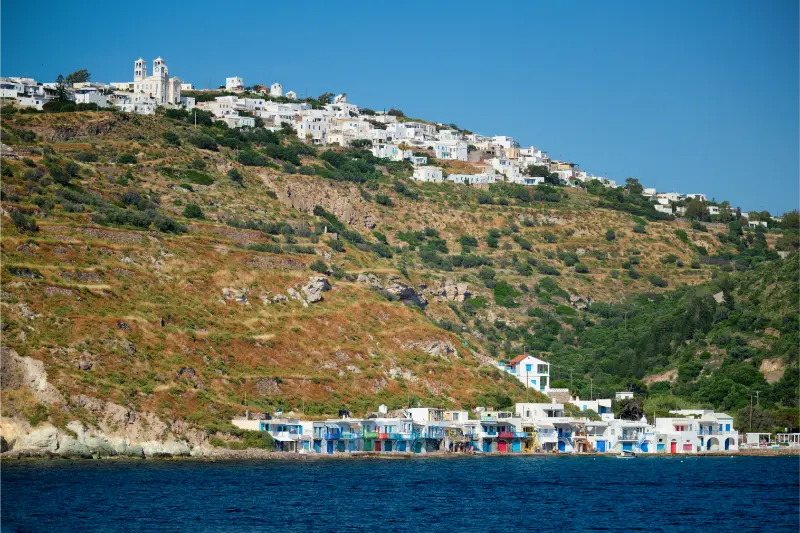
    Sifnos Chrysopigi
  • Zakynthos Town and Bochali Guide: Squares, Castle Views and a 2-Day Stay

    Zakynthos Town and Bochali Guide: Squares, Castle Views and a 2-Day Stay

    Zakynthos Town is often overshadowed by the island’s beaches, turtles and boat trips, yet it is the best place to understand the cultural side of Zakynthos. The 1953 earthquake destroyed much of the historic town, and the reconstruction that followed created the urban landscape you see today. The waterfront, Solomos Square and the climb toward Bochali reveal a different identity from Laganas or the resort coast.

    I would give the town one full day or two nights, especially at the beginning or end of a Zakynthos trip. The Zakynthos Travel Guide covers the entire island, while the Zakynthos turtle guide focuses on the protected marine environment. Here the emphasis is architecture, culture and the view from above.

    Where this fits in your Greece itinerary

    For wider planning, continue with Zakynthos Travel Guide; Zakynthos Turtle Guide. I use these pages together so the day-level advice stays connected to a realistic island route rather than becoming an isolated list of attractions.

    What makes this experience worth your time

    Start at Solomos Square

    The main square is a useful orientation point and a good place to begin understanding the rebuilt capital. The surrounding museums and public buildings add context, while the open space connects naturally with the waterfront. Visit early if you want photographs without the strongest heat and traffic.

    My practical approach is to give this stop enough time to absorb the setting rather than treating it as another pin to clear. I look at heat, parking, walking surface and the next drive before deciding how long to stay. That simple check prevents a beautiful place from becoming the stressful middle of an overfilled day.

    Walk the waterfront slowly

    The seafront is part transport corridor, part promenade and part everyday town life. Do not treat it as a beach. Walk, stop for coffee and use it to connect the central squares with the port area, but remain aware of traffic and working harbour activity.

    My practical approach is to give this stop enough time to absorb the setting rather than treating it as another pin to clear. I look at heat, parking, walking surface and the next drive before deciding how long to stay. That simple check prevents a beautiful place from becoming the stressful middle of an overfilled day.

    Climb to Bochali for the panorama

    Bochali sits above the capital and provides the classic panoramic view over town and the Ionian Sea. You can reach the area by car, taxi or on foot if you are comfortable with an uphill route. Sunset is popular, so arrive before the final light if you want time to explore rather than only taking a photograph.

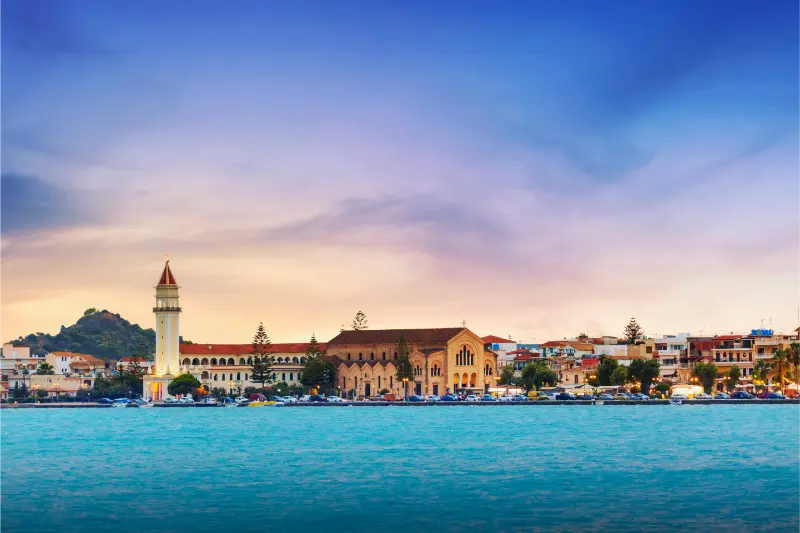
    Evening Sunset Panorama Town Hall Saint Dionysios Church Zakynthos City Ionian Sea Zakynthos Island Greece

    My practical approach is to give this stop enough time to absorb the setting rather than treating it as another pin to clear. I look at heat, parking, walking surface and the next drive before deciding how long to stay. That simple check prevents a beautiful place from becoming the stressful middle of an overfilled day.

    Add the Venetian Castle when open

    The castle above Bochali gives historical depth to the viewpoint. Opening days can be more limited than resort attractions, so verify the current schedule before climbing. Even if the site is closed, the Bochali area is still worth visiting for the view and atmosphere.

    My practical approach is to give this stop enough time to absorb the setting rather than treating it as another pin to clear. I look at heat, parking, walking surface and the next drive before deciding how long to stay. That simple check prevents a beautiful place from becoming the stressful middle of an overfilled day.

    Look for the island’s musical identity

    Zakynthos has a strong tradition of cantades and philharmonic music. Festivals and religious events can make this heritage especially visible, but even on an ordinary evening the town feels culturally different from a generic beach resort.

    Sunrise View From Beach Coastline Greece Zakynthos Alykes Ionian Sea

    My practical approach is to give this stop enough time to absorb the setting rather than treating it as another pin to clear. I look at heat, parking, walking surface and the next drive before deciding how long to stay. That simple check prevents a beautiful place from becoming the stressful middle of an overfilled day.

    Use the capital as a logistics base

    The port, airport access and central services make Zakynthos Town practical. It works particularly well for travellers who want restaurants and local life but are happy to drive to beaches rather than sleeping beside one.

    My practical approach is to give this stop enough time to absorb the setting rather than treating it as another pin to clear. I look at heat, parking, walking surface and the next drive before deciding how long to stay. That simple check prevents a beautiful place from becoming the stressful middle of an overfilled day.

    Planning and getting around

    The town centre is walkable, though summer traffic and parking can be frustrating. If you are staying centrally, ask whether private parking is available. Bochali is uphill, so a taxi or car may be more comfortable in heat. Check museum and castle opening hours shortly before your visit; official schedules can change by season and day of week.

    Before leaving, save the exact parking or departure point offline and confirm any ticket, ferry or archaeological schedule that matters to the day. Island travel is forgiving when you build in buffers, but it becomes fragile when one late boat or full car park affects every later reservation.

    A realistic itinerary

    This is the pacing I would use on a first visit. It keeps one main objective in each part of the day and leaves enough room for meals, weather and unexpected stops.

    • Day 1: explore Solomos Square, the central streets and waterfront, then go to Bochali for late-afternoon views and dinner.
    • Day 2: use the morning for a museum or cultural stop, then continue to a beach or another part of Zakynthos before returning to town in the evening.

    Best time to go

    May, June and September are excellent for town walking. July and August are lively but hot, making early morning and evening the best times for the centre. Winter is quieter and can be rewarding for culture, though tourist services and opening hours are reduced.

    Wind matters throughout the Ionian even though the region often feels more sheltered than the Cyclades. For boats, exposed viewpoints and mountain roads, check the same-day forecast rather than relying only on a general weekly icon. In shoulder season, also verify whether seasonal businesses and transport are operating on your exact dates.

    Food and the rhythm of the day

    Zakynthos Town is a good place to try local dishes away from resort menus. Look for ladotyri cheese, rabbit or meat dishes where available, vegetable cooking and local sweets. The town also works well for bakeries and casual lunches before a road-trip afternoon.

    I normally place the longest drive or hike before the main meal, then slow the schedule down. This is safer if you are driving and also makes the afternoon more enjoyable. A local lunch followed by one nearby stop usually creates a better day than eating quickly and crossing the island again.

    Small details that improve the visit

    Because the capital was largely rebuilt after the 1953 earthquake, it rewards travellers who read a little history before walking. Without that context, the city can feel newer than expected. With it, the surviving and reconstructed elements become part of a story about continuity rather than disappointment over what was lost.

    The Bochali viewpoint is also better when you arrive before sunset. You can walk, find a safe place to stand and watch the light change instead of joining the last-minute rush. If you are driving, leave only from legal parking and do not block narrow local streets.

    Practical mistakes to avoid

    • Skipping the capital entirely
    • Driving to Bochali only at the exact sunset time
    • Assuming the castle is open every day
    • Trying to use the waterfront as a swimming beach
    • Booking central accommodation without parking information
    • Spending the whole stay in town and missing the island’s natural side

    The pattern behind most of these mistakes is overplanning. The Ionian Islands are easy to underestimate because road distances look short and the sea is often calm, but parking, narrow roads, boat timings and heat can still consume time. Plan around one or two strong experiences per day and let the rest stay optional.

    Xigia Beach Zakynthos Island Greece Views Azure Sea Water Nature With Cliffs

    Accessibility, families and comfort

    Accessibility varies widely between old towns, fortresses, mountain trails and boat landings. Stone steps, uneven paths and limited shade can matter more than the distance shown online. Travellers with reduced mobility should contact the specific site, operator or accommodation for current access details. Families should prioritise shade, toilets, safe parking and realistic transfer times rather than assuming every famous stop has full infrastructure.

    Responsible travel

    Stay on marked routes, respect temporary closures and never remove archaeological, geological or natural material. Keep noise low in villages and religious spaces, avoid blocking residents with parked cars and give wildlife a wide buffer. On beaches and boats, take every item you brought with you back out. Small island communities and sensitive coastal environments absorb visitor pressure quickly, so basic behaviour has a visible effect.

    Frequently asked questions

    Is Zakynthos Town worth staying in?

    Yes, especially for one or two nights if you value food, culture and transport convenience.

    If this point is central to your trip, confirm the latest local information shortly before travel because seasonal services and access conditions can change.

    How do I reach Bochali?

    By car, taxi or an uphill walk from the centre, depending on heat and fitness.

    If this point is central to your trip, confirm the latest local information shortly before travel because seasonal services and access conditions can change.

    Is the Venetian Castle always open?

    No. Check the current official schedule before your visit.

    If this point is central to your trip, confirm the latest local information shortly before travel because seasonal services and access conditions can change.

    Can I visit the town without a car?

    Yes. The centre is compact and walkable.

    If this point is central to your trip, confirm the latest local information shortly before travel because seasonal services and access conditions can change.

    Is this a good base for beaches?

    Yes if you are willing to drive, but it is not a beach-resort base itself.

    If this point is central to your trip, confirm the latest local information shortly before travel because seasonal services and access conditions can change.

    Check current information before your visit

    For official destination background and current information, see Visit Greece – Zakynthos Town. I recommend checking opening hours, ferry schedules, weather and temporary access restrictions again shortly before the trip rather than relying on an old screenshot or last year’s timetable.

    Final thoughts

    The strongest Ionian itineraries are not the ones that cover the most kilometres. They combine coast, landscape and local life without forcing every famous stop into the same day. Give the main experience time to breathe, keep one backup plan for weather and leave a little room for an unplanned swim, meal or village stop. That is usually where the trip starts to feel like your own rather than a checklist copied from everyone else.

    More Zakynthos in-depth guides

    Continue planning Zakynthos with Navagio Beach Zakynthos 2026 Guide; Blue Caves Zakynthos Guide; Laganas and Kalamaki Zakynthos Guide; Vasilikos Zakynthos Guide; Xigia and Makris Gialos Zakynthos Guide; Porto Limnionas and Porto Roxa Zakynthos Guide; Marathonisi Turtle Island Zakynthos Guide; Alykes, Alykanas and Tsilivi Zakynthos Guide; Best Beaches in Zakynthos; Zakynthos Road Trip.

  • Vikos Gorge Guide: Viewpoints, Hiking Routes, Villages and Safety Tips

    Vikos Gorge Guide: Viewpoints, Hiking Routes, Villages and Safety Tips

    Vikos Gorge is one of the defining landscapes of Zagori: a deep limestone canyon cut through the Pindus mountains, surrounded by stone villages, forests and old footpaths. Many visitors see it only from a roadside viewpoint, while experienced hikers cross part or all of the gorge on foot. Both approaches can be worthwhile, but they require very different planning. The mistake is to treat a viewpoint stop and a full mountain hike as versions of the same activity.

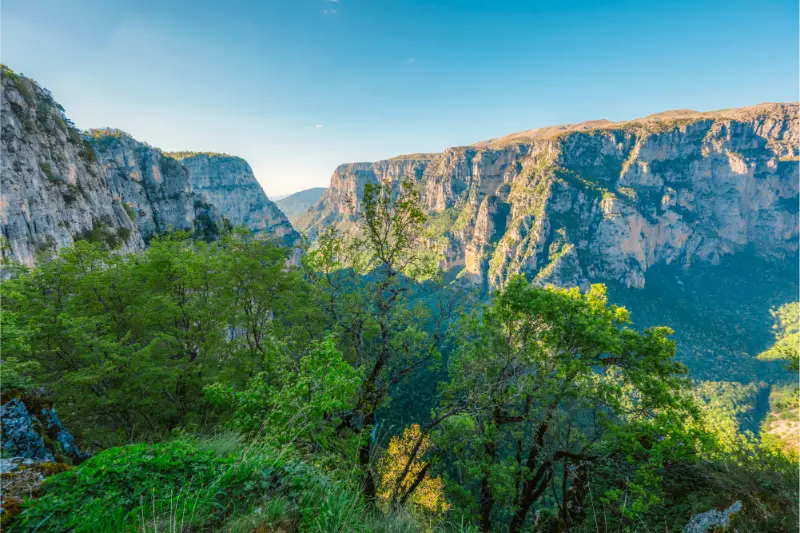
    Vikos Gorge View From Village Vikos Gorge Pindus Mountains Northern Greece

    If this is your first trip to the area, use this article together with Zagori Travel Guide, Hiking in Greece and Ioannina Travel Guide. Those guides cover the wider destination, while this page focuses on the practical decisions that make a visit to Vikos Gorge Guide work smoothly.

    Why Vikos Gorge Guide is worth your time

    The gorge gives Zagori its dramatic geography, but the villages are equally important to the experience. Monodendri, Vikos, Papingo and nearby settlements provide bases, food and historical context, while viewpoints such as Oxya allow non-hikers to appreciate the scale of the canyon. A multi-day stay is far more satisfying than trying to race through the region on a day trip from a distant city.

    Vikos Gorge National Park Vikosaoos Northern Greece Traditional Stone Building Monodendri Village Zagori Greece

    The strongest trips are usually built around a clear reason for being here rather than a list of every possible attraction. Decide whether your priority is history, landscape, food, swimming, photography or walking. Once that is clear, the rest of the itinerary becomes easier: you can choose the right time of day, avoid unnecessary transfers and leave enough space for the experience that brought you here in the first place.

    Main highlights

    • Oxya viewpoint near Monodendri
    • Beloi viewpoint for a more active outing
    • the classic gorge hiking route
    • stone villages of Zagori
    • Voidomatis river area
    • Papingo and mountain scenery

    Oxya viewpoint near Monodendri

    Oxya viewpoint near Monodendri is one of the elements that gives Vikos Gorge Guide its identity. Do not approach it only as a photo stop. Spend enough time to notice how it connects with the surrounding streets, landscape or historical context. In busy periods, moving even ten minutes away from the obvious focal point often changes the experience completely and gives you a more balanced view of the place.

    Beloi viewpoint for a more active outing

    Beloi viewpoint for a more active outing is one of the elements that gives Vikos Gorge Guide its identity. Do not approach it only as a photo stop. Spend enough time to notice how it connects with the surrounding streets, landscape or historical context. In busy periods, moving even ten minutes away from the obvious focal point often changes the experience completely and gives you a more balanced view of the place.

    the classic gorge hiking route

    the classic gorge hiking route is one of the elements that gives Vikos Gorge Guide its identity. Do not approach it only as a photo stop. Spend enough time to notice how it connects with the surrounding streets, landscape or historical context. In busy periods, moving even ten minutes away from the obvious focal point often changes the experience completely and gives you a more balanced view of the place.

    stone villages of Zagori

    stone villages of Zagori is one of the elements that gives Vikos Gorge Guide its identity. Do not approach it only as a photo stop. Spend enough time to notice how it connects with the surrounding streets, landscape or historical context. In busy periods, moving even ten minutes away from the obvious focal point often changes the experience completely and gives you a more balanced view of the place.

    Best time to visit

    Late spring and early autumn are usually the most comfortable periods for hiking, but mountain weather can change quickly. Summer can be hot in exposed sections, while winter conditions can make routes unsuitable without specialist experience. Always check local trail conditions, weather and daylight before committing to a long hike.

    Time of day matters almost as much as season. Early mornings are best for archaeological sites, exposed walks and popular viewpoints, while late afternoon is usually more pleasant for neighbourhoods, waterfronts and photography. If a visit depends on opening hours, boats, weather or trail conditions, check the official information the evening before rather than relying on an itinerary saved months earlier.

    How to get there and get around

    A rental car is the most practical way to move between Zagori villages and trailheads. For a point-to-point gorge hike, arrange the return transfer before starting; do not assume taxis will be waiting at the finish. Carry enough water, proper footwear, offline navigation and layers even if the village forecast looks mild.

    In Greece, transport decisions should be made around the whole day rather than a single attraction. A rental car gives flexibility but can create parking problems in historic centres. Public transport is often excellent for straightforward city routes but less useful for combining several rural stops. Taxis are valuable for short gaps, especially when they save a steep climb or a long wait, but they become expensive when used as a substitute for a properly planned route.

    How much time do you need?

    For Vikos Gorge Guide, a focused visit can usually fit into half a day, but the right amount of time depends on how deeply you want to explore. Travellers who enjoy museums, hiking, long lunches or photography should protect a full day or at least avoid scheduling another major attraction immediately afterwards. If you are using the place as part of a wider road trip, one well-planned stop is better than three rushed ones.

    A realistic itinerary

    On day one, use Monodendri as a base for Oxya and a village walk, then have an early night. On day two, either undertake a properly planned gorge hike or choose a shorter route and drive toward Papingo and the Voidomatis area. This gives both the canyon and the villages enough space in the itinerary.

    Build a buffer of at least one hour into the day. That margin absorbs a longer meal, traffic, a museum queue, a change in weather or the discovery of a viewpoint where you simply want to stay. Greece is rarely at its best when every thirty minutes are scheduled. Protect the essential logistics, then allow the day to breathe.

    Where to stay

    You do not necessarily need to sleep beside Vikos Gorge Guide. Choose accommodation based on the wider trip. In cities, stay near a metro line or in a neighbourhood you enjoy walking through at night. In mountain and rural areas, staying close to the next morning’s trailhead can be more useful than choosing the prettiest village on a map. On a short trip, convenience usually creates more value than saving a small amount on the nightly rate.

    Food and breaks

    Avoid choosing a restaurant only because it sits beside the most famous landmark. Walk a few streets away, compare menus and look for places where the meal itself can become part of the day. In hot weather, a long lunch during the middle of the afternoon is often smarter than forcing another exposed walk. Carry water even in cities, and never assume a rural viewpoint or archaeological site will have an open café when you need one.

    What to bring

    • comfortable shoes with grip
    • refillable water bottle
    • sun protection and a hat
    • a light layer for wind or cooler evenings
    • offline map or downloaded route
    • charged phone or small power bank
    • a little cash for minor purchases

    Pack for the actual terrain rather than the image you have seen online. Ancient paving can be slippery, mountain trails can be rough, and coastal wind can make a warm day feel much cooler after sunset. Good footwear and water make a bigger difference than carrying extra clothes you will never use.

    Common mistakes to avoid

    • arriving at the same peak hour as every tour group
    • trying to combine too many distant stops
    • ignoring heat, wind or trail conditions
    • assuming old ticket prices or opening hours are still valid
    • forgetting to plan the return journey
    • treating religious, residential or protected areas as photo sets

    The most common mistake at Vikos Gorge Guide is overestimating how much fits comfortably into one day. Distances on a map do not show parking, queues, steep streets, museum fatigue or the simple desire to stop for coffee. Prioritise two or three experiences and leave secondary stops optional.

    Is it suitable for families?

    Usually yes, but the day should be adapted to heat, walking distance and attention span. Families often do better with an early start, a clear lunch break and one major attraction rather than a full adult sightseeing schedule. At archaeological sites and viewpoints, uneven surfaces and unprotected drops require active supervision. A shorter successful visit is better than forcing children through every room or path.

    Accessibility and mobility

    Accessibility varies widely. Modern museums and central promenades may have lifts and smoother surfaces, while old towns, mountain paths and archaeological sites can include steps, cobbles and steep gradients. Check the official accessibility information for the specific place you plan to visit. If mobility is limited, taxis can often eliminate the hardest climbs even when the final attraction still requires some walking.

    What to combine with it

    Vikos combines naturally with Ioannina, central Zagori, Papingo and Tzoumerka on a longer Epirus road trip. Avoid adding Meteora to the same day; mountain roads and scenic stops make travel times longer than the map suggests.

    For more context, continue with Zagori Travel Guide, then use Hiking in Greece and Ioannina Travel Guide to build the surrounding itinerary. This keeps Vikos Gorge Guide connected to the rest of the trip instead of turning it into an isolated detour.

    Ioannina Vikos Gorge

    FAQ

    Do I need to book in advance?

    For major museums, organised tours, popular summer activities and time-sensitive transport, advance booking is sensible. For ordinary neighbourhood walks and viewpoints, it is usually unnecessary.

    What is the best time of day?

    Early morning is best for lower temperatures and fewer people. Late afternoon is excellent for atmosphere and photography, provided opening hours and the return journey still work.

    Can I visit without a car?

    In cities, usually yes. Rural attractions and multi-stop mountain days are easier with a car, although organised excursions or taxis can sometimes replace driving.

    Is it worth visiting in the shoulder season?

    Yes. May, June, September and October can be excellent, but seasonal buses, boats and businesses may run less frequently outside peak summer.

    Should I trust prices and timetables from older articles?

    No. Tickets, opening hours, access rules and transport schedules change. Recheck official or local information shortly before your visit.

    Final advice

    Treat Vikos Gorge Guide as an experience rather than a task to complete. Arrive with a clear plan for the essential logistics, then give yourself enough time to notice the details that make the place distinctive. That balance between preparation and flexibility is what turns a technically correct itinerary into a trip that actually feels like Greece.

    More Epirus and Zagori guides

    Continue with Papingo Travel Guide; Monodendri Zagori Guide; Kipi Stone Bridges Guide; Voidomatis River Guide; Metsovo Travel Guide; Konitsa Travel Guide; Aristi Zagori Guide; Vradeto Steps and Beloi Viewpoint Guide; Ioannina Island Guide; Zagori Road Trip.

  • Poros Day Trip from Athens: Ferries, One-Day Itinerary, Beaches and Practical Tips

    Poros Day Trip from Athens: Ferries, One-Day Itinerary, Beaches and Practical Tips

    Poros Day Trip from Athens is the kind of Poros experience that rewards practical planning more than a long checklist. The island is compact, green and closely connected to the Peloponnese, so you can combine town life, swimming and history without spending hours in transit. The challenge is deciding what belongs in the same day and what deserves its own slower visit.

    I would approach this as a guide for Athens visitors with one free day, first-time Saronic travellers and couples seeking an easy island escape. The most useful base is usually Athens for a true day trip; Poros Town if you can stay overnight. If you have extra time, pair the plan with Poros Town plus one beach, or Poros Town plus the Temple of Poseidon—not everything at once. The details below focus on how the place actually fits into a holiday rather than simply listing sights.

    Quick planning summary

    QuestionPractical answer
    Best forAthens visitors with one free day, first-time Saronic travellers and couples seeking an easy island escape
    Ideal paceone long day is possible, but one or two nights give Poros a much more relaxed character
    Best baseAthens for a true day trip; Poros Town if you can stay overnight
    Pair it withPoros Town plus one beach, or Poros Town plus the Temple of Poseidon—not everything at once

    Is Poros realistic as a day trip from Athens?

    Yes, provided the ferry schedule gives you enough usable time on the island. Poros is connected with Piraeus, and the exact journey time depends on vessel and service. The temptation is to focus only on the shortest advertised crossing, but the more important question is the combination of departure time, return time and how much daylight you actually have after boarding and disembarking.

    A day trip works best when you want Poros Town plus one secondary experience. If your list includes multiple beaches, the Temple of Poseidon, the Lemon Forest and a long dinner, stay overnight. The island is close enough to Athens to feel easy but deserves more than a rushed port photo.

    Choosing the right ferry rather than the cheapest ferry

    Compare vessel type, total journey time, arrival port, luggage rules and return options. A slightly more expensive fast service can create several extra hours on the island; a slower service may be more comfortable or better timed. Book through the ferry company or a trusted platform and verify the schedule again shortly before travel because weather and operational changes can occur.

    Arrive at Piraeus with a realistic buffer. The port is large, gates can be far apart and public transport delays happen. For the return, be back at the Poros harbour earlier than the minimum boarding time instead of trying to finish one last beach drink while watching the clock.

    Sea Beach Piraeus Athens Greece

    A realistic one-day itinerary

    On arrival, spend the first hour on the waterfront and climb toward the clock tower before the day gets hotter. Have a late-morning coffee or early lunch, then choose one beach: Askeli for convenience, Love Bay for scenery or Neorio for a greener west-coast feel. Return to town with enough time for a relaxed walk and food before boarding.

    History lovers can replace the beach with the Archaeological Museum and Temple of Poseidon, though transport makes that a more structured day. The Lemon Forest is better saved for an overnight trip unless your ferry times are unusually generous. A day trip should feel like an introduction, not a race around every road.

    Getting around during a short visit

    Walking is excellent within Poros Town, but beaches and the Temple of Poseidon require more planning. Local buses, taxis and seasonal water transport can save time, which matters far more on a day trip than on a week-long stay. Before leaving the harbour, check the current transport board or ask at an official point rather than assuming an old online timetable is still valid.

    If a taxi takes you to a quieter beach or archaeological site, agree on the return arrangement. Waiting twenty minutes is minor on a holiday but significant when your ferry home is fixed. Keep your final hour close to Poros Town.

    What a day trip costs beyond the ferry

    Budget for local transport, lunch, drinks, a sunbed if you use one and any museum or site tickets. Poros does not require a luxury budget, but a day trip becomes more expensive if you use multiple taxis simply to collect beaches. Choose one paid transport leg that adds real value and walk the rest where practical.

    Bring a refillable water bottle, hat and light beach gear so you do not spend time shopping for basics. If you are travelling in shoulder season, add a light layer for the ferry deck and evening return. The sea can feel cooler than Athens even after a warm island afternoon.

    New Year In Athens Greece

    When staying overnight is the better decision

    Stay one or two nights if you want sunset from the clock tower, a quiet morning swim, dinner without ferry anxiety or a mainland detour to Galatas and Lemonodasos. Poros changes after day visitors leave; the waterfront becomes more local and the island feels much less like an excursion.

    An overnight stay also protects you from trying to make weather cooperate with a single day. If wind makes your preferred beach uncomfortable, you can move plans rather than feeling that the trip failed. For couples and families, that flexibility is often worth more than the extra hotel cost.

    How much time should you allow?

    For this plan, one long day is possible, but one or two nights give Poros a much more relaxed character. Poros is compact enough to encourage overplanning, but short distances do not mean every stop belongs in the same day. Travel time, waiting for a bus or taxi, swimming, changing clothes and sitting down for a meal all use time that does not appear on a map.

    A useful rule is one main area in the morning and one in the afternoon. If you are staying several nights, leave at least one unstructured half-day. Poros is at its best when you have time to choose a beach based on that day’s wind and to stay longer at a waterfront table when the atmosphere is good.

    Transport and realistic day planning

    The official Poros municipality tourism site lists buses, taxis, sea transportation and ferry boats to and from Galatas. Frequencies are seasonal, so I would not build a trip around an old timetable. Photograph the current schedule when you arrive, save one taxi contact and keep the final part of any ferry-departure day close to Poros Town.

    If you rent a car or scooter, use it to reach places that are genuinely awkward by public transport rather than moving it for every meal. Parking can be more stressful than walking in the compact town. For isolated beaches or the Temple of Poseidon, agree on a return plan before a taxi drops you off.

    Best time of year for this Poros experience

    Late spring and September are especially attractive for travellers who want warm days, walking and swimming without the peak pressure of July and August. High summer brings the broadest beach services and liveliest evenings, but small coves fill faster and midday heat makes exposed archaeological or uphill walks less comfortable.

    Poros also works outside the classic beach season because the town, mainland connection and cultural sights do not disappear when sunbeds do. In cooler months, verify ferry frequency, museum hours and seasonal restaurants before booking. The trip becomes more about walking, food and local atmosphere than swimming.

    Food, water and the rhythm of the day

    Build meals into the itinerary rather than treating them as gaps between attractions. Poros Town has the widest choice, while Askeli, Neorio and other beach areas have seasonal options. In summer, a long lunch during the hottest hours can be smarter than forcing another walk. Carry water even when you expect a beach bar to be open.

    For seafood, ask about price by weight before ordering larger fish and compare a few menus. Lemon is part of the area’s identity because of the Lemon Forest opposite the island, but the best meals are often simple Greek dishes rather than elaborate themed menus. Leave room for seasonal fruit and a waterfront coffee.

    Who will enjoy this most?

    This plan is particularly good for Athens visitors with one free day, first-time Saronic travellers and couples seeking an easy island escape. Couples benefit from the island’s short distances and evening waterfront, families can keep transfers brief, and solo travellers can base themselves in Poros Town without needing a vehicle. The main adjustment is pace: children and less-mobile travellers need fewer uphill walks and more certainty about return transport.

    Cosy Narrow Street With Stairs Placa District Old Town Athens Greece

    Travellers seeking intense nightlife or huge resort beaches may prefer another Greek island. Poros is strongest as an easy, green Saronic escape where town life, pine coves and mainland access sit close together. That compactness is a feature, not an invitation to schedule every hour.

    Budget and booking strategy

    Compare the total cost of location, not only the room price. A cheap property far from town can create repeated taxi costs, while a central room may remove most evening transport. The same logic applies to ferries: a faster service may cost more but create meaningful extra time on a short trip.

    In July and August, book well-located accommodation and popular ferry departures earlier. For shoulder season, flexibility can save money, but verify that the beach services or water-sports operators you care about are running. Museum and archaeological opening patterns can also differ from summer schedules.

    What to pack

    • Shoes with grip for the clock-tower lanes, archaeological ground and uneven coastal paths.
    • A refillable water bottle, hat and high-SPF sunscreen for summer.
    • A light cover-up for Zoodochos Pigi Monastery and other religious sites.
    • A small dry bag for water taxis, beach days and boat crossings.
    • A downloaded ferry ticket and screenshots of current local transport information.

    Keep the beach bag lighter than you think. Poros is easy when you can switch from town to bus or boat without carrying a full day’s luggage. Buy heavy water locally and keep valuables in a small bag you can take onto ferries and water taxis.

    Common mistakes to avoid

    • Trying to visit Poros Town, three beaches, the Temple of Poseidon and Lemonodasos in one day.
    • Assuming a small cove will have unlimited shade or sunbeds in August.
    • Using last year’s bus or ferry timetable without checking current service.
    • Booking a hillside room without asking about stairs and luggage access.
    • Walking long exposed road sections at midday simply because the island looks small on a map.
    • Ignoring summer fire-risk restrictions in pine-covered areas.

    More Poros guides

    Continue planning with Poros Town Guide: Clock Tower, Waterfront, Museums, Food and Where to Stay; Askeli and Monastiri Poros Guide: Beaches, Monastery, Water Sports and Where to Stay; Love Bay and Russian Bay Poros Guide: Pine Coves, Naval History, Swimming and Sunset; Temple of Poseidon Poros Guide: Ancient Kalaureia, Demosthenes, Access and Visiting Tips; Lemon Forest and Galatas from Poros: Day Trip, Ferries, Citrus Groves and Practical Tips. For the island overview, also read the Poros Travel Guide.

    Frequently asked questions

    Do I need a car for this Poros trip?

    No for most short stays. Poros Town, popular beaches and Galatas can be managed with walking, buses, taxis and boats. A rental vehicle is most useful for inland sights, flexible beach-hopping or mainland road trips.

    How many nights should I spend on Poros?

    Two nights is enough for a relaxed introduction; four or five nights lets you add several beaches, the Temple of Poseidon and a mainland outing without rushing. A day trip is possible but should be deliberately simple.

    Is Poros good in September?

    Yes. September is often a strong balance for warm sea, active services and less intense peak-season pressure. Ferry and business schedules still need to be checked for the exact dates.

    Can I combine Poros with another Saronic island?

    Yes, but direct connections vary by date and vessel. Check real ferry schedules before designing an island-hopping route rather than assuming nearby islands connect every day.

    What should I check on the morning of the trip?

    Check ferry or local transport status, wind and heat, any fire-risk restrictions, and opening hours for the specific cultural site you plan to visit. Then keep one backup beach or town activity in mind.

    Check official information before you go

    For destination, transport, beaches and municipal visitor information, use the official Poros Municipality tourism website. For broader destination context and beach descriptions, see Visit Greece: Poros. Opening hours, ferry services and local transport can change, so verify the specific service you need close to travel.

    Final planning advice

    Poros works best when you use its compact size to reduce stress rather than increase the number of stops. Pick one cultural anchor, one beach or neighbourhood, and a good meal. If the wind, heat or ferry timing changes, the island gives you enough alternatives to adjust without losing the day.

    The biggest advantage is choice without huge distances: a waterfront morning can become a pine-cove afternoon, and a beach day can end with a clock-tower sunset. Leave a little empty time in the schedule. On Poros, that is often when the trip begins to feel like a holiday rather than an itinerary.

    Continue planning with Agistri day trip from Athens.

  • Gytheio Travel Guide: Harbour, Mavrovouni Beach, Cranae Island and Mani Day Trips

    Gytheio Travel Guide: Harbour, Mavrovouni Beach, Cranae Island and Mani Day Trips

    Gytheio is one of the most useful coastal bases in southern Greece because it combines a real port town with easy access to Mani, long beaches and the road toward Monemvasia. Its waterfront is lined with colourful neoclassical buildings, fishing boats and tavernas, while the small island of Cranae sits just off the southern edge of town. The atmosphere feels relaxed and maritime without being isolated.

    This guide is designed for road trippers, couples, families and travellers combining beaches with Mani. It focuses on what is genuinely worth your time, how to combine the main sights without over-planning and which practical decisions matter most once you arrive.

    Quick planning notes

    • Best for: road trippers, couples, families and travellers combining beaches with Mani.
    • Give the destination at least two nights if it is a base for day trips; one night is enough only for a transit stop.
    • Check museum, archaeological-site, bus and ferry information again shortly before travel because seasonal schedules can change.
    • In summer, start exposed walks and ancient sites early and keep beach or lunch time for the hottest hours.

    Why it deserves a place in your Peloponnese itinerary

    For a first visit, the best pace is slower than the map suggests. The Peloponnese is full of short-looking drives that become longer once you add mountain roads, village traffic, beach access and spontaneous stops. Build each day around one main area and one secondary activity. That creates time for lunch, swimming, museum closures or weather changes without turning the trip into a race between pins on a map.

    The strongest reason to include this stop is the combination of local character and regional access. Instead of treating it as a name to tick off, use it as a base or a themed day: history, coast, walking, food or a village circuit. That approach creates a more memorable trip and usually reduces unnecessary driving.

    What to see and do

    Harbour promenade

    The seafront is the natural orientation point. Walk it once in daylight to understand the town, then return in the evening when fishing boats, cafés and tavernas create the strongest atmosphere.

    The best way to experience harbour promenade is to leave enough margin for the details around it. Look at the surrounding streets or landscape, read the on-site information and avoid scheduling the next stop so tightly that you have to leave just as the place becomes interesting.

    Cranae or Marathonisi

    The small islet is linked to the mainland and associated in mythology with Paris and Helen. It is also home to the Tzanetakis Tower and a stone lighthouse, making it the easiest scenic walk from central Gytheio.

    The best way to experience cranae or marathonisi is to leave enough margin for the details around it. Look at the surrounding streets or landscape, read the on-site information and avoid scheduling the next stop so tightly that you have to leave just as the place becomes interesting.

    Mavrovouni Beach

    South of town, Mavrovouni provides a long sandy beach and a very different experience from the compact harbour. It is useful for families and travellers who want to combine a cultural road trip with uncomplicated beach time.

    The best way to experience mavrovouni beach is to leave enough margin for the details around it. Look at the surrounding streets or landscape, read the on-site information and avoid scheduling the next stop so tightly that you have to leave just as the place becomes interesting.

    Gateway to Mani

    Gytheio sits at the northern approach to the Mani Peninsula. Areopoli, Limeni and the Diros Caves are natural day-trip targets, while deeper Mani is better given a full day or an overnight stop.

    Tzannetakis Tower Gytheio Peloponnese Greece Sunset

    The best way to experience gateway to mani is to leave enough margin for the details around it. Look at the surrounding streets or landscape, read the on-site information and avoid scheduling the next stop so tightly that you have to leave just as the place becomes interesting.

    Road toward Monemvasia

    The eastbound route opens another strong day-trip option. Monemvasia deserves its own time, so avoid trying to combine a full Mani circuit and Monemvasia on the same day.

    The best way to experience road toward monemvasia is to leave enough margin for the details around it. Look at the surrounding streets or landscape, read the on-site information and avoid scheduling the next stop so tightly that you have to leave just as the place becomes interesting.

    Seafood and evening life

    The harbour is at its best after the day-trip traffic slows. Choose fish by what is actually available, ask about the daily catch and compare menus rather than assuming every waterfront table offers the same experience.

    The best way to experience seafood and evening life is to leave enough margin for the details around it. Look at the surrounding streets or landscape, read the on-site information and avoid scheduling the next stop so tightly that you have to leave just as the place becomes interesting.

    A realistic day plan

    1. Walk the harbour and Cranae in the morning.
    2. Spend late morning in the old streets and stop for coffee.
    3. Use the hottest hours for Mavrovouni Beach or a long lunch.
    4. Return to town before sunset for the waterfront promenade.
    5. Keep Mani or Monemvasia for a separate full day.

    This sequence is intentionally flexible. Swap the beach and cultural stops according to heat, wind, opening hours and your energy. If a museum or site is unexpectedly closed, the day should still work rather than collapse.

    Where to stay

    Stay in central Gytheio for walkable evenings and harbour atmosphere. Choose Mavrovouni for easier beach access and a quieter resort feel. Drivers should confirm parking because the prettiest waterfront locations are not always the easiest for a car.

    Check current accommodation options on Booking.com. Compare the map location carefully and read recent comments about parking, noise, stairs and air-conditioning rather than choosing only by headline rating.

    How to get there and get around

    Visit Greece describes Gytheio as the maritime gateway to Mani and lists KTEL links with Athens, Kalamata, Sparta and nearby towns. A car is strongly recommended for a multi-day Mani itinerary, but central Gytheio itself is easy to explore on foot.

    If you rent a car, check the accommodation’s exact parking situation before arrival. Historic centres, waterfronts and mountain villages often have narrow streets or parking outside the pedestrian core. Keep an offline map, avoid blindly following navigation apps onto tiny local lanes and refuel before remote excursions. Driving times in Greece are better treated as estimates than promises.

    Travelling without a car is possible if you keep the itinerary focused. Intercity KTEL buses are useful between major towns, but they are not designed to connect every beach, trailhead and archaeological site in a tourist-friendly sequence. Base yourself somewhere walkable, combine buses with occasional taxis and confirm the return journey before leaving for a remote attraction.

    Best time to visit

    Spring and early autumn are the easiest all-round seasons because walking temperatures are comfortable and road trips are less tiring. July and August work well for beach-focused travel, but start cultural visits early and protect the middle of the day from heat. Winter can be excellent for towns and mountain villages, although opening hours, regional transport and some coastal businesses become more limited.

    For photography and walking, early morning and the final two hours of daylight are usually the most rewarding. Midday is better used for lunch, a museum with indoor sections or a swim. In shoulder season, build more flexibility into meals and transport because smaller businesses may not operate daily.

    What to eat

    Fresh fish, grilled octopus, local olive oil, simple vegetable dishes and Laconian products suit the setting. The best strategy is to eat seafood when the catch looks good and alternate it with inland Mani dishes on road-trip days.

    A useful rule in the Peloponnese is to ask what is local today rather than searching for a fixed list of famous dishes. Seasonal vegetables, cheese, olive oil, pies, grilled meat and fish vary by sub-region. A short conversation with the server often produces a more authentic meal than ordering the most photographed item on the menu.

    Visiting with children

    Families should reduce the number of daily stops and prioritise shade, easy swimming and predictable meal breaks. A child may enjoy one castle, one short walk and a beach far more than three museums and a long afternoon drive. Carry water and snacks, check whether archaeological sites allow strollers on uneven paths and avoid exposed walks in the hottest hours.

    Budget and booking strategy

    Costs vary most by season and accommodation style. A useful strategy is to spend on location rather than unnecessary luxury: a walkable room can save repeated parking, taxi and fuel costs. Tavernas are usually easier to budget when you order shared starters, one or two mains and ask about fish by weight before confirming. Keep some cash for small businesses and rural stops.

    Common mistakes to avoid

    • Trying to combine too many towns, beaches and archaeological sites in one day.
    • Relying on an old timetable for buses, ferries, museums or seasonal attractions.
    • Underestimating heat, sun exposure or the time needed on mountain and coastal roads.
    • Choosing accommodation by price without checking the exact map position and parking.
    • Treating local landscapes as photo sets instead of protected environments or lived-in communities.

    How to fit it into a longer Peloponnese trip

    A useful backbone is our Peloponnese road trip guide. Depending on your direction, you can connect this stop with Nafplio, Ancient Olympia, Kalamata and Messinia, Mani or Monemvasia.

    Avoid chaining all of those places into a single fast loop. The Peloponnese rewards regional stays: two or three nights in one base, then a move to the next zone. That gives you room for beaches, weather, long meals and unplanned discoveries.

    Practical safety and responsible travel

    Responsible travel here is mostly practical: stay on marked paths, do not move stones at archaeological sites, protect dune vegetation, take rubbish away from remote beaches and respect quiet residential streets. In summer, follow local fire restrictions and never assume a forest or gorge is safe just because the sky is clear. Local advice on wind, heat and road conditions is often more useful than an old blog post.

    Frequently asked questions

    How many days do you need for Gytheio?

    Two nights is a comfortable minimum if you want more than a quick look. Add a third night when the destination is also your base for hiking, beaches or major day trips.

    Gytheio Embankment Peloponnese Greece Sunset

    Do you need a car?

    Not always for the central town or village, but a car usually improves access to beaches, mountain roads and scattered sights. Car-free travellers should choose a walkable base and plan regional transport before booking remote accommodation.

    Is it worth visiting outside summer?

    Yes. Spring and autumn are often better for archaeology, walking and road trips. Winter can be excellent for cities and mountain areas, while beach-focused destinations become much quieter and have fewer seasonal services.

    Should you book accommodation in advance?

    For July, August, carnival weekends, holiday periods and small villages with limited rooms, yes. In quieter months you may have more flexibility, but the best-located properties can still fill first.

    Useful sources for current information

    For details that can change, check Visit Greece – Gytheio, Mani Peninsula road trip. Reconfirm tickets, opening hours, road access, ferry or bus schedules and weather-sensitive activities shortly before the day of your visit.

    Final advice

    Gytheio Travel Guide works best when you resist the urge to turn the visit into a checklist. Choose the experiences that match your interests, leave time for the local rhythm and use the destination as part of a coherent regional route rather than a rushed detour.

    The Peloponnese is large enough that a good trip is defined as much by what you leave out as by what you include. A slower plan almost always produces better meals, easier driving and more time in the places you came to see.

    Continue planning Laconia with Laconia road trip.

    Continue planning Laconia with Mavrovouni Beach, Valtaki and the Dimitrios shipwreck.

  • Kleftiko Milos Guide: Boat Trips, Sea Caves, Swimming and How to Choose a Cruise

    Kleftiko Milos Guide: Boat Trips, Sea Caves, Swimming and How to Choose a Cruise

    Kleftiko is the sea-carved landscape that appears in many of Milos’ defining photographs: pale volcanic rock, arches, caves and intensely clear water at the south-western tip of the island. Most travellers experience it by boat, and that is important because the quality of the day depends as much on vessel size, route and weather as on the destination itself. A “Kleftiko cruise” can mean anything from a fast half-day boat to a full island sailing trip, so choosing well matters.

    This guide is built for travellers who want more than a quick photo stop. Keep Milos Travel Guide, Sarakiniko Beach Guide, Greek Island Hopping Guide open while planning so this place fits naturally into the wider trip instead of forcing unnecessary backtracking.

    Why this place deserves its own guide

    The difference between an average visit and a very good one is usually logistical rather than dramatic: arriving at the right time of day, understanding the terrain, leaving space for weather changes and knowing what not to combine. Greece rewards flexible planning. A destination can be world-famous and still feel disappointing if the day is overpacked, while a simple walk or village lunch can become a highlight when the schedule leaves room for it.

    What to see and do

    What makes Kleftiko different

    Kleftiko is not a conventional sandy beach where you arrive, rent a lounger and spend six hours ashore. The landscape is a maze of white volcanic formations rising directly from the sea. Swimming around arches and caves is the main experience. That makes calm water and a responsible skipper more important than the presence of beach facilities, which are essentially absent.

    Full-day versus half-day cruises

    A full-day trip can include the west coast, Sykia and multiple swim stops, sometimes continuing around much of Milos depending on conditions. Half-day cruises focus more tightly on Kleftiko and nearby coves. Full-day sailing suits travellers who enjoy being on the water; a shorter cruise is better if seasickness, young children or limited holiday time make eight hours on a boat unattractive.

    Departure points

    Many excursions depart from Adamas, while some use Pollonia or the south coast depending on route and operator. A longer departure can mean more coastline and more time under sail, but it can also mean less time swimming. Do not compare tours only by price. Look at actual route, vessel type, passenger count and where the trip starts and finishes.

    Small boats versus larger sailing vessels

    Small boats can feel more agile and intimate but may move more in rough water. Larger catamarans or sailing boats generally offer more deck space and facilities, though group sizes may be higher. Ask how much shade is available, whether there is a toilet, how passengers enter the water and what happens if weather forces a route change.

    Swimming and caves

    Some tours include guided swimming or small-boat exploration around caves. Only enter confined areas when the skipper or guide says conditions are safe. Rock, surge and boat traffic can create hazards even when the water looks calm from the deck. Water shoes are optional for many swimmers, but a mask can greatly improve the experience in clear conditions.

    Weather and route changes

    Wind is the most important variable. A reputable operator may change the route, departure point or even cancel if conditions are unsafe. That is not a failure of the trip; it is good seamanship. Keep one flexible day in a Milos itinerary so you can move the cruise if needed, especially if Kleftiko is a priority.

    Milos Kleftiko Greece

    Best time to visit

    Late May through September offers the most consistent excursion season, with July and August busiest. September can be excellent because the sea remains warm while crowd pressure often eases. Morning departures usually provide a full day without rushing. Whatever the month, wind on the actual day matters more than a seasonal average.

    Check conditions close to the day of your visit. Heat, wind, sea state, religious services, archaeological works or seasonal opening hours can matter more than the average weather for the month. When an official website publishes current access information, use that as the final reference instead of an old blog post or a saved social-media screenshot.

    How to get there and move around

    The easiest approach is to book a licensed excursion and follow the operator’s meeting instructions. If the boat departs from Adamas, accommodation near the port simplifies an early start. For south-coast departures, confirm whether transport is included. Do not assume you can simply drive to Kleftiko: road and foot approaches are not the standard visitor experience and can involve difficult terrain.

    Build realistic transfer time into the day. Greek islands and historic city centres often look compact on a map, but narrow roads, parking searches, pedestrian zones and seasonal traffic slow everything down. If public transport is central to the plan, verify the latest timetable shortly before travel and keep a backup option for the final connection of the day.

    Where to stay

    Adamas is practical for boat excursions and ferry connections. Plaka and Trypiti offer more atmosphere in the evening, while Pollonia is quieter and polished. Since Milos is small but roads are not instantaneous, choose accommodation based on the whole island rather than one cruise departure.

    Adamantas Adamas Harbor Town Milos Island Greece

    For accommodation, zoom in on the exact property rather than relying on the neighbourhood label. Check stairs, parking, bus access, late-night noise and the walk back after dinner. A property that is geographically close can still be inconvenient if the route is steep or the last bus finishes earlier than expected.

    Food and local experience

    Many full-day cruises include snacks or lunch, but quality and quantity vary. Check exactly what is provided and tell the operator about dietary requirements in advance. Bring water even when drinks are included. After the cruise, a relaxed dinner in Adamas or Plaka is a better plan than scheduling another timed activity.

    Give meals enough time. Greek travel is rarely improved by treating lunch as a twenty-minute gap between attractions. A slower meal also creates a useful buffer when the morning has taken longer than expected. In heavily visited places, moving one or two streets away from the most obvious viewpoint often changes both atmosphere and value.

    A realistic itinerary

    Keep the cruise as the main event of the day. Have a light breakfast, arrive early and avoid a heavy night before if you are prone to seasickness. After returning, shower and rest, then spend the evening in Plaka or Klima. Put Sarakiniko on a different day so changing wind or a delayed return does not force you to rush two of Milos’ most memorable landscapes.

    Use one priority and one secondary activity as the backbone of the day. If weather, traffic or a long lunch pushes the schedule back, drop the secondary stop instead of compressing everything. A good itinerary should survive a delay without turning the rest of the day into a race.

    Families, mobility and accessibility

    Families should plan around shade, toilets, meal timing and realistic walking stamina. Historic lanes, archaeological ground, fortress paths, beaches and mountain villages vary greatly in accessibility. Travellers who need step-free access should contact the site, transport provider or accommodation directly because general descriptions such as ‘easy walk’ are not precise enough for an important mobility decision.

    Safety and responsible travel

    Follow barriers, lifeguard instructions, religious-site rules and local signs even when other visitors ignore them. Do not climb unstable ruins, walk close to eroding cliffs, enter sea caves in rough water or drive onto protected sand for convenience. Responsible behaviour is not only about preserving the destination; it usually produces a calmer and safer trip for you as well.

    Common mistakes to avoid

    • Booking only by lowest price without checking vessel or passenger count
    • Expecting to spend the day on a sandy beach
    • Arguing with a skipper when wind forces a route change
    • Scheduling Kleftiko on your only possible day with no weather flexibility
    • Combining a full-day cruise with another timed attraction in the evening

    What to combine with it

    Build the island around Milos Travel Guide and visit Sarakiniko on a separate day. If Milos is part of a multi-island trip, use the Greek Island Hopping Guide to leave enough ferry buffer.

    Combine places that sit naturally on the same route. Crossing an island twice in one day or zigzagging through Athens wastes energy that could be spent walking, swimming or eating. If two excellent attractions pull you in opposite directions, separate them into different days and enjoy both properly.

    FAQ

    How much time should I allow?

    Protect at least half a day for a focused visit once transport, walking, breaks and a meal are included. If this is one of your main priorities, give it most of the day rather than squeezing it between two distant attractions.

    Do I need to book in advance?

    High-demand tours, tastings, organised beach services and timed archaeological visits can require or benefit from advance booking in peak season. Ordinary village walks and many beaches do not, but current access conditions should always be checked.

    Can I visit without a rental car?

    Often yes in central Athens and on well-served island routes. Rural villages, remote beaches and multi-stop road-trip days are easier by car. Rent only when it adds meaningful flexibility, and never treat a scooter or ATV as the default solution if you lack experience.

    Is it suitable for children?

    Usually, with an adjusted pace. Heat, stairs, exposed paths, long boat days and limited shade affect children more quickly than adults. Plan a shorter version of the day and keep swimming, food or playground time available as a reset.

    How reliable are old prices and timetables?

    Not very. Ticket prices, ferry schedules, museum hours, beach-service policies and bus frequency change. Use official or local sources close to the visit, particularly when one connection or opening window determines the entire day.

    Final advice

    Plan the logistics carefully, then leave space for the destination to change the plan. The most satisfying days in Greece usually have a clear structure but enough flexibility for a longer swim, an unexpected viewpoint, a village café or a sunset that makes the next scheduled stop suddenly unimportant.

    More Milos in-depth guides

    Continue planning Milos with Plaka Milos Guide; Adamas Milos Guide; Pollonia Milos Guide; Klima Milos Guide; Catacombs and Ancient Milos Guide; Phylakopi Milos Guide; Firiplaka and Tsigrado Beaches Guide; Paliochori Beach Milos Guide; Firopotamos and Mandrakia Guide; Kimolos Day Trip from Milos.

    Klima Plaka Villages Milos Island Greece