Author: Jessica

  • Elounda Crete Guide: Spinalonga, Beaches and a 3-Day Itinerary

    Elounda Crete Guide: Spinalonga, Beaches and a 3-Day Itinerary

    Elounda Crete Guide is the focus of this guide. Elounda sits on the Mirabello Bay coast north of Agios Nikolaos and has become one of Crete’s best-known upscale resort areas. Yet the destination is more interesting than luxury hotels alone: there is a working waterfront, nearby Plaka, traces of ancient Olous, calm bays and easy access to Spinalonga.
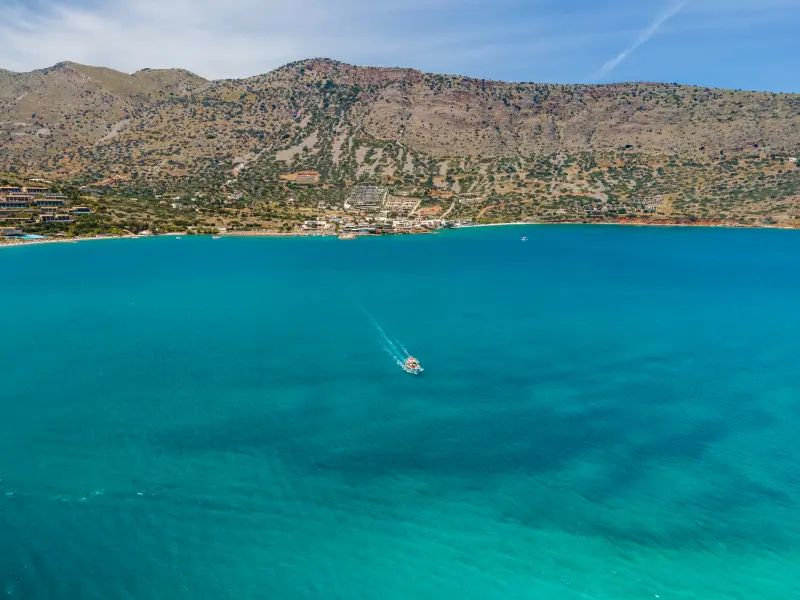
    The strongest Elounda trip balances comfort with exploration. Use the resort atmosphere when you want a slow beach day, but make time for the coast road, Plaka and Spinalonga. If you only see the inside of a hotel complex, you miss the landscape and history that make the area distinctive.

    At a glance

    Best forCouples, relaxed luxury stays, families and Spinalonga visits
    Ideal stay2–4 nights
    Car needed?Optional for Elounda itself, recommended for wider eastern Crete
    Easy combinationAgios Nikolaos, Plaka and Spinalonga

    Why this place deserves time in your Greece itinerary

    A good visit is less about collecting landmarks and more about understanding how the destination works. Elounda sits on the Mirabello Bay coast north of Agios Nikolaos and has become one of Crete’s best-known upscale resort areas. Yet the destination is more interesting than luxury hotels alone: there is a working waterfront, nearby Plaka, traces of ancient Olous, calm bays and easy access to Spinalonga.

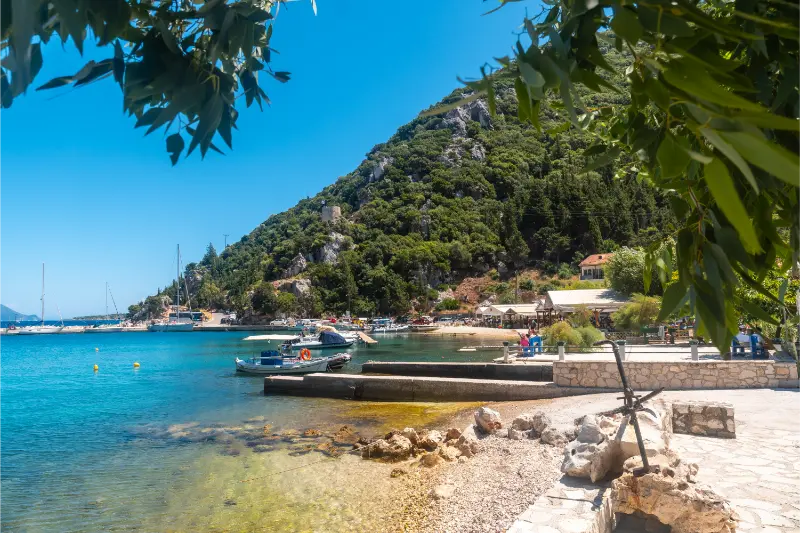
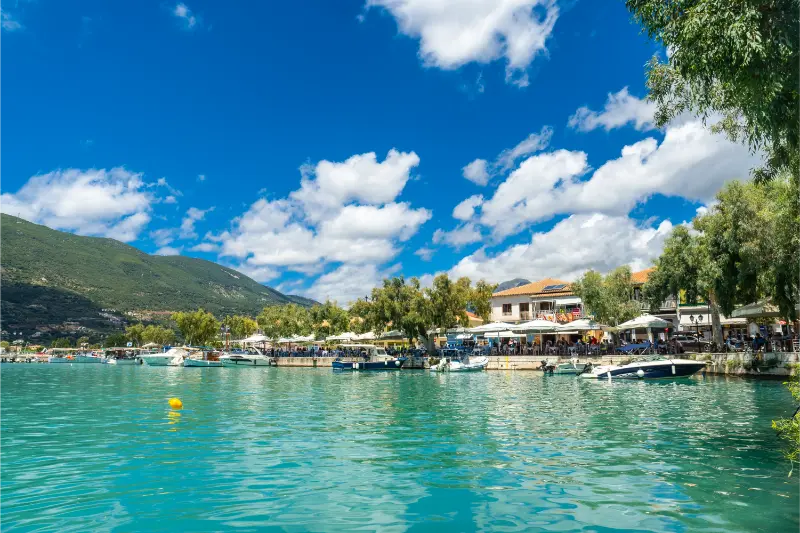
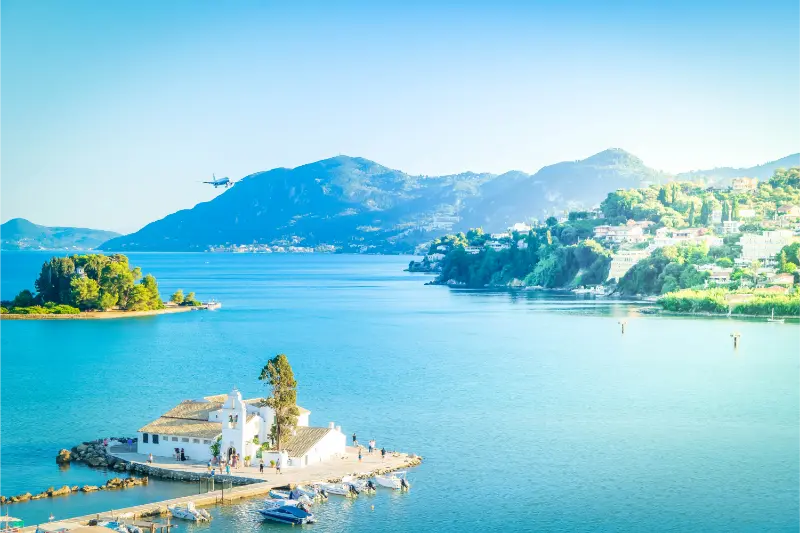
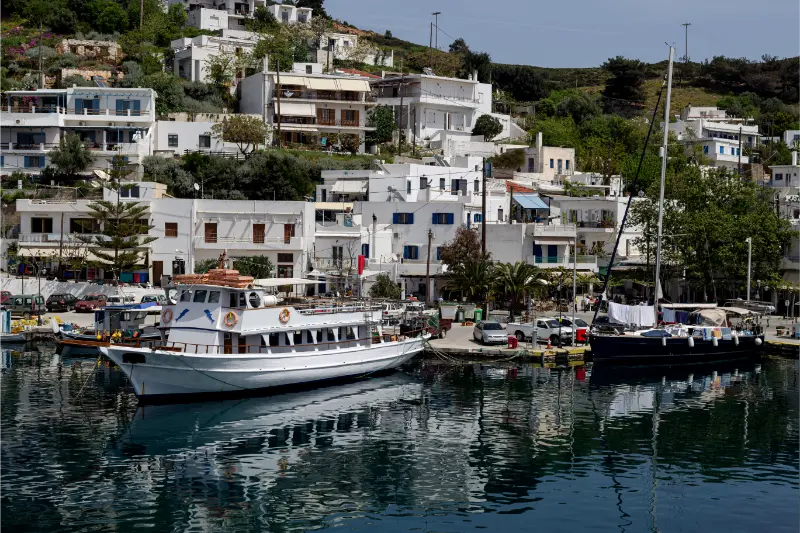
    View Boat Mirabello Bay With Calm Sea Crete Greece

    My planning approach here is simple: build the day around the strongest local experiences, leave breathing room for weather and crowds, and use nearby destinations only when they add something genuinely different. The strongest Elounda trip balances comfort with exploration. Use the resort atmosphere when you want a slow beach day, but make time for the coast road, Plaka and Spinalonga. If you only see the inside of a hotel complex, you miss the landscape and history that make the area distinctive.

    What to see and do

    Elounda waterfront

    The harbour area is compact, easy to walk and lined with places to eat, drink and organise boat trips. It is a practical first stop even if you stay in a resort outside the centre because it helps you understand distances and departure points.

    Evenings are relaxed rather than club-focused, making Elounda a good fit for travellers who prefer long dinners and waterfront walks.

    Spinalonga

    Spinalonga is the essential historical excursion. The island is known for its Venetian fortifications and later role as a leprosy colony, and the surviving streets and buildings create a powerful sense of place. A thoughtful visit takes time; do not reduce it to a fast lap between boat departures.

    For history, route planning and what to expect, read the Spinalonga travel guide.

    Plaka

    Plaka faces Spinalonga from the coast and is smaller and quieter than Elounda. It works well for a seafood lunch, a swim or a slower base if you want to be close to boat connections without the larger resort feel.

    The coastal drive between Elounda and Plaka is short but scenic. Stop only where parking is safe and legal; the road can be busy in summer.

    Kolokytha and the peninsula

    The peninsula and bays around Elounda offer swimming and boat-trip possibilities beyond the main town beach. Road conditions vary, so do not assume every coastal track suits a standard rental car.

    A small-boat excursion can be a better choice if your priority is swimming rather than driving.

    Ancient Olous and the causeway area

    Elounda occupies a landscape with ancient history as well as resort development. The remains associated with Olous are modest compared with Knossos or Gortyna, but they add context to the causeway and lagoon area.

    Treat this as a short layer in a wider coastal walk rather than a destination requiring half a day.

    Where to stay

    Elounda centre

    Best for travellers who want restaurants, harbour activity and boat departures within walking distance.

    Resort coast

    Best for pools, private beach facilities and a self-contained stay; check transfer times into town.

    Plaka

    Quieter and smaller, with a strong Spinalonga focus and a village atmosphere.

    When choosing accommodation, look beyond the marketing label and check the exact map position, stairs, parking or transfer access, and walking time to the places you will use most. On Greek islands in particular, two hotels described as being in the same village can offer very different daily experiences because of gradients, pedestrian lanes or spread-out coastal development.

    How to get there and get around

    Elounda is reached by road from Agios Nikolaos and the rest of Crete. Buses and taxis can work for a simple Elounda–Agios Nikolaos stay, but a car makes it much easier to explore inland Lasithi or continue east. Boat services to Spinalonga operate from nearby points depending on season and operator; confirm departure locations and return times before committing to a plan.
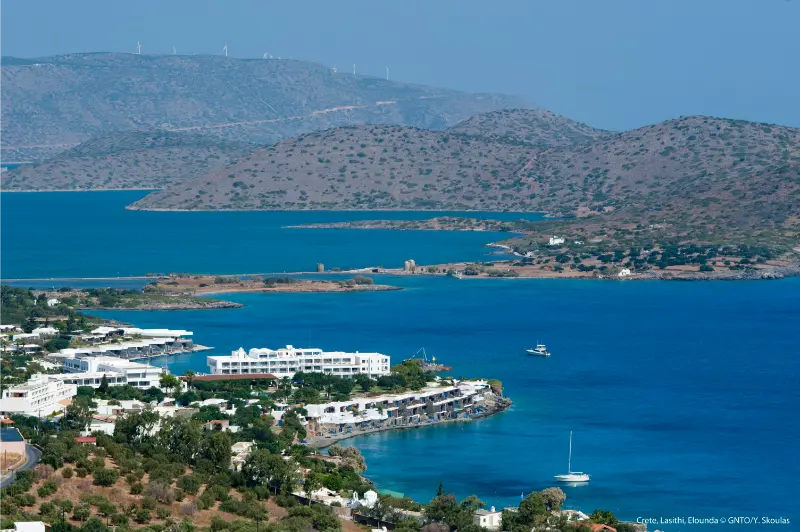
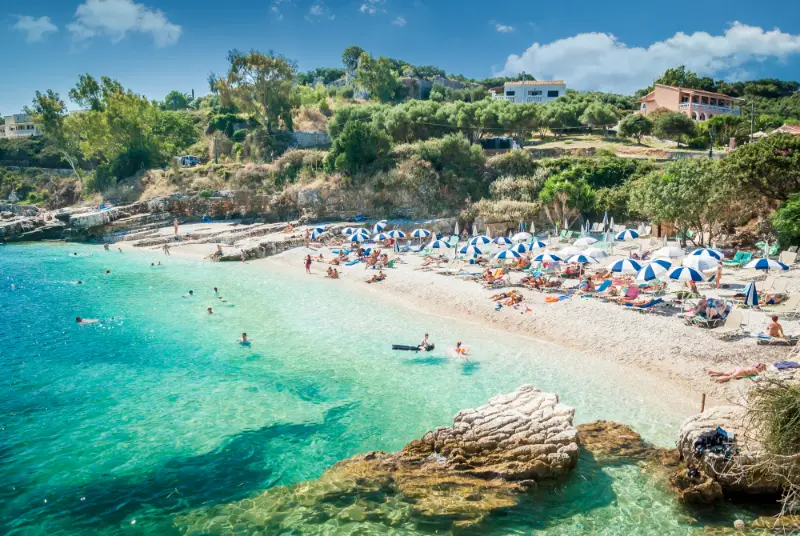
    Crete Lasithi Elounda View 2

    For short stays, it is usually better to choose one transport strategy rather than mixing a rental car, taxis and tours every day. If the destination is walkable, keep car days for the places that genuinely need one. If you do rent, photograph the vehicle at collection, understand fuel and insurance conditions, and never assume an attractive coastal track is suitable for a standard rental car.

    A realistic itinerary

    Day 1

    Explore Elounda’s waterfront, swim locally and have an unhurried dinner. If you arrived by car, drive the coast toward Plaka near sunset.

    Day 2

    Make Spinalonga the main event, adding Plaka before or after the boat trip. Return to Elounda for a relaxed evening rather than stacking another distant attraction.

    Day 3

    Choose between a beach/boat day around the peninsula or a day trip to Agios Nikolaos and Kritsa. The Agios Nikolaos guide gives you a ready-made route.

    Best time to visit

    The classic season runs from spring through autumn, with the warmest sea and busiest resort life in summer. May, June and September are excellent for combining swimming with day trips. In shoulder months, verify boat schedules and hotel services because some resort operations are seasonal.

    Weather is only one part of timing. Ferry frequency, boat excursions, seasonal restaurants and opening hours can also change outside the main summer period. In peak season the opposite problem appears: almost everything is operating, but parking, restaurant reservations and popular viewpoints require more patience. Build flexibility into the plan rather than trying to optimise every hour.

    Food and evenings

    Elounda ranges from high-end hotel dining to simple tavernas. For variety, eat at least one meal in the centre and one in Plaka or an inland village. Seafood is an obvious choice on the coast, but do not overlook Cretan greens, cheeses, rusks, olive oil and slow-cooked meat dishes.

    A useful rule for a better Greece trip is to separate the places you choose for a view from the places you choose for food. Sometimes they are the same restaurant, but not always. Walk one or two streets away from the most obvious waterfront or viewpoint, read the menu before sitting down, and leave room for a bakery breakfast, a simple taverna lunch and one longer dinner rather than making every meal an event.

    Practical tips for different travellers

    Couples

    Couples can make the destination feel more relaxed by avoiding the most obvious sunset rush and booking one slower evening with no transport after dinner. A room with a view is worthwhile only if you will actually spend time there; otherwise put the budget into location, a boat trip or a special meal.

    Families

    Families should check gradients, shade, beach entry and transfer logistics before booking. A beautiful old-town room can become inconvenient with a stroller, while a resort outside the centre may require repeated taxis. Keep the hottest hours simple and build in a swim, playground or rest period rather than expecting children to follow an adult sightseeing pace.

    Solo travellers

    Solo travellers benefit from walkable bases and public transport, but should still plan the last connection of the day rather than assuming buses or boats run late. Joining a small-group excursion can be useful for remote sights, while self-guided mornings are ideal for photography and museums.

    Road-trip travellers

    If this stop is part of a larger road trip, resist the temptation to check out every morning. Two or three nights in one base often saves more time than it costs because packing, parking and check-in repeatedly can consume the best hours of the day.

    Common mistakes to avoid

    • Spending the entire stay inside a resort and never seeing Plaka or the harbour.
    • Treating Spinalonga as a 20-minute photo stop.
    • Assuming every hotel marketed as Elounda is walkable to the village centre.
    • Booking a boat without confirming its exact departure point and return schedule.
    • Trying to combine Spinalonga, Knossos and far eastern Crete in one day.

    How to combine it with the rest of Greece

    Pair Elounda with Agios Nikolaos, Spinalonga and the Crete travel guide for a larger route.

    The most efficient itinerary usually moves geographically rather than bouncing back and forth. Check ferry days, driving times and airport locations before fixing hotel dates. On an island trip, one extra night in a well-connected hub is often more valuable than adding another island simply to increase the destination count.

    FAQ

    Is Elounda only for luxury travellers?

    No. Luxury resorts are prominent, but the village, Plaka and public coastal experiences are accessible to many budgets.

    How many nights do you need?

    Two to four nights work well, depending on whether you use Elounda as a beach break or a base for eastern Crete.

    Is Elounda walkable?

    The centre is walkable, but many resorts are spread along the coast and may require taxis or a car.

    Can I visit Spinalonga from Elounda?

    Yes. Elounda is one of the common bases for boat excursions to the island.

    Is Agios Nikolaos or Elounda a better base?

    Agios Nikolaos is more urban and practical; Elounda is quieter and more resort-oriented. Both can work on the same trip.
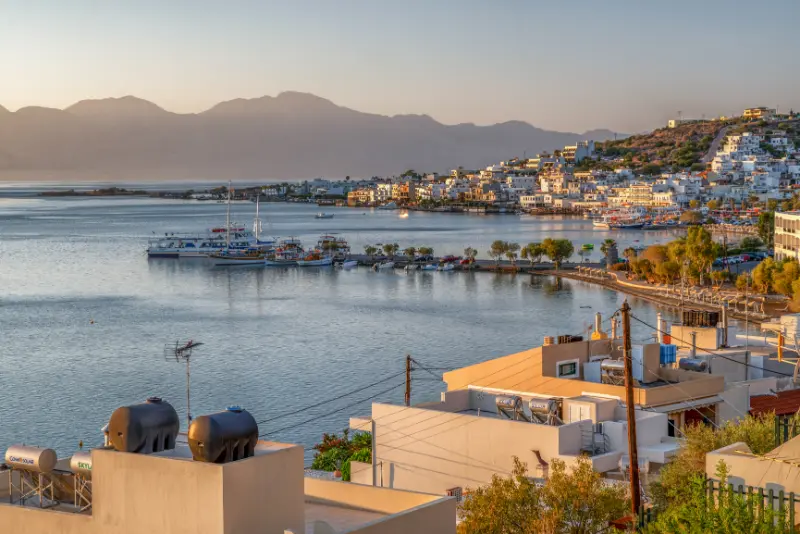
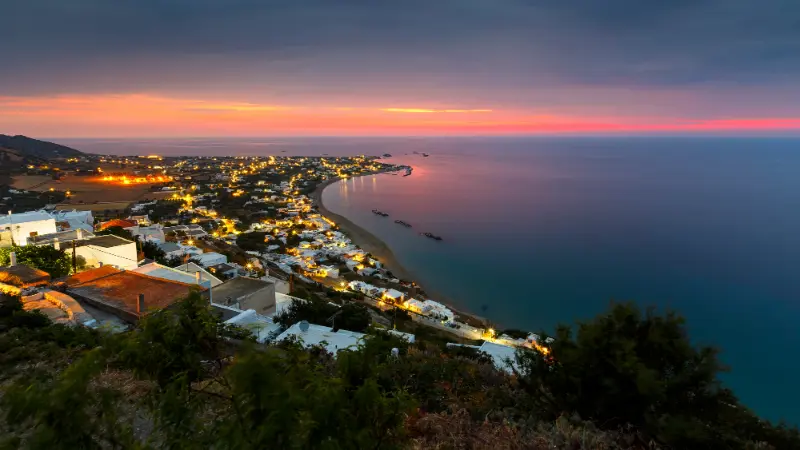
    Elounda Harbor Coastal Town Sunset Crete Greece

    Final advice

    Plan enough structure to protect the important parts of the trip, but leave room to change the order when weather, crowds or local advice suggest a better option. That flexibility is often what turns a busy Greece itinerary into a trip that actually feels like a holiday.
  • Sikinos Travel Guide: Chora, Beaches, Episkopi, Hiking and a 4-Day Itinerary

    Sikinos Travel Guide: Chora, Beaches, Episkopi, Hiking and a 4-Day Itinerary

    Plan a first trip to Sikinos with a practical guide to Chora, Alopronia, Episkopi, beaches, hiking, food, ferries and a realistic four-day itinerary.

    Sikinos sits between Ios and Folegandros but feels very different from both. It is a small southern Cycladic island where terraces, chapels, dry-stone walls and signed paths are as important as beaches. Visit Greece describes the island as quiet and traditionally Cycladic, while Fast Ferries identifies Alopronia as the port and Chora as the capital. The right trip is not about filling every hour; it is about combining a few strong sights with walking, swimming and unhurried evenings.

    Quick planning notes

    • Allow at least three nights; four nights makes weather-dependent beaches and hiking much easier to plan.
    • Chora is the best atmospheric base, while Alopronia is the easiest base for ferry arrivals, beach access and minimal luggage transfers.
    • Do not miss Episkopi, the unusual Roman funerary monument later converted into a Christian church.
    • Treat boat beaches and long hikes as flexible plans because wind and heat can change what is sensible on the day.

    Why choose Sikinos

    Sikinos suits travellers who like the Cyclades but do not need nightlife, beach clubs or a long list of organized attractions. The island’s small population and low-key development preserve a strong sense of scale: you can recognize the same people in a cafe, watch ferries arrive from the hillside and move between port, Chora and countryside without feeling that tourism has taken over the landscape.

    The island is especially rewarding for walkers, couples, slow travellers and anyone building an island-hopping route between Ios and Folegandros. Families can also enjoy it if they are comfortable with limited services and modest beach infrastructure. Travellers seeking resort entertainment, broad shopping or dozens of restaurant choices should combine Sikinos with a larger island rather than expecting it to provide those things.

    Chora: Kastro, Chorio and the monastery

    Chora is the heart of the island and is best understood as two connected areas, traditionally described as Kastro and Chorio. Kastro has the compact whitewashed core, narrow lanes, small squares and the principal church of Panagia Pantanassa, dated by Fast Ferries to 1787. Chorio retains a quieter residential feel and includes the Folklore Museum in an old olive press.

    Above the settlement, the fortified Monastery of Zoodochos Pigi occupies a spectacular cliff-edge position. It is one of the most memorable short walks on Sikinos because the destination combines architecture, history and a wide Aegean panorama. Go in softer light, carry water and treat the monastery and Chora as one connected experience rather than two rushed stops.

    Episkopi and the archaeological landscape

    Episkopi is the island’s signature monument. Fast Ferries describes it as a Roman mausoleum from the third century AD that was later converted into a Byzantine church. That layered history makes the site much more interesting than a simple ruined temple: the building shows how one sacred and funerary landscape was reused across different periods.

    Visit Episkopi with enough time to look at the surrounding countryside. The monument sits within the landscape of terraces and old routes rather than in a dense archaeological park. Combining it with a hike from Chora or with nearby chapels makes more sense than driving in, taking one photograph and leaving immediately.

    Beaches and sea days

    Alopronia is the simplest beach because it is next to the port, has shallow water and some nearby services. Visit Greece highlights it as the island’s most accessible beach and a practical choice for families. Agios Georgios and Dialiskari offer a more detached beach day, while Malta and several smaller coves require more effort or boat access.

    Sikinos is not a beach-resort island. Many coves have little or no infrastructure, and several of the most appealing shores are reached on foot or by local boat. Carry water, shade and footwear suitable for pebbles. If wind makes one coast unpleasant, do not force the plan; switch to Chora, Episkopi or a signed trail and return to the sea when conditions improve.

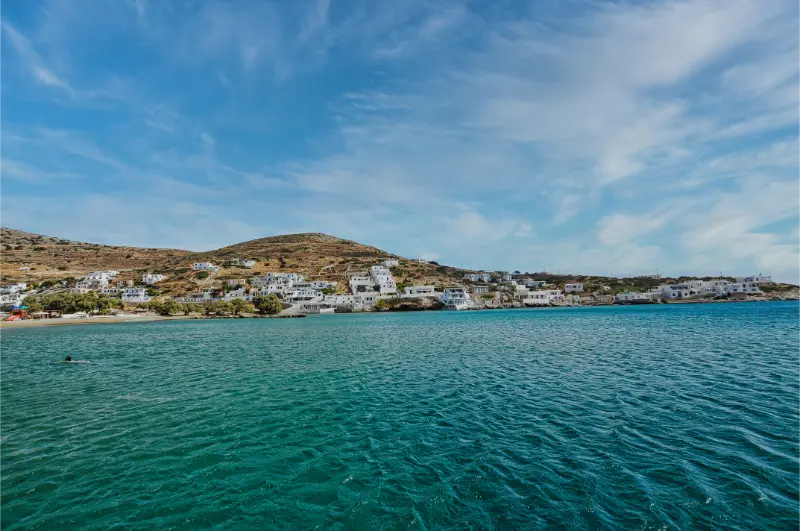
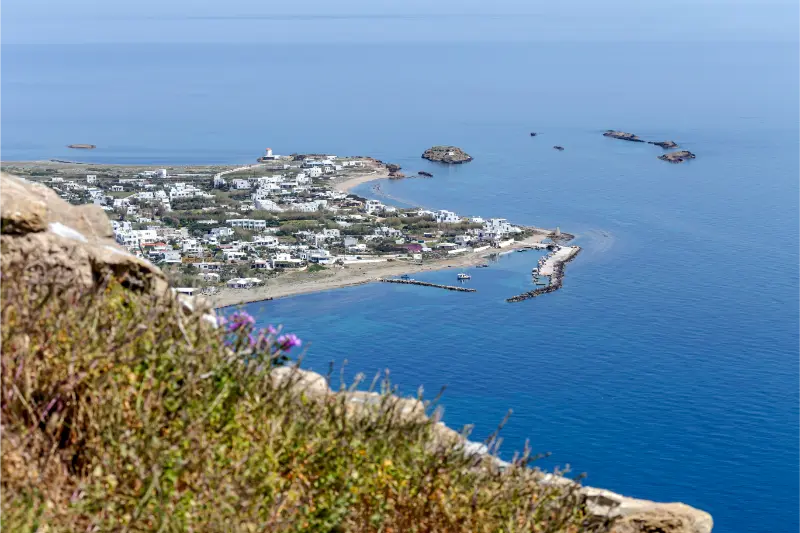
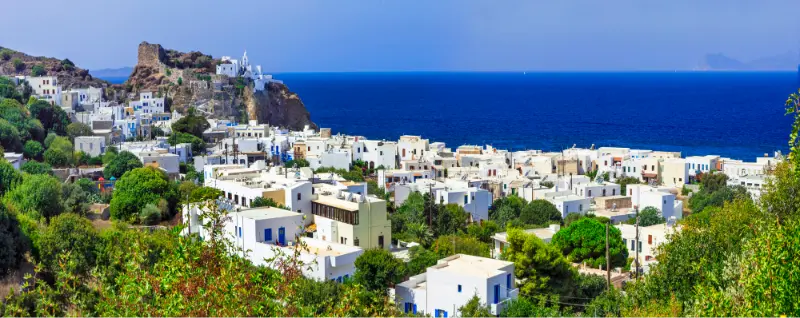
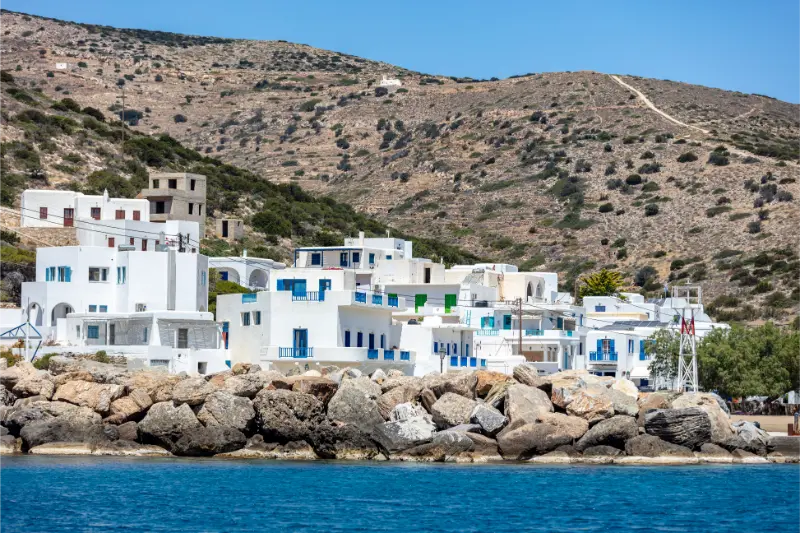
    Sikinos Island Buildings Chora Town Cyclades Greece Blue Sky Calm Sea

    Hiking and the seven-trail network

    Visit Greece describes a network of seven signposted routes connecting Chora, the monastery, Episkopi, Alopronia and more remote landscapes. This is one of the strongest reasons to stay longer than a day. The paths reveal terraces, chapels and views that are invisible from the main road and explain how people moved around the island before modern vehicles.

    The Chora–Alopronia route is a gentle introduction, while routes toward Agia Marina and Mavros Kavos require more commitment. Start early in summer, carry more water than you think you need and avoid relying on shade. An offline map is useful even on signposted routes because junctions in open Cycladic terrain can look deceptively similar.

    Food and wine

    Sikinos was known in antiquity as Oenoe, a name linked to wine, and wine remains part of the island’s identity. Fast Ferries highlights a visitable local winery as well as dishes such as favokeftedes, caper salad, rooster cooked in wine, stuffed goat, small pies, pasteli and watermelon-based sweets. These are useful clues for ordering rather than a list of dishes that every taverna will serve every night.

    Ask what is local and what was cooked that day. On a small island, menus naturally depend on supply, season and family recipes. A better food strategy is to repeat one good taverna and try different daily dishes than to chase a long checklist of names.

    A realistic four-day itinerary

    Day one: arrive in Alopronia, swim if conditions are good, then take the bus or transfer to Chora for an evening walk. Day two: explore Kastro and Chorio, visit the museums if open, then walk to Zoodochos Pigi for late-afternoon views. Day three: make Episkopi the anchor, ideally combined with a signed walking route and an early start.

    Day four can be your sea day: Agios Georgios, Dialiskari or a local boat to a harder-to-reach cove. If wind disrupts the sea, use the spare day for a longer hike, the winery or a slow return to Chora. This sequence intentionally leaves the most weather-dependent plan until you understand local conditions.

    Where to stay and when to book

    Sikinos has a much smaller accommodation supply than Santorini, Paros or Naxos. That is part of its appeal, but it also means that the best-located rooms in Chora and Alopronia can disappear early for July and August. Compare the exact position on a map, not only the property name, because a beautiful hillside room may involve steps, steep lanes or a walk that feels very different with luggage in midday heat. Check current Sikinos accommodation on Booking.com.

    For a short first visit, convenience usually matters more than a dramatic view. Chora is stronger for evenings, atmosphere and trail access, while Alopronia is easier for ferry days and quick swims. If you are travelling without a car, ask the host how far the nearest bus stop is and whether they can help with luggage when ferries arrive late.

    How to make the trip work in practice

    Sikinos works best when the itinerary follows the island rather than fighting it. Plan one main objective per half-day: a monument, a trail, a beach or a long meal. Boat-access beaches depend on wind, walking routes are exposed to sun, and small museums or churches may not operate with big-island opening patterns. Keep a second option ready and confirm local details after arrival.

    Carry water, sun protection and an offline map whenever you leave the two main settlements. Services are intentionally limited outside Chora and Alopronia. That does not make the island difficult; it simply rewards travellers who prepare before setting out and who leave enough time to enjoy a place instead of rushing between checkpoints.

    Frequently asked questions

    How many days do you need in Sikinos?

    Three nights is a useful minimum, while four or five nights allows time for Episkopi, Chora, hiking and beaches without rushing or being trapped by one windy day.

    Is Sikinos good for a first Greek island?

    Yes for travellers who value quiet, walking and traditional villages. If you want frequent buses, nightlife or large organized beaches, pair it with Ios, Santorini or another larger island.

    Do you need a car in Sikinos?

    No. The island can work well with local buses, walking and occasional taxis or boat trips, especially if you stay in Chora or Alopronia.

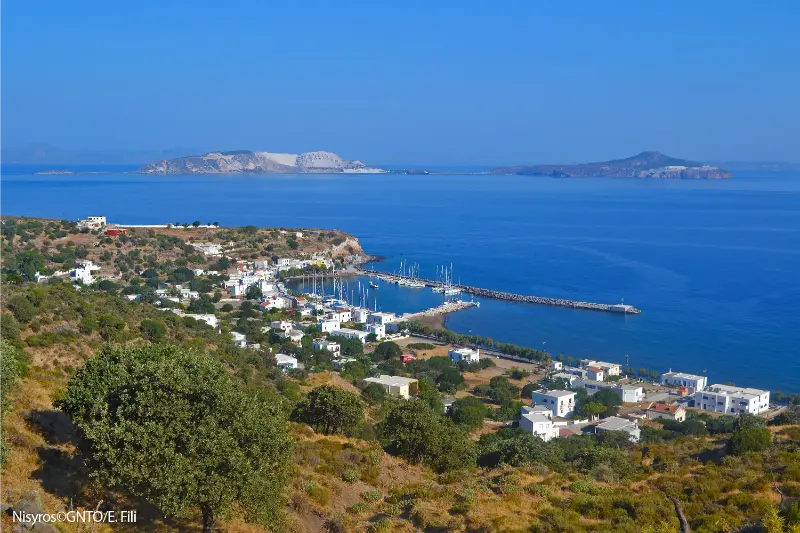
    Alopronia Sikinos Island Greece

    Useful sources for current information

    For details that can change, use the Municipality of Sikinos, the official Visit Greece Sikinos page, the Visit Greece hiking guide and the official Sikinos beaches overview. Ferry routes and seasonal sailings should be checked again shortly before travel through the Fast Ferries Sikinos page or your booked operator.

    Related guides

    • Sikinos Chora Guide: Kastro, Chorio, Monastery and Where to Stay
    • Best Beaches in Sikinos: Alopronia, Agios Georgios, Dialiskari and More
    • Sikinos Hiking Guide: Seven Trails, Episkopi and Mavros Kavos
    • How to Get to Sikinos in 2026: Ferries from Piraeus, Ios and Folegandros

    A slower rhythm is part of the destination

    One of the easiest mistakes on Sikinos is to judge the island by the number of formal attractions. Its strength is the relationship between Chora, terraced fields, dry-stone walls, chapels, old paths and small coves. A morning walk that ends with lunch can be a complete day rather than a gap between major sights. The same is true of an evening in Kastro: there is no need to add another excursion simply because the map looks small.

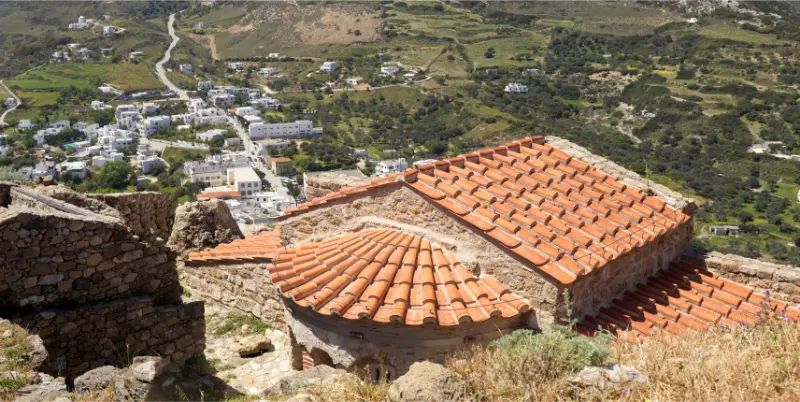
    Kastro Sikinos Island Greece

    This slower approach also protects the trip from weather changes. If wind makes a boat excursion unattractive, walk a signed trail or spend more time in Chora. If the afternoon is too hot for hiking, use the beach and move the trail to early morning. Travellers who leave this flexibility usually see more of the island in a meaningful way than those who try to complete a fixed checklist.

  • Where to Stay in Ithaca: Vathy, Kioni, Frikes, Stavros or the Quiet Coast?

    Where to Stay in Ithaca: Vathy, Kioni, Frikes, Stavros or the Quiet Coast?

    Choosing where to stay in Ithaca matters more than choosing a hotel with the highest review score. The island is small on paper but mountainous in practice, and the distance between Vathy and Kioni feels different after dinner than it does on a map at noon. Your base determines how often you drive, how easy dinner is, which beaches become spontaneous and whether a car-free trip feels liberating or limiting.

    Vathy: best for first visits and flexibility

    Vathy has the most restaurants, shops, taxis and excursion boats. It is the easiest base for travellers without a car, families who want services nearby and anyone arriving late or leaving early. Nearby beaches include Dexa and Filiatro, while roads radiate toward both north and south.

    The downside is that Vathy feels more like a small capital than an intimate fishing village. Traffic and parking are more noticeable in high season. If your dream is to wake to a tiny harbour where everyone recognises the same fishing boats, choose Kioni or Frikes.

    Kioni: best for romance and harbour atmosphere

    Kioni is the classic choice for couples and travellers who want the view to be part of the accommodation experience. The harbour is beautiful in the morning and after day visitors leave, and dinner rarely requires a car if you stay near the waterfront.

    Rooms with high views may involve steep steps. Ask about luggage access and parking before booking. Kioni is also less convenient for repeated trips to Vathy or southern beaches, so it works best when you are comfortable spending significant time in the north.

    Frikes: practical north-island base

    Frikes is smaller and more understated than Kioni, with good road access toward Stavros, Exogi and northern beaches. It suits walkers, sailors and repeat visitors who want the north without paying solely for postcard atmosphere.

    The village has enough for a pleasant stay but fewer choices than Vathy. If you travel outside the core season, confirm which restaurants and services are open.

    Stavros: good for village life and northern exploration

    Stavros is inland rather than directly on the waterfront. That makes it less obvious for a beach holiday but excellent for travellers interested in archaeology, walking and the northern road network. Polis Bay is nearby, and both Frikes and Exogi are easy to combine.

    Choose Stavros if you enjoy starting the day in a real village square and do not need a sea view from the pillow. A car is strongly recommended unless you have arranged transport carefully.

    Quiet coastal houses and countryside stays

    Ithaca has villas, apartments and small properties outside the main settlements. These can be wonderful for privacy, views and long stays, but check access carefully. “Five minutes from Vathy” may mean five minutes by car on a steep road, not a comfortable evening walk.

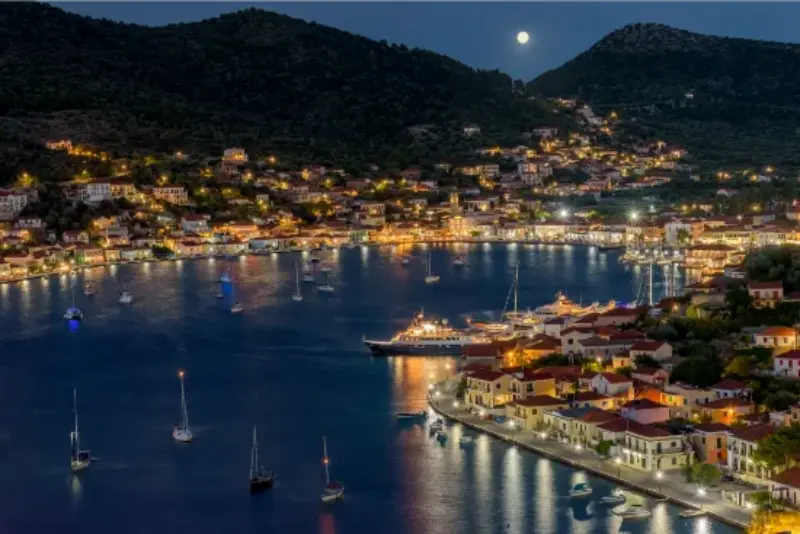
    Vathy The Capital Of Ithaca Island Greece

    Ask about road surface, parking, nearest food shop, air conditioning, mosquito screens and whether the water view requires many stairs. Remote accommodation is only relaxing when the logistics suit you.

    Best base by traveller type

    TravellerBest starting areaWhy
    First-time visitorVathyServices, boats, taxis and central logistics
    CoupleKioniRomantic harbour and evening atmosphere
    Without a carVathyMost resilient transport options
    HikerStavros or VathyAccess to north or broad island network
    FamilyVathy or easy-access coastFood, taxis and simpler logistics
    Repeat visitorFrikes or quiet coastSlower pace and local atmosphere

    Should you split the stay?

    For five nights, one base is enough if you have a car. For seven or more nights, splitting between Vathy and Kioni/Frikes can reduce driving and make the north feel like a second chapter of the holiday. Two nights in the north is enough to enjoy early mornings and dinners without repeated return drives.

    Do not split a three-night stay. Packing, checkout and check-in would consume too much of the trip.

    Questions to ask before booking

    • Is parking dedicated, roadside or unavailable?
    • How many stairs are there from road to room?
    • Is the nearest restaurant safely walkable after dark?
    • Does the room have effective air conditioning?
    • If arriving by ferry, which port should the transfer collect you from?
    • Can the property arrange a taxi in peak season?
    • Is the sea view exposed to afternoon sun or wind?

    Booking in July and August

    The best-located small properties can sell out long before arrival. Book earlier if you need parking, family rooms or a harbour-front location. If prices are high, look one street back or higher on the hillside—but confirm stairs and access before accepting the savings.

    June and September often offer a better balance of choice, temperature and price. October can be lovely but more seasonal businesses reduce hours, especially outside Vathy.

    My practical recommendation for a first trip

    For a five-day first visit, stay in Vathy and make two north-island day trips. For a week, spend four nights in Vathy and three around Kioni or Frikes. That structure gives you both flexibility and the village atmosphere people associate with Ithaca without turning every day into a long drive.

    Booking accommodation and activities

    For accommodation, compare places to stay in Ithaca on Booking.com. Check the exact village rather than booking from the island name alone: Vathy, Kioni, Frikes and the northern villages create very different daily logistics.

    For organised activities and excursions, use the widget below as a starting point. Availability on Ithaca is seasonal and inventory can be limited, so verify the meeting point, cancellation terms and whether transfers are included before paying.

    Official resources to recheck before you go

    For an official destination overview, use Visit Greece’s Ithaca page. It describes Vathy, the fishing villages, pebbled coves and the island’s walking character, and it is a useful starting point before checking local conditions.

    For beaches, the official Visit Greece beaches of Ithaca page covers Filiatro, Dexa, Gidaki, Platia Ammos, Afales, Sarakiniko and Skinos. For local notices, municipal services and seasonal announcements, check the Municipality of Ithaca.

    More Ithaca guides for planning the same trip

    Continue with Vathy Ithaca Guide · Kioni and Frikes Ithaca Guide · North Ithaca Villages Guide · Best Beaches in Ithaca · Ithaca Hiking and Odysseus Sites Guide · Ithaca Boat Trips Guide · Ithaca Without a Car · Where to Stay in Ithaca · Ithaca with Kids · How to Get to Ithaca. Start with the Ithaca Travel Guide if you need the island overview before choosing detailed day plans.

    Reading accommodation descriptions critically

    On Ithaca, words such as “secluded,” “panoramic” and “traditional” often imply practical trade-offs. Secluded can mean a long drive for dinner; panoramic can mean stairs; traditional can mean smaller rooms or older sound insulation. None of these are negatives if they match your priorities.

    Look at the property on a map in relation to the roads you will actually use, then read recent reviews for parking, noise and access rather than only for friendliness.

    Air conditioning, water and shoulder season

    In summer, confirm that air conditioning covers the sleeping area, not only a living room. In shoulder season, ask about heating if evenings are cool. Island water systems also encourage sensible use; follow accommodation guidance and do not assume a private pool has no resource cost.

    A property that is perfect in August may feel isolated in October if nearby tavernas close. Match the accommodation to the season as well as the view.

    Practical timing by season

    In May and early June, walking and village exploration are easier in cooler temperatures, but the sea is cooler and some seasonal services run less frequently. July and August bring the fullest transport and restaurant choice, along with stronger heat, parking pressure and demand for taxis and boats. September is often the best compromise for warm water and calmer roads, while October requires more careful checking of ferry frequencies and business opening days.

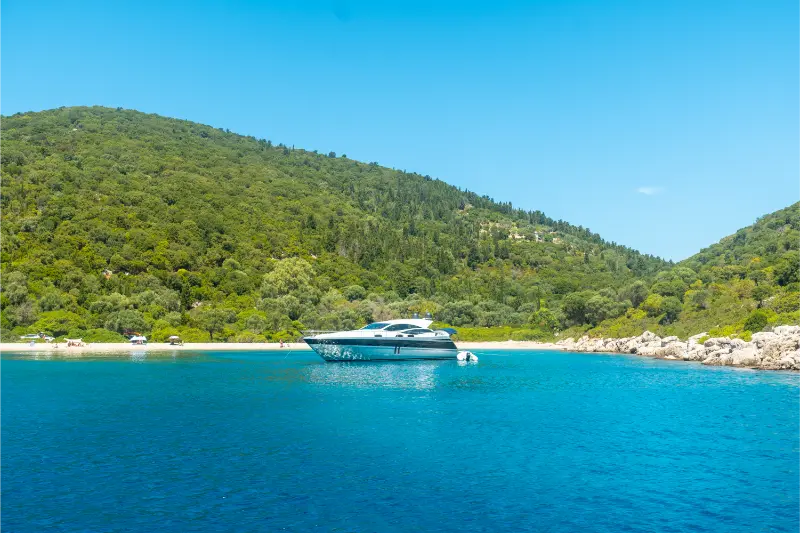
    Boat Cruise Excursion Island Ithaki Ithaca Ionian Sea Mediterranean Sea Greece

    Whatever the month, plan the following day with the actual wind and temperature forecast rather than using a fixed itinerary written weeks earlier. Ithaca is compact enough that changing from a north-coast beach to a Vathy day, or from hiking to a museum and long lunch, rarely ruins the trip. Flexibility is one of the island’s greatest advantages.

    Common planning mistakes

    The most common mistake is treating short distances as short journeys. Roads are narrow and winding, parking takes time and a spontaneous swim can easily add an hour. Do not schedule every meal, beach and village. Choose one main purpose for the day and let secondary stops remain optional.

    Another mistake is relying on a single old timetable or map review. Ferries, local buses, excursion boats and seasonal businesses change. Confirm anything time-critical close to travel and keep departure day simple. Finally, avoid judging the island only by famous names: a quiet unnamed cove or ordinary village square can be more memorable than a hurried checklist stop.

    How to keep the trip relaxed

    Ithaca rewards repetition. Returning to the same waterfront for coffee, revisiting a beach when the wind changes and recognising the road to your village are not wasted opportunities; they are what turns a destination into a place you remember. Leave at least one half-day unplanned so weather, local advice or simple tiredness can change the schedule without creating a sense of failure.

    A practical rule is to stop adding major stops once the day already includes one long drive, one swim and one substantial meal. That may sound conservative, but it produces more time in the water and less time looking at the island through a windscreen.

  • Vasiliki Lefkada Guide: Windsurfing, Beaches and South Coast Day Trips

    Vasiliki Lefkada Guide: Windsurfing, Beaches and South Coast Day Trips

    Vasiliki is the most useful base on southern Lefkada for travellers who want a mix of water sports, beaches, harbour evenings and access to the island’s dramatic southwest coast. The bay is famous internationally for windsurfing, but the village is not only for experienced athletes. Mornings can be calm enough for relaxed swimming and beginner activity, while the stronger afternoon wind changes the character of the water completely.

    If this is your first trip to the area, use this article together with Lefkada Travel Guide, Porto Katsiki and Egremni Guide and Sailing in Greece. Those guides cover the wider destination, while this page focuses on the practical decisions that make a visit to Vasiliki Lefkada Guide work smoothly.

    Why Vasiliki Lefkada Guide is worth your time

    Vasiliki gives southern Lefkada a practical centre. Visit Greece describes the beach as one of the world’s notable windsurfing locations and explains that wind conditions strengthen through the day, making the bay particularly suitable for slalom and freestyle. From the harbour area you can also organise sea outings, while road access puts Porto Katsiki, Egremni viewpoints and villages of the south within reach.

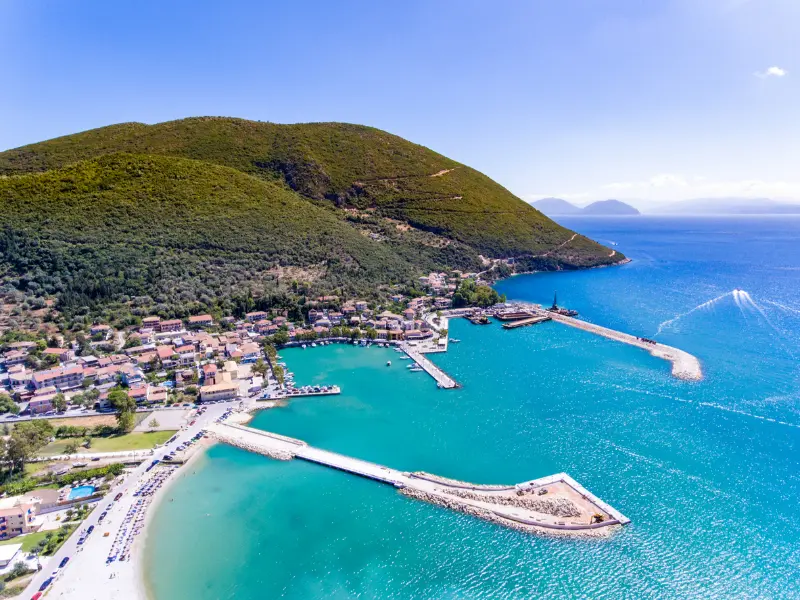
    Seaport City Vasiliki With Its Turquoise Sea Island Lefkada Greece

    The most satisfying way to use a focused guide like this is to decide what you actually want from the stop before building the timetable. Some travellers care most about history, others about landscape, walking, swimming or photography. Once the priority is clear, it becomes much easier to choose the right time of day, avoid unnecessary transfers and leave enough space for the experience rather than simply collecting another pin on a map.

    Main highlights

    • windsurfing on Vasiliki Bay
    • the calmer morning beach atmosphere
    • Vasiliki harbour and evening restaurants
    • boat and sailing connections
    • road trips toward Porto Katsiki and Cape Lefkatas
    • easy access to southern Lefkada villages

    windsurfing on Vasiliki Bay

    The local wind pattern is the headline attraction. Beginners often prefer morning sessions, when conditions can be gentler, while more experienced windsurfers wait for stronger afternoon wind. If you are taking a lesson, book through a reputable school and follow instructor guidance rather than judging conditions from shore.

    the calmer morning beach atmosphere

    Vasiliki is surprisingly versatile because the same bay that becomes active later can feel relaxed in the morning. Families and swimmers should take advantage of early hours before wind and water-sport traffic increase. Water shoes can be useful depending on the exact section of beach.

    Vasiliki harbour and evening restaurants

    The harbour gives the village a stronger evening atmosphere than isolated beach resorts. It is easy to finish a day with a walk, dinner and a view of boats returning to the bay. Staying within walking distance of the centre also reduces the need to drive after dinner on narrow island roads.

    boat and sailing connections

    Southern Lefkada opens toward nearby islands and coves, so boat trips can be a good alternative to a west-coast driving day. Schedules depend heavily on season and weather. Book only after confirming the actual route, swimming stops and cancellation policy rather than choosing a cruise solely by headline destination names.

    Best time to visit

    June and September offer a strong balance of active conditions and manageable crowds. July and August have the most summer energy but also more traffic and demand for lessons. For windsurfing, afternoon is the key period; for swimming and families, morning is usually easier. Shoulder season is excellent for road trips but some water-sport services operate reduced schedules.

    Time of day matters almost as much as the month. Early mornings are usually best for exposed walks, archaeological sites and popular viewpoints, while late afternoon works well for villages, waterfronts and softer photography light. If access depends on weather, boats, trail conditions or opening hours, check official information shortly before leaving your accommodation rather than relying on a screenshot saved months earlier.

    How to get there and get around

    Vasiliki is reached by road from Lefkada Town and the rest of the island. A car is useful if you plan to explore beaches and villages, but once you are staying near the harbour you can walk for meals and basic needs. Parking becomes harder in peak summer, so accommodation with parking has real value. Do not underestimate drive times on winding southern roads.

    Transport should be planned around the whole day, not just the headline attraction. A rental car gives freedom in rural areas but creates parking problems in old villages and cities. Buses can be excellent when the route is direct, yet seasonal frequency may make multi-stop itineraries awkward. Taxis are most valuable when they remove one difficult gap rather than replacing every transfer. Always protect enough time for the return journey.

    How much time do you need?

    For Vasiliki Lefkada Guide, a focused visit usually needs at least half a day once transport, walking and breaks are included. Travellers who enjoy hiking, photography or long lunches should protect more time. The mistake is not staying too long; it is scheduling another major attraction so close afterwards that every small delay becomes stressful. One well-planned experience is better than three rushed stops.

    Vasiliki Lefkada Greece

    A realistic itinerary

    Start with a calm morning swim or beginner windsurf session, have lunch in or near the harbour and use the afternoon either for stronger windsurfing conditions or a scenic road trip. If you are driving to Porto Katsiki, avoid stacking too many beaches into the same afternoon. Return to Vasiliki before dark for an easy harbour evening.

    Build a buffer into the schedule. That margin absorbs parking, a bus delay, an unexpected queue, stronger wind, a slower walking pace or the discovery of a place where you simply want to stay. Greece rarely rewards itineraries planned in thirty-minute blocks. Protect the essential logistics, then leave enough flexibility for the day to develop naturally.

    Where to stay

    You do not necessarily need accommodation beside Vasiliki Lefkada Guide. Choose the base that makes the wider trip simpler. On islands, a central town can be better if you plan several day trips, while staying locally makes sense when sunrise, sunset or early trail access is important. In cities, proximity to useful public transport often saves more time than a room with a slightly better view. Always check parking if you are renting a car.

    Food and breaks

    Plan at least one proper break rather than relying on snacks all day. In villages, move a street or two away from the most photographed corner before choosing a taverna. Around beaches and natural attractions, opening hours can be seasonal, so carry water and do not assume a café will be open exactly when you need it. A slower lunch during the hottest part of the day is often smarter than forcing another exposed walk.

    What to bring

    • comfortable shoes with good grip
    • refillable water bottle
    • sun protection and a hat
    • a light layer for wind or cooler conditions
    • offline map or downloaded route
    • charged phone or small power bank
    • a little cash for small purchases

    Pack for the terrain rather than the photograph. Volcanic paths, polished village paving, cave stairs and mountain roads all create different practical needs. Good shoes, water and sun protection make a bigger difference than carrying extra clothing you never use. If the day includes a swim, keep dry footwear available for the return walk or drive.

    Common mistakes to avoid

    • arriving at the same peak hour as every excursion group
    • trying to combine too many distant stops
    • ignoring heat, wind, sea or trail conditions
    • using outdated opening hours or access information
    • forgetting to plan the return transport
    • treating residential, religious or protected places as photo sets

    The most common mistake at Vasiliki Lefkada Guide is overestimating how much fits comfortably into one day. Maps hide steep lanes, parking searches, queues and the time you will naturally spend taking photos or sitting down for coffee. Prioritise the two or three elements that matter most and make everything else optional.

    Is it suitable for families?

    Usually yes with the right expectations, but adapt the day to heat, walking distance and attention span. Families often do better with an early start, one main experience and a predictable meal break. At viewpoints, caves, mountain paths and archaeological sites, uneven surfaces require active supervision. A shorter successful visit is better than forcing children through an adult sightseeing schedule.

    Accessibility and mobility

    Accessibility varies significantly. Modern transport and some organised attractions may be straightforward, while historic villages, natural trails, caves and archaeological terrain can include steps, steep gradients and rough ground. Check the latest accessibility information for the exact place. When mobility is limited, a taxi or private transfer can sometimes remove the hardest approach even if the final attraction still requires some walking.

    What to combine with it

    Porto Katsiki, Egremni viewpoints, Sivota and Cape Lefkatas can all fit into southern Lefkada planning, but not comfortably in one day. Vasiliki also works as a departure point for travellers continuing by seasonal sea links, so always verify current ferry schedules before building a multi-island itinerary.

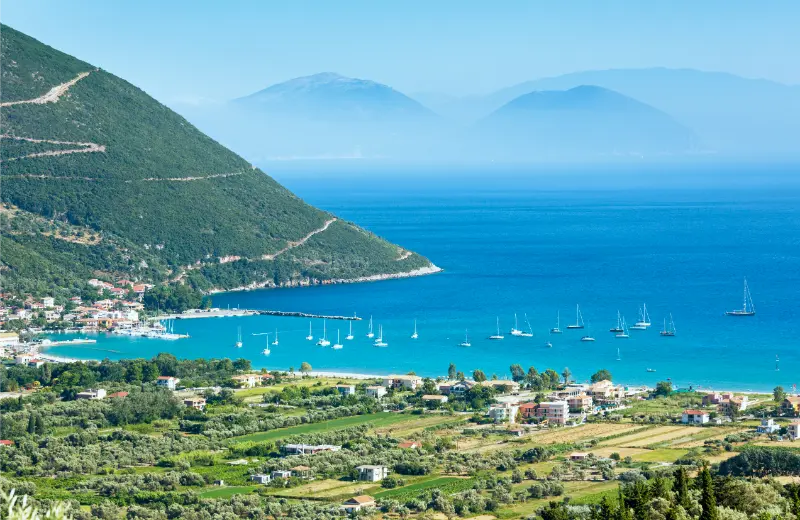
    Lefkada Coast Vasiliki Town Greece Ionian Sea View From Up

    For more context, continue with Lefkada Travel Guide, then use Porto Katsiki and Egremni Guide and Sailing in Greece to build the surrounding itinerary. This keeps Vasiliki Lefkada Guide connected to the rest of the trip instead of turning it into an isolated detour.

    FAQ

    Do I need to book in advance?

    For major archaeological sites, organised tours, water-sport lessons and time-sensitive transport, advance booking can be sensible. Ordinary village walks and viewpoints usually do not require reservations.

    What is the best time of day?

    Early morning is generally best for cooler temperatures and fewer people. Late afternoon can be excellent for atmosphere and photography, provided access hours and the return journey still work.

    Can I visit without a car?

    City and major resort attractions are often possible by bus or taxi. Rural, mountain and multi-stop days are easier with a car, but organised excursions can be a good alternative.

    Is it worth visiting outside peak summer?

    Yes. May, June, September and October are often excellent, though seasonal buses, boats, tavernas and activity centres may run less frequently.

    Should I trust old prices and timetables?

    No. Tickets, opening hours, access rules and transport schedules change. Recheck official or local information shortly before the visit, especially for sites affected by heat, weather or conservation rules.

    Final advice

    Treat Vasiliki Lefkada Guide as an experience rather than a task to complete. Arrive with the essential logistics under control, then give yourself enough time to notice the details that make the place distinctive. That balance between preparation and flexibility is what turns a technically correct itinerary into a day that genuinely feels like Greece.

    More Lefkada in-depth guides

    Continue planning Lefkada with Cape Lefkatas; Sivota and Mikros Gialos; Best Beaches in Lefkada; Lefkada with Kids; Where to Stay in Lefkada.

  • Kassiopi Corfu Guide: Castle, Harbour, Beaches and Where to Stay

    Kassiopi Corfu Guide: Castle, Harbour, Beaches and Where to Stay

    Kassiopi is one of the few Corfu resorts that works equally well as a beach base and as a place with genuine historical texture. The harbour is compact and lively, the headland is crowned by a Byzantine castle, and several small coves sit within walking distance of the centre. You can spend a day here from Corfu Town, but Kassiopi makes more sense if you want to explore the north-east coast without driving back across the island every evening.

    The most useful way to think about Kassiopi is as a small hub rather than a single beach destination. The village itself gives you cafés, tavernas, boat trips and evening atmosphere; Kalamionas, Bataria, Pipitou and Kanoni-style rocky coves give you different swimming conditions; and the road south opens toward Avlaki, Agni, Kalami, Barbati and Nissaki. The castle adds a layer that many resort villages do not have.

    For a broader overview of the island, use my Corfu travel guide. If you are also spending time in the capital, the Corfu Old Town guide is the best companion for forts, museums and an efficient walking day.

    Kassiopi at a glance

    QuestionPractical answer
    Best forCouples, families with older children, independent travellers and north-east coast exploring
    Time neededOne full day, or 3–5 nights as a base
    Car essential?No for the village; useful for remote beaches and inland stops
    Main sightsHarbour, Kassiopi Castle, Panagia Kassopitra, nearby swimming coves

    Start with the harbour, not the beach

    Kassiopi harbour is the orientation point for almost everything. Walk the waterfront first, note the lanes that climb behind it and look across the little bay toward the castle headland. Morning is calmer for photographs and coffee; by evening the promenade becomes the social centre of the village. The harbour is also where you can compare local boat excursions, but always ask exactly where a trip stops and how much swimming time is included rather than choosing only by the pictures on the board.

    The waterfront is easy to enjoy without a plan. What I would avoid is spending the entire visit here and assuming you have seen Kassiopi. The best views arrive when you climb onto the headland and loop around the small beaches beyond the centre.

    Kassiopi Castle: why the short climb is worth it

    Kassiopi Castle is one of Corfu’s three important Byzantine countryside fortresses, together with Angelokastro and Gardiki. The Greek Ministry of Culture’s castle network explains that the fortification controlled the narrow sea passage between Corfu and the mainland and protected the harbour. Read the official background on the Kassiopi Castle page before you go if you enjoy historical context.

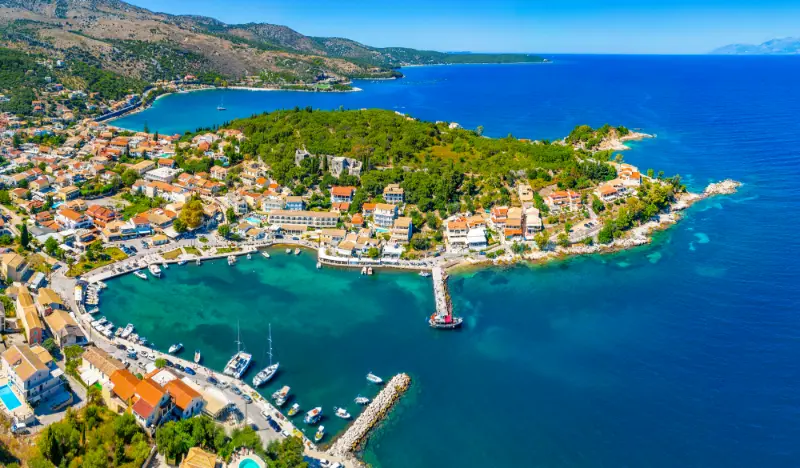
    Kassiopi Corfu Greece

    The remains are atmospheric rather than polished. Wear proper shoes, expect uneven surfaces and do not promise children a conventional museum. The reward is the sense of geography: from the headland you understand why this harbour mattered strategically and why the north-east coast feels so different from the broad sandy west.

    Which beach should you choose in Kassiopi?

    Kalamionas is the easiest larger beach near the village and works well if you want a straightforward swim without turning the day into a hike. The small coves around the castle side are prettier but have less space and can feel busy in peak season. Bataria is popular for clear water and views; Pipitou is another compact option. Conditions can change quickly with wind, so the best beach is often the one protected on that particular morning.

    Bring water shoes if you dislike pebbles or rocky entries. Families with toddlers may prefer a more gradual, organised beach elsewhere on the island, while confident swimmers and snorkellers often appreciate Kassiopi’s clear coves.

    A realistic one-day Kassiopi itinerary

    Arrive before late morning, walk the harbour and visit the castle while temperatures are manageable. Swim before lunch, then choose a shaded taverna break rather than driving immediately to another coast. In the late afternoon either stay for a second cove or continue to Avlaki for a quieter beach. Return to Kassiopi for dinner if you want atmosphere without the scale of Corfu Town.

    If you are driving from the south, do not combine Kassiopi with Paleokastritsa in the same half day. The map makes the island look compact, but cross-island roads are slower than the straight-line distance suggests.

    Getting to Kassiopi without a car

    Corfu Green Buses operate the A4 route between Corfu and Kassiopi; the published 2026 network lists the route and a one-way fare of €3.90 in its May timetable. Always check the latest departure times on Green Buses because seasonal frequency changes. The bus is a practical option for a day trip if you are comfortable organising your day around the return schedule.

    Corfu Kassiopi Greece

    Once you arrive, the harbour, castle and central coves are walkable. A taxi or boat is more useful than a rental car for a single isolated outing, but a car becomes worthwhile if Kassiopi is your base for several days and you want to explore Old Perithia, Pantokrator or multiple remote beaches.

    Where to stay in Kassiopi

    Stay close to the harbour if you value evening walks, restaurants and not driving after dinner. Stay on the edges of the village if you prefer quieter mornings and easier road access. Before booking, check the exact walking route on a map: a property that looks close in distance can sit on a steep lane, which matters with a stroller, luggage or limited mobility.

    For a split stay, I like pairing Kassiopi with two or three nights in Corfu Town. That gives you easy access to the UNESCO centre first, then a slower coastal stay. If your priority is dramatic west-coast scenery, combine Kassiopi with the Paleokastritsa guide rather than trying to commute daily.

    Food, evenings and small details that improve the stay

    Kassiopi has enough dining choice to reward staying after the day-trippers leave. Look beyond the most obvious waterfront tables and check the side streets as well. Corfiot dishes worth trying across the island include sofrito, pastitsada and bourdeto; the north-east also has a long boating tradition, so fish and seafood appear frequently, though the best choice should depend on what is fresh rather than what is most photogenic.

    Keep cash for small purchases, carry sun protection on the castle walk and save your accommodation pin offline. Mobile coverage is generally good, but offline navigation is still helpful on smaller roads around the north.

    North-east coast day trips from Kassiopi

    If Kassiopi is your base for several nights, think in short north-east loops. Avlaki is an easy nearby beach for a slower day; Kalami is associated with the Durrell family and has a sheltered bay; Nissaki and Barbati give you clear water further south. The advantage of staying in Kassiopi is that you can choose one of these after breakfast without committing to a full cross-island drive.

    For Old Perithia or Pantokrator, leave the swim until later. Mountain roads and village walking are more comfortable before the strongest heat, while the sea is still there in the late afternoon. This simple ordering makes a big difference in July and August.

    Kassiopi in shoulder season

    May, June, September and early October can be excellent because the north-east remains active but the midday heat and parking pressure are usually less intense than peak summer. Sea temperature and ferry-style boat activity vary by month, so do not assume every July service is operating in April or late October.

    Outside peak season, confirm restaurant and boat schedules before building a day around one provider. The quieter harbour can be a benefit, but seasonal islands always require a little more flexibility.

    One more practical planning note

    When planning Kassiopi Corfu Guide, keep the day deliberately flexible. Corfu rewards travellers who respond to wind, heat and traffic rather than following a fixed checklist. Confirm opening or transport information on the morning itself, carry water, save important locations offline and avoid adding a distant attraction just because there is an empty hour on paper. The island is most enjoyable when each day has one clear geographical focus, enough time for a meal and enough margin to change the plan if a beach is rough, a road is congested or a cultural site has temporary access restrictions.

    I also recommend building a deliberate pause into the middle of the day. In peak summer, a shaded lunch, swim or hotel break is not wasted time; it protects the part of the afternoon when you are more likely to enjoy a village, viewpoint or coastal walk. If you are driving, refill water before leaving a larger resort area and keep fuel comfortably above empty, because small mountain and coastal roads do not always have services exactly when you need them.

    Finally, check the return route before sunset. Corfu roads can be slower after dark, and bus frequencies often thin out in the evening. If a place is especially beautiful late in the day, consider staying nearby for dinner rather than immediately crossing the island. That simple decision often turns a rushed sightseeing day into a much more memorable travel experience.

    Bus Turistici At Corfu

    Frequently asked questions

    Is Kassiopi worth visiting?

    Yes. It combines a lively harbour, a historically important castle and several clear-water coves within a compact area.

    How long do you need in Kassiopi?

    A full day covers the harbour, castle and a swim; three to five nights work well if you want a north-east Corfu base.

    Can you reach Kassiopi by bus?

    Yes. Green Buses operate the A4 route from Corfu; verify the current seasonal timetable before travelling.

    Is Kassiopi good for families?

    It can be, especially for families with school-age children. For toddlers, check beach access and pebble entries carefully.

    Do you need a car in Kassiopi?

    Not for the village itself. A car is useful for Old Perithia, Pantokrator and a wider north-coast road trip.

    Final thoughts

    Kassiopi works because it does not force you to choose between beach time and a sense of place. Walk the castle, swim in a cove, eat by the harbour and use the village as a launch point for the north-east rather than treating it as another resort stop.

  • Skyros Chora Guide: Castle, Monastery, Brooke Square, Museums and Sunset

    Skyros Chora Guide: Castle, Monastery, Brooke Square, Museums and Sunset

    Skyros Chora is the place where the island feels most distinctive. White houses climb a steep rock below a Byzantine castle, narrow lanes twist between tiny chapels and workshops, and a few minutes of downhill walking takes you toward Magazia and the sea. It has enough history for a serious sightseeing day, but it is also the best place simply to wander, stop for coffee and understand why Skyros does not feel exactly like the Cyclades or the greener northern Sporades.

    Why Chora deserves more than a quick photo stop

    Chora is compact on a map but vertical in real life. The most rewarding route is not to rush straight to the castle and back. Start lower in the town, climb gradually through residential lanes and small squares, visit the museum area and Brooke Square, continue toward the monastery and castle, then return by a different route. The changing views are part of the experience: white roofs, dry hills, the long beach zone of Magazia and Molos, and the contrast between the lush north of the island and the starker south.

    The town also keeps Skyrian craft traditions visible. Woodcarving, ceramics, embroidery and characteristic furniture are not just souvenir themes; they are part of the island’s domestic culture. Even if you do not plan to buy anything, looking at local workshops and traditional interiors makes later museum visits much easier to appreciate.

    The Castle of Skyros and Agios Georgios monastery

    The castle sits on the highest point of Chora, on a rock that the municipality describes as rising about 179 metres above the settlement. Its strategic position explains the settlement pattern below: houses cluster tightly around the protected height, while the sea and surrounding terrain are visible from multiple levels.

    The Monastery of Agios Georgios is directly below the castle and is one of the island’s most important religious landmarks. The municipality traces its foundation to the Byzantine period and notes its long relationship with the Great Lavra of Mount Athos. Dress respectfully, expect steps and uneven surfaces, and check access conditions before the climb because restoration work, services or local restrictions can affect visiting arrangements.

    Fragment Castle Ancient Church Island Skyros Greece

    Brooke Square and the Rupert Brooke connection

    Rupert Brooke, the English poet who died in 1915 while serving in the Royal Naval Division, is closely associated with Skyros because he was buried on the island. Brooke Square in Chora has become one of the town’s best-known viewpoints and cultural stops. The square works especially well near the beginning or end of a Chora walk because it opens the landscape after the tight lanes.

    Do not treat the memorial as an isolated “British history” sight. It is more interesting when combined with the nearby museums and the wider story of Skyros in the early twentieth century. If you later drive south, Brooke’s grave can be visited in a much more remote landscape, but that requires separate transport planning.

    Museums worth adding to the route

    The Archaeological Museum of Skyros was founded in 1963 and displays material from sites including Chora and Palamari, as well as finds ranging from the Early Helladic period to Roman times. It is especially useful before a visit to Palamari because it gives context to objects and settlements that can otherwise look abstract on site.

    The Faltaits Historical and Folklore Museum adds a different layer, focused on local life, documents, art and the traditions that make Skyros culturally distinct. Museum schedules are often more limited than visitors expect on smaller islands, so check opening days rather than assuming both can be visited whenever you arrive.

    Walking from Chora to Magazia

    One of the pleasures of staying in or near Chora is that a cultural morning can turn into a beach afternoon without a car. Magazia lies below the town and is linked by roads and foot routes. The downhill journey is easy to underestimate; remember that you must climb back later, and summer heat can make the return much harder than the outward walk.

    Magazia is a long sandy beach with organised sections, food nearby and an immediate visual connection to Chora above. Continue north and the beachfront develops into Molos. If your ideal day combines old-town atmosphere with swimming, this Chora–Magazia pairing is one of the strongest reasons to base yourself on the east side of Skyros.

    Where to eat and when to visit

    Chora is better for an unhurried evening than for a checklist lunch stop. Look for local cheese, pies, goat or lamb dishes when available, seafood, and the island’s famous lobster dishes if they fit your budget. The most atmospheric tables are not always the ones with the most dramatic view; small places in the lanes can be equally memorable.

    In July and August, visit the upper town early or in the late afternoon. White walls reflect heat, the climb is exposed in places, and the reward is much greater when you are not racing the sun. Spring and September are excellent for walking, while carnival season offers a completely different cultural experience centred on the Geros, Korella and Trata traditions.

    View Embankment Island Skyros Greece Spring

    A realistic half-day Chora itinerary

    1. Coffee and orientation in the lower lanes before the day gets hot.
    2. Archaeological Museum or Faltaits Museum, depending on opening hours.
    3. Brooke Square and the viewpoints above the east coast.
    4. Climb toward Agios Georgios and the castle area.
    5. Return through a different set of lanes and stop for lunch.
    6. Walk or take transport to Magazia for a late-afternoon swim.

    Where to stay if Chora is your priority

    Choose Chora if you value atmosphere, evening restaurants and walking access to cultural sights. Choose Magazia or Molos if you want flatter beach access while remaining close to town. Linaria is better for the ferry and west-coast sunsets but feels separate from Chora’s evening life.

    Parking inside the old core is limited by the nature of the streets, so drivers should check the exact parking arrangement of their accommodation. For a fuller comparison, read Where to Stay in Skyros.

    Booking accommodation and activities

    For accommodation, you can compare places to stay in Skyros on Booking.com. Check the map carefully: a property described simply as “Skyros” may be in Chora, Magazia, Molos, Linaria or a much quieter rural area, and those choices create very different holidays.

    If you want to add an organised experience, boat trip or activity, the widget below can be used as a starting point. Availability on smaller Greek islands is seasonal, so compare the meeting point and cancellation terms with your transport plan.

    Useful official resources and a note on changing information

    The Municipality of Skyros publishes visitor information on beaches, nature, sights and local transport. Visit Greece is useful for broad destination information, while ferry schedules should be checked directly with the operator before travel. Bus routes on Skyros are seasonal and can change from month to month, so use any timetable in this guide as a planning clue rather than a promise.

    Opening hours, road conditions, wind, sea state and seasonal services can all change. For archaeological sites, museums, organised beaches and boat trips, verify the current situation shortly before setting out. That is especially important outside July and August, when a place may be open but transport frequency can be much lower than in high summer.

    When to go and how to shape the day

    Late spring and September are especially comfortable for combining beaches, walks and sightseeing because the island is active without the most intense summer heat. July and August offer the widest range of seasonal services, but exposed Chora climbs, archaeological sites and mountain walks are much more pleasant early in the morning or later in the day. Sea temperature and wind matter as much as air temperature, so choose the beach coast after looking at the actual conditions each morning.

    A useful Skyros rhythm is to put the most active part of the day before lunch, keep the hottest hours for a long meal or rest, then return to the beach or Chora in the late afternoon. This is not wasted time: it reduces driving, makes children and walkers happier, and leaves enough energy for the island’s best evenings. Outside high season, daylight, museum hours and restaurant opening days become more important than heat, so confirm key stops the day before.

    For a first visit, four or five nights is a good minimum if you want Chora, two contrasting beach areas and one inland or cultural excursion without rushing. A week lets you react to wind, repeat a favourite beach and include a northern or southern exploration day. With only two nights, stay close to Chora/Magazia and resist the temptation to circle the whole island.

    Practical planning notes for Skyros

    Skyros is compact, but roads, wind and the separation between Chora on the east side and Linaria on the west make daily planning important. Do not estimate travel only from kilometres. A beach day in the north, a cultural morning in Chora and a ferry departure from Linaria can fit into one day on paper but feel rushed in practice. Group sights by coast and keep one flexible day for weather.

    Skyros Greece

    For summer travel, reserve accommodation and any essential vehicle early, but avoid pre-booking every hour. The island’s strongest experiences—choosing the sheltered coast, lingering in a village, changing plans after local advice—depend on flexibility. In shoulder season, verify restaurant, museum and excursion opening days because businesses can reduce schedules before ferry and flight services fully stop.

    If you rent a car, photograph existing damage, check tyre condition and ask specifically about unpaved-road restrictions. If you do not drive, choose Chora/Magazia and budget for occasional taxis. In either case, leave a generous buffer before a ferry or flight and avoid scheduling an international connection too tightly after leaving the island.

    Plan the rest of your Skyros trip

    Skyros works best as a connected itinerary rather than ten separate checklists. Start with the existing Skyros Travel Guide, then use the specialist guides below according to your priorities.

    Skyros Chora Guide: Castle, Monastery, Brooke Square, Museums and Sunset; Best Beaches in Skyros: Magazia, Molos, Atsitsa, Pefkos, Agios Fokas and Kalamitsa; Linaria Skyros Guide: Port, Marina, Beaches, Sunset and Where to Stay; Skyrian Horse Guide: Where to See the Rare Skyros Horse Responsibly; Mount Kochylas Skyros Hiking Guide: Trails, Wildlife, Views and Safety; Palamari and North Skyros Guide: Archaeology, Atsitsa, Pine Forests and Quiet Beaches; Skyros Without a Car: Buses, Taxis, Walking and the Best Base; Where to Stay in Skyros: Chora, Magazia, Molos, Linaria or Atsitsa?; Skyros with Kids: Family Beaches, Horses, Easy Sights and Practical Tips; Skyros Food Guide: Lobster Pasta, Ladopita, Cheese, Honey and What to Eat

  • Mandraki Nisyros Guide: Panagia Spiliani, Paleokastro, Museums and Where to Stay

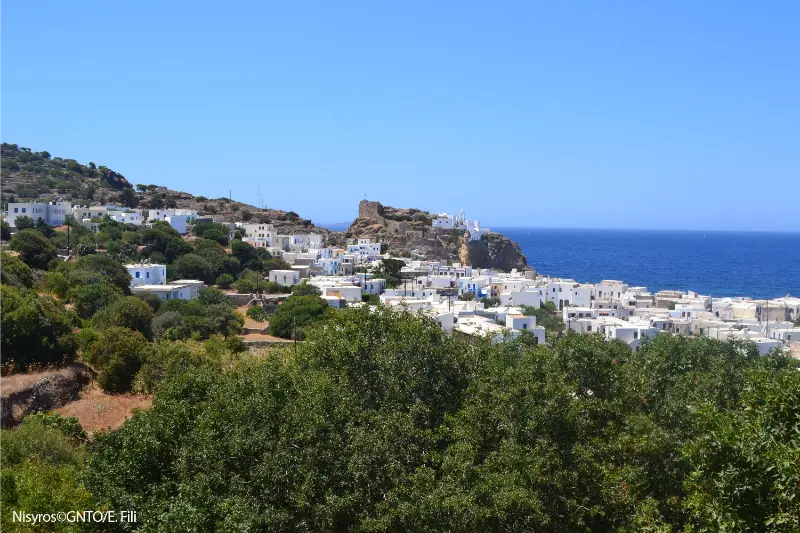
    Mandraki Nisyros Guide: Panagia Spiliani, Paleokastro, Museums and Where to Stay

    Mandraki is much more than the port where most visitors first step onto Nisyros. It is the island’s largest settlement, the best place for an evening stroll, and the easiest base for travellers who want restaurants, museums, ferry access and a strong sense of local life within walking distance. White houses, dark volcanic stone, pebble-paved squares and the castle hill make it a place worth exploring slowly rather than rushing through on the way to the crater.

    If this is your first visit, use this article together with my Nisyros travel guide. Nisyros is compact, but the combination of steep terrain, summer heat, seasonal buses and a volcanic interior means that realistic timing matters more than raw distance.

    Why this experience belongs in a Nisyros itinerary

    Nisyros rewards travellers who look beyond a quick crater visit. The island combines an active volcanic landscape with four historic settlements, ancient fortifications, monasteries, thermal heritage, a small network of distinctive beaches and walking routes. Many visitors arrive from Kos for only a few hours, so staying overnight or planning one theme at a time immediately creates a calmer and more local experience.

    The best days here usually have one main objective before lunch and one lighter activity later. That rhythm keeps you out of the strongest sun, leaves room for transport changes and makes space for the long meals and village walks that are central to a small-island trip.

    Start at the harbour, but do not stop there

    The waterfront is the practical heart of Mandraki: ferries and excursion boats arrive here, buses and taxis are easiest to find nearby, and the first cafés make it tempting to sit down immediately. I would still use the cool morning hours to walk inland before the day-trippers spread through the lanes. The village quickly becomes quieter once you leave the port, and the contrast between white walls and black volcanic stone is one of the details that makes Nisyros look different from many other Dodecanese islands.

    Mandraki works best on foot. Distances are short, but there are steps and slopes, especially if you climb toward the castle and Panagia Spiliani. Comfortable shoes matter more than they seem on a map. If you arrive with luggage, check how far your accommodation is from a road-access point; a charming room deep inside the old lanes may involve a final walk over uneven paving.

    Panagia Spiliani and the castle hill

    Above Mandraki stands the medieval castle complex with the Monastery of Panagia Spiliani, one of the island’s most important religious landmarks. The climb is part of the experience: the view opens gradually over the roofs, harbour and sea, and the atmosphere changes as you leave the busier streets behind. Dress respectfully for the monastery and allow more time than a quick photo stop, particularly if you visit during a religious celebration.

    The castle hill is also one of the best places to understand the settlement’s geography. From above, the port, the compact old town and the volcanic coastline fall into place. Visit early or late in the day in summer. Midday heat can turn a short ascent into a tiring one, while late afternoon gives softer light and makes it easy to descend for dinner.

    Paleokastro: ancient Nisyros above Mandraki

    Paleokastro is one of the most substantial ancient fortifications on the island and a very different experience from the medieval castle above the town. The walls were built with massive blocks of dark volcanic stone, and the site rewards visitors who enjoy archaeology, masonry and landscapes more than reconstructed monuments. It is a place to look closely at how the defensive wall was engineered and to imagine the ancient settlement in relation to the harbour below.

    Do not combine Paleokastro with every other sight in a single hot afternoon. It deserves a separate early-morning or late-day walk, especially if archaeology interests you. Carry water, use proper footwear and check the current access conditions locally. Pairing the site with the Archaeological Museum in Mandraki gives much more context than visiting the wall alone.

    Museums and local history

    Mandraki has an Archaeological Museum and a Folklore Museum, and both help balance the island’s geological fame with its human history. The Folklore Museum is housed in a restored traditional residence and presents domestic life, tools, textiles and objects that show how island families lived before tourism and modern transport changed everyday routines.

    Museum opening times can be seasonal, so I would not build the whole day around a fixed hour without checking locally. Instead, keep one museum as a midday option when the sun is strongest. It is a useful way to slow the pace between a morning walk and a late-afternoon swim.

    Hohlaki Beach and sunset

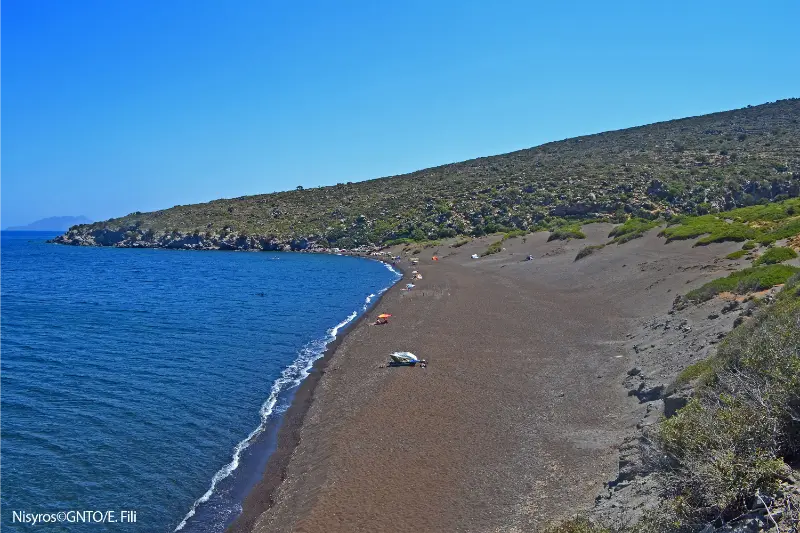
    Hohlaki, immediately west of Mandraki, is the island’s unmistakable black-pebble beach. The large volcanic stones look dramatic, especially against white surf, but this is not a conventional soft-sand beach. Water entry can be awkward when the sea is rough and the stones become very hot in strong sun, so beach shoes can be useful.

    I like Hohlaki most as a short swim or sunset stop rather than an all-day beach base. Its proximity to town makes it easy to combine with sightseeing, and the evening light is often more rewarding than the hottest part of the afternoon. If the sea is unsettled, enjoy the view without forcing a swim and save your longer beach day for Pali, Lies or Pachia Ammos.

    How to get around for this part of the trip

    Mandraki is the transport hub. Seasonal municipal buses connect the port area with Pali and, on selected services, the mountain villages. Taxis and organised excursions are useful for the volcanic field, especially when you want to avoid waiting around a limited bus timetable. The Municipality of Nisyros publishes current public-transport information, so check the latest schedule rather than copying times from an older travel blog.

    A rental car or scooter adds flexibility, but it is not essential for every traveller. If you do drive, remember that roads climb quickly and parking inside traditional settlements can be limited. Do not take a standard rental vehicle onto rough tracks simply because an online map shows a road continuing.

    Where to stay

    Mandraki is the most convenient base for first-time visitors, travellers without a car and anyone who values evening choice. Stay near the harbour for easy luggage handling and transport; choose the inner lanes for atmosphere; or look toward the edge of the settlement if you want quieter nights and easier road access. Always check the final approach to the property because stairs and narrow lanes can make two nearby accommodations feel very different.

    A realistic way to plan the day

    • Walk the old lanes early, before excursion traffic builds.
    • Climb to Panagia Spiliani and the castle while temperatures are manageable.
    • Use midday for a museum, lunch and a slower break.
    • Visit Paleokastro in a separate cooler window if archaeology is a priority.
    • Finish at Hohlaki or on the waterfront, then stay in Mandraki for dinner.

    Use the sequence above as a framework rather than a timetable. Wind, ferry arrivals, heat and seasonal opening hours can change the best order. If a museum is closed or a bus is full, Nisyros is small enough to swap the day around without losing the trip.

    Nisyros View 4

    Best time to visit

    Late spring and September are excellent for travellers who want to combine sightseeing and walking with warm weather. July and August offer the fullest summer atmosphere but bring stronger heat and more day-trip traffic from Kos. For hiking, archaeology and village exploration, the shoulder seasons are easier; for swimming, mid-summer provides warmer sea temperatures but demands more attention to shade and hydration.

    Outside the main season, ferry frequency, bus services, museums and tavernas may operate on reduced schedules. Nisyros can still be rewarding, but you should confirm the services that matter to your trip before booking a tightly connected itinerary.

    What to pack

    • Closed or grippy shoes for volcanic ground, cobbled lanes and paths.
    • A refillable water bottle and extra water for beaches or exposed walks.
    • High-SPF sunscreen, sunglasses and a hat that stays secure in wind.
    • A light layer for ferry crossings and breezy evenings.
    • Offline maps and a charged power bank for routes away from the villages.
    • A small amount of cash as backup for small businesses and transport.

    Common mistakes to avoid

    • Treating Mandraki only as a ferry terminal.
    • Trying to climb to the castle at the hottest time of day.
    • Booking a room without checking stairs and luggage access.
    • Expecting Hohlaki to behave like a sandy resort beach.
    • Skipping the museums even though they add context to the volcano and villages.

    More Nisyros guides

    Mandraki Nisyros Guide: Panagia Spiliani, Paleokastro, Museums and Where to Stay; Nisyros Volcano Guide: Stefanos Crater, Caldera, Geology, Safety and Visiting Tips; Nikia and Emporios Nisyros Guide: Caldera Views, Porta Square, Museum and Natural Sauna; Pali Nisyros Guide: Harbour, Beaches, Thermal Heritage, Food and Where to Stay; Best Beaches in Nisyros: Hohlaki, Pali, Lies, Pachia Ammos and Volcanic Swimming Spots; Nisyros Hiking Guide: Caldera Trails, Villages, Paleokastro, Beaches and Safety; Nisyros Day Trip from Kos: Kardamena Boats, Volcano, Villages and a Realistic Itinerary; Nisyros Without a Car: Buses, Taxis, Walking, Volcano Transport and the Best Base; Where to Stay in Nisyros: Mandraki, Pali, Nikia or Emporios? Best Areas Compared; Nisyros Food Guide: Pithia, Kapamas, Local Cheese, Capers, Sweets and What to Eat; Nisyros Travel Guide.

    Nisyros View 5

    Frequently asked questions

    Is Mandraki the best place to stay in Nisyros?

    For many first-time visitors, yes. It has the port, the widest range of services, museums, restaurants and the easiest access to buses and taxis. Pali is quieter and more beach-oriented.

    Can you walk from Mandraki to the main sights?

    You can comfortably explore the town, Hohlaki, Panagia Spiliani and several nearby points on foot, but the caldera, Nikia, Emporios and Pali require transport or a much more demanding hike.

    How much time should I give Mandraki?

    A half-day shows the essentials, but an overnight stay is far better because the village changes after day-trip visitors leave.

    Is Mandraki good without a car?

    Yes. It is the easiest car-free base because transport services concentrate around the port and the core of the town is walkable.

    Official information to check before you go

    For current island information, settlements, museums, transport announcements and activities, consult the Municipality of Nisyros visitor information. For broader destination information and sea access, see the official Visit Greece Nisyros page. Always recheck ferry, bus, museum and excursion details for your exact travel dates.

    Final planning advice

    Nisyros is at its best when you resist the urge to treat it as one volcanic attraction. Give the villages, coastline and food the same attention as the crater, plan around the hottest hours, and keep enough flexibility to follow local transport and weather conditions. Even on a short stay, that approach produces a much richer trip than racing through a checklist.

    Nisyros
  • Best Beaches in Ikaria: Seychelles, Mesakti, Livadi, Nas, Faros and Hidden Coves

    Best Beaches in Ikaria: Seychelles, Mesakti, Livadi, Nas, Faros and Hidden Coves

    Ikaria’s beaches are unusually varied for one island. The north has long sandy shores exposed to the Ikarian Sea, the south hides pebble coves beneath steep rock, the east has easier family beaches around Faros, and remote stretches near Magganitis or Karkinagri reward travellers willing to drive slowly and walk. The right beach therefore depends less on a universal “top ten” and more on wind, access, where you are staying and whether you want facilities or solitude.

    Seychelles: spectacular but not effortless

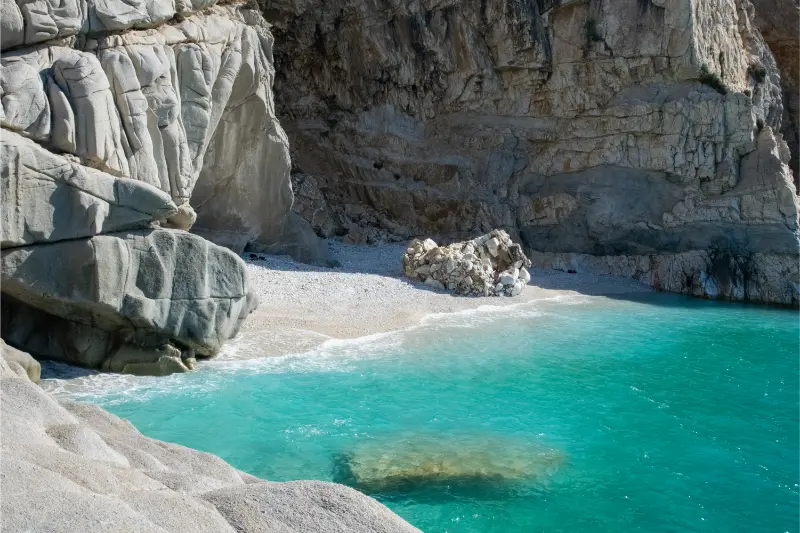
    Seychelles near Magganitis is the beach most likely to appear on social media: pale pebbles, striking rock formations and intensely clear water in a compact cove. It is beautiful, but it should not be described as an easy resort beach. Access involves a rough descent from the road or a boat approach, and the shore has limited space and no reason to expect full facilities.

    Wear real shoes for the path, carry water and pack out everything you bring. Avoid the hottest middle of the day and do not attempt the descent if mobility, footwear or weather make it unsafe. A boat can be a better option for some travellers.

    Mesakti: best for a classic sandy beach day

    Mesakti is the broad sandy choice near Gialiskari and Armenistis. It has the space and visitor infrastructure that many families and younger travellers want, and it can also attract surfers when waves build. The sand makes access easy, but the sea is not always gentle.

    Watch the surf carefully, especially with children. Strong north-coast conditions can produce currents and breaking waves. If the water looks rough, use the day for villages or move to a more sheltered coast rather than forcing the plan.

    Livadi: convenient beside Armenistis

    Livadi sits next to the same north-coast holiday zone and is one of the easiest beaches to combine with accommodation in Armenistis. Its river-mouth setting gives it a different character from Mesakti. It is a good choice for a relaxed half-day followed by lunch or a late afternoon in the village.

    Parking pressure rises in August, so walk from nearby accommodation where a safe route exists. Do not leave valuables visible in the car or block narrow access roads.

    Nas: come for the setting, respect the sea

    Nas is memorable because the beach, river gorge, archaeological remains and sunset all meet in one small landscape. It is one of Ikaria’s most atmospheric coastal stops, but it is also a place where swimming conditions require caution. The open coast can generate strong waves and currents.

    Treat Nas as a viewpoint, hiking destination and sunset stop first. Swim only when conditions are clearly calm and follow local warnings. Families with young children may prefer Mesakti, Livadi or Faros for an ordinary beach day.

    Faros: easiest south-east beach base

    Faros is one of the most useful beaches on the south-eastern side, close to the airport and a manageable drive from Agios Kirykos. It has food and accommodation nearby and works well for travellers who want a straightforward beach day without crossing the island.

    This is also a good first or last-day beach around a flight, provided you leave enough time for the airport. Check wind because even easier beaches change character when conditions strengthen.

    Therma, Kerame and east-coast alternatives

    Therma offers swimming beside the spa village, while Kerame and other eastern coves can provide quieter alternatives. These beaches are useful when the north coast is rough or when you are based in Agios Kirykos and do not want a long drive.

    Travellers with mobility needs should note that the Municipality has installed accessible-beach infrastructure at selected locations including Therma, Karavostamo, Evdilos and Mesakti. Seasonal deployment and current condition should be confirmed before travel.

    Magganitis and remote south-west swimming

    The coast around Magganitis feels very different from the north. Rock dominates, roads are dramatic and small coves appear below steep slopes. Seychelles is the famous name, but do not ignore other local swimming spots recommended by your host or taverna when sea conditions are suitable.

    Bay Seychelles Beach Ikaria Aegean Sea Greece

    Fuel, water and time matter more here. Do not set out late in the day assuming you can cross the island quickly after sunset.

    Which beach is best for you?

    What you wantGood starting choice
    Wide sand and facilitiesMesakti
    Stay near ArmenistisLivadi
    Iconic rocky coveSeychelles
    Sunset and dramatic settingNas
    Easy south-east dayFaros
    Spa village + swimTherma
    Quieter local alternativeKerame / Karavostamo area depending conditions

    Wind and water safety

    Ikaria is known for strong summer winds. A beach that was calm yesterday may have powerful surf today, especially on the north coast. Ask locally before driving across the island and always judge the water at the moment you arrive. Do not use an old photo or review as evidence that conditions are safe.

    Pebble coves can deepen quickly and remote beaches may lack lifeguards, shade, toilets or phone reception. Bring water, sun protection and suitable footwear. Parents should choose the sea state, not the reputation of the beach, as the main safety criterion.

    A four-day beach strategy

    1. Day 1 north: Mesakti and Livadi from an Armenistis base.
    2. Day 2 west/south-west: Magganitis and Seychelles only if access and weather are suitable.
    3. Day 3 south-east: Faros plus a short stop in Agios Kirykos or Therma.
    4. Day 4 flexible: choose the coast with the best wind and wave conditions rather than repeating a fixed plan.

    Booking accommodation and activities

    For accommodation, compare places to stay in Ikaria on Booking.com. Always check the exact village and road access before booking. A property described simply as “Ikaria” can be an hour or more from the beach, port or village you expect to use most.

    For organised activities and excursions, use the widget below as a starting point. Ikaria has a smaller organised-tour market than Santorini, Rhodes or Crete, so availability can be seasonal. Verify the meeting point, transfer arrangements and cancellation terms before paying.

    Official resources to recheck before you go

    For a broad official destination overview, use Visit Ikaria and the Municipality of Ikaria. Both are useful for checking local notices, villages, beaches, museums and seasonal information close to your trip.

    For village geography, the official Visit Ikaria village directory is especially useful because Ikaria is not organised around one resort strip: the island has many scattered settlements and travel times are longer than the map first suggests.

    The Municipality’s tourism guide lists well-known beaches including Prioni, Gialiskari, Mesakti, Armenistis and Seychelles; use local conditions to decide which one is best on the day.

    Continue planning your Ikaria trip

    Beach access is part of the experience

    Some of Ikaria’s most beautiful coves demand walking, stairs or rough roads. A beach is not “better” because it is harder to reach, and there is no prize for taking unsuitable footwear down a steep path.

    Match access to the least mobile person in your group. A comfortable day at Faros or Mesakti is better than turning Seychelles into a stressful rescue exercise.

    Turquoise Mesakti Beach Bay With Analipsi Chapel Ikaria Island Greece Sunlight

    Leave-no-trace basics

    Remote coves may have no bins because regular waste collection is difficult. Carry rubbish back to a settlement, avoid cigarette butts in dry vegetation and never build fires on beaches.

    Use reef-safe behaviour around the water: do not remove shells, rocks or marine life and keep boats and paddleboards away from swimmers.

    Planning by season

    May and early June favour walking, green landscapes and quieter villages, but some seasonal beach businesses operate shorter hours. July and August bring the widest choice of accommodation, food and festival activity along with stronger heat, wind, traffic and booking pressure. September often offers the best balance of warm sea, active villages and easier roads. October can be rewarding for slow travel, but ferry frequency and seasonal restaurants require more checking.

    Whatever the month, build each day around the actual wind and temperature. Ikaria is large enough that a fixed itinerary can create unnecessary driving when the north coast is rough or the mountains are hot. Keeping one flexible half-day is more useful than adding another attraction to a crowded schedule.

    Common planning mistakes

    The most common mistake is treating map distance as travel time. Mountain bends, village traffic, ferry arrivals and spontaneous stops slow every journey. Choose one main part of the island per day and resist adding a distant beach simply because it appears only thirty kilometres away.

    Another mistake is relying on a single old timetable or social-media post. Ferries, buses, museum hours and festival confirmations change. Recheck anything time-critical close to travel and ask locally when conditions matter more than a published schedule.

    How to keep the day realistic

    Ikaria works best when you choose one main purpose for each day and let secondary stops remain optional. A beach day can include one village and dinner; a hiking day can finish with a swim; a port day can include a museum and nearby meal. Trying to combine the north coast, Raches, Therma and a sunset stop in one circuit creates more road time than experience.

    Leave enough time to stop when a bakery, viewpoint or village square looks inviting. The island rewards curiosity more than speed. If the wind, heat or ferry schedule changes, shorten the plan rather than moving every stop later into the evening. That flexibility is one of the simplest ways to make an Ikaria trip feel genuinely relaxed.

  • Heraklion Travel Guide: Knossos, Museums, Food and a 3-Day Plan

    Heraklion Travel Guide: Knossos, Museums, Food and a 3-Day Plan

    Heraklion is often treated as a place to land, collect a rental car and leave, but that skips one of Crete’s most important historical combinations: the Archaeological Museum in the city and the Palace of Knossos just outside it. For travellers who enjoy ancient history, local food and a more lived-in urban atmosphere than a resort town, Heraklion deserves at least two nights.

    It also works as a practical centre for a larger Crete trip. Combine it with Chania to see how different western and central Crete feel, or use the Crete travel guide to decide whether you should base yourself here or simply include the city as a stop on a road trip.

    Why stay in Heraklion

    The city is busy, imperfect and much less polished than Chania’s harbour, but that is part of its value. You can walk the Venetian walls, eat in squares used by residents, visit one of Greece’s strongest archaeological museums and reach Knossos without changing hotels. The airport and ferry port also make it a logistical hub.

    I would choose Heraklion over a beach resort when the first priorities are history, onward transport and restaurants rather than waking up beside the sea. For a beach-focused holiday, stay elsewhere and visit the city for a day.

    Heraklion Archaeological Museum

    The museum is the essential preparation for Knossos because it brings together Minoan objects from sites across Crete. Frescoes, ritual objects, pottery, jewellery and the Phaistos Disc help make sense of the civilisation before you walk through reconstructed and excavated spaces at the palace.

    If museums usually tire you, do not try to read every label. Give yourself a shortlist: the Minoan galleries, the objects from Knossos and the pieces that connect directly to places you will see later. That creates a narrative instead of museum fatigue.

    Visiting Knossos

    Knossos is close enough to Heraklion to combine with the museum in one substantial day, but I would start early, especially in summer. The site is exposed and can become hot. Guided interpretation helps because the mix of ancient remains and twentieth-century reconstruction can be difficult to read without context.

    In 2025, Knossos and the other major Minoan palatial centres of Crete were inscribed on UNESCO’s World Heritage List. That recognition reflects the wider network of Minoan sites, not just one photogenic staircase or fresco. Treat Knossos as the gateway to that larger story.

    What to see in the city centre

    Walk from Lions Square toward the Venetian Loggia, the harbour and Koules fortress, then include part of the city walls if the weather is comfortable. The centre is compact, but traffic around it can feel intense; once you are inside the pedestrian areas, Heraklion becomes much easier.

    Koules Fortress Heraklion City Crete Island Greece

    I like Heraklion most in the late afternoon when the archaeological sightseeing is finished. The city then turns into a place for coffee, meze, shopping and people-watching rather than another list of monuments.

    Where to stay

    For one or two nights without a car, stay in the central pedestrian area or close enough to walk there. This simplifies museum visits and dinner. If you arrive with a rental car, confirm parking before booking; a hotel that advertises “central” may be excellent for walking but awkward for luggage and a vehicle.

    For an early flight or late arrival, an airport-side hotel can make sense for one night, but I would not base a sightseeing stay there. The convenience of being able to walk to the centre is worth more during the rest of the trip.

    Day trips from Heraklion

    Central Crete opens several different day-trip directions. Wine country south of the city is useful for travellers interested in vineyards and villages. The north coast has resorts and beaches, while the south leads toward Matala and the Asterousia landscape. The key is not to attempt all directions in a short stay.

    If your trip includes Rethymno, Chania or eastern Crete, move hotels rather than returning to Heraklion every night. Crete rewards linear routes more than repeated backtracking.

    Crete Heraklion Loggia

    Food and evening atmosphere

    Heraklion is excellent for casual food. Look for Cretan cheeses, pies, snails if you are curious, grilled meats, seafood, vegetables, dakos and seasonal dishes. A meze-style meal lets you try more without ordering a long formal dinner.

    Choose at least one meal away from the busiest visitor streets. The city’s appeal is strongest when it feels like a real Cretan city rather than a stop between the airport and Knossos.

    A 3-day Heraklion plan

    1. Day 1: arrive, walk the centre, Venetian harbour and Koules area, then dinner in town.
    2. Day 2: early Knossos, Heraklion Archaeological Museum in the afternoon, relaxed evening.
    3. Day 3: choose wine country, Matala or a slower city morning before continuing your Crete route.

    How I would plan the trip before booking

    For Heraklion, I would book the trip in this order: decide how many nights you genuinely have, choose the walkable city centre for a short sightseeing stay, check the transport that controls your arrival and departure, and only then reserve day trips. This order matters because attractive hotel prices can tempt you into a base that creates unnecessary driving, transfers or early-morning stress. A good location often saves more holiday time than a slightly cheaper room.

    The transport question is especially important here: buses and taxis work for the city and Knossos, while a car is more useful when you start exploring central or southern Crete. I would keep the first and final day lighter than the middle of the trip. That leaves space for delayed flights or ferries, heat, wind, children needing a slower morning, or simply discovering a place you want to stay longer.

    For seasonality, spring and autumn are excellent for archaeological sightseeing; in midsummer I would visit exposed sites early and keep the hottest hours for museums or lunch. I also avoid building a plan in which every day depends on perfect beach weather. A museum, old town, village, food stop or short scenic walk gives the itinerary resilience when conditions change.

    Who will enjoy this destination most?

    Heraklion works best for travellers who like a mixture of sightseeing and unstructured time rather than rushing between checklist attractions. It rewards mornings that start early, a long lunch or coffee break, and evenings close to the accommodation rather than another long transfer.

    For families, the museum is easy to pace, while Knossos requires sun protection, water and a realistic limit on how long children will enjoy exposed ruins. Couples can make the trip more relaxed by staying somewhere walkable for dinner. Solo travellers generally benefit from central bases and public transport connections. Road-trippers should check parking before choosing accommodation, because a beautiful historic centre can be inconvenient with a car.

    If you are combining this stop with another part of Greece, compare the pacing with the Crete road-trip itinerary. One of the biggest mistakes in Greece is treating a short transfer on a map as a short travel day; ferry check-in, port access, parking, waiting time and mountain roads all add invisible hours.

    Small details that make the trip easier

    I keep a small offline map on my phone, carry water in warm months, save the exact accommodation entrance rather than only the property name, and photograph parking or bus-stop information when I arrive. These tiny habits are more useful than a minute-by-minute itinerary.

    Comfortable shoes matter in Greece more often than visitors expect. Polished stone, steps, uneven lanes and archaeological ground are common. Sun protection, a light layer for wind or air-conditioned transport, and a reusable bottle cover most day-to-day needs. At religious sites, modest clothing may be required, so it is useful to carry something that covers shoulders or knees.

    Finally, leave one block of two or three hours completely unscheduled. The most memorable part of a trip is often the bakery you did not plan, a swim that lasts longer than expected, a village square at dusk or a viewpoint found on the way back to the hotel.

    Frequently asked questions

    How many nights in Heraklion?

    Two nights is a good minimum if you want both Knossos and the archaeological museum without rushing. Three nights works well when you add a central-Crete day trip.

    Crete Heraklion Mount Asterousia

    Can you visit Knossos without a car?

    Yes. It is one of the easier major archaeological sites to reach from a Greek city, with public transport and taxis available. A car is not necessary if Knossos is your only trip outside Heraklion.

    Is Heraklion worth visiting if I already saw Chania?

    Yes if you care about Minoan history. Chania offers a more romantic old-town experience, while Heraklion gives you Knossos, the archaeological museum and a busier urban side of Crete.

    My final planning rule

    The best version of a Heraklion travel guide is not the itinerary with the most stops; it is the one that gives each stop enough time to feel different from the last. I would rather remove one attraction and arrive at dinner relaxed than spend the day checking the time. Greece rewards travellers who protect their mornings, allow long meals and accept that wind, heat or a ferry schedule may change the original plan.

    Before departure, I recheck the opening hours of any archaeological site or museum that anchors the day, the transport timetable for the next move, and the exact hotel access or parking instructions. Those three checks prevent most avoidable problems. Everything else can stay flexible: the beach, the lunch stop, the viewpoint and the order of smaller sights.

    I also keep one backup idea that requires little transport. That might be a town walk, an urban beach, a museum, a café neighbourhood or a slow meal. A backup is not a second full itinerary; it is permission to change the day without feeling that the trip has failed.

  • Kimolos Without a Car: Buses, Walking, Taxis, Boat Taxis and the Best Base

    Kimolos Without a Car: Buses, Walking, Taxis, Boat Taxis and the Best Base

    Visit Kimolos without a car using Chorio as a base, seasonal buses, taxis, walking routes and boat taxis, with realistic advice on beaches, luggage and remote areas.

    Kimolos rewards travellers who plan around its small scale rather than trying to treat it like a larger resort island. The practical details in this guide are designed for independent visitors: what is genuinely walkable, where transport saves time, how wind changes a beach day, and which places deserve unhurried time.

    Quick planning notes

    • Base yourself in Chorio for the broadest mix of food, buses, taxis and trail access.
    • Check the current bus timetable after arrival because seasonal frequency can change.
    • Use taxis strategically for one-way hikes or remote beach returns rather than every journey.
    • Boat taxis can unlock secluded coastlines, but wind can suspend or change services.

    Can you realistically enjoy Kimolos without a car?

    Yes. Kimolos is one of the Cycladic islands where a car-free holiday can work well because distances are short, Chorio concentrates services and the municipality notes a bus linking the village, port and beaches. Walking paths extend the network further, while taxis and boats fill specific gaps. The key is accepting that you will not reach every remote cove on demand.

    A car-free trip is easiest for travelers who enjoy walking, can adapt beach plans to the day’s transport and are comfortable spending several evenings in Chorio. If your priority is visiting multiple remote beaches each day with toddlers or heavy gear, a vehicle gives more freedom.

    Why Chorio is the best base

    Chorio places restaurants, groceries, the pharmacy, museums and many trailheads within walking distance. It is also the logical point for buses and taxis. Staying here means you can have a satisfying day even if wind cancels a boat or a bus time does not suit you: explore the castle, walk to a viewpoint, eat locally and reorganize the beach plan.

    Psathi is the alternative for ferry convenience, but you will travel uphill to Chorio repeatedly. South-coast accommodation can be excellent for beach-focused stays, though evenings and transport become less flexible without your own wheels.

    Using the seasonal bus

    Local buses typically connect Chorio, Psathi and selected beaches during the visitor season. Routes and frequency can change from year to year and across the summer, so photograph the current timetable after you arrive and confirm the last return before committing to a beach day.

    Build your plan around the bus you can actually catch rather than a generic online timetable. If the final service is early, use a taxi for the return or choose a walkable evening close to your base. Missing the last bus from a remote beach is more expensive than adjusting your swim by thirty minutes.

    Taxis: use them where they add the most value

    Kimolos has limited taxi capacity, so taxis are best treated as a strategic tool. They are particularly useful for luggage transfers, early ferry departures, reaching a trailhead before the heat and collecting you after a one-way walk. Book ahead for time-critical journeys.

    Kimolos Island Chora Village Cyclades Greece Cemetery Churchyard Nature Blue Sky

    For ordinary beach travel, a bus or shared taxi may be more economical. Ask your accommodation for current local numbers and realistic pickup times. Do not assume a ride-hailing app will provide instant service on a small island.

    Walking between Chorio, Psathi, Rema and Goupa

    The main settlement cluster is compact enough that a car is unnecessary once you settle in. Chorio to Psathi involves a change in elevation, but fit travelers can walk it without luggage. Rema and Goupa extend the coastal walk and make an excellent arrival-day circuit.

    In summer, time the uphill return for morning or evening. Carry water even on short routes because exposed pavement and stone can feel hotter than the distance suggests. After dark, use a small light and stay alert where pedestrian space narrows.

    Cyclades Islands Kimolos Coastline Clear Transparent Water Greece

    Reaching beaches without a car

    Rema and Goupa are the easiest swimming options on foot. Seasonal buses serve several of the more popular beaches, while taxis can cover areas not aligned with the schedule. For remote northern coves, boat access may be simpler than trying to force a land journey.

    Choose one main beach per day rather than attempting a multi-stop circuit. Car-free travel is most relaxing when you let transport shape the rhythm instead of spending the day waiting for connections.

    Boat taxis and coastal excursions

    The municipality notes boat taxis and traditional boats as ways to reach secluded northern beaches and Polyaigos. These services are weather-dependent, which is an advantage for safety even if it complicates planning. Keep one flexible day in your itinerary for the sea excursion you care about most.

    Confirm departure point, return time, payment method and whether the boat lands on a beach or requires swimming from the vessel. If you have an evening ferry, do not rely on a boat excursion returning with only a narrow connection.

    A realistic four-day car-free itinerary

    Day one: Psathi, Rema, Goupa and Chorio. Day two: bus or taxi to Bonatsa/Aliki/Kalamitsi. Day three: an early hike toward Skiadi or another official trail, then an easy afternoon. Day four: Prassa by bus/taxi if conditions are good, or a boat trip to Polyaigos if the sea is calm.

    This structure covers village life, several beach types, hiking and the sea without requiring a vehicle. It also leaves room to repeat a favorite place, which is often more rewarding than chasing every pin on the map.

    Where to book accommodation

    Accommodation is limited compared with larger Cycladic islands, especially in July and August. Compare location carefully rather than choosing only by room style: a property in Chorio gives the easiest evenings, while coastal stays trade convenience for quicker beach access. Check current Kimolos accommodation on Booking.com.

    Kimolos Greece

    Frequently asked questions

    Do I need to rent a car in Kimolos?

    No. A well-planned stay in Chorio works with buses, walking, taxis and boats. A vehicle is useful for maximum beach flexibility but not essential.

    Can I walk from the ferry port to Chorio?

    Yes if you are fit and traveling light, but the uphill transfer is less pleasant with luggage or midday heat. Use a bus, taxi or accommodation transfer on arrival.

    How do I visit Prassa without a car?

    Seasonal buses or taxis are the usual land options. Service changes, so confirm the current timetable locally rather than relying on an old schedule.

    Useful official resources

    For information that can change after publication, use the Municipality of Kimolos for local services and island information, the Visit Greece Kimolos page for destination background, and the municipality’s ferry timetable page before fixing transfers. Ferry and local transport times can change by season, weather and operator, so confirm the exact day rather than relying on an old screenshot.

    Related Kimolos guides

    Managing groceries and beach gear

    Buy water, fruit and picnic supplies in Chorio before heading to a beach with limited facilities. A lightweight backpack is more practical than carrying several bags between buses and walking paths. If you travel with snorkeling gear, use a compact mesh bag that can dry. Car-free travel becomes tiring mainly when you carry too much rather than because distances are large.

    When a one-day vehicle rental makes sense

    Even travelers committed to a car-free stay can consider renting for a single day if they want to link several remote beaches or photograph sunset in an area with no convenient return transport. Compare the cost with two or three taxi rides and check road restrictions. The rest of the stay can still be comfortably based on foot, bus and boat.

    Final planning note

    Kimolos is small enough that a change of plan rarely ruins the day. Keep the most weather-sensitive activity in the first half of your stay, check wind and local transport each morning, and avoid committing to a remote beach or exposed walk when conditions are marginal. Carry water, save important tickets and maps offline, and leave enough time to return to Chorio or Psathi before the final bus, boat or ferry. This simple flexibility is especially valuable for Kimolos without a car, because the island’s limited infrastructure is part of its charm but also means that alternatives are easier to use when you decide early rather than after a connection has already been missed.

    Before finalizing the day, ask your accommodation or a local business whether anything practical has changed: bus timing, sea conditions, road access or an event in Chorio. Small islands often communicate useful changes locally before they appear on travel websites. Keeping one simple alternative in mind—an easier beach, a museum visit, a village meal or a shorter walk—usually protects the day without adding complicated planning.

    For Kimolos without a car, the most useful habit is to decide the next day only after checking the wind forecast and the latest local transport information. Kimolos is compact, so changing from one coast to another or replacing a boat day with Chorio is usually easy. That flexibility gives you a better trip than forcing a pre-written schedule when the sea, heat or seasonal services suggest a different plan.