
Author: Jessica

  • Syntagma and National Garden Guide: Parliament, Evzones and a Central Athens Walk

    Syntagma and National Garden Guide: Parliament, Evzones and a Central Athens Walk

    Syntagma is the civic heart of modern Athens and one of the most useful orientation points for a first visit. The Greek Parliament faces the square, Ermou Street begins nearby, and the National Garden provides a green route south toward Zappeion and the Panathenaic Stadium. Visit Greece describes Syntagma as one of the city’s main central squares and notes that the National Garden covers about 40 acres, making this much more than a traffic interchange.

    This guide is designed for travellers who want to use the area well rather than simply photograph it. For wider planning, keep Athens Travel Guide, Plaka and Anafiotika Guide, National Archaeological Museum Athens Guide open in another tab so you can see how this stop fits into the rest of the trip.

    Why this place deserves its own guide

    A destination becomes much easier to enjoy when you understand its scale, the best time of day and the trade-offs between convenience and atmosphere. The most common planning error in Greece is not choosing the wrong attraction; it is stacking too many good places into one day. The sections below focus on the practical decisions that make the experience calmer, more flexible and more rewarding.

    What to see and do

    Syntagma Square

    The square is at its best when you use it as a crossroads rather than a destination requiring hours. Stand back to understand the relationship between the Parliament, hotels, metro entrances and Ermou Street, then move on. Early morning is calmer; late afternoon is busier but more atmospheric. Demonstrations and official events can occasionally change access, so leave flexibility if your route depends on crossing the square at a specific time.

    Parliament and the Evzones

    In front of the Parliament, the Monument to the Unknown Soldier is guarded by the Evzones in traditional uniform. Guard changes take place regularly, while larger ceremonial changes are associated with specific schedules. Because timing and security arrangements can change, verify the official schedule if seeing a particular ceremony matters to you rather than planning the whole day around an old blog post.
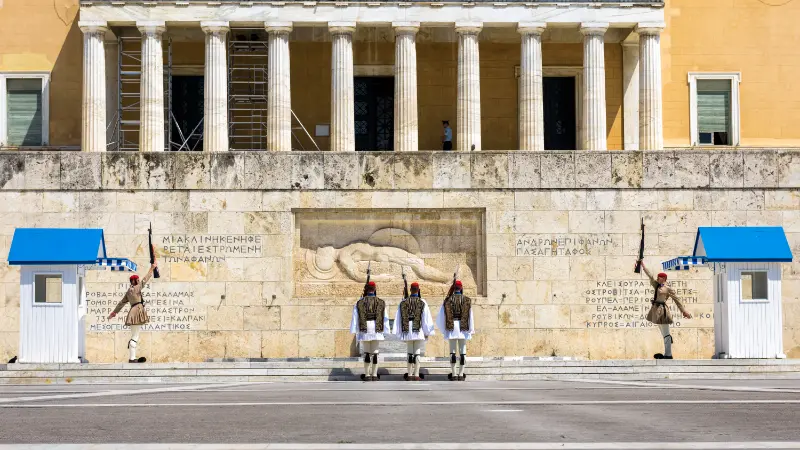
    Changing Honor Guard Syntagma Square Athens Greece

    National Garden

    Enter the National Garden from the Syntagma side and the city noise drops quickly. Shaded paths, mature planting, ponds and benches make it useful both as a sightseeing stop and as a practical break during hot weather. Do not expect a manicured palace garden in the formal French sense; its appeal is the feeling of moving through a green, irregular urban landscape in the middle of Athens.

    Zappeion and the route south

    The Zappeion sits immediately south of the garden and creates a natural continuation toward the Panathenaic Stadium. Even when you do not enter any building, the route is rewarding because neoclassical architecture, open space and archaeological fragments appear close together. It is also one of the easiest central walks for travellers who want a lower-intensity afternoon after museums or the Acropolis.

    Ermou, Plaka and the city centre

    From Syntagma you can walk west along Ermou toward Monastiraki or south-west into Plaka. That makes the square ideal for splitting a day into different themes: civic Athens first, shopping or food later, and the historic centre in the evening. Avoid trying to do all of central Athens in one loop; use Syntagma as a hinge and choose one direction according to your energy.
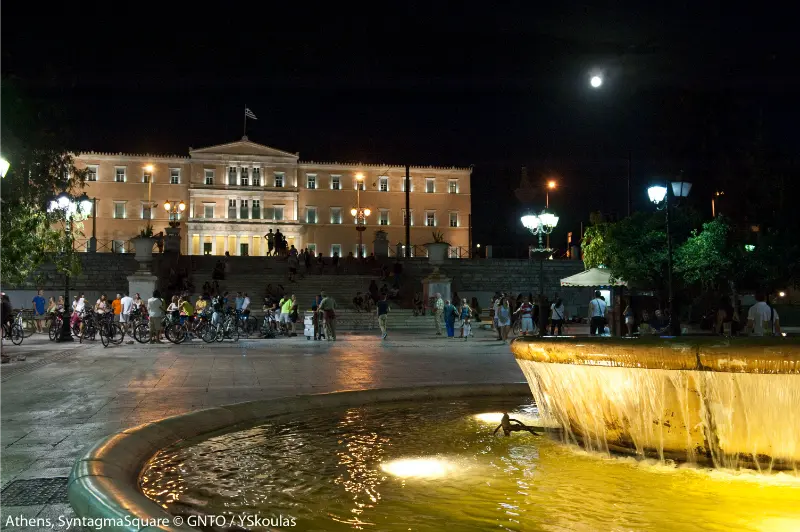
    Athens Syntagma Square

    Best time to visit

    Spring and autumn are ideal for the full walk. In summer, the National Garden is valuable for shade, but the open square and streets around the stadium can be punishing at midday. Winter is excellent for this route because it combines outdoor walking with cafés, shops and museums nearby. The garden has opening arrangements that can change, so check current local information if you plan an early or late visit.

    Whatever the month, use the weather you actually have. Strong wind, heat, rough sea or a local event can matter more than the seasonal average. On exposed walks, beaches and archaeological terrain, an early start often improves both comfort and photography. Keep one flexible block in the day so a delay does not force you to rush the experience you came for.

    How to get there and move around

    Syntagma metro station is served by Lines 2 and 3 and is one of the easiest arrival points in central Athens. The airport connection on Line 3 also makes it important for many visitors on their first and last day. Once here, walk: Parliament, the garden, Zappeion, Plaka and Ermou are all close. Taxis are more useful for luggage than for moving between these central sights.
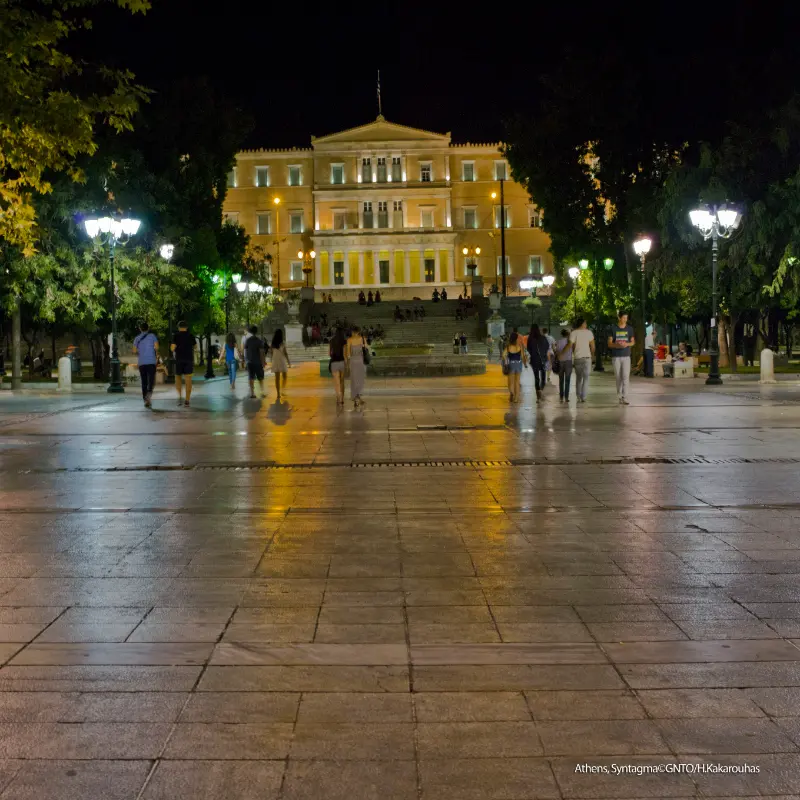
    Athens Syntagma H Kakarouhas

    Do not judge transport only by kilometres. Island roads, central-city traffic, parking searches and walking access can turn a short map distance into a much longer transfer. When public transport is part of your plan, recheck the current timetable close to travel day. When driving, save the parking point in advance and avoid entering pedestrian lanes simply because navigation software suggests the shortest line.

    Where to stay

    Hotels around Syntagma are convenient if you value transport, airport access and the ability to walk in several directions. They can be expensive, and rooms facing major roads may be noisy. The area suits short stays and first-time visitors especially well. If atmosphere matters more than transport efficiency, compare Plaka or Koukaki; if nightlife matters more, Monastiraki or Psyrri may fit better.

    Before booking, zoom in on the exact property location rather than trusting the neighbourhood name. Check stairs, road access, bus stops, late-night noise and the walk back after dinner. A room that looks only 500 metres from a beach or landmark can feel very different when the route is steep, unlit or exposed to traffic. Location should support the way you actually plan to spend your days.

    Food and evening atmosphere

    Syntagma itself is more of a transport and shopping centre than a food destination, but excellent options begin within a few minutes in every direction. Walk toward Plaka for traditional and tourist-oriented choices, Kolonaki for polished cafés and restaurants, or Monastiraki and Psyrri for a broader evening scene. The practical advantage is choice rather than one iconic dish.

    Greek travel is better when meals are given enough time. Avoid planning dinner as a 45-minute gap between attractions. Sit down after the hottest part of the day, order at the pace of the place and keep room for an unplanned walk afterwards. In heavily visited areas, moving one or two streets away from the obvious viewpoint often changes both prices and atmosphere.

    A realistic one-day plan

    Arrive at Syntagma in the morning, see the Parliament façade and Monument to the Unknown Soldier, then enter the National Garden. Walk slowly south to Zappeion, continue to the Panathenaic Stadium exterior or visit it if it interests you, and then loop back through the Mets edge or toward Plaka. After lunch, choose either Ermou and Monastiraki or museums along Vasilissis Sofias. This route keeps walking logical and avoids unnecessary backtracking.

    Build the day around one priority and one secondary activity. If the priority takes longer, drop the secondary stop without regret. This is especially important on islands, where parking, buses, wind or heat can alter timing. A good itinerary should survive a 30-minute delay without collapsing into stress.

    Families, mobility and accessibility

    Families should plan around shade, toilets, meal timing and realistic walking stamina rather than adult sightseeing speed. For travellers with reduced mobility, accessibility varies sharply between modern promenades and historic lanes, rocky beaches or stair-heavy villages. Contact accommodation or the relevant site directly if step-free access is essential; generic labels such as “easy walk” are not precise enough for important mobility decisions.

    Common mistakes to avoid

    • Standing in Syntagma for too long instead of using it as a route hub
    • Relying on an old guard-ceremony timetable without checking
    • Crossing exposed streets at midday in a heatwave
    • Assuming the National Garden is a formal palace garden
    • Adding Monastiraki, Plaka, Kolonaki and the Acropolis to the same rushed walk

    Most of these mistakes come from the same habit: planning from a map without considering how the place behaves in real life. A few minutes spent checking terrain, weather, parking and current access rules can save hours of frustration. Keep screenshots of essential transport information, but do not rely on an old screenshot when conditions or seasonal schedules may have changed.

    What to combine with it

    Pair this walk with Plaka, Monastiraki or the museums east of the square. For the wider plan, use Athens Travel Guide and Plaka and Anafiotika Guide.

    Try to combine places that sit naturally on the same route. Crossing an island twice in one day or zigzagging through central Athens wastes energy that could be spent walking, swimming or eating. If two attractions pull you in opposite directions, split them across separate days even if a map makes them look close.

    FAQ

    How much time should I allow?

    A focused visit usually needs at least half a day once transport, walking, breaks and a meal are included. If this is one of your main priorities, protect most of a day instead of squeezing it between two distant attractions.

    Do I need a rental car?

    Not always. Central Athens neighbourhoods and well-connected island resorts can work very well without a car, while rural viewpoints and multi-stop island days are easier with one. Rent only for the days when it adds real flexibility.

    Is it suitable for families?

    Usually yes, but the right version of the day depends on age, heat and terrain. Beach facilities, shaded breaks and shorter walks matter more with young children than completing every viewpoint or monument.

    Should I book in advance?

    Book accommodation and high-demand experiences early in peak season. Ordinary walks and beaches generally do not need reservations, but organised loungers, popular restaurants, boat trips and guided visits can fill up.

    Can I trust old prices and timetables?

    No. Transport frequency, ticket systems, road access and seasonal services can change. Check official or local information shortly before the visit, especially if the entire day depends on one bus, boat or opening window.

    Final advice

    Use this guide as a framework rather than a timetable you must obey minute by minute. The best travel days in Greece usually have a clear structure but enough empty space for a longer swim, an unexpected church, a café you like or a sunset that convinces you not to move. Plan the logistics carefully, then give the place room to surprise you.

    More Athens museums, culture and neighbourhood guides

    Continue with Benaki Museum Athens Guide; Museum of Cycladic Art Athens Guide; Byzantine and Christian Museum Athens Guide; National Gallery Athens Guide; Kerameikos Archaeological Site Guide; Philopappos Hill Athens Guide; Stavros Niarchos Foundation Cultural Center Guide; Varvakios Market Athens Guide; Exarchia Athens Guide; Athens 4-Day Itinerary.
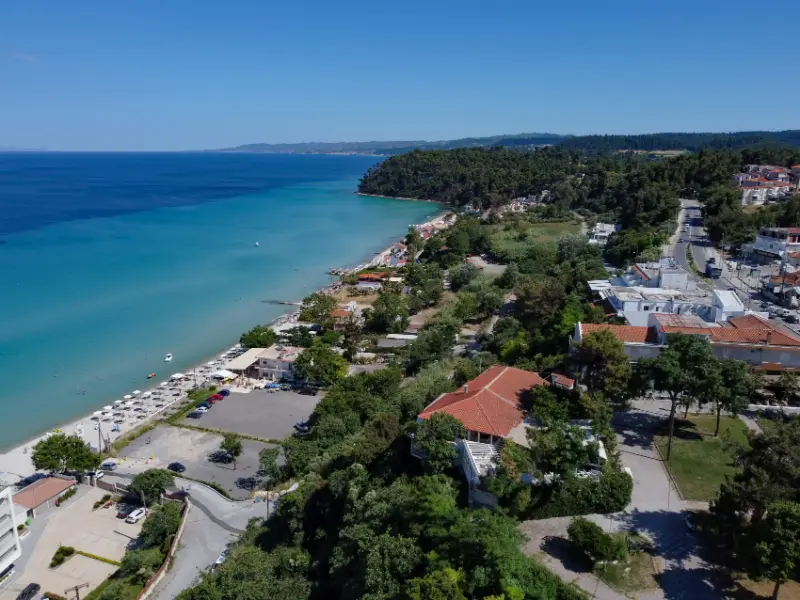
  • Kassandra Halkidiki Guide: Afitos, Kallithea, Beaches and a 5-Day Itinerary

    Kassandra Halkidiki Guide: Afitos, Kallithea, Beaches and a 5-Day Itinerary

    Kassandra is the western peninsula of Halkidiki and the easiest choice when you want classic beach holidays with a large concentration of hotels, restaurants, nightlife and organised services. It is also the closest of Halkidiki’s three peninsulas to Thessaloniki, which makes it attractive for shorter trips and for travellers who do not want a complicated road itinerary.

    That convenience can make Kassandra sound generic, but it is more varied than the resort strip suggests. Afitos preserves stone-built village character above the Toroneos Gulf, Kallithea is one of the main commercial and nightlife centres, Nea Fokea adds a historic seafront stop, and the southern half becomes more relaxed around Pefkochori, Chrousso, Possidi and the thermal-spring area of Agia Paraskevi.

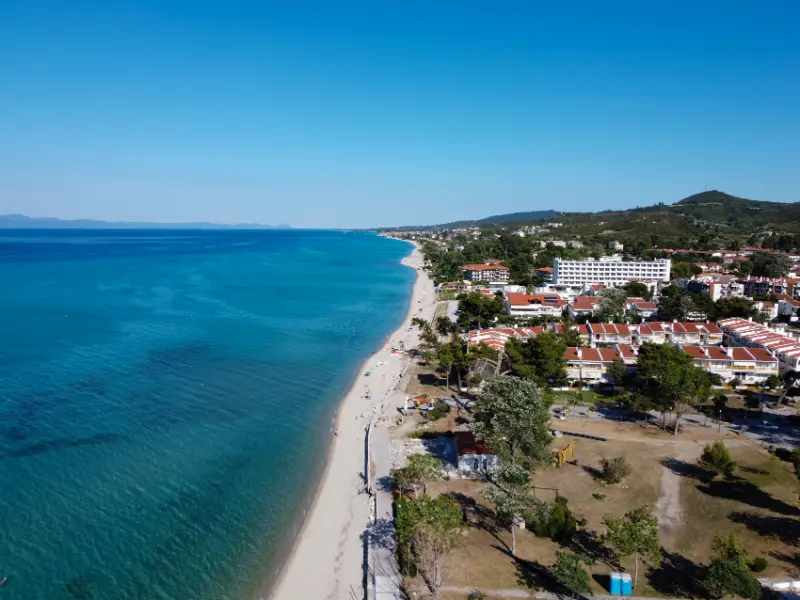
    Kassandra Coastline Near Town Nea Fokea Chalkidiki Greece

    Why it is worth adding to your itinerary

    The value is variety without extreme distances. You can combine one excellent swim, one village and one scenic drive in the same day without turning the itinerary into a race. The key is choosing fewer stops and giving the landscape time to change around you.

    What to see and do

    Walk Afitos slowly

    Afitos is the place I would protect from an overfilled beach schedule. The village sits on a natural balcony above the gulf and keeps stone houses, cobbled streets and a traditional square. The local tourism authority highlights its preserved character and Folklore Museum. Go early or late, walk without a rigid route and stay for a meal with a view rather than treating it as a 20-minute photo stop.

    Use Kallithea for energy and services

    Kallithea is one of Kassandra’s main commercial hubs and is known for nightlife as well as beach access. That makes it useful if your group wants restaurants and activity after dark. It is less suitable if your priority is silence. Choose accommodation a little away from club areas if you want the convenience without the late-night soundtrack.

    Add Nea Fokea

    Nea Fokea gives the itinerary a more local harbour feel and breaks up the resort rhythm. It is an easy stop when moving along the east coast and works well for an early dinner. Do not force it into the same day as every major village; its value is that it lets the trip slow down.

    Explore the southern beaches

    Pefkochori and Hanioti are busy bases with plenty of services, while beaches farther south can feel more spacious depending on season and wind. Rather than chasing a list, choose one beach for the morning and one village or sunset stop later. Kassandra works best when you stop measuring success by the number of pins visited.

    Drive to the Possidi side

    The west side gives different light, sea exposure and sunset possibilities from the east. Possidi and the surrounding coast are worth a dedicated half-day rather than a quick detour. Conditions can vary, so respect signs and currents and avoid walking onto exposed sand formations in rough weather.

    A realistic itinerary

    Part of the dayPlan
    Day 1Afitos village, beach and relaxed dinner
    Day 2Kallithea beach and evening nightlife if wanted
    Day 3Hanioti and Pefkochori with one long beach stop
    Day 4Southern loop and Agia Paraskevi area
    Day 5Possidi side, Nea Fokea or a flexible favourite beach

    Use this as a framework rather than a strict timetable. Northern Greece rewards flexibility: traffic, wind, mountain weather, ferry operations and opening hours can change the rhythm of a day. Protect the main experience and treat secondary stops as optional. That produces a better trip than racing to every pin saved on a map.

    How to get there and move around

    Kassandra is the easiest Halkidiki peninsula to reach by road from Thessaloniki, but peak-summer traffic can erase that advantage at popular times. A car is useful for village hopping, though travellers who want a simple resort holiday can choose one base and move less. Do not change hotels every night; the peninsula is small enough that one or two bases are usually sufficient.

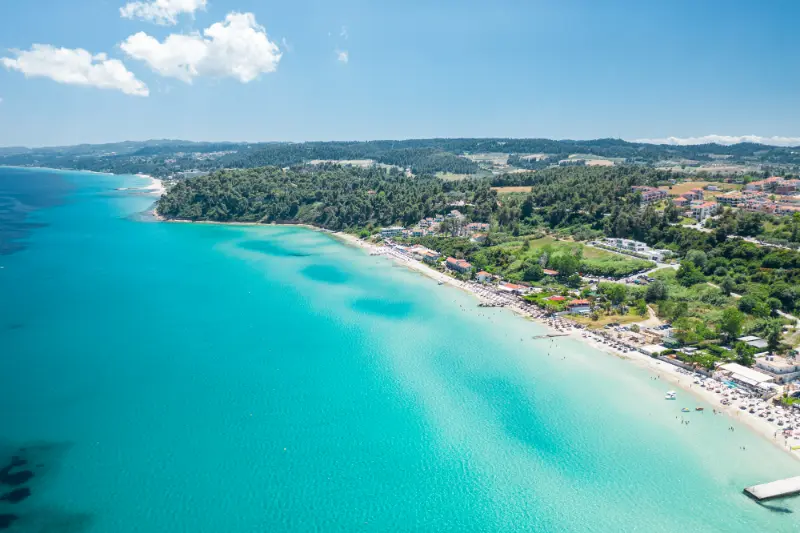
    Chalkidiki Greece Coastal Village Landscape Drone Shot Hanioti Seafront Kassandra Peninsula

    How to plan the driving

    Northern Greece often looks compact on a map, but coastal roads, village streets and summer traffic can slow a day dramatically. Choose one side of a peninsula for the morning and another for late afternoon instead of zigzagging between famous beaches. Download an offline map, keep fuel above half a tank on long loops, and treat scenic pull-offs as optional rather than mandatory stops.

    Beach-day rhythm

    A strong beach day is not necessarily the one with the most beaches. Arrive early at the place you care about most, swim while the water and parking are calmer, take a long lunch or shaded break, then move once in late afternoon. That rhythm usually produces more time in the sea and less time queuing behind rental cars.

    Best time to visit

    June and September are ideal for most travellers. July and August bring the fullest nightlife and warmest resort atmosphere, but they also bring higher demand, heat and traffic. May can be lovely for sightseeing with cooler water, while October is more weather-dependent but attractive for quiet road trips.

    Check the same-day weather and any official operating information shortly before you leave. Northern Greece can combine coastal heat, mountain cloud and strong wind within the same regional itinerary. Planning by conditions rather than by a rigid spreadsheet is one of the easiest ways to improve the trip.

    Food and local rhythm

    Afitos is good for a slower dinner, Kallithea and Pefkochori have the widest range of options, and smaller waterfront stops are better when you want fish without a party atmosphere. Avoid choosing every restaurant by online popularity; a simple taverna close to where you already are is often the better travel decision.

    Do not compress every meal into the smallest possible gap between attractions. A long lunch or early dinner is also a planning tool: it gives you shade, hydration and time to decide whether the next stop still makes sense. This matters even more on driving, hiking and boat days.

    How to combine it with nearby places

    After Kassandra, spend several nights in Sithonia if you want more scenic beach-hopping. For a cultural and island contrast, continue east to Ouranoupoli and Ammouliani.

    When building a longer route, group places by geography. A northern-Greece itinerary becomes tiring when each day starts with a two-hour transfer in the opposite direction. Two or three nights per base usually produces more walking, swimming and local evenings than changing hotels every day.

    Where to stay

    Choose accommodation according to the part of the day you value most. If evenings on foot matter, stay near the village or waterfront centre. If road-trip access and parking matter more, a property on the edge can be the smarter choice. Read parking details carefully: “parking nearby” is not the same as a guaranteed private space.

    Practical planning notes

    Download an offline map before leaving the main city or resort area. Mobile coverage is generally good but can weaken in mountains, wetlands and isolated coastal stretches. Save the official destination name and your accommodation pin, and carry a charging cable or power bank on days with heavy navigation and photography.

    Carry water, sun protection and a light layer even when the forecast looks simple. Coastal wind can cool a boat quickly, while archaeological parks and wetland roads can be completely exposed. In hiking areas, replace casual footwear with shoes that have reliable grip. Small preparation choices make a bigger difference than adding another attraction.

    If you are travelling with children or older relatives, judge difficulty by heat, surfaces and standing time rather than kilometres. A short archaeological site under strong sun can feel harder than a longer shaded walk. Build in benches, café stops and permission to skip the final viewpoint.

    Common mistakes to avoid

    • Choosing Kallithea when you actually want silence
    • Driving the full peninsula every day from the same northern base
    • Skipping Afitos because it is not directly on a famous beach
    • Expecting every beach to have identical wind and sea conditions
    • Parking in residential lanes without checking restrictions
    • Treating Kassandra only as nightlife and missing its villages

    Official information

    For current opening hours, tickets, access rules or regional information, check Visit Kassandra – official municipal tourism site shortly before the trip. I prefer official sources for variable details because transport timetables, admission prices and seasonal operations can change after older travel articles were published.

    Frequently asked questions

    Is Kassandra good for families?

    Yes. It has extensive accommodation and organised beaches; choose a quieter base rather than the main nightlife areas.

    Peninsula Of Kassandra Halkidiki Greece

    Where is the best nightlife?

    Kallithea is the best-known hub, with additional evening activity in larger resort towns such as Pefkochori and Hanioti.

    How many days are enough?

    Three days covers the main highlights; five gives you time to enjoy beaches rather than simply drive between them.

    Should I stay in Afitos?

    Yes if atmosphere and walkable evenings matter. It is one of Kassandra’s most distinctive villages.

    Can I visit without a car?

    Yes for a resort-based holiday, but a car makes village and beach exploration much easier.

    Final advice

    Build the day around one clear reason for coming, then let the surrounding region add depth. Northern Greece is especially rewarding when you leave margin for a good meal, a change in weather or a place you did not expect to enjoy. The goal is not maximum coverage; it is a route that still feels enjoyable on the final day.

    For the wider picture, continue with Halkidiki Travel Guide, Sithonia Guide, Ouranoupoli Guide. These guides connect this stop to the rest of the region without unnecessary backtracking.

  • Fiskardo Kefalonia Guide: Harbour, Beaches, Boat Trips and a 2-Day Stay

    Fiskardo Kefalonia Guide: Harbour, Beaches, Boat Trips and a 2-Day Stay

    Fiskardo is Kefalonia’s most polished harbour village, a compact waterfront of colourful buildings, yachts, cafés and restaurants surrounded by forested hills. It is also historically distinctive because much of the village retained older architecture after the destructive 1953 Ionian earthquake. The result is attractive enough for a quick stop, but Fiskardo works better if you give it at least one evening, when day-trippers leave and the harbour becomes slower and more atmospheric.

    This guide is designed to help you decide not only what to see at Fiskardo Kefalonia Guide, but how to fit it into a wider Greece itinerary without wasting time. For the bigger picture, use the Kefalonia Travel Guide. You can also continue with the Ithaca Travel Guide when it matches your route.

    Why Fiskardo Kefalonia Guide is worth adding to your trip

    The strongest reason to include Fiskardo Kefalonia Guide is that it offers a very specific experience rather than another generic stop. The landscape, local rhythm and practical details are different enough to justify dedicated time. It also works well as part of a larger route, so you do not need to build your entire holiday around it. The key is to give the place enough time to move beyond the first photograph: walk a little farther, arrive outside the busiest hour and leave space for a meal, swim, museum room or viewpoint that is not dictated by a checklist.

    Top things to see and do

    • the colourful harbourfront
    • older Ionian architecture
    • Foki and Emblisi beaches
    • walking paths around the peninsula
    • small-boat exploration
    • easy links toward Ithaca and the northern Ionian

    The colourful harbourfront

    The colourful harbourfront is one of the defining parts of the visit. Rather than treating it as a five-minute photo stop, look at how it fits the setting around it. Arriving earlier or later than the main rush usually changes the experience significantly. Take time to notice access, shade, wind, pedestrian routes and where people naturally congregate; moving just a short distance from the obvious focal point often gives you a quieter view and a better understanding of the place.

    Older ionian architecture

    Older ionian architecture is one of the defining parts of the visit. Rather than treating it as a five-minute photo stop, look at how it fits the setting around it. Arriving earlier or later than the main rush usually changes the experience significantly. Take time to notice access, shade, wind, pedestrian routes and where people naturally congregate; moving just a short distance from the obvious focal point often gives you a quieter view and a better understanding of the place.

    Foki and emblisi beaches

    Foki and emblisi beaches is one of the defining parts of the visit. Rather than treating it as a five-minute photo stop, look at how it fits the setting around it. Arriving earlier or later than the main rush usually changes the experience significantly. Take time to notice access, shade, wind, pedestrian routes and where people naturally congregate; moving just a short distance from the obvious focal point often gives you a quieter view and a better understanding of the place.

    Walking paths around the peninsula

    Walking paths around the peninsula is one of the defining parts of the visit. Rather than treating it as a five-minute photo stop, look at how it fits the setting around it. Arriving earlier or later than the main rush usually changes the experience significantly. Take time to notice access, shade, wind, pedestrian routes and where people naturally congregate; moving just a short distance from the obvious focal point often gives you a quieter view and a better understanding of the place.

    Small-boat exploration

    Small-boat exploration is one of the defining parts of the visit. Rather than treating it as a five-minute photo stop, look at how it fits the setting around it. Arriving earlier or later than the main rush usually changes the experience significantly. Take time to notice access, shade, wind, pedestrian routes and where people naturally congregate; moving just a short distance from the obvious focal point often gives you a quieter view and a better understanding of the place.

    Where to stay

    Stay near the harbour if you want to walk to dinner and enjoy the evening atmosphere. Travellers prioritising quiet and swimming may prefer accommodation just outside the centre. Parking can be awkward at busy times, so once you have a good space, explore on foot rather than moving the car for every short stop.

    When comparing accommodation, look at walking time and road access rather than distance in a straight line. On Greek islands, a hotel that appears close on a map can involve a steep climb, a busy road or difficult parking. For short stays, convenience is usually worth more than a small saving. For longer stays, choose a base that makes your most important day trips easy rather than trying to be equally close to everything.

    Best time to visit

    June and September are excellent for warm water and a lively harbour without the peak August intensity. In July and August, reserve accommodation and special dinners in advance. Early morning is the best time to see the waterfront at its calmest.

    Weather in Greece can change the character of a day even in summer. Wind is especially important on exposed islands and beaches, while heat matters at archaeological sites and on steep walking routes. Check the forecast the evening before and be willing to swap beach, museum and village days. Shoulder season travellers should also verify seasonal buses, boats and restaurant opening days because services are less frequent than in July and August.

    How to get there and get around

    For Fiskardo Kefalonia Guide, transport should be planned around the wider region rather than in isolation. Rental cars offer flexibility for beaches and villages, but they are unnecessary in compact pedestrian centres. Buses can be excellent on popular summer routes but are less useful for combining several remote stops in one day. Taxis solve short gaps but become expensive if used as a substitute for a full-day car. If boats are part of the experience, confirm departure point, return time and cancellation policy before committing to the rest of your itinerary.

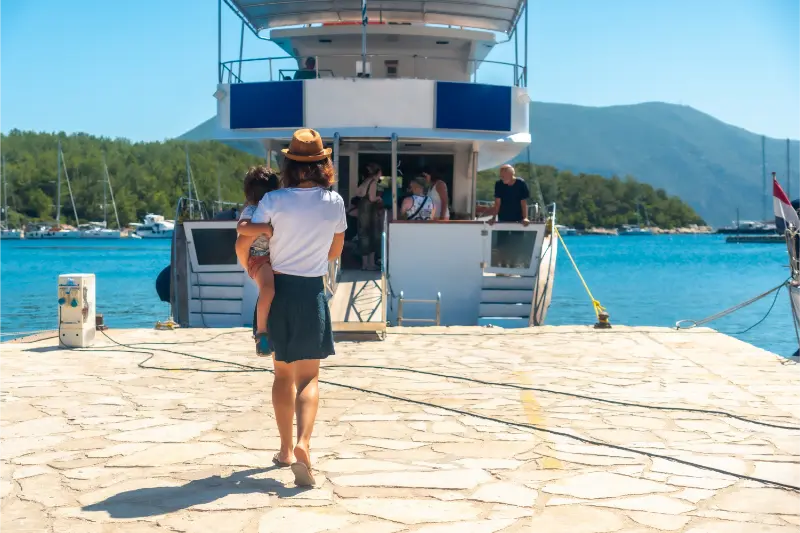
    Woman With Her Son Getting Boat Fiskardo Village Kefalonia Island Greece

    A realistic day plan

    Use the first day for the harbour, Foki or Emblisi, and a long waterfront evening. On day two, choose a boat excursion or drive toward Assos and Myrtos, returning to Fiskardo for a final walk once the busiest daytime traffic has faded.

    Keep at least one flexible hour in the plan. That buffer absorbs parking delays, a longer lunch, a change in sea conditions or simply the discovery of a place where you want to stay. Greece rewards travellers who protect the essential logistics but do not schedule every thirty minutes. The goal is a day that feels full without becoming a race.

    Food and drink

    Do not choose a restaurant at Fiskardo Kefalonia Guide only because it occupies the most photogenic terrace. Walk one or two streets away from the busiest viewpoint and compare menus, local clientele and whether dishes are cooked to order. Look for seasonal vegetables, grilled fish where appropriate, local cheeses, pies and regional wine. A long Greek lunch can be part of the sightseeing rather than a break from it, especially during the hottest hours of the day.

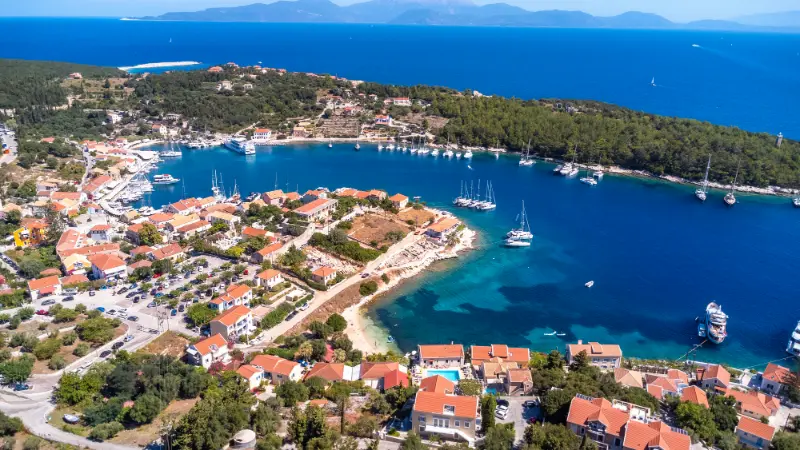
    Fiskardo On Kefalonia Island Greece

    What to pack

    • refillable water bottle
    • sun hat and high-SPF sunscreen
    • comfortable shoes with grip
    • light layer for wind or evening
    • swimwear and quick-drying towel when relevant
    • offline map and enough phone battery
    • small amount of cash for minor purchases

    Footwear matters more than many visitors expect. Whitewashed towns can have polished stone, archaeological sites are uneven, and beach access may involve rough paths or stairs. Pack for the actual terrain rather than the photograph. In high summer, carrying water is not optional, particularly where natural shade is limited.

    Common mistakes to avoid

    • arriving at the same peak hour as everyone else
    • assuming parking will be easy in July or August
    • ignoring wind and sea conditions
    • trying to combine too many distant stops
    • booking transport without checking the return journey
    • treating protected natural or archaeological areas like ordinary leisure spaces

    The most common planning mistake at Fiskardo Kefalonia Guide is overestimating how much fits into one day. Distances on a map are only part of the calculation: summer traffic, queues, steep access and the simple desire to stop for a swim or meal all add time. Build a route around two or three priorities and let secondary stops remain optional.

    Is it good for families?

    In most cases, yes, provided you adapt the day to heat, walking distance and water conditions. Families should start earlier, schedule shade and food before children are tired, and avoid building a day around a difficult late-afternoon return. Beaches with open sea require active supervision regardless of how clear the water looks. At museums and archaeological sites, a shorter focused visit is often more successful than trying to see every gallery or ruin.

    Is it worth visiting without a car?

    Often yes, but the answer depends on your base and season. Compact towns and major sights can be easier without a vehicle, while remote beaches and multi-stop road trips favour a car. If you prefer not to drive, design the itinerary around one well-connected base and use buses, organised excursions, boats or occasional taxis instead of trying to reproduce a driving itinerary with public transport.

    FAQ

    How much time do I need?

    Allow at least half a day for a focused visit and longer if you are combining it with swimming, a museum, a boat trip or a long meal.

    Do I need to book in advance?

    For accommodation, popular summer restaurants, major museums and organised boat trips, advance booking is sensible in peak season. Simple beach visits and town walks usually do not require reservations.

    What is the best time of day?

    Early morning is usually best for lower temperatures and fewer people. Late afternoon can offer beautiful light, but always consider transport, wind, closing times and the journey back.

    Can I visit in the shoulder season?

    Yes. May, June, September and early October are often excellent, although seasonal transport and businesses may operate on reduced schedules outside the core summer months.

    Should I trust old prices and timetables online?

    No. Entrance fees, boat schedules, buses and access rules can change. Recheck official or local information shortly before the visit.

    Final advice

    Build your visit to Fiskardo Kefalonia Guide around the conditions you actually find rather than a rigid online itinerary. Arrive with two or three priorities, verify any time-sensitive access information, and leave enough space to enjoy the setting. That approach gives you better photographs, calmer meals and a much more convincing sense of place than trying to collect every attraction in the shortest possible time.

    More Kefalonia in-depth guides

    Continue planning Kefalonia with Lassi and Makris Gialos Kefalonia Guide; Sami and Antisamos Kefalonia Guide; Skala Kefalonia Guide; Lixouri and Paliki Kefalonia Guide; Agia Efimia Kefalonia Guide; Fteri Beach Kefalonia Guide; Best Beaches in Kefalonia; Kefalonia Without a Car; Kefalonia with Kids; Where to Stay in Kefalonia.

  • Where to Stay in Kefalonia: Best Areas for Beaches, Couples, Families and Road Trips

    Where to Stay in Kefalonia: Best Areas for Beaches, Couples, Families and Road Trips

    Choosing where to stay in Kefalonia has more impact on the holiday than choosing between two similar hotels. The island is large, roads cross mountains and bays, and the places travellers most want to see are spread from Skala in the south-east to Fiskardo in the far north. A hotel that looks central on a zoomed-out map can still create hours of driving across a week.

    The right area depends on your travel style. Argostoli is strongest for services and transport, Lassi for easy beaches near the capital, Sami for caves and the east coast, Agia Efimia for a quieter north-east base, Fiskardo for harbour atmosphere, Assos for romance and scenery, Skala for a resort stay, and Lixouri for the Paliki peninsula. There is no universal winner; there is only a base that fits the itinerary.

    Where to Stay in Kefalonia at a glance

    AreaBest for
    ArgostoliTransport, restaurants, short stays and first/last nights
    LassiBeach convenience near airport and capital
    SamiCaves, Antisamos and east-coast touring
    Agia EfimiaQuiet harbour stay and access toward Myrtos/north
    FiskardoStylish harbour evenings and northern Kefalonia
    AssosScenery, couples and a small-village stay
    SkalaLong resort holiday and easy beach days
    LixouriPaliki beaches and repeat visitors

    Argostoli: best for transport and everyday convenience

    Argostoli is the island’s practical hub. It works particularly well for travellers without a car, short stays, late arrivals and anyone who wants restaurants and shops within walking distance. You trade direct access to a major beach for easier connections and a real town atmosphere.

    Use the Argostoli guide for a detailed look at the waterfront and city. Couples wanting beach access can stay in Lassi and visit Argostoli in the evening.

    Lassi: best easy beach base

    Lassi is one of the simplest first-time choices. Makris Gialos and Platis Gialos are close, the airport side is convenient and Argostoli is nearby. You can have a satisfying holiday without driving every day.

    The trade-off is atmosphere. It is a resort area, not a preserved historic harbour. Read the Lassi and Makris Gialos guide if you are choosing between convenience and character.

    Sami and Agia Efimia: best for east/north exploration

    Sami is stronger for transport, caves and Antisamos. Agia Efimia is smaller and more relaxed, with a yacht-harbour feel and easier access toward Myrtos. Both reduce the drive to several major sights compared with Skala or Lassi.

    A split stay of Lassi/Argostoli plus Sami or Agia Efimia is one of the most efficient ways to see Kefalonia without spending every day in the car.

    Places Of Greece Island Ionica Kefalonia Pittoresco Village Of Agia Efimia

    Fiskardo and Assos: best for atmosphere

    Fiskardo has the widest restaurant and harbour scene in the north and works well for travellers who enjoy polished evenings, boat activity and small nearby coves. The Fiskardo guide covers the practical details.

    Assos is smaller and more dramatic, with the castle peninsula and a picture-postcard bay. It is a beautiful romantic stop, but limited parking and a small accommodation stock mean booking location matters. See the Assos guide.

    View Assos Peninsula Greece Kefalonia

    Skala: best for a one-base resort holiday

    Skala is far from the north but excellent if your priority is a long beach, restaurants and a straightforward resort routine. It suits families and couples who want fewer hotel changes and only a couple of major excursions.

    Do not stay in Skala and then schedule Fiskardo, Assos and Myrtos on separate consecutive days unless you genuinely enjoy long drives. Group northern sights into one excursion or choose a split stay.

    Lixouri and Paliki: best for a different side of Kefalonia

    Lixouri is a strong choice for repeat visitors and beach lovers interested in Xi, Petani and the Paliki peninsula. It feels less like a standard first-tourist base and more like a second centre with its own routes and beaches.

    The Lixouri and Paliki guide explains how to build a west-coast stay without treating the peninsula as a rushed detour.

    When to go and how the season changes the experience

    For where to stay in Kefalonia, June and September are usually the easiest months to balance warm swimming conditions with less pressure on roads, parking and restaurants. July and August bring the widest range of seasonal services, boat trips and nightlife, but they also bring the strongest heat and the most competition for parking. May and October can be rewarding for walking and quieter travel, yet weather and seasonal opening hours become less predictable.

    Do not plan the entire trip from average temperature charts. Wind direction, recent weather and sea state can change the best beach for a particular day. Keep one or two flexible days and move the most weather-sensitive boat or west-coast plan when conditions look best.

    Driving, roads and parking

    Kefalonia rewards a car, but the driving is slower than the map suggests. Mountain roads, village streets, bends and summer traffic all add time. Build margin into every estimate, especially when you have a ferry, boat departure or restaurant reservation. Avoid stopping on blind corners for photographs and use formal viewpoints or safe pull-outs instead.

    Parking is usually the hidden problem at famous places. Arriving before the middle of the day can make Myrtos, Assos, Fiskardo and other popular stops much easier. If you dislike driving on steep roads, choose a base that reduces the number of cross-island days rather than forcing yourself through a seven-day road-trip schedule.

    Buses and car-free planning

    KTEL Kefalonias publishes seasonal local routes linking Argostoli with the airport, Lassi, Sami, Fiskardo, Myrtos and other destinations. Frequencies change through the season, sometimes substantially. Use buses for the routes they serve well and accept that a taxi, boat excursion or one-day car rental may be the sensible tool for places outside the main network.

    Before travelling, check the official KTEL Kefalonia local timetable. Do not rely on a blog timetable copied months earlier. For a full strategy, see my Kefalonia without a car guide.

    Food, water and the rhythm of the day

    A good Kefalonia day has space for lunch. Long coastal drives and beach parking feel much easier when you are not trying to fit six attractions around them. Keep water in the car, especially for remote beaches and hiking, and do not assume every scenic cove has a taverna or kiosk.

    Assos Village Azure Cove Kefalonia Greece

    Robola wine is one of the island’s best-known local products, while meat pies, seafood and simple grilled dishes appear widely. If wine tasting is part of the day, designate the driver or use a transfer; winding island roads are not the place to combine driving with alcohol.

    How to connect this guide with the rest of Kefalonia

    Start with the Kefalonia travel guide if this is your first visit. The Myrtos Beach guide, Assos guide, Fiskardo guide, Melissani and Drogarati Caves guide and Mount Ainos guide cover the island’s major landscape and sightseeing anchors in more depth. Use those pages to build clusters of nearby stops instead of crossing the island several times in one day.

    If you have seven nights, one base can work for a relaxed holiday but two bases usually reduce driving for travellers who want to see both the north and south. The point of a split stay is not to collect hotels; it is to move once so that several later days become easier.

    Booking experiences and boat trips

    Kefalonia has boat trips, sea kayaking, sailing, cave visits and day excursions, but availability is seasonal and weather-dependent. Compare duration, transport included, boat size, shade and cancellation terms before booking. A shorter high-quality trip can be better than an all-day itinerary with too many stops.

    Common planning mistakes to avoid

    • Trying to combine Myrtos, Assos, Fiskardo, Melissani, Drogarati and a sunset stop in one day.
    • Choosing accommodation only by nightly price without checking how much driving it creates.
    • Assuming every famous beach has sand, shallow water, shade and full facilities.
    • Saving a seasonal bus timetable and assuming it will still apply on different dates.
    • Booking a weather-sensitive boat excursion on the only free day of the trip.
    • Underestimating the sun on remote pebble beaches where natural shade may be limited.

    Frequently asked questions

    What is the best area for a first trip?

    Lassi or Argostoli are the easiest all-round choices, while Sami is excellent if caves and east-coast exploration are central to the trip.

    Where should couples stay?

    Assos, Fiskardo and Agia Efimia offer the strongest small-harbour or romantic atmosphere; Lassi is easier if beach convenience matters more.

    What is best for families?

    Lassi and Skala are easy resort bases, while Sami works well for families planning caves and east-coast days.

    Should I split my stay?

    For seven nights or more, two bases can reduce driving. A south/central base plus a north/east base is often efficient.

    Where should I stay without a car?

    Argostoli is the best transport hub, with Lassi a strong beach-oriented alternative.

    Is it worth staying in Fiskardo?

    Yes if northern Kefalonia and harbour atmosphere are priorities. It is less practical for repeated trips to the south of the island.

    More Kefalonia in-depth guides

    Continue planning the island with Lassi and Makris Gialos Kefalonia Guide; Sami and Antisamos Kefalonia Guide; Skala Kefalonia Guide; Lixouri and Paliki Kefalonia Guide; Agia Efimia Kefalonia Guide; Fteri Beach Kefalonia Guide; Best Beaches in Kefalonia; Kefalonia Without a Car; Kefalonia with Kids.

    A simple way to plan the day without rushing

    When I build a day around where to stay in Kefalonia, I start with one non-negotiable experience and treat everything else as optional. That might be a particular beach, a cave visit, a harbour dinner or a boat departure. I then add one nearby secondary stop and leave the rest of the day open. This sounds conservative on paper, but it is exactly what prevents Kefalonia from becoming a sequence of car parks and rushed photographs.

    Keep a weather backup in the same part of the island. If the sea is rough, switch from a beach to a village, cave or inland drive; if the afternoon is extremely hot, reverse the order and save the open-air stop for later. The best itineraries are not the ones with the most reservations. They are the ones that can absorb wind, traffic, a late lunch or the discovery of a beach you did not expect to love.

    What I would prioritise on a short visit

    With only three or four days on Kefalonia, I would not attempt complete island coverage. Choose one part of the island, add Myrtos or another major landmark if the route is sensible, and protect at least one slow beach afternoon. On a one-week trip, add a second base or two longer day trips. With ten days or more, the island finally gives you room for remote beaches, a mountain day and weather flexibility without sacrificing the evenings.

    That approach also improves value. Fewer long drives mean less fuel, fewer emergency taxis and fewer meals bought only because you are late. More importantly, it creates time for the small things that make an Ionian island memorable: swimming twice in the same bay because the light changed, staying for dessert, or stopping at a viewpoint when the road is quiet.

  • Corfu Travel Guide: Old Town, Beaches, Villages and a 5-Day Itinerary

    Corfu Travel Guide: Old Town, Beaches, Villages and a 5-Day Itinerary

    Corfu is one of the Greek islands that immediately challenges the stereotype of white Cycladic houses and dry summer hills. The Ionian landscape is greener, Corfu Town has strong Venetian character, and the island combines historic streets with coves, resort beaches, mountain villages and viewpoints over a deeply indented coast.

    For a first visit, the main decision is where to base yourself. Corfu is not tiny, and driving from one end to the other repeatedly wastes holiday time. I prefer to choose one base for a five-day trip or split the stay only if I have at least a week.

    How many days do you need in Corfu?

    Four days can work for Corfu Town plus two beach areas. Five to seven days are better because you can slow down, include inland villages and avoid choosing every day according to driving distance. On a two-week Greece trip, Corfu also deserves enough time to justify the flight or ferry connection.

    If you are still choosing between islands, compare Corfu with the options in my best Greek islands guide. Corfu suits travellers who value greenery, architecture and varied landscapes more than the classic Cycladic visual style.

    Corfu Town: start here

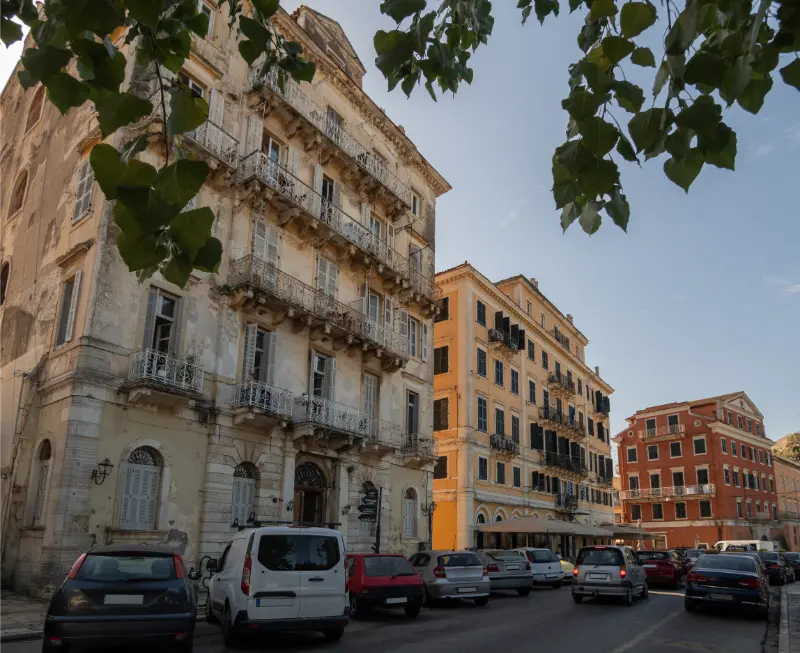
    The UNESCO-listed Old Town is the cultural heart of the island. Venetian fortifications, narrow lanes known as kantounia, arcaded streets and later British and French influences create a city that feels different from most island capitals in Greece. You can easily spend a full day without needing a car.

    Narrow Streets Old Town Kerkyra Island Corfu Greece

    Walk through the Liston area, explore the old lanes, visit one of the fortresses and leave time for squares and cafés. The town is best when you stop looking for a single route. Early morning and evening are especially pleasant because day-trip traffic is lighter and the heat is less intense.

    Old Fortress and sea views

    The Old Fortress is one of the clearest places to understand Corfu’s strategic position. Its walls and elevated areas provide views across the town and sea. Wear stable shoes and allow more time than a quick photo stop, particularly in summer.

    The New Fortress provides another perspective on the defensive history of the town. Opening access can change, so verify current information rather than assuming both fortresses will fit the same afternoon.

    Where to stay

    Corfu Town is ideal for travellers who prioritise restaurants, history, evening walks and public transport. It is also practical before an early flight or ferry. Beach lovers may prefer a coastal base such as the northeast, west coast or a resort area with direct sea access.

    Families should look beyond beach photographs and check practical details: road access, steep paths, supermarket distance and whether the hotel sits above the water with many steps. A sea view can be beautiful and still be inconvenient with a stroller.

    The west coast and Paleokastritsa

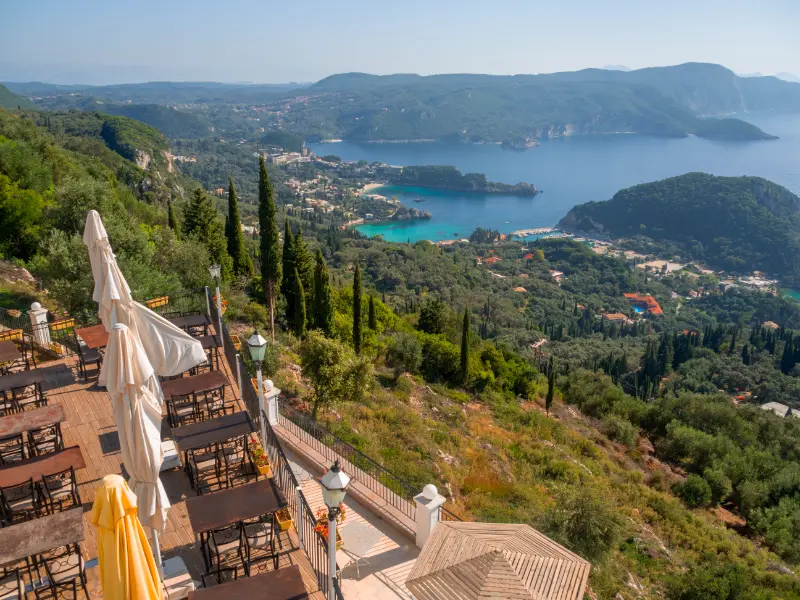
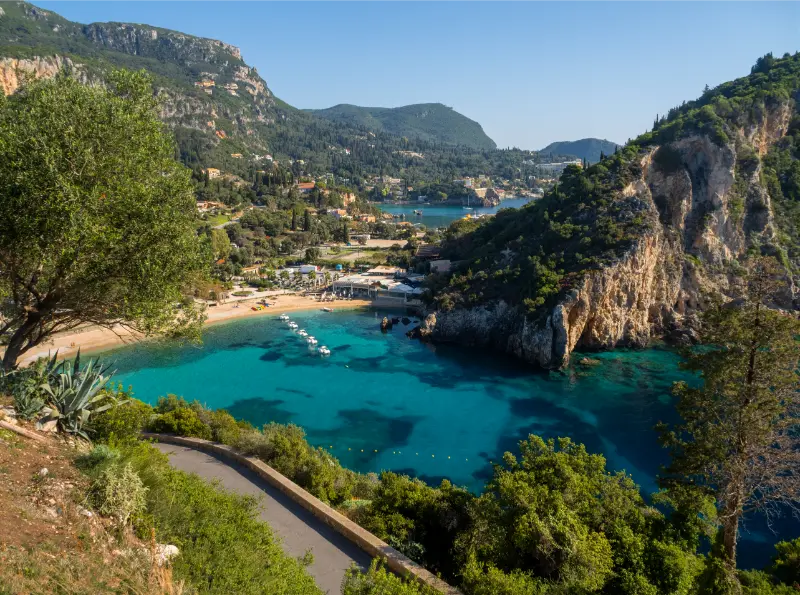
    Paleokastritsa is one of Corfu’s best-known coastal areas, with coves and dramatic green hills dropping toward blue water. It is popular for good reason, so visit early or outside peak hours if possible. Beaches vary in size and access, and boat trips can reveal small coves that are difficult to reach by road.

    Do not judge Corfu by one famous beach. The west coast has several areas with cliffs, sunset views and sandy stretches. Sea conditions can differ from the more sheltered east coast, so choose swimming spots according to weather rather than a fixed photo list.

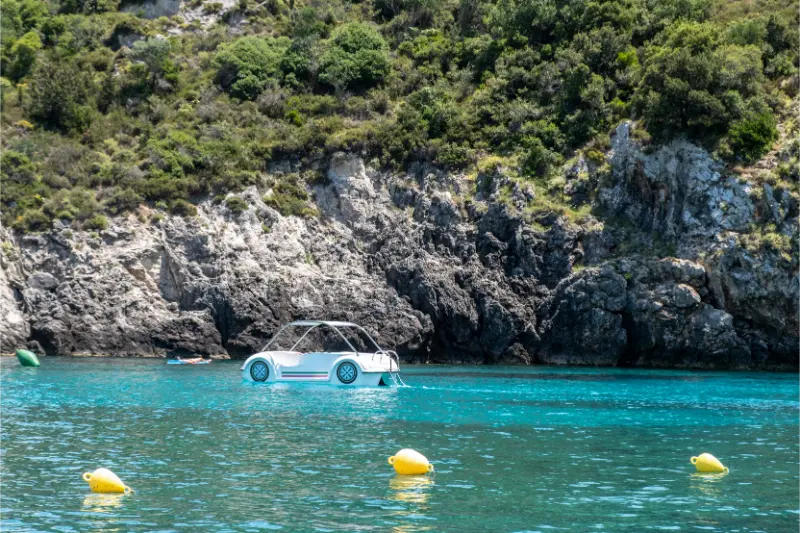
    Pedal Boat Like Car Floating Turquoise Sea Near Rocky Cliffs Corfu Island Greece

    Northeast Corfu

    The northeast coast is known for clear water, small bays and villages backed by green hills. It can feel polished and relaxed, with boat hire and waterfront tavernas forming part of the classic day. A small boat can be a wonderful way to explore, but only rent one if the provider gives clear safety instructions and conditions are suitable.

    Roads in parts of the northeast can be narrow. If you drive, keep expectations realistic and do not race between bays. The pleasure comes from spending several hours in one area.

    Inland villages and Mount Pantokrator

    Corfu’s interior gives the island depth. Traditional villages, olive groves and higher viewpoints are a good contrast to resort strips. Mount Pantokrator is the island’s highest peak and offers wide views in clear weather. The drive involves winding roads, so allow time and avoid treating it as a quick detour.

    A village lunch in the interior can be one of the most memorable meals of the trip. Look for seasonal dishes and local products rather than ordering the same menu everywhere.

    Corfiot food to try

    Corfu has dishes with clear local identity. Sofrito, pastitsada and bourdeto are names you will encounter on traditional menus, alongside seafood and broader Greek favourites. Kumquat products are also associated with the island.

    I would try local dishes at different types of places: one old-town restaurant, one village taverna and one coastal meal. That gives a better sense of the island than searching for a single definitive restaurant ranking.

    Getting around Corfu

    A rental car offers the most flexibility for beaches and villages, but it is unnecessary inside Corfu Town and can be inconvenient for parking. If you split the holiday between town and coast, consider renting only for the coastal days.

    Buses connect the town with many destinations, though frequency varies by route and season. Check current schedules locally. Taxis are useful for airport transfers and evenings when you do not want to drive after dinner. My Greece transport guide covers the broader logistics.

    A five-day Corfu itinerary

    Day 1: Corfu Town

    Explore the Old Town, Liston and one fortress. Have lunch in the centre, rest during the hottest hours and return for an evening walk. Do not pick up a rental car yet if you are staying centrally.

    Day 2: Paleokastritsa and west coast

    Head out early for swimming and viewpoints around Paleokastritsa. Add one nearby village or scenic stop, then return without trying to cover the entire west coast.

    Day 3: northeast coast

    Choose one or two bays, enjoy a long swim and have lunch by the water. If conditions are good, consider a boat outing. Keep the evening flexible.

    Day 4: villages and mountain views

    Drive inland, stop in traditional villages and continue toward higher viewpoints or Mount Pantokrator. This is a good day to focus on Corfiot food away from the busiest beach strips.

    Mount Pantokrator Nisaki Village Its Foothills Corfu Greece

    Day 5: favourite beach or slow town day

    Use the final day for whichever part of the island you liked most. This buffer is useful if weather disrupted a boat or beach plan earlier.

    Corfu with children

    Corfu works well for families because you can combine shallow beach time, short boat trips, town walks and easy food options. The main challenge is terrain: some beaches and hotels have steep access. Read recent property information and ask specifically about stairs before booking.

    Children usually enjoy the fortresses more than a sequence of formal museums. Turn the town into an exploration day, then keep the next day almost entirely about swimming.

    When to visit Corfu

    Late spring brings green landscapes and comfortable sightseeing temperatures. Summer provides the most reliable beach conditions but also the largest crowds and highest accommodation demand. September is attractive for warm sea temperatures with a slightly calmer rhythm, though weather is never guaranteed.

    The island also has life beyond the summer season, especially in Corfu Town. If beach clubs and boat services are central to your plan, confirm seasonal operations outside peak months.

    Corfu or Zakynthos?

    Both are Ionian islands, but the experience is different. Corfu has the stronger historic urban centre and a larger mix of villages and architecture. Zakynthos is particularly famous for dramatic coastal scenery and marine life. Read my Zakynthos travel guide if you are choosing between them.

    Common mistakes to avoid

    • Booking a beautiful hotel without checking how many stairs separate it from the beach.
    • Driving across the island every day because the map looks small.
    • Visiting only resort areas and missing Corfu Town.
    • Taking a boat out in unsuitable conditions or without understanding local rules.
    • Assuming all beaches have the same wind and sea conditions.
    • Renting a car for days spent entirely in the historic centre.

    Frequently asked questions

    Is Corfu good for couples?

    Yes. Corfu Town evenings, small coves, mountain viewpoints and waterfront restaurants make it easy to build a romantic trip without relying on nightlife alone.

    Is Corfu good for families?

    Yes, provided you choose accommodation and beaches with practical access. The variety is useful because bad beach weather does not ruin the whole holiday; the town, villages and cultural sights offer alternatives.

    Do I need to change hotels?

    Not for five days. One well-chosen base is simpler. For seven to ten days, splitting Corfu Town and a coastal area can reduce driving and create two different experiences.

    Why Corfu deserves time beyond the beaches

    Corfu works best when you let its history and landscape share the itinerary. Spend one day under Venetian walls, another in green hills and another swimming below cliffs. That combination is what makes the island distinctive. If you arrive expecting only a beach resort, Corfu is likely to give you much more than you planned.

  • Serifos Travel Guide: Chora, Beaches, Hiking and a 4-Day Itinerary

    Serifos Travel Guide: Chora, Beaches, Hiking and a 4-Day Itinerary

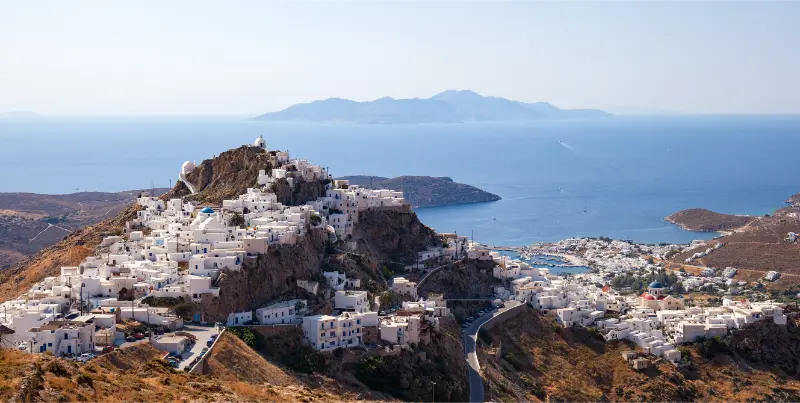
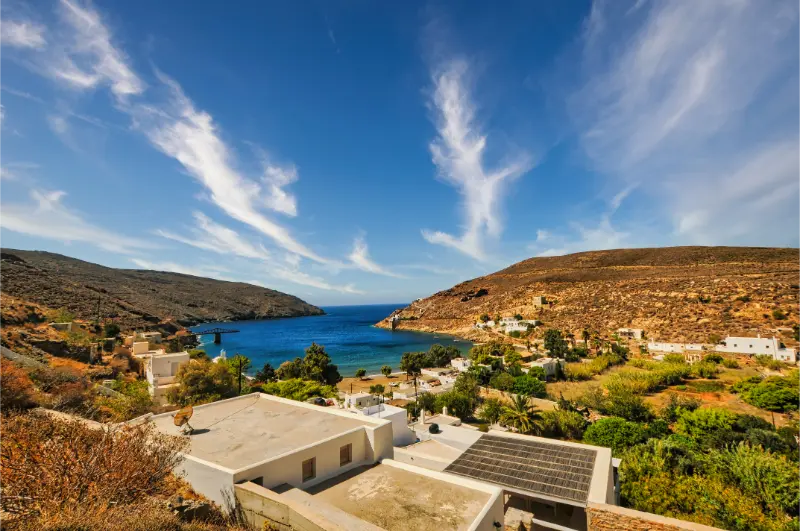
    Serifos is a Cycladic island for travellers who want the architecture and blue water of the Aegean without turning every day into a queue for famous viewpoints. Its hilltop Chora is dramatic, its coastline is full of coves, and the old mining landscapes in the south-west give the island a rougher, more industrial history than many neighbours.

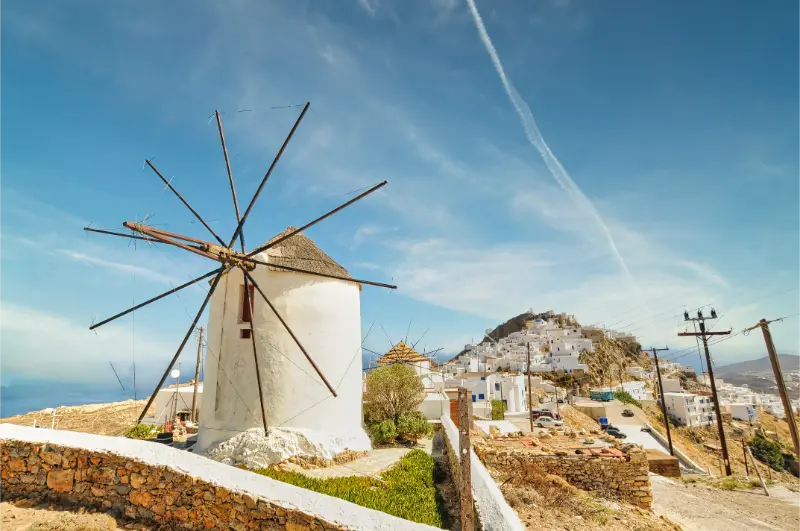
    Windmill Chora Village Serifos Island Greece

    I would choose Serifos for a slower four- or five-day stay, especially after a busier island. It combines well with Sifnos or Milos, but it deserves more than a one-night ferry stop because the best parts are spread beyond the port.

    Why visit Serifos?

    Serifos feels compact without feeling tiny. Livadi provides practical services and an easy arrival, Chora rises dramatically above it, and beaches fan out around the coast. The island still rewards spontaneous drives and unplanned swims.

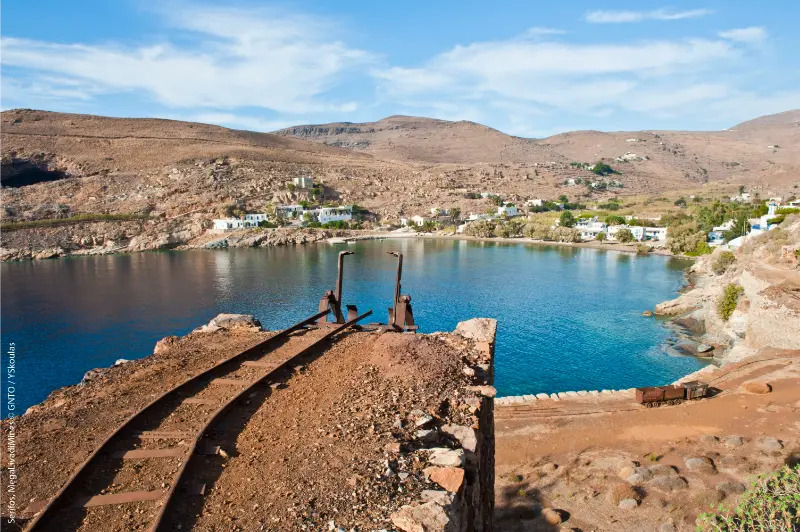
    Its mining heritage makes it visually distinctive. Around Megalo Livadi and the south-west you can see traces of the island’s industrial past beside a beautiful bay, reminding you that Cycladic life was never only tourism.

    Serifos Mega Livadi Mines

    Where to stay

    Your choice is mainly between convenience by the port, atmosphere in Chora and quieter beach-oriented accommodation elsewhere.

    Livadi

    Livadi is the port and most practical base for restaurants, buses, car rental and ferry days. It is ideal if you want to minimise logistics.

    Chora

    Stay in Chora for sunset views, whitewashed lanes and a more atmospheric evening setting. Be prepared for steps, slopes and less convenient luggage handling.

    Livadaki area

    The area around Livadaki and nearby beaches can suit travellers who want swimming close to accommodation while remaining near the main port services.

    Megalo Livadi and the south-west

    This quieter part of the island appeals to repeat visitors and road trippers who value landscape and seclusion over nightlife and convenience.

    Best things to do

    Climb through Chora

    Walk from the lower town toward the upper settlement and castle viewpoints. The route is steep but rewarding, especially late in the day when the light softens.

    Spend time at Psili Ammos

    Psili Ammos is one of Serifos’s best-known beaches, with clear water and a natural setting. Arrive outside peak hours if you want a calmer experience.

    Explore Megalo Livadi

    The bay and former mining area offer a very different landscape from Chora. Treat old industrial structures with caution and observe them rather than entering unstable ruins.

    Drive the island loop

    A rental car or scooter lets you connect beaches, chapels and villages efficiently. Distances are moderate, but roads can be narrow and exposed.

    Hike old paths

    Historic footpaths link settlements and reveal the island beyond the beach road. Choose a short route in warm weather and carry more water than you expect to need.

    Watch sunset from above Livadi

    The height difference between Chora and the port creates one of the island’s defining views. Give yourself time rather than arriving exactly at sunset.

    Beaches and nature

    Serifos has sandy beaches, pebbled coves and stretches of coast with very little development. Ganema, Vagia and Psili Ammos are common favourites, but wind exposure varies. On windy days, ask locally which side of the island is most sheltered.

    The rocky interior and old mining terrain are part of the appeal. This is not a lush island, yet the contrast between bare hills, stone walls and deep blue sea is precisely what makes it photogenic.

    Food and local character

    Food is straightforward and satisfying: grilled fish, local cheeses, vegetable dishes, capers, simple meat dishes and Cycladic sweets. Chora is atmospheric for dinner, while Livadi offers the widest practical choice.

    Do not schedule every meal at the waterfront. A small taverna in a village or beach bay can become a highlight because the island’s pace is as important as any single attraction.

    How to get there

    Serifos is reached by ferry, most commonly from Piraeus and from other western Cyclades islands. Conventional and faster ferries can have very different journey times, and the timetable changes seasonally.

    If your international flight lands late, avoid a tight same-day ferry connection. A night in Athens or near the port can be cheaper than losing a prepaid ferry and accommodation night after a delay.

    Getting around

    For beaches and the mining coast, a rental vehicle is useful. Scooters are popular but should be chosen only by experienced riders because wind, gravel and bends can turn a short ride into a demanding one.

    A bus network can cover the main settlements and selected beaches in season. Car-free travel is possible from Livadi, but it requires more patience and a simpler itinerary.

    How many days do you need?

    Three full days cover Chora, a beach circuit and the mining coast. Four or five days is better if you want slower beach time and a hike.

    A relaxed 4-day Serifos itinerary

    Day 1 – Livadi and Chora

    Arrive, settle in Livadi and go up to Chora in the late afternoon. Explore both lower and upper town, then stay for dinner.

    Day 2 – East and north beaches

    Choose Psili Ammos and one additional beach rather than racing around the whole island. Leave room for a long lunch.

    Day 3 – Mining coast

    Drive toward Megalo Livadi, stopping at beaches and viewpoints on the way. Spend time understanding the landscape rather than treating the old mining area as a photo prop.

    Megalo Livadi Serifos Island Greece

    Day 4 – Slow island day

    Pick a favourite beach, short hike or return to Chora. Keep the final day flexible around your ferry departure.

    Best time to visit

    June and September are excellent for warm weather with a calmer rhythm. July and August bring the busiest ferries and strongest summer atmosphere, but also more wind and higher accommodation demand.

    May and early October can be beautiful for walking, though some seasonal services may be limited. Always check ferry frequency before building a shoulder-season island-hopping route.

    Is it a good choice for families?

    Families can enjoy Serifos, especially when based near Livadi or an easy beach. The main challenge is Chora’s steep terrain and the logistics of moving between beaches without a car.

    For younger children, plan fewer stops and choose beaches with simple access. Avoid long exposed walks in the middle of hot days.

    Budget and booking tips

    Accommodation prices change sharply with season, location and room type. I prefer to compare a few bases before booking rather than choosing the first hotel that looks inexpensive. A cheaper room far from the places you actually want to see can cost more once transport, parking and lost time are included.

    For ferries, flights, rental cars, boat trips and guided activities, treat schedules and prices as dynamic. Check the operator again shortly before travel, especially outside July and August. Weather can affect sea transport, while seasonal businesses may open later in spring or close earlier in autumn.

    Mistakes to avoid

    Do not underestimate the climb in Chora or assume a hotel labelled “near Chora” is flat and easy. Ask about steps, parking and luggage access before booking.

    Do not treat abandoned mining structures as safe attractions. View them respectfully from secure areas and avoid entering unstable buildings or tunnels.

    Who Serifos suits best

    Serifos works best for travellers who are comfortable giving a destination enough time to reveal its character. If your priority is to collect as many islands or regions as possible in a single week, this may feel slower than expected. If instead you enjoy mixing beaches or landscapes with local food, village walks, cultural stops and unplanned pauses, the trip becomes much more rewarding. Couples can build quiet evenings around scenic towns, solo travellers gain flexibility to follow weather and transport conditions, and repeat visitors to Greece will appreciate seeing a side of the country that is less dominated by the most internationally famous stops.

    It is also a strong choice for independent travellers who like making decisions day by day. A rental vehicle can open up more options, but it should not turn the holiday into a driving challenge. Pick one main objective for each day, then add nearby stops only if time and energy allow. That approach keeps the itinerary useful for different ages and budgets and reduces the temptation to race from viewpoint to viewpoint.

    Planning the pace of your trip

    My preferred way to plan this kind of Greece trip is to separate transfer days from sightseeing days. Arrival and departure always take longer than the timetable suggests once luggage, check-in, parking, meals and possible delays are included. Treating those hours as real travel time makes the itinerary far more realistic. On full days, start early for exposed archaeological sites, long drives or hikes, then reserve the hottest part of the afternoon for lunch, swimming or rest.

    Keep at least one half-day flexible. Wind, heat, ferry changes or a beach you unexpectedly love can easily change priorities. A flexible block prevents one cancelled boat trip or poor-weather morning from becoming a problem. It also leaves space for the experiences that are difficult to schedule in advance: a village festival, a recommendation from a hotel owner, a quiet cove discovered on the road or simply the decision to stay longer over lunch.

    How to combine Serifos with the rest of Greece

    Serifos is especially logical with Sifnos, while Milos adds volcanic landscapes and a larger range of excursions.

    For a more active contrast, consider Andros once this guide is part of your route, but check seasonal ferry connections rather than assuming every Cyclades pair has a direct daily service.

    Frequently asked questions

    Is Serifos quieter than Santorini or Mykonos?

    Generally yes. It has tourism infrastructure but a far less urbanised, nightlife-driven feel.

    Where should I stay first time?

    Livadi is easiest for transport and services; Chora is best for atmosphere.

    Do I need a car?

    Not absolutely, but a car makes beach exploration and the mining coast much easier.

    How many days are enough?

    Four days is a comfortable first visit.

    Is Serifos good for hiking?

    Yes, especially outside the hottest summer weeks when old paths are more comfortable to explore.

    Practical final advice

    Build your days around geography rather than a checklist. Group nearby beaches, villages and sights together, leave room for a long lunch or an unexpected swim, and avoid crossing the same area repeatedly. This matters even more on islands and mountain roads, where short distances can take longer than they appear on a map.

    Carry water, sun protection and shoes suitable for uneven ground. Download an offline map before remote drives or hikes, and do not rely on mobile coverage in every cove or mountain village. If a route uses an unpaved road, confirm the conditions locally and check whether your rental agreement permits it.

    Most importantly, allow the destination to feel different from the headline islands. The value of this trip is not in reproducing Santorini or Mykonos somewhere else, but in experiencing its own landscapes, food, architecture and daily rhythm. A slower itinerary usually produces a better trip than adding another island simply because it fits on the map.

    Useful official information

    For destination updates and inspiration, consult the Greek National Tourism Organisation: Visit Greece – Serifos. Always recheck transport timetables and seasonal opening details close to your travel dates.

    More detailed Serifos guides

    For deeper trip planning, continue with these dedicated Serifos guides: Chora Serifos Guide; Livadi and Livadakia Serifos Guide; Mega Livadi and Koutalas Serifos Guide; Psili Ammos and Agios Sostis Serifos Guide; Ganema, Vagia and Koutalas Beaches Serifos Guide; Serifos Villages Guide; Serifos Hiking Guide; Serifos Without a Car; Serifos with Kids; Where to Stay in Serifos.

    Related itinerary: Milos, Sifnos and Serifos in 10 Days: Western Cyclades Island-Hopping Itinerary.

    Related itinerary: Kea, Kythnos and Serifos in 10 Days: Quiet Cyclades Island-Hopping Itinerary.
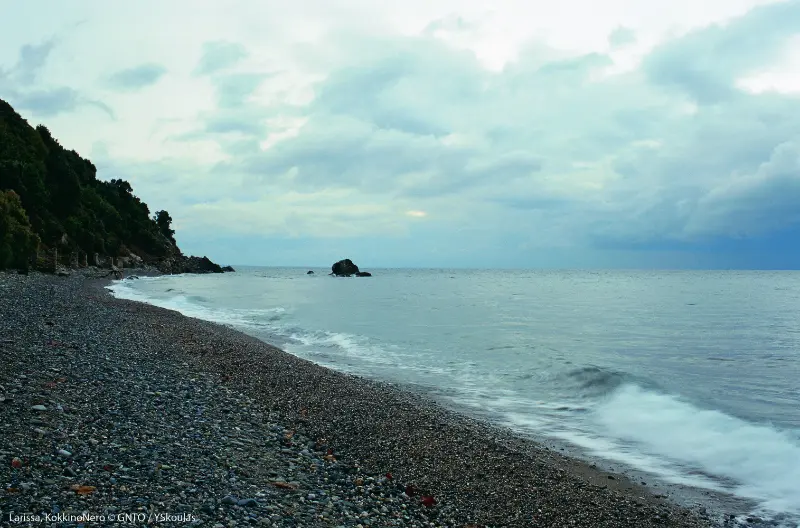
  • Paleokastritsa Corfu Guide: Beaches, Monastery, Boat Trips and Viewpoints

    Paleokastritsa Corfu Guide: Beaches, Monastery, Boat Trips and Viewpoints

    Paleokastritsa Corfu Guide is the focus of this guide. Paleokastritsa is one of Corfu’s classic coastal landscapes: steep green hills fall into a series of blue coves, while a monastery occupies a headland above the water. It is beautiful enough to attract heavy day-trip traffic, which means timing and transport choices matter almost as much as the scenery.

    Do not think of Paleokastritsa as a single beach. The area is a collection of coves and viewpoints spread along a hilly coast. A better visit combines one swim, the monastery, a short boat trip and an elevated viewpoint rather than trying to rush through every bay.

    At a glance

    Best forScenery, swimming, boat trips and first-time Corfu visitors
    Ideal stay1 full day, or 2–3 nights for a slower beach break
    Car needed?Helpful but not essential; buses and organised tours are alternatives
    Main challengeParking and crowds in peak summer

    Why this place deserves time in your Greece itinerary

    A good visit is less about collecting landmarks and more about understanding how the destination works. Paleokastritsa is one of Corfu’s classic coastal landscapes: steep green hills fall into a series of blue coves, while a monastery occupies a headland above the water. It is beautiful enough to attract heavy day-trip traffic, which means timing and transport choices matter almost as much as the scenery.

    My planning approach here is simple: build the day around the strongest local experiences, leave breathing room for weather and crowds, and use nearby destinations only when they add something genuinely different. Do not think of Paleokastritsa as a single beach. The area is a collection of coves and viewpoints spread along a hilly coast. A better visit combines one swim, the monastery, a short boat trip and an elevated viewpoint rather than trying to rush through every bay.

    What to see and do

    Main coves and beaches

    The water colour is the immediate attraction, but beach conditions differ from cove to cove. Some areas are organised with loungers and facilities, while others feel smaller and more enclosed by cliffs. Arrive early if you want a good beach position in July or August.

    Because the coast faces open water, sea temperature and wave conditions can vary. Have a flexible plan rather than insisting on a boat trip in poor conditions.

    Monastery of Paleokastritsa

    The monastery sits above the bays and adds a cultural stop to what could otherwise become only a beach day. Dress respectfully, keep voices low and remember that this is a religious site, not simply a viewpoint.

    Panoramic View Viewpoint Resort Town Paleokastritsa Corfu Greece

    The elevated setting provides an excellent sense of the coastline’s shape. Visit in the morning before the area reaches its busiest period.

    Small-boat excursions

    Local boats offer short trips to sea caves and small coves when conditions allow. These excursions are one of the best ways to understand the dramatic limestone coast from water level.

    Ask clearly about duration, swimming stops, life jackets and what happens if conditions change. A private boat gives flexibility, while shared trips are easier on the budget.

    Lakones and Bella Vista

    The hillside village of Lakones and its viewpoints provide the classic panorama over Paleokastritsa. The road is narrow in places and popular in high season, so drive slowly and use established parking rather than stopping in the road.

    Pair the viewpoint with a village coffee or lunch; it turns a photo stop into a more complete inland experience.

    Angelokastro combination

    Angelokastro, the Byzantine castle above Corfu’s northwest, can be combined with Paleokastritsa if you have a car and enough time. The climb and exposed setting make cooler hours preferable.

    For a one-day Corfu road trip, beach time in Paleokastritsa plus a castle or village stop is more realistic than trying to cross the entire island.

    Where to stay

    Near the main beach

    Best for travellers who want swimming and boat departures within easy walking distance.

    Hillside accommodation

    Better views and often quieter, but check steepness and whether you need a car for meals and beaches.

    Corfu Town

    Best if Paleokastritsa is only a day trip and you want museums, Old Town evenings and island-wide transport options.

    When choosing accommodation, look beyond the marketing label and check the exact map position, stairs, parking or transfer access, and walking time to the places you will use most. On Greek islands in particular, two hotels described as being in the same village can offer very different daily experiences because of gradients, pedestrian lanes or spread-out coastal development.

    How to get there and get around

    Road travel from Corfu Town is straightforward in distance but can be slow in summer traffic. Public buses are a good alternative for a day trip if schedules fit your plan. Drivers should arrive early, expect narrow approaches near popular viewpoints and avoid leaving the car where it blocks buses or local traffic.

    For short stays, it is usually better to choose one transport strategy rather than mixing a rental car, taxis and tours every day. If the destination is walkable, keep car days for the places that genuinely need one. If you do rent, photograph the vehicle at collection, understand fuel and insurance conditions, and never assume an attractive coastal track is suitable for a standard rental car.

    A realistic itinerary

    Morning

    Arrive early, visit the monastery and choose a cove for swimming before the main day-trip wave.

    Midday

    Take a short boat trip if the sea is suitable, then have lunch away from the most congested beach frontage.

    Afternoon

    Drive or taxi up to Lakones for the panorama. If you still have energy and daylight, add Angelokastro or a northwest village before returning to your base.

    Best time to visit

    Late May, June and September are excellent: warm enough for the sea, greener than late summer and generally less pressured. July and August are busiest, so early starts become important. In spring or autumn, weather can affect boat trips even when the landscape is beautiful.

    Weather is only one part of timing. Ferry frequency, boat excursions, seasonal restaurants and opening hours can also change outside the main summer period. In peak season the opposite problem appears: almost everything is operating, but parking, restaurant reservations and popular viewpoints require more patience. Build flexibility into the plan rather than trying to optimise every hour.

    Food and evenings

    Beachfront restaurants are convenient, but hillside and village tavernas often create a more relaxed meal. Corfiot dishes to look for include sofrito, pastitsada and bourdeto, though menus vary. A lunch in Lakones or another inland village pairs well with the coastal day.

    A useful rule for a better Greece trip is to separate the places you choose for a view from the places you choose for food. Sometimes they are the same restaurant, but not always. Walk one or two streets away from the most obvious waterfront or viewpoint, read the menu before sitting down, and leave room for a bakery breakfast, a simple taverna lunch and one longer dinner rather than making every meal an event.

    Practical tips for different travellers

    Couples

    Couples can make the destination feel more relaxed by avoiding the most obvious sunset rush and booking one slower evening with no transport after dinner. A room with a view is worthwhile only if you will actually spend time there; otherwise put the budget into location, a boat trip or a special meal.

    Families

    Families should check gradients, shade, beach entry and transfer logistics before booking. A beautiful old-town room can become inconvenient with a stroller, while a resort outside the centre may require repeated taxis. Keep the hottest hours simple and build in a swim, playground or rest period rather than expecting children to follow an adult sightseeing pace.

    Solo travellers

    Solo travellers benefit from walkable bases and public transport, but should still plan the last connection of the day rather than assuming buses or boats run late. Joining a small-group excursion can be useful for remote sights, while self-guided mornings are ideal for photography and museums.

    Road-trip travellers

    If this stop is part of a larger road trip, resist the temptation to check out every morning. Two or three nights in one base often saves more time than it costs because packing, parking and check-in repeatedly can consume the best hours of the day.

    Common mistakes to avoid

    • Treating Paleokastritsa as one beach and missing the wider landscape.
    • Arriving at midday in August and expecting easy parking.
    • Driving narrow viewpoint roads too quickly or stopping in unsafe places for photographs.
    • Booking a boat trip without checking sea conditions and duration.
    • Skipping Corfu Town because the coastal scenery feels more immediately dramatic.

    How to combine it with the rest of Greece

    Use Paleokastritsa as a complement to the Corfu travel guide and Corfu Old Town guide.

    Panoramic View Resort Town Paleokastritsa Corfu Greece

    The most efficient itinerary usually moves geographically rather than bouncing back and forth. Check ferry days, driving times and airport locations before fixing hotel dates. On an island trip, one extra night in a well-connected hub is often more valuable than adding another island simply to increase the destination count.

    FAQ

    Is Paleokastritsa worth a day trip?

    Yes. It combines some of Corfu’s most dramatic coastal scenery with beaches, a monastery and boat trips.

    Do I need a car?

    No, but a car makes viewpoints and nearby villages easier. Buses can work well for a simple beach day.

    How long should I spend there?

    A full day is ideal. Two or three nights suit travellers who want repeated swims and slower evenings.

    Are boat trips essential?

    No, but they add a valuable perspective on the caves and coves when sea conditions are good.

    Is Paleokastritsa good with children?

    Yes for beach time, but steep roads, steps and boat access require planning with very young children.

    Final advice

    Plan enough structure to protect the important parts of the trip, but leave room to change the order when weather, crowds or local advice suggest a better option. That flexibility is often what turns a busy Greece itinerary into a trip that actually feels like a holiday.

    More Corfu in-depth guides

    Continue planning Corfu with Kassiopi Corfu Guide; Porto Timoni and Afionas Corfu Guide; Glyfada and Pelekas Corfu Guide; Issos and Halikounas Corfu Guide; Achilleion Palace Corfu 2026 Guide; Kanoni, Pontikonisi and Mon Repos Corfu Guide; Best Beaches in Corfu; Corfu Without a Car; Corfu with Kids; Corfu Road Trip.

  • Areopoli and Limeni Guide: Stone Towers, Seaside Views and a Perfect Mani Base

    Areopoli and Limeni Guide: Stone Towers, Seaside Views and a Perfect Mani Base

    Areopoli and Limeni sit only a short drive apart, but they show two different faces of Mani. Areopoli is built in stone on higher ground, with tower houses, narrow lanes and a strong connection to the Greek War of Independence. Limeni sits directly on the water, where old stone buildings meet a small, intensely blue bay.

    Together they make one of the best bases for exploring the peninsula. Use this guide alongside my Mani road trip and Diros Caves guide to slow the region down rather than treating it as a drive-through between Monemvasia and Messinia.

    Why this place deserves its own stop

    Areopoli is the practical centre: restaurants, accommodation and access roads radiate from it. Its historic core remains compact and atmospheric, especially early and late in the day. Visit Greece notes that the first flag of the 1821 Revolution was raised in Taxiarchon Square on 17 March 1821, a date still central to local identity.

    Limeni provides the coastal counterpoint. There is no need for a long list of attractions. The reason to go is the setting itself—clear water, stone facades and evening light—plus the chance to swim or eat beside the sea when conditions are calm.

    What to see and do

    Taxiarchon Square in Areopoli

    This is the historic and social heart of Areopoli. The square and surrounding lanes are most enjoyable when you are not rushing to the next stop. Look at the stone architecture, churches and tower houses, then sit for coffee and let the town function as a real place rather than an outdoor museum.

    The stone lanes and tower houses

    Mani’s defensive tower-house tradition gives Areopoli its distinctive profile. Some structures are private or adapted for hospitality, so the experience is about walking the streets and reading the urban fabric rather than entering every building.

    Evening in Areopoli

    The old centre becomes especially appealing after the heat drops. Restaurants and bars fill the lanes, and the stone takes on warmer colours. Staying overnight lets you experience this atmosphere after day-trippers have left.

    Limeni waterfront

    Limeni is tiny compared with Areopoli, but its waterfront is one of Mani’s signature scenes. Walk slowly along the edge, find a safe swimming entry and leave time to sit rather than driving in, taking photographs and leaving.

    Swimming in clear water

    The sea around Limeni can be beautifully transparent. Access is not a broad sandy-beach experience, so water shoes can be useful. Keep clear of boats and respect private property around waterfront buildings.

    Sunset and dinner

    Limeni is popular around sunset because the low light works beautifully on the stone and sea. If you want a specific waterfront table in peak season, reserve. Otherwise, enjoy the view and eat in Areopoli where there is more choice.

    A realistic way to plan the visit

    Spend one night at minimum; two nights are better if you want Diros and southern Mani. On arrival, walk Areopoli late afternoon, eat locally and save Limeni for a separate swim or sunset.

    On the second day, visit Diros early, return for lunch, then choose either Limeni or a longer drive south toward Gerolimenas and Vathia. Do not attempt every village simply because distances look short on the map.

    Parking in historic cores can be awkward. Leave the car in a sensible area and walk rather than forcing it through narrow lanes in search of a door-to-door arrival.

    How to get there and move around

    A car is strongly recommended for Mani. Areopoli is connected by intercity buses, but the region becomes far less flexible without your own transport. Visit Greece currently lists bus journeys from Kalamata at roughly 1.5–2 hours, subject to timetable changes.

    Roads are paved but can be winding and visually distracting. If you are the driver, stop at viewpoints rather than slowing unpredictably on bends so passengers can take photographs.

    How much time do you need?

    Allow at least one full day and one night for Areopoli and Limeni together. Two nights create a much better base for Diros, southern Mani and beach stops without constant packing.

    Peloponnese Mani Limeni View 2

    Best time to visit

    Late spring and early autumn are excellent for walking, swimming and driving. July and August are lively but hot, and parking around popular waterfront areas becomes more competitive.

    Winter reveals a quieter, more austere Mani. Some seasonal businesses reduce hours, but Areopoli remains a useful base and the stone landscape can be very atmospheric.

    Food, breaks and the pace of the day

    Mani cuisine rewards simple choices: local cured pork such as syglino, regional cheeses, olives, pies and straightforward grilled dishes. Ask what is local rather than ordering the same island menu everywhere.

    Waterfront meals in Limeni are about location as much as food. In Areopoli you will usually find greater variety and a livelier evening scene.

    Families, mobility and practical comfort

    Areopoli’s old lanes are uneven in places but relatively compact. Limeni’s swimming access may involve rocks or steps rather than sand. Travellers with mobility limitations should choose accommodation and sea access carefully.

    With children, use Areopoli as the stable base and keep driving days short. A swim in Limeni and the caves at Diros create enough variety without a marathon of villages.

    What to combine with it

    The obvious combination is the Diros Caves, only a short regional drive away.

    For a longer route, connect Mani with Monemvasia to the east or Kalamata and Messinia to the west, but avoid doing both in one day.

    Common mistakes to avoid

    • Visiting both towns only as a quick photo stop
    • Trying to park in the narrowest parts of the old centre
    • Expecting Limeni to be a conventional sandy beach
    • Scheduling Diros, Vathia, Cape Tainaron and Monemvasia on the same day
    • Missing Areopoli in the evening by staying too far away

    Frequently asked questions

    Should I stay in Areopoli or Limeni?

    Areopoli is more practical for restaurants, parking options and road connections. Limeni is quieter and more romantic beside the sea. The best choice depends on whether convenience or waterfront atmosphere matters more.

    How long do I need?

    One night works for a short introduction, but two nights are much better if you want Diros and a drive into southern Mani.

    Can I swim in Limeni?

    Yes in suitable conditions, but access is generally from rocky or built edges rather than a large sandy beach. Watch for boats and slippery surfaces.

    Is Areopoli worth visiting in winter?

    Yes for architecture, food and atmosphere, though some tourism businesses operate reduced schedules. The stone landscape suits cooler weather.

    Do I need a car?

    For a full Mani experience, yes. Buses can get you to Areopoli, but reaching caves, villages, coves and viewpoints becomes much harder without a vehicle.

    Final advice

    Areopoli and Limeni work because they do not need to be over-programmed. Walk the stone lanes, understand the revolutionary history, swim when the sea is calm and give yourself a long meal. Mani becomes memorable when you stop treating every village as a box to tick.

    Peloponnese Mani Limeni View 3

    A few details that make the day better

    A strong itinerary is not built only around opening hours. Leave a margin for parking, slow roads, heat, photographs and an unplanned coffee. In the Peloponnese, travel times can look short on a map but feel longer once mountain bends, village traffic and archaeological walking are added. Build the day around one major experience and one secondary stop rather than trying to collect every nearby place.

    Carry water, sun protection and a light layer in the car even when the forecast looks simple. Archaeological sites can be exposed, caves can be cool, coastal forts can be windy and mountain towns can change temperature quickly. These small preparations matter more than adding another attraction to the schedule.

    For current prices, opening hours and access rules, use the official site or local authority close to the travel date. Greece is gradually changing ticketing, restoration schedules and visitor routes at many sites, and a detail copied from an older article can be the difference between a smooth day and a wasted drive.

    Photography, timing and road-trip strategy

    For photographs, the best light is usually early or late, but practical opening hours and road safety come first. Do not design the entire day around a single social-media angle. A quieter arrival, cooler walking conditions and enough time to understand the place will usually produce better photographs anyway. If the site is coastal, protect cameras and phones from salt spray and blowing sand; if it is archaeological, never climb walls or cross barriers for a cleaner composition.

    When this stop sits inside a road trip, calculate the day from door to door rather than from attraction to attraction. Parking, walking from the car, ticket queues, coffee, fuel and wrong turns all consume time. A two-hour sight may require four hours of the day once transport and recovery are included. This is why I prefer one major stop plus one lighter experience, especially in the Peloponnese where the roads themselves are part of the journey.

    Responsible travel and local etiquette

    Respect barriers, religious spaces, protected wetlands, private houses and working harbours. Do not fly a drone unless you have checked the current rules for the exact archaeological or protected area. Keep noise down in monasteries and memorial sites, dress appropriately where worship is active, and never remove stones, shells from protected zones or archaeological fragments as souvenirs.

    Spend locally when it makes sense: a coffee in the village, lunch after the site, a small family-run stay or a locally guided experience can spread the benefit of tourism beyond the headline attraction. At the same time, avoid treating every resident as part of the visitor experience. Mani villages, Messinian ports and mountain towns are living communities first and tourist destinations second.

    Old Traditional Village Vathia Mani Greece

    Who will enjoy this stop most?

    This stop works best for travellers who enjoy combining landscape with context rather than moving quickly between famous names. History lovers will find layers to unpack, photographers get strong visual material, and road-trippers gain a destination that breaks up longer drives. Travellers who prefer resort convenience may find the limited shade, uneven ground, changing access or simple infrastructure less appealing. Knowing that in advance helps you decide whether to give the place a full day or keep it as a shorter stop.

  • Where to Stay in Skopelos: Chora, Panormos, Glossa, Loutraki or Neo Klima?

    Where to Stay in Skopelos: Chora, Panormos, Glossa, Loutraki or Neo Klima?

    Where you stay in Skopelos changes the rhythm of the entire trip. Chora gives you the best evening choice and easiest first visit, Panormos puts the beach at the centre, Glossa adds village atmosphere and views, Loutraki is practical for some ferries, and Neo Klima offers a quieter west-coast compromise. No single area is best for everyone.

    Skopelos Island Village Neo Klima Hovolos Beach Sporades Greece

    For a stay of five nights or more, I would seriously consider splitting the trip. Three nights in Chora plus two or three on the west or north coast reduces daily driving and lets you experience two different versions of the island.

    Skopelos Chora: best first-time base

    Chora has the widest range of restaurants, shops and evening walks, plus the main harbour atmosphere. It is the easiest base for travellers who want variety and do not want every night to depend on a car.

    The trade-off is that the best-known west-coast beaches require transport. Parking can also be inconvenient in the busiest season, so check whether your accommodation has a realistic plan for guests with cars.

    Panormos: best for beach-first holidays

    Panormos is ideal if your priority is swimming and you want to walk from accommodation to the sea and dinner. The west-coast position also makes Milia and Kastani easy to reach.

    It is quieter in the evening than Chora and offers less cultural sightseeing on foot. For a couple or family who mainly wants beach days, that can be an advantage rather than a limitation.

    Glossa: best for views and village character

    Glossa gives you steep lanes, traditional architecture and a strong sense of being in a village above the sea. It is well placed for Agios Ioannis Kastri and the north.

    Book carefully if mobility is limited or you have heavy luggage. Hills and steps are part of the experience, and a “central” apartment can still require a demanding walk.

    Loutraki: best for port convenience

    Loutraki works well for travellers arriving or leaving on ferries that call at the northern port. It is flatter and simpler with luggage than Glossa.

    The atmosphere is more harbour-based and less picturesque than the hillside village above. It is a practical base, especially for a short stay, but not necessarily the place to choose if you want the classic old-town feel.

    Neo Klima and Elios: west-coast compromise

    Neo Klima/Elios offers a harbour settlement with access to the west coast and a quieter base than Chora. It can suit families and repeat visitors who already know the island.

    Check current transport if you are not renting a car. With a vehicle, the location is convenient for Kastani, Milia, Panormos and the northern villages.

    Stafylos and Agnontas: smaller alternatives

    Stafylos is useful for quick beach access close to Chora, while Agnontas offers a small harbour setting and tavernas. Both are better for travellers who are comfortable with quieter evenings.

    Before booking, check exactly how far the property is from the beach or bus stop. On a hilly island, distance alone does not show how easy the walk will feel.

    One base or two?

    One base is simplest for trips of three or four nights. For six or seven nights, combining Chora with Panormos, Neo Klima or Glossa reduces backtracking and creates two different evening experiences.

    Move only once. More frequent hotel changes add luggage logistics without enough geographic benefit on an island of this size.

    What to check before booking

    Confirm parking, air conditioning, stairs, road access, luggage transfer and distance to dinner. On Skopelos, a room 300 metres from the centre can still involve a steep climb.

    Sporades Skopelos Gourouni Lighthouse

    Read the most recent reviews for noise and access rather than only overall ratings. A beautiful view often comes with elevation, and that trade-off should be deliberate.

    Getting around Skopelos

    Skopelos is compact on a map but not flat. Roads curve through forested hills, and journey times are slower than straight-line distances suggest. A rental car gives the greatest flexibility for beaches and northern villages, while seasonal buses can work well for travellers based in Chora or along the main west-coast corridor.

    If you drive, allow extra time after dark and do not rush on narrow bends. If you rely on buses, check the current timetable after arrival because frequency changes through the season. Taxis are a useful backup for one-way trips, late dinners and locations away from the principal route.

    Where to stay and booking strategy

    For live availability, compare accommodation in Skopelos on Booking.com. Choose the map location before comparing room design: a hillside apartment may have a spectacular view but require steep walking, while a beach property may leave you dependent on transport for evening restaurants.

    For a first visit, Chora is the easiest all-round base. Panormos suits beach-first holidays, Glossa gives village character and north-island access, and Neo Klima offers a quieter west-coast compromise. A split stay becomes worthwhile at around six nights.

    Ferries and arrival planning

    Skopelos has no commercial airport, so most travellers arrive by ferry after flying to Skiathos or travelling overland to a mainland port. Visit Greece explains the common Skiathos-airport connection, while published 2026 ferry schedules show seasonal services from Mantoudi that can call at Skiathos, Glossa and Skopelos.

    Schedules change by date and weather, so treat any timetable in an article as a planning example rather than a permanent promise. Check the operator close to travel, confirm the exact Skopelos port on the ticket and leave buffer time when connecting a ferry with a flight.

    Sporades Skopelos Hora

    Common mistakes to avoid

    • Assuming every beach has sand, shallow water, shade and full services.
    • Booking a hillside room without checking stairs and luggage access.
    • Trying to see Chora, Glossa, Mamma Mia locations and several beaches in one day.
    • Using an old bus or ferry timetable instead of checking the current season.
    • Driving unfamiliar winding roads too quickly after dark.
    • Treating religious chapels as film props rather than active places of worship.

    Useful official information

    For destination background, use the Visit Greece. The Municipality of Skopelos is also useful for local notices. Recheck opening arrangements, transport, weather and any fire-related access restrictions shortly before the day you travel.

    Tours and activities

    Seasonal boat trips, transfers and guided experiences vary considerably by month. The widget below can help you see what is actually bookable for your dates. Compare meeting points, duration, cancellation rules and whether transport from your accommodation is included.

    Continue planning your Skopelos trip

    Final advice

    Skopelos works best when you leave enough empty space in the itinerary for the island itself. A road may be slower than expected, a beach may be perfect for another hour, or wind may make you change coast. Those changes are not failures; they are normal parts of travelling on a green, mountainous island.

    Check the next day’s weather and transport each evening, then choose one main experience and one secondary option. That simple habit prevents rushed driving and produces a trip that feels more like a holiday than a checklist.

    A realistic daily rhythm

    Start with the activity most sensitive to heat or crowds, whether that is a chapel climb, village walk or forest route. Use late morning and afternoon for the sea, lunch or a shaded harbour, then return to villages when temperatures fall. This rhythm reduces unnecessary driving and fits the way Skopelos is naturally experienced.

    Keeping one flexible block each day also protects the itinerary from wind and ferry changes. If the sea is rough, you can switch to Chora or Glossa; if the weather is calm, use the opportunity for a boat or beach day.

    Responsible travel on a green island

    Skopelos depends on healthy forest and clean coastal water. Respect fire restrictions, never leave rubbish at remote beaches and avoid parking where emergency or local access is blocked. On boats, follow protected-area rules and keep distance from wildlife.

    Support village shops, bakeries and family-run tavernas rather than treating the island only as scenery. Spending locally helps preserve the communities that make Skopelos different from a purpose-built resort.

    What to pack

    Bring shoes with grip for steps and short trails, water shoes for pebbled beaches, high-SPF sunscreen, a refillable bottle and a light layer for ferry decks or breezy evenings. An offline map is useful when mobile coverage becomes inconsistent in forested areas.

    A small dry bag protects phones and documents on boats, while a compact beach shade can be useful away from organised sections. Pack lightly enough that stairs in Chora or Glossa do not become a problem on arrival day.

  • Kokkino Nero and Stomio Guide: Thermal Springs, Pineios Delta, Beaches and North Larissa Coast

    Kokkino Nero and Stomio Guide: Thermal Springs, Pineios Delta, Beaches and North Larissa Coast

    Kokkino Nero and Stomio sit on a section of the Larissa coast where the landscape changes quickly from forested slopes to sandy beaches and the wetlands of the Pineios Delta. Kokkino Nero is known for mineral-rich springs within the village, while Stomio provides a wider beach, a small lighthouse and access to the river-mouth landscape. Together they make a strong alternative to the more continuous resort strip around Agiokampos and Velika.

    Larissa Kokkino Nero View 2

    The official Visit Thessaly guide to Larissa beaches specifically highlights Kokkino Nero’s springs, Stomio’s sandy coast and the beaches near the Pineios Delta. This is a place where you can combine swimming and nature, but wetland protection and river conditions require more care than at a simple resort beach.

    Quick planning summary

    • Best for: beach days with nature, families and travellers exploring Tempe/Kissavos.
    • Kokkino Nero: mineral springs, shaded village atmosphere and small coves nearby.
    • Stomio: sandy beach, shallow water in places and easy access to the delta zone.
    • Allow: one full day, or two nights for a slower coast-and-mountain break.
    • Nature rule: respect wetland habitats and do not drive onto dunes or river-mouth tracks.

    Kokkino Nero and its springs

    The name Kokkino Nero means ‘red water’, a reference to the iron-rich mineral water that stains surfaces around the springs. The village allows visitors to combine a thermal-water curiosity with an Aegean beach day, something unusual on this coast.

    Treat the spring area as a natural feature, not a modern spa complex. Surfaces can be wet and slippery, and mineral water should not be consumed in large quantities simply because it is described as therapeutic. People with medical concerns should seek professional advice rather than treating a travel stop as a health treatment.

    Small beaches beneath Kissavos

    Between the larger resort areas and Stomio, the coast is broken by coves such as Koutsoupia, Paliouria and smaller beaches. Forested slopes come close to the sea, giving this section a more enclosed feeling than the long open sand farther north.

    Roadside parking can be limited. Do not leave vehicles on blind bends or block property access in order to reach an uncrowded cove. If a beach access road looks rough after storms, turn around rather than damaging the car or track.

    Stomio and the lighthouse

    Stomio has a more open coastal setting and a small lighthouse that gives the seafront a recognisable landmark. The official regional guide notes wooden bridges over branches of the river on the way toward the beach, underlining how close the settlement is to the Pineios water system.

    This is a good family base when sea conditions are calm, but shallow water is not a substitute for supervision. River influence, wind and sandbars can alter local conditions, so observe the beach on the day rather than relying on general descriptions.

    The Pineios Delta

    North of Stomio, the Pineios reaches the Aegean after crossing Thessaly from the Pindus. The delta is an important wetland landscape of channels, reeds, agricultural fields and coastal habitats. It is best approached as a nature area rather than an off-road playground.

    Use established roads and viewpoints, keep noise low and avoid nesting or sensitive areas. Birdlife changes with season, and binoculars are more useful than trying to approach wildlife closely for photographs.

    Alexandrini, Messangala and Kastri-Loutro

    Continuing north brings quieter sandy areas and old-style holiday settlements. Alexandrini, Messangala and Kastri-Loutro are associated with simple family beach culture rather than polished resort architecture.

    These areas are useful if you want long sand and an uncomplicated day, but services vary by season. Carry shade and water outside peak summer and avoid assuming every beach bar or taverna will be open in May or October.

    Linking the coast with Tempe

    The northern coast connects naturally with the Vale of Tempe and Ambelakia. The Pineios river is the physical link: it passes through the famous valley before spreading into the delta near the sea.

    Do not try to visit Ambelakia, Tempe, several beaches and the full delta in a few hours. Choose one cultural stop and one coastal stop for a balanced day.

    A different option from Agiokampos

    For a long continuous beach and more resort infrastructure, compare this area with Agiokampos, Velika and Sotiritsa. Kokkino Nero and Stomio are better when you want springs, forest and wetland scenery mixed into the beach experience.

    Splitting two or three nights between the southern and northern Larissa coast is unnecessary for most visitors; choose the atmosphere that matches your trip and make the other area a day excursion.

    How much time to allow

    For Kokkino Nero and Stomio, the right amount of time depends on whether you are treating it as a destination or as part of a wider Thessaly route. A rushed stop can cover the headline sights, but the character of the area appears in the quieter details: a village square, a short walk, a local museum, a stretch of coast or a meal that is not squeezed between two long drives. A full day is enough to combine the springs, Stomio and one wetland or beach stop. Two nights work well if you also want Tempe or Kissavos without constant driving.

    Build the day around one or two priorities rather than a checklist. Thessaly is geographically compact on a map but mountain roads, river valleys and agricultural traffic can slow travel. If a visit starts feeling hurried, remove the least important detour rather than cutting time from the place you actually came to see.

    Getting there and getting around

    A car is the easiest option. Coastal roads are scenic but slower than the motorway, and small beach access roads can be narrow. If you are arriving from Larissa or Thessaloniki, compare the main-road approach with the scenic coast rather than assuming the shortest distance is fastest.

    A car gives the most flexibility, especially if you want to combine Kokkino Nero and Stomio with Tempe, Rapsani and Kissavos. Public transport can work for larger towns, but small villages, trailheads, archaeological sites and remote beaches are harder to connect efficiently. Recheck road conditions after severe weather and never assume a mountain shortcut is faster than the signed main route.

    Where to stay

    Stomio has a relaxed beach-base feel, while Kokkino Nero is more distinctive for springs and greenery. Agia offers more inland services and is useful if your trip also includes Kissavos villages.

    For a broader trip, Stomio, Kokkino Nero or Agia is the most practical reference point. Choose accommodation for parking, realistic driving time and the kind of evenings you want, not only for a low room rate. In rural Thessaly, a beautiful guesthouse can be excellent, but confirm check-in arrangements, heating or air conditioning, stairs and food options if you are arriving late.

    Check accommodation on the northern Larissa coast on Booking.com.

    Best time to visit

    June and September are especially attractive for swimming with fewer crowds. July and August are livelier. Spring and autumn are excellent for the delta and hiking, but sea temperatures and beach services may be limited.

    Spring and autumn generally reward travellers who want walking, archaeology and village life without peak heat. Summer is best when swimming or high mountain air is part of the plan, while winter can be atmospheric but requires more conservative driving and more attention to daylight, frost and snow. Always check the short-range forecast rather than planning only from seasonal averages.

    Food and local stops

    Expect fish, seafood, grilled dishes, salads and familiar Greek taverna food along the coast. In nearby mountain villages, chestnuts, fruit and more inland cooking become part of the experience.

    Treat food as part of the route rather than a final obligation at the end of a long day. In smaller places, lunch may be the most reliable meal, while evening choice can be limited outside weekends or summer. Ask what is local and in season, and avoid assuming that every regional speciality is available in every taverna.

    Families and different travel styles

    Stomio and the northern sandy beaches can work well for young children when conditions are calm. Bring shade, supervise constantly near water and keep delta walks short in hot weather because exposed wetland areas can feel much warmer than shaded village streets.

    Travellers who prefer slow travel should reduce the number of stops and spend more time in the meeting point of Kissavos forests, mineral springs and the northern Larissa coast. Photographers benefit from early and late light, while hikers need a separate time budget for route-finding and weather changes. Older travellers or anyone with limited mobility should verify gradients, steps and surface conditions at monasteries, old villages and archaeological sites before committing to a long circuit.

    Larissa Kissavos Mountain

    Safety and responsible travel

    Check sea conditions, avoid swimming near river outflow during strong currents or poor water conditions, and never drive onto soft sand or wetland tracks. Mosquito protection can be useful around the delta in warm months.

    Carry water, keep a charged phone and respect closures, barriers, private land and protected habitats. Do not enter unstable ruins or damaged buildings for photographs. In summer, wildfire restrictions can affect forest access; on the coast, wind and waves can change quickly; in mountain areas, fog and thunderstorms can reduce visibility far faster than on the plain.

    How to combine it with a Thessaly itinerary

    Pair the coast with Tempe and Ambelakia or Rapsani. If you prefer mountain scenery, use our Mount Kissavos guide on a separate day.

    If you are building a longer regional trip, connect this article with our Thessaly road-trip itinerary, where to stay in Thessaly and Thessaly with kids. Those guides help decide which stops belong in the same travel day and which are better treated as separate bases.

    Final advice

    Kokkino Nero and Stomio are most interesting when you treat the coast as an ecosystem rather than just a line of beaches. Springs, forest, river and sea all meet within a relatively small area.

    The best version of a visit to Kokkino Nero and Stomio is the one that leaves enough margin for the unexpected: a viewpoint, a conversation, a local product, changing weather or a road that takes longer than expected. That flexibility is not wasted time; it is often what turns a technically efficient itinerary into a trip that actually feels like Thessaly.

    Official information and planning checks

    For current beach and destination context, use Visit Thessaly’s Larissa coast guide and obey any local wetland, road or bathing advisories.

    Larissa Valley Of Tempi