Author: Jessica

  • Where to Stay in Anafi: Chora, Kleisidi, Roukounas or the Quiet Coast?

    Where to Stay in Anafi: Chora, Kleisidi, Roukounas or the Quiet Coast?

    Compare where to stay in Anafi, from practical Chora to Kleisidi, Roukounas and quieter coastal accommodation, with transport and noise tips.

    This guide is written for independent travellers who want practical detail rather than a checklist. Distances on Anafi are short, but heat, wind and limited transport can make a simple day more demanding than it appears on a map. The best plans leave margin and use Chora as the logistical anchor.

    Quick planning notes

    • Base yourself in Chora for the easiest transport and evening logistics.
    • Check the current ferry and local bus schedule close to travel.
    • Start exposed walks early and carry more water than you expect to drink.
    • Keep one alternative beach or walking plan for windy days.

    Chora for first visits

    Chora is the most practical base for most travellers because restaurants, shops, evening life and bus departures are concentrated there. It also gives you a cooler, more social evening after a beach day. The main downside is that you are not sleeping beside the sea, and some properties involve steep luggage access.

    the main village is the most practical base for most travellers because restaurants, shops, evening life and bus departures are concentrated there. It also gives you a cooler, more social evening after a beach day. The main downside is that you are not sleeping beside the sea, and some properties involve steep luggage access. In practice, the most useful approach is to slow down, confirm the day’s conditions locally and avoid linking too many stops into one itinerary. This creates time for swimming, shade, meals and unexpected delays rather than turning a small island into a race.

    Kleisidi for beach convenience

    Kleisidi suits travellers who want an easy sandy beach near their accommodation while remaining relatively close to the port and Chora. It can work especially well for families or couples who prioritise morning swims. Check the exact uphill or road connection to Chora before booking because ‘close’ on an island map may still require a transfer after dinner.

    Kleisidi suits travellers who want an easy sandy beach near their accommodation while remaining relatively close to the port and the main village. It can work especially well for families or couples who prioritise morning swims. Check the exact uphill or road connection to the main village before booking because ‘close’ on an island map may still require a transfer after dinner. In practice, the most useful approach is to slow down, confirm the day’s conditions locally and avoid linking too many stops into one itinerary. This creates time for swimming, shade, meals and unexpected delays rather than turning a small island into a race.

    Roukounas for a nature-first stay

    Staying near Roukounas creates a slower beach-focused trip. You gain immediate access to the island’s signature sandy shore and the walking corridor toward Kastelli and the monastery area. In exchange, services are fewer and evenings are quieter. This is a deliberate choice rather than a universally better base.

    Staying near Roukounas creates a slower beach-focused trip. You gain immediate access to the island’s signature sandy shore and the walking corridor toward Kastelli and the monastery area. In exchange, services are fewer and evenings are quieter. This is a deliberate choice rather than a universally better base. In practice, the most useful approach is to slow down, confirm the day’s conditions locally and avoid linking too many stops into one itinerary. This creates time for swimming, shade, meals and unexpected delays rather than turning a small island into a race.

    Remote south-coast options

    Scattered rooms or small properties elsewhere on the coast can feel wonderfully isolated, particularly for repeat visitors. Before booking, ask about water supply, road access, nearest food, bus service, phone signal and taxi availability. A beautiful remote room can become inconvenient if every dinner requires a complicated transfer.

    Scattered rooms or small properties elsewhere on the coast can feel wonderfully isolated, particularly for repeat visitors. Before booking, ask about water supply, road access, nearest food, bus service, phone signal and taxi availability. A beautiful remote room can become inconvenient if every dinner requires a complicated transfer. In practice, the most useful approach is to slow down, confirm the day’s conditions locally and avoid linking too many stops into one itinerary. This creates time for swimming, shade, meals and unexpected delays rather than turning a small island into a race.

    Noise, stairs and luggage

    Anafi is quiet overall, but Chora rooms above popular bars can still be noisy in summer. Conversely, very remote rooms can feel too silent for solo travellers who enjoy evening atmosphere. Check recent reviews for stairs, vehicle access and air conditioning rather than relying only on sea-view photos.

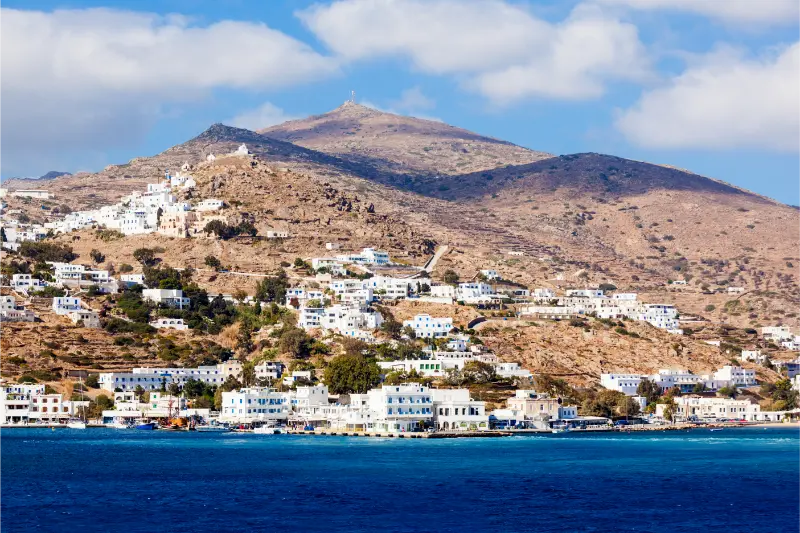
    Anafi Island Greece

    the island is quiet overall, but the main village rooms above popular bars can still be noisy in summer. Conversely, very remote rooms can feel too silent for solo travellers who enjoy evening atmosphere. Check recent reviews for stairs, vehicle access and air conditioning rather than relying only on sea-view photos. In practice, the most useful approach is to slow down, confirm the day’s conditions locally and avoid linking too many stops into one itinerary. This creates time for swimming, shade, meals and unexpected delays rather than turning a small island into a race.

    How many nights

    Three nights allow a taste of Chora, one beach day and one major outing. Four to five nights make more sense if you want the Kalamos hike plus several beaches. A week suits hikers and slow travellers. The longer the stay, the more appealing a quiet coastal base becomes because you are not trying to maximise every bus connection.

    Three nights allow a taste of the main village, one beach day and one major outing. Four to five nights make more sense if you want the Kalamos hike plus several beaches. A week suits hikers and slow travellers. The longer the stay, the more appealing a quiet coastal base becomes because you are not trying to maximise every bus connection. In practice, the most useful approach is to slow down, confirm the day’s conditions locally and avoid linking too many stops into one itinerary. This creates time for swimming, shade, meals and unexpected delays rather than turning a small island into a race.

    Planning around wind and heat

    Anafi is exposed to the Aegean, so weather should shape the day rather than sit in the background. In midsummer, schedule exposed walking before 10:00 and again after the strongest heat. Wind can make one coast uncomfortable while another feels manageable. Check the forecast, but also ask locally because residents understand how a particular direction affects Roukounas, Kleisidi and the Kalamos side. Build at least one flexible day into a four- or five-night stay.

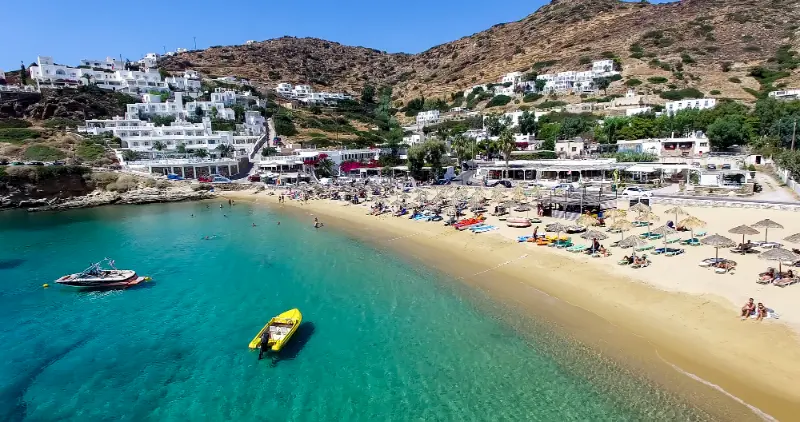
    Anafi Island Greece

    Water, cash and phone coverage

    Carry water before leaving Chora, especially on trails and remote beach days. Card acceptance is common in many businesses, but a modest cash reserve is useful for small purchases or temporary terminal problems. Save ferry tickets, accommodation directions and bus information offline. Mobile service is generally useful around settled areas, yet no hiker should rely on continuous signal as a safety system.

    Responsible travel on a small island

    Anafi’s appeal depends on low-density landscapes, clean beaches and a small resident community. Take rubbish back to Chora when bins are not available, stay on established paths, avoid removing stones or archaeological material and keep noise low around chapels and monasteries. Water and waste systems on small Cycladic islands face heavy summer pressure, so short showers and refillable bottles are practical environmental choices rather than symbolic gestures.

    Booking strategy

    July and August need earlier accommodation booking than the island’s quiet reputation might suggest because room supply is limited. Ferries also deserve attention: a small number of weekly departures can make one missed connection expensive. Reserve the critical pieces first—ferry, room and any must-do excursion—then keep meals and beach choices more spontaneous. Shoulder-season visitors should confirm opening dates because services reduce outside the main summer period.

    What to pack

    Bring closed walking shoes, sandals with reliable grip, a hat that stays on in wind, high-SPF sunscreen, a light long-sleeve layer, refillable water bottle and a small daypack. A headlamp is useful for early or late walks, while a compact first-aid kit helps with blisters and minor scrapes. If you are arriving on an overnight ferry, keep the first morning simple rather than starting a major hike sleep-deprived.

    How long to stay

    Two nights only show the surface of Anafi. Three nights allow Chora, one strong beach day and one major outing, while four or five nights create enough margin for Kalamos, Roukounas and a second hike without racing. Travellers who love walking can easily use a week. The island rewards repetition: the same Chora viewpoint or beach can feel completely different as light and wind change.

    Useful official information

    Municipality of Anafi publishes practical information on trails, sights, churches and beaches. For current ferry times, compare the actual sailing date before travel because frequencies change by season.

    Accommodation and activities

    Compare accommodation on Booking.com. For guided activities and bookable experiences in the wider Cyclades, compare the exact departure island before paying.

    Related Anafi guides

  • Preveza Travel Guide: Old Town, Beaches, Ambracian Gulf, Food and Where to Stay

    Preveza Travel Guide: Old Town, Beaches, Ambracian Gulf, Food and Where to Stay

    Preveza feels more like an island town than a typical mainland city. It sits on a peninsula at the entrance to the Ambracian Gulf, with sailing boats along the waterfront, narrow streets behind the harbour and a long Ionian beach coast beginning only a short drive away. That combination makes it one of the easiest places in Epirus to mix archaeology, swimming and relaxed evenings without changing hotels every day.

    The city is also a smart logistics base. Aktion Airport is close, Ancient Nikopolis is on the outskirts, Lefkada is reachable by road, and Parga or Syvota can be added without turning the trip into a long expedition. I would stay at least two nights; three nights are better if you want one beach day and one archaeological or nature day.

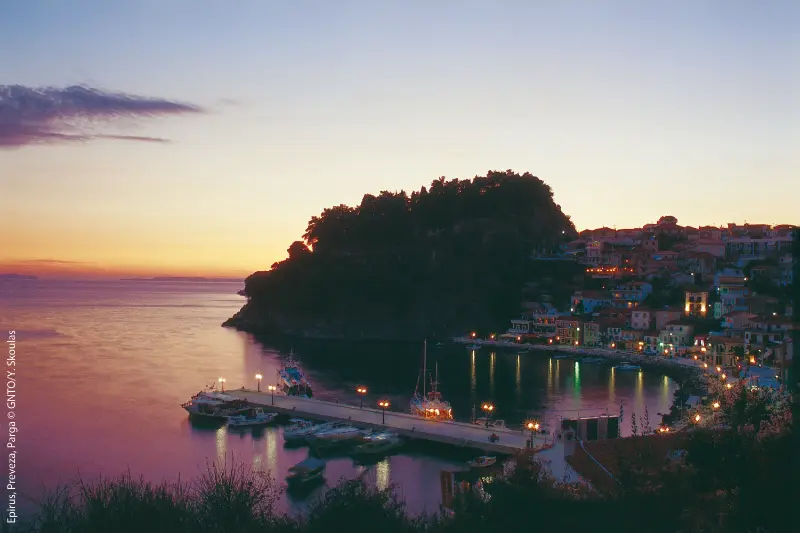
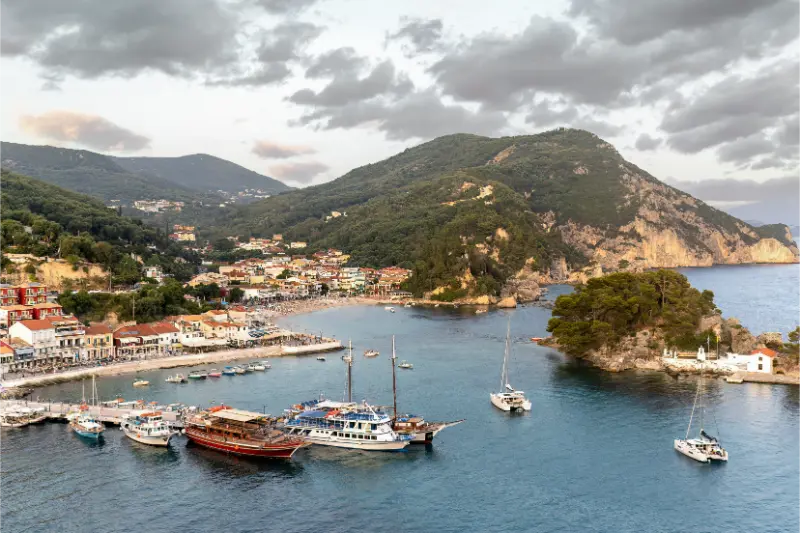
    Parga Preveza Thesprotia Greece Epirus

    Quick planning notes

    • Best for independent road trippers who want to go beyond the best-known Greek islands and headline archaeological stops.
    • Allow at least one full day for the main sights; two nights usually produce a more relaxed experience with an evening in the destination.
    • A car gives the most flexibility for surrounding villages, beaches and archaeological sites, although the central area can usually be explored on foot.
    • Start exposed outdoor sights early in summer and keep midday for lunch, museums or a slower waterfront break.
    • Reconfirm museum hours, local buses, boat departures and seasonal businesses shortly before travel rather than relying on an old timetable.
    • Keep one part of the day flexible for weather, heat or a place you discover locally and want to stay longer.

    Why this place deserves more than a quick stop

    Preveza Travel Guide is useful because it fills a gap between better-known destinations without feeling like filler in an itinerary. The strongest trips in mainland Greece are built around regions: one town for evenings, one archaeological or natural focus during the day, and enough time to understand how landscape, food and history connect. Here, that regional logic is more rewarding than collecting isolated photo stops.

    I would resist the temptation to copy a route simply because every place looks close on Google Maps. Mountain roads, coastal detours, archaeological opening hours and long lunches all affect the real pace. Choose two or three priorities per day. If you finish early, add a nearby beach, viewpoint or café rather than turning the afternoon into another long transfer.

    What to see and do

    The waterfront and marina

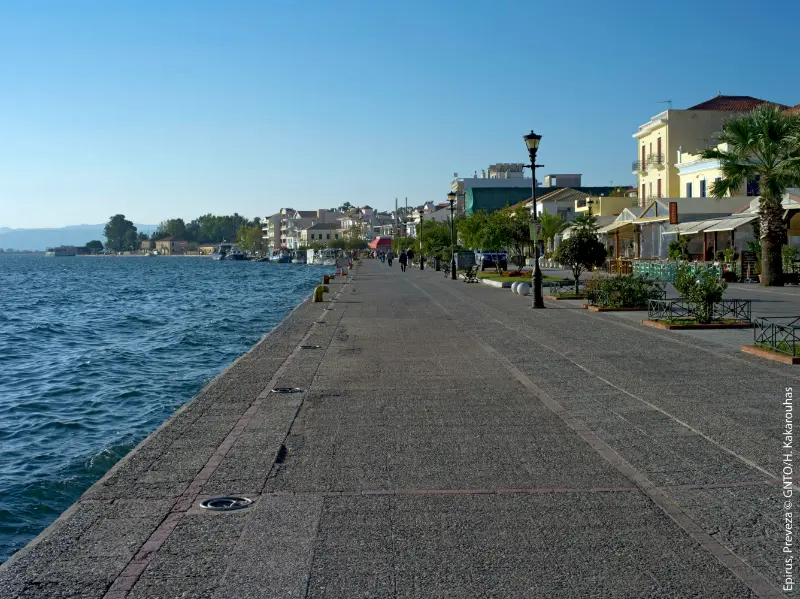
    The seafront is Preveza’s social spine. Walk it once in daylight to understand the harbour and again in the evening when tables fill and the town becomes more animated. The marina brings an international sailing crowd, but the atmosphere remains distinctly local a few streets inland. This is a place where a slow coffee and a long dinner are part of sightseeing rather than time taken away from it.

    Practical approach: treat the waterfront and marina as part of a route rather than an isolated pin. Check access and parking before setting out, carry water in warm weather, and give yourself enough time to walk beyond the first viewpoint. If conditions are poor or a site is unexpectedly closed, use the saved time for the nearest village or local museum instead of forcing the schedule.

    Old town lanes and Seytan Pazar

    Behind the waterfront, the narrow pedestrian lanes create the most enjoyable part of central Preveza. Seytan Pazar is often highlighted for its historic character, small shops and tavernas. Rather than following a rigid route, wander between churches, older houses and cafés. The scale is small, and the pleasure comes from noticing how quickly the city shifts from busy harbour to intimate lanes.

    Practical approach: treat old town lanes and seytan pazar as part of a route rather than an isolated pin. Check access and parking before setting out, carry water in warm weather, and give yourself enough time to walk beyond the first viewpoint. If conditions are poor or a site is unexpectedly closed, use the saved time for the nearest village or local museum instead of forcing the schedule.

    Pantokrator and the coastal forts

    Preveza’s strategic position left a chain of fortifications around the peninsula. Pantokrator is the most atmospheric coastal stop, especially when paired with a sunset drive or walk. The forts are not all presented like polished museum sites, so go for the setting and historical context rather than expecting elaborate exhibitions. They make the geography of the entrance to the Ambracian Gulf much easier to understand.

    Practical approach: treat pantokrator and the coastal forts as part of a route rather than an isolated pin. Check access and parking before setting out, carry water in warm weather, and give yourself enough time to walk beyond the first viewpoint. If conditions are poor or a site is unexpectedly closed, use the saved time for the nearest village or local museum instead of forcing the schedule.

    Monolithi and the Ionian beach coast

    The coast north of Preveza gives you kilometre after kilometre of open Ionian swimming. Monolithi is the headline beach, backed by forest and broad enough to feel different from a small island cove. Wind and waves can vary, so choose the beach according to conditions rather than loyalty to one famous name. Families should also pay attention to shade, parking and facilities on the exact section they use.

    Practical approach: treat monolithi and the ionian beach coast as part of a route rather than an isolated pin. Check access and parking before setting out, carry water in warm weather, and give yourself enough time to walk beyond the first viewpoint. If conditions are poor or a site is unexpectedly closed, use the saved time for the nearest village or local museum instead of forcing the schedule.

    The Ambracian Gulf

    The Ambracian is not just a body of water beside the city; it is a protected wetland system with dolphins, sea turtles and important birdlife. Wildlife cruises and kayaking can be worthwhile when run responsibly. Keep expectations realistic: wild animals are not guaranteed. The point is to experience a calm, ecologically rich gulf that feels very different from the open Ionian side of Preveza.

    Practical approach: treat the ambracian gulf as part of a route rather than an isolated pin. Check access and parking before setting out, carry water in warm weather, and give yourself enough time to walk beyond the first viewpoint. If conditions are poor or a site is unexpectedly closed, use the saved time for the nearest village or local museum instead of forcing the schedule.

    Ancient Nikopolis

    Nikopolis is the essential cultural excursion. Founded by Octavian after the Battle of Actium, the Roman city spreads across a huge archaeological landscape with walls, theatre, odeon, stadium and early Christian monuments. Pair the site with the Archaeological Museum rather than choosing one or the other. They tell the same story from different angles and together justify a half-day or more.

    Practical approach: treat ancient nikopolis as part of a route rather than an isolated pin. Check access and parking before setting out, carry water in warm weather, and give yourself enough time to walk beyond the first viewpoint. If conditions are poor or a site is unexpectedly closed, use the saved time for the nearest village or local museum instead of forcing the schedule.

    How to structure your day

    1. Morning: wander the old town and harbour before temperatures rise.
    2. Late morning: drive to Ancient Nikopolis and its museum.
    3. Lunch: return to Preveza for seafood or an Epirote pie-focused meal.
    4. Afternoon: swim on the Monolithi coast or take a wetland-focused excursion.
    5. Sunset: Pantokrator or the waterfront promenade.
    6. Extra day: choose Syvota/Parga, Lefkada or the Ambracian Gulf rather than trying to combine all three.

    This order is deliberately conservative. It leaves the hottest part of the day for lunch or a less exposed stop and avoids driving back and forth. Reverse it if your accommodation, opening hours or weather make another sequence more logical. In summer, the difference between an 08:30 archaeological visit and a 12:30 visit can completely change how much you enjoy the site.

    Where to stay

    For a first visit, stay between the old town and waterfront so evenings require no driving. Beach accommodation north of town works better for travellers who prioritise swimming and have a car. If you arrive late through Aktion Airport, Preveza is an easier first-night base than immediately driving deep into Epirus or across to an island.

    If you are ready to compare accommodation, check current places to stay in Preveza on Booking.com. I prefer booking a base that makes evenings walkable rather than saving a small amount on a room that forces an extra drive every night.

    What to eat

    Preveza is one of the places where seafood should shape your food plan. Look for local papalina sardines, Ambracian shrimp when available, mullet, bottarga and simple grilled fish. The city also carries the pie and meat traditions of Epirus. I would have one seafood dinner near the water and another meal in the lanes away from the most obvious harbour frontage.

    Preveza City

    A useful rule in smaller mainland destinations is to ask what is local and seasonal before ordering. Menus can be long, but the most memorable dishes are usually the ones tied to the landscape around you: river or lagoon fish where relevant, pies and cheeses in Epirus, grilled meat inland, and simple seafood along the Ionian coast. Leave space for a slow meal instead of squeezing dinner between driving legs.

    Getting there and getting around

    For a multi-stop mainland itinerary, a rental car is usually the most practical option because it lets you connect archaeological sites, beaches, wetlands and villages that are not designed around a tourist shuttle network. Intercity KTEL buses connect the larger towns, but local onward services may be limited or timed for residents rather than sightseeing. If travelling without a car, choose accommodation centrally and plan each excursion around the actual current timetable.

    Driving itself is generally straightforward on the main roads, but secondary mountain and coastal roads can be narrower, slower and darker than expected at night. Do not estimate travel time only by distance. Refuel before remote loops, keep offline maps available, and avoid committing to the last possible ferry, museum entry or restaurant booking after a long driving day.

    Best time to visit

    May, June, September and early October balance beach weather with comfortable city walking. July and August bring the liveliest atmosphere and strongest beach demand. Winter is much quieter but still works for food, history and local life; some sea-based activities and resort businesses become seasonal.

    For most travellers, shoulder season also makes spontaneous planning easier: parking is less stressful, restaurants have more time for guests and walking is more pleasant. Peak summer is still the right choice for guaranteed beach atmosphere and the widest range of boat services, but it rewards early starts and pre-booked accommodation.

    How to connect this stop with the rest of Greece

    Build the route as a cluster rather than an out-and-back. Useful next reads are Ancient Nikopolis guide Syvota Epirus guide Vonitsa and Palairos guide. Linking nearby destinations this way reduces repeated driving and gives each overnight stop a clear reason to exist.

    If you have only a week, choose one coast-and-inland combination rather than trying to cross the whole region. With ten to fourteen days, you can combine Epirus with Western Greece or the Ionian Islands while still keeping two-night bases. The best road trips here are not the ones with the most pins; they are the ones where the landscape changes gradually and the evenings still feel relaxed.

    Common planning mistakes

    • Trying to visit every nearby attraction on the same day simply because the driving distances look short.
    • Assuming archaeological sites, small museums, boats and seasonal restaurants keep identical hours all year.
    • Arriving at exposed sites in the middle of a summer afternoon without enough water or shade.
    • Booking remote accommodation for the view without checking the real drive to dinner, groceries and the next morning’s route.
    • Treating wetlands, rivers and archaeological areas as photo sets rather than working or protected landscapes.
    • Leaving no flexible time for weather, local advice or a beach and village that turns out to deserve longer.

    Frequently asked questions

    How many nights do I need?

    One night can work for a transit-focused visit, but two nights are usually better because they give you one full day without packing the car. Add a third night when beaches, hiking, birdwatching or boat trips are a major part of the plan.

    Do I need a car?

    Not always for the town centre, but a car makes the wider region dramatically easier. Without one, choose a central hotel and verify KTEL, taxi or excursion options for the exact day you want to travel.

    Is this a good stop with children?

    Yes if you simplify the itinerary. Choose one major sight in the morning, a long lunch and a beach or easy walk later. Avoid combining several exposed archaeological sites with a long afternoon drive in summer.

    Can I visit in winter?

    Yes, especially for food, history and local life. Expect shorter daylight, more variable weather and reduced seasonal tourism services. Mountain roads and wetland tracks may require extra flexibility after heavy rain.

    Should I book activities in advance?

    Reserve popular boat trips, special guided tours and peak-summer accommodation in advance. For ordinary sightseeing, keep some flexibility and recheck current opening hours a day or two before the visit.

    Useful official source

    For details that can change, use Visit Greece – Preveza and recheck opening hours, tickets, weather restrictions, transport and seasonal services shortly before departure. Official pages are especially important for archaeological sites, protected areas and boat schedules.

    Final advice

    The main advantage of travelling through this part of Greece is variety without huge distances: a morning can be archaeological, the afternoon can move to a river, lagoon or Ionian beach, and dinner can still happen in a real working town rather than a purpose-built resort. Use that variety, but do not let it push you into overplanning.

    Choose a logical base, start early when heat or opening hours matter, and let one or two experiences carry each day. That is the balance that turns a collection of lesser-known stops into a coherent Greece itinerary—and it is also what makes these places memorable enough to deserve their own articles rather than a paragraph in a generic regional guide.

  • Skiathos Travel Guide: Beaches, Skiathos Town, Boat Trips and a 4-Day Itinerary

    Skiathos Travel Guide: Beaches, Skiathos Town, Boat Trips and a 4-Day Itinerary

    Skiathos is compact, green and unusually easy to enjoy without spending the entire holiday in a rental car. The south coast is lined with beaches connected by a seasonal bus route, Skiathos Town provides restaurants and nightlife, and boat trips open access to dramatic northern shores. Pine forest reaches close to the sea in many places, giving the island a softer, greener character than the dry Cyclades.

    Official Visit Greece information describes Skiathos as one of the most popular Sporades islands, combining nightlife with beaches and cultural sights such as the Papadiamantis house and Evangelistria Monastery. For first-time visitors, four or five days is enough to understand the island without rushing.

    Skiathos Town

    Skiathos Town is the natural base for many travellers. White houses climb above the harbour, narrow lanes hold restaurants and bars, and boats depart directly from the waterfront. The Bourtzi peninsula divides the old and new harbour areas and provides an easy evening walk.

    Stay in town if you enjoy dining out, nightlife and the ability to join excursions without arranging transfers. The main disadvantage is that you will commute to beaches rather than stepping directly onto one each morning.

    Koukounaries

    Koukounaries is the island’s most famous beach, a long arc of golden sand backed by pine forest and a protected wetland area. It is beautiful and well organized, but fame means crowds in high summer. Arrive earlier for a calmer experience and explore the surrounding area rather than staying only in the busiest central section.

    The seasonal bus makes Koukounaries accessible without a car from Skiathos Town. That simple transport link is one reason the island works so well for visitors who prefer not to drive.

    Lalaria

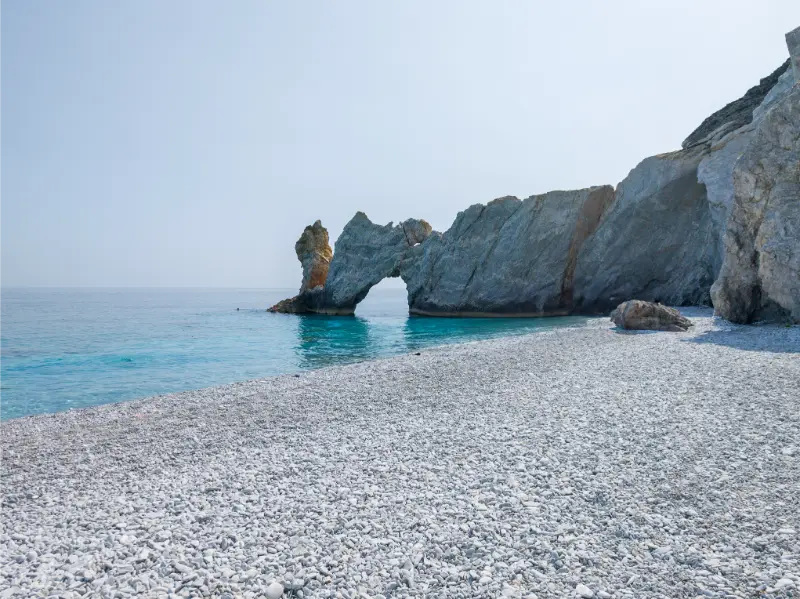
    Lalaria is dramatically different: white pebbles, steep cliffs and a natural rock arch on the north coast. It is typically reached by boat because there is no ordinary road access. The experience depends heavily on sea conditions; excursions may be cancelled when winds make the northern coast unsafe.

    Do not build your entire holiday around a guaranteed Lalaria day. Keep the schedule flexible so you can move the boat trip if weather changes. Respect any restrictions on removing stones from the beach; natural places suffer when every visitor takes a souvenir.

    Beaches along the south coast

    The south coast offers a chain of beaches, each with a slightly different personality. Vromolimnos and Agia Paraskevi are popular and organized; Troulos is convenient for families; Banana Beach areas attract a younger crowd and sunset visitors. Smaller coves provide quieter alternatives if you are willing to walk.

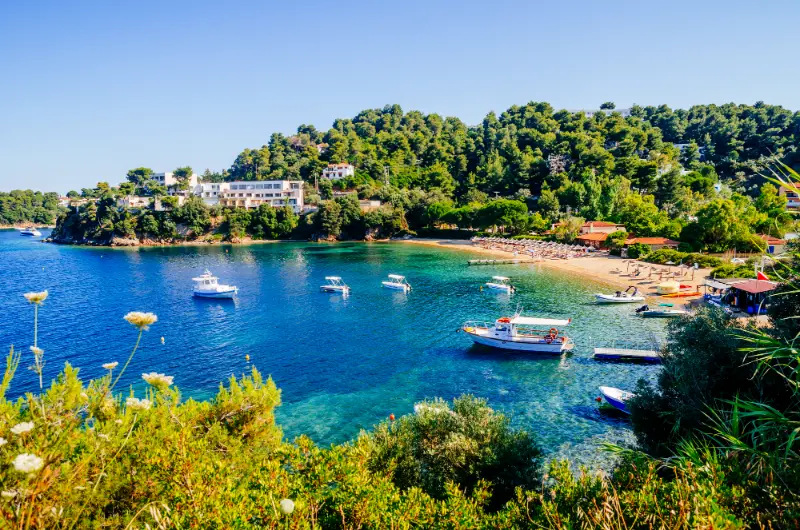
    Agia Paraskevi Beach Skiathos Greece

    Use the bus route as a beach-hopping tool. You can spend the morning at one beach, lunch nearby and continue to another without needing to park. In peak season buses can be busy, so allow extra time.

    The north is wilder

    Away from the developed south, northern Skiathos feels more rugged and less built-up. Dirt roads and tracks reach some areas, while boat trips reveal cliffs and remote beaches. If you rent a vehicle to explore, ask the rental company which roads are permitted under your insurance.

    A small car may not be suitable for every track. Never assume an online map line represents a comfortable road.

    Hiking and cycling

    Skiathos has a network of trails through pine forest, hills and monastery landscapes. Official tourism information also promotes mountain-bike routes. This makes the island more interesting outside peak beach season, particularly in spring and autumn.

    For walking in summer, start early and carry water. Forest shade helps, but humidity and heat still matter. Use current route information from local trail organizations rather than following faded markings blindly.

    Evangelistria Monastery

    The historic Evangelistria Monastery lies in the hills north of town and provides a cultural break from beach days. The approach reveals the greener interior, and the monastery is connected with important moments in modern Greek history.

    Dress respectfully and check visiting hours before setting out. Combining the monastery with a short walk or scenic drive makes a pleasant half-day.

    Papadiamantis and local culture

    Alexandros Papadiamantis, one of Greece’s important literary figures, was born on Skiathos. His house in town is preserved as a museum. Even travellers unfamiliar with his work can appreciate the small-scale glimpse into island life and architecture.

    This kind of cultural stop is useful on a cloudy morning or between beach sessions. Skiathos is more rewarding when you give it at least one experience unrelated to swimming.

    Beach Of Troulos Skiathos Island Greece

    Where to stay

    **Skiathos Town** is best for restaurants, nightlife and boat departures. **Koukounaries** suits beach-first travellers who prefer evenings in a resort setting. **Troulos** and **Agia Paraskevi** offer a middle ground with good beach access and bus connections.

    If you stay outside town, check the distance to the bus stop and how late services run during your travel dates. A hotel described as “near Skiathos Town” may still require a taxi at night.

    Do you need a car?

    No. A large percentage of first-time visitors can manage with buses, boats and occasional taxis. Rent a vehicle only if you specifically want the northern interior, remote viewpoints or flexible exploration away from the south-coast corridor.

    This is one of Skiathos’s advantages over larger islands such as Kefalonia or Crete. You can have an active trip without spending every day behind the wheel.

    A four-day Skiathos itinerary

    Day 1: Skiathos Town

    Walk the harbour, Bourtzi and old lanes. Visit the Papadiamantis house if open, then have dinner in town.

    Day 2: Koukounaries and south-coast beaches

    Take the bus to Koukounaries in the morning. Spend several hours there, then stop at another south-coast beach on the return journey.

    Day 3: boat trip

    Choose a boat trip that includes Lalaria if sea conditions allow, or a route toward Skopelos/other nearby waters depending on your interests. Keep this day flexible for weather.

    Skiathos Island Near Lalaria Beach Sporades Thessaly Greece

    Day 4: monastery and hiking

    Visit Evangelistria Monastery and add a short trail or inland drive. Return to town for a final swim or sunset dinner.

    A fifth day is ideal if you want to do nothing except choose your favourite beach and stay there.

    Skiathos with children

    The island is family-friendly because distances are manageable and many south-coast beaches have organized facilities. Staying near a bus route reduces the stress of driving and parking. Choose calmer beaches based on daily wind conditions and check water depth for young swimmers.

    Boat trips can be exciting for older children, but long excursions are less suitable for toddlers if there is limited shade. Ask about boat size, toilets and swimming stops before booking.

    Nightlife

    Skiathos Town has a lively summer nightlife scene, from waterfront bars to late-night venues. It is generally easier to combine with a beach holiday than the more intense club identity of Mykonos or Ios. Stay near town if going out is important; otherwise choose a beach area and visit for one or two evenings.

    Food

    Town offers the widest restaurant range, while beach areas mix tavernas with casual cafés. Look for seafood, local pies and simple grilled dishes. As on many islands, the most scenic harbour table may cost more, so compare menus rather than choosing only by view.

    Best time to visit

    June and September are excellent for beach days with slightly less pressure on transport and accommodation. July and August are the busiest and liveliest. May and October appeal to walkers, though sea conditions and seasonal services become less predictable.

    Combining Skiathos with the Sporades

    Skiathos is a natural gateway to Skopelos and Alonnisos. Ferry routes and frequencies vary by season, so plan the sequence around actual sailings. The island group rewards slower travel; two islands over a week usually feels better than trying to visit all of them in a few days.

    Common mistakes

    • Renting a car automatically without realizing how useful the bus route is.
    • Fixing the Lalaria boat trip on the only day available despite weather risk.
    • Staying far from town without checking evening transport.
    • Trying to visit too many beaches in one day instead of enjoying one or two.
    • Underestimating hiking heat simply because the island is green.

    Frequently asked questions

    How many days do you need in Skiathos?

    Four days is enough for town, beaches, a boat trip and one inland day. Five to seven days is better for a relaxed beach holiday.

    Can you visit without a car?

    Yes. Skiathos is one of the easier Greek islands to enjoy with buses, boats and taxis.

    Is Skiathos only for nightlife?

    No. It has strong beaches, hiking, cultural sites and easy access to the wider Sporades.

    Which beach is best for first-time visitors?

    Koukounaries is the classic choice, but the best beach on a particular day depends on crowds, wind and the atmosphere you prefer.

    Why Skiathos is an easy island to love

    Skiathos removes much of the logistical friction that can complicate an island holiday. You can stay in one base, ride a bus to beautiful beaches, walk to dinner, take a boat to the wild north and spend a day in pine-covered hills. For travellers who want variety without a major road trip, it is one of Greece’s most convenient island choices.

    Add Skopelos to a Sporades trip

    Skiathos pairs naturally with neighbouring Skopelos. My Skopelos travel guide covers ferries, beaches, villages and the famous Mamma Mia locations.

    \n\n

    Continue through the Sporades

    If you want a quieter nature-focused island after Skiathos, continue to Alonissos and compare it with Skopelos.

    Add Skyros to your Sporades research

    Skyros has different transport patterns and a distinct cultural identity. Use the Skyros travel guide before trying to combine it with Skiathos.

    More guides to continue planning

    Continue with Skiathos Town; Koukounaries Beach for more detailed planning.

    More Skiathos in-depth guides

    Continue planning Skiathos with Lalaria Beach Skiathos Guide; Kastro Skiathos Guide; Evangelistria Monastery Skiathos Guide; Banana Beach and Agia Eleni Skiathos Guide; Troulos and Agia Paraskevi Skiathos Guide; Skiathos Hiking Guide; Best Beaches in Skiathos; Skiathos Without a Car; Skiathos with Kids; Skiathos 5-Day Itinerary.

    \n\n

    Continue planning with Volos without a car and ferry planning.

    \n
  • Xanthi Travel Guide: Old Town, Food, Nestos and a 3-Day Itinerary

    Xanthi Travel Guide: Old Town, Food, Nestos and a 3-Day Itinerary

    Xanthi is one of the most distinctive cultural cities in northern Greece. Its old town, tobacco-era architecture, multicultural religious heritage and food scene make it worth a dedicated visit, while the Nestos River and wetlands add an exceptional nature component just outside the city.

    Why Xanthi feels different from other Greek cities

    Xanthi reflects the layered history of Thrace more visibly than many destinations on a standard Greece itinerary. The old town combines mansions, churches, mosques and narrow streets, while the modern centre has markets, student energy and a food culture shaped by Greek, Balkan, Ottoman and Asia Minor influences.

    This is not a city you visit for one single monument. Its strength is atmosphere: walking between old tobacco-era buildings, tasting sweets and savoury dishes, hearing different cultural traditions and then using the city as a base for the Nestos River or Lake Vistonida.

    Xanthi Old Town

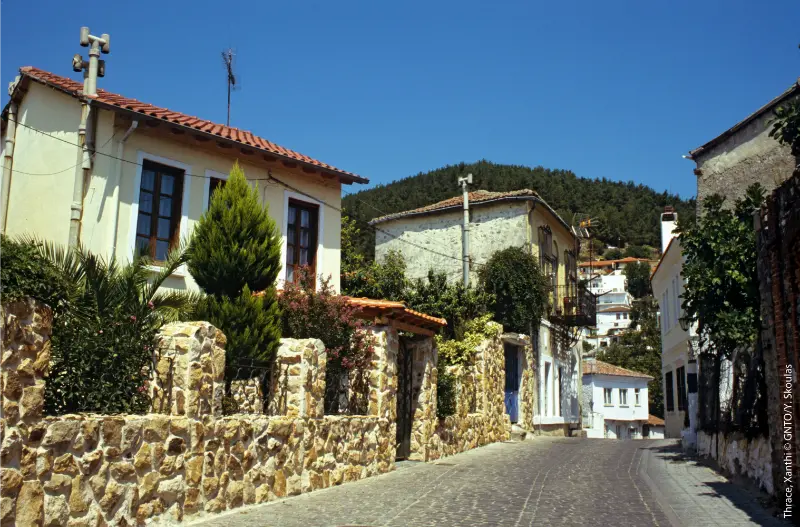
    The old town rises behind the modern centre and is the first area to explore. Colourful mansions, cobbled lanes and traditional houses create a compact walking district. Some buildings reflect the wealth generated by tobacco trade, while religious monuments reveal the city’s multicultural history.

    Go once in daylight for architecture and again in the evening when cafés and tavernas become more active. The Old Town Festival, usually held around the end of summer, can transform the area completely; in 2026 it ran from 30 August to 5 September, so future travellers should check current dates rather than assume the same calendar every year.

    Markets, tobacco heritage and museums

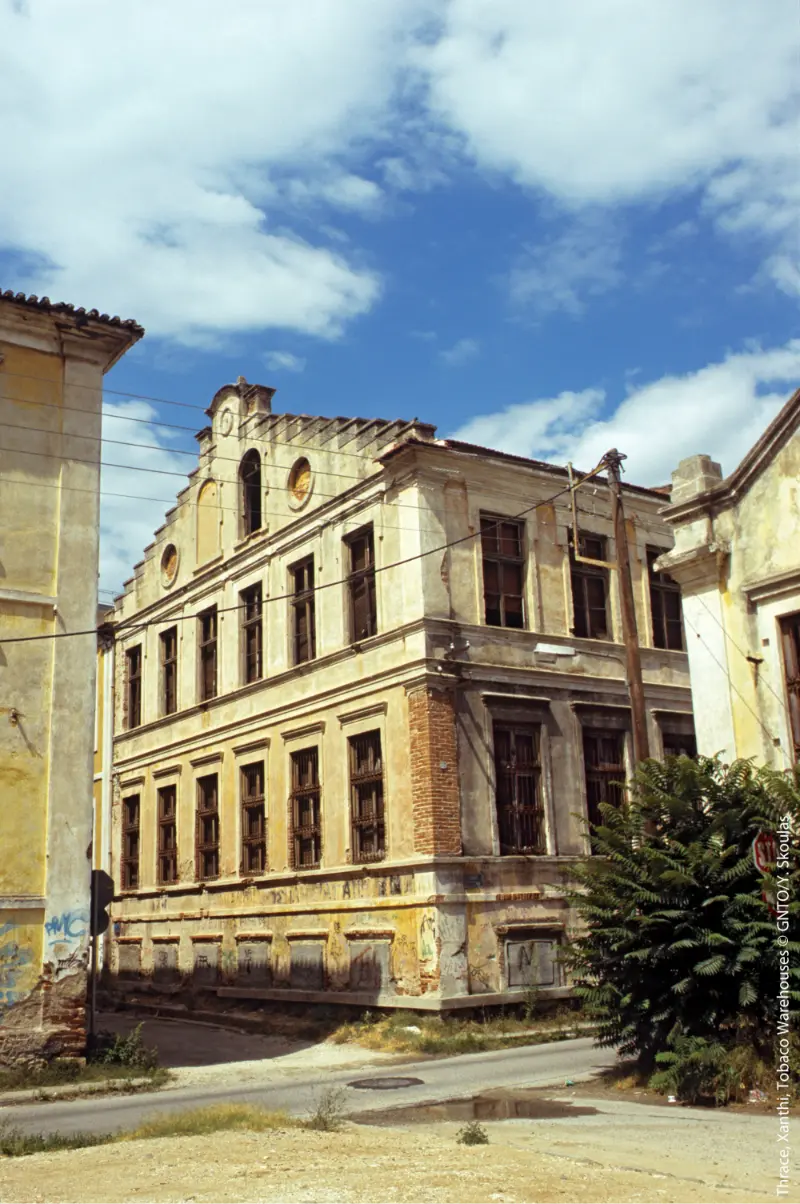
    Xanthi’s modern centre is worth attention too. Markets and commercial streets show that the city is not preserved as a museum piece, while tobacco warehouses and related architecture tell the story of nineteenth- and twentieth-century prosperity. Choose one or two museums based on your interests instead of trying to enter every cultural building.

    Thrace Xanthi Tobako Warehouses

    The contrast between old-town mansions and industrial tobacco structures is one of the most interesting urban themes. A slow walk connecting the two helps you understand why Xanthi developed the way it did.

    A food city with eastern and Balkan influences

    Food may be the strongest reason to stay overnight. The region’s cuisine combines pies, slow-cooked meats, cured products, spices, sweets and ingredients from the surrounding agricultural landscape. Visit Greece highlights dishes such as kavourmas and regional pies, but the more useful strategy is to ask what a taverna cooks especially well that day.

    Leave room for dessert. Xanthi has a strong sweet tradition, and café stops are part of the experience rather than something to fit between attractions. If you enjoyed the food focus of the Thessaloniki guide, Xanthi adds a distinctly Thracian layer.

    Religious and multicultural heritage

    Churches, monasteries, mosques and other religious monuments coexist throughout the region, reflecting the multicultural history of Thrace. Approach them as active places of worship as well as historical sites: dress respectfully, avoid interrupting services and ask before photographing interiors.

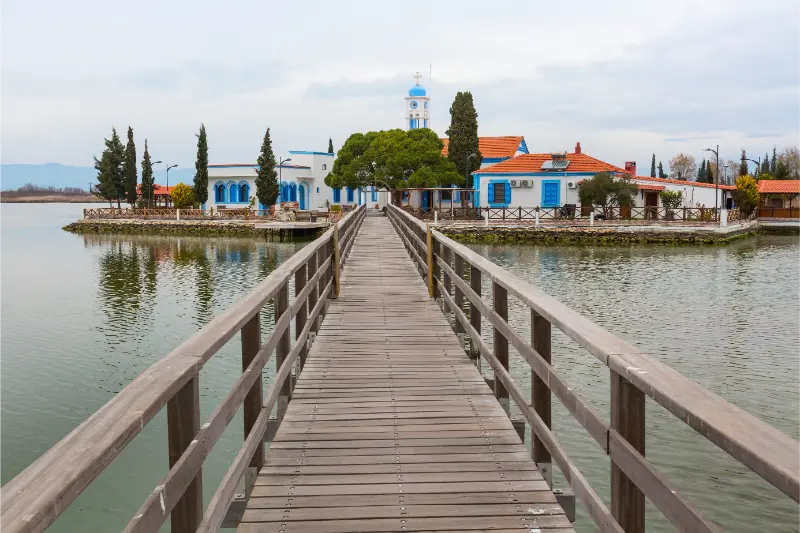
    A regional drive can extend this theme to Porto Lagos and Lake Vistonida, where religious monuments sit within a wetland landscape. This is an excellent example of how cultural and natural travel overlap in Thrace.

    Nestos River day trip

    The Nestos Straits are one of the best nature excursions from Xanthi. The river cuts through a protected landscape of forest, cliffs and meanders, with hiking, canoeing and viewpoints available in different areas. The tourism authority describes the gorge as part of a Natura 2000 and Ramsar-protected ecosystem.

    Outdoor activities should be planned with local operators or reliable route information. A long trail in summer heat is very different from a short viewpoint visit. If you only have half a day, focus on Toxotes and an accessible viewpoint rather than attempting a full-distance hike.

    A 3-day Xanthi itinerary

    • Day 1: explore the old town, modern centre, markets and food scene at a relaxed pace.
    • Day 2: devote the day to the Nestos River area, choosing hiking, canoeing or a scenic route according to season.
    • Day 3: visit Lake Vistonida, Porto Lagos or nearby villages before continuing toward Kavala or Alexandroupoli.

    Three days reveals both city and landscape. With only one night, prioritise the old town and food rather than attempting a distant nature excursion.

    Where to stay

    Staying near the old town is ideal for atmosphere and evening walks, while the modern centre can be easier for parking and transport. Distances are short enough that either works for most visitors. If you are arriving during a festival, book early and expect road closures or noise in central areas.

    For a road trip, ask about parking explicitly. Historic streets can be narrow, and a property that looks central on a map may not be convenient for a larger rental car.

    Best time to visit

    Spring and autumn are excellent for combining city walking with the Nestos landscape. Summer can be hot but works well if you start early and use evenings for the old town. Festival dates add energy but also crowds. Winter is quieter and can be rewarding for food and cultural travel.

    The wider region changes strongly with the seasons, especially wetlands and river activities. Check local conditions for canoeing, hiking and birdwatching rather than assuming every excursion operates year-round.

    How to get there and continue through Thrace

    Xanthi is commonly reached by road or intercity bus from Thessaloniki and other northern Greek cities. A car is useful for Nestos, Porto Lagos and onward travel to Alexandroupoli, though the city itself is walkable.

    For a wider route, combine Xanthi with the Kavala guide to the west and the Alexandroupoli guide to the east. This creates one of the best under-the-radar mainland itineraries in Greece.

    Frequently asked questions

    How many days do you need in Xanthi?

    Two days work for the city; three days are better if you want the Nestos River or Lake Vistonida.

    What is Xanthi known for?

    It is known for its historic old town, tobacco-era heritage, multicultural traditions, food and the nearby Nestos River landscape.

    Is Xanthi good for food lovers?

    Yes. Thracian cuisine reflects Greek, Balkan and Asia Minor influences and is a major reason to stay overnight.

    Do you need a car in Xanthi?

    Not for the city centre, but a car is useful for Nestos, Porto Lagos and wider Thrace.

    When is the Xanthi Old Town Festival?

    Dates vary by year. In 2026 it ran from 30 August to 5 September, so always check the current official programme before booking.

    Thrace Xanthi

    Extra practical planning note

    Travellers interested in photography should give the old town both morning and evening. Morning light reveals façades and empty lanes, while evening brings residents, food and atmosphere. During festivals the visual energy is higher but clean architectural photographs become much harder, so choose dates according to your priorities.

    Final advice

    Give Xanthi time for meals and unplanned walks. The city is most rewarding when you combine its architecture and multicultural history with one full nature excursion rather than treating it as a quick stop between Thessaloniki and the Turkish border.

  • Delphi Travel Guide: How to Visit the Archaeological Site from Athens

    Delphi Travel Guide: How to Visit the Archaeological Site from Athens

    Delphi is one of the easiest places to add when you want a first taste of mainland Greece beyond Athens. The sanctuary sits on the slopes of Mount Parnassus, with terraces, ruins and mountain views that make the setting almost as important as the archaeology. In the ancient Greek world, Delphi was associated with Apollo and the oracle, and people travelled from across the Mediterranean to seek guidance there.

    Today the site works as either a long day trip from Athens or a much more relaxed overnight stop. I prefer the overnight version when the wider itinerary allows it, because you can experience Delphi after the main excursion groups leave and combine it with nearby Arachova without constantly watching the clock.

    Why Delphi is different from the Acropolis

    The Acropolis in Athens is monumental and urban; Delphi feels embedded in a mountain landscape. The Sacred Way climbs through the sanctuary, passing the remains of treasuries and monuments before reaching the Temple of Apollo. Higher up are the theatre and stadium, while the archaeological museum preserves some of the most important finds from the site.

    This physical climb matters. Delphi is not a flat collection of ruins, so footwear, weather and energy levels affect the experience. The reward is a sequence of views that opens gradually as you ascend.

    Day trip or overnight stay?

    A day trip is practical if Athens is your main base and you have limited time. Organised tours remove the need to coordinate buses and usually combine transport with guiding. Independent travellers can also use intercity bus services, but schedules must be checked carefully because a missed return can become a real problem.

    Staying overnight changes the rhythm. You can arrive after lunch, explore the village or museum, sleep locally and visit the archaeological site when you are fresh. The next morning you can continue toward Meteora, the Peloponnese or back to Athens. On a longer trip, this route feels much less repetitive than returning to the capital after every mainland excursion.

    How to get to Delphi from Athens

    By road, Delphi is reached through central Greece, and the journey usually takes a few hours depending on traffic and stops. Driving gives you flexibility to include Arachova, mountain viewpoints or another destination afterwards. If you rent a car, avoid picking it up in central Athens unless you genuinely need it there; collecting outside the congested core can reduce stress.

    Intercity buses are a budget-friendly alternative. Check the current KTEL operator timetable shortly before travel because services and departure points can change. For the wider transport picture, my Greece transport guide explains how buses, rental cars and domestic connections fit together.

    What to see at the archaeological site

    The heart of Delphi is the Sanctuary of Apollo. As you climb the Sacred Way, the remains of dedications and treasuries help reveal how competitive and international the sanctuary once was. The Temple of Apollo is the central landmark, closely associated with the oracle and the Pythia.

    Continue upward if conditions and access permit. The ancient theatre has a remarkable position above the temple, and the stadium sits higher on the slope. Do not rush the upper sections simply because a tour schedule is tight; the changes in perspective are part of the appeal.

    Do not skip the Delphi Archaeological Museum

    The museum provides the objects that make the ruined structures understandable. The Charioteer of Delphi is the best-known work, but architectural sculpture, votive offerings and inscriptions are equally useful for understanding the sanctuary. I would include the museum even on a one-day visit.

    Some travellers prefer the museum first because it provides context; others enjoy seeing the objects after walking through the site. Either order works. On a hot day, using the museum as a cooler midday break can make the overall visit much more comfortable.

    The Sanctuary of Athena Pronaia

    The lower sanctuary of Athena Pronaia is separate from the main archaeological area and is famous for the circular Tholos. It is easy to overlook when visitors are short on time, yet the setting is beautiful and it adds another visual layer to Delphi. Check current access arrangements because archaeological sites can have temporary restrictions for conservation or safety.

    If you are driving, plan your parking and walking carefully rather than stopping suddenly on the road. If you are on a guided tour, ask whether the lower sanctuary is included because not every schedule allows enough time.

    Arachova: worth adding or not?

    Arachova is a mountain town a short drive from Delphi and a popular winter destination for access to Mount Parnassus. Its stone houses, shops and restaurants make it a pleasant stop, especially in cooler months. In summer it can still be a useful place for dinner or a break from the archaeological focus.

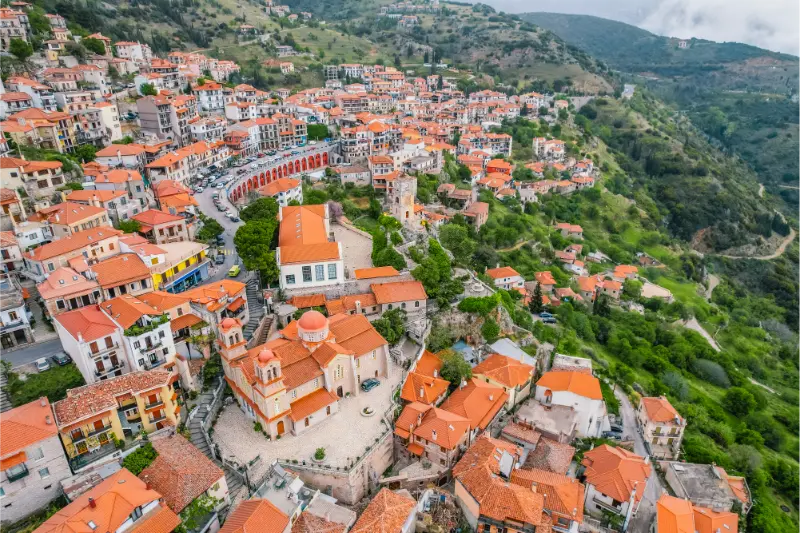
    Aerial View Town Arachova Greece Near Parnassus Mountain Temple Delphi

    I would add Arachova if you have your own car or an overnight stay. On a tightly timed bus day trip, forcing it into the schedule may create more stress than value. This is a good example of why transport should shape the itinerary rather than being added at the end.

    Best time of day to visit Delphi

    Morning is usually the easiest choice in warm weather because the site is exposed and involves climbing. Late afternoon can have beautiful light and fewer groups, but seasonal opening times determine whether that is possible. Always confirm official hours before building the day around sunset ideas.

    Spring and autumn are particularly comfortable for walking. Summer works well if you start early, wear a hat and carry water. Winter can be dramatic and quiet, but mountain weather is less predictable and daylight is shorter.

    A one-day Delphi plan from Athens

    Leave Athens early enough to reach Delphi before the hottest part of the day. Visit the main archaeological site first, then the museum. Have lunch in Delphi village and, if your transport allows it, include the Athena Pronaia area before returning.

    Do not add another distant attraction to the same day. The journey already makes this a substantial excursion, and the value comes from understanding the site rather than from maximising stops.

    A better two-day plan

    Day 1: Athens to Delphi

    Travel in the morning, stop in Arachova for lunch or a walk, then continue to Delphi. Explore the village and museum if time works, enjoy dinner and sleep locally.

    Day 2: archaeological site and onward travel

    Visit the sanctuary early, add Athena Pronaia, then continue toward your next destination. If that destination is Meteora, read my Meteora travel guide and allow a realistic driving window.

    Delphi with children

    Children often respond well to the story of the oracle because it gives the ruins a clear narrative. Keep the history simple: explain that leaders and ordinary travellers came to ask questions, then point out the route they followed through the sanctuary. The climb itself also provides natural breaks and viewpoints.

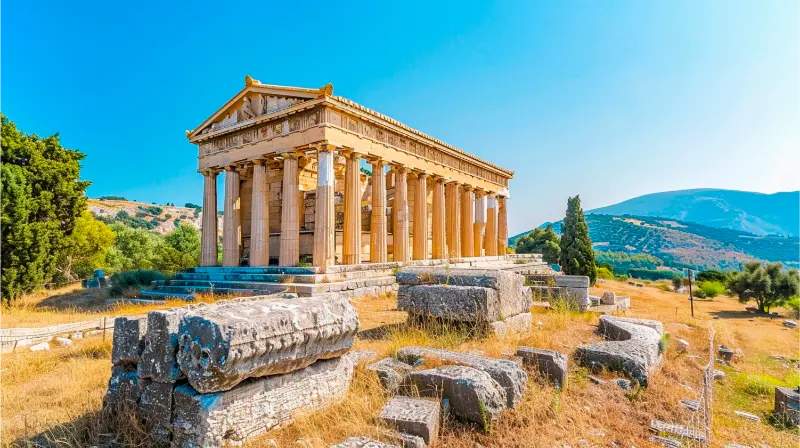
    Ruins Greek Temple Delphi Greece

    For younger children, avoid trying to cover every information panel. Choose the temple, theatre, museum and one or two objects to remember. Comfortable shoes, snacks at appropriate places outside the protected area and a flexible pace matter more than a perfect educational plan.

    What to bring

    • Comfortable shoes with grip for sloping and uneven surfaces.
    • Water, especially from late spring through early autumn.
    • Sun protection and a light layer for changing mountain weather.
    • Offline tickets or reservation screenshots when applicable.
    • A small day bag rather than heavy luggage.
    • Enough time between Delphi and any onward transport connection.

    Common mistakes to avoid

    The biggest mistake is treating Delphi as a quick roadside ruin. The museum and landscape are central to the experience. Another is assuming bus schedules will match an old article online. Verify current services and build a return plan before you leave Athens.

    Drivers should also resist adding too many detours. Mountain roads can be slower than expected, and arriving tired makes the next destination less enjoyable. A route through mainland Greece should contain fewer bases than an island-hopping itinerary, not more.

    Frequently asked questions

    Is Delphi worth a full day?

    Yes. Travel time from Athens plus the archaeological site and museum easily justify a full day. An overnight stay is even better if Delphi connects to a wider mainland trip.

    Can I combine Delphi and Meteora in one day?

    You can drive between them, but trying to properly visit both on the same day is unnecessarily rushed. Stay overnight in one area and use the journey between them as part of a two- or three-day mainland route.

    Do I need a guide?

    A guide is not essential, but Delphi benefits greatly from context because many buildings survive only in partial form. A good guide, audio guide or museum visit helps turn stones and foundations into a coherent story.

    Where should Delphi fit in a first Greece itinerary?

    It works especially well after Athens and before Meteora or a Peloponnese road trip. If your holiday is mainly islands, use my guide to choosing Greek islands to decide whether a mainland detour is worth the time.

    The reason I would include Delphi

    Delphi gives a first-time Greece trip something the islands cannot: a combination of classical history, mountain scenery and a journey through the mainland. It is easy to understand why the location became sacred in antiquity once you stand on the slope and look across the valley. Plan enough time for the museum and the climb, and the day feels like much more than an excursion from Athens.

  • Monodendri Zagori Guide: Vikos Views, Monastery Walks and a Perfect 2-Day Stay

    Monodendri Zagori Guide: Vikos Views, Monastery Walks and a Perfect 2-Day Stay

    Monodendri Zagori Guide is a useful way to experience a central Zagori village that works both as a destination in its own right and as one of the easiest bases for experiencing the southern rim of Vikos Gorge. This guide is designed for travellers who want more than a list of sights: it explains how to sequence the day, where driving or walking time is often underestimated, and which details matter when you are actually on the ground in Epirus.

    For wider context, start with the Zagori Travel Guide and the Ioannina Travel Guide. If hiking is central to your trip, also use the Hiking in Greece guide. Those pages cover the broader region; this article stays focused on the practical choices that make this specific stop work smoothly.

    Quick planning facts

    • Monodendri is one of the best-known villages of central Zagori.
    • It provides access to the Agia Paraskevi monastery and several famous Vikos Gorge viewpoints.
    • The long Vikos crossing is a demanding hiking day and should not be confused with short viewpoint walks.
    • The village is part of the wider UNESCO-listed Zagori Cultural Landscape.
    • Monodendri combines particularly well with Vitsa, Kipi, Kapesovo and Vradeto on a road trip.

    Why this place deserves its own stop

    The main reason to include this stop is that it reveals a different layer of Epirus from the famous headline sights. A central zagori village that works both as a destination in its own right and as one of the easiest bases for experiencing the southern rim of vikos gorge. The experience becomes much richer when you leave enough time for walking, food and the changing mountain light instead of treating the place as a roadside photograph.

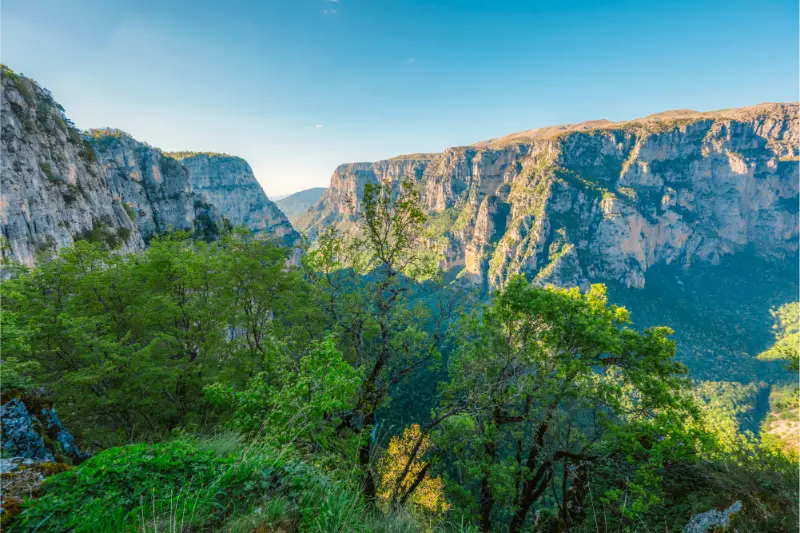
    Vikos Gorge From Oxya Viewpoint National Park Vikosaoos Zagori Northern Greece Nature Landscape

    Zagori and the wider Pindus reward slow travel. Roads twist around valleys, parking in old settlements is limited, and weather can change the order of the day. I therefore plan by geographic clusters: one village group, one outdoor objective and one relaxed meal. That structure leaves room for an unexpected viewpoint, a local recommendation or a trail that takes longer than the sign suggests.

    The village itself

    Monodendri deserves time before or after the gorge. Stone houses, paved lanes and the central square create a compact mountain settlement where it is easy to slow down. Rather than parking, photographing the square and leaving, walk the side lanes and notice how the village is fitted to the slope. This context helps the viewpoints make more sense: Zagori is as much a cultural landscape as a geological one.

    My approach here is to allow more time than the minimum. Even when the main sight takes less than an hour, the surrounding paths, views and village atmosphere are what make the stop memorable. If weather closes in, shorten the outdoor section rather than compensating by driving faster to the next place.

    Agia Paraskevi monastery

    The walk toward the monastery of Agia Paraskevi is one of the most accessible ways to experience the edge of Vikos without committing to the full gorge crossing. The monastery sits dramatically above the canyon. Stay on safe, established paths and do not treat exposed edges as photo platforms; the depth of the gorge is difficult to judge in photographs.

    My approach here is to allow more time than the minimum. Even when the main sight takes less than an hour, the surrounding paths, views and village atmosphere are what make the stop memorable. If weather closes in, shorten the outdoor section rather than compensating by driving faster to the next place.

    Oxya viewpoint

    Oxya is one of the classic road-access viewpoints over Vikos Gorge and is a natural complement to Monodendri. Go when visibility is good and allow time simply to look rather than racing between viewpoints. Clouds, haze and low light can completely change the atmosphere, which is why flexibility is more useful than a rigid schedule.

    My approach here is to allow more time than the minimum. Even when the main sight takes less than an hour, the surrounding paths, views and village atmosphere are what make the stop memorable. If weather closes in, shorten the outdoor section rather than compensating by driving faster to the next place.

    Hiking choices

    The full Vikos Gorge crossing is an all-day undertaking for prepared hikers, while Monodendri also offers shorter walks. Choose a route based on distance, elevation, weather and exit logistics. The official regional tourism guidance warns that snowmelt and rain can make sections difficult, so a route that looks straightforward on a map can be unsuitable on the day.

    My approach here is to allow more time than the minimum. Even when the main sight takes less than an hour, the surrounding paths, views and village atmosphere are what make the stop memorable. If weather closes in, shorten the outdoor section rather than compensating by driving faster to the next place.

    How I would plan the visit

    A relaxed two-day stay works very well. On the first afternoon, explore the village and walk toward Agia Paraskevi, then use the evening for a local dinner. On day two, visit Oxya early, continue toward Kapesovo and Vradeto or the Kipi bridges, and return before dark. If you are crossing Vikos Gorge, give that hike its own day and arrange transport between trailheads in advance.

    The key is to preserve a margin. In mountain Greece, a 30-minute delay can come from roadworks, livestock, a photo stop, a slow lunch or simply a narrow road behind another vehicle. Building slack into the itinerary means you can enjoy those moments rather than treating them as problems. I also avoid scheduling a long transfer immediately after the main hike or outdoor activity.

    Where to stay

    Monodendri is a convenient base if your priority is Vikos viewpoints and central Zagori. It has enough accommodation and food to avoid constant driving, while still feeling like a mountain village. If you are planning early starts, staying in the village is more practical than commuting from Ioannina. Confirm parking and breakfast times if you need to leave before normal service begins.

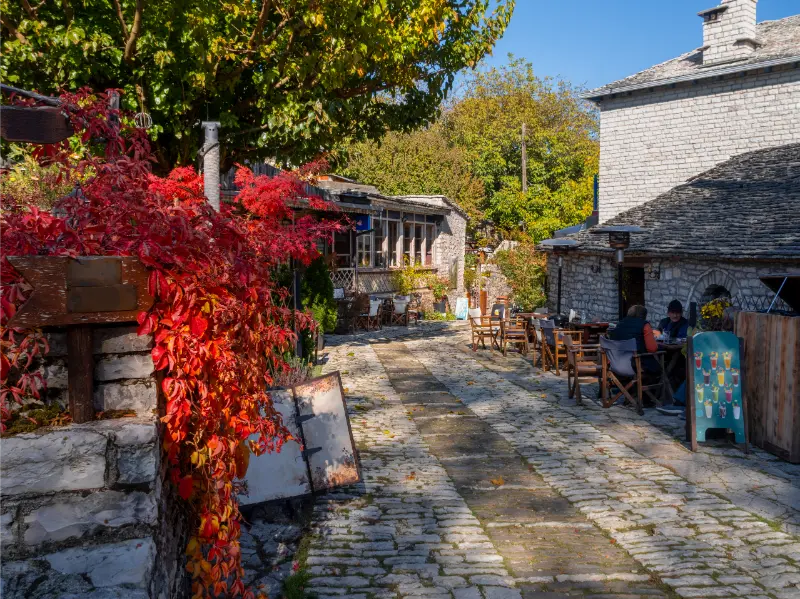
    Traditionally Houses Mountains Village Monodendri Zagori Greece Near Vikos George

    For booking, I pay more attention to parking instructions, heating, breakfast timing and road access than to a long amenities list. Historic villages often have pedestrian lanes and accommodation entrances that are not obvious from a map. A message to the property before arrival can save a stressful search with luggage on steep stone streets.

    Getting around and driving

    A car gives the greatest flexibility in this part of Epirus, but driving style matters. Mountain roads can be narrow, with blind bends, occasional animals and limited shoulders. Keep fuel comfortably above empty, download an offline map, and avoid relying on optimistic map-app journey times. After dark, familiarity with the route matters more than the number of kilometres.

    If you prefer not to drive, organised excursions, taxis and local transfers can cover some major sights, but they are not a complete substitute for a car when you want several small villages. For point-to-point hikes, pre-arranged transport is often more important than getting to the trailhead itself. Confirm the pickup plan before setting out.

    Food and local rhythm

    The village is a good place to try Zagori’s savoury pies, local cheeses, mushrooms and hearty mountain cooking. Portions can be generous, so a heavy lunch before a strenuous walk is not always ideal. I prefer a lighter meal before hiking and a longer dinner afterward, when there is no pressure to drive immediately.

    Opening patterns are seasonal. A village that feels busy on an autumn weekend can be extremely quiet on a weekday outside peak periods. I do not assume that a café, petrol station or taverna shown online will be open at a precise hour. Carrying water and a small snack gives you the freedom to keep the day relaxed.

    Best time to visit

    Late spring and early autumn are excellent for most road trips and walking because temperatures are usually more comfortable than midsummer. Summer offers long daylight, but exposed paths can still be hot. Autumn colours are particularly attractive around the Pindus. Winter creates a completely different atmosphere, with snow possible at altitude and a much greater need to check tyres, chains, forecasts and road conditions.

    There is no single best month for every traveller. Hikers should prioritise stable conditions; photographers may prefer changing weather; families often value long daylight and simpler roads. Whatever the season, recent local information is more important than a fixed annual rule when mountains, rivers or snow are involved.

    Travelling with children

    Short village walks and viewpoints can work well for families, but exposed gorge edges demand constant attention. The full crossing is not a default family walk. Choose paths with known duration and terrain, and remember that stone paving can become slick after rain. A slower itinerary with one major outing per day is more enjoyable than trying to tick off every viewpoint.

    A useful family rule in Zagori is one major objective per day. Children often enjoy the bridges, water, village squares and short paths more than a long checklist of viewpoints. Build in warm food, toilet stops and time to play. If a route has exposure, fast water or loose stone, adult supervision matters more than the route’s reputation for being easy.

    Photography without turning the trip into a photo shoot

    Monodendri is photogenic in several different ways: the geometry of stone lanes, broad canyon views and the contrast between village architecture and the gorge. Morning often brings clearer air; after storms, clouds can add drama but also obscure the view. Never climb barriers or leave paths to imitate photographs taken from unsafe positions.

    The best images often come when you stop looking for a single iconic frame. Stone walls, slate roofs, old paths, water and cloud layers tell the story of the region. Use safe pull-offs, never block a road or doorway, and remember that monasteries, churches and homes may have photography restrictions or deserve privacy even when no sign is posted.

    Responsible travel in the UNESCO landscape

    This part of Epirus is not a theme park: villages are lived-in communities and many trails cross a protected mountain landscape. Park only where you do not block residents or emergency access, keep noise low in village lanes, carry your rubbish out, and stay on established paths when the ground is fragile. In summer, fire restrictions can change quickly; in winter, snow and ice can turn an easy-looking road or path into a serious problem. Local advice on the day is more valuable than an old blog post when conditions are changing.

    UNESCO describes Zagori as a cultural landscape in which villages, stone bridges, paths, staircases, sacred forests and mountain terrain form one connected system. That is a useful way to travel here too: support local businesses, walk respectfully through settlements and avoid reducing the region to a collection of viewpoints. The character visitors come to see depends on villages remaining viable places to live.

    Common mistakes to avoid

    • Treating Monodendri only as a parking stop for Vikos.
    • Confusing a viewpoint visit with the full gorge hike.
    • Starting long hikes without arranging return transport.
    • Packing too many Zagori villages into one afternoon.
    • Walking exposed edges for a photograph.

    Most mistakes come from trying to make the day more efficient than the landscape allows. The cure is simple: fewer stops, earlier starts for outdoor activities, a clear parking plan and a willingness to change the route when weather or fatigue says so. In Epirus, a slower day often produces more memorable travel than a longer checklist.

    Official information and useful context

    For current destination information, consult the Epirus for All Seasons guide to Zagori. For the wider heritage context, UNESCO’s Zagori Cultural Landscape page explains why the villages, stone infrastructure and surrounding landscape are protected as one cultural system. Recheck opening hours, trail conditions and activity schedules close to your travel date.

    Frequently asked questions

    Is Monodendri a good base for Zagori?

    Yes. It is especially convenient for Vikos viewpoints and the central Zagori villages, while still being close enough to Ioannina for the start or end of a road trip.

    Can you see Vikos Gorge without hiking it?

    Absolutely. Agia Paraskevi and road-access viewpoints such as Oxya allow you to appreciate the scale of the gorge without attempting the full crossing.

    How long should you stay?

    One night works for a brief visit, but two nights give you a full day for viewpoints, nearby villages or a proper hike.

    Is the Vikos hike difficult?

    The classic crossing is long and requires fitness, suitable footwear, water, weather checks and transport planning. It is not technically extreme, but it should be treated as a serious mountain day.

    When should you visit?

    Spring and autumn suit hiking, summer offers long daylight, and winter is atmospheric but can bring snow, ice and reduced access.

    Final thoughts

    Monodendri Zagori Guide works best when it is given enough time to feel like part of a mountain journey rather than another pin on a map. Keep the day realistic, connect it with nearby villages instead of distant attractions, and let food, weather and walking pace shape the itinerary. That approach is exactly what makes Epirus different from a fast island-hopping schedule.

    Streets Village Monodendri Mountains Epirus Greece
  • Thessaloniki Archaeological Museum Guide: Highlights, Tickets and a Smart Visiting Plan

    Thessaloniki Archaeological Museum Guide: Highlights, Tickets and a Smart Visiting Plan

    The Archaeological Museum of Thessaloniki is one of the best places in northern Greece to understand Macedonia beyond the famous names of Philip II and Alexander the Great. The collections move from prehistoric communities through the rise of the Macedonian kingdom and into the Roman era, with gold, sculpture, funerary monuments and everyday objects that give the region much more depth than a single archaeological site can provide.

    I would place the museum early in a Thessaloniki stay, especially before day trips to Pella, Aigai or Dion. Once you understand the objects, chronology and geography inside the galleries, the wider region becomes easier to read. The museum is also conveniently close to the seafront, White Tower and Museum of Byzantine Culture, so it fits naturally into a cultural day without complicated transport.

    Macedonia Thessaloniki Byzantine Civil Museum

    Why this deserves a place in your Thessaloniki itinerary

    The museum is valuable because it explains Macedonia as a long historical landscape rather than a chapter built around one dynasty. Gold jewellery and elite burials are spectacular, but the stronger experience comes from seeing how cities, sanctuaries, cemeteries and trade developed across the region. That context makes later visits to archaeological sites much more rewarding.

    It is also a useful weather-proof stop. Thessaloniki can be hot in summer, wet in winter and windy by the sea. A well-timed museum visit gives you two or three hours of substantial content while allowing the outdoor part of the day to move to a more comfortable period.

    At a glance

    Best forAncient Macedonia, archaeology, first-time visitors and rainy or very hot days
    Time needed2–3 hours for a focused visit; longer for archaeology enthusiasts
    Best timeMorning or early afternoon; first Thursday evenings in selected summer months can be useful
    AreaNear the White Tower and seafront
    Pair it withMuseum of Byzantine Culture, White Tower, Galerian Complex

    What to see and focus on

    Do not try to photograph every display case. Choose a few strong themes and let the museum build a story around them.

    • The Gold of Macedon galleries and elite funerary objects.
    • Prehistoric and early historic material that explains the region before the Macedonian kingdom.
    • Sculpture, inscriptions and funerary monuments from Thessaloniki and Macedonia.
    • Open-air exhibits and stone monuments when weather allows.
    • Explanatory material that helps connect Thessaloniki with Pella, Aigai and Dion.

    Understanding Macedonia before the famous kings

    Long before the royal court reached its classical peak, communities across Macedonia developed settlement networks, burial traditions and exchanges with the wider Aegean world. The museum is especially good at showing that gradual development. It prevents the common mistake of treating the region as if history began when Philip II consolidated power.

    The Roman period also matters. Thessaloniki remained important because of its strategic position and later became one of the great urban centres of the eastern Mediterranean. Looking at Roman sculpture and urban material here prepares you for the Galerian Complex and for the city’s transition into the early Christian and Byzantine world.

    How to approach the Gold of Macedon

    The gold is visually impressive, but slow down enough to read what the objects reveal about status, burial and craftsmanship. Wreaths, jewellery and grave goods were not simply decorative. They communicated identity, wealth, ritual and connections between the living and the dead.

    If you have already visited Aigai, the galleries help you compare royal material with a broader Macedonian context. If you are going to Aigai later, they work as an introduction. Either sequence is useful, but try to avoid seeing the museum and a major archaeological day trip back-to-back without a break because the amount of historical information can become exhausting.

    A practical route that works

    A simple order keeps the museum from turning into a blur of labels.

    1. Begin with the chronological galleries to establish the basic timeline.
    2. Move into the Macedonian material and give extra time to funerary objects and gold.
    3. Take a short break before the Roman and later collections.
    4. Use the open-air section if conditions are comfortable.
    5. Finish by deciding which regional site—Pella, Aigai or Dion—you want to understand next.

    Two concentrated hours are better than four tired hours. The museum rewards attention, not speed or completionism.

    How to get there and move around

    The museum is at 6 Manoli Andronikou Street, close to the White Tower and the waterfront. From Aristotelous Square, the walk is straightforward and mostly flat. Public transport and the Thessaloniki Metro also make the wider centre easy to navigate.

    If you are combining museums, walk between the Archaeological Museum and the Museum of Byzantine Culture rather than taking a taxi. The distance is short enough that transport usually adds more friction than it removes.

    Best time of day and season

    The museum works year-round. In summer, I like using it during the hottest part of the day and keeping the waterfront for morning or evening. In winter, it is a reliable anchor around which you can build shorter outdoor walks.

    On the first Thursday of May through September, the museum currently advertises extended hours for selected exhibitions until 22:00. That can be useful if you prefer a slower evening cultural visit, but verify the specific galleries and date before relying on it.

    Tickets, opening hours and 2026 planning

    The museum currently lists general admission at €10 and reduced admission at €5. From April 1 to October 31 it advertises 09:00–17:00 daily, with selected first-Thursday evening openings; from November through March it lists 09:00–17:00 with Tuesday closed. Hours are explicitly subject to change.

    Check the latest information at the official Archaeological Museum of Thessaloniki website shortly before visiting. Do not rely on screenshots of old schedules, especially around holidays.

    Food and coffee nearby

    The museum area is close enough to the centre that you do not need to plan lunch around the museum café alone. A coffee before the visit can help with concentration; a proper meal afterwards is better than interrupting the galleries when you are halfway through the chronology.

    If you plan to continue to the waterfront, walk west after the museum and choose food based on the next neighbourhood rather than the museum exit. Thessaloniki is a city where lunch can easily become part of the sightseeing day.

    Macedonia Thessaloniki Cinema Museum

    Is it worth it with children?

    Families can enjoy the museum if adults select a few themes instead of trying to cover everything. Gold, armour, sculpture and stories connected with ancient kings give children concrete things to look for.

    Break the visit after about an hour if attention drops. The nearby seafront gives you an easy outdoor reset before another cultural stop.

    Accessibility and physical effort

    The museum states that it is accessible to people with disabilities. The modern galleries are significantly easier than uneven outdoor archaeological sites.

    If mobility is limited, use the museum as one of the strongest historical experiences in the city and be more selective about steep or irregular sites elsewhere.

    How to combine it with the rest of Thessaloniki

    For the bigger picture, start with my Thessaloniki Travel Guide, then use the Ano Poli guide and White Tower and waterfront guide to connect the city centre with the upper town and seafront.

    For regional context, continue with Ancient Pella, Aigai/Vergina or Dion Archaeological Park. These three day trips become much easier to interpret after the museum.

    Macedonia Thessaloniki Folk Art Museum

    Mistakes to avoid

    • Rushing directly to the gold and ignoring the earlier galleries.
    • Trying to combine two large museums and several monuments without a break.
    • Assuming summer opening always continues into the evening.
    • Reading only the object labels and skipping the maps and chronology.
    • Planning the visit immediately before a long archaeological day trip.

    Treat the museum as the foundation of your northern-Greece history, not a box to tick between the White Tower and lunch.

    A slower version of the visit

    A slower visit can focus on one question: how did Macedonia change from local communities into a kingdom and then a Roman province? Following that thread makes the museum feel coherent even if you skip entire cases.

    Afterwards, walk to the sea and give yourself fifteen minutes without another monument. That pause helps the information settle before you continue.

    Practical packing and small details

    • A light layer for climate-controlled galleries.
    • A small notebook or phone note for sites you want to visit later.
    • Water for the walk before and after the museum.
    • Comfortable shoes if you are combining the visit with the seafront.

    Large bags and unnecessary gear only make museum days tiring. Keep the day light and let the exhibits do the work.

    Responsible travel and local etiquette

    Respect photography rules and do not block narrow display areas while taking pictures. Museum objects often attract crowds in small spaces.

    Support official museum information rather than repeating simplified myths. Archaeology is strongest when evidence and uncertainty are both acknowledged.

    FAQ

    How much time do I need?

    Two to three hours is enough for a strong first visit.

    How much is the ticket in 2026?

    The official museum currently lists €10 general admission and €5 reduced; recheck before visiting.

    Is it close to the White Tower?

    Yes. The museum is within an easy walk of the White Tower and waterfront.

    Is it good before visiting Vergina?

    Yes. It gives useful Macedonian context before Aigai/Vergina, Pella or Dion.

    Is it open on Tuesday?

    In the current summer schedule it is open daily; in the November–March schedule Tuesday is listed as closed.

    Final thoughts

    The Archaeological Museum is one of the best investments of time in Thessaloniki because it makes the entire region more understandable. It is not only about beautiful objects; it gives you a framework for Macedonia.

    Visit early in your stay, keep the route focused and use what you learn to choose the archaeological day trips that genuinely interest you.

  • Where to Stay in Ios: Chora, Mylopotas, Port or a Quiet Beach? Best Areas Compared

    Where to Stay in Ios: Chora, Mylopotas, Port or a Quiet Beach? Best Areas Compared

    Choosing where to stay in Ios matters more than choosing a specific hotel. A room in central Chora creates a completely different holiday from one on Mylopotas, beside the port or near a remote beach. Distances are not huge, but hills, late-night transport and seasonal bus frequency make the wrong base surprisingly inconvenient.

    For most first-time visitors the decision comes down to Chora versus Mylopotas. Chora wins for restaurants, atmosphere and nightlife; Mylopotas wins for immediate beach access. The port is useful for short stays and early ferries, while remote areas suit travellers with a vehicle who actively want quiet.

    Quick area comparison

    ChoraBest all-round base, food, nightlife, culture
    MylopotasBest for beach-first holidays
    Port / GialosBest for ferry convenience and short stays
    Koumbara / west coastQuieter beach atmosphere, sunset
    Manganari / remote southSeclusion; best with deliberate transport planning

    Stay in Chora for the complete island experience

    Chora is my default recommendation for a first visit of three to five nights because you can walk to restaurants, museums, churches and nightlife, then use public transport for the main beaches. It also gives evenings structure: you return from the sea, rest, then step outside for dinner.

    The downside is noise and stairs. A hotel inside the most active lanes can be loud late at night, while a beautiful upper-village room may involve a substantial climb. Read the Chora Ios guide and ask the property about access before booking.

    Stay at Mylopotas for a beach-first holiday

    Mylopotas is better when the beach is the reason for the trip. You can swim before breakfast crowds, return to your room during the hottest hours and go back to the sea later. Families, couples and younger travellers all use the area, but the atmosphere varies by exact property and beach section.

    The compromise is that Chora requires transport or an uphill walk. If you expect to go out every night, the convenience of waking up beside the beach may be outweighed by repeated late transfers. See the Mylopotas Beach guide.

    Stay near the port for ferry convenience

    The port/Gialos area is practical, especially if you arrive late, leave early or stay only one or two nights. You are close to the ferry, have a usable beach and can reach Chora by bus or taxi. It is less romantic than the village for many travellers, but convenience is a real luxury on transfer days.

    Consider a final-night port stay only if your departure time justifies moving hotels. Otherwise, changing rooms can cost more time than it saves. Ask your Chora or Mylopotas property whether they arrange early transfers before booking two accommodations.

    Stay around Koumbara for a quieter west-coast feel

    Koumbara and nearby west-coast accommodation can suit couples or repeat visitors who want beach time and sunset without sleeping in the centre of the nightlife. A vehicle or reliable taxi plan becomes more useful, especially for dinner in Chora.

    Koumbara Beach Island Of Ios Greece

    This is not the best choice for a first-time car-free traveller who wants to see everything. It is a deliberate lifestyle choice: more quiet, less spontaneous access to the main village.

    Stay near Manganari or the remote south for seclusion

    Remote southern accommodation is for travellers who want the beach itself to be the destination. It can be wonderful for couples, writers, slow travellers and anyone who does not care about nightlife. But confirm food, transport and seasonal opening before committing, because isolation feels different when services are limited.

    Use the Manganari guide to understand the south-coast day. I would not recommend a remote base to a first-time visitor without a vehicle unless the property provides dependable transfers.

    Best area without a car

    Chora is the strongest all-round choice, followed by Mylopotas if the beach dominates your plans. The port is also easy but less central to evening life. Remote beaches become much harder without private transport, especially outside the peak timetable period.

    Read Ios Without a Car before paying for accommodation. The cheapest room can become expensive if you need two taxis every day.

    Best area for nightlife

    Stay in or immediately around Chora if nightlife is central. Choose the edge of the village if you want to walk to bars but still sleep. Ask specifically about late-night noise; generic descriptions such as “central” and “lively” can hide a huge difference in experience.

    The Ios nightlife guide explains timing, transport and how to balance late nights with beach days.

    Ios Beach Greece

    Best area for families

    Mylopotas is easiest for repeated beach days; quiet parts of Chora can work well for restaurants and transport. Families should prioritise direct road access, shade and a short walk to food over a dramatic view reached by many steps.

    See Ios with Kids for a realistic family itinerary. The “best hotel” for adults travelling light can be the wrong choice with a stroller or beach gear.

    Best area for couples

    Couples have the widest choice. Chora works for evenings and atmosphere, Mylopotas for beach time, and quieter west- or south-coast stays for privacy. Decide whether your ideal night ends with a short walk from dinner or with silence beside the sea.

    Should you split your stay?

    On a stay under five nights, usually no. Ios is compact enough that changing hotels often creates unnecessary packing. A split makes more sense on a week-long trip when you deliberately want two different rhythms, such as three nights in Chora and three nights near a quiet beach.

    Questions to ask before booking

    • How far is the nearest practical bus stop?
    • Are there many steps between the road and the room?
    • Is late-night noise common in July and August?
    • Is parking available if I rent a vehicle?
    • Can the property arrange an early ferry transfer?
    • Are restaurants within walking distance on my exact travel dates?

    Frequently asked questions

    What is the best area for a first trip to Ios?

    Chora is the best all-round base for most first-time visitors because it combines culture, food, nightlife and transport.

    Is Mylopotas better than Chora?

    Only if beach access is your top priority. Chora is stronger for evenings; Mylopotas is stronger for swimming and an easy beach routine.

    Should I stay near the port?

    It is excellent for early or late ferries and short stays. For a longer holiday, most travellers prefer Chora or Mylopotas.

    Where should I stay for a quiet trip?

    Look at the edges of Chora, quieter parts of Mylopotas, Koumbara or remote coastal accommodation. Verify transport before booking.

    Final recommendation

    For a first four-night trip, I would usually stay in Chora if evenings and variety matter, or Mylopotas if the beach is the main objective. Build the rest of the island around day trips rather than moving accommodation. Then use the Ios travel guide and best beaches guide to fill the itinerary.

    Planning details that make a real difference

    Ios looks compact on a map, but the island is hilly and summer heat changes how long simple journeys feel. Group each day geographically instead of bouncing from the port to the north, back to Chora and then to the south. One beach area plus one cultural or evening area is usually enough. This reduces transport time and leaves room for swims, meals and the unexpected delays that are normal on an island.

    Panoramic View Sopra City And Port Of Island Of Ios Sulle Cyclades In Greece Durante Tempo Of Sunset

    In July and August, protect the middle of the day. Use early morning for walking, archaeology or village exploration, then move to the beach, lunch or shade. September often keeps warm sea temperatures while making active days easier, but some seasonal services gradually reduce frequency. May and early June are attractive for walking and quieter travel, although the sea may feel cooler and not every beach business will operate at peak-summer hours.

    Wind should remain a flexible part of the plan. The Meltemi can affect beaches, small boats and comfort even on a cloudless day. Ask locally which coast is behaving best rather than forcing a beach because it was written into the itinerary. This is also why cultural options in Chora are valuable: a windy morning can become a museum-and-village morning without feeling wasted.

    For money, carry a payment card plus some cash. Do not rely on a single ATM on the day of departure, and keep enough cash for a taxi if a card terminal fails. If you are travelling in peak season, reserve accommodation and important ferry connections early, but leave ordinary beach days flexible.

    How I would fit this into a first Ios trip

    On a first four- or five-night visit, I would give one full day to Mylopotas, one to Manganari or another remote coast, one morning to Chora and archaeology, and one flexible block to hiking, a boat trip or the north. Evenings naturally return to Chora for sunset and food. This structure shows both the social and quiet sides of the island without turning the trip into a checklist.

    Ferry times should shape the first and last day. If you arrive late, do not schedule a remote beach immediately; settle in, eat and walk through Chora. If you leave early, protect the final evening from transport stress by confirming the bus or taxi before dinner. The best island itinerary is not the one with the most stops, but the one that still feels enjoyable when wind, heat or ferry timing changes the order.

  • Santorini Without a Car: Buses, Walking, Transfers and Realistic Day Plans

    Santorini Without a Car: Buses, Walking, Transfers and Realistic Day Plans

    You can visit Santorini without renting a car, and for many first-time travellers I actually prefer that approach. Fira is the hub of the public bus network, Oia and the main beach resorts have regular seasonal links, and organised tours can cover places that are awkward by bus. The trade-off is that you must plan around a hub-and-spoke system rather than expecting direct buses between every pair of attractions.

    The key decision is where you stay. A beautiful remote hotel can make a car-free holiday unnecessarily difficult, while a room in Fira, Firostefani, Kamari or Perissa can simplify transport enough that you never miss having a vehicle. This guide focuses on realistic daily logistics rather than pretending buses work like an urban metro.

    For the wider island picture, keep the Santorini travel guide open alongside this page. The Oia guide, Fira guide, Akrotiri guide, Imerovigli guide and Santorini wine guide cover the main places and experiences in more depth, so you can build a route without repeating the same stops.

    How Santorini buses work

    KTEL Santorini operates the island’s public buses, with Fira as the central hub. The official website lists destination routes including Oia, Kamari, Perissa, Akrotiri, Vlychada, Monolithos, Firostefani/Imerovigli and the airport. Routes and frequencies change seasonally, so always use KTEL Santorini’s official timetable rather than relying on a screenshot from a forum.

    The practical consequence is that a journey such as Oia to Perissa may require travelling to Fira first and changing buses. That is not a problem if you plan for it; it becomes frustrating only when you assume two points on the same island must have a direct service.

    Classic Oia Santorini Skyline Night With Buildings Greece

    Best places to stay without a car

    BaseWhy it works car-freeMain trade-off
    FiraMain bus hub, museums, restaurants, airport/port connectionsBusy and less tranquil.
    FirostefaniWalk to Fira; caldera views; local bus optionsSome hotel access involves many stairs.
    ImerovigliWalkable to Firostefani/Fira for active travellersLess convenient late at night.
    KamariBeach, restaurants, bus link to FiraNot on the caldera.
    PerissaLong beach, restaurants, seasonal busesMost island trips route through Fira.
    OiaExcellent if most time is spent in OiaRemote from the central hub and beaches.

    Airport to hotel without a rental car

    Public buses link the airport with Fira according to the seasonal schedule. From Fira, you can change for other destinations. With heavy luggage, children or a late arrival, a pre-booked transfer can be worth the extra cost because it removes the uncertainty of waiting and changing buses.

    If staying in a caldera property, ask where the vehicle can actually drop you. Many hotels are reached by pedestrian lanes and stairs. A transfer may bring you only to the nearest road point, so porter arrangements matter as much as the drive itself.

    Athinios ferry port without a car

    The ferry port is at the bottom of a steep cliff road where traffic can concentrate around ship arrivals. Bus and transfer services operate around ferry traffic, but I would not improvise a tight airport connection immediately after a ferry arrival. Leave margin for unloading, queues and the climb from the port.

    For departures, arrange transport based on the ferry company’s check-in guidance and seasonal traffic rather than using a fixed “30 minutes is enough” rule. Port days are one of the few times a private transfer can meaningfully reduce stress even for budget-conscious travellers.

    Fira, Firostefani and Imerovigli on foot

    These three areas are connected by a scenic caldera path. Walking often beats waiting for a bus. Fira to Firostefani is short; continuing to Imerovigli is still very manageable for active travellers. The Firostefani guide explains how to use this corridor as part of a car-free stay.

    People Roof House Waiting Sunset Santorini Greek Island Greece

    Oia without a car

    Buses from Fira make Oia straightforward. Go early if you want quieter lanes, and avoid structuring the entire day around sunset unless you are comfortable with the return crowds. Another excellent option is to hike from Fira or Imerovigli to Oia using the Fira to Oia hike guide and return by bus.

    Akrotiri and the south without a car

    Akrotiri is reachable by public transport from Fira when seasonal services operate. Combining several south-island stops in one day is harder because direct cross-connections are limited. This is where a guided tour can be more efficient: one vehicle can link the archaeological site, a village, a winery and a beach without repeated returns to Fira.

    Beach days without a car

    Kamari and Perissa are the easiest choices for a full beach day. Take the bus from Fira, stay several hours and return rather than trying to visit three beaches in one afternoon. Vlychada may also be reachable by seasonal service, but lower frequency means you should check the return time before settling in.

    When a taxi or transfer is worth paying for

    • Very early airport departure.
    • Late arrival with luggage.
    • Ferry port transfers during busy ship windows.
    • Dinner at a winery or remote restaurant after buses become infrequent.
    • Travelling with toddlers, older relatives or significant mobility limitations.
    • Moving between two non-Fira bases with luggage.

    A realistic 4-day car-free plan

    1. Day 1: base yourself in Fira/Firostefani, walk the caldera and visit the Museum of Prehistoric Thera.
    2. Day 2: bus to Oia early; return by bus or hike one direction if conditions suit.
    3. Day 3: use a bus to Akrotiri or book a south-island guided tour with a winery/village stop.
    4. Day 4: choose Perissa or Kamari for a simple beach day, then return to Fira for dinner.

    What not to do without a car

    Do not design a day with six short stops scattered around the island. Public transport is better for point-to-point visits where you stay long enough to justify the journey. If you want to photograph every village in one day, rent a car for that single day or book a tour. A car-free trip is most enjoyable when you embrace slower blocks of time.

    Scooters and ATVs are not automatically the answer

    Visitors sometimes avoid renting a car only to rent an ATV or scooter instead. These vehicles bring their own safety risks, especially on busy roads, in strong wind and for inexperienced riders. Choose them only if you are properly licensed, insured and experienced—not as a casual substitute for a car because parking looks difficult.

    Tours that solve transport problems

    A good tour should replace a genuinely awkward transport day. Akrotiri plus villages, a wine circuit or a boat cruise with hotel transfer can all make sense. Avoid booking tours that duplicate places you can walk to easily from your base.

    Using Fira as a deliberate transport hub

    If you accept that most routes begin or end in Fira, the network becomes easier to use. Plan mornings from Fira to one destination, spend several hours there, then return. Trying to chain Oia, Akrotiri and Kamari together by bus in one day is possible only at the cost of a lot of waiting and repeated transfers.

    Tickets, queues and boarding

    Arrive a little before busy departures, especially for Oia and the beaches in peak summer. Keep small cash available in case payment methods differ from what you expect, and listen for destination announcements because buses may not use route numbers in the way city networks do.

    When one rental day changes everything

    A single rental day can cover Pyrgos, Megalochori, Emporio and Vlychada efficiently. This hybrid strategy keeps the holiday mostly car-free while giving you one flexible day for places where public transport would force repeated returns to Fira.

    One final practical planning note

    Before finalising the day, recheck transport, weather and any seasonal opening information for your exact travel date. Santorini changes character dramatically between spring, peak summer and late autumn: buses run at different frequencies, restaurants and beach services may alter their hours, and strong wind can make a plan that looked perfect on paper uncomfortable in practice. Build a little spare time between major stops, carry water, and avoid treating short driving distances as proof that you can fit unlimited sightseeing into one day. The most enjoyable Santorini itineraries leave enough room to stop for a meal, change coast when conditions are better elsewhere, or simply stay longer in a place that turns out to be more interesting than expected.

    Frequently asked questions

    Can you do Santorini without a car?

    Yes. Fira-based buses, walking and selected tours cover most first-time itineraries.

    Where should I stay without a car?

    Fira is the easiest transport base; Firostefani is the best compromise for views plus walkability. Kamari and Perissa work well for beach-focused stays.

    Landscape Firostefani Village Santorini Island Greece

    Can I get from the airport to Oia by bus?

    Typically you travel through Fira rather than using a direct airport–Oia route. Check the current timetable for your dates.

    Is the ferry port easy by public transport?

    Buses serve ferry traffic, but congestion and luggage make private transfers attractive when timing is important.

    Do buses run late at night?

    Seasonal operating hours vary. Never assume the last return is the same all year; check the official schedule on the day.

    Final thoughts

    A car-free Santorini trip works when the itinerary respects the transport network. Stay near Fira or another strong bus base, walk the caldera villages, dedicate whole blocks of time to Oia or a beach, and use one organised tour for the awkward south-island day. That approach often feels calmer than driving and parking every day.

  • Thassos Travel Guide: Beaches, Mountain Villages and a 7-Day Road Trip

    Thassos Travel Guide: Beaches, Mountain Villages and a 7-Day Road Trip

    Thassos is one of the easiest Greek islands to imagine as a road trip. A coastal road circles a green, mountainous island where pine trees meet bright beaches, while inland villages, marble quarries and archaeological remains add reasons to leave the shoreline.

    Because access is through northern Greece, I would combine Thassos with Thessaloniki or the new Kavala route rather than with the central Cyclades. It creates a completely different Greece itinerary.

    Why visit Thassos?

    Visit Greece describes Thassos as the northernmost Greek island, only a short distance from the Macedonian coast. That proximity matters: the island is more wooded than many southern Aegean destinations and can be reached without a long open-sea ferry crossing.

    It is especially good for travellers who want beaches but do not want every day to look the same. You can swim in the morning, eat in a mountain village at lunch, explore ancient remains later and finish in a harbour town.

    Where to stay

    Limenas (Thassos Town)

    The main town is best for archaeology, transport and a broad choice of restaurants. It also works well for first and last nights.

    Limenaria / Potos

    The south offers a larger holiday-resort atmosphere and convenient access to many popular beaches.

    Skala Potamia / Golden Beach

    A good eastern base for families and travellers who want a long beach within walking distance of accommodation.

    Skala Potamia Thassos Greece

    Best things to do

    Explore ancient Thassos

    Around Limenas, ancient remains include the agora, theatre area and other archaeological traces. Visit early or late in the day during hot weather.

    Drive the coastal circuit

    The island road is a destination in itself, but I would divide it over several days rather than attempt a rushed full lap with constant stops.

    Visit Theologos or Panagia

    Mountain villages reveal stone architecture, springs, shaded squares and a slower rhythm than the coast.

    See the marble landscapes

    Thassos has been famous for marble since antiquity. Modern quarries are working landscapes rather than tourist playgrounds, so stay within legal and safe viewing areas.

    Marble Covered Beach Thassos Island Greece

    Choose a different beach each day

    Golden Beach, Paradise Beach, Psili Ammos and other coves all have different exposure and facilities. The best choice changes with wind and crowd levels.

    Add a short hike

    The mountainous interior provides walking options and viewpoints, but summer heat can be intense away from the sea. A spring or autumn visit is better for longer walks.

    Food

    Northern Greek influences are noticeable in the food, alongside island staples such as grilled fish, olive oil, honey and local meat dishes. Mountain villages can be especially rewarding for a long lunch.

    How to get there

    Thassos has no airport. Travellers usually fly or travel overland to northern Greece and continue by ferry from the mainland. Kavala’s airport is one common gateway, while the exact ferry port and schedule depend on the route and season.

    Getting around

    A car is the easiest way to make full use of the island. The coastal circuit is straightforward compared with many mountain islands, but parking at famous beaches can still become difficult in peak summer.

    A realistic 7-day itinerary

    Day 1 – Limenas

    Arrive, explore the old harbour and archaeological area.

    Day 2 – East coast

    Focus on Golden Beach, Panagia and nearby viewpoints.

    Day 3 – South coast

    Move through beaches and finish around Potos or Limenaria.

    Limenaria Thassos Greece

    Day 4 – Mountain villages

    Spend a slower day inland with Theologos or another traditional village.

    Day 5 – West coast

    Explore the less dramatic but often calmer western side and choose a sunset stop.

    Day 6 – Beach or hiking day

    Use weather to decide between a longer swim day and an inland walk.

    Day 7 – Favourite area

    Return to the coast or village you liked most instead of forcing in new stops.

    How I would plan the trip

    I would build a trip to Thassos around geography rather than a list of attractions. Choose one main area for each day, add only nearby stops, and keep at least one half-day flexible. On a Greek island, the distance on the map rarely tells the full story: narrow roads, parking, ferry schedules, heat and the temptation to stop at an unexpected beach can all stretch a simple transfer.

    Transfer days deserve their own space in the itinerary. A morning ferry, a rental-car pickup or a mountain drive can consume more time than the timetable suggests once luggage, check-in and meals are included. Treating those hours as real travel time is one of the easiest ways to make the holiday feel relaxed rather than rushed.

    Best time to visit

    For a first trip to Thassos, late spring and early autumn are usually the easiest seasons to balance warm weather with a calmer pace. July and August bring the most reliable beach conditions but also the highest demand, stronger midday heat and more pressure on parking and accommodation. In shoulder season, some seasonal services may run less frequently, so transport and opening times should be checked close to the trip.

    If walking, archaeological sites or road trips are central to the plan, I would avoid putting the most exposed activities in the middle of the day. Start early, leave the hottest hours for lunch or swimming, and return to villages and viewpoints later in the afternoon.

    Budget and booking strategy

    Accommodation prices can change dramatically by month and by exact location. I compare the total cost of the stay rather than the room rate alone: a cheaper property can become less attractive if it requires daily taxis, long drives or paid parking. On small islands and in mountain regions, location is often worth more than an extra category of hotel.

    Ferry timetables, domestic flights, rental-car prices and boat excursions are dynamic. I would book the fixed parts of the trip first, then leave weather-dependent activities flexible where possible. Always recheck schedules a few days before travel and again on the day when sea conditions are relevant.

    Practical mistakes to avoid

    The most common mistake in Thassos is trying to see too much in too little time. A better trip usually comes from choosing fewer bases, driving the same roads less often and leaving space for a beach, village or meal that turns out to be better than expected.

    Do not assume every attractive cove has easy access, shade, facilities or reliable phone coverage. Carry water, sun protection and shoes suitable for uneven ground. Download an offline map before remote drives or hikes, and ask locally before taking a rental car onto rough roads that may not be covered by the rental agreement.

    Who this destination suits

    Thassos works especially well for independent travellers who enjoy combining landscapes with local food and small-scale sightseeing. Couples can build days around beaches, sunset walks and slow dinners, while solo travellers gain flexibility to follow weather and transport conditions. Families can also enjoy the destination, but the most comfortable plan usually uses fewer bases and avoids very long transfer days.

    Travellers with limited mobility should check accommodation access carefully. Historic villages can have steep lanes, steps and parking outside the centre, while some beaches require rough paths or stairways. A beautiful location on a map is not always the most practical base for every traveller.

    How to combine it with the rest of Greece

    Thassos fits naturally with Thessaloniki and the new Kavala guide. For another northern Aegean island with a very different landscape, compare it with Lesvos, Chios or Samos.

    Frequently asked questions

    How many days do I need in Thassos?

    For a first visit, four to seven days usually gives enough time to understand the destination without turning every day into a transfer. A shorter stay can work if you focus on one area and accept that you will leave some places for another trip.

    Do I need a car?

    It depends on the destination and your base, but a car is often the easiest way to reach beaches, villages and archaeological sites away from the main town. If you prefer not to drive, choose accommodation around the strongest public-transport hub and build the itinerary around available buses, boats and organised excursions.

    Is it suitable for a first trip to Greece?

    Yes, provided you match the destination to your travel style. It is particularly rewarding for travellers who want to go beyond the most famous Greek islands while still having enough infrastructure for an independent holiday.

    Should I book everything in advance?

    Book the parts that can sell out or determine the structure of the trip, such as peak-season accommodation, flights and important ferry connections. Keep beach days and weather-sensitive excursions more flexible whenever cancellation terms allow.

    What should I pack?

    Bring sun protection, a reusable water bottle, comfortable walking shoes and a light layer for windy evenings or mountain areas. For beach-heavy itineraries, water shoes can be useful on pebbled or rocky shores.

    Final advice

    The best way to experience Thassos is to resist the temptation to turn it into a checklist. Spend enough time in one area to notice the rhythm of the place, eat where the day naturally takes you, and leave room for local recommendations. That slower approach is what makes a second-tier destination in the guidebooks feel like a first-rate travel experience.

    Useful official information

    For destination information and current travel inspiration, consult the Greek National Tourism Organisation: Visit Greece. Transport timetables, seasonal opening hours and excursion schedules should always be checked again close to your travel dates.

    North, east, south or west Thassos?

    The east is strongest for long green-backed beaches and easy access to mountain villages. The south has a livelier holiday atmosphere, while the west is often useful for calmer water and sunset drives. Limenas in the north remains the cultural and transport anchor.

    That variety is why I prefer changing base once on a seven-day trip. It reduces repetitive driving and lets you enjoy dinner without a long return along the coast.

    More North Aegean guides

    Continue with Alyki and Giola for more detailed planning in this part of Greece.

    \n\n\n

    More Thassos guides

    \n\n\n

    Continue with our detailed Thassos guides: Golden Beach and Skala Potamia, Marble Beach, Limenaria and Potos, mountain villages, Mount Ipsarion and the 7-day itinerary.

    \n

    Related itinerary: Kavala, Philippi and Thassos in 7 Days: Northern Aegean Coast and Island Itinerary.