
Author: Jessica

  • Emporio Santorini Guide: Kasteli, Goulas, Medieval Lanes and a Half-Day Visit

    Emporio Santorini Guide: Kasteli, Goulas, Medieval Lanes and a Half-Day Visit

    Emporio is one of the best places on Santorini to see how the island looked before the caldera villages became an international luxury destination. The settlement sits inland in the south, close to Perissa and Perivolos, and its historic core is a dense maze of narrow lanes, vaulted passages, small churches and defensive architecture. It feels very different from Oia even though the island is small.

    Blue Domed Churches Whitewashed Houses Oia Santorini Greece Overlooking Aegean Sea Caldera

    The reason to visit is not a single monument. Emporio works because you can walk through the Kasteli quarter, look for the old Goulas tower, notice how houses and alleys were built for protection, then combine the village with a beach or a south-island road trip. I would allow two or three hours if you enjoy slow wandering and architecture rather than arriving for one photograph.

    For the wider island picture, keep the Santorini travel guide open alongside this page. The Oia guide, Fira guide, Akrotiri guide, Imerovigli guide and Santorini wine guide cover the main places and experiences in more depth, so you can build a route without repeating the same stops.

    Emporio at a glance

    • Historic inland village in southern Santorini.
    • Known for the fortified Kasteli quarter and compact medieval lanes.
    • Close to Perissa and Perivolos beaches.
    • Best explored on foot after parking outside the tight historic core.
    • Works well in the morning or late afternoon when light and temperatures are softer.

    Why Emporio looks different from Oia

    Oia’s identity is tied to the caldera edge, cave houses and maritime history. Emporio developed inland and has a more defensive urban form. In the oldest part of the village, lanes narrow, buildings seem to lock together and arches create shaded passages. That compactness was practical in an era when settlements needed protection from raids.

    This is also why a visit can feel confusing in a good way. There is no need to follow a perfect route through the Kasteli. Wander, note landmarks, and accept that you may circle back to the same chapel from a different alley. The most interesting details are often small: worn doorways, steps, external staircases and the way light reaches the vaulted passages.

    The Kasteli: the heart of old Emporio

    Kasteli refers to the fortified historic nucleus. It is the section I would prioritise if time is limited. The lanes are pedestrian in character and not designed for modern vehicles. Enter slowly, keep voices low around homes and churches, and remember that this is still a residential neighbourhood rather than an open-air museum.

    Architecture lovers should look at how the lanes turn sharply and how houses form a continuous defensive shell. Santorini’s medieval settlements were shaped by insecurity as well as climate, and Emporio makes that relationship easier to see than the heavily commercial caldera centres.

    The Goulas tower

    The Goulas is a fortified tower associated with Emporio’s defensive history. Its condition and access should not be assumed from photographs online; treat it primarily as a historic landmark in the village landscape and respect any barriers or private boundaries. The value is in understanding why a strong tower and compact settlement developed together.

    Churches and everyday village life

    Small churches appear throughout the old lanes, and their bell towers create some of the most photogenic frames in Emporio. Dress respectfully if entering an active church and avoid photographing worshippers. Unlike a major ticketed attraction, the village rewards observation more than ticking off named sites.

    Outside the Kasteli, modern Emporio has shops, bakeries, cafés and everyday services. That contrast is useful: you can step from a defensive medieval lane into a normal contemporary island community within minutes. It prevents the historic quarter from feeling staged.

    How to combine Emporio with Perissa and Perivolos

    The most practical pairing is a village-and-beach day. Explore Emporio before the heat builds, then continue to Perissa or Perivolos for swimming and lunch. The Kamari and Perissa guide explains the black-sand beach experience, facilities and transport. This combination is especially good if your hotel is on the caldera and you want one day that feels completely different.

    Emporio and Pyrgos: similar or different?

    Both are historic inland villages, but I would not consider them interchangeable. Pyrgos climbs toward a hilltop castle and gives broad island views; Emporio feels denser and more labyrinthine, with the Kasteli wrapped into the living fabric of the settlement. If you enjoy architecture, visit both. If time is short, choose Pyrgos for viewpoints and Emporio for medieval lanes.

    Getting there and parking

    A rental car makes Emporio easy to combine with Perissa, Akrotiri, Megalochori or wineries. Do not attempt to drive into the tight historic lanes; use legal parking on the edges and continue on foot. If travelling by bus, check current KTEL Santorini routes and stops because services and seasonal frequencies change. Fira remains the main network hub.

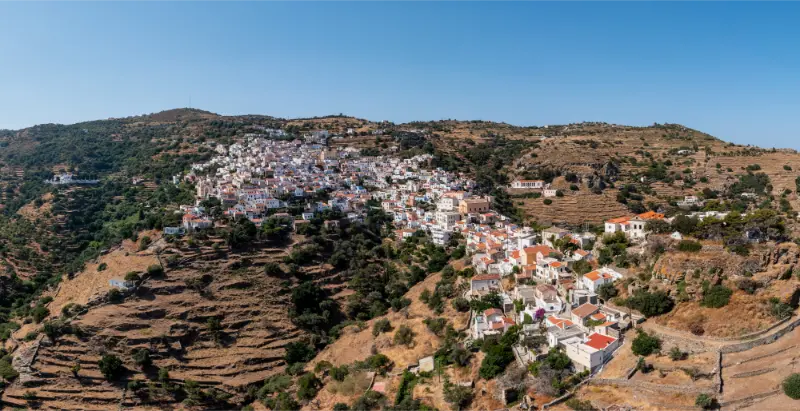
    Aerial View Emporio Village Santorini Greece Aegeana Sea

    Best time of day

    Early morning gives you cooler lanes and very little visitor traffic. Late afternoon brings warmer light and can lead naturally into dinner or a beach evening. Midday is possible because the narrow lanes create pockets of shade, but the walk to and from parking or bus stops can still be hot in July and August.

    A realistic half-day plan

    1. Arrive in Emporio before the strongest heat.
    2. Walk into the Kasteli without trying to force a rigid route.
    3. Find viewpoints of the Goulas and photograph only from public space.
    4. Stop for coffee or a bakery snack in the modern village.
    5. Continue to Perissa or Perivolos for lunch and a swim.
    6. Return via a winery or Pyrgos only if the day still feels relaxed.

    What to wear and bring

    Comfortable shoes are more important than hiking gear. Stone steps and polished surfaces can be slippery, especially after rare rain or where surfaces are worn smooth. Carry water in summer and use sun protection for the open sections. The historic lanes are not stroller-friendly everywhere, so families should be prepared for carrying younger children over steps.

    Tours and south-island routes

    Emporio appears on some private and small-group island tours, often with Pyrgos, wineries or beaches. A guided option is most useful if you want the architectural history explained rather than simply walking the lanes independently.

    Architecture to notice as you walk

    Look for arches bridging lanes, thick walls, recessed doorways and abrupt turns that reduce long sight lines. These features are not random decoration; they reflect the defensive logic of a fortified Cycladic settlement. The experience becomes more interesting when you read the lanes as infrastructure rather than simply a pretty maze.

    Emporio for photographers

    A small lens is better than elaborate equipment because lanes are tight and the most interesting scenes are often close. Morning gives cooler neutral light; late afternoon creates stronger shadows and texture. Ask permission before photographing residents at close range, and never reposition objects outside homes to improve a composition.

    Where Emporio fits if you have only three days

    With only three days, visit Emporio only if inland villages or architecture are a real interest. Combine it with Akrotiri or Perissa so the transport has a clear purpose. If your priorities are the caldera hike, Oia and archaeology, keep Emporio for a future trip rather than reducing every stop to twenty minutes.

    One final practical planning note

    Before finalising the day, recheck transport, weather and any seasonal opening information for your exact travel date. Santorini changes character dramatically between spring, peak summer and late autumn: buses run at different frequencies, restaurants and beach services may alter their hours, and strong wind can make a plan that looked perfect on paper uncomfortable in practice. Build a little spare time between major stops, carry water, and avoid treating short driving distances as proof that you can fit unlimited sightseeing into one day. The most enjoyable Santorini itineraries leave enough room to stop for a meal, change coast when conditions are better elsewhere, or simply stay longer in a place that turns out to be more interesting than expected.

    Frequently asked questions

    How long do you need in Emporio?

    Two hours is enough for the Kasteli and a relaxed walk; three hours works better if you stop for food or enjoy architecture and photography.

    Is Emporio worth visiting if I have already seen Oia?

    Yes, because the urban form and atmosphere are completely different. Emporio shows an inland, defensive side of Santorini rather than caldera resort life.

    Aerial View Emporio Village Santorini Greece Aegeana Sea

    Can you drive into old Emporio?

    You should not plan to. The historic lanes are extremely narrow and best approached on foot from the edge of the settlement.

    Is Emporio good for sunset?

    It is not the classic caldera sunset destination. Visit for the village itself, then use Pyrgos, the caldera edge or your accommodation for sunset.

    Can I combine Emporio with Akrotiri?

    Yes. With a car or organised tour, Emporio, Akrotiri and a south-coast beach can fit comfortably into one day if you avoid rushing.

    Final thoughts

    Emporio adds depth to a Santorini itinerary because it is not trying to compete with the caldera. Walk the Kasteli slowly, notice the defensive logic of the lanes and then continue to the beach. It is exactly the kind of stop that makes the island feel like a real place rather than a sequence of famous viewpoints.

  • Meteora Monasteries Guide: The Six Active Monasteries, Dress Code and Visiting Plan

    Meteora Monasteries Guide: The Six Active Monasteries, Dress Code and Visiting Plan

    Meteora is famous for its rock towers, but the landscape only makes full sense when you understand the living monasteries on top of them. Today six monasteries remain active, each with a different position, access pattern and weekly schedule.

    My broader Meteora Travel Guide covers where to stay, hiking and trip length. This article is narrower: how to plan the monastery visits themselves without racing from car park to car park or accidentally arriving on the wrong closure day.

    Why this place deserves more than a quick photo

    The monasteries are not interchangeable viewpoints. Great Meteoron and Varlaam communicate scale and institutional history; Roussanou appears almost fused to its rock; Agios Nikolaos Anapafsas is compact and close to Kastraki; Agia Triada demands more effort; Agios Stefanos is generally easier to access than the steepest sites.

    Seeing three monasteries thoughtfully can be more rewarding than stepping briefly inside all six. Frescoes, chapels, small museums, courtyards and views require time, and the religious character deserves a slower pace than a scenic driving loop.

    A short history before you visit

    Visit Greece describes Meteora as one of the most significant Orthodox monastic centres, with a monastic presence dating back to hermits who settled among the rocks centuries ago. Historically many more monasteries existed; six remain in operation today.

    Those six are Great Meteoron, Varlaam, Roussanou, Agios Nikolaos Anapafsas, Agia Triada and Agios Stefanos. Each preserves aspects of post-Byzantine religious art, architecture and monastic life.

    Meteora was inscribed on the UNESCO World Heritage List in 1988 for both cultural and natural values. For current official tourism context, see Visit Greece – Meteora.

    What to see: the essential highlights

    • Great Meteoron: the largest and historically most important of the active monasteries, with substantial collections and commanding views.
    • Varlaam: close enough to pair naturally with Great Meteoron and known for impressive frescoes and monastic spaces.
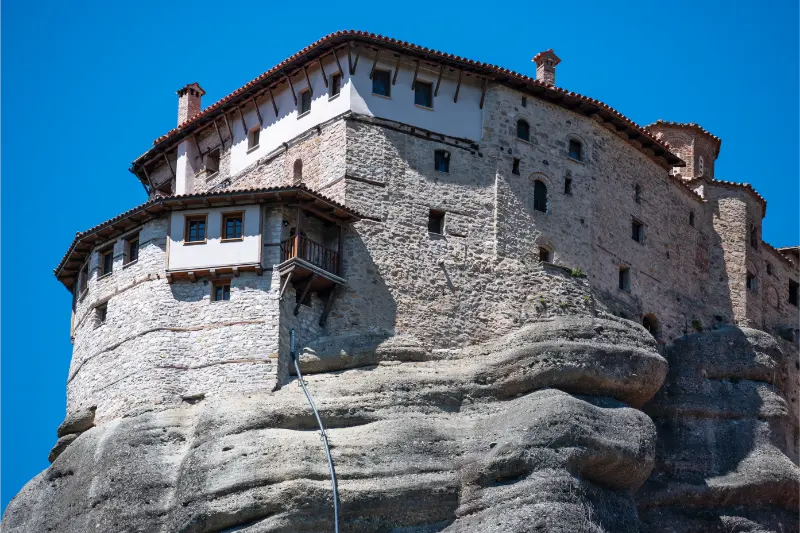
    • Roussanou: visually dramatic because the monastery seems to occupy the full top of its narrow rock pillar.
    • Agios Nikolaos Anapafsas: compact, layered vertically and convenient when approaching from Kastraki.
    • Agia Triada: famous for its isolated position and rewarding outlook, but it requires more physical effort.
    • Agios Stefanos: generally the easiest active monastery to access and a useful choice for travellers who cannot manage many stairs.

    The route I would follow

    The correct route changes by weekday because monasteries close on different days. Start with the current opening schedule, then group sites geographically instead of choosing an arbitrary ranking.

    1. Check official opening days for all six before leaving your accommodation.
    2. Choose two priority monasteries and treat a third as optional.
    3. Start early at the monastery with the longest stairs or biggest visitor demand.
    4. Move to a nearby second monastery before the busiest midday period.
    5. Take a real break in Kastraki or Kalambaka rather than eating in the car.
    6. Use late afternoon for viewpoints or a short hike instead of forcing another interior visit.

    If you have two days, divide the monasteries across them and include a walking route. Meteora is one of the few famous Greek sights where adding time does not just add attractions—it changes how you perceive the whole landscape.

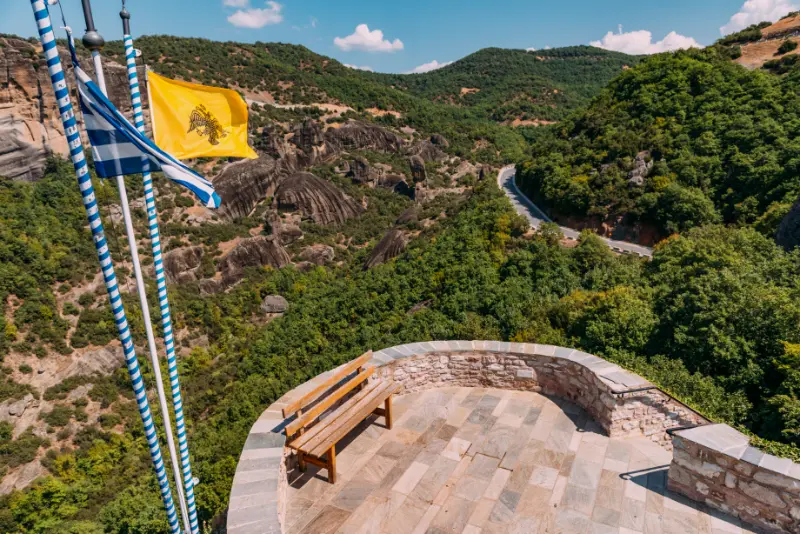
    Panoramic View Meteora Monasteries Thessaly Greece

    How much time do you need?

    One day is enough to visit two or three monasteries plus viewpoints. Two days is better if you also want a hike or if the weekly closure pattern makes your preferred monasteries difficult to combine.
    Inside each monastery, allow roughly thirty to sixty minutes depending on interest and crowd levels, plus parking, stairs and transfers. The road loop looks short on a map, but repeated stops consume time quickly.

    How to get there

    Kalambaka and Kastraki are the main bases. The Meteora guide explains arrival from other parts of Greece; once there, travellers use rental cars, taxis, tours, local transport where available, cycling or hiking routes.

    A car gives flexibility but not guaranteed parking at peak times. Organised tours simplify logistics and interpretation. Hiking gives the deepest sense of the rocks but should be planned around weather and daylight.

    Best time of day and best season

    Spring and autumn are ideal for walking and monastery visits. Summer requires early starts because exposed stairs and viewpoints can be hot. Winter can be atmospheric but brings shorter daylight and more variable conditions.

    Weekly closures are often more important than season. Build the day around the monasteries that are actually open, and recheck because religious observances or operational needs can affect access.

    Tickets, opening hours and current information

    Entrance contributions, opening hours and dress requirements can change. Check the current monastery information locally or through official tourism channels shortly before visiting. Do not rely on a timetable saved months earlier.

    What to wear and what to bring

    • Modest clothing suitable for an active Orthodox monastery.
    • Comfortable shoes for stairs and polished stone.
    • Water, especially in warm weather.
    • A light layer for cool interiors or shoulder season.
    • Cash as a backup for small entrance contributions or local purchases.

    Visiting with children

    Children often enjoy the dramatic setting and stairs more than a conventional museum, but several monasteries in succession can become repetitive. Pick two contrasting sites and add a viewpoint or short nature walk.

    Keep voices low inside chapels and explain in advance that these are active religious communities, not theme attractions. The visit becomes easier when children understand the behaviour expected.

    Accessibility and physical effort

    Accessibility varies substantially. Some monasteries require many steps, while Agios Stefanos is generally the most straightforward for visitors with limited mobility. Verify current conditions before choosing.

    If interior visits are difficult, Meteora still offers exceptional road viewpoints and lower-level scenery. A satisfying day does not depend on reaching every summit.

    Photography without missing the place itself

    Exterior photography is spectacular, especially when a monastery is framed by several rock towers. Inside churches and museums, photography restrictions may apply; follow posted rules without argument.

    The famous sunset viewpoints can become crowded. Arrive before the final light, park responsibly and avoid standing in the road for photographs.

    What to combine with your visit

    Meteora pairs naturally with Mount Olympus, Thessaloniki or a wider mainland itinerary, but travel times are significant. I would not combine Meteora and Delphi as a casual same-day sightseeing pair.

    Kastraki and Kalambaka offer restaurants and quieter evening walks. Staying locally is far better than treating Meteora as a rushed roadside stop during a long drive.

    Where to stay for the easiest visit

    Kastraki feels smaller and sits directly under the rocks, making it excellent for atmosphere and trail access. Kalambaka has more services, transport connections and accommodation choice.

    For a two-day visit, either base works. Choose according to whether you prioritise quiet scenery or maximum convenience rather than obsessing over a few minutes of driving.

    Common planning mistakes

    • Trying to visit all six monasteries in one day.
    • Ignoring weekly closure days until arriving at the door.
    • Wearing clothing that does not respect monastery requirements.
    • Focusing only on interiors and skipping the landscape viewpoints.
    • Parking carelessly on narrow roads during peak periods.

    A slower, better way to experience it

    The point of Meteora is the relationship between seclusion, effort and landscape. Walk a short section between rocks, listen to the change in sound away from traffic, and look back at a monastery from below after you have stood inside it.

    Even one hour on foot can transform the trip from a sequence of parking lots into an understanding of why hermits chose this terrain in the first place.

    Frequently asked questions

    How many active monasteries are there at Meteora?

    Six are currently in operation: Great Meteoron, Varlaam, Roussanou, Agios Nikolaos Anapafsas, Agia Triada and Agios Stefanos.

    Meteora Monasteries And Rock Formations

    Can I visit all six in one day?

    Technically schedules may sometimes allow several, but I do not recommend it. Two or three creates a better experience.

    Is there a dress code?

    Yes, modest dress is expected in active monasteries. Follow the current instructions at each site.

    Which monastery is easiest to access?

    Agios Stefanos is generally considered the least physically demanding of the active monasteries.

    Meteora Monasteries Greece Details From Monastery Rousanou St Barbara

    Do I need a car?

    No. Tours, taxis and hiking are alternatives, though a car offers the most flexibility for independent visits.

    Final advice

    Meteora is not improved by collecting all six monastery names in a single day. Choose a few, understand what makes each different, and leave space for the rocks themselves.

    The best plan combines two or three interiors with viewpoints and at least a little walking. That is when the monasteries stop feeling like isolated attractions and become part of a coherent sacred landscape.

    A practical two-day monastery plan

    If I have two days, I divide the monasteries by geography and effort rather than trying to “complete” a list. On the first morning I would pair Great Meteoron and Varlaam, because they sit close together and together provide a strong introduction to scale, monastic architecture and collections. After lunch, I would use the afternoon for road viewpoints or a short walk rather than another long stair climb.

    On the second day I would choose Roussanou or Agios Nikolaos Anapafsas early, then add either Agia Triada for a more demanding approach or Agios Stefanos for an easier visit. This produces contrast between monasteries and leaves enough mental space to actually remember what you saw inside each one.

    Respecting a living religious site

    Meteora is not an open-air museum that happens to contain churches. Monks and nuns still live in the active communities, pilgrims may be praying, and services can take precedence over sightseeing. Speak quietly in chapels, follow clothing instructions without treating them as a nuisance, and do not photograph people engaged in worship. The difference between tourism and respectful visitation is mostly simple behaviour.

    Driving the Meteora loop safely

    The scenic road can be distracting because every bend reveals another rock formation. Pull into proper viewpoints rather than slowing unpredictably in the carriageway. In high season, parking around monastery entrances can fill quickly, so an early start improves safety as well as the visitor experience. If you are uncomfortable driving mountain roads while sightseeing, a local tour or taxi is a very reasonable alternative.

  • Volos Travel Guide: Waterfront, Tsipouradika, Pelion and a 3-Day Itinerary

    Volos Travel Guide: Waterfront, Tsipouradika, Pelion and a 3-Day Itinerary

    Volos is one of Greece’s most useful city bases because it connects an energetic waterfront with Pelion’s mountain villages and the ferry routes of the Sporades. The city itself is modern and easygoing, with food culture—especially tsipouradika—playing a bigger role than monumental sightseeing.

    This guide is designed for independent travellers who want a realistic pace. Instead of treating the destination as a collection of photo stops, the plan leaves time for beaches, meals, transport delays and the simple pleasure of returning to the same square or waterfront more than once.

    Why this destination is worth adding to a Greece trip

    Volos is one of Greece’s most useful city bases because it connects an energetic waterfront with Pelion’s mountain villages and the ferry routes of the Sporades. The city itself is modern and easygoing, with food culture—especially tsipouradika—playing a bigger role than monumental sightseeing. It is particularly rewarding if you already know the most famous Greek destinations and want a trip with a stronger local rhythm.

    The key is to match the destination to the right traveller. If your priority is nonstop nightlife, luxury shopping or a long list of major monuments, another Greek base may suit you better. If you value landscape, food, walking and days that are not over-scheduled, it can be an excellent choice.

    How to get there and plan the arrival

    Volos is accessible by road and intercity bus from major Greek cities, while rail and regional transport arrangements should always be checked close to travel because services can change. The port is a major gateway for the Sporades, so the city also works well as an overnight stop before or after an island trip.

    I would avoid booking a tight international-flight-to-ferry or long-distance-bus connection on the same day. Greek transport is generally straightforward, but weather, traffic and seasonal timetables can turn an elegant spreadsheet into a stressful holiday. One buffer night is often worth more than an extra attraction.

    Where to stay

    waterfront and port

    The easiest area for first-time visitors, evening walks and ferry logistics. Choose this area if it matches the part of the trip you care about most; changing accommodation every night is rarely necessary.

    city centre

    Practical for shops, cafés and everyday local life. Choose this area if it matches the part of the trip you care about most; changing accommodation every night is rarely necessary.

    Anavros

    A seafront area near the archaeological museum and useful for a longer coastal walk. Choose this area if it matches the part of the trip you care about most; changing accommodation every night is rarely necessary.

    Goritsa side

    Good for travellers who want views and a slightly more residential feel. Choose this area if it matches the part of the trip you care about most; changing accommodation every night is rarely necessary.

    Portaria and Makrinitsa

    Not in volos itself, but the classic pelion villages to add when you have a car or organised transport. Choose this area if it matches the part of the trip you care about most; changing accommodation every night is rarely necessary.

    Best things to do

    Walk the long waterfront

    Volos is best introduced on foot along the sea. The flat promenade makes arrival easy after a long journey and gives you a feel for the city before you choose where to eat.

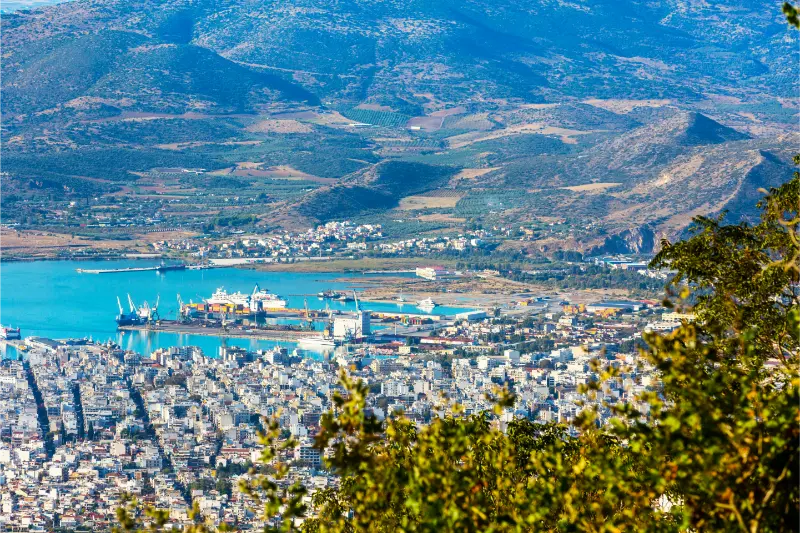
    Volos City View From Sea Greece

    Experience a tsipouradiko meal

    Ordering small dishes with tsipouro is central to Volos food culture. Go slowly, ask how the establishment serves its meze, and never plan to drive afterward if you are drinking alcohol.

    Visit the Athanasakeion Archaeological Museum

    The museum gives strong context for Thessaly and nearby prehistoric sites, making it a worthwhile cultural stop before heading into Pelion.

    Take a day trip to Portaria and Makrinitsa

    These mountain villages rise quickly above the city and show why Volos is such an effective base. Their architecture, squares and views contrast sharply with the modern waterfront.

    Use Volos as the gateway to the Sporades

    Ferries connect the city with islands such as Skiathos, Skopelos and Alonissos according to seasonal schedules. An overnight stay can make ferry-day logistics far less stressful.

    Beaches and swimming

    Beach conditions in Greece are shaped by wind as much as by sunshine. A beach that is perfect one morning can be exposed the next day, so ask locally and keep an alternative coast in mind. Water shoes can be useful on pebbly entries, and shade should never be assumed.

    Anavros coast

    Convenient for a sea walk and a quick local swim in suitable conditions. In July and August, arrive earlier if parking or limited shade is a concern.

    Agria area

    East of the city and useful as the coast begins to blend into pelion. In July and August, arrive earlier if parking or limited shade is a concern.

    Kala Nera side

    A popular pelion gulf option for a broader day trip. In July and August, arrive earlier if parking or limited shade is a concern.

    Aegean Pelion beaches

    Dramatic but farther away, best treated as a full-day excursion rather than a quick volos beach stop. In July and August, arrive earlier if parking or limited shade is a concern.

    Getting around

    For a short stay, the best transport choice depends on where you sleep. Central bases reduce the need for a vehicle, while beaches, trailheads and scattered villages often make a rental car useful. Before renting, read our guide to renting a car in Greece and driving in Greece guide.

    Do not rent a scooter simply because it looks convenient. Wind, uneven road surfaces, heat and unfamiliar traffic can make two-wheel travel demanding. Use only a vehicle covered by your licence and insurance, wear proper protection and choose the slow option when conditions feel marginal.

    What and where to eat

    Volos deserves a meal plan more than a monument plan. Tsipouradika traditionally pair small plates with each order of tsipouro, but styles vary by establishment. Seafood, shellfish, grilled fish and vegetable meze are common, while Pelion adds pies, spoon sweets and mountain produce to the regional picture.

    A useful rule is to separate “view meals” from “food meals”. A waterfront table can be worth choosing for atmosphere, while a backstreet taverna may offer better value and a more local menu. Over several days, do both rather than expecting one restaurant to deliver every part of the experience.

    A realistic itinerary

    • Day 1: arrive, walk the waterfront, explore the centre and have an unhurried tsipouradiko dinner.
    • Day 2: visit the archaeological museum, continue along Anavros, then take an afternoon/evening trip to Portaria and Makrinitsa.
    • Day 3: choose a Pelion beach excursion, a museum-and-food day in Volos, or depart by ferry toward the Sporades.

    The itinerary is intentionally not packed from breakfast to midnight. Build in one slow period every day. In Greece, the memorable part is often the hour you did not schedule: a swim after the wind drops, a village coffee, or a longer dinner because the light is beautiful.

    Best time to visit

    Volos is genuinely year-round. Spring and autumn are excellent for mixing city walks with Pelion villages; summer suits travellers combining the city with beaches and ferries; winter gives Pelion a mountain atmosphere and makes food-focused weekends especially appealing.

    For any shoulder-season trip, verify accommodation, ferry or bus frequency and museum opening days before paying for non-refundable bookings. Small destinations can feel wonderfully local outside summer, but that also means fewer services designed specifically for visitors.

    Travelling without a car

    A car-free trip is possible if you choose a central base and accept that you will see less of the destination. Build days around walking, local buses, taxis and boats instead of trying to reproduce a driving itinerary. Our Greece without a car guide explains how to design the wider trip around that idea.

    Families, couples and solo travellers

    Families should prioritise simple transfers, shade and accommodation within walking distance of food. Couples often get more from a quieter village base and late dinners than from trying to visit every beach. Solo travellers benefit from staying near the main settlement, where transport and evening dining are easier without a car.

    For children, alternate sightseeing with swimming rather than scheduling several cultural stops in a row. For adults, remember that heat changes everyone’s patience and energy: a shorter plan executed comfortably is usually a better holiday than a “complete” itinerary completed exhausted.

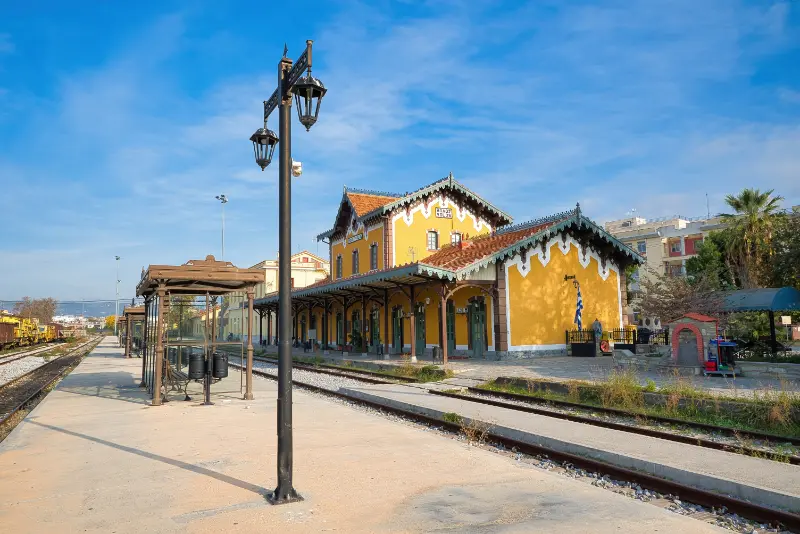
    Historic Station City Volos Greece Building Was Completed

    Budget planning

    The biggest variables are accommodation, vehicle rental and transport to the destination. Food can remain reasonable if you mix tavernas with bakeries and simple lunches. Book peak-summer rooms early, but compare cancellation terms rather than choosing the lowest headline price automatically. See our Greece on a budget guide for a broader strategy.

    What to pack

    Bring breathable clothing, strong sun protection, a reusable water bottle, swim shoes if you dislike rocky entries and at least one pair of footwear suitable for uneven lanes or trails. A light layer is useful on windy ferries and in shoulder season. For a complete checklist, use our Greece packing list.

    Responsible travel tips

    Water and waste management are real constraints in many Greek destinations. Use refillable bottles where safe, avoid unnecessary linen changes, never leave rubbish at remote coves, and stay on established paths in fragile landscapes. At archaeological and religious sites, follow local rules even when other visitors ignore them.

    Useful nearby guides

    If you are building a longer itinerary, these guides connect naturally with this destination: Pelion travel guide, Skiathos travel guide, Skopelos travel guide.

    For the wider trip, start with the Greece travel guide for first-time visitors and then use the 7-, 10- and 14-day Greece itineraries to keep transfer time realistic.

    Common mistakes to avoid

    • Trying to see every beach or village in one day instead of choosing a coherent area.
    • Assuming ferry, bus or museum schedules stay identical all year.
    • Underestimating heat, wind and the time needed for uphill walking.
    • Booking a rental vehicle before checking licence, insurance and parking conditions.
    • Leaving no flexibility for weather-dependent boat trips or outdoor plans.
    • Choosing accommodation only by price without checking how you will reach dinner, beaches and the departure port.

    Frequently asked questions

    Is Volos worth visiting if I am not taking a ferry?

    Yes, especially for food, the waterfront and easy access to Pelion. It works well as a two- or three-night mainland stop.

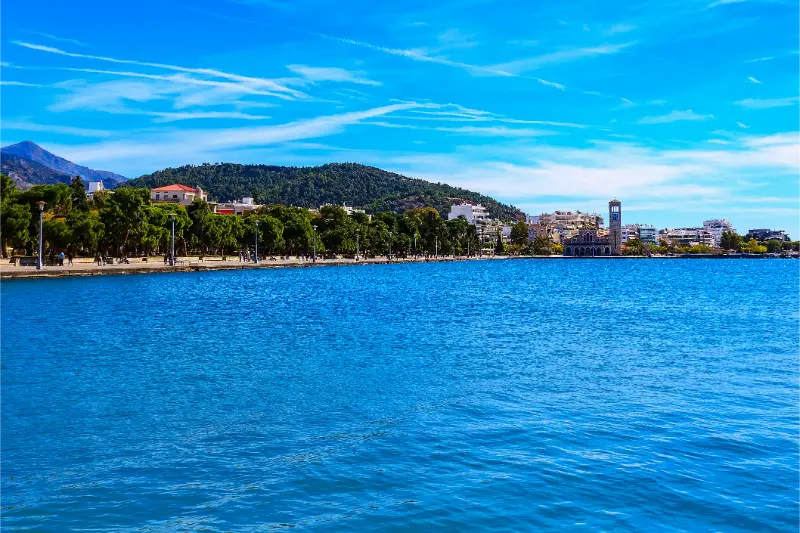
    Volos City Greece Landscape

    Do I need a car?

    Not for the city centre, but a car is very useful for exploring Pelion independently.

    What are tsipouradika?

    They are establishments centred on tsipouro and accompanying meze. The exact serving style varies, so ask how ordering works before starting.

    Can I visit Pelion as a day trip?

    Yes. Portaria and Makrinitsa are the easiest introduction, while more distant beaches and eastern villages need a fuller day.

    Final advice

    The best version of this trip is not the one with the most pins saved on a map. Choose a sensible base, protect the middle of the day from excessive driving or hiking, and leave enough space to repeat the places you genuinely enjoy. That slower rhythm is often what turns a Greece itinerary into a holiday rather than a logistical exercise.

    More Pelion guides

    Continue with Makrinitsa; Portaria; the Pelion Train; Kala Nera and Afissos for more detailed planning.

    \n

    Heading inland from Volos, use our Larissa guide and Tempe and Ambelakia guide to continue through eastern Thessaly.

    \n\n\n

    For more detailed Thessaly planning, continue with 8-day Thessaly road trip.

    \n\n\n

    For more detailed Thessaly planning, continue with Almyros and Kouri Forest, Velestino and ancient Pherae, where to stay in Thessaly and Thessaly with kids.

    \n\n\n

    For more detailed Thessaly planning, continue with Thessaly food guide, archaeological sites in Thessaly.

    \n\n\n

    Continue planning with where to stay in Volos, Volos with kids, Volos without a car, Volos food guide, Volos in one day.

    \n

    More Pelion planning guides: where to stay in Pelion, Pelion with kids, Pelion without a car, best beaches in Pelion, best time to visit Pelion, Pelion food guide, South Pelion guide, East Pelion guide, Pelion in winter, Pelion 3 day itinerary.

  • Andros Without a Car: Buses, Taxis, Ferries and Best Bases

    Andros Without a Car: Buses, Taxis, Ferries and Best Bases

    You can visit Andros without renting a car, but the island rewards careful base selection more than many small Cyclades destinations. The ferry arrives at Gavrio in the west, Chora is on the east coast, Batsi sits between the port and the main western beaches, and Korthi is farther south. Buses and taxis connect the main centres, while hiking routes create an unusual alternative for active travellers.

    A car-free trip works best when you accept that you will not collect every remote beach. Choose a base where dinner and one good beach are walkable, then use buses, taxis or one organised day for the rest. That approach is cheaper and more relaxing than trying to imitate a rental-car itinerary with constant transfers.

    Best car-free bases

    BaseWhy it worksMain limitation
    BatsiBeach, restaurants, accommodation and west-coast bus corridorFarther from Chora museums
    ChoraWalkable culture, town beaches, hiking routesLonger transfer from ferry
    GavrioFerry convenience and busesLess atmospheric for a full holiday
    KorthiQuiet and good for hikingFewer transport options for a first no-car trip

    Arriving at Gavrio

    Most ferries from the mainland use Rafina and arrive at Gavrio. Before sailing, check the current Andros bus timetable and note the next departure toward your base. If the connection is poor, budget for a taxi rather than assuming one will be inexpensive or immediately available during a busy ferry arrival.

    For late arrivals, one night in Gavrio can be sensible. It is better to begin the holiday rested than to force a cross-island transfer after dark. Our Gavrio and Agios Petros Guide covers the port area.

    Batsi without a car

    Batsi is the easiest all-round choice. The main beach, restaurants, cafés and accommodation are concentrated around the bay. You can spend a full day without transport and use buses or taxis for Chora, Gavrio and nearby west-coast beaches. This makes Batsi especially attractive for a four- or five-night trip.

    The limitation is remote access. Achla, Zorkos and some hiking trailheads are awkward without a private vehicle. Treat them as optional rather than as failures if your trip remains car-free.

    Chora without a car

    Chora is excellent if museums, architecture and walking are priorities. Nimborio and Paraporti are on foot, and marked trails lead toward central villages. A bus or taxi is still needed for Batsi, Gavrio and many beaches, but you can fill two days locally without feeling trapped.

    The transfer from Gavrio is the main practical issue. Align your ferry and bus if possible, and ask the hotel about the nearest drop-off because pedestrian lanes can make luggage handling different from a road-front property.

    Using buses

    Andros bus timetables are seasonal. Do not publish or rely on a fixed “every hour” assumption. Save the current timetable shortly before travel and recheck locally because extra summer services or shoulder-season reductions can change the practical network.

    Build each day around the last return bus, not just the outward trip. If the final connection is early, have a taxi number as backup. In small islands, missing the last bus is not a disaster, but it can become an unexpectedly expensive evening.

    Taxis and private transfers

    Taxis are useful for ferry transfers, point-to-point hikes and evenings when bus schedules do not align. For a long hiking day, pre-book the pickup rather than hoping a car is nearby at the finish. Confirm the approximate fare before setting out if budget matters.

    A strategic taxi can make a no-car trip much more flexible. Spending money on two carefully chosen transfers may still cost less than renting and parking a car for a week.

    Hiking as transport

    Andros is unusual because walking can connect villages rather than simply loop around a viewpoint. Marked paths link Chora, Apikia, Menites, Korthi and other areas. This makes an active no-car itinerary genuinely possible, but only if you plan luggage and return transport.

    Traditional Greece Series Andros Island View Chora Village From Old Fortress

    Use the Andros Hiking Guide and current Andros Routes maps. A hiking path should never be used as an improvised shortcut with luggage just because it appears shorter than the road.

    Beaches without a car

    From Batsi, the town beach is effortless and some nearby western beaches can be reached by seasonal bus or short taxi. From Chora, Nimborio and Paraporti are walkable, while Gialia can be combined with a hike. Remote north-east beaches are the main sacrifice of a car-free trip.

    The Best Beaches in Andros guide identifies which beaches are convenient and which are genuinely road-trip destinations.

    A 5-day no-car plan

    Day 1: arrive and stay in Batsi. Day 2: Batsi beach and nearby west coast. Day 3: bus to Chora for museums and town beaches. Day 4: taxi or bus to a central-village walking route around Menites/Apikia. Day 5: relaxed Batsi morning and return to Gavrio. If hiking is your priority, switch the fourth day for a point-to-point trail with a pre-arranged pickup.

    This plan deliberately leaves out remote beaches. That is not a weakness; it is what makes the itinerary reliable. If you later decide you want a single driving day, rent locally for 24 hours rather than restructuring the whole trip.

    Best time to visit

    For a trip that mixes villages, walking and beaches, May, June, September and early October are the most balanced periods. The landscape is easier to enjoy on foot, roads and parking are less stressful than in peak August, and the sea is usually part of the day rather than the only reason to travel. July and August bring the strongest holiday atmosphere, more ferry capacity and fully active beach businesses, but they also demand earlier starts, stronger sun protection and more flexible planning around wind.

    Spring can be excellent for hikers because Andros is unusually green for the Cyclades, although winter and spring growth can temporarily obscure sections of old paths before maintenance teams clear them. In 2026 Andros Routes published repeated spring and summer maintenance updates, a useful reminder that even well-marked trails are living infrastructure rather than indoor attractions. Always check the latest route notes if walking is central to the trip.

    Who this part of Andros suits best

    A car-free Andros trip is best for travellers who enjoy walking, are comfortable using buses and taxis, and prefer two or three strong areas over an island-wide checklist. Batsi is the easiest holiday base; Chora is best for culture; serious hikers can build more complex point-to-point routes.

    Unknown Sailor Statue Andros Island Greece Riva Square Chora Town

    What to carry

    Keep the bus timetable, ferry ticket, hotel address and taxi contacts saved offline. Travel with manageable luggage because stairs and pedestrian lanes are common. For walking days, carry proper shoes, water, sun protection and a power bank.

    Common mistakes to avoid

    The biggest planning error on Andros is underestimating the island because it sits close to Athens. Roads cross steep terrain, villages are separated by valleys and a beach that looks near on a map may require a very different approach road. Build days around one part of the island instead of zigzagging from north to south. The second mistake is assuming the famous Cycladic wind affects every bay equally; conditions can differ sharply by coast, so keep a second beach or walking plan in mind.

    A third mistake is treating the ferry timetable as the only transport decision. The ferry arrives at Gavrio, while Chora is on the opposite side of the island. If you are travelling without a car, the timing of the onward bus or taxi matters. If you drive, check parking at your accommodation and do not assume narrow village lanes are appropriate for through traffic.

    Continue planning your Andros trip

    Use the guides together rather than as separate checklists. Start with the main Andros travel guide and then open the specialist pages that match your route: Andros Travel Guide; Chora Andros Guide; Batsi Andros Guide; Gavrio and Agios Petros Guide; Korthi Andros Guide; Menites, Apikia and Pythara Guide; Ancient Andros Guide. The remaining guides are linked throughout the cluster where they are most relevant, so you can move from a base or beach decision to transport and hiking without rebuilding the itinerary from scratch.

    Useful official sources before you go

    For current destination information I cross-check the Municipality of Andros visitor portal and the Andros Routes project. Trail conditions, museum schedules, ferry services and local transport can change seasonally, so verify time-sensitive details shortly before travel.

    Frequently asked questions

    Can I see Andros without a car?

    Yes. Batsi, Chora and Gavrio are practical with buses and taxis, and marked hiking routes add options.

    Greek Islands View Korthiou Town From High Andros Island Cyclades Greece

    What is the best base without a car?

    Batsi is the easiest all-round base; Chora is better for culture and town-based walking.

    Can I reach remote beaches by bus?

    Not all of them. Some wild beaches are much easier by car, taxi or boat.

    Should I rent a car for one day?

    It can be a good compromise if you want one remote-beach or village road trip without driving for the whole holiday.

    How do I get from the ferry to Chora?

    Use the seasonal bus when it matches your ferry or take a taxi. Check the schedule for your exact arrival date.

    Final planning advice

    Andros rewards a slower plan. Choose a base that makes your mornings easy, group nearby villages and beaches into the same day, and leave room for weather. The island is varied enough that a windy beach day can become a museum, village or hiking day without feeling like a compromise. That flexibility is one of the reasons Andros works so well for repeat visits as well as a first Cyclades trip.

  • How to Get to Kea from Athens: Lavrio Ferries, 2026 Schedules and Island Hopping

    How to Get to Kea from Athens: Lavrio Ferries, 2026 Schedules and Island Hopping

    Kea is the Cycladic island that makes the most sense for travellers who want a short sea crossing from Attica. Ferries leave from Lavrio, not from central Athens and not usually from Piraeus, so the main planning task is reaching the correct port. In 2026, the Lavrio–Kea route operates year-round with frequent service, and the crossing is typically around 40 minutes to a little over an hour depending on the vessel.

    That short ferry ride is why Kea works so well for a weekend, but do not underestimate the land transfer to Lavrio or the value of a buffer. Athens Airport, central Athens and Lavrio are different transport problems, and traffic can erase the time you thought you saved by choosing the nearest island.

    Lavrio is the key port

    Lavrio lies on the south-east Attica coast. It is much closer to Athens Airport than Piraeus is, which can make Kea attractive for travellers arriving by air. From central Athens, however, you still need to cross a substantial part of Attica, so transfer time depends on traffic and transport mode.

    When booking any transfer, say “Lavrio port” clearly. Do not simply ask for “the ferry port,” because visitors often think of Piraeus by default.

    2026 ferry frequency and journey time

    Current 2026 route listings show year-round Lavrio–Kea service, often with several departures per day. Typical crossing times are about 40 minutes to 1 hour 10 minutes, depending on the company and vessel. Published lead-in passenger fares are around the low teens in euros, but vehicle tickets, cabins where applicable and peak departures cost more.

    Schedules change by season and sometimes by week. Use the operator’s live booking system or a current ferry comparison service for your exact date. A general statement that “there are many ferries” is not enough if you need to connect with an international flight.

    From Athens Airport to Lavrio

    For a same-day arrival, taxi or pre-booked transfer is the simplest solution. Public transport can be cheaper but may require more time and a connection. If your flight is delayed, separate ferry tickets are normally your responsibility, so build a generous margin.

    An overnight near the airport or in Lavrio can be sensible for a late flight followed by an early ferry. The extra night may feel inefficient on paper, but it protects the rest of the holiday.

    From central Athens to Lavrio

    Travellers combining Athens and Kea should treat the transfer as its own leg rather than as a quick metro ride. A taxi or private transfer is direct; buses are cheaper but involve more schedule checking. Leave earlier than the map’s best-case driving estimate.

    If you are staying in Athens before Kea, pack and pay the hotel the night before. The morning of the ferry is not the time to add an Acropolis sunrise, a long breakfast and a cross-city transfer.

    Taking a rental car on the ferry

    A car is useful on Kea, especially for beaches, Karthaia trailheads and rural accommodation. You can either rent on the island or take a vehicle from the mainland if the rental agreement permits ferry travel. Never assume it does; ask the company in writing.

    Vehicle space can sell out before passenger space on popular summer departures. If the car is essential, book both directions early and arrive at Lavrio with extra time for the vehicle queue.

    Arriving in Korissia

    Kea ferries arrive in Korissia. From there you can walk to port-area accommodation, collect a rental car, take a taxi or use local buses. Ioulida is inland and uphill, while Vourkari lies farther around the bay.

    If your property is in a remote villa area, arrange the first transfer before boarding. Arriving at night and discovering that the accommodation pin is on an unlit rural road is an avoidable start to the trip.

    Island hopping from Kea

    Kea has useful links within the western Cyclades, but routes are not as dense as the famous Mykonos–Paros–Naxos corridor. In 2026, published services include connections with Kythnos on selected days, and seasonal schedules may extend to other islands depending on the operator.

    Greece Kea Island Aerial Drone View Panorama Ioulis Chora

    Build an island-hopping plan from actual ferry dates, not geographical proximity. Kea and another island may look close on a map while the useful departure operates only a few days each week.

    How early should you arrive at the port?

    Follow the ferry company’s instructions, especially if travelling with a vehicle. Passenger boarding on a small port can be straightforward, but summer weekends produce queues and traffic around Lavrio. Arriving early also gives you time to verify the correct gate and collect any documents required by the operator.

    On Kea, return to Korissia with enough time for fuel, rental-car return and luggage. A final swim should not depend on perfect traffic.

    Connection rules for your flight home

    I would not book a tight Kea ferry–international flight connection on separate tickets. Wind, mechanical delays, road traffic and airport security all add uncertainty. If the international flight matters, return to Attica the previous evening or build a large same-day margin.

    Greece Kea Island Panoramic View Kastro Area Ioulis

    This is especially important outside peak summer, when an alternative ferry later the same day may be less convenient. A buffer night in Athens can turn travel risk into an extra dinner rather than a missed flight.

    Quick transport decision table

    SituationBest approach
    Landing at Athens Airport, comfortable budgetPre-book transfer to Lavrio
    Staying in central Athens firstTaxi/private transfer or planned bus connection
    Short Kea weekend without remote plansTravel as foot passenger and use local transport
    Beach/hiking road tripReserve island car or approved ferry vehicle
    Island hopping onwardBook around the actual operating days, not the map

    Where to stay and how to book

    If your arrival is late or departure very early, Korissia is the easiest place to stay on Kea because you are beside the ferry. For a normal multi-night holiday, choose your base for the island experience and simply plan the port transfer carefully.

    For live availability and current rates, compare places to stay in Kea on Booking.com. I recommend checking the exact pin on the map before paying: on Kea, two properties described with the same village name can be separated by steep roads, long walks or a stretch that is much easier with a car.

    Official resources to check before your trip

    For live 2026 ferry planning, compare the Lavrio–Kea route on Ferryhopper and then verify the selected sailing with the operating company. The Municipality of Kea also links local ferry and bus information.

    Opening hours, ferry times, bus routes and beach services can change by season. Recheck them close to your travel date rather than treating an old timetable or a social-media post as permanent.

    Tours and activities

    Kea has a smaller organised-tour market than Santorini or Mykonos, so availability is often seasonal. The widget below is useful for checking whether guided hikes, sailing, diving or other bookable experiences are operating on your dates. Verify meeting points and cancellation terms before paying.

    Continue planning your Kea trip

    How I would fit this into a first Kea itinerary

    For a first stay of four or five nights, I would not make how to get to Kea the only purpose of the trip. Kea works best when one day is built around Ioulida and the historic interior, one around the coast, one around a substantial walk or archaeological experience, and at least one remains flexible for wind and weather. That structure lets you use this guide in context rather than forcing every attraction into consecutive hours. If you are arriving from Athens on a Friday and leaving Sunday, cut the plan further: choose one village experience, one beach area and one signature activity. The island is close enough to return to, so there is little value in turning a short break into a race.

    Kea also changes character between weekdays and summer weekends. Its proximity to Attica means Friday-evening and Sunday-return traffic can feel much busier than a midweek stay. If accommodation prices, restaurant reservations or ferry availability look tight, consider shifting the same itinerary by a day or travelling in June or September. Shoulder-season travel is particularly attractive for walking because the sun is less punishing and you can spend more of the day outdoors instead of organizing everything around midday heat.

    Keep one practical rule throughout the trip: verify the next day’s transport and opening information the evening before. Ferry operators, local buses, museums, restaurants and boat activities can all change seasonally. Ten minutes of checking is more useful than relying on a screenshot saved months earlier. It also gives you permission to change plans when the wind or temperature makes another part of the island more appealing.

  • Folegandros Hiking Guide: Best Trails, Chora, Ano Meria, Lighthouse and Beaches

    Folegandros Hiking Guide: Best Trails, Chora, Ano Meria, Lighthouse and Beaches

    Hiking is one of the best reasons to choose Folegandros over a more resort-oriented Cycladic island. Old paths connect Chora, Ano Meria, chapels, farmsteads, beaches and the lighthouse, often crossing a landscape where dry-stone walls are as important as the views. The distances are modest, but the sun and exposure make route planning more important than the kilometre count suggests.

    The official tourism information describes dozens of paths across the island. I would treat the network as a set of corridors rather than a single long-distance trail. That makes it easy to combine walking with the bus or a beach boat and avoid repeating every climb.

    Best easy walkChora to Panagia
    Best village-landscape walkChora / Ano Meria corridor
    Best hike + beachAno Meria to Livadaki
    Best short coastal extensionAgali to Fira or Galyfos
    Best landmarkAspropounta Lighthouse
    Main hazardHeat, exposure, wind and underestimated return climbs

    Chora to Panagia

    This is the simplest introduction. The paved zigzag climbs from Pounta to Panagia in around 15 minutes according to the official church page. It is not a wilderness hike, but it shows immediately how vertical the island can feel. Go early or late and use it to judge how you handle the heat before attempting longer routes.

    Chora to Ano Meria

    Walking between the two main settlements reveals agricultural Folegandros better than driving the road. Depending on the exact historic path you choose, expect stone walls, chapels, terraces and open views. Because paths intersect the modern road in places, an offline map is valuable. The local bus creates an easy bailout if you arrange the day around current times.

    Ano Meria to Livadaki and the lighthouse

    This is the classic active day. The official Livadaki page describes three paths from Ano Meria and roughly 45–60 minutes to the beach. From the bay, Aspropounta Lighthouse is a short extension. The challenge is the return: climb back, or coordinate a boat to Agali if services are operating.

    Carry all food and water. Livadaki has no services, and the lighthouse section is exposed. The one-way hike plus boat return is excellent, but never assume the boat is guaranteed without same-day confirmation.

    Agali to Fira and Galyfos

    These are short coastal walks rather than full hikes, ideal for a recovery day. Fira lies a short walk from Agali and Galyfos in the other direction. They are useful examples of how Folegandros lets you add walking to a beach day without committing to a multi-hour route.

    Sunrise Vardia Beach Folegandros Island Greece

    Katergo from Livadi

    The official Katergo page describes around 30 minutes on foot from Livadi. The route is exposed and the beach has no water, so the total effort is greater than the walking time implies. Start early, use proper shoes and reserve energy for the return.

    How to plan with buses and boats

    The best Folegandros hikes do not always need to be out-and-back. A bus can position you in Ano Meria, or a beach boat can return you from Livadaki to Agali. This is efficient but introduces schedule risk. Build a backup plan that still works if the boat is cancelled or the bus interval is longer than expected.

    Navigation and safety

    Do not rely exclusively on phone signal. Download an offline map, photograph any route board at the start and carry a small power bank. Historic paths can fade at junctions where grazing tracks intersect. If you have not seen a marker or obvious path for several minutes, stop and reassess rather than continuing downhill because it “looks right”.

    Summer heat is the main physical risk. Hike early, cover exposed skin, drink before you are thirsty and avoid ambitious midday climbs. In strong wind, cliff-edge paths and loose hats or gear become separate problems. If the day feels wrong, shorten the route; Folegandros will still be there tomorrow.

    Best seasons for hiking

    Spring and autumn are more comfortable than peak summer for long walks. Wildflowers, cooler temperatures and quieter paths improve the experience. In July and August, use early morning for longer routes and reserve afternoons for swimming, lunch or shaded village time.

    How I would plan a day around Folegandros hiking

    The easiest way to enjoy Folegandros hiking is to give it a clear role in the day rather than squeezing it between unrelated stops. Use one transport-assisted one-way walk and one shorter local route rather than stacking long exposed hikes on consecutive days. Folegandros is small on a map, but heat, wind, footpaths and waiting for a bus or boat can make short distances feel longer. Build the day around one coast or one walking corridor and keep a second option for changing conditions.

    Buses between the main settlements and seasonal beach boats can turn out-and-back walks into one-way routes, but only when current schedules align. I would avoid making a tight sequence of reservations around transport that is seasonal or weather-dependent. A slower plan is not wasted time here: coffee in a square, a swim that lasts an hour longer than expected, or an early dinner after a hike is part of the reason to choose Folegandros over a larger resort island.

    Who this experience suits best

    Folegandros suits walkers who enjoy historic paths, open landscapes and combining hikes with beaches or villages. It is less suitable for travellers who need a long list of organised attractions every day. Folegandros works best when you are comfortable with simple routines, walking and choosing quality over quantity.

    Karavostasi Village Folegandros Greece

    What to carry

    • Water in a reusable bottle, with extra capacity for remote beaches or trails
    • Sun protection: hat, sunglasses and high-SPF sunscreen
    • Shoes with grip if the plan includes old paths or rocky approaches
    • A light layer for windy evenings or exposed boat rides
    • Offline maps or screenshots of the return route and current transport information
    • Cash as a backup for small seasonal services or boat tickets

    Common mistakes to avoid

    The common mistake is judging a route only by distance. Exposure, lack of shade, loose surfaces and a steep return can make a 4 km day feel much harder than expected. Another common mistake is assuming that a place described as “close” is effortless to reach. On Folegandros, 2–4 km can involve strong sun, exposed paths, steep gradients or a bus that runs only at certain times. Match the day to your actual fitness and the weather, not to the map scale.

    A final mistake is overplanning sunset. The island has beautiful evening light from many places, but racing from a beach to a famous viewpoint can turn a relaxed day into a stressful one. If the day is already working, stay where you are and enjoy the light there.

    Continue planning your Folegandros trip

    Use these guides together rather than as isolated checklists. Start with the main Folegandros Travel Guide and then open the specialist pages that match the way you want to travel: Chora Folegandros Guide; Karavostasis Folegandros Guide; Ano Meria Folegandros Guide; Agali Folegandros Guide; Katergo Beach Folegandros Guide; Livadaki Beach Folegandros Guide; Best Beaches in Folegandros; Folegandros Without a Car; Where to Stay in Folegandros.

    Useful official sources before you go

    For destination details I cross-check the official Folegandros visitor portal and Visit Greece. Beach boats, local buses, ferry schedules, museum hours and seasonal businesses can change, so verify time-sensitive details shortly before travel. The official island portal groups walking routes and individual destinations; use current local maps and ask about path condition if a route is important to your trip.

    Frequently asked questions

    Is Folegandros good for hiking?

    Yes. Old paths link villages, chapels and remote beaches across a compact but exposed landscape.

    What is an easy first walk?

    The climb from Chora to Panagia is short and gives a good feel for the terrain.

    What is the best hike to a beach?

    Ano Meria to Livadaki is one of the most rewarding, especially if a boat return can be coordinated.

    Do I need hiking boots?

    Trail shoes or sturdy footwear with grip are enough for many routes; avoid smooth beach sandals on loose paths.

    When is the best season?

    Spring and autumn are most comfortable; in summer start longer walks early.

    Best time to visit and how season changes the plan

    May, June and September are the easiest months for balancing walking, swimming and village time. Paths are more comfortable outside the strongest heat, while most seasonal transport and restaurants are active. July and August bring the fullest island atmosphere and the widest choice of services, but shade is limited and accommodation should be booked earlier. In peak summer I would start any exposed walk before breakfast or immediately after it, then use the hottest hours for a long lunch or rest.

    April and October can be excellent for quiet travel, but do not assume every beach boat, museum or seasonal taverna follows a summer timetable. The sea can also feel cooler and weather changes become more relevant. Winter is a different kind of trip: the island remains inhabited, yet tourism infrastructure and ferry frequency are reduced, so plan it as a local-life visit rather than a conventional beach holiday.

    How to fit this into a first Folegandros itinerary

    For a four-night first trip, I would use Chora as the main base and divide the island by direction. Give one day to the Agali side, one day to Ano Meria and a western-coast walk, and one day to Karavostasis/Katergo or another beach chosen by conditions. Keep arrival and departure days light. This structure avoids crossing the island repeatedly and leaves enough room to change plans if wind affects a beach boat.

    Folegandros Sandy Beach Agkali White Buildings Blue Sky Cyclades Greece

    With six nights, add a second slower beach day, a proper village lunch and one sunset that is not attached to a schedule. The extra time is particularly valuable for walkers because you can avoid doing a long hike in poor conditions simply because it is the only free day. Folegandros is small enough to understand quickly but rewarding enough that one unscheduled afternoon never feels wasted.

  • Marble Beach Thassos Guide: Saliara, Porto Vathy, Road Access and Practical Tips

    Marble Beach Thassos Guide: Saliara, Porto Vathy, Road Access and Practical Tips

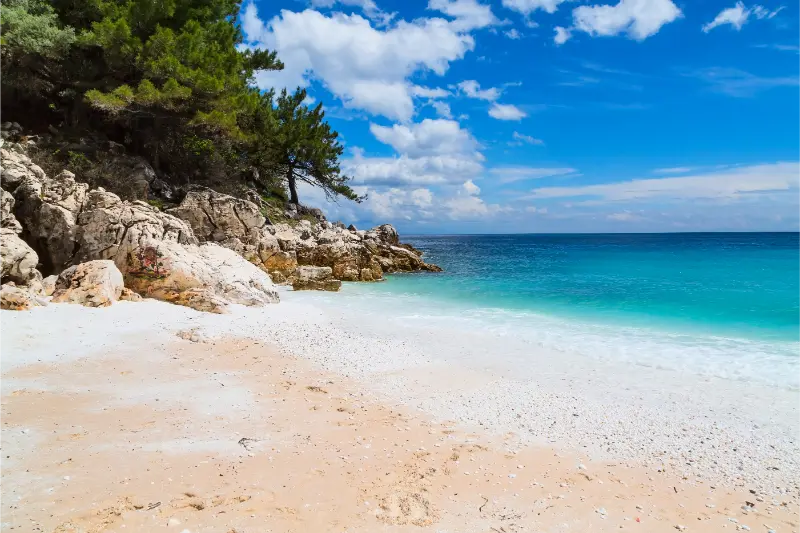
    Marble Beach is the Thassos stop that photographs almost too well: brilliant pale stone, turquoise water and green slopes create a colour contrast that looks edited even when it is not. The name is usually associated with Saliara, north-east of Limenas, while nearby Porto Vathy is often discussed in the same outing. The scenery is memorable, but the day works only if you understand the access, road surface and seasonal crowd pressure before you go.

    This is not a beach I would approach with the same casual plan as Golden Beach. The access roads around the marble-quarry coast can be dusty and rough, conditions change, and summer fire-prevention measures can affect forest-area movement. Use the best beaches in Thassos guide to keep alternatives ready in case the road or conditions do not suit your vehicle.

    Marble Covered Beach Thassos Island Greece

    Quick planning snapshot

    Best forScenery, photography, clear-water swimming
    AccessRoad conditions can be rough; check locally
    Beach surfaceWhite marble pebbles/chips rather than natural fine sand
    Best timingEarly morning or later afternoon in peak season
    Main cautionDust, traffic, road condition and temporary fire restrictions

    Why the water looks so bright

    The pale marble fragments along the shore and seabed reflect light through the clear water, creating the intense aqua colour people associate with Saliara. That visual effect is the reason the beach became famous, but it also means the beach feels more engineered and quarry-adjacent than a remote natural cove. Go for the unusual landscape rather than expecting untouched wilderness.

    Because the surface is made of pale stone material, footwear can be useful when the ground heats up. Water shoes are optional for confident swimmers but helpful for children and anyone sensitive to pebbles.

    Saliara or Porto Vathy?

    Saliara is the name most visitors mean when they say Marble Beach. Porto Vathy is another pale-marble beach in the same broad north-east area and can be combined if access is straightforward on the day. There is no need to force both if one is crowded or the road feels uncomfortable.

    Choose your main objective before driving in. If the goal is the classic bright-white shoreline, prioritise Saliara early. If you want a longer beach stop with facilities, compare Porto Vathy’s current setup locally. Businesses and access arrangements can change from season to season.

    Driving and road access

    The final approach is the part that deserves attention. Unsealed sections can be dusty, corrugated or uncomfortable for a small rental car. Rental agreements may also restrict driving on certain unpaved roads, so read the terms rather than assuming every road shown on a navigation app is permitted.

    Ask your accommodation host or rental company about current road condition before leaving. If recent rain, road works or fire restrictions have changed access, use an alternative beach instead of treating Marble Beach as mandatory. The municipality has issued temporary summer movement restrictions in forest areas during very high fire-risk periods, so same-day local information matters.

    Swimming, facilities and crowd management

    The water can be beautifully clear, but the beach is small enough that atmosphere changes quickly when organised excursions or many cars arrive. Early morning gives the best chance of a calmer experience and easier photographs. Late afternoon can also work, although road driving should be completed with enough daylight if you are unfamiliar with the route.

    Do not rely on a specific beach-bar setup unless you have confirmed it for the season. Bring water, sun protection and a backup snack. A famous beach with commercial facilities can still have days when services are reduced or access changes.

    How to combine Marble Beach with Limenas

    Marble Beach makes most sense from Limenas or the north-east. Visit early, then return toward town for the Archaeological Museum, Ancient Agora and lunch. This creates a balanced day: unusual beach scenery in the cooler morning and culture when the beach becomes crowded.

    Avoid pairing Marble Beach with the far south coast unless you genuinely enjoy long driving days. Thassos is circular on a map, but a holiday should not become a lap-time challenge.

    Aerial View Marble Beach To Thassos Island Greece

    What to photograph and when

    The classic Marble Beach photographs depend on light. Early morning often produces cleaner water colour and fewer people, while strong midday sun creates the brightest contrast between the white shore and turquoise sea. If photography matters, protect equipment from marble dust and do not block the narrow access road while stopping for pictures. Drones may be restricted by Greek aviation rules and local conditions, so check current permissions rather than assuming recreational flying is allowed.

    A sensible backup plan

    If Saliara is inaccessible, too crowded or unsuitable for your vehicle, do not spend the day searching for another unpaved shortcut. Return to Limenas, Makryammos if current visitor access allows, or Golden Beach. The north-east coast has enough alternatives that one closed road should not ruin the day. This is especially important during hot, dry periods when access restrictions are designed for fire safety, not tourism convenience.

    Getting there and moving around

    A private car is the easiest option, but only if your rental terms and the current road condition allow it. Some travellers prefer an organised transfer or excursion because it removes the vehicle-risk question. Do not take a scooter or small car onto rough surfaces simply because other people are doing it.

    Download the route before leaving paved roads because mobile signal can vary. Tell someone your plan if you are heading into a quieter section, and keep enough fuel and water for a delay. These are simple precautions, not signs that the beach is dangerous.

    Best time to go

    June and September balance warm water with less traffic. July and August are visually spectacular but can be very busy and are also the months when high fire-risk controls are most relevant.

    After heavy weather, access conditions can change quickly. Shoulder season is not automatically easier if the dirt road has been damaged, so local confirmation remains useful.

    Who this plan works best for

    Marble Beach is ideal for photographers, couples and travellers who enjoy distinctive landscapes. It is less suitable for anyone uncomfortable with rough road access, travellers in a rental vehicle with restrictive terms, or families who prioritise a long, simple sandy beach day.

    A realistic way to plan the day

    Leave Limenas early, spend the morning at Saliara or Porto Vathy, then return to town for lunch and the Archaeological Museum. If you still want to swim later, choose an easy paved-access beach rather than driving back onto the quarry roads.

    From Golden Beach, make Marble Beach a half-day excursion and return to your base before afternoon traffic. Add Panagia only if everyone still has energy; there is no prize for squeezing every nearby name into the same day.

    Common mistakes to avoid

    • Following navigation blindly onto a road your rental agreement does not allow.
    • Arriving at the busiest time and expecting an empty white beach.
    • Assuming beach-bar services are guaranteed every day of the season.
    • Driving forest roads during official fire-risk restrictions.
    • Combining Marble Beach with a full south-island loop on the same day.

    Useful official context

    The official Visit Greece Thassos page describes the island as the northernmost Greek island, green and mountainous, with a coastal road linking beaches and inland villages. For hiking, the Discover Greece hiking guide identifies Mount Ipsarion as the island’s highest peak at 1,204 metres and describes the popular route from Potamia. Because local access can change during periods of very high fire risk, especially on forest roads and trails, check municipal notices before setting out in summer.

    Tours and activities

    Boat trips, guided excursions and local experiences can be useful when they replace an awkward drive or help you reach coves and viewpoints more efficiently. Compare the exact departure point, duration, transport included and cancellation conditions before booking, because availability changes through the season.

    Frequently asked questions

    Is Marble Beach the same as Saliara?

    Usually yes. Saliara is the beach most visitors mean by Marble Beach, while Porto Vathy is another pale-marble beach nearby.

    Can I reach it with a normal rental car?

    Often travellers do, but road conditions and rental restrictions vary. Confirm both before using an unpaved approach.

    Is the beach natural?

    The striking pale shoreline is associated with local marble material and the nearby quarry landscape. It looks very different from a typical sandy beach.

    When should I go?

    Early morning is best for easier parking, softer temperatures and fewer people. Always check same-day access in high fire-risk periods.

    Continue planning your Thassos trip

    For the overall island plan, start with the Thassos travel guide. The Alyki and Giola guide is the best companion for the south-east coast, while the new cluster links beaches, villages, hiking and archaeological sights into realistic day plans. Pair the beach with the Ancient Thassos and Limenas guide rather than driving across the island afterward.

    Limenas Thassos Greece

    Final practical advice

    Marble Beach is worth seeing because it looks unlike almost anywhere else on the island, but the road and timing matter more than the pin on the map.

    Treat access as part of the attraction: check conditions, go early and keep a paved-road alternative ready. That small amount of planning makes the visit much more relaxed.

  • Tinos with Kids: Family Beaches, Easy Villages, Food and Practical Tips

    Tinos with Kids: Family Beaches, Easy Villages, Food and Practical Tips

    Tinos works well for families who enjoy a mix of beaches, villages and food rather than a resort with constant organised entertainment. The island’s strongest family days are simple: a morning village before the heat, a long lunch, a beach chosen for the day’s wind and an early evening walk. Chora provides practical services, while places such as Pyrgos and Volax give children something more memorable than another row of souvenir shops.

    The key is not to copy an adult road-trip itinerary. Tinos has winding roads, strong summer sun and beaches whose conditions change with wind. Young children do not benefit from visiting six villages because they are “on the way.” Choose one cultural anchor, one swim and one good meal. Families who keep that rhythm usually see more of the island because nobody is exhausted by day three.

    At a glance

    Age/needGood choiceAvoid
    ToddlersChora/Agios Fokas, easy beachesLong exposed hikes
    Primary-school kidsPyrgos museum, Volax, short trailsToo many villages in one day
    TeenagersKolymbithra, hiking, food, photographyRigid family timetable
    No-car familyCentral Chora baseRemote accommodation without transfers

    Best base for families

    Chora is the easiest base if you want pharmacies, supermarkets, buses and restaurants close by. The Agios Fokas side can be especially useful because you combine town access with a beach atmosphere. Families renting a car may prefer a villa or beach settlement, but should check how long the evening drive to food really takes and whether parking is straightforward.

    Easy family beaches

    Agios Fokas, Agios Sostis and the Porto/Agios Ioannis area are practical starting points because access and services are easier than at remote northern coves. “Family-friendly” does not mean calm every day: check wind and waves before children enter. Bring water shoes if your child dislikes pebbles and a compact sun shelter where beach rules allow it.

    Pyrgos with children

    Pyrgos works surprisingly well with school-age children because the marble museum turns craft into something tangible. The Museum of Marble Crafts includes tools, machinery, raw stone and audiovisual material, which is easier to engage with than a room of labels. Follow the museum with a snack in the square rather than another hour of adult sightseeing. Note the published Tuesday closure when planning.

    Volax as a short adventure

    The giant boulders around Volax give children an immediate visual reason to care about the stop. Keep the visit safe by discouraging risky climbing and using proper shoes. A short village walk plus a look at basket weaving is enough for younger children; older families can add a piece of the marked trail network in the cool morning.

    Panagia Evangelistria respectfully

    Families can visit the shrine, but explain before entering that it is an active place of worship. Keep the visit shorter with small children and avoid the busiest pilgrimage periods if your goal is calm cultural sightseeing. Bring water for the uphill approach, dress everyone appropriately and do not let children run through queues or ceremonial spaces.

    Food with children

    Tinos’s food culture makes family meals easier because you can order dishes for the table: breads, cheeses, local sausages, salads, meat, potatoes and simple pasta or grilled options depending on the taverna. Eat earlier than peak dinner time if toddlers struggle with late nights. A bakery breakfast and picnic lunch can also protect the budget without reducing the sense of place.

    Car seats and road days

    If renting a car, reserve the correct child seat rather than hoping one will be available at the desk. Inspect the seat before leaving and ask for help fitting it if necessary. Island distances look short, but bends make drives slower. Build breaks into western or northern loops and never leave children in a parked car while taking a viewpoint photograph.

    Heat, naps and shade

    In July and August, the middle of the day should not be the time for a long village staircase or exposed hike. Use early morning for culture, retreat to shade for lunch and naps, then swim later. Keep refillable bottles cold and carry more water in the car than the family expects to drink. This pacing is not “missing time”; it is what makes the evening enjoyable.

    How this fits into a wider Tinos trip

    Use this page together with Tinos travel guide, Tinos Chora Guide, Pyrgos and Panormos Tinos Guide, Volax Tinos Guide, Kardiani and Isternia Tinos Guide, Panagia Evangelistria Tinos Guide. Keeping related places and practical topics connected makes it easier to build days by geography instead of repeatedly crossing the island.

    Tinos Agapi Village

    How to plan around wind and summer heat

    Tinos is famously exposed to Aegean wind, and the same breeze that makes a terrace comfortable can make a north-facing beach rough or an exposed ridge unpleasant. Check the day’s conditions before committing to a remote beach, boat outing or long hike. In July and August, use early morning for villages, churches and walking, reserve the hottest hours for lunch or swimming, and return to sightseeing later in the afternoon. A flexible itinerary is a practical advantage, not a failure to plan.

    Driving realistically on Tinos

    Distances on the map look short, but roads between villages are winding and often narrow. Add time for oncoming traffic, photo stops and finding sensible parking outside historic lanes. Do not follow a navigation app blindly onto a rough shortcut simply because it saves three minutes. If you are uncomfortable with steep bends, base in Chora and use buses, taxis or organised excursions for selected days rather than turning every transfer into stress.

    Tinos Hora

    Food and daily rhythm

    Tinos is a destination where lunch can be part of the sightseeing rather than a break from it. Build time for village squares, bakeries, local cheeses, capers, artichokes, sausages and seasonal dishes instead of planning every meal at the waterfront. Opening patterns outside peak summer can be irregular in small villages, so carry water and a snack even when you expect to find a taverna. In August, reserve famous restaurants but leave ordinary meals spontaneous.

    Booking and time-sensitive information

    Ferry times, bus schedules, museum hours and road access can change. Recheck anything that would cause a serious problem if wrong: the last bus, the final ferry of the day, a museum you are crossing the island to visit, or access to a remote beach after strong weather. Save confirmations offline and keep enough margin before departure. Tinos rewards slow planning; it punishes itineraries where one ten-minute delay breaks the rest of the day.

    Official museum information

    For current opening hours and temporary closures at the Museum of Marble Crafts in Pyrgos, use the official Piraeus Bank Group Cultural Foundation museum page. In 2026 the published seasonal schedule lists daily opening except Tuesday, with longer hours from March through mid-October. Always check again for exceptional closures before a dedicated museum trip.

    Tours and activities

    A guided village day, food experience or private transfer can be useful when it reduces transport friction or adds local interpretation. Compare the actual time spent at each stop, pickup location, group size and cancellation policy rather than choosing the itinerary with the longest list of villages.

    Common planning mistakes

    • Choosing a beautiful remote beach with no shade for a toddler.
    • Planning adult-length village days in summer heat.
    • Assuming every beach is calm because it was calm in a photograph.
    • Arriving at the marble museum on Tuesday without checking.
    • Renting a car without confirming the correct child seat.

    Frequently asked questions

    Is Tinos good for families?

    Yes, especially for families that like beaches, villages and food more than large resort attractions.

    Tinos Island Greece

    Where should families stay?

    Chora and the Agios Fokas side are easiest for services; beach settlements work well with a car.

    Which beach is easiest with children?

    Agios Fokas and organised eastern beaches are practical, but conditions should always be checked on the day.

    Is Volax suitable for kids?

    Yes for a short supervised visit; avoid risky boulder climbing and midday heat.

    Do you need a car with children?

    Not necessarily from Chora, but a car simplifies naps, beach equipment and flexible village days.

    Final practical advice

    Tinos is most rewarding when you leave space between the famous stops. One village, one meaningful cultural visit and one swim often make a better day than six pins on a map. Choose a base that suits your transport style, group nearby experiences, check wind and heat each morning, and verify time-sensitive information shortly before you travel. The island’s villages, food and walking routes are not filler between beaches; together they are the reason Tinos feels different from many other Cycladic destinations.

    Photography without slowing everyone down

    The best photographs on Tinos usually come from side light, village details and wide landscapes rather than stopping a car in an unsafe place. In villages, park first and walk back to the viewpoint. Ask before photographing craftspeople at work and never treat worshippers as part of a travel portrait. Early morning and late afternoon also reduce harsh contrast on white walls and marble while making walking more comfortable.

    What to carry each day

    A small day bag should include water, sun protection, a light layer for wind, offline maps and footwear that can handle stone steps. Add swim shoes if your group dislikes pebbles and a reusable bag for beach rubbish. On hiking days carry significantly more water and a power bank. On church days bring clothing that allows you to enter respectfully without having to return to the hotel.

  • Where to Stay in Lesvos: Mytilene, Molyvos, Petra, Plomari or Skala Eressos?

    Where to Stay in Lesvos: Mytilene, Molyvos, Petra, Plomari or Skala Eressos?

    Choosing where to stay in Lesvos is one of the most important decisions in the trip because the island is large enough for the wrong base to create hours of unnecessary driving. Mytilene is best for transport and city life; Molyvos for historic atmosphere; Petra for a practical north-coast beach stay; Plomari for ouzo and the south; Skala Eressos for a slow western beach holiday.

    Panagia Glykofilousa Petra Lesvos Greece

    For a week, I usually prefer a split stay instead of sleeping in one place for seven nights. Two bases are enough for most travellers; three can work if western Lesvos and the Petrified Forest are priorities.

    Quick planning summary

    AreaBest for
    MytileneTransport, museums, food, first/last night
    MolyvosHistoric atmosphere and romantic evenings
    PetraBeach convenience and north-coast families
    PlomariOuzo, south-coast food and beaches
    Skala EressosSlow western beach stay

    Mytilene: best for logistics and city life

    Choose Mytilene if you have a short trip, no car, an early flight or a late ferry. The city has museums, the castle, the broadest restaurant choice and the strongest public-transport connections. It is also useful for exploring the south-east before moving elsewhere.

    The trade-off is atmosphere: if you imagined a quiet stone village above a beach, Mytilene feels more urban. Use the Mytilene guide to decide whether that energy suits your first nights.

    Molyvos: best for historic atmosphere

    Molyvos is the most visually dramatic base on the island, with the castle, stone lanes and harbour creating a strong sense of place. Couples and first-time visitors often love staying here because evenings remain memorable even after sightseeing ends.

    Steep streets, parking and distance from the south are the main compromises. Read the Molyvos Lesvos Guide before booking a property high on the hill if mobility is a concern.

    Petra: best all-round north-coast base

    Petra gives you a walkable village, beach, restaurants and practical access to Molyvos. It is easier for families and travellers who want flat beach time than sleeping in the steep historic centre of Molyvos.

    It is also one of the better north-coast choices without a car because KTEL serves the corridor. See the Petra and Anaxos guide for the difference between the two beach areas.

    Plomari: best for food, ouzo and the south

    Plomari is a strong two- or three-night base if you care about ouzo, meze, Agios Isidoros and the greener south coast. It feels more like a working town than a resort and gives a Lesvos trip better regional balance.

    Plomari Island Of Lesvos Sporadi

    The drawback is distance from Molyvos and the far west. Do not choose Plomari for a week if you plan to drive north every second day. Use the Plomari guide for local excursions.

    Skala Eressos: best for a slow western beach stay

    Skala Eressos is ideal if you want several days without driving. Beach, cafés, meals and sunset are concentrated enough to make the village feel like a genuine rest stop in a larger road trip.

    It is far from Mytilene and the north, so this is a destination base rather than a central one. Pair it with Sigri and the Petrified Forest, not with daily trips back east.

    Kalloni and Skala Kallonis: best for birdwatching and central access

    Kalloni sits near the centre of the island’s road network and is useful for travellers prioritising the salt pans, migration season and quick access to several regions. Skala Kallonis adds a harbour and seafood atmosphere.

    If birdwatching is the main purpose, use the Kalloni and Birdwatching guide. For a pure beach holiday, Petra or Skala Eressos usually feels more immediately appealing.

    Agiasos: best for mountain village atmosphere

    Agiasos is not the obvious first base, but it can be rewarding for hikers, craft lovers and travellers who want a night away from the coast. The village sits around 460 m on Mount Olympus and feels culturally distinct from the seaside settlements.

    One night is usually enough unless you are hiking or attending a festival. Use the Agiasos guide for planning.

    How I would split seven nights

    Option one for a first trip: two nights Mytilene, three nights Molyvos or Petra, two nights Plomari. Option two for western priorities: one night Mytilene, three nights Petra/Molyvos, three nights Skala Eressos with Sigri and the Petrified Forest.

    Changing hotels every night wastes time. Two or three bases let you experience different regions while still unpacking long enough to enjoy them.

    Where to stay without a car

    Mytilene is the easiest choice, followed by Petra and Plomari. Skala Eressos works once you have completed the long bus transfer. Remote villas and isolated beach hotels should be avoided unless the property provides reliable transfers.

    Use Lesvos Without a Car to build a route from actual 2026 KTEL corridors.

    Booking strategy by season

    July and August require earlier booking in Molyvos, Petra and popular beach areas, especially for family rooms and parking. June and September often give a better balance of sea temperature, availability and comfortable sightseeing.

    In spring or late autumn, prioritise towns and villages with year-round life. A remote beach property can feel wonderfully quiet or inconveniently closed depending on what services remain nearby.

    How much time should you allow?

    Lesvos is much larger than many visitors expect. Even when two places look close on a simple island map, road quality, village traffic, viewpoints and meal stops can turn a short transfer into half a day. Plan by region and resist the urge to cross the island repeatedly.

    Keep at least one flexible half-day in a week-long trip. Wind, heat, museum hours and local events can change the best plan, and having space to move a beach or village visit is more useful than a schedule packed to the minute.

    Best time to visit Lesvos

    May, June and September are excellent for travellers who want sightseeing, food, walking and some swimming without the strongest peak-season heat. July and August have the widest choice of seasonal services but also more demand and hotter afternoons. Spring is outstanding for wildflowers and bird migration; autumn brings a slower rhythm and important bird movement again.

    Outside summer, check ferry, bus and attraction schedules for the exact date. Lesvos has substantial year-round life, especially around Mytilene, but beach businesses and visitor attractions can reduce hours.

    Driving and road-trip rhythm

    A car is the easiest way to experience a broad range of Lesvos, but driving should not become the main activity. Base yourself regionally, refuel before remote west-coast days and avoid committing to long unfamiliar roads after a late dinner.

    If you are travelling without a car, the trip is still possible but should use fewer bases. The Lesvos Without a Car guide explains the current KTEL corridors and realistic compromises.

    Responsible travel and practical safety

    In summer, carry water, sun protection and closed shoes for archaeological or hiking sites. Respect fire-risk restrictions, never block agricultural roads and keep beaches free of litter. On remote coasts, tell someone where you are going if mobile coverage is uncertain.

    For cultural and religious sites, dress respectfully and follow photography rules. For wetlands and birdwatching, stay on public roads and hides rather than approaching wildlife. Good travel on Lesvos is mostly about small decisions that protect the places you came to enjoy.

    More Lesvos guides

    Mytilene Lesvos Guide: Castle, Museums, Waterfront, Food and Where to Stay; Plomari Lesvos Guide: Ouzo, Agios Isidoros, Museums, Villages and Where to Stay; Skala Eressos Lesvos Guide: Sappho, Beach, Village Life and Where to Stay; Petra and Anaxos Lesvos Guide: Beaches, Panagia, Molyvos Trips and Where to Stay; Agiasos Lesvos Guide: Panagia, Pottery, Chestnut Forests, Food and Village Walks; Kalloni and Birdwatching Lesvos Guide: Salt Pans, Flamingos, Sardines and Wetlands; Lesvos Food and Ouzo Guide: Kalloni Sardines, Ladotyri, Olive Oil and What to Eat; Best Beaches in Lesvos: 15 Beaches for Families, Clear Water, Wild Scenery and Quiet Days; Lesvos Without a Car: Buses, Taxis, Best Bases and a Realistic Car-Free Plan; Lesvos Travel Guide; Molyvos Lesvos Guide; Petrified Forest of Lesvos Guide.

    Frequently asked questions

    What is the best area for a first trip to Lesvos?

    A split between Mytilene and the north coast works very well; add Plomari or Skala Eressos if you have a week or more.

    Where should couples stay?

    Molyvos for atmosphere, Plomari for food and Skala Eressos for a slower beach stay are strong choices.

    Where is best for families?

    Petra, Anaxos and Agios Isidoros are practical because beach and accommodation can be close together.

    Island Of Lesvos Village Of Petra

    Where is best without a car?

    Mytilene is easiest; Petra and Plomari are also workable with KTEL.

    Should I change hotels during a one-week trip?

    Usually yes. Two bases reduce driving and make the island’s regional differences much easier to enjoy.

    Check official information before you go

    For current information use the relevant official source and the official Visit Lesvos portal. For bus schedules use KTEL Lesvos. Opening hours, transport frequencies and seasonal services can change, so verify the detail that matters shortly before travel.

    Final planning advice

    Lesvos rewards slow regional travel. Build each day around one main area, add a beach or meal nearby and leave enough room for an unplanned village stop. The island becomes much more enjoyable when you stop treating distance as dead time and start choosing bases that reduce unnecessary driving.

    For a first trip, focus on two or three regions rather than trying to collect every famous name. You can always return for the parts you missed, and Lesvos has enough depth in food, villages, nature and history to justify another visit.

  • Sikinos Without a Car: Buses, Walking, Boat Trips, Taxis and the Best Base

    Sikinos Without a Car: Buses, Walking, Boat Trips, Taxis and the Best Base

    Plan Sikinos without a car using buses, walking trails, taxis and local boats, with advice on the best base, beaches, ferry days and realistic itineraries.

    Sikinos is one of the easier Cycladic islands to enjoy without renting a vehicle because the two main settlements are close, the hiking network is useful and boat trips open access to remote beaches. The limitation is frequency: small-island buses, taxis and boats do not operate like city transport, so a successful car-free trip depends on checking the day’s schedule and building margin.

    Quick planning notes

    • Chora is the best car-free base for evenings and hiking; Alopronia is best for ferry convenience and easy beach access.
    • Use the bus for the main Chora–Alopronia connection and confirm the current timetable after arrival.
    • Taxis are most useful for luggage, early ferries and one-way hiking plans rather than for repeated short trips.
    • Boat excursions replace a car for the hardest-to-reach beaches, but they depend on wind and demand.

    Do you need a car on Sikinos?

    No. For most first-time visitors, a car is optional rather than essential. Chora, Alopronia, Episkopi and several trailheads can be linked by bus, taxi and walking, while remote coves are often more naturally reached by boat anyway. Travelling car-free also removes parking and rough-track concerns.

    A vehicle becomes more useful if you have mobility limitations, very young children with large amounts of equipment, or a short stay in which you want to compress several remote stops into one day. Even then, the island’s character does not reward frantic driving; a slower route is usually more satisfying.

    Chora as a base

    Chora is the strongest base for travellers who want restaurants, evening atmosphere and walking access. You can explore Kastro and Chorio on foot, walk to Zoodochos Pigi and connect with routes toward Episkopi. A bus or taxi handles the port and beach connection when needed.

    The main inconvenience is luggage. Chora sits above the port, and accommodation can be inside pedestrian lanes. Ask exactly where the vehicle can stop and whether the host helps with bags. This matters more than whether the property advertises itself as “central.”

    Alopronia as a base

    Alopronia is almost the opposite: minimal transfer friction, easy swimming and immediate ferry access. If your trip is only two nights or you have an early departure, this can outweigh the quieter evening scene. The main beach is also the island’s easiest family swimming option.

    For dinner or cultural sightseeing, use the bus or taxi uphill to Chora. Photograph the current schedule when you arrive and note the last return. If you prefer spontaneous late evenings, Chora is usually the better base despite the ferry transfer.

    Public buses

    The bus is most useful for the main port–Chora connection and selected seasonal movements. Timetables can change by season and may be coordinated around ferry arrivals or local demand rather than published months in advance. Treat online times as planning guidance and confirm locally.

    Build a cushion before ferry departure. A delayed bus should not be allowed to create a missed long-distance sailing. On departure day, if the final connection feels too tight, arrange a taxi rather than relying on perfect timing.

    Walking as transport

    Walking is not only recreation on Sikinos; the signed trail network can genuinely replace some vehicle journeys. Chora–Alopronia is the clearest example, while routes to the monastery and Episkopi combine transport with sightseeing. This makes a car-free stay feel intentional rather than restrictive.

    Sikinos Hora

    The caveat is summer heat. A 3 km road or trail can be unpleasant at 2 p.m. even when it looks trivial on a map. Walk early, use the bus for the hotter return and keep footwear suitable for stone paths rather than beach sandals.

    Taxis and transfers

    Fast Ferries publishes a local taxi contact among Sikinos useful numbers, which confirms that taxi service exists, but the fleet is naturally limited. Reserve for critical transfers such as late arrivals, early departures or one-way hikes. Do not assume a vehicle will appear immediately after a call in peak season.

    For two or three travellers, occasional taxi use can still cost less than renting a vehicle for an entire stay. Think of taxis as strategic tools, not as the default way to move between every beach and meal.

    Boats as part of a car-free plan

    Local boats are the best answer to coves such as Santorineika and other shores that are difficult on foot. They also create a day that no rental car could reproduce. Book the boat early in the trip so wind cancellation leaves time to try again.

    Ask where you board, what footwear is suitable for landings, whether shade is available and what happens if weather changes. Bring water even if a boat operator provides some supplies because remote beaches generally have no services.

    Where to stay and when to book

    Sikinos has a much smaller accommodation supply than Santorini, Paros or Naxos. That is part of its appeal, but it also means that the best-located rooms in Chora and Alopronia can disappear early for July and August. Compare the exact position on a map, not only the property name, because a beautiful hillside room may involve steps, steep lanes or a walk that feels very different with luggage in midday heat. Check current Sikinos accommodation on Booking.com.

    For a short first visit, convenience usually matters more than a dramatic view. Chora is stronger for evenings, atmosphere and trail access, while Alopronia is easier for ferry days and quick swims. If you are travelling without a car, ask the host how far the nearest bus stop is and whether they can help with luggage when ferries arrive late.

    How to make the trip work in practice

    Sikinos works best when the itinerary follows the island rather than fighting it. Plan one main objective per half-day: a monument, a trail, a beach or a long meal. Boat-access beaches depend on wind, walking routes are exposed to sun, and small museums or churches may not operate with big-island opening patterns. Keep a second option ready and confirm local details after arrival.

    Beach Of Agios Georgios On Island Of Sikinos Spesso Indicata Come Skinos In Greece

    Carry water, sun protection and an offline map whenever you leave the two main settlements. Services are intentionally limited outside Chora and Alopronia. That does not make the island difficult; it simply rewards travellers who prepare before setting out and who leave enough time to enjoy a place instead of rushing between checkpoints.
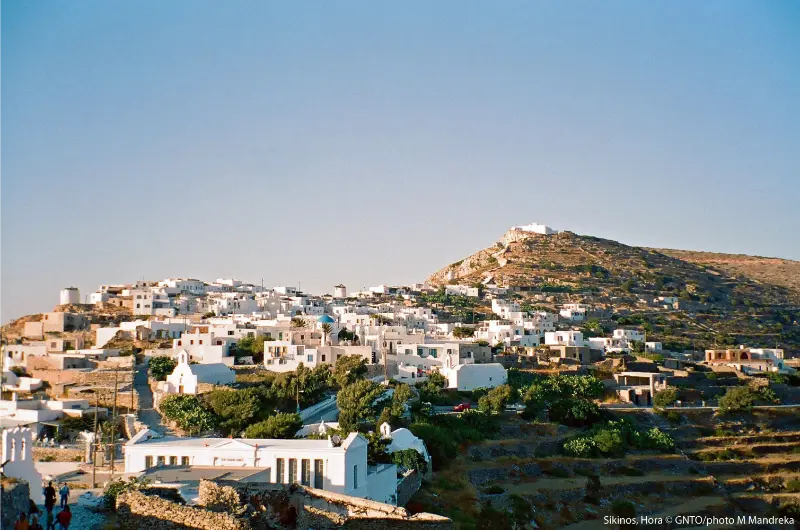
    Frequently asked questions

    Can I visit Sikinos without renting a car?

    Yes. Stay in Chora or Alopronia and combine buses, walking, taxis and local boats. The island is especially suitable for slower car-free travel.

    Which base is best without a car?

    Chora is best for evenings and hiking; Alopronia is best for ferry convenience and beach-at-the-door simplicity.

    Are there taxis in Sikinos?

    Yes, but availability is limited compared with large islands. Reserve important transfers rather than depending on an immediate pickup.

    Useful sources for current information

    For details that can change, use the Municipality of Sikinos, the official Visit Greece Sikinos page, the Visit Greece hiking guide and the official Sikinos beaches overview. Ferry routes and seasonal sailings should be checked again shortly before travel through the Fast Ferries Sikinos page or your booked operator.

    Related guides

    A slower rhythm is part of the destination

    One of the easiest mistakes on Sikinos is to judge the island by the number of formal attractions. Its strength is the relationship between Chora, terraced fields, dry-stone walls, chapels, old paths and small coves. A morning walk that ends with lunch can be a complete day rather than a gap between major sights. The same is true of an evening in Kastro: there is no need to add another excursion simply because the map looks small.

    This slower approach also protects the trip from weather changes. If wind makes a boat excursion unattractive, walk a signed trail or spend more time in Chora. If the afternoon is too hot for hiking, use the beach and move the trail to early morning. Travellers who leave this flexibility usually see more of the island in a meaningful way than those who try to complete a fixed checklist.

    Shoulder season deserves special planning. Walking temperatures can be excellent, but transport, tavernas and excursions may operate less frequently than in peak summer. Confirm what is open, buy water before long walks and avoid assuming that a service listed online runs every day. The reward is an even quieter version of an island that is already known for calm, traditional Cycladic life.

    Small-island details that make a difference

    Because Sikinos has few layers of backup infrastructure, simple preparation has an outsized effect on the quality of a day. Save important phone numbers offline, keep some cash, refill water whenever you pass an open shop and tell your accommodation if you are heading onto a remote path. None of these steps are dramatic, but together they prevent the common problems that arise when visitors apply big-island habits to a place with a much smaller service network.

    Also leave room for local advice. A host, taverna owner, driver or boatman can tell you whether a trail is especially hot, a cove is rough, a museum is opening later than usual or a ferry has changed berth. On Sikinos, current local information is often more useful than a rigid plan made months earlier. Use published guides to understand the island, then let real conditions shape the final details.