Author: Jessica

  • Athens 4-Day Itinerary: Acropolis, Museums, Neighbourhoods and Riviera

    Athens 4-Day Itinerary: Acropolis, Museums, Neighbourhoods and Riviera

    Four days is an excellent amount of time for Athens because it lets you move beyond the pattern of Acropolis in the morning, Plaka at lunch and departure the next day. You can still see the famous ancient sites, but you also gain time for modern neighbourhoods, one or two serious museums, a market morning and either the coast or a contemporary cultural stop. The key is to group places geographically so you are not repeatedly crossing the city in the heat.

    This itinerary is intentionally realistic rather than maximalist. I would rather spend two hours properly at the Acropolis and enjoy a slow evening in Psyrri than squeeze five archaeological sites into one exhausted day. Use the plan as a structure, then adjust for museum closing days, heat, temporary closures and your own interests.
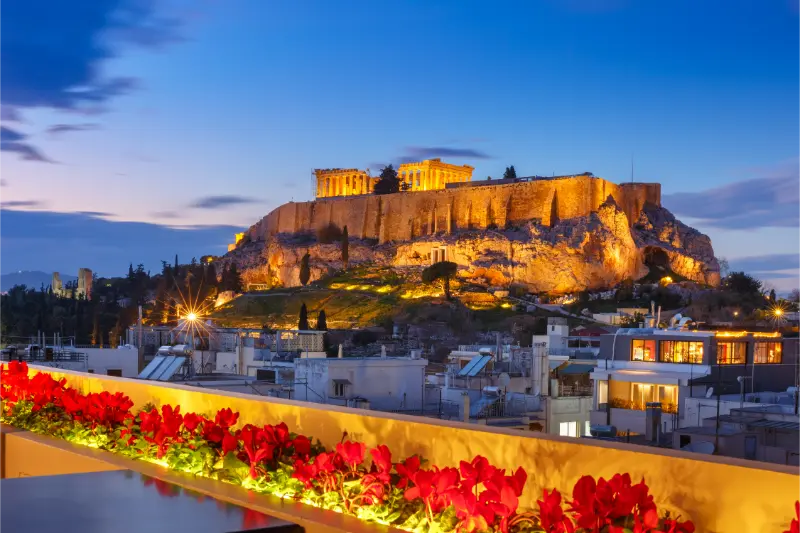
    Aerial View Acropolis Hill Crowned With Parthenon Evening Blue Hour Athens Greece

    For wider planning, use my Athens Travel Guide and Best Neighborhoods in Athens. This guide stays focused on one part of the city so you can decide whether it genuinely fits your trip rather than adding it simply because it appears on a checklist.

    Quick planning facts

    • Day 1 focuses on the Acropolis, Acropolis Museum and Plaka/Koukaki.
    • Day 2 covers the Ancient Agora, Monastiraki, Varvakios Market and a sunset viewpoint.
    • Day 3 is built around the museum district, Syntagma and modern Athens.
    • Day 4 can be used for the Athens Riviera/SNFCC or an Attica day trip depending on season.
    • Tuesday museum closures and current archaeological-site access should be checked before fixing the exact order.

    Why this stop deserves time in an Athens itinerary

    Athens becomes much more rewarding when the itinerary alternates between archaeology, museums, neighbourhood life and open-air breaks. This stop earns its place because it adds a different layer rather than repeating what you already learn at the Acropolis. Think about what question you want the visit to answer: how Greeks understood history, how modern Athenians use public space, how food reaches the city, or how a neighbourhood’s identity developed. That simple question makes the experience more focused.
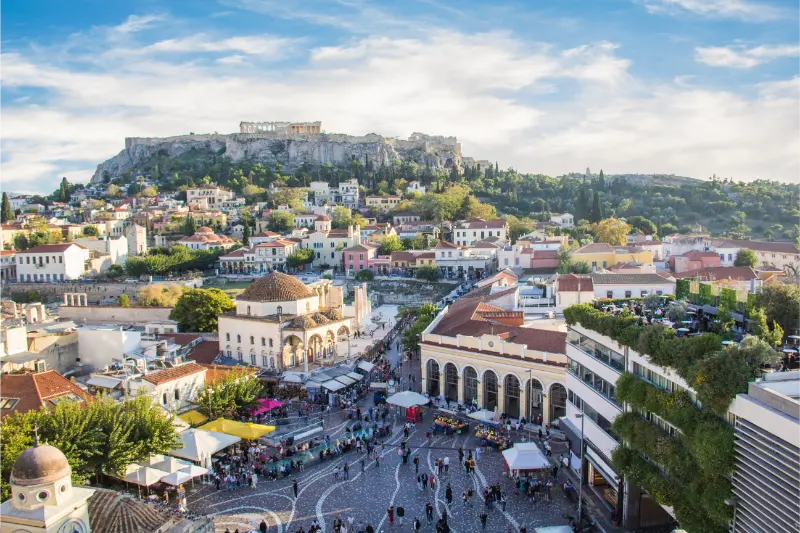
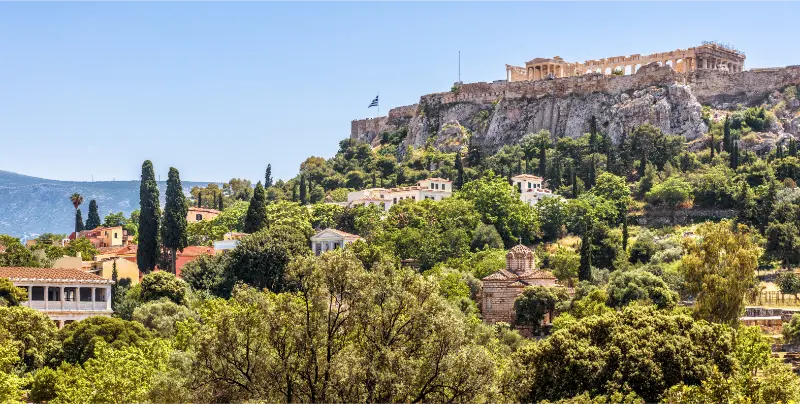
    View Acropolis Monastiraki Area Athens Greece

    It also helps with pacing. Four days of temples and galleries can become surprisingly tiring even for travellers who love history. Pairing one concentrated cultural visit with a market, garden, hill or café district keeps attention high. I prefer to plan one major anchor in each half-day and leave enough time to walk between nearby places. Athens rewards transitions: the streets between attractions often explain the city as clearly as the attractions themselves.

    What to focus on

    Day 1: Acropolis and the southern historic core

    Start early at the Acropolis, continue through the Acropolis Museum, then slow the pace in Koukaki or Plaka. Late afternoon is perfect for Philopappos Hill if energy remains. This day is deliberately compact so you can walk most of it.

    Day 2: Agora, markets and old commercial Athens

    Begin at the Ancient Agora, continue to Monastiraki and Psyrri, then explore Varvakios Market before lunch. In late afternoon choose Lycabettus or another viewpoint rather than adding more ruins.

    Day 3: museums and modern civic Athens

    Choose one major museum as the anchor: National Archaeological, Benaki, Cycladic, Byzantine or National Gallery. Pair it with Syntagma, the National Garden, Kolonaki or Pangrati. Avoid turning the day into a museum marathon.

    Day 4: coast and contemporary Athens

    In warm weather, head toward the Riviera and Lake Vouliagmeni, or combine the SNFCC with southern neighbourhoods. In cooler months, an Attica day trip such as Cape Sounion, Eleusis or Marathon can be more rewarding.

    Evenings

    Use evenings for neighbourhood character: Psyrri for energy, Koukaki for a balanced local feel, Kolonaki for a polished atmosphere or Exarchia for independent culture. Dinner location should reduce transport rather than create another cross-city journey.

    A practical way to structure the visit

    The smartest order depends on your arrival day. If Day 3 lands on a Tuesday, remember that several major museums close that day, so swap the museum day with the coast or ancient-sites day. During a heatwave, start outdoor archaeology at opening time, retreat indoors at midday and return outside late. The itinerary works because each day has one anchor rather than six priorities.

    Do not judge the success of the visit by how many rooms, monuments or streets you cover. Choose a small number of details to remember and give yourself time to notice how the place connects to the rest of Athens. If a temporary exhibition, event or closure changes your plan, adapt rather than forcing the original schedule. The city has enough alternatives within a short distance that a changed plan rarely needs to become a lost day.

    Getting there and what to combine nearby

    Central Athens is highly walkable, but Metro Lines 2 and 3 save energy when moving between the museum district, Syntagma and outer neighbourhoods. Use taxis selectively for late evenings, luggage or the coast. Do not rent a car for the central four-day itinerary; parking and traffic add friction. A rental only starts to make sense if you leave Athens for a wider mainland road trip.

    Useful nearby reading: Athens Travel Guide; Best Neighborhoods in Athens; Athens Riviera guide. These guides make it easier to build a route that stays in one part of Athens instead of wasting time zigzagging across the city.

    How much time to allow

    Book timed or high-demand attractions where required, but leave at least one flexible block every day. September and October can still be hot; winter rain changes the value of hill walks; strikes can affect transport. A strong itinerary is one that survives these changes without collapsing because every hour was pre-booked.

    Add a buffer rather than scheduling the next reservation at the exact moment you expect to finish. Security lines, a room that interests you more than expected, a coffee stop or simply heat can all change the pace. My preferred approach is to keep at least thirty minutes of slack between a major cultural visit and the next fixed-time activity. That small margin makes Athens feel much less stressful.

    Best time of day and seasonal strategy

    In summer, outdoor walking is usually easiest early and late, while museums and indoor cultural spaces are valuable during the hottest hours. In spring and autumn, the city is more forgiving and you can walk longer between stops. Winter brings shorter days and occasional rain but can make museums, markets and neighbourhood cafés especially enjoyable. Always check the current official opening page near your visit because Athens attractions can use seasonal hours, holiday closures or temporary access rules.

    For the latest practical details, use the official visitor information. Prices, entrance arrangements and temporary closures can change after an article is published, so the official source should win if it conflicts with an older travel guide.

    Accessibility, families and comfort

    Athens is improving accessibility, but the experience varies sharply between a modern museum and an ancient hill. If step-free access is essential, check the venue’s current accessibility page rather than assuming a route is barrier-free. Families should plan shorter focused visits, regular water and snack breaks, and one outdoor space where children can move. Older travellers may prefer taxis for short transfers that look walkable on a map but involve heat, traffic or steep pavements.

    Comfort also includes mental pace. A child who remembers one object, a couple who spend twenty quiet minutes over coffee, or a solo traveller who pauses to sketch a view may get more from Athens than someone who races through twenty landmarks. Build the itinerary around how you actually travel, not around the maximum number of pins that can fit into a day.

    Photography and respectful visiting

    Photography rules vary. Museums may restrict flash, tripods or photography in temporary exhibitions; religious or commemorative spaces deserve additional sensitivity; markets and neighbourhoods are workplaces and homes rather than sets. Photograph architecture and public space freely where permitted, but ask before taking close portraits of vendors or residents. In crowded places, step aside before stopping for a photo so you do not block doors, paths or working areas.

    Common mistakes to avoid

    • Adding the stop only because it is famous, without deciding what you want to learn or experience.
    • Planning several major museums or archaeological sites back-to-back with no outdoor break.
    • Relying on old opening hours instead of checking the official page close to the visit.
    • Underestimating heat, hills and walking time between places that look close on a map.
    • Trying to photograph everything instead of slowing down for a few memorable details.
    • Ignoring the neighbourhood around the attraction and travelling immediately to the other side of the city.

    Most of these mistakes are easy to fix: reduce the number of fixed stops, group attractions geographically and let one or two places be the centre of the day. Athens is compact enough that you do not need to optimise every minute, but large enough that poor sequencing can still waste energy. The best itineraries feel deliberate without feeling rigid.

    How to adapt the itinerary to your travel style

    History-focused travellers can replace the Riviera with Kerameikos, the National Archaeological Museum and an extra ancient site. Food-focused visitors can extend the market morning into a cooking class or neighbourhood meal and reduce museum time. Families can use the National Garden, SNFCC and coast as pressure-release valves between monuments. Repeat visitors can skip the Acropolis entirely and use the four days for Pangrati, Exarchia, museums, the Riviera and Attica. The structure should serve your interests, not the other way around.
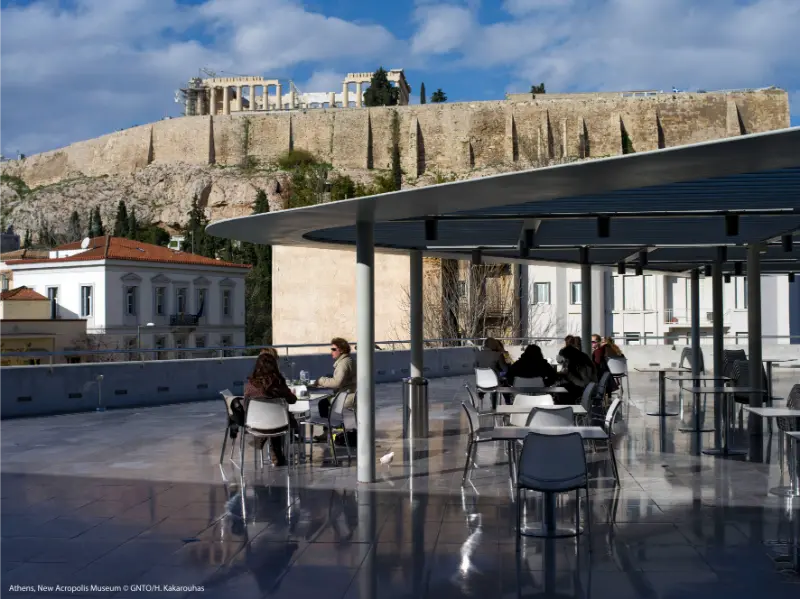
    Athens Acropolis Cafe

    Frequently asked questions

    Is four days too long for Athens?

    No. Four days lets you see the ancient core without rushing and still experience museums, food markets, neighbourhoods and the coast or Attica.

    Should I buy a city pass?

    Only after comparing the exact attractions you will visit. Ticket products change, and not every pass covers the same sites or transport.

    Where should I stay for this itinerary?

    Koukaki, Syntagma, Plaka and Monastiraki are all convenient. Choose based on evening atmosphere and noise tolerance rather than a few minutes of walking difference.

    Do I need a car?

    Not for the city portion. Public transport and walking are easier. Consider a car only for specific Attica or mainland day trips.

    What should I cut if I only have three days?

    Remove either the coast/Attica day or one museum block. Keep the Acropolis, one major museum and at least one neighbourhood evening.

    Final thoughts

    Athens 4-Day Itinerary is most rewarding when it is treated as part of the wider Athens story rather than an isolated attraction. Give the visit enough time to understand its character, connect it with one nearby neighbourhood or outdoor stop, and leave room for the city to interrupt your schedule with a café, a view or a street you did not plan to explore.

    That balance is what I would keep throughout an Athens trip: one serious cultural experience, one walkable neighbourhood and enough unplanned time to notice how ancient, Byzantine, modern and contemporary Athens overlap. It produces a much stronger memory of the city than a checklist of ticket gates.

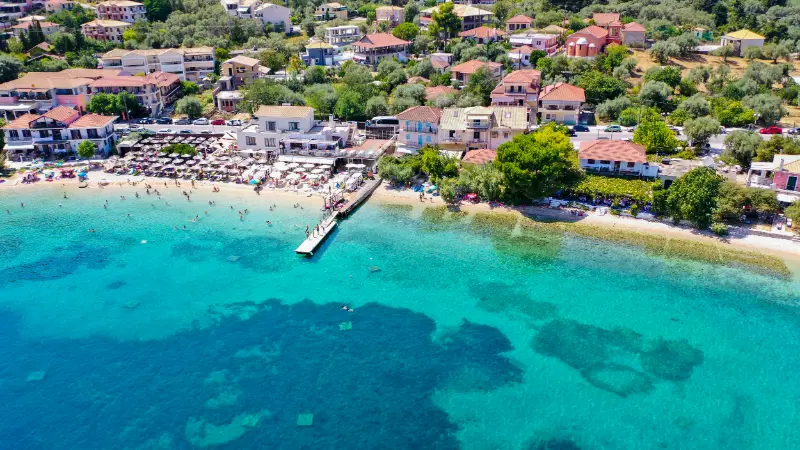
  • Lefkada with Kids: Family Beaches, Easy Days, Boat Trips and Practical Tips

    Lefkada with Kids: Family Beaches, Easy Days, Boat Trips and Practical Tips

    Lefkada can be an excellent family island, but the famous photographs can mislead parents. The west coast is spectacular and sometimes rough, with stairs, steep access and powerful shore break; the east and south-east coasts often offer easier logistics, more sheltered bays and shorter walks from the car to the water. A successful family trip uses both rather than forcing children into the island’s most dramatic locations every day.

    The practical advantage of Lefkada is road access from mainland Greece, so families can arrive without loading everyone onto a ferry. Once on the island, bases such as Nydri, Nikiana, Lygia, Vasiliki and Lefkada Town reduce daily stress. Use the best beaches in Lefkada guide to choose beaches by conditions rather than fame.

    Nikiana Lefkada Greece

    Quick planning snapshot

    Easiest family basesNydri, Nikiana/Lygia, Lefkada Town, parts of Vasiliki
    Beach strategySheltered bays on rough west-coast days
    Good activitiesShort boat trips, village lunch, easy swims, town walks
    Main cautionHeat, waves, stairs and long winding drives
    Best rhythmOne main activity per day + long rest

    For younger children, the island becomes far easier when you stay somewhere with dinner and a small beach or promenade within walking distance. That removes the need to put everyone back in the car twice every evening.

    Choosing a family base

    Nydri gives families the broadest choice of boat trips and services, though it is busy in summer. Nikiana and Lygia can be calmer and are well placed between Lefkada Town and Nydri. Lefkada Town is useful for evening walks and transport, while Vasiliki works well for the south and families with older children interested in water sports.

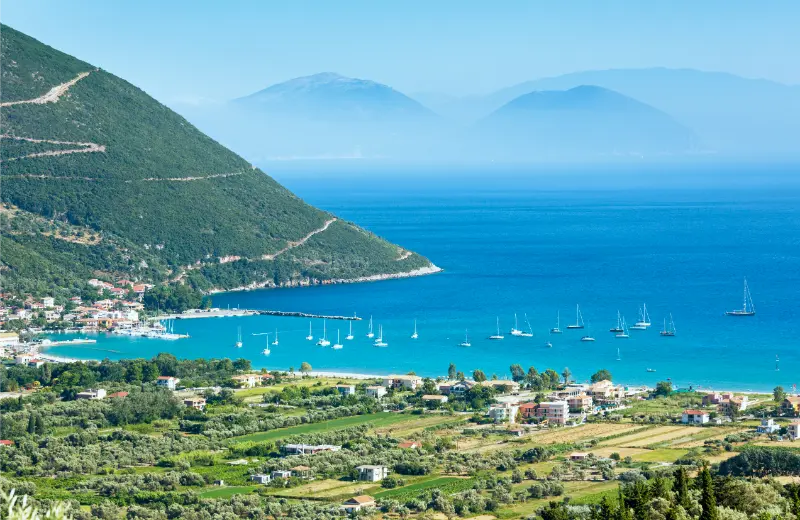
    Landscape City Vasiliki With Its Turquoise Sea Island Lefkada Greece

    Agios Nikitas is charming, but parking and west-coast conditions can make it less effortless with toddlers. If you love the west coast, choose accommodation with straightforward parking and check the walk to restaurants carefully.

    Family beaches: easier is often better

    Mikros Gialos and Desimi are useful family options because their bays are more sheltered than the open west coast. Small beaches near east-coast resorts can also be practical for a short morning swim. Porto Katsiki and Kathisma can still be visited, but decide based on conditions and the children’s age rather than treating them as compulsory.

    Pebbles are common, so water shoes can make entry more comfortable. Bring shade, hats and far more drinking water than you would for a city sightseeing day.

    Boat trips with children

    A boat day can be the highlight because it removes driving and turns swimming stops into an adventure. Choose duration carefully. A ten-hour cruise may be too much for preschoolers even if the brochure looks perfect, while a shorter excursion from Nydri can provide the same excitement with less fatigue.

    Ask about shade, toilets, boarding steps, life jackets and the amount of time spent in open water. Families should also keep one weather backup day because wind can change the route or comfort level.

    Driving, naps and the island’s winding roads

    Lefkada is not huge, but mountain roads make cross-island drives slower than they appear. Children prone to motion sickness may struggle if every day includes two hours of bends. Cluster activities geographically and use the hottest part of the afternoon for a rest rather than another scenic drive.

    How to plan the visit without wasting half the day

    A car gives families the most flexibility, especially for carrying beach gear and changing plans when children are tired. If you do not want to drive, base in Nydri or Lefkada Town and build the trip around buses, boats and short taxis.

    Bring a compact beach kit that stays ready: refillable water bottles, sun hats, high-SPF sunscreen, water shoes, a light shade option, snacks and a dry change of clothes. This matters more than adding another attraction to the itinerary.

    When to go and how weather changes the experience

    June and September are excellent family months if school schedules allow: warm water, long days and lower crowd pressure. July and August are busiest and hottest, so early beach starts and long afternoon breaks become more important.

    May can work well for sightseeing and village days, but the sea may feel cool for young children. In any month, check wind and swell before committing to exposed west-coast beaches.

    Who this plan works best for

    Families with toddlers should prioritise easy access and short transfers; school-age children often enjoy boat trips and village exploration; teenagers may appreciate Vasiliki water sports and more adventurous beach access. Lefkada can fit all three age groups if the pace changes with them.

    Lefkada Coast Vasiliki Town Greece Ionian Sea View From Up

    A realistic way to fit it into your Lefkada trip

    A simple family day starts with an early swim at a sheltered beach, followed by lunch and a long rest. In late afternoon, choose a promenade, harbour or village rather than another beach requiring stairs and a long drive.

    Every three or four days, schedule an intentionally light day with no major drive. Children often remember ice cream by the harbour and a second swim at the local beach more fondly than the fifth famous viewpoint.

    Common mistakes to avoid

    • Planning around adult Instagram priorities instead of children’s energy.
    • Taking toddlers to rough west-coast water because the beach is famous.
    • Skipping afternoon rest in July or August.
    • Choosing a remote villa with no walkable dinner option.
    • Booking a very long boat tour without checking shade and facilities.

    The best family itinerary has fewer “must-sees” and more flexibility. Lefkada gives you enough variety that changing plans for wind, naps or tired children does not ruin the trip.

    Tours and activities around Lefkada

    Boat trips, sailing days and guided activities can be useful when you want to see coves or nearby islands without building the entire day around driving and parking. Availability changes through the season, so compare the exact departure point, duration and cancellation conditions before booking.

    Frequently asked questions

    Is Lefkada good for families?

    Yes. Road access, varied beaches and resort services make it practical, but beach choice and driving distances should be adapted to children’s ages.

    Which Lefkada beaches are easiest with children?

    Sheltered options such as Mikros Gialos and Desimi can be easier than exposed west-coast beaches. Always judge the actual conditions on the day.

    Do we need a car?

    A car is very useful for families, but a no-car holiday is possible from Nydri or Lefkada Town if you are happy with a simpler itinerary.

    Are boat trips suitable for young children?

    Many are, but duration, shade, toilet access and sea conditions matter. Choose the trip for your youngest traveller rather than the adults.

    Continue planning your Lefkada trip

    Start with the main Lefkada travel guide if you are still choosing your base and trip length. For the island’s most famous west-coast scenery, use the Porto Katsiki and Egremni guide. The Lefkada Town guide, Nydri guide and Vasiliki guide help you compare very different bases rather than booking only by hotel price. For an easier transport plan, read Lefkada without a car; for beach selection, use the 15-beach comparison.

    Final practical advice

    Lefkada with kids works best when the family does not try to reproduce an adult road trip. Pick an easy base, use sheltered beaches when needed and keep one main activity per day.

    The island’s most famous beach can wait for the right conditions. A calm swim, good lunch and relaxed evening are often the better family memories.

    Extra planning notes for a smoother day

    For a longer stay, remember that Lefkada with kids should be one part of a broader Lefkada plan rather than the only objective. Build in time for meals, parking, short walks and weather changes. Distances on the island are manageable, but the roads frequently bend around mountains and bays, so a schedule that looks sparse on a flat map can already be full in practice. Travelling earlier in the morning usually improves parking, temperatures and photography, while late afternoon is better for slower village walks and harbour dinners. If a beach or boat day is uncomfortable because of wind, switch to an inland village, the capital or a sheltered bay instead of forcing the original plan. This flexible approach is especially useful in July and August, when traffic and heat magnify every small delay. Keep drinking water in the car, download the route before leaving your accommodation, and confirm seasonal transport or boat information close to the day of travel.

  • Elafonisos Travel Guide: Simos Beach, Panagia, Pavlopetri and Where to Stay

    Elafonisos Travel Guide: Simos Beach, Panagia, Pavlopetri and Where to Stay

    Elafonisos is a tiny island just off the southeastern Peloponnese, but its beaches are among the most visually striking in mainland-connected Greece. Simos and Sarakiniko are the headline names, with pale sand, dunes and clear shallow water, while Panagia provides another beautiful west-coast option. The trip works best when you treat the fragile coastal landscape as the attraction rather than simply a backdrop for a beach day.

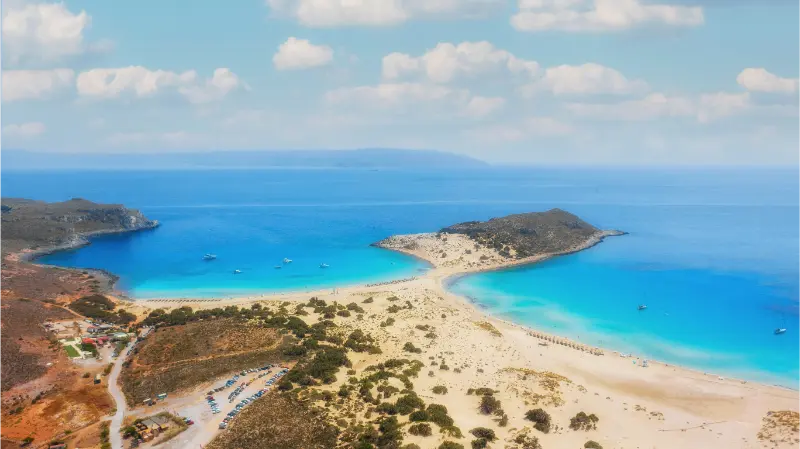
    Aerial View Tropical Seascape Beach Simos Elafonisos Island Peloponnese Greece

    This guide is designed for beach lovers, families, couples and Peloponnese road trippers. It focuses on what is genuinely worth your time, how to combine the main sights without over-planning and which practical decisions matter most once you arrive.

    Quick planning notes

    • Best for: beach lovers, families, couples and Peloponnese road trippers.
    • Give the destination at least two nights if it is a base for day trips; one night is enough only for a transit stop.
    • Check museum, archaeological-site, bus and ferry information again shortly before travel because seasonal schedules can change.
    • In summer, start exposed walks and ancient sites early and keep beach or lunch time for the hottest hours.

    Why it deserves a place in your Peloponnese itinerary

    For a first visit, the best pace is slower than the map suggests. The Peloponnese is full of short-looking drives that become longer once you add mountain roads, village traffic, beach access and spontaneous stops. Build each day around one main area and one secondary activity. That creates time for lunch, swimming, museum closures or weather changes without turning the trip into a race between pins on a map.

    The strongest reason to include this stop is the combination of local character and regional access. Instead of treating it as a name to tick off, use it as a base or a themed day: history, coast, walking, food or a village circuit. That approach creates a more memorable trip and usually reduces unnecessary driving.

    What to see and do

    Simos and Sarakiniko

    The twin sandy bays are the island’s signature landscape. Arrive early in peak summer, protect the dunes and vegetation, and do not remove sand, shells or plants from the protected environment.

    The best way to experience simos and sarakiniko is to leave enough margin for the details around it. Look at the surrounding streets or landscape, read the on-site information and avoid scheduling the next stop so tightly that you have to leave just as the place becomes interesting.

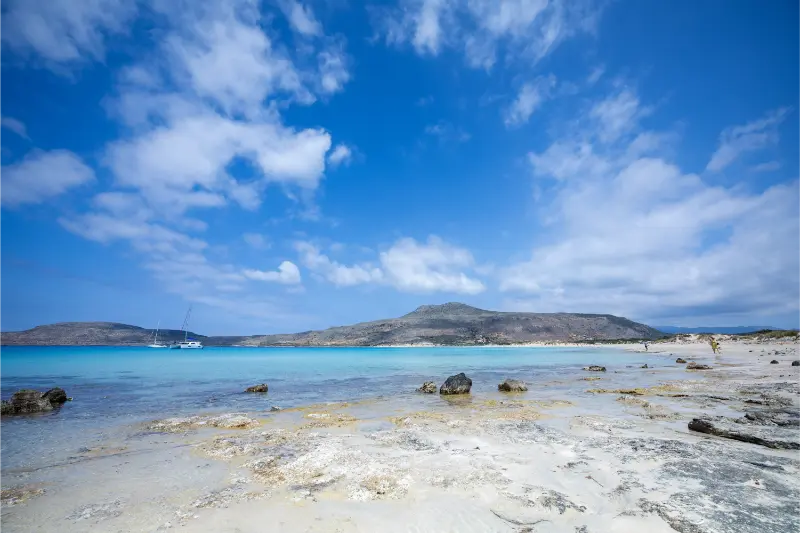
    Stunning Simos Beach Elafonisos Island Greece

    Panagia Beach

    Panagia offers a different orientation and is a strong sunset choice. Wind direction can change the swimming experience considerably, so having more than one beach in mind is useful.

    The best way to experience panagia beach is to leave enough margin for the details around it. Look at the surrounding streets or landscape, read the on-site information and avoid scheduling the next stop so tightly that you have to leave just as the place becomes interesting.

    Elafonisos village

    The compact harbour settlement is where most services, tavernas and accommodation cluster. It is easy to walk, especially in the evening after day visitors have returned to the mainland.

    The best way to experience elafonisos village is to leave enough margin for the details around it. Look at the surrounding streets or landscape, read the on-site information and avoid scheduling the next stop so tightly that you have to leave just as the place becomes interesting.

    Pavlopetri

    Opposite Elafonisos near the mainland shore lies the submerged prehistoric settlement of Pavlopetri. Treat it as an archaeological seascape: avoid touching or disturbing remains and follow any local restrictions on swimming or boating.

    The best way to experience pavlopetri is to leave enough margin for the details around it. Look at the surrounding streets or landscape, read the on-site information and avoid scheduling the next stop so tightly that you have to leave just as the place becomes interesting.

    Protected landscape

    Visit Greece notes the Natura 2000 value of the dunes and coastal vegetation around the island. Staying on established access routes is part of visiting responsibly.

    The best way to experience protected landscape is to leave enough margin for the details around it. Look at the surrounding streets or landscape, read the on-site information and avoid scheduling the next stop so tightly that you have to leave just as the place becomes interesting.

    Short ferry crossing

    Access is by ferry from Pounta near Neapoli. The crossing is short, but queues can build in summer, especially when vehicles are involved, so leave flexibility on arrival and departure days.

    The best way to experience short ferry crossing is to leave enough margin for the details around it. Look at the surrounding streets or landscape, read the on-site information and avoid scheduling the next stop so tightly that you have to leave just as the place becomes interesting.

    A realistic day plan

    1. Take an early ferry if visiting in summer.
    2. Go directly to Simos before the busiest hours.
    3. Return to the village for lunch and a slower afternoon.
    4. Use Panagia or another west-facing spot later in the day.
    5. If staying overnight, enjoy the harbour after day-trip crowds have left.

    This sequence is intentionally flexible. Swap the beach and cultural stops according to heat, wind, opening hours and your energy. If a museum or site is unexpectedly closed, the day should still work rather than collapse.

    Where to stay

    The village is the easiest base for restaurants and ferry logistics. Beach-area accommodation can be appealing if your priority is swimming, but check distance from shops and evening dining before booking.

    Check current accommodation options on Booking.com. Compare the map location carefully and read recent comments about parking, noise, stairs and air-conditioning rather than choosing only by headline rating.

    How to get there and get around

    Visit Greece describes access via KTEL toward Neapoli/Pounta and the local ferry to Elafonisos. Drivers should expect seasonal queues and verify the current vehicle-ferry schedule rather than relying on an old timetable.

    If you rent a car, check the accommodation’s exact parking situation before arrival. Historic centres, waterfronts and mountain villages often have narrow streets or parking outside the pedestrian core. Keep an offline map, avoid blindly following navigation apps onto tiny local lanes and refuel before remote excursions. Driving times in Greece are better treated as estimates than promises.

    Travelling without a car is possible if you keep the itinerary focused. Intercity KTEL buses are useful between major towns, but they are not designed to connect every beach, trailhead and archaeological site in a tourist-friendly sequence. Base yourself somewhere walkable, combine buses with occasional taxis and confirm the return journey before leaving for a remote attraction.

    Best time to visit

    Spring and early autumn are the easiest all-round seasons because walking temperatures are comfortable and road trips are less tiring. July and August work well for beach-focused travel, but start cultural visits early and protect the middle of the day from heat. Winter can be excellent for towns and mountain villages, although opening hours, regional transport and some coastal businesses become more limited.

    For photography and walking, early morning and the final two hours of daylight are usually the most rewarding. Midday is better used for lunch, a museum with indoor sections or a swim. In shoulder season, build more flexibility into meals and transport because smaller businesses may not operate daily.

    What to eat

    Seafood, grilled fish and simple island-style tavernas dominate. Because the island is small, restaurant choice is narrower than on larger islands, so reserve or eat a little earlier on the busiest August evenings.

    A useful rule in the Peloponnese is to ask what is local today rather than searching for a fixed list of famous dishes. Seasonal vegetables, cheese, olive oil, pies, grilled meat and fish vary by sub-region. A short conversation with the server often produces a more authentic meal than ordering the most photographed item on the menu.

    Visiting with children

    Families should reduce the number of daily stops and prioritise shade, easy swimming and predictable meal breaks. A child may enjoy one castle, one short walk and a beach far more than three museums and a long afternoon drive. Carry water and snacks, check whether archaeological sites allow strollers on uneven paths and avoid exposed walks in the hottest hours.

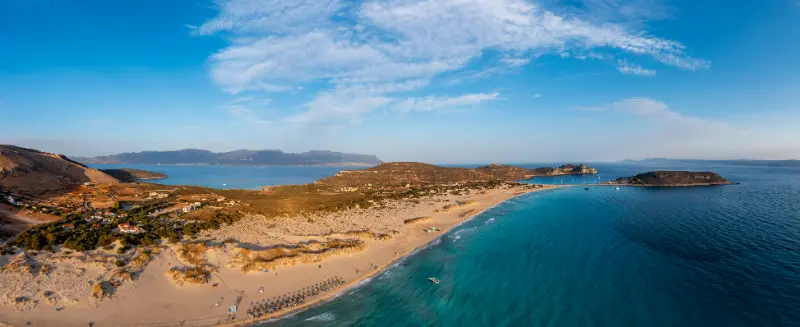
    Elafonisos Greek Island Simos Double Beach Aerial Drone View Peloponnese Greece

    Budget and booking strategy

    Costs vary most by season and accommodation style. A useful strategy is to spend on location rather than unnecessary luxury: a walkable room can save repeated parking, taxi and fuel costs. Tavernas are usually easier to budget when you order shared starters, one or two mains and ask about fish by weight before confirming. Keep some cash for small businesses and rural stops.

    Common mistakes to avoid

    • Trying to combine too many towns, beaches and archaeological sites in one day.
    • Relying on an old timetable for buses, ferries, museums or seasonal attractions.
    • Underestimating heat, sun exposure or the time needed on mountain and coastal roads.
    • Choosing accommodation by price without checking the exact map position and parking.
    • Treating local landscapes as photo sets instead of protected environments or lived-in communities.

    How to fit it into a longer Peloponnese trip

    A useful backbone is our Peloponnese road trip guide. Depending on your direction, you can connect this stop with Nafplio, Ancient Olympia, Kalamata and Messinia, Mani or Monemvasia.

    Avoid chaining all of those places into a single fast loop. The Peloponnese rewards regional stays: two or three nights in one base, then a move to the next zone. That gives you room for beaches, weather, long meals and unplanned discoveries.

    Practical safety and responsible travel

    Responsible travel here is mostly practical: stay on marked paths, do not move stones at archaeological sites, protect dune vegetation, take rubbish away from remote beaches and respect quiet residential streets. In summer, follow local fire restrictions and never assume a forest or gorge is safe just because the sky is clear. Local advice on wind, heat and road conditions is often more useful than an old blog post.

    Frequently asked questions

    How many days do you need for Elafonisos?

    Two nights is a comfortable minimum if you want more than a quick look. Add a third night when the destination is also your base for hiking, beaches or major day trips.

    Do you need a car?

    Not always for the central town or village, but a car usually improves access to beaches, mountain roads and scattered sights. Car-free travellers should choose a walkable base and plan regional transport before booking remote accommodation.

    Is it worth visiting outside summer?

    Yes. Spring and autumn are often better for archaeology, walking and road trips. Winter can be excellent for cities and mountain areas, while beach-focused destinations become much quieter and have fewer seasonal services.

    Should you book accommodation in advance?

    For July, August, carnival weekends, holiday periods and small villages with limited rooms, yes. In quieter months you may have more flexibility, but the best-located properties can still fill first.

    Useful sources for current information

    For details that can change, check Visit Greece – Elafonisos, Peloponnese road trip. Reconfirm tickets, opening hours, road access, ferry or bus schedules and weather-sensitive activities shortly before the day of your visit.

    Final advice

    Elafonisos Travel Guide works best when you resist the urge to turn the visit into a checklist. Choose the experiences that match your interests, leave time for the local rhythm and use the destination as part of a coherent regional route rather than a rushed detour.

    The Peloponnese is large enough that a good trip is defined as much by what you leave out as by what you include. A slower plan almost always produces better meals, easier driving and more time in the places you came to see.

    Continue planning Laconia with Pavlopetri underwater city, Neapoli Voion.

  • Corinth City Guide: Waterfront, Canal, Museums, Ancient Corinth and Where to Stay

    Corinth City Guide: Waterfront, Canal, Museums, Ancient Corinth and Where to Stay

    Modern Corinth is often bypassed by travellers who drive directly from Athens to Ancient Corinth or Nafplio, but it is a useful base in its own right. The contemporary city faces the Corinthian Gulf and sits close to the isthmus, suburban railway, canal, archaeological sites and westbound motorway. It is less romantic than Nafplio and less resort-focused than Loutraki, yet that practicality can be exactly what makes it work for one or two nights.

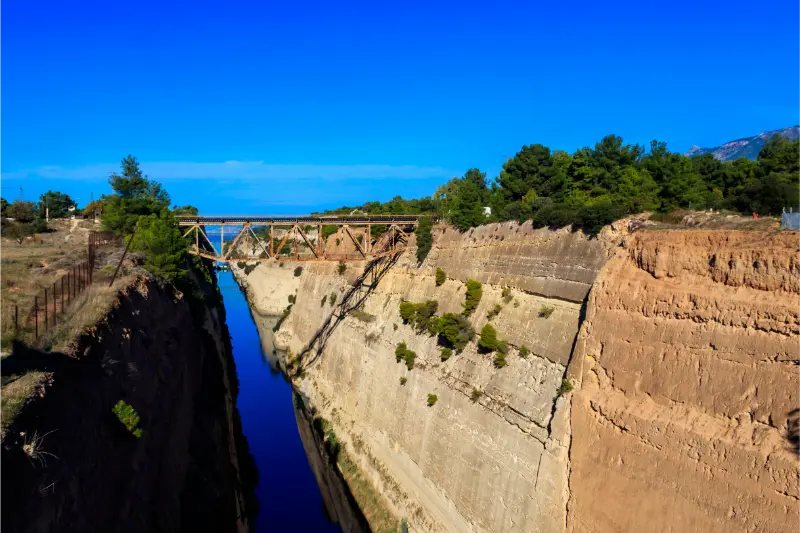
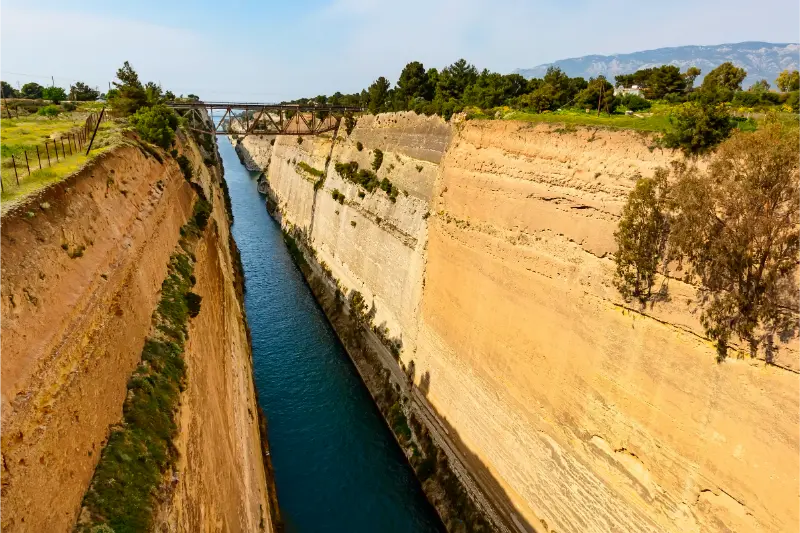
    Corinth Canal Canal Connects Gulf Corinth With Saronic Gulf Aegean Sea Greece

    The city also helps separate three places that visitors often confuse: modern Corinth, the archaeological site of Ancient Corinth several kilometres inland, and the Corinth Canal at the isthmus. Staying in modern Corinth gives you urban services and transport while keeping both historic areas close.

    Why this Corinthia stop is worth your time

    Choose Corinth if you want an efficient transport base, a local city atmosphere and easy road access in several directions. It suits travellers arriving by suburban rail, people continuing west toward Patras, and road trippers who want to visit Ancient Corinth, Acrocorinth and the canal without staying in a tourist village. It is not the place I would choose for a purely beach-focused holiday, but it is excellent for logistics and short cultural stays.

    Corinth Canal Greece

    Quick planning summary

    • Best all-round seasons: April to June and September to October for sightseeing, walking and comfortable road trips.
    • July and August: best for a classic beach holiday, but start archaeological visits early and expect more traffic on weekends.
    • Winter: excellent for Trikala Corinthias, Ziria and Feneos when roads are clear; snow equipment may be necessary at altitude.
    • Transport: coastal towns are reachable by bus or rail in several cases, while mountain routes and Perachora are much easier with a car.
    • Driving: motorway distances are short, but mountain roads are slower than map estimates suggest.
    • Always recheck: archaeological hours, KTEL or rail timetables, ski-centre operation, wildfire restrictions and mountain-road conditions.

    What to see and do

    Seafront and Pegasus Square

    Begin around the central waterfront and Pegasus Square. The city is modern, open and easy to navigate on foot, with cafés, restaurants and everyday shops. The seafront is best in the evening when local life moves outdoors. Do not expect a preserved Ottoman or Venetian old town; Corinth’s interest is contemporary urban life combined with its extraordinary historical surroundings.

    Allow more time than the map suggests. Corinthia changes quickly from motorway and coast to narrow village roads, archaeological paths or mountain terrain, so one well-planned stop is usually more satisfying than three rushed ones.

    Historical and Folklore context

    Small cultural venues and local collections help place modern Corinth after the earthquakes and rebuilding that shaped the present city. Opening hours for local museums can be limited, so verify them before planning a dedicated visit. The larger archaeological story is better handled at Ancient Corinth’s museum and the sites around the isthmus.

    Allow more time than the map suggests. Corinthia changes quickly from motorway and coast to narrow village roads, archaeological paths or mountain terrain, so one well-planned stop is usually more satisfying than three rushed ones.

    Corinth Canal viewpoints

    The canal is close enough for an easy visit by taxi or car. Use an official or established viewpoint rather than stopping unsafely on road shoulders. The straight cut through the isthmus is most impressive when you understand its scale and the much older idea of moving vessels across the land corridor via the ancient Diolkos.

    Allow more time than the map suggests. Corinthia changes quickly from motorway and coast to narrow village roads, archaeological paths or mountain terrain, so one well-planned stop is usually more satisfying than three rushed ones.

    Ancient Corinth

    The archaeological site has the Temple of Apollo, Roman forum, fountains and a museum, and deserves several unhurried hours. It was a major Greek city and later the capital of Roman Achaea. The Apostle Paul connection is important to many visitors, but the site is much broader than one religious association. Go early for heat and photography.

    Allow more time than the map suggests. Corinthia changes quickly from motorway and coast to narrow village roads, archaeological paths or mountain terrain, so one well-planned stop is usually more satisfying than three rushed ones.

    Acrocorinth

    Acrocorinth is the fortified height above the ancient city. It involves uneven uphill walking, exposed stone and large distances within the walls. Good shoes and water matter. The panorama helps you understand why control of the isthmus was strategically valuable across Greek, Roman, Byzantine, Frankish, Venetian and Ottoman periods.

    Allow more time than the map suggests. Corinthia changes quickly from motorway and coast to narrow village roads, archaeological paths or mountain terrain, so one well-planned stop is usually more satisfying than three rushed ones.

    Easy onward trips

    From Corinth you can move east to Loutraki and Perachora, south toward Nemea and Argolis, or west toward Kiato and Xylokastro. That makes it an efficient hub for travellers who prefer one practical hotel over changing accommodation every night.

    Allow more time than the map suggests. Corinthia changes quickly from motorway and coast to narrow village roads, archaeological paths or mountain terrain, so one well-planned stop is usually more satisfying than three rushed ones.

    A realistic itinerary

    • Day 1: arrive, explore the central waterfront and use the evening for a relaxed local dinner.
    • Day 2: visit Ancient Corinth early, continue to Acrocorinth, then return to the city for the evening.
    • Day 3: stop at the Corinth Canal and Isthmia before either continuing to Athens or starting a wider Peloponnese road trip.

    Keep at least one part of the day flexible. Wind can change the best swimming coast, heat can make an exposed archaeological site unpleasant, and mountain weather can close or slow roads. A backup lunch, village walk or seaside stop is more useful than a rigid minute-by-minute schedule.

    Where to stay

    The city centre and waterfront are the most convenient areas for travellers without a car. Drivers can consider accommodation slightly outside the core if secure parking and motorway access matter more than nightlife. Check walking distance to the railway station if arriving by train because “Corinth” listings can cover a wider area than expected.

    Before booking, check the exact pin on the map rather than relying only on the destination name. Coastal listings can stretch along several kilometres, while mountain properties may be on steep lanes. Confirm parking, heating or air conditioning, and whether dinner is realistically walkable.

    For accommodation, compare current options on Booking.com. Map view and recent reviews are especially useful for parking, road noise, beach access and winter heating.

    Getting there and getting around

    Corinth is connected with Athens by road and suburban rail. For archaeological sites, taxis or a rental car save significant time because Ancient Corinth and Acrocorinth are not in the modern centre. The city also works as a connection point for buses toward other Peloponnese destinations, but schedules should be checked on the exact travel date.

    Corinthia is close to Athens, but that does not mean every attraction is easy by public transport. The Athens–Corinth–Kiato corridor is the simplest without a car. Perachora, wineries, Acrocorinth and the highlands require more planning. If you drive, use legal parking and never block emergency or forest access.

    Best time to visit

    Spring is excellent for archaeological sites, wildflowers, hiking and mountain driving, although canyon routes can carry more water. June and September balance warm sea temperatures with easier sightseeing. July and August suit beach-focused trips but require early starts. Autumn is strong for food, wine and forest colour, while winter belongs to the mountain villages and occasional snow around Ziria and Feneos.

    Microclimates matter. Loutraki can be mild while Trikala Corinthias is cold and cloudy; a calm gulf morning can turn windy by afternoon. Check both coastal and mountain forecasts when the itinerary changes altitude.

    Food and local products

    Eat where locals do rather than treating meals as a sightseeing exercise. Seafood from the gulf, grilled meats, pies, seasonal vegetables, local olive oil and wines from nearby Nemea are natural choices. For breakfast, bakeries are often faster and better value than hotel buffets if you are leaving early for archaeological sites.

    Corinthia sits between sea, vineyards and mountain agriculture. Across the region look for fresh fish, olive oil, citrus, raisins, honey, cheeses, pies and Agiorgitiko wines from Nemea. The best meal is often a simple taverna dish that matches the landscape you are visiting rather than a generic tourist menu.

    Travelling with children

    Modern Corinth is easy with children because services, pharmacies and supermarkets are close. The challenge is archaeological heat. Split Ancient Corinth and Acrocorinth if children are young, and do not assume a fortress visit after a full museum morning will be enjoyable for everyone.

    For family trips, alternate ruins with water, forest or village time. Shade is limited at many archaeological sites, and mountain roads can cause motion sickness. Carry water and snacks, avoid the strongest midday heat, and choose one main objective per half-day.

    Costs and practical details

    Corinthia can be good value because many landscape attractions cost little or nothing. Budget separately for archaeological tickets, spa sessions, wine tastings, organised canyoning, ski activities, tolls and fuel. Carry some cash in mountain villages and do not assume every small seasonal business accepts cards during network outages.

    How this guide fits the wider region

    Continue planning with Ancient Corinth and Canal guide; Acrocorinth guide; Isthmia and Corinth Canal; Loutraki guide. These pages are designed as one Corinthia cluster so you can move from coast to archaeology and mountains without duplicating research.

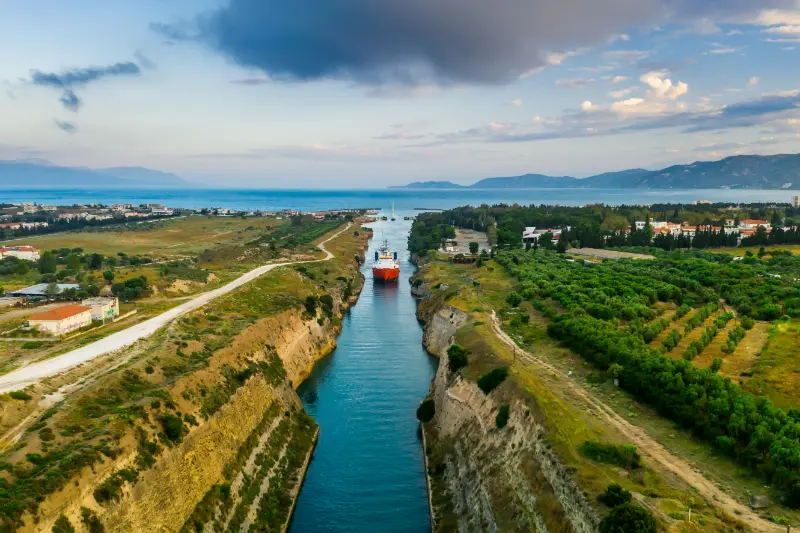
    Ship Passing Through Corinth Canal Greece

    Common mistakes

    • Confusing modern Corinth, Ancient Corinth and the canal as one walkable attraction.
    • Skipping the archaeological museum at Ancient Corinth.
    • Walking Acrocorinth in sandals or without water.
    • Choosing accommodation by name alone without checking its exact map position.
    • Using Corinth only as a petrol stop when it could simplify several regional day trips.

    Frequently asked questions

    How many days do I need in Corinthia?

    Three days can cover the canal, Ancient Corinth and one coast or mountain area. Five days gives enough time to include Loutraki, Perachora, Nemea, western Corinthia and the Feneos highlands without constant driving.

    Can I visit without a car?

    Yes for Corinth, Loutraki, Kiato and parts of Xylokastro, using rail, KTEL and taxis. A car becomes much more useful for Perachora, Acrocorinth, wineries, Ziria and Lake Doxa.

    Is Corinthia only a stop between Athens and Nafplio?

    No. The region combines major archaeology, thermal tourism, gulf beaches, Nemea wine country and high mountains. It can easily fill a dedicated long weekend or a five-day road trip.

    What is the biggest planning risk?

    Trying to combine coast, archaeology and mountains in one day because distances look small. Road type, heat and opening hours matter more than kilometres.

    What should I verify shortly before travelling?

    Archaeological opening hours and ticket rules, current public-transport timetables, ski-centre operation, wildfire or trail restrictions, road conditions in the highlands and marine weather for swimming or boat activities.

    Useful official source

    For details that can change, check Visit Greece – Corinth and confirm current access, opening hours or transport close to your travel date.

    Final advice

    Corinthia rewards travellers who stop thinking of it as the first motorway section after Athens. Use the short distances intelligently: stay on the coast when you want easy evenings, dedicate a full day to the mountains, visit archaeological sites early, and leave room for a long lunch or unexpected viewpoint. That slower rhythm is what turns a transit region into a memorable part of a Greece trip.

  • Where to Stay in Kimolos: Chorio, Psathi, Aliki, Bonatsa or Prassa?

    Where to Stay in Kimolos: Chorio, Psathi, Aliki, Bonatsa or Prassa?

    Choose where to stay in Kimolos by comparing Chorio, Psathi, Aliki, Bonatsa, Kalamitsi and Prassa for beaches, restaurants, car-free travel, families and quiet nights.

    Kimolos rewards travellers who plan around its small scale rather than trying to treat it like a larger resort island. The practical details in this guide are designed for independent visitors: what is genuinely walkable, where transport saves time, how wind changes a beach day, and which places deserve unhurried time.

    Quick planning notes

    • Choose location before room style: the right base can save repeated taxi or bus journeys.
    • Chorio is the strongest all-round base, especially without a car.
    • Psathi suits short stays and early ferries; south-coast areas suit beach-first holidays.
    • Ask every property about stairs, parking and luggage access because map distance can be misleading.

    The decision in one minute

    Choose Chorio if you want restaurants, evening atmosphere and the easiest car-free logistics. Choose Psathi if ferry convenience matters most. Choose Aliki, Bonatsa or Kalamitsi for a beach-oriented stay with quieter evenings, and consider Prassa if you specifically want the island’s striking northeastern scenery and do not mind being away from the main village.

    There is no single “best” area because Kimolos is compact. The meaningful difference is how you want mornings and evenings to feel. A beach base reduces the effort of the first swim; Chorio reduces the effort of dinner, shopping and transport.

    Greece Kimolos Island Cyclades Chorio Aerial Drone View

    Chorio: best for first-time visitors

    Chorio offers the broadest mix of restaurants, shops, museums, nightlife and public transport. It is also the starting point for much of the island’s walking network. For first-time visitors staying three to five nights, these advantages usually outweigh the lack of a major beach directly outside the door.

    The main caution is access. Historic lanes have steps and vehicle-free sections. Before booking, ask exactly where a taxi stops and how far you must carry luggage. A room five minutes from the center can be ideal if it offers easier access and quieter nights.

    Psathi: best for ferry convenience

    Psathi is the practical choice for early departures, late arrivals and travelers who enjoy harbour atmosphere. Rema and Goupa are nearby for swimming and photography, and Chorio is close enough for dinner. Short-stay visitors can save transfer time by sleeping near the port.

    Ferry activity creates occasional noise, and dining choice is smaller than in Chorio. If you are a light sleeper, ask whether the room faces the quay. Psathi works best when convenience is a priority rather than when you want to be at the center of evening life.

    Aliki and Bonatsa: best for easy beach days

    The south-coast area around Aliki and Bonatsa is appealing for families and travelers who want to wake close to sand. Roads are straightforward by island standards and the beaches are easier to use for long days than some rocky coves. Kalamitsi adds another nearby option.

    The compromise is evening variety. You may still travel to Chorio for dinner or a walk, especially on longer stays. With a rental car this is simple; without one, check bus frequency and taxi availability before choosing a beach base.

    Kalamitsi: a quieter south-coast alternative

    Kalamitsi suits travelers who prefer a low-key coastal setting and are happy to plan evenings. It can feel more private than staying in the main village while keeping you near several south-coast beaches. This is a good choice for couples or repeat visitors who already know the island’s basic logistics.

    Confirm the distance to groceries and the nearest reliable restaurant rather than assuming every coastal property has services within a short stroll. A small kitchen or fridge becomes more valuable outside Chorio.

    Prassa: best for scenery, not convenience

    Prassa is visually dramatic and gives immediate access to one of Kimolos’s best-known beaches. Staying nearby can be wonderful if your holiday is built around swimming, quiet mornings and northeastern landscapes. It is less convenient for travelers who want to walk to many restaurants or rely heavily on public transport.

    Road and wind conditions matter more here. Ask your host about the final approach, parking and what happens when strong northerly weather makes the beach less attractive. A beautiful location is only the best choice if it fits how you actually travel.

    Best area without a car

    Chorio wins for most car-free travelers because buses, taxis, shops and dining are concentrated around the village. Psathi is the second choice if ferry access matters more than nightlife. A beach base can still work, but you will plan the day around limited transport rather than stepping outside and improvising.

    If you do not drive, ask the property for the current bus stop and walking time to it. “Near the bus” can mean something different on a rural island road than in a city.

    Best area for families

    Families with young children often appreciate Bonatsa or Aliki for straightforward beach access, while families with older children may prefer Chorio because evenings are easier and day trips remain flexible. A stroller is more awkward in historic lanes, so families with babies should prioritize access details.

    Whichever area you choose, confirm air conditioning, fridge access, blackout shutters and safe balcony design. Those practical features matter more than decorative style after several hot summer days.

    How many nights to book

    Three nights give a useful introduction if ferry times are favorable. Four or five nights are better for combining beaches, Skiadi, Chorio and a possible Polyaigos excursion without rushing. A week suits hikers and travelers who enjoy repeating beaches and following weather rather than a checklist.

    Polyaigos Volcanic White Sand Beach Turquoise Sea Blue Sky Kimolos Island Cyclades Greece

    If you split time with Milos, resist giving Kimolos only one night unless you simply want a taste. The island’s appeal grows after the day-trip rhythm fades and you begin choosing activities based on wind, appetite and mood.

    Where to book accommodation

    Accommodation is limited compared with larger Cycladic islands, especially in July and August. Compare location carefully rather than choosing only by room style: a property in Chorio gives the easiest evenings, while coastal stays trade convenience for quicker beach access. Check current Kimolos accommodation on Booking.com.

    Frequently asked questions

    What is the best area to stay in Kimolos for a first visit?

    Chorio is the best all-round base for most first-time visitors because it concentrates restaurants, shops, transport and evening atmosphere.

    Should I stay in Chorio or by the beach?

    Choose Chorio for convenience and variety; choose Bonatsa/Aliki/Kalamitsi for easier beach mornings and quieter evenings.

    Is Psathi too noisy?

    Ferry arrivals create short periods of activity, but the port is otherwise small. Ask for a room set back from the quay if you are sensitive to early-morning noise.

    Useful official resources

    For information that can change after publication, use the Municipality of Kimolos for local services and island information, the Visit Greece Kimolos page for destination background, and the municipality’s ferry timetable page before fixing transfers. Ferry and local transport times can change by season, weather and operator, so confirm the exact day rather than relying on an old screenshot.

    Related Kimolos guides

    Questions to ask before confirming a room

    Ask about the exact number of steps from road to entrance, parking distance, luggage help, air conditioning, Wi-Fi reliability and the nearest breakfast option. If you work remotely, request a recent speed test rather than assuming island internet is adequate. If you travel in September, ask which nearby restaurants and beach services are expected to remain open.

    Booking strategy by season

    For late July and August, reserve early because the island has a limited accommodation stock. June and September usually allow more choice and better value, but do not assume every coastal business operates from early spring to late autumn. Flexible cancellation is valuable when ferry schedules are still provisional. In shoulder season, Chorio is often the safest base because it retains the broadest services.

    Final planning note

    Kimolos is small enough that a change of plan rarely ruins the day. Keep the most weather-sensitive activity in the first half of your stay, check wind and local transport each morning, and avoid committing to a remote beach or exposed walk when conditions are marginal. Carry water, save important tickets and maps offline, and leave enough time to return to Chorio or Psathi before the final bus, boat or ferry. This simple flexibility is especially valuable for where to stay in Kimolos, because the island’s limited infrastructure is part of its charm but also means that alternatives are easier to use when you decide early rather than after a connection has already been missed.

    Greece Kimolos Island Cyclades Chorio Aerial Drone View

    Before finalizing the day, ask your accommodation or a local business whether anything practical has changed: bus timing, sea conditions, road access or an event in Chorio. Small islands often communicate useful changes locally before they appear on travel websites. Keeping one simple alternative in mind—an easier beach, a museum visit, a village meal or a shorter walk—usually protects the day without adding complicated planning.

  • Knossos Palace Guide: Tickets, History, Best Time and How to Visit from Heraklion

    Knossos Palace Guide: Tickets, History, Best Time and How to Visit from Heraklion

    Knossos is one of those places where the famous name can get in the way of the actual visit. Many travellers arrive expecting a single intact palace and instead find a large archaeological site made of courts, storerooms, staircases, reconstructed architectural elements and layers of interpretation. Once you understand that, the site becomes far more interesting: you are walking through the administrative and ceremonial heart of a Bronze Age society that developed on Crete long before classical Athens reached its height.

    The palace lies just south of Heraklion, which makes it one of the easiest major archaeological sites in Greece to add to a city stay. I would combine it with the Heraklion travel guide and, ideally, the Heraklion Archaeological Museum. If you are moving around the island, the Crete road trip itinerary shows where Knossos fits without turning the day into a rushed checklist.

    Why Knossos matters

    Knossos was the largest Minoan palatial centre on Crete and is closely associated with the myths of King Minos, the Labyrinth, the Minotaur, Theseus and Ariadne. Archaeology and mythology are not the same thing, but the myths give the site an additional imaginative layer. The historical story is already remarkable without embellishment: the palace complex reflects sophisticated administration, craft production, storage, ritual activity and long-distance connections across the eastern Mediterranean.

    The visible remains belong to several phases because the site was repeatedly rebuilt after destruction. This is important when you look at walls and rooms: Knossos was not frozen in one moment. Its architecture changed across centuries. The excavations led by Arthur Evans from 1900 also introduced reconstructions that remain controversial. They help visitors visualize spaces, but they also reflect early twentieth-century archaeological interpretation. I treat the reconstructions as one layer of the site rather than as a perfect recreation of the Bronze Age palace.

    What to see inside the palace

    Start by orienting yourself around the Central Court. From there, the most memorable areas include the West Magazines with their long storage rooms and large pithoi, the Throne Room complex, the Grand Staircase, the Queen’s Megaron area and the sections associated with the famous fresco reconstructions. Even if you have seen photographs, the relationship between levels, corridors and courts is easier to appreciate on site.

    Do not rush from one famous reconstruction to another. Look at drainage channels, thresholds, storage spaces and changes in floor level. These quieter details explain why Knossos feels so advanced to modern visitors. The palace was not simply a royal residence; it was part of a wider economic, religious and political system.

    How long you need

    For a first visit I would allow about two hours inside the archaeological site. A fast visitor can walk the main circuit in less, but that leaves little time to understand what each area represents. If you enjoy archaeology, three hours is easy to justify, especially when the site is not crowded.

    Add at least another two hours for the Heraklion Archaeological Museum on the same day or the following morning. Many of the original finds and frescoes connected with Minoan Crete are in the museum, so the two visits complete each other. Seeing the objects after the architecture gives context; seeing the museum first can make the palace easier to decode.

    Best time of day to visit

    In warm months, early morning is my first choice. There is limited shade across large parts of the site, and the combination of heat and tour groups can make midday tiring. Late afternoon can also be pleasant when opening hours allow, but check the official schedule because seasonal hours change.

    Spring and autumn are especially comfortable for archaeological sightseeing in Crete. In July and August, carry water, wear a hat and treat sun protection as essential rather than optional. If your schedule is flexible, avoid building a tight ferry or flight connection immediately after the visit.

    Tickets and official information

    Ticket prices and opening hours can change, so I recommend checking the official Hellenic Heritage information immediately before travel rather than relying on an old screenshot or a blog post. Buying online can be useful in busy periods. The official Greek cultural authorities also publish information on free-admission days and reduced categories.

    Use the official information as the final word on access. Archaeological sites can occasionally modify hours because of heat, weather, maintenance or special events. I prefer to verify again on the morning of the visit when the weather forecast is extreme.

    How to get to Knossos from Heraklion

    Knossos is close enough to Heraklion that you do not need a rental car just for this excursion. Public buses connect the city with the archaeological site, and taxis are straightforward. If you already have a car for a wider Crete trip, driving is convenient, but remember that Heraklion traffic and parking can be more stressful than the short distance suggests.

    Ruins Knossos Palace Crete Island Greece

    If you are staying in Chania or Rethymno, I would not travel across the island solely for a rushed one-hour stop. Make Knossos part of an eastern or central Crete day and pair it with Heraklion. The Rethymno guide and Chania guide explain why Crete works better when you divide the island into regions.

    Knossos and the Heraklion Archaeological Museum

    The museum is not an optional afterthought if you want to understand the Minoans. It contains major finds from sites across Crete, including pottery, jewellery, ritual objects, sculpture and celebrated frescoes. The palace gives you scale; the museum gives you detail.

    My preferred sequence for first-time visitors is museum in the morning, lunch in Heraklion, then Knossos later if temperatures are reasonable. In midsummer I reverse that: Knossos at opening time, then the air-conditioned museum during the hotter part of the day.

    Is a guide worth it?

    Knossos is a strong candidate for a guided visit because much of what matters is not self-explanatory. A good guide can distinguish excavation history, reconstruction, myth and archaeological evidence. That helps prevent the visit from becoming a sequence of photographs with little understanding.

    If you prefer to visit independently, read a short Minoan overview beforehand and use the site panels carefully. I would still avoid overly confident stories that present every room name or mythological connection as settled fact. Archaeological interpretation changes, and some labels are conventional rather than certain.

    What to bring

    • Comfortable shoes with grip, because surfaces can be uneven.
    • Water, especially from late spring through early autumn.
    • A hat and sunscreen; shade is limited in many areas.
    • A small amount of patience for narrow viewing points when tour groups arrive.
    • A downloaded ticket or screenshot if mobile reception is unreliable.

    Large luggage is a bad match for an archaeological visit. If Knossos falls between hotel check-out and a flight or ferry, arrange storage in Heraklion rather than dragging bags to the site.

    How to build Knossos into a Crete itinerary

    For a three-day Heraklion stay, I would give one day to the city and museum, one day to Knossos plus nearby interests, and one day to a beach, winery or another archaeological site depending on your priorities. For a longer Crete trip, Heraklion works well as a two-night stop between western Crete and eastern Crete.

    Knossos is not a reason to race through the rest of the island. Crete rewards slower travel. Use the complete Crete travel guide to decide whether your trip should emphasize history, beaches, hiking, villages or a balanced mix.

    Palace Knossos At Crete Greece

    Common mistakes to avoid

    The biggest mistake is arriving in the hottest part of the day with no water and expecting constant shade. The second is skipping the museum. The third is treating Evans’s reconstructions as if every colour and architectural detail were unquestionably ancient.

    I would also avoid planning Knossos, the museum, a cross-island drive and a ferry departure on the same day. The palace is easy to reach, but the value of the visit comes from having enough mental space to understand what you are seeing.

    Frequently asked questions

    Is Knossos suitable for children?

    Yes, especially for school-age children who enjoy myths and ancient history. Keep the visit shorter in hot weather and turn the Labyrinth and Minotaur stories into a starting point, while explaining that mythology and archaeology are different kinds of evidence.

    Can I visit Knossos without a car?

    Yes. From Heraklion, public transport and taxis make the palace straightforward to reach. A car becomes more useful only when Knossos is one stop in a broader day outside the city.

    Should I visit Knossos or the museum first?

    Both sequences work. In very hot weather I prefer Knossos early and the museum later. In cooler weather, seeing the museum first can make the palace easier to understand because you already know the objects, frescoes and Minoan visual language.

    Is Knossos a full-day trip?

    The palace itself is usually a half-day activity at most, but Knossos plus the Heraklion Archaeological Museum and a relaxed meal can fill most of a day without feeling rushed.

    A slower way to experience Knossos

    If you have the time, resist the instinct to move continuously. Spend several minutes in the Central Court, then revisit one section after you have read the museum labels or guide notes. Archaeological sites become clearer on a second look because your mental map has improved. I also like to compare reconstructed elements with untouched masonry so the difference between ancient fabric and modern interpretation stays visible.

    After the palace, return to Heraklion without immediately adding another major attraction. A long lunch, a walk by the Venetian harbour and the museum create a more coherent Minoan day than racing toward a distant beach. This pacing is especially useful for first-time visitors who are already processing unfamiliar dates, names and archaeological terminology.

    Before leaving Crete, consider how Knossos connects with other Minoan palatial centres and museums across the island. Even if you do not visit them, knowing that Knossos was part of a wider network prevents the common mistake of imagining all Minoan life concentrated in one palace. Crete’s Bronze Age story is regional, complex and still being researched.

    More archaeology and history guides: UNESCO World Heritage Sites in Greece, Mycenaean Greece guide, Minoan Crete guide, Roman Greece guide, Byzantine Greece guide, Venetian Greece guide, Ottoman heritage in Greece, best ancient theatres in Greece, best archaeological museums in Greece, Greek castles and fortresses.

  • Where to Stay in Andros: Chora, Batsi, Gavrio or Korthi? Best Areas Compared

    Where to Stay in Andros: Chora, Batsi, Gavrio or Korthi? Best Areas Compared

    Choosing where to stay in Andros matters more than on a very small Cycladic island. Gavrio is the ferry port in the west, Batsi is the easiest resort-style base, Chora is the cultural capital on the east coast and Korthi is a quieter southern option. The roads are scenic but not fast enough to make every base feel identical.

    Ferry Boat Andros Island Port Greece

    For most first-time visitors I would choose Batsi if beaches and easy evenings are the priority, or Chora if architecture, museums and hiking matter more. Gavrio is excellent for transport convenience, while Korthi rewards travellers who want a quieter, more local rhythm. This guide compares the trade-offs rather than naming one universal winner.

    Quick comparison

    AreaBest forMain compromise
    BatsiFirst trips, couples, families, beach holidaysLess cultural depth than Chora
    ChoraCulture, architecture, walking, couplesFarther from ferry port
    GavrioLate arrivals, early ferries, north-west road tripsMore practical than atmospheric
    KorthiHiking, quiet stays, southern AndrosFewer services and longer island transfers

    Batsi: best all-round holiday base

    Batsi combines a swimmable bay, accommodation at different price levels, restaurants and a pleasant evening waterfront. It is close enough to Gavrio to make ferry days easy and well placed for Agios Petros, Chrissi Ammos and other west-coast beaches. That balance is why it is the safest recommendation for a first trip.

    Choose the lower village if you want minimal walking, or a hillside room for views and potentially less evening noise. Ask exactly how many steps are involved. Our Batsi Guide covers the village in detail.

    Chora: best for culture and atmosphere

    Chora is the most distinctive base on the island, with neoclassical architecture, museums, pedestrian lanes, Nimborio and Paraporti beaches and strong hiking access to the central valleys. Staying overnight lets you experience the town before and after day visitors.

    The trade-off is transfer time from Gavrio and more complicated luggage access at some pedestrian properties. If you plan to spend every day on west-coast beaches, Chora adds unnecessary driving. See the Chora Andros Guide.

    Gavrio: best for ferry convenience

    Gavrio is ideal for one-night stays around the ferry, travellers with very early departures and anyone planning to explore northern Andros. Agios Petros beach and the Hellenistic tower are nearby, and the road south to Batsi is easy to use.

    For a full week, the port may feel less atmospheric than Batsi or Chora. A good compromise is to spend the final night here only when the ferry schedule makes it useful. Read the Gavrio and Agios Petros Guide.

    Korthi: best for quiet southern Andros

    Korthi suits hikers and repeat visitors who want a more local base near Grias to Pidima, Dipotamata and southern villages. It is slower in the evening and less oriented toward international tourism, which is exactly the attraction for some travellers.

    It is not the obvious choice for a first two-night trip because you will spend too much time moving to Chora and the ferry. With five to seven nights, however, a Korthi stay can add a very different second chapter. See the Korthi Guide.

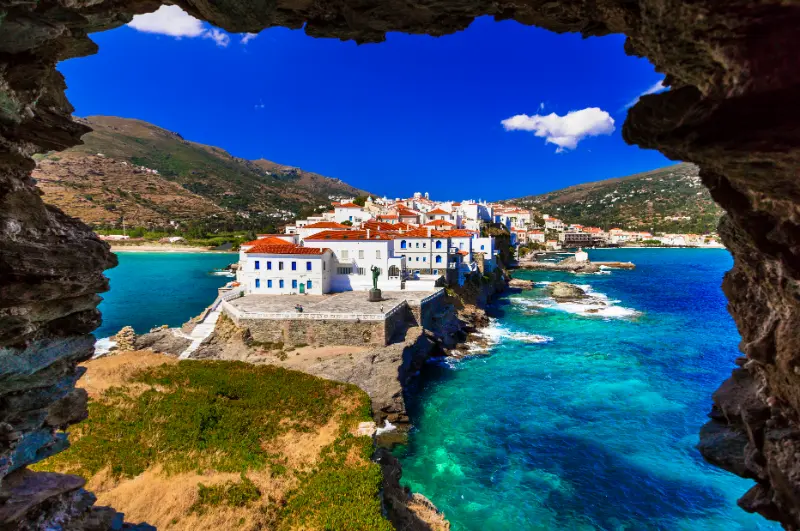
    Traditional Greece Series Andros Island View Chora Village From Old Fortress

    Best area without a car

    Batsi is the easiest because beach, food and accommodation are concentrated in one walkable area and seasonal buses connect the west-coast corridor. Chora is also workable if culture is the priority, but you need a longer transfer from Gavrio. The Andros Without a Car guide gives a full strategy.

    Gavrio is practical but less rewarding as a holiday base, while Korthi requires more careful transport planning. Do not choose a remote villa without a car simply because it looks close to a bus route on a map.

    Best area for beaches

    Batsi wins for convenience, especially when you count nearby Agios Petros, Chrissi Ammos and Kypri. Gavrio also works for north-west beaches. Chora is better if you are happy with Nimborio, Paraporti and day trips to Gialia. Korthi gives access to Grias to Pidima but is not the island’s easiest classic beach-resort base.

    Wind matters enough that no accommodation can guarantee a perfect beach every day. A car expands your ability to change coast when conditions shift.

    Best area for hiking

    Chora is the most flexible hiking base because multiple marked routes reach central villages, Panachrados, Apikia, Vourkoti and Korthi. Korthi is excellent for southern routes, while Batsi and Gavrio have northern trails toward Agios Petros, Arni and old watermill areas.

    If hiking is the main purpose, choose accommodation near the start/end of the specific routes rather than simply picking the island’s prettiest town. Our hiking guide includes published distances.

    Best area for families

    Batsi is easiest for families because the daily routine can be beach, lunch, rest and dinner without repeated car journeys. Gavrio/Agios Petros is also practical for broad beaches. Chora works well with older children interested in museums and walks, but families with strollers should ask about steps.

    Korthi is a good choice for active families who want a quiet stay, although the famous Grias to Pidima access is less convenient with toddlers than an organised west-coast beach.

    Should you split your stay?

    With four nights or fewer, use one base. With five to seven nights, a Batsi–Chora split can work if you genuinely want two different atmospheres and dislike driving back and forth. A Chora–Korthi split is more specialised for hikers. Do not change hotels simply to save 20 minutes of driving; packing and check-in often consume more time.

    If your ferry leaves early, you can also keep one main base and spend only the final night near Gavrio. This is the most practical “split” because it solves a transport problem rather than creating one.

    Questions to ask before booking

    • How many steps are there from the parking area or bus stop?
    • Is parking private, public or street-only?
    • Can a taxi reach the door?
    • How exposed is the room to road or nightlife noise?
    • Is the beach genuinely walkable in summer heat?
    • What is the cancellation policy if ferry schedules change?

    Best time to visit

    For a trip that mixes villages, walking and beaches, May, June, September and early October are the most balanced periods. The landscape is easier to enjoy on foot, roads and parking are less stressful than in peak August, and the sea is usually part of the day rather than the only reason to travel. July and August bring the strongest holiday atmosphere, more ferry capacity and fully active beach businesses, but they also demand earlier starts, stronger sun protection and more flexible planning around wind.

    Spring can be excellent for hikers because Andros is unusually green for the Cyclades, although winter and spring growth can temporarily obscure sections of old paths before maintenance teams clear them. In 2026 Andros Routes published repeated spring and summer maintenance updates, a useful reminder that even well-marked trails are living infrastructure rather than indoor attractions. Always check the latest route notes if walking is central to the trip.

    Who this part of Andros suits best

    Batsi is the easiest first-time base, Chora is strongest for culture and walking, Gavrio solves transport problems, and Korthi rewards travellers seeking a quieter southern stay. The right choice depends on what you want to do before breakfast and after dinner, not on a generic ranking.

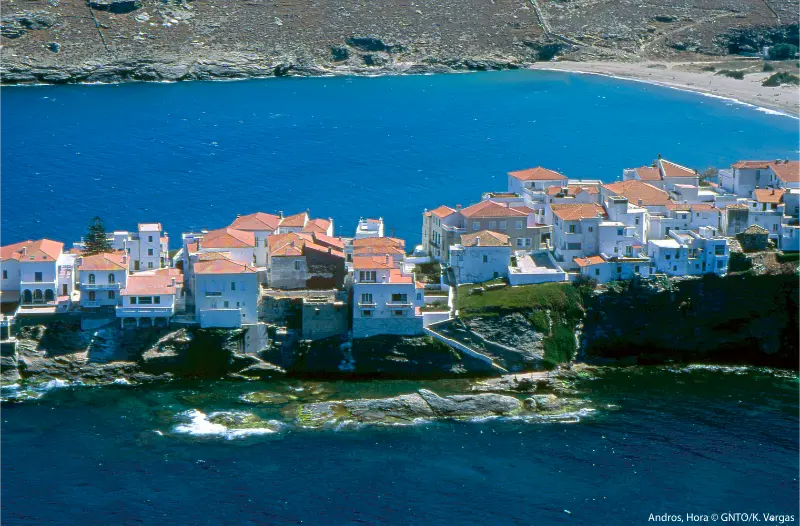
    Andros Hora Greece

    What to carry

    Pack for the base you choose: comfortable walking shoes for Chora and Korthi, simple beach gear for Batsi, and easily managed luggage for any property reached by steps. If you rent a car, a phone mount and offline map help with village navigation.

    Common mistakes to avoid

    The biggest planning error on Andros is underestimating the island because it sits close to Athens. Roads cross steep terrain, villages are separated by valleys and a beach that looks near on a map may require a very different approach road. Build days around one part of the island instead of zigzagging from north to south. The second mistake is assuming the famous Cycladic wind affects every bay equally; conditions can differ sharply by coast, so keep a second beach or walking plan in mind.

    A third mistake is treating the ferry timetable as the only transport decision. The ferry arrives at Gavrio, while Chora is on the opposite side of the island. If you are travelling without a car, the timing of the onward bus or taxi matters. If you drive, check parking at your accommodation and do not assume narrow village lanes are appropriate for through traffic.

    Continue planning your Andros trip

    Use the guides together rather than as separate checklists. Start with the main Andros travel guide and then open the specialist pages that match your route: Andros Travel Guide; Chora Andros Guide; Batsi Andros Guide; Gavrio and Agios Petros Guide; Korthi Andros Guide; Menites, Apikia and Pythara Guide; Ancient Andros Guide. The remaining guides are linked throughout the cluster where they are most relevant, so you can move from a base or beach decision to transport and hiking without rebuilding the itinerary from scratch.

    Useful official sources before you go

    For current destination information I cross-check the Municipality of Andros visitor portal and the Andros Routes project. Trail conditions, museum schedules, ferry services and local transport can change seasonally, so verify time-sensitive details shortly before travel.

    Frequently asked questions

    What is the best place to stay in Andros for a first visit?

    Batsi is the easiest all-round choice; Chora is better if culture and hiking are your priorities.

    Where should I stay without a car?

    Batsi is generally simplest, followed by Chora if you are comfortable planning the ferry transfer.

    Which area is best for couples?

    Both Batsi and Chora work well: choose Batsi for beach-and-dinner ease, Chora for architecture and atmosphere.

    Where should families stay?

    Batsi and the west-coast beach corridor are usually easiest for a low-friction family holiday.

    Is it worth staying in two places?

    Only if you have at least five or six nights and genuinely want different east/west experiences. Short trips are better with one base.

    Final planning advice

    Andros rewards a slower plan. Choose a base that makes your mornings easy, group nearby villages and beaches into the same day, and leave room for weather. The island is varied enough that a windy beach day can become a museum, village or hiking day without feeling like a compromise. That flexibility is one of the reasons Andros works so well for repeat visits as well as a first Cyclades trip.

  • Ancient Corinth and Corinth Canal Guide: Ruins, Acrocorinth and a Day Trip Plan

    Ancient Corinth and Corinth Canal Guide: Ruins, Acrocorinth and a Day Trip Plan

    Corinth is one of the easiest places to underestimate because the name refers to several different stops: modern Corinth, the archaeological site of Ancient Corinth, the fortress of Acrocorinth and the Corinth Canal at the Isthmus. They are related geographically but are not one attraction you can see from a single car park.

    Corinth Canal Greece

    Together, however, they make one of the best history-and-landscape days between Athens and the Peloponnese. The route also fits naturally into my Peloponnese Road Trip if you are continuing toward Nafplio, Mycenae or Epidaurus.

    Why this place deserves more than a quick photo

    Ancient Corinth shows the remains of a major Greek and Roman city in a strategic location between mainland Greece and the Peloponnese. The Temple of Apollo, Roman forum, fountains and road alignments create a much more urban experience than a single sanctuary.

    Acrocorinth adds the defensive layer above the city, while the modern canal explains why control of the Isthmus remained strategically important into the industrial age. Visiting all three creates a continuous story about movement, trade and geography.

    A short history before you visit

    Corinth prospered because of its position near routes connecting the Saronic and Corinthian gulfs. Ancient infrastructure, ports and the Diolkos helped exploit the narrow Isthmus long before the modern canal was completed.

    The city was destroyed and re-founded in antiquity, and the archaeological remains include strong Roman elements alongside earlier Greek monuments. Christian visitors also connect Corinth with the journeys and letters of St Paul.

    The modern Corinth Canal was completed in 1893. Visit Greece describes it as a 6,346-metre cut through the Isthmus, with near-vertical sides that make the viewpoint impressive even for travellers who are not interested in engineering. See Visit Greece – Corinth Canal.

    What to see: the essential highlights

    • Temple of Apollo: the most visually recognisable ancient monument and a useful anchor for understanding the older city.
    • Roman Forum: the civic heart of the later city, with buildings and monuments that reveal Corinth’s importance under Roman rule.
    • Peirene Fountain: one of the site’s best places to connect mythology, water infrastructure and urban life.
    • Lechaion Road: the route toward the ancient port helps visitors imagine the city as a commercial centre.
    • Acrocorinth: the massive hilltop fortress above Ancient Corinth, with layers from multiple periods and extraordinary views.
    • Corinth Canal: a short modern stop that makes the geography of the Isthmus immediately obvious.

    The route I would follow

    With a car, I would visit the canal either first or last depending on your direction of travel, then give the historical core most of the day.

    1. Stop at a safe, official canal viewpoint and spend twenty to thirty minutes understanding the Isthmus.
    2. Continue to Ancient Corinth and visit the archaeological site and museum before the hottest hours.
    3. Have lunch in the village area rather than rushing directly uphill.
    4. Drive to Acrocorinth if weather, road conditions and opening hours make the fortress practical.
    5. Finish with a relaxed drive toward Nafplio or back to Athens, rather than adding another major site after sunset.

    Without a car, an organised excursion can make the three-part route easier. Independent public transport may reach Corinth, but linking the archaeological site, fortress and canal efficiently requires more planning.

    How much time do you need?

    Ancient Corinth itself deserves around two hours for a first visit. Add another one to two hours for Acrocorinth depending on walking and access, plus a short canal stop. A full day is ideal when travelling from Athens.

    If you are only passing through on a road trip, choose either Ancient Corinth or Acrocorinth as the main visit and keep the canal brief.

    Ship Passing Through Corinth Canal Greece

    How to get there

    The Corinth area is a straightforward drive from Athens and sits directly on the route into the northeastern Peloponnese. Drivers should distinguish clearly between “Corinth,” “Ancient Corinth,” “Acrocorinth” and “Corinth Canal” in navigation apps.

    For public transport, verify the current train/bus situation and last-mile options before departure. A taxi from a transport hub may be necessary for the archaeological site or fortress.

    Best time of day and best season

    Spring and autumn are ideal. Summer visits should begin early at the archaeological site, with Acrocorinth attempted only if heat and wind are manageable.

    The canal viewpoint is easy to visit throughout the year, but the archaeological and fortress experience depends more heavily on daylight and weather.

    Tickets, opening hours and current information

    Ancient Corinth and Acrocorinth can have different access arrangements, and opening hours may change seasonally. Check official Hellenic cultural sources. The canal viewpoint is a separate modern stop rather than part of the archaeological ticket.

    What to wear and what to bring

    • Comfortable shoes for ruins and fortress surfaces.
    • Water and sun protection.
    • A charged phone with each stop saved separately.
    • A wind layer for exposed Acrocorinth in cooler months.
    • Enough time to drive between locations without rushing.

    Visiting with children

    The mix of ruins, a huge hilltop fortress and a dramatic canal makes Corinth more varied for children than a long museum-only day. I would keep explanations short and use the geography as the story.

    At Acrocorinth, supervise closely around uneven ground and exposed edges. At canal viewpoints, remain behind barriers and treat traffic areas seriously.

    Accessibility and physical effort

    Ancient Corinth is generally easier than Acrocorinth, though archaeological surfaces remain uneven. The fortress involves slopes and rough paths that can be difficult for limited mobility.

    The canal can be appreciated from roadside viewpoints with comparatively little walking, making it a useful stop even for travellers who skip the hilltop fortress.

    Photography without missing the place itself

    The Temple of Apollo looks strongest when framed against Acrocorinth, because the photograph then explains the city’s topography. At the canal, wide lenses exaggerate depth but keep yourself safely behind barriers.

    On Acrocorinth, panoramic images toward the gulfs show why the hill was so strategically valuable. Do not climb unstable walls for a better angle.

    What to combine with your visit

    Continue to Nafplio, Mycenae or Epidaurus if you are entering the Peloponnese.

    From Athens, Corinth works as a dedicated day trip. I would not add both Mycenae and Epidaurus unless you are comfortable with a very long sightseeing day and have your own transport.

    Where to stay for the easiest visit

    Most visitors do not need to sleep in Ancient Corinth if they are based in Athens or Nafplio. Staying nearby can make sense for a slow road trip or an early Acrocorinth start.

    Nafplio offers the more atmospheric overnight base if your next day continues through Argolis.

    Common planning mistakes

    • Typing only “Corinth” into navigation and arriving at the wrong area.
    • Treating the canal as if it were beside Ancient Corinth.
    • Attempting Acrocorinth in extreme midday heat.
    • Underestimating the amount of walking at the fortress.
    • Adding too many other archaeological sites to the same day.

    A slower, better way to experience it

    Corinth becomes coherent when you keep looking at the landscape. Ancient roads point toward ports, Acrocorinth dominates the plain and the modern canal cuts the Isthmus at a different point. The story is about movement as much as monuments.

    Corinth Canal Canal Connects Gulf Corinth With Saronic Gulf Aegean Sea Greece

    Give the archaeology enough time to separate Greek, Roman, medieval and modern layers instead of blending everything into “old Corinth.”

    Frequently asked questions

    Can I visit Ancient Corinth from Athens in one day?

    Yes. With a car or organised excursion, Ancient Corinth, the canal and possibly Acrocorinth fit comfortably into a full day.

    Is the Corinth Canal at the archaeological site?

    No. It is a separate stop at the Isthmus and requires its own navigation destination.

    Is Acrocorinth worth visiting?

    Yes for fortress history and views, especially in comfortable weather. It is more physically demanding than Ancient Corinth.

    How long do I need at Ancient Corinth?

    Around two hours is a good first visit, longer if you enjoy museums and detailed archaeology.

    Can I combine Corinth with Nafplio?

    Yes. It is an excellent stop on the drive from Athens into the northeastern Peloponnese.

    Final advice

    Ancient Corinth makes the most sense as part of a three-layer day: city ruins, hilltop fortress and Isthmus geography. That combination explains why this narrow part of Greece mattered for so many centuries.

    Start early, keep the canal brief, give the archaeology your attention and save Acrocorinth for conditions that make the climb enjoyable rather than punishing.

    Ancient Corinth versus Acrocorinth: which should you prioritise?

    If you have limited time, choose according to interest. Ancient Corinth is better for urban archaeology, Roman history, St Paul context and a structured museum visit. Acrocorinth is better for fortifications, panoramic geography and the sense of controlling the Isthmus from above. Travellers who enjoy both history and landscape should make time for both, but they should not be confused as two entrances to the same site.

    I would prioritise Ancient Corinth with young children, older travellers or anyone visiting in intense heat. I would prioritise Acrocorinth for photographers, fortress enthusiasts and travellers who are already comfortable with uneven uphill walking.

    A realistic Athens-to-Nafplio travel day

    Corinth works exceptionally well on the transfer day from Athens to Nafplio. Leave Athens after breakfast, stop at the canal for twenty minutes, spend the late morning at Ancient Corinth, have lunch, then decide whether weather favours Acrocorinth. You can still reach Nafplio with enough time for an evening walk instead of arriving after a marathon of archaeological sites.

    Why the canal is worth a short stop

    The canal does not need a long visit. Its value is explanatory: in a few minutes you see the narrowness of the Isthmus and understand why ancient rulers, engineers and merchants repeatedly imagined cutting through it. Treat it as a geographic lesson and engineering viewpoint, not as the day’s main attraction.

    More detailed Peloponnese planning

    Continue with Acrocorinth Guide for more detailed planning.

    For more ideas in northern Peloponnese, continue with Corinth city, Isthmia, Loutraki.

  • Kalymnos Hiking Guide: Italian Path, Profitis Ilias, Castles, Caves and Safety

    Kalymnos Hiking Guide: Italian Path, Profitis Ilias, Castles, Caves and Safety

    Kalymnos is famous for climbing, but its walking landscape is just as revealing. Old paths link villages, chapels, castles, mountain ridges and agricultural valleys, while the coastline repeatedly drops into hidden coves. Some routes are stone-paved kalderimi; others are rough shepherd paths where navigation and heat matter much more.

    The Municipality of Kalymnos describes easy walks such as the route above Kantouni to Saint Photis, the paved Italian Path between Vathy Valley and Pothia, and much steeper options including the climb toward Profitis Ilias, the island’s highest point at 676 metres. That range is why you should choose a route by conditions and ability, not by the most dramatic photo.

    Kalymnos hiking at a glance

    Planning pointPractical approach
    Easy introductionKantouni to Saint Photis or a short section of the Italian Path.
    Moderate cultural walkChorio and castle approaches, depending on heat and current path condition.
    Harder mountain goalProfitis Ilias, 676 m, with exposed terrain and limited shade.
    Best seasonSpring and autumn; winter can also suit walking, while summer requires early starts.
    NavigationUse current maps/tracks and local advice; some minor paths are faint or goat trails.

    The Italian Path: the best first named route

    The municipality describes the Italian Path as a paved trail over lower hills between Vathy Valley and Pothia. It is a good introduction because it combines landscape and history without immediately committing you to the island’s highest ridge. Even so, exposed sun can turn a moderate walk into a demanding one.

    Walk only the section that suits your transport plan. A point-to-point route is not useful if you finish without a realistic way back. Ask your accommodation about taxis or current bus connections before leaving, and download navigation for offline use.

    Kantouni to Saint Photis

    The route above Kantouni Bay to the church of Saint Photis is specifically described by the municipality as suitable for a broad range of walkers. It is ideal on a mixed beach-and-walk day: start early, enjoy the viewpoint and church setting, then return for a swim when the temperature rises.

    Natrural Beauty Unspoiled Greek Islands Kalymnos Beach Arginonta Dodecanese Greece

    “Easy” still means outdoor terrain. Wear grippy shoes and carry water. If you are travelling with children, judge the route by their experience with uneven paths rather than distance alone.

    Profitis Ilias: the serious summit option

    At 676 metres, Profitis Ilias is the highest point on Kalymnos and a much more committed outing. The reward is perspective over the island’s mountain spine and surrounding sea, but the exposure makes poor timing costly. I would avoid a first ascent in the middle of a hot summer day.

    Use a current track, start with more water than you think necessary, and tell someone your route. If cloud, strong wind or heat changes the conditions, turning back is a successful decision. Summit plans are optional; safe returns are not.

    Castles, chapels and archaeological walks

    One of the pleasures of walking on Kalymnos is that routes often end somewhere meaningful: a chapel, a Byzantine castle, a ruined settlement or a viewpoint over old agricultural land. Chorio’s castle can be treated as a cultural hike rather than a drive-and-photo stop, while Telendos offers separate walks to Byzantine remains.

    Archaeological places deserve low-impact behaviour. Stay off unstable walls, do not move pottery or stones, and avoid shortcuts that erode slopes. Pairing a walk with the Archaeological Museum in Pothia gives the ruins context.

    Hiking around Vathy

    The Vathy valley provides the island’s strongest contrast between bare limestone and green cultivation. Walking here is not about a single summit; it is about seeing orchards, old paths and the narrow Rina inlet from above. The Italian Path is the obvious named connection, but shorter local walks can be enough on a hot day.

    If you combine hiking with a boat or lunch in Rina, keep the schedule loose. A walk that takes longer than expected should not make you race to a small seasonal boat. See Vathy and Rina for the area plan.

    Long-distance and remote trails

    The municipality mentions a long-distance Kalymnos Trail and many less obvious mountain and coastal paths known locally to shepherds and hunters. This is where visitors should become more conservative, not more adventurous. Faint goat tracks are not automatically public hiking routes, and route-finding mistakes on limestone can lead into steep ground.

    For remote walking, use an up-to-date route source, carry offline navigation, and consider a local guide. Mobile coverage should not be your only safety system. If you are alone, leave a route plan with someone who will notice if you do not return.

    Heat, water and footwear

    The biggest hiking risk for ordinary visitors is often not technical terrain but underestimating heat and exposure. Many Kalymnos slopes have little shade. In summer, start around sunrise for longer routes, carry electrolytes or food as well as water, and stop before symptoms of heat exhaustion develop.

    Mirties Kalymnos Greece

    Trail shoes or light hiking shoes with real grip are much better than smooth-soled trainers. Limestone can be sharp, loose or polished. Trekking poles help some walkers on descents, but they do not replace balance and route judgment.

    Combine walking with swimming

    A very Kalymnian day is a walk followed by a swim rather than two separate “activities.” Kantouni, Vathy, Telendos and several coastal routes make this easy. Pack swim gear in a light bag, but do not let the promise of the beach push you through a route that has become too hot or difficult.

    For a week-long trip, alternate one longer hiking day with beach or museum days. Your legs will recover, and you will understand more of the island than if every morning becomes another summit.

    When to go and how to use the day

    Kalymnos works in more than one season, but the ideal timing depends on what you want to do. Summer is straightforward for swimming and long evenings, yet exposed walks and limestone cliffs can become very hot in the middle of the day. Spring and autumn are better for active itineraries, and Visit Greece specifically highlights September as an excellent climbing month because the rock conditions and sea temperatures can work well together. Wind can change swimming, boating and climbing comfort from one coast to another, so keep at least one day flexible.

    In July and August I would front-load anything strenuous: walk, climb or explore archaeological sites early, take a long lunch or swim around midday, and return outside later in the afternoon. In the shoulder season the same itinerary can be more continuous, but daylight and boat frequency may be reduced. The practical habit that improves almost every Kalymnos trip is to check wind and sea conditions before committing to a remote beach or a boat-based day.

    What to pack for this part of Kalymnos

    • Shoes with grip rather than relying only on beach sandals; limestone paths and village steps can be polished or loose.
    • A refillable water bottle and more water than you expect for exposed walks, beaches without services and climbing approaches.
    • Sun protection that works while moving: hat, high-SPF sunscreen and a light layer for shoulders.
    • Swim shoes if you dislike pebbles or rocky entries; many of the island’s most attractive coves are not soft-sand beaches.
    • A small dry bag or waterproof phone pouch for caiques, sea taxis and beach days.
    • A light layer for breezy evenings, especially outside peak summer or after sunset on the west coast.

    A realistic planning rule

    For a hiking holiday, avoid building a day that depends on every connection, meal and swim happening at an exact minute. Kalymnos is compact, but its mountain spine, indented coast and seasonal transport mean that a short distance can still require a deliberate route. Two strong experiences plus an unhurried meal usually create a better day than five photo stops. This is especially true if one element depends on wind, a boat, a museum timetable or a trail that you have not walked before.

    Kalymnos Greece

    It is also worth separating “possible” from “comfortable.” You may be able to combine a morning in Pothia, a west-coast swim, Telendos and a sunset dinner, but that does not mean every traveller will enjoy the transfers. Families, slower walkers and anyone visiting in extreme heat should reduce the number of moves. Climbers should treat approach walks and recovery time as part of the schedule rather than invisible minutes between sightseeing stops.

    Continue planning Kalymnos

    Build the rest of the trip with Pothia Kalymnos Guide; Massouri and Myrties Kalymnos Guide; Telendos Island Guide; Vathy and Rina Kalymnos Guide; Kalymnos Climbing Guide; Best Beaches in Kalymnos; Kalymnos Diving and Sponge Heritage Guide; Kalymnos Without a Car; Where to Stay in Kalymnos. Start with the Kalymnos Travel Guide if you want the broader five-day overview before choosing detailed day plans.

    Kalymnos hiking FAQ

    What is the highest point on Kalymnos?

    The municipality identifies Profitis Ilias at 676 metres above sea level.

    What is a good easy walk?

    The route above Kantouni to Saint Photis is described by the municipality as suitable for a wide range of walkers. A short section of the Italian Path is another approachable introduction.

    When is the best time to hike?

    Spring and autumn are the most comfortable for most walkers. In summer, use very early starts and shorter routes because exposed limestone becomes extremely hot.

    Do I need a guide?

    Not for every well-known route, but a guide is valuable for remote, poorly marked or technically confusing terrain. Never rely on an old online track without checking current conditions.

    Can I hike and climb on the same trip?

    Yes, but manage recovery. Hiking approaches and descents add load to a climbing week, so schedule genuine rest rather than counting every walk as recovery.

    Useful official information

    For current destination information I check the Municipality of Kalymnos and Visit Greece – Kalymnos. Transport, museum opening hours, boat services, climbing access and seasonal businesses can change, so recheck the details that matter to your day shortly before travel. The municipality’s hiking page is particularly useful for understanding the range from easy kalderimi to the Profitis Ilias summit and the long-distance Kalymnos Trail.

  • Sifnos Travel Guide: Food, Villages, Hiking and a 5-Day Itinerary

    Sifnos Travel Guide: Food, Villages, Hiking and a 5-Day Itinerary

    Sifnos is one of the Cyclades islands I recommend when someone asks for a holiday that feels elegant without becoming flashy. Its appeal comes from balance: beautiful villages, strong food traditions, pottery, beaches, monasteries and a remarkably good hiking network all fit into a compact island. There is nightlife in Apollonia, but the island’s personality is built more around long dinners and evening walks than clubs.

    The official tourism organisation highlights more than 100 kilometres of signposted paths, and that changes the way you can experience Sifnos. You do not have to choose between a beach holiday and an active trip. A typical day can include a morning walk between villages, lunch at a taverna and a swim in the afternoon. For comparison, see my Tinos guide and Naxos guide.

    Where to stay in Sifnos

    Apollonia is the most convenient base if you want restaurants, evening atmosphere and bus connections. Artemonas is quieter and more residential, with beautiful lanes and traditional houses close enough to Apollonia that you can often walk between them. Kastro is wonderfully atmospheric but less practical for travellers who want easy transport.

    For direct beach access, Platis Gialos, Kamares, Vathi and Faros are strong options. Kamares is especially practical on arrival and departure because it is the ferry port. Platis Gialos has more of a resort feel, while Vathi is slower and more sheltered. Choose the base according to your daily rhythm rather than simply booking the prettiest photograph.

    Apollonia, Artemonas and Kastro

    Apollonia works best in the evening when the central lane fills with people moving between cafés, restaurants and bars. Artemonas has a calmer architectural charm and is one of my favourite places for a morning walk. Kastro, the historic settlement on the east coast, feels different again, with narrow passages, sea views and the small church of the Seven Martyrs below the village.

    These settlements are close enough that they should not be treated as three separate full-day excursions. Link them through walking, buses or short drives and give yourself time to sit down. Sifnos is a destination where the spaces between sights are often more memorable than the sights themselves.

    Why Sifnos is famous for food

    Sifnos has a disproportionate influence on Greek culinary culture, and the island proudly connects itself with chef Nikolaos Tselementes. On the table, look for revithada, a slow-cooked chickpea dish traditionally associated with Sunday meals, mastelo, local cheeses, caper-based dishes and almond sweets.

    Gastronomy Sifnos Chickpea Soup

    The point is not to collect every traditional dish in two days. Eat seasonally and ask what is prepared that day. Some of the best meals are simple: chickpeas, salad, cheese, bread and local wine. If you are travelling in high season, reserve restaurants you genuinely care about but leave room for spontaneous tavernas.

    Hiking on Sifnos

    The Sifnos Trails network is one of the island’s greatest strengths. Official tourism information describes more than 100 kilometres of signposted routes, from short village walks to demanding mountain trails. The route between Apollonia and Artemonas is an easy introduction, while longer walks reach monasteries, ancient sites and more remote coasts.

    For serious summer walking, start early. Cycladic sun and wind can be deceptive, and shade is limited. Carry more water than you think you need, use proper footwear and do not rely on a phone battery as your only navigation tool. Spring and autumn are far more comfortable for longer hikes.

    Best beaches

    Platis Gialos is broad, accessible and well served, making it a good all-purpose beach. Vathi has a sheltered bay and relaxed atmosphere. Faros gives you access to several coves and pairs nicely with a walk toward Chrysopigi. Kamares is convenient if you want to swim immediately after arriving by ferry.

    Sifnos is not an island where I would build the entire trip around one “best” beach. The pleasure comes from changing context: a village in the morning, a coastal walk, then a swim somewhere that matches the wind. Ask locally which side of the island is most comfortable that day.

    Chrysopigi and religious landscapes

    The Monastery of Chrysopigi, dramatically positioned by the sea, is one of the island’s signature views. It is easy to combine with Faros and nearby swimming. As with all active religious sites, dress and behaviour should remain respectful even if your main interest is architecture or photography.

    Sifnos is dotted with churches and monasteries, many reached by old paths. These buildings are not simply decorative landmarks; they are part of the cultural landscape that shaped the trail network and village life. Walk slowly enough to notice how terraces, chapels and settlements relate to each other.

    Getting around

    Buses link the main settlements and beaches, making Sifnos manageable without a car if you stay in a central village. Timetables become much more frequent in summer, while shoulder-season travellers should check the current schedule before committing to a distant dinner reservation.

    A small rental car offers flexibility, but narrow roads and limited parking near popular villages can be frustrating. Scooters are common but should only be considered by experienced riders; wind, gravel and unfamiliar roads are not good conditions for learning on holiday.

    A five-day Sifnos itinerary

    Day one: settle in, explore Apollonia and Artemonas, and have a long dinner. Day two: visit Kastro, walk part of the east-coast paths and swim nearby. Day three: spend time around Faros and Chrysopigi. Day four: choose a longer hike in the morning and recover at Vathi or Platis Gialos. Day five: keep flexible for a favourite beach, pottery workshop or slower village day.

    Sifnos Island Faros Village Cyclades Greece Blue Sky Turquoise Sea Sandy Beach

    This itinerary deliberately avoids assigning three beaches to every afternoon. Sifnos is better when you have time for food and walking. If you stay seven days, add another long trail and a completely unstructured beach day.

    Best time to visit

    June and September are my favourite months for balancing warm sea, manageable temperatures and open restaurants. July and August are livelier and have stronger ferry schedules, but hiking becomes harder in the midday heat. April and May are excellent for landscapes and trails if swimming is not your main priority.

    Always consider wind when planning ferries and beach days in the Cyclades. A flexible final day before an important international flight is sensible on any island-hopping trip.

    Who Sifnos suits best

    Sifnos is especially good for food lovers, walkers, couples and travellers who appreciate tasteful villages more than large resorts. It also works for families who choose an accessible beach base and do not overload the schedule.

    If you want intense nightlife or a huge catalogue of organised attractions, look elsewhere. The island’s strength is the quality of ordinary days: a stone path, a shaded lunch, a swim and an evening in a village square.

    Frequently asked questions

    How many days do I need in Sifnos?

    Five days is an excellent first visit. A week is even better if hiking and food are major priorities.

    Is Sifnos expensive?

    Accommodation can be costly in peak summer, but you can control the budget by travelling in June or September, using buses and choosing simple tavernas.

    Can I visit Sifnos without a car?

    Yes. The central villages and main beaches are linked by buses, and the trail network adds another way to move between places.

    What food should I try?

    Look for revithada, mastelo, local cheeses, caper dishes and almond sweets, while also asking what seasonal dishes are available that day.

    Planning Sifnos in practice

    A good Sifnos day usually has one main objective. If you are doing a long hike, make that the day’s centre and choose an easy beach afterwards. If you are planning a special lunch, avoid putting it between two distant attractions. The island’s pleasure comes from leaving enough time to sit down.

    For walkers, download route information before leaving accommodation and carry a power bank. The official trail network is well marked, but summer brightness can make phone screens difficult to read and rural signal is not something to assume. A paper or offline map is a useful backup.

    Restaurant demand can spike in August, particularly in Apollonia and popular coastal villages. Reserve only the meals that matter most, because booking every evening removes flexibility. Some of my favourite island meals happen because I notice a taverna while walking and stop without a plan.

    Sifnos Apollonia

    Sifnos is well suited to a two-island trip rather than a five-island sprint. Combine it with Milos, Serifos or another nearby Cyclades island when ferry schedules align, and give each island enough nights to develop a routine.

    If you are carrying hiking shoes, actually use them. Many visitors admire Sifnos paths from a bus window and never experience the old connections between villages. Even a short signed route can become one of the most memorable parts of the trip.

    If you are carrying hiking shoes, actually use them. Many visitors admire Sifnos paths from a bus window and never experience the old connections between villages. Even a short signed route can become one of the most memorable parts of the trip.

    If you are carrying hiking shoes, actually use them. Many visitors admire Sifnos paths from a bus window and never experience the old connections between villages. Even a short signed route can become one of the most memorable parts of the trip.

    More detailed planning

    Continue with Ancient Pella Guide for a more detailed plan.

    More in-depth Sifnos guides

    Continue planning the island with Apollonia and Artemonas Sifnos Guide; Kastro Sifnos Guide; Kamares Sifnos Guide; Platis Gialos Sifnos Guide; Faros and Chrysopigi Sifnos Guide; Best Beaches in Sifnos; Sifnos Food Guide; Sifnos Hiking Guide; Sifnos Without a Car; Where to Stay in Sifnos. These focused guides cover the villages, beaches, food, walking and transport questions that need more detail than the general Sifnos overview.

    Related itinerary: Milos, Sifnos and Serifos in 10 Days: Western Cyclades Island-Hopping Itinerary.