Author: Jessica

  • Spetses Without a Car: Walking, Bikes, Buses, Sea Taxis and Horse Carriages

    Spetses Without a Car: Walking, Bikes, Buses, Sea Taxis and Horse Carriages

    Spetses is one of the easiest Greek islands to visit without a rental car because the restriction on private vehicles is part of normal island life rather than a niche tourist choice. The centre is walkable, bicycles are widely available, buses serve key beach routes, sea taxis connect the coast and horse carriages remain part of the town’s transport mix. The result is liberating once you plan around distance and heat instead of around parking.

    The phrase “car-free island” can be misunderstood. Service vehicles, taxis and permitted traffic still exist, and roads are not pedestrian-only parks. The practical advantage is that visitors do not need to hire a car. Your main decisions are where to stay, how much walking you enjoy, and which beach or activity requires a boat or bus.

    Quick planning overview

    ModeBest useMain limitation
    WalkingDapia, Kounoupitsa, Old Harbour, town beachesHeat and luggage
    Bicycle/e-bikePerimeter road and flexible beach accessHills, heat, rider confidence
    BusSelected beachesSeasonal timetable
    Beach boatAgia Paraskevi, Agioi Anargyroi, ZogeriaFixed returns and weather
    Sea taxiDirect beach transfersHigher cost
    Horse carriageTown transfer and experienceLimited routes/capacity
    Authorised taxiLuggage and longer road transfersAvailability at busy times

    Walking: the default mode

    Within Spetses Town, walking is usually faster and more enjoyable than waiting for any vehicle. Dapia to Kounoupitsa and Dapia to the Old Harbour are classic waterfront routes with enough interest that they feel like sightseeing rather than commuting.

    The limitation is summer heat. A route that is delightful at 19:00 can feel exhausting at 14:00. Use shade, water and realistic pacing, especially with young children or older travellers.

    Bicycles and e-bikes

    The municipality promotes cycling and notes that the perimeter road around the island is roughly 25 kilometres. Standard bicycles work for fit riders comfortable with hills, while e-bikes can make the route accessible to more people. Rental shops are concentrated around town.
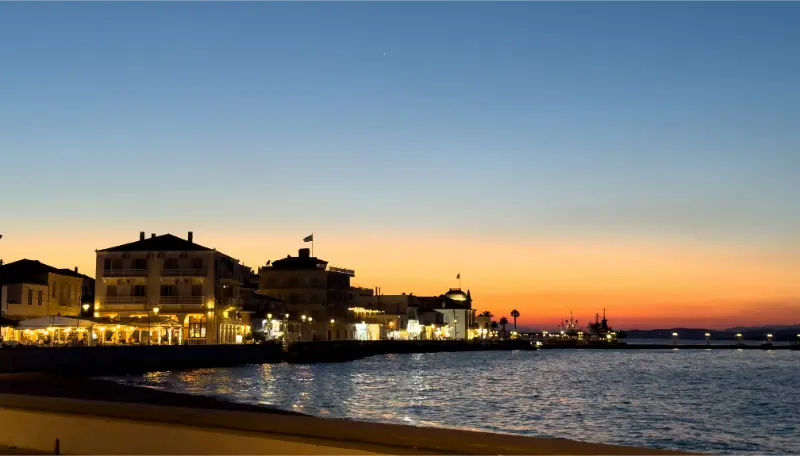
    Spetses Island Sunset Greece Seafront Buildings Shops Cafes Port Dramatic Sky

    Wear a helmet, test brakes before leaving and ask the rental shop about the route. Do not treat the absence of normal car traffic as an excuse to ride casually: roads can still carry buses, scooters, taxis, service vehicles and other cyclists.

    Beach buses

    The municipal beach information lists a bus route serving Agios Mamas, Agia Paraskevi, Agioi Anargyroi and Xilokeriza. This is the backbone of a low-cost no-car beach day on the southern and western side of the island.

    Frequency changes seasonally, so do not copy a timetable from an old blog. Check the current schedule locally and note the last return before going down to the beach.

    Beach boats from Dapia

    Seasonal boats connect Dapia with beaches including Agia Paraskevi, Agioi Anargyroi and Zogeria. The boat itself becomes part of the day and solves the problem of reaching bays that are less convenient by road.

    The trade-off is schedule dependence. Ask about weather, exact pickup point and final return. If you dislike fixed times, a sea taxi may be a better fit despite the higher price.

    Sea taxis

    Sea taxis provide direct coastal transport from Dapia and can be especially useful for groups, late returns or beaches poorly served by buses. They also allow you to build a point-to-point day instead of returning to the same road stop.

    Agree on the fare and pickup plan before departure. For remote coves, confirm whether mobile coverage is reliable enough to call for the return or arrange a specific time in advance.

    Horse carriages

    Horse-drawn carriages are one of Spetses’ signature forms of transport and operate from central stands. They can be useful for a scenic transfer as well as the experience itself, particularly between Dapia and parts of the waterfront.

    Treat them as a limited transport option rather than the answer to every journey. Availability, route and cost vary, and some travellers may prefer walking or taxis for practical reasons.

    Authorised taxis and luggage

    Authorised taxis are important because hotel access and luggage are the moments when a car-free trip can become awkward. If your property is uphill, far from Dapia or near the Old Harbour, ask the accommodation to explain the transfer before arrival.

    Taxi demand spikes around ferry arrivals and events. Pre-arranging a pickup is especially sensible for families, older travellers and anyone with large luggage.

    Best bases without a car

    Dapia is the easiest because every transport mode converges there. Kounoupitsa is still walkable and quieter. The Old Harbour is atmospheric but less convenient for luggage and some beach departures. Remote beach properties can be lovely but reduce spontaneous access to town.

    For a first no-car visit, location is more valuable than extra room size. Choose the base that removes one daily transport problem rather than the property that looks most isolated in photographs.

    A no-car three-day plan

    Day one: walk Dapia, museums and the Old Harbour. Day two: use a bus or beach boat to a destination beach. Day three: rent bicycles for part of the perimeter road or choose a marked walking route, then use a sea taxi for a final swim if needed.

    This structure uses a different transport mode each day and prevents the trip from feeling repetitive. It also gives you alternatives if wind disrupts boats.

    How many days do you need?

    Two nights are enough to understand the shape of Spetses Town and enjoy one beach, but three or four nights are much more satisfying. A longer stay allows a museum morning, a slow Old Harbour evening, a remote-beach day and either a cycling or walking day without forcing every activity into the hottest hours.

    If you are combining Spetses with Hydra or Poros, avoid changing islands every night. Three nights on one island usually feels richer than three separate one-night stops because ferry days eat into usable time and the best atmosphere on the Saronic islands often appears before day-trippers arrive or after they leave.

    Spetses Greece

    When to visit

    May, June, September and early October offer the best balance for travellers who want beaches and walking in the same trip. July and August bring the strongest holiday atmosphere, more beach services and the highest demand, while midday heat makes cycling and inland walking less comfortable. Spring can be excellent for hiking and flowers, and the island remains attractive outside peak summer for history, architecture and quiet waterfront walks.

    September has an additional cultural dimension because of Armata, the annual commemoration of the 1822 naval battle. In 2026 the municipality scheduled the wider programme from 28 August to 13 September, with the main reenactment on 12 September. If you travel for Armata, book transport and accommodation early because this is not a normal quiet September weekend.

    What to pack

    Comfortable walking shoes matter more here than on a resort holiday because even a relaxed day involves waterfront promenades, lanes and museum visits. Add reef-safe sun protection, a refillable water bottle, a hat, swim shoes if you dislike pebbles and a light layer for breezy ferry decks or late evenings.

    Cyclists should bring or rent a helmet and carry more water than they expect to need. Families benefit from a compact beach shade for unorganised coves, while anyone staying in an old mansion or lane should pack luggage that is easy to carry over steps and uneven surfaces.

    Practical tips that make the trip easier

    • Ask your accommodation exactly how luggage reaches the property before booking, not after you arrive at Dapia.
    • Download an offline map because phone signal is useful but should not be the only way to navigate inland routes.
    • Check the last bus or beach-boat return before leaving town and photograph the timetable if it is posted locally.
    • For e-bike rentals, ask about battery range, charger policy and what to do if the bike develops a problem away from town.
    • Do not cycle after drinking; use a taxi, carriage or walk instead.
    • Carry water on every longer walk or ride because roadside services are uneven away from town.
    • Sea taxis are often best booked with a clear return arrangement rather than “call us later” at a remote cove.
    • During Armata and major sporting events, normal waterfront routes and transport availability can change significantly.
    • If someone in the group has reduced mobility, prioritise Dapia and verify step-free access at the hotel rather than assuming the whole waterfront is accessible.
    • Use transport to reduce heat exposure: walk early and late, use a bus or boat for the longest midday movement.

    Continue planning your Spetses trip

    Use these guides as one connected cluster rather than separate checklists: Spetses Travel Guide; Dapia and Spetses Town Guide; Old Harbour Spetses Guide; Bouboulina and Spetses Museums Guide; Best Beaches in Spetses; Spetses Without a Car; Spetses Cycling and Hiking Guide; Spetses with Kids; Where to Stay in Spetses; Spetses 4-Day Itinerary. For nearby alternatives, compare Hydra, Poros and Aegina.

    Useful official sources before you go

    For time-sensitive details I cross-check the Municipality of Spetses visitor portal, the official transport page, the official beach guide and Visit Greece. Ferry schedules, beach boats, bus frequencies, museum access and event programmes can change, so verify the details that affect a specific day shortly before travelling.

    Frequently asked questions

    Do I need a car in Spetses?

    No. Visitors generally do not need or use private cars. Walking, bicycles, buses, boats, sea taxis, carriages and authorised taxis cover the main travel needs.
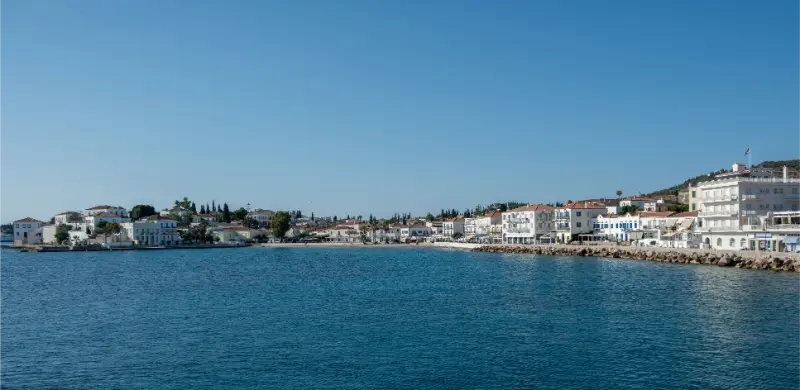
    Spetses Island Greece Seafront Buildings View From Sea

    Can I reach the best beaches without a car?

    Yes. Several destination beaches are served by bus, seasonal boat or sea taxi, while town beaches are walkable.

    Is cycling easy?

    Town routes are straightforward, but the 25-kilometre island loop has moderate hills and summer heat can make it demanding.

    Where should I stay without a car?

    Dapia is the simplest first-time base because ferry arrivals, boats, taxis and central services are close together.

    Are horse carriages practical or just tourist attractions?

    They can be both. They are part of the island’s transport tradition and can be useful for selected waterfront journeys, although they do not replace buses or taxis for every route.

    Final planning advice

    Spetses without a car is not a compromise; it is the normal way to experience the island. Choose a sensible base, learn the bus and boat options on arrival, and use walking for the parts of town where moving slowly is actually the attraction.
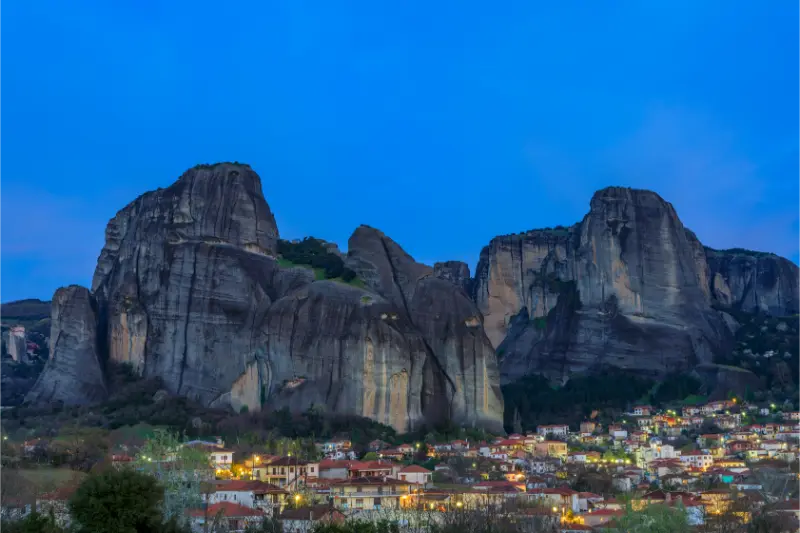
  • Meteora Hiking Guide: Monastery Trails, Kalambaka, Kastraki and Viewpoints

    Meteora Hiking Guide: Monastery Trails, Kalambaka, Kastraki and Viewpoints

    Meteora is often experienced from roadside viewpoints and monastery car parks, but walking changes the scale of the landscape completely. Trails move through forest, beneath sandstone towers and between Kalambaka, Kastraki and the monasteries, revealing how isolated the monastic world once felt. You do not need to be a technical mountaineer to enjoy Meteora on foot, but you do need proper shoes, realistic distances and respect for heat, weather and monastery opening schedules.

    Aerial View Meteora Cliff Kalambaka Town Greece

    If this is your first trip to the area, use this article together with Meteora Travel Guide, Meteora Monasteries Guide and Hiking in Greece. Those guides cover the wider destination, while this page focuses on the practical decisions that make a visit to Meteora Hiking Guide work smoothly.

    Why Meteora Hiking Guide is worth your time

    Hiking solves one of Meteora’s biggest planning problems: the landscape can feel fragmented when you drive from stop to stop. On foot, the rocks, villages, old paths and monasteries connect into a coherent place. Short walks suit casual travellers, while longer routes can fill an entire day. The goal is not to visit every monastery while hiking; choose a few and give the paths themselves equal importance.

    Meteora Monasteries Greece Details From Monastery Rousanou St Barbara

    The strongest trips are usually built around a clear reason for being here rather than a list of every possible attraction. Decide whether your priority is history, landscape, food, swimming, photography or walking. Once that is clear, the rest of the itinerary becomes easier: you can choose the right time of day, avoid unnecessary transfers and leave enough space for the experience that brought you here in the first place.

    Main highlights

    • forest paths beneath the rock pillars
    • routes between Kastraki and monasteries
    • old footpaths used before modern roads
    • sunrise and late-afternoon viewpoints
    • combining two or three monasteries on foot
    • village tavernas after the hike

    forest paths beneath the rock pillars

    forest paths beneath the rock pillars is one of the elements that gives Meteora Hiking Guide its identity. Do not approach it only as a photo stop. Spend enough time to notice how it connects with the surrounding streets, landscape or historical context. In busy periods, moving even ten minutes away from the obvious focal point often changes the experience completely and gives you a more balanced view of the place.

    routes between Kastraki and monasteries

    routes between Kastraki and monasteries is one of the elements that gives Meteora Hiking Guide its identity. Do not approach it only as a photo stop. Spend enough time to notice how it connects with the surrounding streets, landscape or historical context. In busy periods, moving even ten minutes away from the obvious focal point often changes the experience completely and gives you a more balanced view of the place.

    Panoramic View Meteora Mountains Village Kastraki Greece

    old footpaths used before modern roads

    old footpaths used before modern roads is one of the elements that gives Meteora Hiking Guide its identity. Do not approach it only as a photo stop. Spend enough time to notice how it connects with the surrounding streets, landscape or historical context. In busy periods, moving even ten minutes away from the obvious focal point often changes the experience completely and gives you a more balanced view of the place.

    sunrise and late-afternoon viewpoints

    sunrise and late-afternoon viewpoints is one of the elements that gives Meteora Hiking Guide its identity. Do not approach it only as a photo stop. Spend enough time to notice how it connects with the surrounding streets, landscape or historical context. In busy periods, moving even ten minutes away from the obvious focal point often changes the experience completely and gives you a more balanced view of the place.

    Best time to visit

    Spring and autumn are the easiest seasons for longer walks. Summer requires an early start because exposed sections become hot, while winter can bring rain, frost or slippery ground. Always check the local forecast and monastery schedules before choosing the route; opening days vary between monasteries and can change seasonally.

    Time of day matters almost as much as season. Early mornings are best for archaeological sites, exposed walks and popular viewpoints, while late afternoon is usually more pleasant for neighbourhoods, waterfronts and photography. If a visit depends on opening hours, boats, weather or trail conditions, check the official information the evening before rather than relying on an itinerary saved months earlier.

    How to get there and get around

    Stay in Kastraki if walking is a major priority because several routes begin close to the village, though Kalambaka has more transport and services. Carry water, offline maps, sun protection and a light layer. Trails can be rocky and sometimes poorly suited to smooth city shoes. Do not rely on mobile signal alone for navigation.

    In Greece, transport decisions should be made around the whole day rather than a single attraction. A rental car gives flexibility but can create parking problems in historic centres. Public transport is often excellent for straightforward city routes but less useful for combining several rural stops. Taxis are valuable for short gaps, especially when they save a steep climb or a long wait, but they become expensive when used as a substitute for a properly planned route.

    How much time do you need?

    For Meteora Hiking Guide, a focused visit can usually fit into half a day, but the right amount of time depends on how deeply you want to explore. Travellers who enjoy museums, hiking, long lunches or photography should protect a full day or at least avoid scheduling another major attraction immediately afterwards. If you are using the place as part of a wider road trip, one well-planned stop is better than three rushed ones.

    A realistic itinerary

    Use the first afternoon for a short viewpoint walk and sunset, then start early the next morning for a longer route linking Kastraki with selected monasteries. Stop for interiors only where the schedule fits naturally. Return by foot, bus or taxi depending on the route rather than forcing a circular hike that adds unnecessary road walking.

    Build a buffer of at least one hour into the day. That margin absorbs a longer meal, traffic, a museum queue, a change in weather or the discovery of a viewpoint where you simply want to stay. Greece is rarely at its best when every thirty minutes are scheduled. Protect the essential logistics, then allow the day to breathe.

    Where to stay

    You do not necessarily need to sleep beside Meteora Hiking Guide. Choose accommodation based on the wider trip. In cities, stay near a metro line or in a neighbourhood you enjoy walking through at night. In mountain and rural areas, staying close to the next morning’s trailhead can be more useful than choosing the prettiest village on a map. On a short trip, convenience usually creates more value than saving a small amount on the nightly rate.

    Food and breaks

    Avoid choosing a restaurant only because it sits beside the most famous landmark. Walk a few streets away, compare menus and look for places where the meal itself can become part of the day. In hot weather, a long lunch during the middle of the afternoon is often smarter than forcing another exposed walk. Carry water even in cities, and never assume a rural viewpoint or archaeological site will have an open café when you need one.

    What to bring

    • comfortable shoes with grip
    • refillable water bottle
    • sun protection and a hat
    • a light layer for wind or cooler evenings
    • offline map or downloaded route
    • charged phone or small power bank
    • a little cash for minor purchases

    Pack for the actual terrain rather than the image you have seen online. Ancient paving can be slippery, mountain trails can be rough, and coastal wind can make a warm day feel much cooler after sunset. Good footwear and water make a bigger difference than carrying extra clothes you will never use.

    Common mistakes to avoid

    • arriving at the same peak hour as every tour group
    • trying to combine too many distant stops
    • ignoring heat, wind or trail conditions
    • assuming old ticket prices or opening hours are still valid
    • forgetting to plan the return journey
    • treating religious, residential or protected areas as photo sets

    The most common mistake at Meteora Hiking Guide is overestimating how much fits comfortably into one day. Distances on a map do not show parking, queues, steep streets, museum fatigue or the simple desire to stop for coffee. Prioritise two or three experiences and leave secondary stops optional.

    Is it suitable for families?

    Usually yes, but the day should be adapted to heat, walking distance and attention span. Families often do better with an early start, a clear lunch break and one major attraction rather than a full adult sightseeing schedule. At archaeological sites and viewpoints, uneven surfaces and unprotected drops require active supervision. A shorter successful visit is better than forcing children through every room or path.

    Accessibility and mobility

    Accessibility varies widely. Modern museums and central promenades may have lifts and smoother surfaces, while old towns, mountain paths and archaeological sites can include steps, cobbles and steep gradients. Check the official accessibility information for the specific place you plan to visit. If mobility is limited, taxis can often eliminate the hardest climbs even when the final attraction still requires some walking.

    What to combine with it

    Meteora combines well with Trikala or a longer Thessaly road trip, but it deserves at least one overnight stay. If you also plan Mount Olympus or Zagori, allow separate travel days because mountain geography makes these transfers longer than they appear on a national map.

    For more context, continue with Meteora Travel Guide, then use Meteora Monasteries Guide and Hiking in Greece to build the surrounding itinerary. This keeps Meteora Hiking Guide connected to the rest of the trip instead of turning it into an isolated detour.

    FAQ

    Do I need to book in advance?

    For major museums, organised tours, popular summer activities and time-sensitive transport, advance booking is sensible. For ordinary neighbourhood walks and viewpoints, it is usually unnecessary.

    What is the best time of day?

    Early morning is best for lower temperatures and fewer people. Late afternoon is excellent for atmosphere and photography, provided opening hours and the return journey still work.

    Can I visit without a car?

    In cities, usually yes. Rural attractions and multi-stop mountain days are easier with a car, although organised excursions or taxis can sometimes replace driving.

    Is it worth visiting in the shoulder season?

    Yes. May, June, September and October can be excellent, but seasonal buses, boats and businesses may run less frequently outside peak summer.

    Should I trust prices and timetables from older articles?

    No. Tickets, opening hours, access rules and transport schedules change. Recheck official or local information shortly before your visit.

    Final advice

    Treat Meteora Hiking Guide as an experience rather than a task to complete. Arrive with a clear plan for the essential logistics, then give yourself enough time to notice the details that make the place distinctive. That balance between preparation and flexibility is what turns a technically correct itinerary into a trip that actually feels like Greece.

  • Zakynthos Travel Guide: Beaches, Turtles, Boat Trips and Where to Stay

    Zakynthos Travel Guide: Beaches, Turtles, Boat Trips and Where to Stay

    Zakynthos is an island of contrasts. Many visitors know it from the famous image of Navagio, or Shipwreck Beach, enclosed by white cliffs, but the island is also important for loggerhead sea turtles, has long sandy beaches in the south and a much quieter mountainous interior in the north and west. A good trip should include all three sides of Zakynthos rather than chasing one photograph.

    View Navagio Shipwreck Beach Zakynthos Greece Navagio Beach Attraction Tourists Visiting Island Zakynthos

    The most important planning point is that access rules around sensitive beaches and cliff areas can change for safety and environmental protection. Never build the entire holiday around entering a specific cove. Check official local guidance close to your travel dates and be prepared to enjoy a protected site from an authorised viewpoint or boat route when direct access is restricted.

    How many days do you need?

    Four days gives you time for a boat trip, a turtle-focused day and some independent beach exploration. Five to seven days is better because sea conditions can move boat plans and you will have time to see villages away from the resorts.

    Zakynthos fits well as a standalone island holiday. It can also combine with other Ionian destinations, but ferry logistics are not as simple as Cyclades island hopping. Compare transport before assuming two nearby-looking islands connect every day.

    Where to stay

    Zakynthos Town is useful for restaurants, local life and access to services, though it is not the classic beach-resort choice. Laganas is the best-known nightlife area and has a long beach, but it is not right for everyone. Kalamaki is close to the airport and the protected nesting coast, while Tsilivi and other east-coast resorts appeal to travellers looking for a more conventional beach-holiday base.

    Couples seeking quiet should read the exact location carefully, especially around nightlife zones. Families should check pool safety, walking distance to the beach and road crossings. As with Corfu, the phrase “500 metres from the sea” does not explain whether the route is flat, shaded or comfortable.

    Understanding the turtle protection area

    The waters and beaches around Laganas Bay are internationally important nesting habitat for the loggerhead turtle, Caretta caretta. Conservation rules govern boating, beach use and access in protected zones. These rules are not inconveniences for tourists; they are what allow the wildlife experience to exist.

    Choose operators that explain responsible distances and speed restrictions. Never touch, chase or surround a turtle for a photograph. If a tour advertises guaranteed close encounters or encourages intrusive behaviour, choose another provider.

    Turtle-watching without harming the turtles

    Early or quieter boat departures can be more enjoyable, but wildlife is never guaranteed. A responsible trip should be interesting even if sightings are brief. Learn about the ecosystem, enjoy the coastline and treat a turtle encounter as a privilege rather than a product you purchased.

    On nesting beaches, follow all signs regarding umbrellas, night access and protected areas. Do not dig large holes or leave equipment behind because hatchlings move toward the sea after dark and obstacles matter.

    Navagio: plan for the view, not a promise of access

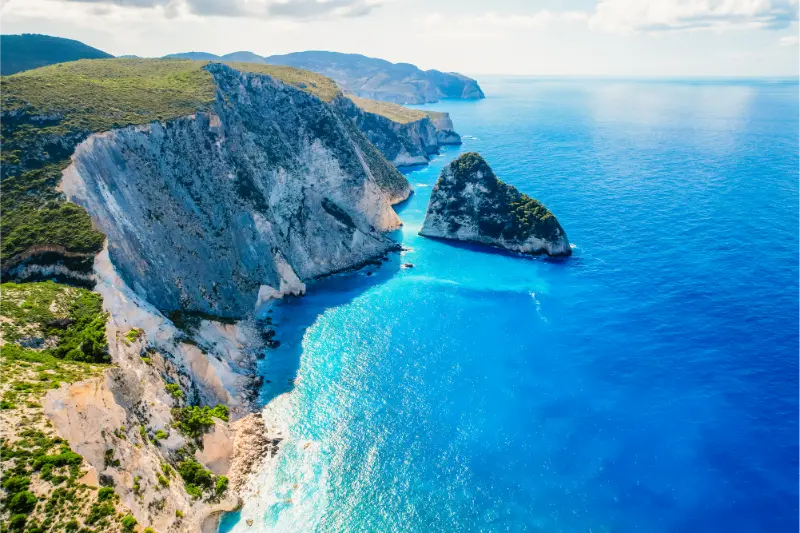
    Navagio is one of the most recognisable landscapes in Greece. The cliffs are also geologically unstable, and safety rules have changed in recent years. Direct beach access, boat approach distances and cliff-top areas may be restricted depending on current assessments.

    That is why I would never book Zakynthos with the expectation that you must stand on the beach. Treat the broader northwest coast, sea caves and cliff viewpoints as the experience. Use only official viewing areas and never cross barriers for a photograph.

    Zakynthos Greece Ionian Sea Lagoon Port Limnionas Beach Crystal Clear Water With Caves

    Blue Caves and northern boat trips

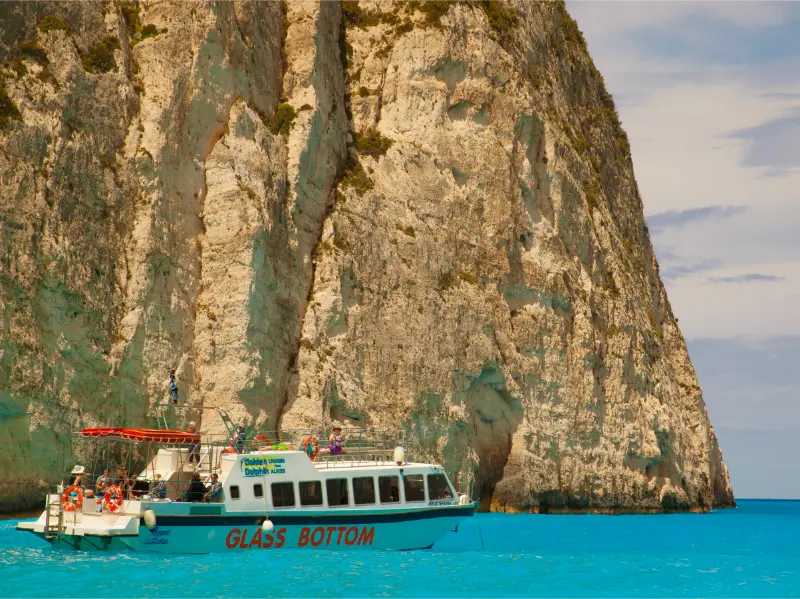
    The Blue Caves area in northern Zakynthos is another popular boat destination. Light reflecting through clear water creates striking colour, especially in suitable weather. Small boats can offer a more intimate trip, while larger excursions are often cheaper and include more passengers.

    Choose the boat based on comfort, shade, swim access and safety, not only the number of stops. If the sea is rough, accept a cancellation or route change. A responsible captain protecting passengers is more important than completing an advertised itinerary.

    Best beaches beyond the famous sights

    The south has broad sandy beaches that are convenient for swimming and families, while parts of the west and north feature smaller coves and dramatic rock scenery. Water depth and access vary, so a “best beach” list is less useful than matching the beach to the day’s wind and your travel style.

    I like to keep one beach day unplanned. Ask locally which coast is calmer that morning, then drive there rather than crossing the island to reproduce a saved social-media image.

    Explore the interior

    Mountain villages and inland roads reveal a quieter side of Zakynthos. You will see olive groves, local produce and landscapes far removed from nightlife resorts. A slow lunch inland also provides a break from the sun.

    Drivers should take narrow roads carefully and avoid following navigation apps down lanes that are clearly unsuitable. If you rent a scooter or ATV, understand the insurance and safety limitations; a holiday vehicle is not automatically easy just because it is small.

    Getting around Zakynthos

    A rental car is the most flexible option for reaching different coasts and villages. Buses connect key areas but are less suitable for a multi-stop beach itinerary. Taxis work for airport transfers and evenings, especially if you do not want to drive after dinner.

    Rent only from a company that clearly explains insurance, fuel and damage procedures. Photograph the vehicle at pickup. For general advice, see my Greece transport guide.

    A five-day Zakynthos itinerary

    Day 1: settle in and explore locally

    Do not cross the island immediately after arrival. Walk your base, swim nearby and arrange boat plans according to the weather forecast.

    Day 2: turtle-focused south coast

    Take a responsible boat excursion in the protected marine area, then spend the rest of the day at a permitted beach. Keep wildlife expectations realistic and follow conservation rules.

    Day 3: north and northwest coast

    Drive north for viewpoints and, if conditions allow, a Blue Caves or northwest boat trip. Follow the current safety rules around Navagio and never enter closed cliff areas.

    Day 4: villages and west-coast scenery

    Explore the interior, stop for a long lunch and choose a beach or sunset location according to conditions. This is the day to discover places that are not on every first-time checklist.

    Day 5: flexible sea day

    Repeat your favourite beach, take a second boat trip or stay close to the hotel. The flexible final day protects the itinerary against an earlier weather cancellation.

    Zakynthos with children

    Families can have an excellent trip when they choose calm sandy beaches and responsible short boat tours. The turtle story is naturally interesting for children and provides a good introduction to conservation. Explain the beach rules as part of protecting baby turtles rather than as arbitrary restrictions.

    Avoid long exposed boat excursions for very young children without shade. Life jackets, toilets, boarding access and trip length matter more than the most impressive route description.

    Nightlife and quieter alternatives

    Laganas is strongly associated with nightlife, especially for younger summer visitors. If that is not your goal, you do not need to avoid Zakynthos; simply choose another base. The island is large enough to have very different atmospheres.

    Couples can focus on northern and western scenery, while families often prefer calmer resort areas. Read recent accommodation reviews for noise comments because nightlife patterns change street by street.

    When to visit

    June through September is the core beach season, with July and August the busiest. Late spring and early autumn can offer a calmer atmosphere, although sea and weather conditions vary. Turtle nesting and hatching activity follows natural cycles, not a tourist timetable, and regulations may affect beach access at particular times.

    Outside peak summer, confirm that boat operators and resort services are running. Zakynthos Town remains more functional year-round than seasonal resort strips.

    Corfu or Zakynthos?

    Choose Corfu for a stronger historic town, greener landscape and Venetian architecture. Choose Zakynthos for dramatic cliffs, marine conservation and the combination of sandy southern beaches with rugged northern scenery. My Corfu guide gives the alternative in detail.

    Common mistakes to avoid

    • Crossing safety barriers near cliffs for a photograph.
    • Choosing wildlife operators that crowd or chase turtles.
    • Assuming Navagio beach access is guaranteed.
    • Booking accommodation in a nightlife zone without checking whether that suits you.
    • Renting an ATV or scooter without understanding insurance and road risk.
    • Scheduling every boat trip on consecutive days with no weather buffer.

    Frequently asked questions

    Is Zakynthos only for nightlife?

    No. Nightlife is concentrated in particular areas. The island also has quiet villages, family beaches, conservation zones and scenic northern landscapes.

    Can I visit Zakynthos without a car?

    Yes if you stay in a well-connected resort and use tours, buses and taxis. A car makes independent exploration much easier, especially for remote viewpoints and beaches.

    Is Zakynthos good for island hopping?

    It can be combined with other Ionian destinations, but connections require more research than the dense Cyclades ferry network. If easy island hopping is the priority, compare Naxos and Paros in my Greek islands overview.

    The best mindset for Zakynthos

    Go for the coastline and wildlife, but do not demand access to every place you have seen online. Protected nature and unstable cliffs require rules that can change. If you build the trip around several good days rather than one famous beach, Zakynthos becomes more rewarding and much less vulnerable to a single closure or rough-sea forecast.

    Plakaki Beach Zakynthos Island Zakynthos Island Greece Views Azure Sea Water Nature With Cliffs Cave

    Continue planning your Greece trip