Author: Jessica

  • Pelion Travel Guide: Villages, Beaches, Hiking and a 7-Day Road Trip

    Pelion Travel Guide: Villages, Beaches, Hiking and a 7-Day Road Trip

    Pelion is where a mountain road trip and a beach holiday overlap. Forested slopes rise between the Pagasetic Gulf and the Aegean Sea, stone villages sit beneath enormous plane trees, and steep roads descend toward coves that feel surprisingly wild. It is one of the best mainland regions for travellers who want Greece without choosing between sea and mountains.

    I would plan Pelion as a circular road trip from Volos rather than a single-resort stay. It combines particularly well with Meteora or a longer northern mainland itinerary, but the peninsula itself deserves at least five to seven days.

    Why visit Pelion?

    The region changes character from west to east. The Pagasetic side has calmer water and easier resort towns, while the Aegean side is more dramatic, with steep forested slopes and beaches below villages such as Tsagarada and Zagora.
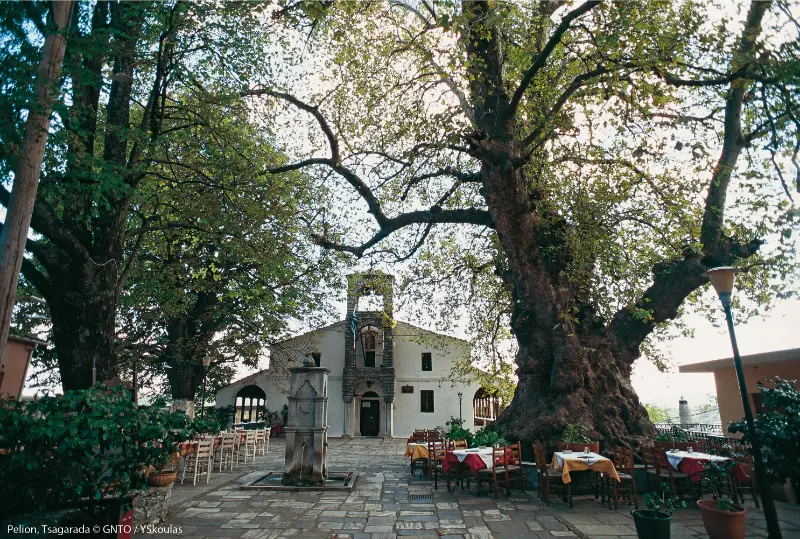
    Pelion Tsagarada

    Pelion is also a true four-season destination. Summer brings beaches, autumn is ideal for walking and food, winter adds mountain atmosphere and skiing, while spring fills the landscape with water and greenery.

    Where to stay

    Splitting the stay between a western or central village and the eastern coast reduces driving and lets you experience both sides of the mountain.

    Volos

    The gateway city, ideal for arrival, transport and a first or last night. Its tsipouradika food culture is a destination in itself.

    Portaria

    A practical mountain base close to Volos, with traditional architecture and easy access to surrounding villages.

    Makrinitsa

    One of the most atmospheric villages, known for stone houses, a beautiful square and views over Volos. Parking and luggage access can require planning.

    Tsagarada

    An excellent eastern base for forest walks and beaches such as Mylopotamos and Fakistra.

    Milies / Vizitsa

    Strong choices for traditional architecture, the historic railway area and a quieter central-southern Pelion experience.

    Best things to do

    Walk Makrinitsa and Portaria

    These villages are close enough to combine but deserve separate walks. Go beyond the main squares into side lanes and viewpoints.
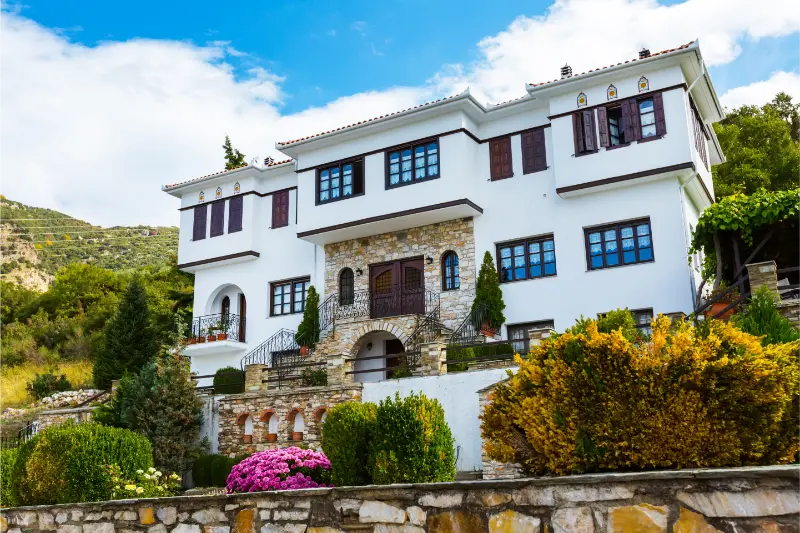
    Street View Portaria Village Pelion Greece

    Explore Tsagarada

    Tsagarada is spread across several neighbourhoods rather than one compact centre. The giant plane tree and forest atmosphere are highlights.

    Swim at Mylopotamos

    The famous beach is dramatic, but access involves steps and parking can be difficult at peak times. Arrive early or choose another nearby cove.

    Visit Damouchari

    This small coastal settlement is ideal for a slow lunch, swim and short walk rather than a rushed photo stop.

    Ride the historic Pelion train if operating

    The traditional railway known as Moutzouris is one of the region’s signature experiences. Check current operating dates and booking requirements.

    Hike an old kalderimi path

    Cobblestone mule paths connect villages and coast. Choose a route suited to your fitness and carry navigation because forest junctions can be confusing.

    Beaches and nature

    Pelion’s beaches vary dramatically. Gulf-side beaches are often calmer and easier for families, while Aegean beaches can be more spectacular but also more exposed to waves.

    The mountain reaches about 1,624 metres at its highest point and supports beech, chestnut and other forests. Weather can change quickly between coast and ridge, so carry a layer even on warm shoulder-season days.

    Food and local character

    Pelion is famous for dishes such as spetzofai, pies, mountain greens, apples and spoon sweets. Volos adds its own tsipouradiko tradition, where small plates accompany tsipouro.

    Food works best when you let geography guide it: seafood by the coast, hearty dishes in mountain villages and a dedicated meal in Volos rather than trying to sample everything in one town.

    How to get there

    Volos is the main gateway by road and public transport. Most international visitors arrive via Athens or Thessaloniki and continue overland, although regional flight options can vary seasonally.

    If you are driving from Athens or Meteora, treat the journey as part of the itinerary and avoid arriving at a mountain village for the first time after dark.

    Getting around

    A car is highly recommended. Distances may look short, but roads climb, curve and pass through villages where average speeds are low.

    Do not plan several cross-mountain transfers every day. Stay on one side for a couple of nights, then change base.

    How many days do you need?

    Seven days is ideal for a first trip, especially in summer. Four or five days can work if you focus on one side plus the classic mountain villages.

    A realistic 7-day Pelion road trip

    Day 1 – Volos

    Arrive, walk the waterfront and have a relaxed tsipouradiko meal.

    Day 2 – Portaria and Makrinitsa

    Move into the mountain, explore both villages and stay overnight nearby.

    Day 3 – Milies and Vizitsa

    Follow the central-southern villages and check whether the historic train fits your dates.

    Day 4 – Cross to the Aegean side

    Drive toward Tsagarada slowly, stopping at viewpoints and forest villages.

    Day 5 – Mylopotamos and Tsagarada

    Make this a beach-and-village day without adding a long drive.

    Day 6 – Damouchari or hiking

    Choose either a coastal day or a marked walking route depending on weather.

    Day 7 – Return via a different route

    Use the final day for one last village or Gulf-side stop before continuing toward your next destination.

    Best time to visit

    June and September are excellent for combining beaches and mountain villages. July and August are lively but parking at famous beaches can be difficult.

    Autumn is superb for walking, chestnut forests and food. Winter turns Pelion into a mountain destination, with very different road and weather considerations.

    Is it a good choice for families?

    Pelion works well for families who enjoy road trips, but select accommodation with easy parking and avoid overly ambitious daily drives.

    Gulf-side beaches are often simpler with younger children, while steep eastern beach access may require carrying gear down many steps.

    Budget and booking tips

    Accommodation prices change sharply with season, location and room type. I prefer to compare a few bases before booking rather than choosing the first hotel that looks inexpensive. A cheaper room far from the places you actually want to see can cost more once transport, parking and lost time are included.

    For ferries, flights, rental cars, boat trips and guided activities, treat schedules and prices as dynamic. Check the operator again shortly before travel, especially outside July and August. Weather can affect sea transport, while seasonal businesses may open later in spring or close earlier in autumn.

    Mistakes to avoid

    The biggest mistake is trusting map distances without considering mountain roads. Twenty kilometres can take much longer than expected.

    Another mistake is booking one base for a week and repeatedly crossing the mountain. Two bases create a far more relaxing trip.

    Who Pelion suits best

    Pelion works best for travellers who are comfortable giving a destination enough time to reveal its character. If your priority is to collect as many islands or regions as possible in a single week, this may feel slower than expected. If instead you enjoy mixing beaches or landscapes with local food, village walks, cultural stops and unplanned pauses, the trip becomes much more rewarding. Couples can build quiet evenings around scenic towns, solo travellers gain flexibility to follow weather and transport conditions, and repeat visitors to Greece will appreciate seeing a side of the country that is less dominated by the most internationally famous stops.

    It is also a strong choice for independent travellers who like making decisions day by day. A rental vehicle can open up more options, but it should not turn the holiday into a driving challenge. Pick one main objective for each day, then add nearby stops only if time and energy allow. That approach keeps the itinerary useful for different ages and budgets and reduces the temptation to race from viewpoint to viewpoint.

    Planning the pace of your trip

    My preferred way to plan this kind of Greece trip is to separate transfer days from sightseeing days. Arrival and departure always take longer than the timetable suggests once luggage, check-in, parking, meals and possible delays are included. Treating those hours as real travel time makes the itinerary far more realistic. On full days, start early for exposed archaeological sites, long drives or hikes, then reserve the hottest part of the afternoon for lunch, swimming or rest.

    Keep at least one half-day flexible. Wind, heat, ferry changes or a beach you unexpectedly love can easily change priorities. A flexible block prevents one cancelled boat trip or poor-weather morning from becoming a problem. It also leaves space for the experiences that are difficult to schedule in advance: a village festival, a recommendation from a hotel owner, a quiet cove discovered on the road or simply the decision to stay longer over lunch.

    How to combine Pelion with the rest of Greece

    Pelion combines beautifully with Meteora for a mountains-and-monasteries route, or with Thessaloniki on a longer northern trip.

    For an island-like extension without a long ferry chain, continue toward Evia as part of a central-Greece road trip.
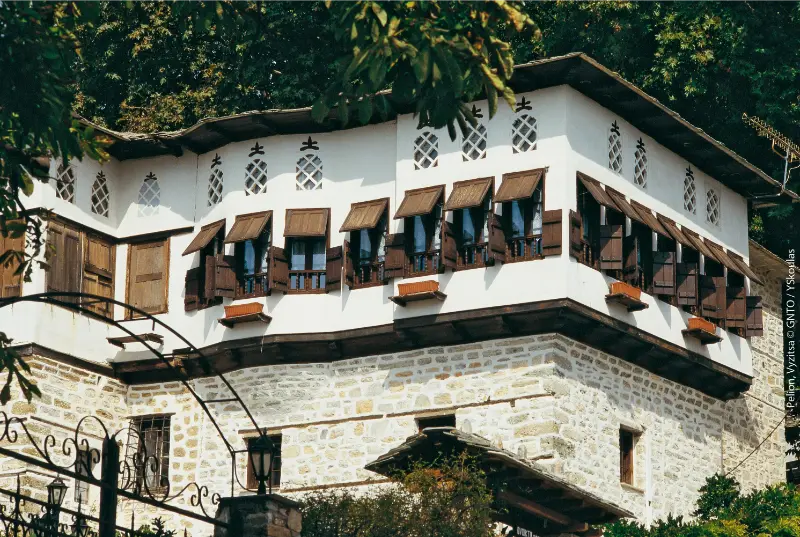
    Pelion Vyzitsa

    Frequently asked questions

    Is Pelion an island?

    No. Pelion is a mountainous peninsula in Thessaly, with coastlines on the Pagasetic Gulf and Aegean Sea.

    Do I need a car?

    A car is strongly recommended for a multi-village itinerary.

    How many days?

    Five to seven days is ideal for a first trip.

    Where should I stay?

    Use two bases, typically one around Portaria/Makrinitsa or Milies and another on the eastern coast.

    Is Pelion only for summer?

    No. It is a genuine four-season destination with hiking, village travel and winter activities.

    Practical final advice

    Build your days around geography rather than a checklist. Group nearby beaches, villages and sights together, leave room for a long lunch or an unexpected swim, and avoid crossing the same area repeatedly. This matters even more on islands and mountain roads, where short distances can take longer than they appear on a map.

    Carry water, sun protection and shoes suitable for uneven ground. Download an offline map before remote drives or hikes, and do not rely on mobile coverage in every cove or mountain village. If a route uses an unpaved road, confirm the conditions locally and check whether your rental agreement permits it.

    Most importantly, allow the destination to feel different from the headline islands. The value of this trip is not in reproducing Santorini or Mykonos somewhere else, but in experiencing its own landscapes, food, architecture and daily rhythm. A slower itinerary usually produces a better trip than adding another island simply because it fits on the map.

    Useful official information

    For destination updates and inspiration, consult the Greek National Tourism Organisation: Visit Greece – Pelion. Always recheck transport timetables and seasonal opening details close to your travel dates.

    Use Volos as your Pelion gateway

    The Volos guide covers the waterfront, tsipouradika and how to use the city as a base for Pelion and Sporades ferries.

    More Pelion guides

    Continue with Makrinitsa; Portaria; Tsagarada; Milies and Vyzitsa; Pelion hiking routes for more detailed planning.

    \n\n

    For more detailed Thessaly planning, continue with 8-day Thessaly road trip.

    \n\n\n

    For more detailed Thessaly planning, continue with where to stay in Thessaly and Thessaly with kids.

    \n\n\n

    Continue planning with day trips from Volos, best beaches near Volos, best time to visit Volos.

    \n

    More Pelion planning guides: where to stay in Pelion, Pelion with kids, Pelion without a car, best beaches in Pelion, best time to visit Pelion, Pelion food guide, South Pelion guide, East Pelion guide, Pelion in winter, Pelion 3 day itinerary.

  • Spetses Cycling and Hiking Guide: 25-km Island Loop, 19 Trails, Beaches and Safety

    Spetses Cycling and Hiking Guide: 25-km Island Loop, 19 Trails, Beaches and Safety

    Spetses rewards active travellers because the island’s lack of normal private-car traffic is paired with a practical perimeter road and a surprisingly extensive trail network. The municipality describes a 25-kilometre road circling the island and 19 walking routes totalling about 65 kilometres, reaching the central ridge and places such as Profitis Ilias and Rigani.

    That does not mean every visitor should attempt a full island loop at noon in August. Terrain, heat, wind and cycling experience matter. The best approach is to separate “transport cycling” from “sport cycling,” choose a walking route that matches your fitness and use beaches as recovery points rather than trying to collect every landmark in one exhausting day.

    Quick planning overview

    ActivityGood choice forKey challenge
    25-km bike loopFit recreational cyclistsHills and summer heat
    Town cyclingShort transfers and exploringMixed users on narrow roads
    E-bike loopBroader range of ridersBattery and rental quality
    Marked trailsWalkers seeking pine landscapesNavigation and sun exposure
    Ridge routesExperienced hikersElevation and limited services
    Beach-walk combinationsMost visitorsReturn transport

    The 25-kilometre island loop

    The perimeter road gives cyclists the simplest mental map of Spetses: leave town, follow the coast through changing terrain, pass access points for beaches and eventually return to the built-up east side. The distance sounds modest, but the route is not flat and summer conditions can turn a recreational ride into a demanding workout.

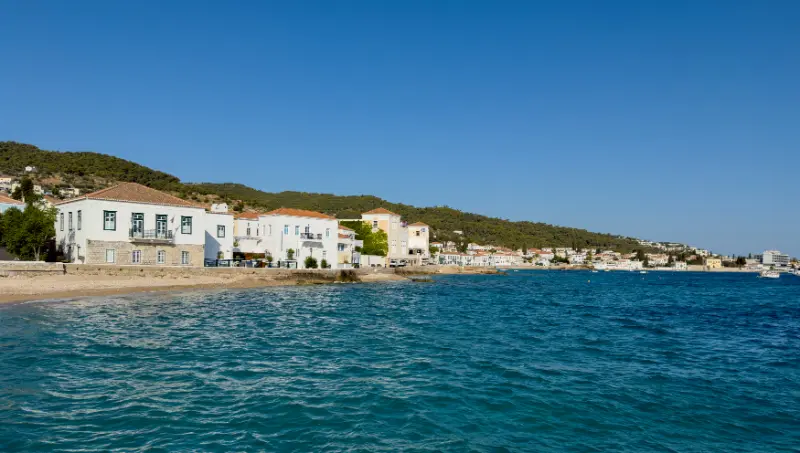
    Spetses Island Greece Seafront Neoclassical Buildings Old Historic Town

    Start early, pace the first hills conservatively and plan one meaningful stop rather than many short interruptions. If you are unsure about completing the loop, ride an out-and-back section and keep energy for the return.

    Standard bike or e-bike?

    A standard bicycle suits confident riders who already cycle regularly. An e-bike is better for mixed-ability couples, travellers who want to stop at several beaches or anyone who values the scenery more than the training effect. The extra assistance is especially useful when headwind and hills combine.

    Whatever you rent, inspect brakes, tyres and saddle position before leaving. Ask what support exists if you have a puncture or electrical issue far from town, and save the rental shop’s number offline.

    Walking network: 19 routes and 65 km

    The municipality’s walking network was developed through the Greek Paths of Culture programme and reaches from town or the perimeter road toward central-ridge locations. That scale means hiking is not an improvised side activity; it can fill several days for travellers who enjoy landscapes and quiet inland terrain.

    Choose a route using distance, elevation and shade rather than a single attractive viewpoint. Ask locally about maintenance and fire conditions, because trail quality can change after winter growth, storms or summer restrictions.

    Central ridge and Profitis Ilias

    Routes toward the central ridge reveal a different island from the waterfront. Pine forest, open views and chapel landscapes replace the café and yacht atmosphere of Dapia. Profitis Ilias and Rigani are reference points within this inland network.

    Carry more water than a town walk would require and do not expect regular shops. In hot weather, leave early enough to be descending before the strongest afternoon sun.

    Combining activity with beaches

    The smartest active days finish at water. Cyclists can build a stop at Agia Paraskevi, Agioi Anargyroi or Zogeria into the perimeter ride, while walkers can choose routes that end near the coast and arrange a bus, boat or sea taxi return.

    This is also a safety strategy. A long ride followed by another hour of walking in heat is unnecessary when the island’s transport network offers alternatives.

    Cycling in town

    For short distances, bicycles are convenient between Dapia, Kounoupitsa and the Old Harbour, but the busiest waterfront sections are not race tracks. Pedestrians, carriages, taxis and service vehicles share limited space.

    Ride slowly through crowded areas and dismount when pedestrian density makes cycling inconsiderate. The absence of private-car traffic should make the island calmer, not encourage aggressive riding.

    Heat and seasonal planning

    May, June, September and October are the best periods for longer rides and walks. In July and August, early starts are essential. The island may feel breezy by the sea while inland slopes become much hotter once you leave the waterfront.

    Check fire-risk announcements in extreme summer weather. Pine landscapes are part of the island’s identity and require cautious behaviour: no smoking on trails, no open flames and no ignoring temporary access restrictions.

    Navigation and equipment

    A phone with offline maps, a power bank, water and sun protection are basic equipment. Hikers should wear shoes with real tread; cyclists need helmets and ideally a small repair kit. Do not depend on fashion sandals simply because the route begins in town.

    Tell someone your planned route if you are heading inland alone. The island is small, but a wrong turn, minor injury or heat exhaustion still matters when you are away from services.

    A two-day active plan

    On day one, rent a bike and ride a partial or full perimeter loop with one long beach stop. On day two, choose a marked inland trail and finish with an easy town swim. This spreads the load across different muscles and keeps each day interesting.

    If weather is poor, switch the cycling day to museums and do the active route later. Flexibility is more important than completing a pre-planned mileage target.

    How many days do you need?

    Two nights are enough to understand the shape of Spetses Town and enjoy one beach, but three or four nights are much more satisfying. A longer stay allows a museum morning, a slow Old Harbour evening, a remote-beach day and either a cycling or walking day without forcing every activity into the hottest hours.

    If you are combining Spetses with Hydra or Poros, avoid changing islands every night. Three nights on one island usually feels richer than three separate one-night stops because ferry days eat into usable time and the best atmosphere on the Saronic islands often appears before day-trippers arrive or after they leave.

    Spetses Greece

    When to visit

    May, June, September and early October offer the best balance for travellers who want beaches and walking in the same trip. July and August bring the strongest holiday atmosphere, more beach services and the highest demand, while midday heat makes cycling and inland walking less comfortable. Spring can be excellent for hiking and flowers, and the island remains attractive outside peak summer for history, architecture and quiet waterfront walks.

    September has an additional cultural dimension because of Armata, the annual commemoration of the 1822 naval battle. In 2026 the municipality scheduled the wider programme from 28 August to 13 September, with the main reenactment on 12 September. If you travel for Armata, book transport and accommodation early because this is not a normal quiet September weekend.

    What to pack

    Comfortable walking shoes matter more here than on a resort holiday because even a relaxed day involves waterfront promenades, lanes and museum visits. Add reef-safe sun protection, a refillable water bottle, a hat, swim shoes if you dislike pebbles and a light layer for breezy ferry decks or late evenings.

    Cyclists should bring or rent a helmet and carry more water than they expect to need. Families benefit from a compact beach shade for unorganised coves, while anyone staying in an old mansion or lane should pack luggage that is easy to carry over steps and uneven surfaces.

    Practical tips that make the trip easier

    • Begin long rides and hikes early in summer and plan to be near shade or water by midday.
    • Rent a helmet even if local riders appear casual about wearing one; your holiday is not the place to take avoidable head-injury risk.
    • Ask the rental shop which direction they recommend for the island loop based on current road conditions and wind.
    • Carry at least one extra water bottle beyond what you think you need on ridge routes.
    • Download offline maps and save the accommodation and rental-shop numbers before leaving town.
    • Choose e-bikes based on condition and support, not just price; a weak battery far from town is not a bargain.
    • On shared waterfront roads, slow down around pedestrians, children, horses and delivery vehicles.
    • Use beach boats or buses as bailout options if heat or fatigue makes the planned return unsafe.
    • Check municipal announcements for fire-risk restrictions or route closures during extreme summer conditions.
    • Never enter the sea exhausted at a rough or unsupervised cove; recover, hydrate and assess conditions first.

    Continue planning your Spetses trip

    Use these guides as one connected cluster rather than separate checklists: Spetses Travel Guide; Dapia and Spetses Town Guide; Old Harbour Spetses Guide; Bouboulina and Spetses Museums Guide; Best Beaches in Spetses; Spetses Without a Car; Spetses Cycling and Hiking Guide; Spetses with Kids; Where to Stay in Spetses; Spetses 4-Day Itinerary. For nearby alternatives, compare Hydra, Poros and Aegina.

    Useful official sources before you go

    For time-sensitive details I cross-check the Municipality of Spetses visitor portal, the official transport page, the official beach guide and Visit Greece. Ferry schedules, beach boats, bus frequencies, museum access and event programmes can change, so verify the details that affect a specific day shortly before travelling.

    Frequently asked questions

    How long is the cycling loop around Spetses?

    The municipality describes the perimeter road as about 25 kilometres.

    How many hiking routes are there?

    The municipal activity guide lists 19 walking routes covering about 65 kilometres in total.

    Do I need a mountain bike?

    Not for the main perimeter road. A well-maintained hybrid, city bike or e-bike can work, while trail-focused routes may justify different equipment.

    Is Spetses good for hiking in August?

    It can be, but only with very early starts, careful heat management and attention to fire-risk conditions. Shoulder seasons are more comfortable.

    Can I combine cycling with beaches?

    Yes. That is one of the best ways to use the perimeter road, as long as you protect the bike and do not leave valuables unattended.

    Final planning advice

    Active travel is one of the best ways to understand why Spetses feels different from a conventional resort island. Ride or walk slowly enough to notice the pine landscape, use the sea as a recovery stop and treat heat management as part of the route rather than an afterthought.

  • Where to Stay in Lemnos: Myrina, Plati, Agios Ioannis, Moudros or Keros?

    Where to Stay in Lemnos: Myrina, Plati, Agios Ioannis, Moudros or Keros?

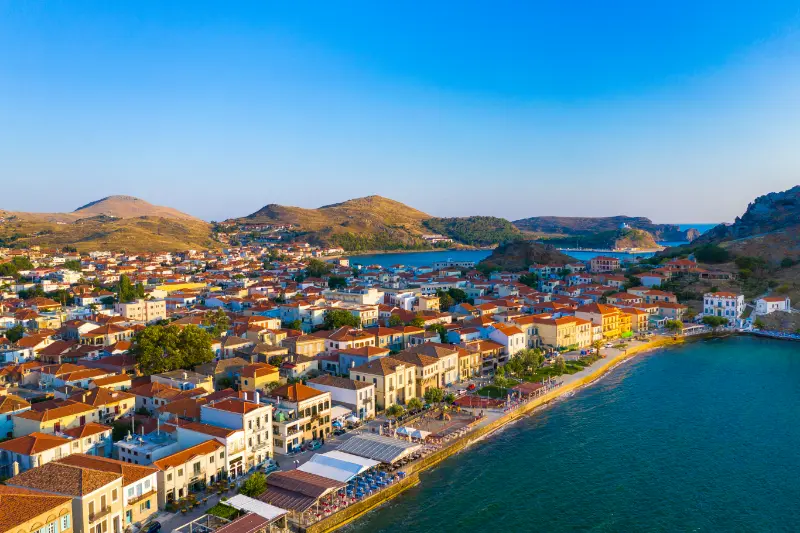
    Choosing where to stay in Lemnos matters more than it first appears because the island is larger and more spread out than many first-time visitors expect. Myrina is the easiest base for restaurants and a first trip, but it is not automatically the best choice if your priorities are windsurfing at Keros, archaeology in the east or quiet beach evenings.

    This guide compares Myrina, Plati, Agios Ioannis/Kaspakas, Moudros and the Keros/Kalliopi area. Before booking, use the Lemnos Travel Guide to decide which parts of the island you actually want to see. A cheap room can become inconvenient if it adds an hour of driving every day.

    Quick answer: where should a first-time visitor stay?

    For most first-time visitors, Myrina is the safest choice. You can walk to restaurants, shops and town beaches, visit the castle without driving, and start day trips in every direction. Plati is the best alternative if you want a more beach-oriented stay while remaining close to the capital.

    Moudros is better for travellers focused on the east and south-east. Keros/Kalliopi is a specialist choice for windsurfing, kitesurfing and nature. Agios Ioannis/Kaspakas works for couples and travellers who want a quieter west-coast atmosphere with sunsets.

    AreaBest forMain trade-off
    MyrinaFirst trips, restaurants, car-free evenings, historyMore driving to Keros, Poliochni and far east.
    PlatiBeach holidays, families, easy access to MyrinaLess evening variety than staying in town.
    Agios Ioannis / KaspakasSunsets, quieter couples trips, west coastCar useful; fewer services than Myrina.
    MoudrosArchaeology, east/southeast road trips, quiet town lifeLess nightlife and fewer restaurant choices.
    Keros / KalliopiWindsurfing, kitesurfing, wetlands, natureRemote for Myrina and west-coast sightseeing.

    Myrina: best all-round base

    Myrina has the strongest combination of practical services and atmosphere. The castle, Romeikos Gialos, harbour, Archaeological Museum, shops and evening restaurants are all close together. That means you can return from a driving day, park the car and enjoy the evening on foot.

    The capital is especially useful for trips shorter than five nights. When time is limited, changing hotels or staying remotely usually creates more friction than it saves. Myrina also gives you a comfortable fallback on windy or cloudy days because museums, cafés and town walks are not dependent on beach weather.

    Which part of Myrina?

    The harbour area is convenient for evening atmosphere and restaurants. Romeikos Gialos is attractive for sea views and elegant architecture, while areas slightly inland can be quieter and easier for parking. If you rent a car, parking access may matter more than being fifty metres closer to the waterfront.

    Check the exact property location on a map rather than relying on a neighbourhood label. Lemnos accommodations are often small, and two rooms described as ‘central Myrina’ can offer very different luggage access and parking.

    Plati: best for an easy beach holiday

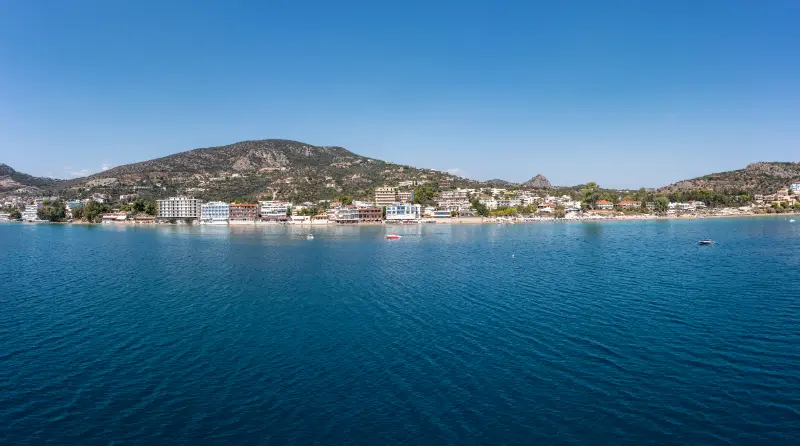
    Plati is just outside Myrina and gives you a long sandy beach without isolating you from the capital. It is one of the strongest choices for families and travellers who want swimming to be the default activity. The beach also appears in the municipality’s 2026 accessibility programme. See Best Beaches in Lemnos for beach comparisons.

    The trade-off is that you will probably still go into Myrina for some dinners and sightseeing. If you have a car, this is minor. Without a car, confirm bus, taxi and walking options before booking a property at the far end of the beach.

    Agios Ioannis and Kaspakas: best for sunsets and quiet

    The Agios Ioannis coast near Kaspakas feels noticeably more relaxed than central Myrina while remaining within reasonable reach of the town. It suits couples, repeat visitors and travellers who prefer a sea-view evening to nightlife.

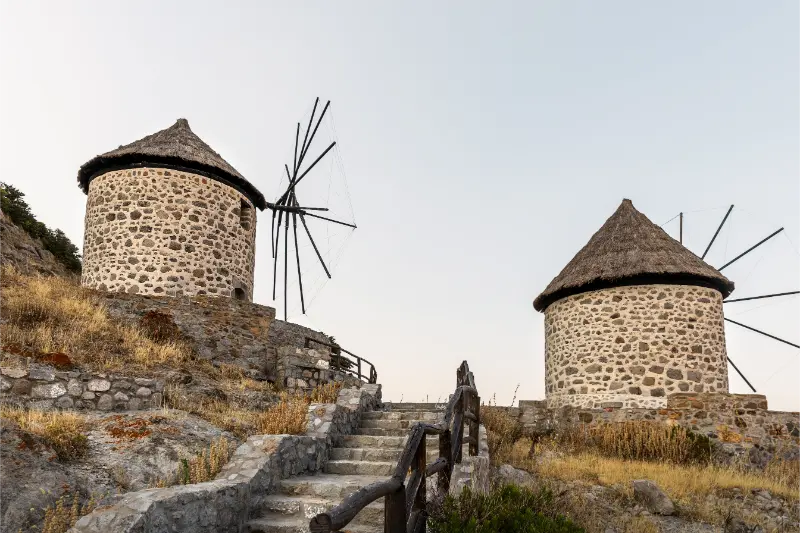
    Traditional Windmills Near Kontias Village Lemnos Island Greece Aegean Sea Panoramic View

    This area is also a good choice if you plan to spend more time on the west and north-west of Lemnos, including the dunes and Gomati. A car is strongly recommended unless your accommodation provides transfers or you are comfortable using taxis.

    Moudros: best for the east and archaeology

    Moudros is the strategic alternative to Myrina. From here, Poliochni, Fanaraki, Keros and much of the east become easier, and the town itself has important First World War and maritime history. Read the Moudros Lemnos Guide before dismissing it as simply a practical base.

    The evenings are quieter and the accommodation market is smaller. For travellers who value nightlife, extensive shopping or a large selection of restaurants, Myrina is better. For travellers who want early archaeological starts and less repetitive driving, Moudros can be excellent.

    Keros and Kalliopi: best for wind sports

    If the purpose of your trip is kitesurfing or windsurfing, sleeping close to Keros makes sense. You can follow daily conditions, reach lessons without a long commute and enjoy the eastern wetlands and villages. The Keros Beach guide explains why this part of the island is different.

    For general sightseeing, however, Keros is remote. A traveller who wants Myrina dinners every night, west-coast sunsets and the north-west dunes may quickly tire of the driving. Choose it because the east is your priority, not because a property photo looks peaceful.

    Should you split your stay?

    For three to five nights, I would stay in one place. For six or seven nights, one base is still perfectly reasonable if you have a car. A split stay becomes useful around eight nights or more when you want to spend several days in the east and several around Myrina without repeated cross-island drives.

    A practical split is four or five nights in Myrina/Plati plus two or three nights around Moudros or Keros. Do not move hotels just to save twenty minutes once; the packing and check-in time cancels the benefit.

    Best area for families

    Plati is the easiest recommendation for a beach-first family holiday, while Myrina works better for families who want restaurants, walks and flexible non-beach options. Moudros can suit families on a road trip but has fewer evening choices. See Lemnos with Kids for a fuller family plan.

    Look beyond the room itself. Parking, shade, kitchen facilities, distance to the beach and whether you can walk to dinner may have a bigger impact on family comfort than a sea-view balcony.

    Best area without a car

    Myrina is clearly the most practical base without a rental car. Plati can also work if you are happy to use taxis and seasonal transport. Remote rural stays are beautiful but can become restrictive. Read Lemnos Without a Car before booking a property outside the capital.

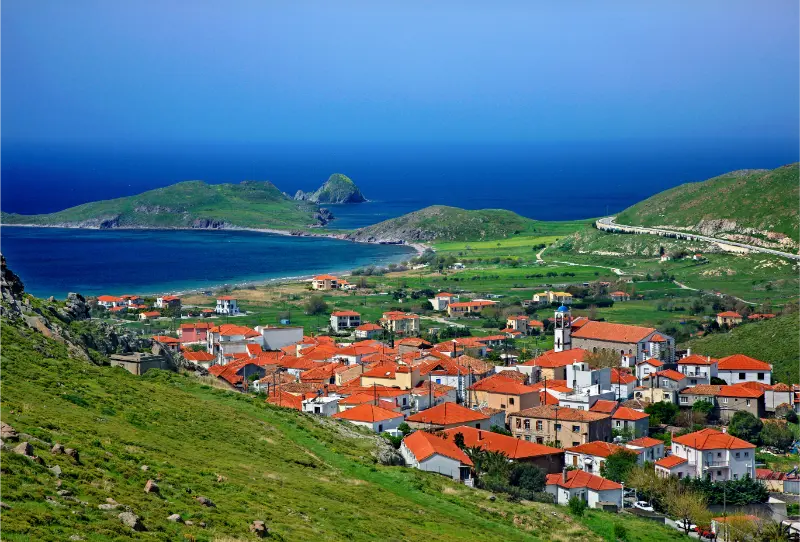
    Village Of Platy Island Of Lemnos Greece

    Best area for couples

    Myrina offers the widest choice of dinners and evening walks. Agios Ioannis is better for quiet sunsets and a slower atmosphere. A rural guesthouse can be romantic too, but only if you are comfortable driving after dark or eating close to your accommodation.

    Best area for beaches

    Plati gives the easiest beach routine. Thanos and Evgatis are accessible by car from Myrina, while Agios Ioannis suits west-coast stays. Keros is best for watersports rather than a classic sheltered resort holiday. Moudros gives you easier access to Fanaraki and the south-east.

    How early should you book?

    July and August require the most planning, especially for highly rated small properties and family rooms. June and September give more flexibility, but the best-located rooms can still disappear. If you need a specific combination—parking, accessible room, cot, sea view—book earlier than someone who can accept any simple room.

    Cancellation terms matter on an island where ferry or flight disruption is possible. Read the policy before choosing a non-refundable rate just to save a small amount.

    What to check before paying

    • Exact location, not just the village name.
    • Parking arrangement if you rent a car.
    • Stairs and accessibility if mobility is limited.
    • Air conditioning and shade for summer stays.
    • Walking distance to dinner if you do not want to drive at night.
    • Whether breakfast is included or there is a bakery nearby.
    • Cancellation conditions and check-in procedure for late ferry or flight arrivals.

    Accommodation booking

    You can compare accommodation in Lemnos on Booking.com. Compare the map view as carefully as the price: on Lemnos, location determines how much of each holiday day is spent driving.

    Frequently asked questions

    Is Myrina or Moudros better?

    Myrina is better for a first trip, restaurants, evening atmosphere and car-free time. Moudros is better for repeated exploration of the east and south-east and for travellers who prefer a quieter local town.

    Can I stay near Keros if I do not windsurf?

    Yes, especially for nature and quiet, but it is a specialised base. You will drive more for Myrina, western beaches and the north-west.

    Is Lemnos small enough for one base?

    Yes for most travellers, particularly with a car. The island is large enough that location matters, but not so large that a split stay is necessary on a normal week-long trip.

    More Lemnos guides

    Best Beaches in Lemnos: Plati, Thanos, Agios Ioannis, Keros, Gomati and Fanaraki; Keros Beach and East Lemnos Guide: Windsurfing, Kitesurfing, Wetlands and Kalliopi; Lemnos Sand Dunes and Falakro Guide: Ammothines, Gomati and Volcanic Landscapes; Hephaistia, Kavirio and Philoctetes Cave Guide: Ancient Lemnos Road Trip; Moudros Lemnos Guide: Bay, WWI History, Fanaraki Beaches and Day Trips; Lemnos Villages Guide: Kontias, Portianou, Nea Koutali, Kaspakas and Rural Stops; Lemnos Food and Wine Guide: Kalathaki, Melichloro, Flomaria, Muscat and Local Taverns; Where to Stay in Lemnos: Myrina, Plati, Agios Ioannis, Moudros or Keros?; Lemnos with Kids: Family Beaches, Easy Sights, Wildlife and Practical Tips; Lemnos Without a Car: Buses, Taxis, Myrina Base, Beaches and What You Can Realistically See

  • Nafplio with Kids: Fortresses, Beaches, Easy Day Trips and Practical Family Tips

    Nafplio with Kids: Fortresses, Beaches, Easy Day Trips and Practical Family Tips

    Nafplio is one of the easiest historic towns in mainland Greece to enjoy with children because the reward-to-effort ratio is unusually good. You can walk a largely flat old-town core, watch boats in the harbour, take a short boat ride toward Bourtzi, eat without complicated reservations and reach family beaches within minutes. Major archaeological sites such as Mycenae, Tiryns and Epidaurus are close enough to become half-day outings instead of endurance tests.

    The challenge is not finding things to do; it is resisting the temptation to do too much. Palamidi, museums, beaches and ancient sites all involve heat, stone and walking. Families have a much better trip when they schedule one main cultural objective per day and leave room for playground time, swimming and long meals. Nafplio’s compact layout makes that slower rhythm easy.

    Why this Argolis stop belongs in your itinerary

    Nafplio suits families with toddlers through teenagers because days can be adjusted quickly. A tired child does not require abandoning an entire excursion: you can return to the old town, take a harbour walk or switch to Arvanitia or Karathona. It also has a large accommodation range. The main constraints are summer heat, stairs, cobbles and limited parking in the historic centre.

    Quick planning summary

    • Best all-round seasons: April to June and September to October for archaeology, walking and comfortable road trips.
    • July and August: excellent for beach time, but visit exposed archaeological sites early and expect heavier traffic around Nafplio and Tolo.
    • Transport: a car gives the most flexibility across Argolis; central Nafplio, Argos, Tolo and Palaia Epidavros are walkable once you arrive.
    • Heat strategy: put stone sites and hilltop castles in the morning, keep the middle of the day for lunch, museums or swimming.
    • Always recheck: archaeological opening hours, museum closures, KTEL timetables, boat excursions, festival schedules and wildfire restrictions close to your trip.

    What to see and do

    Old Town as an easy family base

    The old town is compact, colourful and largely enjoyable on foot. Children can watch boats, browse small shops and move between squares without long transfers. Syntagma Square is a natural reset point for drinks or snacks. Strollers work on many streets, though polished stone, cobbles and occasional steps make compact models easier than heavy prams. In summer, use mornings and evenings for walking and retreat indoors or to the beach at midday.

    Build some margin into the visit. Distances in Argolis are short, but parking, heat, meal times and the temptation to stop at viewpoints make realistic days slower than a map suggests. One major site plus one beach, town or food experience usually feels better than four rapid stops.

    Bourtzi from the waterfront

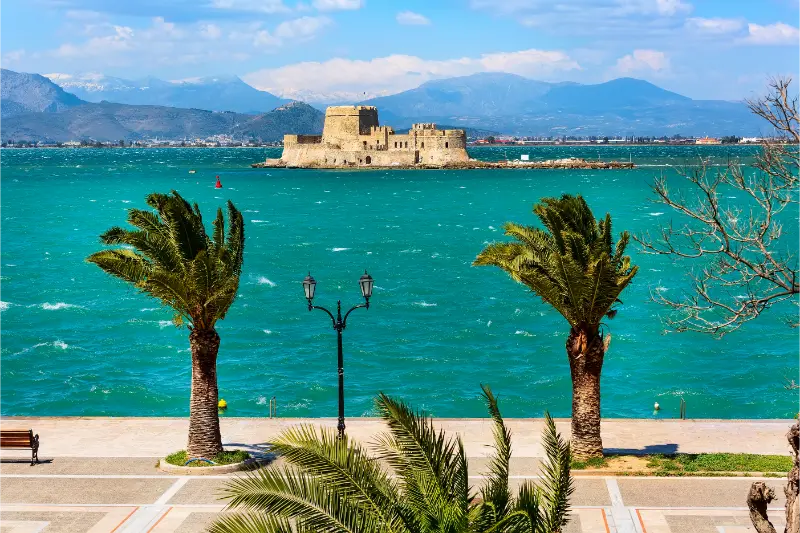
    Bourtzi is visually exciting for children because it sits directly in the harbour. Even when you do not take a boat, spotting the fortress from the promenade gives younger travellers an immediate sense of place. If boat access is operating, confirm current schedules and ticket rules rather than promising the trip in advance. Keep life jackets and sun exposure in mind with very young children.

    Nafplio Nafplion City Greece Old Town Bourtzi Fortress Aerial Drone View

    Build some margin into the visit. Distances in Argolis are short, but parking, heat, meal times and the temptation to stop at viewpoints make realistic days slower than a map suggests. One major site plus one beach, town or food experience usually feels better than four rapid stops.

    Palamidi without turning it into a punishment

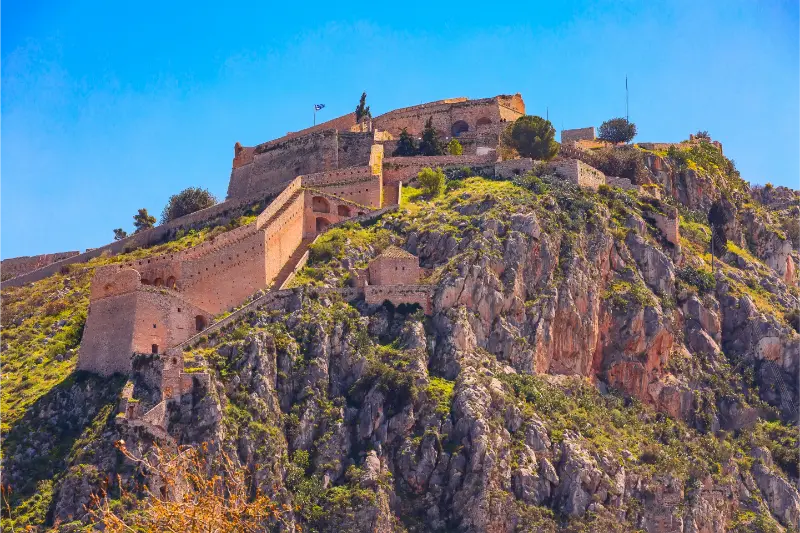
    Palamidi is spectacular, but the famous staircase is not compulsory. Families can drive or take a taxi to the upper entrance and explore the bastions from there, saving energy for the site itself. Older children may enjoy walking down rather than climbing up. Edges, uneven stone and heat require close supervision. Go early, carry water and avoid making Palamidi the second major archaeological site of the day.

    Build some margin into the visit. Distances in Argolis are short, but parking, heat, meal times and the temptation to stop at viewpoints make realistic days slower than a map suggests. One major site plus one beach, town or food experience usually feels better than four rapid stops.

    Arvanitia and Karathona beaches

    Arvanitia is perfect for a quick swim because it is close to town. Karathona is better for a longer family beach day, with more space and facilities. The official regional tourism site describes Karathona as family-friendly and notes that it has organised services. Pack water shoes if your children prefer them on mixed sand/pebble beaches, and arrive early on summer weekends to reduce parking stress.

    Build some margin into the visit. Distances in Argolis are short, but parking, heat, meal times and the temptation to stop at viewpoints make realistic days slower than a map suggests. One major site plus one beach, town or food experience usually feels better than four rapid stops.

    Tiryns as the easiest archaeology with children

    If Mycenae feels too ambitious for a hot day, Tiryns is a strong alternative. The huge Cyclopean walls are visually impressive, the site is close to Nafplio and a visit can be kept to around an hour. Children often respond better to the giant-stone “Cyclops” story than to subtle foundation plans. Explain clearly that the Cyclopes belong to mythology, then let the architecture do the rest.

    Build some margin into the visit. Distances in Argolis are short, but parking, heat, meal times and the temptation to stop at viewpoints make realistic days slower than a map suggests. One major site plus one beach, town or food experience usually feels better than four rapid stops.

    Mycenae and Epidaurus in manageable doses

    Both sites are realistic family day trips, but not on the same day with young children. Mycenae works best early before the heat; Epidaurus offers the instantly understandable theatre and more open space. Bring snacks and water, and set one clear “must-see” element rather than trying to inspect every display case. The goal is to leave children curious, not exhausted.

    Build some margin into the visit. Distances in Argolis are short, but parking, heat, meal times and the temptation to stop at viewpoints make realistic days slower than a map suggests. One major site plus one beach, town or food experience usually feels better than four rapid stops.

    Food and evening rhythm

    Nafplio’s family advantage becomes clearest after 18:00. You can return to the room, rest, then walk out for dinner without another drive. Many tavernas serve simple grilled meat, pasta, pies and familiar Greek dishes alongside more adventurous choices. Let children share plates and order gradually; Greek dinners are naturally flexible and there is rarely a need to rush through courses.

    Build some margin into the visit. Distances in Argolis are short, but parking, heat, meal times and the temptation to stop at viewpoints make realistic days slower than a map suggests. One major site plus one beach, town or food experience usually feels better than four rapid stops.

    A realistic itinerary

    • Day 1: old town, harbour and an easy Arvanitia swim.
    • Day 2: drive to Palamidi early, rest after lunch, then spend late afternoon at Karathona.
    • Day 3: choose Mycenae or Epidaurus, not both; return to Nafplio for a relaxed evening.
    • Day 4: take a short Tolo/Ancient Asine beach excursion or visit Tiryns for a compact archaeological stop.

    Treat the itinerary as a framework rather than a timetable. If the sea is rough, switch a boat or snorkelling plan for archaeology. If a site is unusually hot or crowded, shorten it and return another morning. Argolis is compact enough that flexibility rarely costs much driving.

    Where to stay

    Families with strollers benefit from staying in or just outside the flat lower old town, but verify car access and parking because historic streets can be restricted. A hotel on the edge of the centre often gives the best compromise between walkability and easier luggage handling. For a beach-first family holiday, Tolo may be simpler than Nafplio, with day trips into town rather than the reverse.

    Before booking, zoom into the map and read recent comments about parking, road noise, stairs and walking access. In Nafplio and hillside Tolo especially, a property that looks central can involve steep lanes or restricted vehicle access. On the coast, “sea view” does not always mean “walkable beach.”

    For accommodation, compare current options on Booking.com. Use map view rather than sorting only by review score, because location changes the experience substantially in Argolis.

    Getting there and getting around

    A car is not needed for central Nafplio but is very useful for beaches and archaeological sites. If renting, choose the smallest practical vehicle and use legal peripheral parking rather than attempting to drive through the historic core. Taxis can replace a rental car for Palamidi and short beach transfers. KTEL buses are possible for some routes, but family flexibility is usually better with a car or pre-arranged transfer.

    Palamidi Castle Hill Nafplion Greece

    From Athens, most road trips reach Argolis through Corinth. Public transport is possible for the main towns, but connections between beaches, small archaeological sites and villages are much less convenient. If you rent a car, park legally and avoid blocking narrow residential streets, beach access or emergency routes.

    Best time to visit

    Spring is outstanding for wildflowers, green landscapes and archaeology without extreme heat. June and September are the best compromise if you want warm sea temperatures and cultural sightseeing. July and August are ideal for a beach-first trip but require early starts. October can remain pleasant on the coast, while winter is better for city breaks, food and archaeology than for relying on resort services.

    Wind and local exposure matter more than the regional forecast suggests. A calm morning in Nafplio can coincide with choppier conditions on another part of the Argolic Gulf. Check the day’s weather and marine conditions before committing to boat trips, long swims or exposed ridge walks.

    Food and local products

    Keep lunches simple on sightseeing days: pies, souvlaki, salads, fruit and yoghurt reduce the risk of a heavy meal before more walking. In the evening, share meze and let children try local dishes in small portions. Ice cream and pastry stops are easy rewards, but carry water throughout the day rather than relying on buying drinks at every site.

    Across Argolis, look for citrus from the Argive plain, local olive oil, seasonal vegetables, cheeses, grilled meats and fish on the coast. Nemea’s Agiorgitiko adds a strong wine identity. The best way to eat locally is to match the meal to the landscape: seafood by the gulf, market produce in Argos and wine-focused dishes inland.

    Travelling with children

    For babies and toddlers, heat management matters more than the attraction list. For primary-school children, use mythology and fortresses as stories. Teenagers may enjoy photography, sea kayaking or a boat trip more than another museum. Build one activity around each child’s interests and protect unstructured time; Nafplio is enjoyable precisely because you do not need to fill every hour.

    Family days work best when the difficult element comes first. Do the fortress, archaeological site or hike in the morning, then reward everyone with lunch and a swim. Carry water and hats, and do not underestimate how tiring reflective stone, cobbles and uneven paths become in summer.

    Costs and practical details

    Argolis can be relatively good value because beaches, town walks and many viewpoints cost little or nothing. Budget separately for state archaeological tickets, museums, boat trips, organised water sports and wine tastings. Keep some cash for small tavernas, kiosks and seasonal businesses, although cards are widely accepted in larger towns.

    How this guide fits the wider region

    Continue planning with Nafplio travel guide; Palamidi and Bourtzi; Best beaches near Nafplio; Tiryns guide. These pages form one connected Argolis cluster, so you can move between archaeology, coast, towns and food without repeating the same planning work.

    Bourtzi Fortress Nafplio Greece

    Common mistakes

    • Making children climb Palamidi’s stairs in midday heat because it feels “authentic.”
    • Scheduling Mycenae and Epidaurus back-to-back on the same summer day.
    • Booking a beautiful old-town room without checking stroller access and parking.
    • Skipping beach time because the trip is labelled a cultural holiday.
    • Keeping adult dinner timing so rigid that everyone reaches the table exhausted.

    Frequently asked questions

    How many days should I spend in Argolis?

    Three days are enough for Nafplio, Mycenae and Epidaurus at a brisk pace. Five to seven days are much better if you also want beaches, Argos, Tiryns, wine country and the eastern coast without constant driving.

    Do I need a car?

    Not for a simple Nafplio stay, but a car dramatically improves access to archaeological sites, Tolo, Drepano, coastal villages, Nemea wineries and the eastern Argolis peninsula.

    Can I visit Argolis as a day trip from Athens?

    Yes for one major objective such as Mycenae plus Nafplio or Epidaurus, but a day trip cannot reproduce the slower combination of archaeology, evenings and beach time that makes the region special.

    Is Argolis suitable outside summer?

    Yes. Spring and autumn are arguably better for archaeology and walking. Winter suits Nafplio, Argos and historical sites, although beach resorts and boat services become much quieter.

    What should I verify shortly before travelling?

    Check archaeological opening hours, museum operating days, current bus or ferry timetables, boat excursions, performance schedules, trail conditions and any wildfire-related access restrictions.

    Useful official source

    For information that can change, check Visit Peloponnese – Beaches near Nauplio and confirm current access, opening hours or local conditions close to your travel date.

    Final advice

    Argolis is at its best when you use its compact geography to slow down rather than accelerate. Visit a major site early, eat a proper lunch, spend time by the sea or in a town, and keep evenings simple. That rhythm produces a richer trip than racing from monument to monument simply because everything appears close on the map.

  • Skopelos Without a Car: Buses, Taxis, Ferries, Walking and the Best Bases

    Skopelos Without a Car: Buses, Taxis, Ferries, Walking and the Best Bases

    You can enjoy Skopelos without renting a car, but the trip works best when you accept that public transport shapes the itinerary. The island is mountainous, villages sit at different elevations, and beaches are spread along long sections of coast. A car-free holiday is therefore about choosing the right base and using buses, taxis and occasional boat trips strategically.
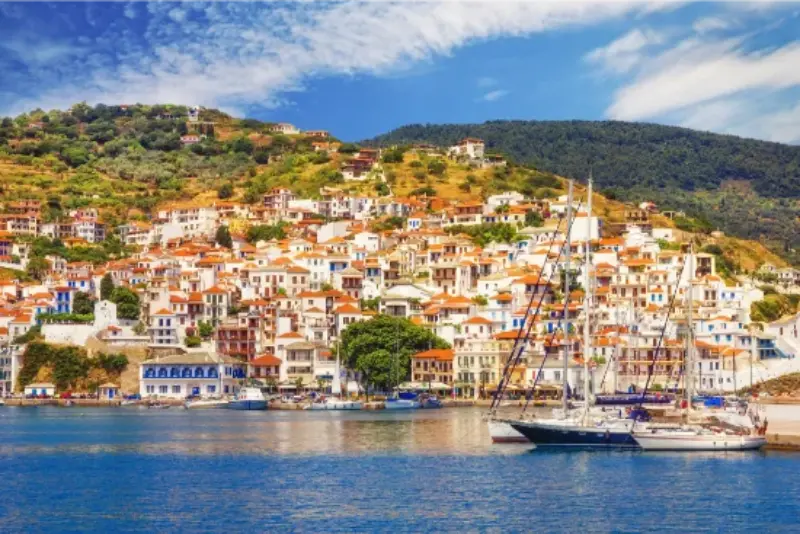
    For most first-time visitors, Skopelos Town is the easiest base because it combines a ferry port, restaurants, shops and access to seasonal bus services. Panormos can work for a beach-focused stay, while Glossa and Loutraki are useful if your ferry arrives there and your priorities are the north of the island.

    Seasonal buses

    Summer bus services typically connect Skopelos Town with key settlements and beaches along the main road corridor. Exact frequency changes through the season, and not every beach has a stop directly on the sand.

    Check the current timetable after arrival and photograph it. Build the day around services you know exist rather than relying on a blog post from a previous year.

    Taxis as part of the plan

    Taxis fill the gaps between bus times and places away from the main route. They are especially useful for Agios Ioannis Kastri, late dinners or a one-way transfer after a long beach day.

    Ask about the fare before a longer journey and consider booking the return in advance during peak periods. A few targeted taxi rides can still cost less than a week of car rental.

    Choosing the right ferry port

    Skopelos can be served by Skopelos Town, Glossa/Loutraki and sometimes other port calls depending on operator and conditions. Current 2026 services from Mantoudi include Skopelos and Glossa on selected schedules.

    Skopelos City Skopelos Island Greece

    Read the ticket carefully. Arriving at Loutraki when your hotel is in Chora creates a substantial transfer, and the reverse can also happen. Accommodation and ferry planning should be done together.

    Best beaches without driving

    Stafylos is one of the simplest near-Chora choices and Visit Greece notes bus access with a final walk. Panormos, Milia and Kastani can also be possible by seasonal public transport depending on the timetable.

    Do not assume the last bus waits for sunset. Carry enough water for a possible wait and keep a taxi contact as backup if you choose a beach far from your base.

    Walking: useful but not a replacement for transport

    Walking is excellent inside Chora, Glossa and compact coastal areas. It is not realistic to treat the island’s main roads as a pedestrian network between distant beaches, especially in heat and traffic.

    Use walking for local exploration and short paths, then use transport for long transfers. This keeps a car-free holiday pleasant rather than turning every day into an endurance challenge.

    Who should still rent a car?

    A car is valuable if you want early-morning photography, remote coves, multiple villages in one day or flexible hiking logistics. It is also helpful for families carrying substantial beach equipment.

    If you dislike driving winding roads, however, a well-planned car-free stay can be more relaxing. Choose one or two bases and accept that seeing less can produce a better holiday.

    How many days without a car?

    Four or five nights is enough for a car-free introduction if you stay in Chora and use buses for two or three beach days. A week allows a second base such as Panormos or Glossa without feeling rushed.

    The key is accepting that one remote sight may require a taxi. Designing the whole trip around avoiding every taxi can waste more time than it saves money.

    Arrival planning

    Check which Skopelos port appears on the ferry ticket before booking the final transfer. Skopelos Town and Loutraki are far enough apart that a mistake changes the first day significantly.

    Sporades Skopelos Gourouni Lighthouse

    If the ferry arrives late, pre-arrange the transfer. Seasonal bus timetables are not designed around every sailing, and taxis can be in high demand after a full ferry docks.

    Getting around Skopelos

    Skopelos is compact on a map but not flat. Roads curve through forested hills, and journey times are slower than straight-line distances suggest. A rental car gives the greatest flexibility for beaches and northern villages, while seasonal buses can work well for travellers based in Chora or along the main west-coast corridor.

    If you drive, allow extra time after dark and do not rush on narrow bends. If you rely on buses, check the current timetable after arrival because frequency changes through the season. Taxis are a useful backup for one-way trips, late dinners and locations away from the principal route.

    Where to stay and booking strategy

    For live availability, compare accommodation in Skopelos on Booking.com. Choose the map location before comparing room design: a hillside apartment may have a spectacular view but require steep walking, while a beach property may leave you dependent on transport for evening restaurants.

    For a first visit, Chora is the easiest all-round base. Panormos suits beach-first holidays, Glossa gives village character and north-island access, and Neo Klima offers a quieter west-coast compromise. A split stay becomes worthwhile at around six nights.

    Ferries and arrival planning

    Skopelos has no commercial airport, so most travellers arrive by ferry after flying to Skiathos or travelling overland to a mainland port. Visit Greece explains the common Skiathos-airport connection, while published 2026 ferry schedules show seasonal services from Mantoudi that can call at Skiathos, Glossa and Skopelos.

    Schedules change by date and weather, so treat any timetable in an article as a planning example rather than a permanent promise. Check the operator close to travel, confirm the exact Skopelos port on the ticket and leave buffer time when connecting a ferry with a flight.

    Sporades Skopelos Hora

    Common mistakes to avoid

    • Assuming every beach has sand, shallow water, shade and full services.
    • Booking a hillside room without checking stairs and luggage access.
    • Trying to see Chora, Glossa, Mamma Mia locations and several beaches in one day.
    • Using an old bus or ferry timetable instead of checking the current season.
    • Driving unfamiliar winding roads too quickly after dark.
    • Treating religious chapels as film props rather than active places of worship.

    Useful official information

    For destination background, use the Municipality of Skopelos. The Municipality of Skopelos is also useful for local notices. Recheck opening arrangements, transport, weather and any fire-related access restrictions shortly before the day you travel.

    Tours and activities

    Seasonal boat trips, transfers and guided experiences vary considerably by month. The widget below can help you see what is actually bookable for your dates. Compare meeting points, duration, cancellation rules and whether transport from your accommodation is included.

    Continue planning your Skopelos trip

    Final advice

    Skopelos works best when you leave enough empty space in the itinerary for the island itself. A road may be slower than expected, a beach may be perfect for another hour, or wind may make you change coast. Those changes are not failures; they are normal parts of travelling on a green, mountainous island.

    Check the next day’s weather and transport each evening, then choose one main experience and one secondary option. That simple habit prevents rushed driving and produces a trip that feels more like a holiday than a checklist.

    A realistic daily rhythm

    Start with the activity most sensitive to heat or crowds, whether that is a chapel climb, village walk or forest route. Use late morning and afternoon for the sea, lunch or a shaded harbour, then return to villages when temperatures fall. This rhythm reduces unnecessary driving and fits the way Skopelos is naturally experienced.

    Keeping one flexible block each day also protects the itinerary from wind and ferry changes. If the sea is rough, you can switch to Chora or Glossa; if the weather is calm, use the opportunity for a boat or beach day.

    Responsible travel on a green island

    Skopelos depends on healthy forest and clean coastal water. Respect fire restrictions, never leave rubbish at remote beaches and avoid parking where emergency or local access is blocked. On boats, follow protected-area rules and keep distance from wildlife.

    Support village shops, bakeries and family-run tavernas rather than treating the island only as scenery. Spending locally helps preserve the communities that make Skopelos different from a purpose-built resort.

    What to pack

    Bring shoes with grip for steps and short trails, water shoes for pebbled beaches, high-SPF sunscreen, a refillable bottle and a light layer for ferry decks or breezy evenings. An offline map is useful when mobile coverage becomes inconsistent in forested areas.

    A small dry bag protects phones and documents on boats, while a compact beach shade can be useful away from organised sections. Pack lightly enough that stairs in Chora or Glossa do not become a problem on arrival day.

  • Karpathos Mountain Villages Guide: Aperi, Othos, Volada, Pyles and Menetes

    Karpathos Mountain Villages Guide: Aperi, Othos, Volada, Pyles and Menetes

    The mountain villages are the best way to understand why Karpathos feels different from a simple beach island. Aperi was once the capital, Othos is the island’s highest settlement, Menetes spreads amphitheatrically above the south, and Volada and Pyles connect the interior road into a rewarding cultural loop. These villages are not interchangeable; each contributes a different piece of the island’s history.

    Aerial Shot Amoopi Beach With White Buildings Turquoise Water Karpathos Greece

    This article complements the Karpathos Travel Guide rather than repeating it. Karpathos is long, mountainous and more spread out than its map can suggest, so the useful question is not simply what is beautiful, but what fits together in one realistic day. I also link to the Olympos Karpathos Guide where the northern traditions need more detail.

    Quick planning summary

    • Aperi served as the island capital from 1700 to 1892 and remains an important ecclesiastical centre.
    • Othos is identified by the municipality as the highest settlement on Karpathos at about 510 m.
    • Menetes sits at about 315 m and is one of the island’s largest villages.
    • The municipality describes a southern village circuit linking Pigadia, Aperi, Volada, Othos, Pyles, Arkasa and Menetes.
    • Village roads and parking require patience; do not plan the loop like a fast driving attraction.
    • Churches, folklore collections and everyday architecture are as important as panoramic viewpoints.
    Planning pointPractical approach
    BaseChoose the area that matches your main priority instead of changing hotels every night.
    TransportA car gives the widest freedom; buses, taxis and summer boats work best with a narrower plan.
    WindUse daily wind and sea conditions to decide between exposed and sheltered coasts.
    PaceTwo or three well-chosen stops usually work better than a long checklist.

    Why the villages matter

    Karpathos has preserved unusually strong local identities because mountain settlements historically offered protection and relative isolation. Even today, architecture, dialect, food and religious traditions change the feel of a day once you leave the coast.

    Do not approach the interior as a list of photo stops. Choose three or four villages, walk for at least twenty minutes in each and leave time for coffee or lunch. This slower rhythm reveals far more than a rapid loop completed only from the car.

    The most famous traditional village is Olympos, but the central and southern villages are easier to combine and show a different, less tour-oriented side of the island.

    Aperi: former capital and green lanes

    Aperi stands about 8 km northwest of Pigadia and was the island capital from 1700 to 1892. The municipality highlights its mansions, green lanes and role as the seat of the Bishop of Karpathos and Kasos.

    Walk rather than drive deep into residential lanes. Aperi is also the gateway toward Achata and Kyra Panagia, so it pairs naturally with a beach afternoon if you do not want a full village circuit.

    Aerial Shot Houses Beach By Calm Ocean Captured Karpathos Greece

    Its relative greenery gives it a softer character than the more exposed settlements farther south and west.

    Volada and the inland road

    Volada is one of the villages that make the central road circuit work. The municipal attractions page notes remains of three castles from different historical periods in the area, adding interest beyond the village streets themselves.

    If archaeological exploration is part of your plan, ask locally about access rather than assuming every ruin has a marked visitor path. Karpathos still contains many places where history sits within a working landscape.

    Bay Greece Holiday Karpathos

    Volada is best enjoyed as part of the chain between Aperi and Othos rather than as an isolated destination.

    Othos: the highest settlement

    Othos is described by the municipality as the highest settlement on Karpathos, around 510 metres above sea level, with broad views from its amphitheatrical setting. Clouds can sit on the higher terrain even when the coast is clear.

    The change in temperature can be noticeable, especially outside midsummer. Carry a light layer if you are touring in spring, autumn or late evening.

    Stop for views, village streets and any open cultural collection, but keep expectations flexible because small museums and workshops can have limited hours.

    Pyles and the western descent

    Pyles sits on the route as the road begins to move toward the west coast. The transition is part of the experience: dry mountain scenery opens toward sea views and sunset country.

    Use Pyles as a pause rather than rushing directly to Arkasa. A village square, church courtyard or roadside viewpoint can be more memorable than another scheduled attraction.

    If you plan to end at the west coast for sunset, leave enough daylight for the final descent and avoid navigating unfamiliar roads after a long dinner if that makes you uncomfortable.

    Menetes: history, church and views

    Menetes is built on the northern slope of Profitis Elias at roughly 315 metres. The municipality highlights the large Church of the Assumption, its carved wooden iconostasis, broad views toward Pigadia and the village’s strong role in modern island history.

    The Folklore Museum adds context when open, while nearby Agios Mamas preserves older religious art. Check opening arrangements locally because small cultural sites are often seasonal.

    Menetes is also a useful link between the southern coast and Arkasa, making it easy to include at the beginning or end of a west-coast day.

    How to structure the road trip

    A practical loop from Pigadia is Aperi, Volada, Othos and Pyles, then down toward Arkasa, followed by Menetes on the return. The municipality itself describes a similar short circuit through these villages.

    Do not add Olympos to this same day. The northern drive deserves its own outing and is already covered in the dedicated Olympos guide.

    If you want a shorter version, choose Aperi, Othos and Menetes and spend more time walking rather than collecting villages.

    Food, coffee and village etiquette

    Village cafés and tavernas are part of the route, not merely places to refuel. Ask about local dishes and sweets and accept that service can follow a slower rhythm than a resort zone.

    Dress and behave respectfully around churches, especially if a service or feast is underway. Photograph people only with permission, particularly where traditional dress is part of everyday cultural identity rather than a tourist performance.

    Parking respectfully outside tight lanes is one of the simplest ways to reduce friction for residents.

    Best time of day and season

    Spring and autumn are excellent for village walking because temperatures are lower, while summer evenings bring more social life and festival activity. Midday in July and August can make stone lanes hot and quiet.

    Start early for photography and walking, break for lunch, then continue when the light softens. If a village appears sleepy at 15:00, that is not a failure of the destination—it is a normal daily rhythm.

    Wind can make the interior feel cooler than the beaches, another reason to carry a light layer outside peak summer.

    Tours and activities

    Availability changes through the season, especially for boat trips and outdoor activities. Compare departure points, cancellation terms and the exact beaches or villages included before booking. The widget below is useful for seeing what is actually running for your dates rather than assuming that every summer excursion operates every day.

    Useful official sources

    Continue planning Karpathos

    For the rest of the island, continue with these dedicated guides: Pigadia Karpathos Guide: Harbour, Beach, Museum, Food and Where to Stay; Arkasa and Finiki Karpathos Guide: Paleokastro, Beaches, Sunset and Where to Stay; Lefkos and Mesochori Karpathos Guide: Beaches, Village Walks, Sokastro and Where to Stay; Karpathos Mountain Villages Guide: Aperi, Othos, Volada, Pyles and Menetes; Apella, Kyra Panagia and Achata Karpathos Guide: Access, Swimming and Boat Trips; Best Beaches in Karpathos: 15 Beaches for Families, Snorkelling, Wind and Scenery; Karpathos Hiking Guide: Best Trails, Lastos, Olympos, Diafani and Saria; Karpathos Windsurfing Guide: Afiartis, Chicken Bay, Wind, Lessons and Where to Stay; Karpathos Without a Car: Buses, Boats, Taxis and the Best Bases; Where to Stay in Karpathos: Pigadia, Ammoopi, Arkasa, Lefkos or Diafani?. The two existing cornerstone articles remain the Karpathos Travel Guide and the Olympos Karpathos Guide.

    Frequently asked questions

    Can I see all the mountain villages in one day?

    You can drive a loop, but the experience is better if you choose three or four villages and spend time walking rather than trying to stop everywhere.

    Which village has the best views?

    Othos is especially panoramic because it is the island’s highest settlement, while Menetes has excellent views toward Pigadia and the south.

    Do I need a car?

    A car is the easiest way to build a multi-village loop. Buses connect some villages, but a timetable-based day is less flexible.

    Should I combine the loop with Olympos?

    No. Olympos and the far north deserve a separate day because of the distance and the amount there is to experience.

    Final planning advice

    Karpathos rewards travellers who leave room for the island to set the pace. Distances, mountain roads, wind and boat conditions can change the value of a plan from one day to the next. A flexible itinerary makes it easier to move a beach day, stay longer in a village or choose a sheltered coast when the Aegean is rough.

    For a first trip, I would prioritise one strong base, one mountain-village day, one east-coast beach day, one west-coast day and at least one experience that reflects the island’s character beyond the sea. That might be a hike, a windsurf lesson, a slow meal in a fishing village or an overnight in the north. The result feels much more like Karpathos than racing from viewpoint to viewpoint.

  • Kimolos Travel Guide: Chorio, Prassa, Skiadi and a 4-Day Island Itinerary

    Kimolos Travel Guide: Chorio, Prassa, Skiadi and a 4-Day Island Itinerary

    Kimolos sits beside Milos but offers a noticeably quieter scale. Whitewashed lanes, volcanic geology, small fishing quarters and beaches with luminous water make it ideal for travellers who want the western Cyclades without building every day around famous photo stops.

    This guide is designed for independent travellers who want a realistic pace. Instead of treating the destination as a collection of photo stops, the plan leaves time for beaches, meals, transport delays and the simple pleasure of returning to the same square or waterfront more than once.

    Why this destination is worth adding to a Greece trip

    Kimolos sits beside Milos but offers a noticeably quieter scale. Whitewashed lanes, volcanic geology, small fishing quarters and beaches with luminous water make it ideal for travellers who want the western Cyclades without building every day around famous photo stops. It is particularly rewarding if you already know the most famous Greek destinations and want a trip with a stronger local rhythm.

    The key is to match the destination to the right traveller. If your priority is nonstop nightlife, luxury shopping or a long list of major monuments, another Greek base may suit you better. If you value landscape, food, walking and days that are not over-scheduled, it can be an excellent choice.

    How to get there and plan the arrival

    Kimolos can be reached by ferry, and many travellers combine it with Milos. The local crossing between the two islands is especially useful for a twin-island trip, while longer mainland connections vary by season. Psathi is the port, and Chorio is a short distance inland.

    Kimolos Island Psathi Village Cyclades Greece Whitewashed Buildings Sandy Beach Calm Blue Sea

    I would avoid booking a tight international-flight-to-ferry or long-distance-bus connection on the same day. Greek transport is generally straightforward, but weather, traffic and seasonal timetables can turn an elegant spreadsheet into a stressful holiday. One buffer night is often worth more than an extra attraction.

    Where to stay

    Chorio

    The main village and best all-round base for evenings, narrow lanes and local character. Choose this area if it matches the part of the trip you care about most; changing accommodation every night is rarely necessary.

    Psathi

    The port, convenient for arrival days and waterfront meals. Choose this area if it matches the part of the trip you care about most; changing accommodation every night is rarely necessary.

    Goupa and Kara

    Small coastal quarters with photogenic boat houses and a strong sense of traditional island life. Choose this area if it matches the part of the trip you care about most; changing accommodation every night is rarely necessary.

    Prassa

    The beach side of the island, best for travellers prioritising swimming over village atmosphere. Choose this area if it matches the part of the trip you care about most; changing accommodation every night is rarely necessary.

    Best things to do

    Explore Mesa Kastro and Exo Kastro

    Chorio contains the older fortified core and the later settlement around it. Walk without a strict route and look for details rather than trying to “complete” the village.

    Swim at Prassa

    The pale rock and clear water create one of Kimolos’ most memorable coastal scenes. Arrive earlier in the day if you want a calmer experience.

    Hike to Skiadi

    This mushroom-shaped geological formation is one of the island’s natural signatures. The trail is exposed, so avoid the hottest hours and carry proper water and footwear.

    Walk through Goupa

    The small fishermen’s houses and sea-level setting show a different side of Cycladic architecture from the inland village.

    Take a boat trip toward Polyaigos

    The uninhabited island nearby is known for striking water and coastal scenery. Choose operators carefully and remember that sea conditions can reshape the route.

    Beaches and swimming

    Beach conditions in Greece are shaped by wind as much as by sunshine. A beach that is perfect one morning can be exposed the next day, so ask locally and keep an alternative coast in mind. Water shoes can be useful on pebbly entries, and shade should never be assumed.

    Prassa

    The signature pale-rock beach. In July and August, arrive earlier if parking or limited shade is a concern.

    Bonatsa

    A practical sandy choice for a relaxed day. In July and August, arrive earlier if parking or limited shade is a concern.

    Aliki

    Easy to combine with the southern coast. In July and August, arrive earlier if parking or limited shade is a concern.

    Klima or nearby coves

    Useful for travellers looking for smaller, less structured swimming stops. In July and August, arrive earlier if parking or limited shade is a concern.

    Getting around

    For a short stay, the best transport choice depends on where you sleep. Central bases reduce the need for a vehicle, while beaches, trailheads and scattered villages often make a rental car useful. Before renting, read our guide to renting a car in Greece and driving in Greece guide.

    Do not rent a scooter simply because it looks convenient. Wind, uneven road surfaces, heat and unfamiliar traffic can make two-wheel travel demanding. Use only a vehicle covered by your licence and insurance, wear proper protection and choose the slow option when conditions feel marginal.

    What and where to eat

    Kimolos is a good place to try local pies, cheeses, tomato-based dishes and simple seafood. Because the island is small, meals often become part of the social rhythm of Chorio rather than a separate activity. Leave room for bakery stops and local sweets as well as dinner.

    Greece Kimolos Island Cyclades Chorio Aerial Drone View

    A useful rule is to separate “view meals” from “food meals”. A waterfront table can be worth choosing for atmosphere, while a backstreet taverna may offer better value and a more local menu. Over several days, do both rather than expecting one restaurant to deliver every part of the experience.

    A realistic itinerary

    • Day 1: arrive at Psathi, settle in Chorio and explore the Kastro lanes after the heat fades.
    • Day 2: spend the day around Prassa and the northeast coast.
    • Day 3: hike to Skiadi early, then cool down at a southern beach and walk through Goupa in the evening.
    • Day 4: take a boat trip toward Polyaigos or keep the day flexible for a ferry excursion to Milos.

    The itinerary is intentionally not packed from breakfast to midnight. Build in one slow period every day. In Greece, the memorable part is often the hour you did not schedule: a swim after the wind drops, a village coffee, or a longer dinner because the light is beautiful.

    Best time to visit

    June and September are ideal for walking, swimming and a calmer village atmosphere. July and August bring more visitors and fuller services, while spring suits hikers if accommodation and ferries line up. Wind matters on small Cycladic islands, so build one flexible day into longer stays.

    For any shoulder-season trip, verify accommodation, ferry or bus frequency and museum opening days before paying for non-refundable bookings. Small destinations can feel wonderfully local outside summer, but that also means fewer services designed specifically for visitors.

    Travelling without a car

    A car-free trip is possible if you choose a central base and accept that you will see less of the destination. Build days around walking, local buses, taxis and boats instead of trying to reproduce a driving itinerary. Our Greece without a car guide explains how to design the wider trip around that idea.

    Families, couples and solo travellers

    Families should prioritise simple transfers, shade and accommodation within walking distance of food. Couples often get more from a quieter village base and late dinners than from trying to visit every beach. Solo travellers benefit from staying near the main settlement, where transport and evening dining are easier without a car.

    For children, alternate sightseeing with swimming rather than scheduling several cultural stops in a row. For adults, remember that heat changes everyone’s patience and energy: a shorter plan executed comfortably is usually a better holiday than a “complete” itinerary completed exhausted.

    Budget planning

    The biggest variables are accommodation, vehicle rental and transport to the destination. Food can remain reasonable if you mix tavernas with bakeries and simple lunches. Book peak-summer rooms early, but compare cancellation terms rather than choosing the lowest headline price automatically. See our Greece on a budget guide for a broader strategy.

    What to pack

    Bring breathable clothing, strong sun protection, a reusable water bottle, swim shoes if you dislike rocky entries and at least one pair of footwear suitable for uneven lanes or trails. A light layer is useful on windy ferries and in shoulder season. For a complete checklist, use our Greece packing list.

    Responsible travel tips

    Water and waste management are real constraints in many Greek destinations. Use refillable bottles where safe, avoid unnecessary linen changes, never leave rubbish at remote coves, and stay on established paths in fragile landscapes. At archaeological and religious sites, follow local rules even when other visitors ignore them.

    Useful nearby guides

    If you are building a longer itinerary, these guides connect naturally with this destination: Milos travel guide, Greek island hopping guide, Greece ferry guide.

    For the wider trip, start with the Greece travel guide for first-time visitors and then use the 7-, 10- and 14-day Greece itineraries to keep transfer time realistic.

    Common mistakes to avoid

    • Trying to see every beach or village in one day instead of choosing a coherent area.
    • Assuming ferry, bus or museum schedules stay identical all year.
    • Underestimating heat, wind and the time needed for uphill walking.
    • Booking a rental vehicle before checking licence, insurance and parking conditions.
    • Leaving no flexibility for weather-dependent boat trips or outdoor plans.
    • Choosing accommodation only by price without checking how you will reach dinner, beaches and the departure port.

    Frequently asked questions

    Can I visit Kimolos as a day trip from Milos?

    Yes when local boat schedules allow, but staying overnight gives you the quieter evenings that are a major part of Kimolos’ appeal.

    Where should I stay?

    Chorio is the best all-round base for atmosphere and evening access; Psathi is convenient for ferry logistics.

    Beach Of Psathi On Island Of Kimolos In Greece

    Do I need a car?

    Not necessarily for a short stay, but a small rental vehicle can make scattered beaches easier. Walking and seasonal local transport can work if you plan around them.

    Is Kimolos very different from Milos?

    Yes. They share volcanic geology, but Kimolos is smaller, quieter and less dominated by headline attractions.

    Final advice

    The best version of this trip is not the one with the most pins saved on a map. Choose a sensible base, protect the middle of the day from excessive driving or hiking, and leave enough space to repeat the places you genuinely enjoy. That slower rhythm is often what turns a Greece itinerary into a holiday rather than a logistical exercise.

  • Lake Kerkini Guide: Pelicans, Boat Trips, Buffalo and a Nature Escape from Thessaloniki

    Lake Kerkini Guide: Pelicans, Boat Trips, Buffalo and a Nature Escape from Thessaloniki

    Lake Kerkini is one of the best places in northern Greece to replace sightseeing with observation. The lake is artificial, created after a dam was built on the Strymonas River in 1932, but over time it developed into one of the country’s most important wetlands. Visit Greece notes more than 300 bird species and highlights Dalmatian pelicans, water buffalo, boat trips, cycling and wildlife photography.

    That makes Kerkini a strong two-day escape from Thessaloniki, especially for travellers who have already filled an itinerary with cities and archaeological sites. The goal is not to see every species. The goal is to spend enough time near the water that the landscape changes around you—light, birds, buffalo, fishing boats and mountain reflections all move at different speeds.

    Kerkini Lake 160323

    Why it is worth adding to your itinerary

    This is a place where observation is the activity. Arrive with enough time to notice weather, wildlife, sound and changing light instead of expecting a fixed attraction to perform on demand. The less aggressively you schedule the visit, the more rewarding it tends to become.

    What to see and do

    Take a small-boat wildlife trip

    A local boat excursion is the easiest way to understand the scale of the wetland. Good operators keep respectful distances and read conditions rather than chasing birds. Sit quietly, listen to the guide and use a longer camera lens or binoculars instead of asking the boat to approach wildlife more closely.

    Watch Dalmatian pelicans

    Dalmatian pelicans are the headline species for many visitors, but avoid making the day depend on one photograph. Bird behaviour changes with season, water levels and weather. The wider experience—cormorants, herons, raptors and open-water movement—is what makes Kerkini rewarding even when the pelicans are not performing on cue.

    Look for water buffalo

    The surrounding area is known for herds of water buffalo, another element emphasised by Visit Greece. You may see them from roads or organised activities. Treat farms and animals as working rural life rather than a petting-zoo attraction; stop only where safe and respect private property.

    Cycle or walk the quieter edges

    Flat sections around the lake make cycling appealing, while short walks give you time to notice reeds, insects and small birds that disappear when you are moving by car. Do not attempt to circle the entire lake simply to say you did it. Choose one or two sectors and spend more time outside the vehicle.

    Stay for dawn or late afternoon

    Wildlife activity and light are often better at the edges of the day. This is the main reason to sleep locally rather than treating Kerkini as a rushed return trip. Dawn mist, winter light or a quiet sunset can become the strongest memory even if your species list is short.

    A realistic itinerary

    Part of the dayPlan
    Day 1 morningArrive, orient yourself and take a guided boat trip
    Day 1 afternoonVillage lunch, buffalo landscape and short lakeside walk
    Day 1 eveningSunset or quiet birding from an appropriate viewpoint
    Day 2 earlyDawn observation or photography
    Day 2 late morningCycling, second wetland sector and return to Thessaloniki

    Use this as a framework rather than a strict timetable. Northern Greece rewards flexibility: traffic, wind, mountain weather, ferry operations and opening hours can change the rhythm of a day. Protect the main experience and treat secondary stops as optional. That produces a better trip than racing to every pin saved on a map.

    How to get there and move around

    A car is the most practical way to reach different parts of Lake Kerkini, but once you arrive, reduce driving. Pre-book a reputable local boat or nature guide if wildlife is the main goal. Bring binoculars if possible, sun protection in warm months, a windproof layer in cooler weather and footwear that can handle muddy ground. Never block agricultural roads for photography.

    Wildlife and landscape come first

    Natural areas work best when you adapt to their conditions rather than expecting them to behave like urban attractions. Keep noise low, stay on established paths or boat routes, avoid approaching wildlife for photographs and follow local guidance. Binoculars, water and patience usually improve the experience more than an aggressive schedule.

    Weather changes the day

    In northern Greece, mountain and wetland conditions can change quickly. Heat, wind, rain and low cloud affect visibility and trail safety. Check the same-day forecast, start early, and keep a shorter alternative in mind. A flexible plan is not a compromise; it is part of travelling well in landscapes that are still genuinely wild.

    Best time to visit

    Kerkini is a year-round nature destination, and the “best” season depends on what you want to see. Spring brings migration and active wetlands; summer is hotter but lively; autumn has softer light; winter can be outstanding for birding and atmosphere. Ask local guides what is currently present rather than planning from a generic species calendar.

    Check the same-day weather and any official operating information shortly before you leave. Northern Greece can combine coastal heat, mountain cloud and strong wind within the same regional itinerary. Planning by conditions rather than by a rigid spreadsheet is one of the easiest ways to improve the trip.

    Food and local rhythm

    This is an agricultural region, so let local products shape the meal. Buffalo products may appear on menus alongside meat, dairy and Macedonian dishes. Ask what is regional and seasonal. A warm meal after a cold morning on the lake can be one of the best parts of a winter visit.

    Do not compress every meal into the smallest possible gap between attractions. A long lunch or early dinner is also a planning tool: it gives you shade, hydration and time to decide whether the next stop still makes sense. This matters even more on driving, hiking and boat days.

    How to combine it with nearby places

    Start or finish in Thessaloniki. If you have a week in northern Greece, contrast the wetland with Mount Olympus or a coastal stay in Halkidiki.

    When building a longer route, group places by geography. A northern-Greece itinerary becomes tiring when each day starts with a two-hour transfer in the opposite direction. Two or three nights per base usually produces more walking, swimming and local evenings than changing hotels every day.

    Where to stay

    This works best from a stable regional base rather than as a one-night hotel change. Choose where to sleep according to your next morning as well as today’s attraction. An extra 20 minutes of driving can be worthwhile if it gives you a walkable evening and avoids repacking luggage.

    Practical planning notes

    Download an offline map before leaving the main city or resort area. Mobile coverage is generally good but can weaken in mountains, wetlands and isolated coastal stretches. Save the official destination name and your accommodation pin, and carry a charging cable or power bank on days with heavy navigation and photography.

    Carry water, sun protection and a light layer even when the forecast looks simple. Coastal wind can cool a boat quickly, while archaeological parks and wetland roads can be completely exposed. In hiking areas, replace casual footwear with shoes that have reliable grip. Small preparation choices make a bigger difference than adding another attraction.

    If you are travelling with children or older relatives, judge difficulty by heat, surfaces and standing time rather than kilometres. A short archaeological site under strong sun can feel harder than a longer shaded walk. Build in benches, café stops and permission to skip the final viewpoint.

    Common mistakes to avoid

    • Expecting wildlife to appear on a timetable
    • Approaching birds for close photographs
    • Doing the whole trip from inside a car
    • Visiting only at midday in summer
    • Blocking rural roads with a parked vehicle
    • Assuming one season is universally best

    Official information

    For current opening hours, tickets, access rules or regional information, check Visit Greece – Lake Kerkini ecotourism shortly before the trip. I prefer official sources for variable details because transport timetables, admission prices and seasonal operations can change after older travel articles were published.

    Frequently asked questions

    Is Lake Kerkini natural?

    The present lake is an artificial reservoir created after a dam on the Strymonas River in 1932, but it has become an exceptionally important wetland.

    What wildlife is it famous for?

    Dalmatian pelicans are especially famous, alongside many other bird species and local water-buffalo herds.

    Do I need a guide?

    Not for a simple visit, but a local nature or boat guide can dramatically improve wildlife observation and understanding.

    Can I visit from Thessaloniki in a day?

    Yes, but one night is better if dawn, sunset or bird photography matters.

    Is winter worth it?

    Yes. Winter can be excellent for birds, low light and a quieter atmosphere; dress for cold and wind.

    Final advice

    Build the day around one clear reason for coming, then let the surrounding region add depth. Northern Greece is especially rewarding when you leave margin for a good meal, a change in weather or a place you did not expect to enjoy. The goal is not maximum coverage; it is a route that still feels enjoyable on the final day.

    For the wider picture, continue with Thessaloniki Travel Guide, Mount Olympus Guide, Halkidiki Travel Guide. These guides connect this stop to the rest of the region without unnecessary backtracking.

    Serres is the most practical urban base for combining Lake Kerkini with other regional sights; see our Serres travel guide.

    Kerkini Lake 25

    For another northern wetland landscape, compare Kerkini with our Lake Doirani guide and Axios Delta guide.

    For more ideas in the region, see our Ano Poroia and Kerkini villages and Sidirokastro and Rupel Fort guides.

    \n

    More practical Serres guides: Where to Stay in Serres, Serres with Kids, Serres Without a Car, Serres Food Guide, Serres Nightlife Guide, Serres on a Budget, Solo Travel in Serres, Best Time to Visit Serres, Best Day Trips from Serres, Serres in One Day.

    \n

    Related nature and wildlife guides: Birdwatching in Greece: Best Wetlands, Islands, Seasons and Species, Wetlands of Greece: Kerkini, Prespa, Evros, Messolonghi and More.

  • Leros Hiking Guide: Castle, Windmills, Coastal Walks and Practical Routes

    Leros Hiking Guide: Castle, Windmills, Coastal Walks and Practical Routes

    Leros is a good walking island for travellers who prefer variety to one huge mountain objective. In a single trip you can climb from a harbour to a Byzantine castle, cross windmill ridges, follow coastal lanes to a beach and walk through an interwar town shaped by military history.

    The key is realistic timing. The island’s hills are low, but summer sun makes exposed routes feel harder than their elevation suggests. I would build the walking day around early starts, swims and late-afternoon village routes, and I would never assume that an abandoned military track is automatically a safe public trail.

    What hiking on Leros is really like

    Leros is not a high-mountain trekking island. Its walking appeal comes from low hills, ridge views, village lanes, old military landscapes and short coastal approaches. That makes it excellent for half-day walks that can end at a beach or taverna. The challenge in summer is heat and exposure rather than altitude.

    I would think in routes rather than one official “best hike.” Some walks are obvious village connections; others use minor roads, rough tracks or older paths whose condition can change. Download offline mapping, ask locally about access and turn around if a route becomes unclear. This is especially important around abandoned military structures, where a visible opening is not an invitation to enter.

    Walk 1: Agia Marina – Platanos – windmills – Castle of Panagia

    This is the essential first walk because it combines settlement, history and the best-known ridge views. Start low while the day is cool, move through Platanos and climb toward the windmills and castle. The municipality places the fortress at around 200 metres, which sounds modest but feels much harder under strong summer sun.

    Time the walk around the castle’s current opening hours. If the gate is closed, the ridge and windmills are still worthwhile, but the experience is better when you can enter the fortified complex and see the central bays from above.

    Village Of Agia Marina On Leros Island In Greece

    Walk 2: Panteli and Vromolithos coastal evening

    For an easier option, use the roads and waterfront around Panteli and Vromolithos as a sunset walk rather than a workout. Swim first, then walk when the heat drops. This is ideal for mixed groups because people who do not want a serious hike can still join for the most scenic part of the day.

    Walk 3: Alinda toward Kryfos — only if conditions suit

    Kryfos is the adventurous beach walk. The municipality describes the approach from the Panagies area near Alinda as fairly difficult, and explicitly notes that boat access is much easier. Treat that warning seriously. Carry water, use shoes rather than sandals and avoid the hike when temperatures are high or the route is unfamiliar.

    The reward is a more secluded beach setting, but the point is not to prove you can reach it on foot. If anyone in your group is uncomfortable with rough terrain, use a boat and save your walking energy for the castle route.

    Walk 4: Lakki and Merikia history walk

    Lakki creates a very different kind of walk: broad planned streets, rationalist architecture, harbour views and the transition toward the wartime landscape around Merikia. This is almost an urban-history hike. It works well in cooler weather or early morning, followed by the War Museum when it opens.

    Walk 5: short north and south explorations

    Partheni and Blefoutis in the north, or Xirokampos and the southern coves, are better treated as exploratory walks than fixed long hikes unless you have current local route information. Minor roads and tracks can still give excellent coastal views. The advantage of a car is that you can walk one-way sections and avoid turning an enjoyable morning into a hot road march.

    Summer safety on Leros

    • Start early and avoid exposed ridges around midday.
    • Carry more water than you expect; small chapels and viewpoints may have no reliable supply.
    • Use proper footwear on loose limestone and polished village steps.
    • Check wildfire restrictions and local advice during periods of extreme fire danger.
    • Do not enter abandoned tunnels, batteries or military structures unless they are officially open.
    • Tell someone your route if you are heading to a remote cove alone.

    When to go and how to use the day

    Walking and hiking on Leros works differently by season. In July and August I would put walks, castle visits, museums and exposed viewpoints early in the day, then use the hottest hours for lunch, a shaded rest or swimming. Late afternoon is when the villages and waterfronts become more enjoyable again. May, June, September and early October are easier for travellers who want to combine sightseeing with walking rather than organising the entire day around heat.

    Wind matters on Leros because the coastline is deeply indented. A beach that feels exposed one day may be pleasant the next, while another bay can stay relatively calm. I would keep one flexible afternoon rather than assigning every beach to a fixed date. In summer, think in short morning and evening walks rather than one long exposed trek.

    Transport and realistic pacing

    A no-car hiking holiday is possible around the central settlements, but a car or taxi helps with trailheads in the north, south and remote coves. The island is not huge, but short map distances do not always mean a quick, flat walk. Hills, summer heat and the shape of the bays make route planning important. If you are relying on buses, confirm the current timetable locally rather than building the day around an old online schedule.

    For most visitors, two substantial experiences plus a good meal and a swim create a better day than five rushed stops. This is especially true around the castle ridge, central villages and coastal coves, where it is easy to underestimate how much time disappears into viewpoints, photographs, museum rooms and unplanned waterfront breaks.

    What to pack

    • Shoes with useful grip for castle approaches, stone lanes and uneven coastal paths.
    • A refillable water bottle; exposed hills and quieter beaches may have limited services.
    • High-SPF sunscreen, a hat and a light shoulder cover for strong summer sun.
    • Swim shoes if you prefer them for pebble or mixed-surface beaches.
    • A light layer for breezy evenings and boat rides outside peak summer.
    • Offline maps or saved pins if your plan includes minor roads, remote coves or walking routes.

    Who this plan suits best

    It suits walkers who enjoy cultural landscapes, photographers, history enthusiasts and travellers who like combining a two-hour walk with a swim rather than chasing summit statistics. Leros rewards travellers who leave space in the schedule. The island is not about racing between a long list of blockbuster sights; its appeal comes from the combination of small bays, layered twentieth-century history, low-key villages and evenings that still feel local.

    Leros Dodecanese Greece

    Common mistakes to avoid

    • Treating every beach as equally sheltered regardless of wind direction.
    • Assuming a short distance on the map is automatically an easy walk in midday heat.
    • Using old museum or bus hours without checking them again for the current season.
    • Planning only beaches and missing the island’s unusually important Italian and Second World War heritage.
    • Changing accommodation unnecessarily on a short stay instead of using one practical base.
    • Trying to fit a museum, a castle, a remote beach and a long dinner into one tightly timed afternoon.

    How I would make the plan more reliable

    The most useful way to plan Leros hiking guide is to separate fixed commitments from flexible ones. A museum opening time or ferry departure is fixed; a swim, café stop or sunset viewpoint is flexible. Put the fixed element first, then keep the beach or meal that follows adjustable. This prevents a small timetable change from collapsing the entire day.

    I would also avoid judging travel time from distance alone. Leros has bays, hills and narrow roads, and a route that looks very short can include parking, a climb or a wait for a taxi. Add buffer time, especially when you have a ferry later that day. On a holiday this small adjustment is more valuable than adding one extra attraction.

    Finally, use local conditions as information rather than an inconvenience. If wind makes your planned beach uncomfortable, switch bay. If the castle is closed, spend longer in the villages and return another morning. If a museum hour changes, move the swim forward. Leros works best when the itinerary responds to the island instead of trying to force the island to follow a spreadsheet.

    Budget and booking notes

    Leros is generally easier to manage financially than islands dominated by luxury resorts, but summer accommodation and transport still reward early planning. Book the room that solves the most daily problems: walkable dinner, acceptable beach access, manageable steps and a sensible route from the ferry. Spending slightly more on the right base can save repeated taxi fares and wasted time.

    For tours and activities, compare the cancellation terms, exact meeting point and whether transport is included. For independent days, keep small cash available for local services that may not fit a fully digital routine. Prices and opening periods change, so treat any old blog total as a reference rather than a promise.

    Accessibility and slower travel

    Travellers with limited mobility should ask unusually specific questions on Leros: number of steps from the road to the room, whether the restaurant route is level, where a taxi can actually stop and whether a beach has a stable entry. Historic lanes and hillside accommodation can be beautiful but demanding. A well-chosen base and a few taxi transfers can make the same island much easier.

    Slow travel also improves the experience for everyone else. Staying longer in one bay, returning to the same taverna and walking a village twice at different times of day reveals more than a fast island checklist. Leros has enough detail for this approach, especially when history, swimming and local life are all part of the reason you came.

    Leros Island Greece Dodecanese

    Continue planning Leros

    Start with the Leros Travel Guide for the island-wide overview, then use these dedicated guides: Agia Marina, Platanos and Panteli Leros Guide; Lakki Leros Guide; Leros War Museum and WWII Guide; Alinda and Krithoni Leros Guide; Best Beaches in Leros; Leros Diving Guide; Leros Without a Car; Leros with Kids; Where to Stay in Leros.

    Leros Hiking Guide FAQ

    What is the best hike for a first visit?

    The Agia Marina–Platanos–windmills–Castle of Panagia route gives the best combination of history, views and village atmosphere.

    Is Leros good for serious trekking?

    It is better for varied half-day walks than for long high-mountain trekking. Heat and route clarity can be more important than elevation.

    Can I hike to Kryfos Beach?

    Yes, but the municipality describes the walk as fairly difficult and notes that boat access is much easier. Do not attempt it casually in extreme heat.

    Do I need hiking boots?

    Light hiking shoes or sturdy trainers with grip are adequate for many routes. Sandals are a poor choice for loose or uneven paths.

    Are old military tunnels safe to explore?

    Do not enter unofficial tunnels or abandoned structures. Use sites that are formally open to visitors, such as the War Museum.

    Useful official information

    For current local information I check the Municipality of Leros and Visit Greece – Leros. For the castle route, verify current access on the official Castle of Panagia page. Opening hours, local transport, boat services and seasonal businesses can change, so recheck anything time-sensitive shortly before the day you plan to use it.

  • Thessaloniki Travel Guide: What to See, Where to Stay and What to Eat

    Thessaloniki Travel Guide: What to See, Where to Stay and What to Eat

    Thessaloniki is the Greek city I would choose when someone wants history and food but a different rhythm from Athens. It is Greece’s second-largest city, yet the central area feels surprisingly walkable. The waterfront gives you an easy orientation line, Roman and Byzantine monuments appear between modern buildings, and evenings revolve around food, cafés and neighbourhood streets rather than a single list of attractions.

    The city also works as a gateway to northern Greece. You can use it before or after Meteora, continue toward Halkidiki, or build a longer road trip through Macedonia. That makes Thessaloniki particularly useful for travellers who have already seen Athens and the Cyclades and want a second Greece trip with a different character.

    How many days do you need?

    Two full days cover the main historic centre and waterfront at a comfortable pace. Three days are better if food is a priority, you want museums, or you plan a short excursion. Four or more days make sense when Thessaloniki is the base for day trips.

    I would not treat it as an overnight transit stop if you can avoid it. The pleasure of Thessaloniki is cumulative: a market in the morning, a Byzantine church, a long lunch, sunset by the sea and a late evening in a lively neighbourhood. Rushing through removes exactly what makes the city attractive.

    Where to stay in Thessaloniki

    The central area around Aristotelous Square is convenient for a first visit because you can walk to the waterfront, markets and many historic sights. Ladadika is lively and restaurant-heavy, good for travellers who want nightlife close by. Ano Poli, the Upper Town, offers more atmosphere and views but involves slopes and less direct access to the flat commercial centre.

    Near the waterfront east of the core, accommodation can feel calmer while still being connected. Before booking, check the exact walking route rather than simply the distance in kilometres. A hotel that is technically central can still be on a noisy nightlife street or up a steep hill.

    Start with the waterfront

    The White Tower is the obvious landmark and a useful starting point for understanding the city. From there, the long seafront promenade stretches east with open views across the Thermaic Gulf. Locals use the waterfront for walking, cycling, meeting friends and exercising, so it feels like part of daily life rather than a tourist-only zone.

    I would walk it once in daylight and again around sunset. The light changes quickly, Mount Olympus can sometimes be visible in the distance under clear conditions, and the city becomes especially pleasant when the heat drops.

    Roman Thessaloniki

    The Roman Forum, the Arch of Galerius and the Rotunda show how important Thessaloniki was long before the modern Greek state. These sites are scattered through active streets, which makes the history feel integrated into the city rather than confined to one archaeological park.

    The Rotunda is especially striking because its long history spans Roman, Christian and Ottoman periods. Check current entry arrangements and opening hours, then combine it with the nearby Arch of Galerius and a walk toward the university area or centre.

    Macedonia Thessaloniki Rotunda

    Byzantine heritage

    Thessaloniki is one of Europe’s great cities for Byzantine monuments, with early Christian and Byzantine churches recognised by UNESCO. Hagia Sophia and the Church of Saint Demetrius are essential first stops, but smaller churches often provide the quieter experience.

    Religious buildings remain places of worship. Dress and behave respectfully, avoid interrupting services, and follow photography rules. If Byzantine art interests you, the Museum of Byzantine Culture adds valuable context and deserves more than a rushed final hour.

    Ano Poli: the upper town

    Ano Poli survived much of the destruction caused by the great fire of 1917 and retains narrower streets, traditional houses and sections of the old walls. It is one of the best areas for seeing a different side of Thessaloniki. The views from the walls are excellent, especially later in the day.

    Walking uphill from the centre is possible, but in summer or with children you may prefer a bus or taxi up and walk down. This simple direction change makes the experience far easier. Wear shoes suitable for uneven paving.

    Markets and food culture

    Food is not an optional extra in Thessaloniki; it is one of the main reasons to visit. Markets and food halls have changed and been renovated over time, but the central market district remains a good place to understand ingredients, snacks and everyday eating. Look for bakeries in the morning, meze at lunch and desserts later rather than trying to fit everything into one oversized meal.

    The city has influences from the Balkans, Ottoman history, Sephardic Jewish heritage and population movements from Asia Minor. That mixture is reflected in dishes, spices and pastry traditions. Instead of searching for one “best” restaurant, choose places that are busy with locals and specialise in a few things.

    What to eat

    Bougatsa is the classic breakfast or snack: crisp pastry with fillings that can be sweet or savoury. Koulouri, a sesame bread ring, is an easy street snack. For meals, explore meze, seafood, grilled dishes and regional products from Macedonia.

    Desserts are a serious category here, from syrup-soaked pastries to custard-based sweets. If you take a food tour, do it early in the trip so you learn what to order independently later. Food tours are most valuable when they teach you how the city eats, not simply when they provide large portions.

    Jewish history

    Thessaloniki once had one of the most important Sephardic Jewish communities in Europe. The Holocaust devastated that population, and the city’s Jewish history is essential to understanding modern Thessaloniki. Museums, memorials and surviving sites provide a more complete picture than the common tourist narrative focused only on ancient and Byzantine periods.

    Approach this history with time and respect. If you are particularly interested, plan a dedicated visit rather than squeezing a memorial between restaurant stops.

    Getting around

    Central Thessaloniki is very walkable, but buses and taxis are useful for the upper town, airport transfers and longer cross-city movements. Transport infrastructure can change, including new services and operating arrangements, so check current official information shortly before travel rather than relying on old route descriptions.

    If Thessaloniki is part of a larger trip, my Greece transport guide explains domestic flights, intercity buses and rental cars. For Meteora, continue with the Meteora guide.

    Part Byzantine Wall Thessaloniki Greece

    A practical three-day itinerary

    Day 1: waterfront and historic centre

    Start at the White Tower, walk part of the seafront, then head toward Aristotelous Square and the central markets. Visit the Roman Forum area, have a long lunch and return to the waterfront for sunset. Keep the first evening close to your hotel.

    Day 2: Byzantine city and Ano Poli

    Visit Saint Demetrius and other Byzantine churches in the morning. Continue to the Museum of Byzantine Culture if it matches your interests. Later, take transport to Ano Poli, explore the walls and walk downhill through residential streets. Finish with dinner in a neighbourhood you have not yet tried.

    Day 3: museums, food or an excursion

    Choose according to your travel style. History-focused visitors can add archaeological and Jewish heritage sites. Food lovers can take a market tour. If you have a car, use the day for a nearby destination rather than trying to squeeze a long mainland route into the afternoon.

    Aerial Panoramic View Main Symbol Thessaloniki City White Tower With Boat Tour Ship Pier Landmarks Greece Urban Development

    Day trips from Thessaloniki

    Halkidiki is the obvious choice for beaches when you have a car and enough time, although day trips can become long in peak traffic. Pella and Vergina appeal to travellers interested in ancient Macedonian history. Mount Olympus and nearby towns work better with a full day and realistic driving expectations.

    Meteora is connected to Thessaloniki, but I prefer at least one overnight there. A destination famous enough to justify several hours of travel also deserves enough time to experience sunrise, sunset or a hike.

    Thessaloniki with children

    The waterfront makes Thessaloniki easier for families than a city built entirely around steep archaeological zones. Alternate museums and churches with open-air time near the sea. Children usually handle history better when there is a physical landmark to anchor the story, such as the White Tower or city walls.

    Food is another advantage because casual bakeries and small plates make meal times flexible. Choose central accommodation so you can return for a rest instead of pushing everyone through a full day.

    When to visit

    Spring and autumn are excellent for city walking. Summer can be hot, but the waterfront becomes lively in the evening and Thessaloniki combines well with northern beaches. Winter is a good option for food, museums and a city break, especially for travellers who do not need beach weather.

    Because Thessaloniki is a year-round city rather than a seasonal island resort, you have more flexibility outside summer. That can also improve accommodation value.

    Common mistakes to avoid

    • Visiting only the White Tower and waterfront and missing the upper town.
    • Treating Byzantine churches as interchangeable instead of choosing a few and learning their stories.
    • Eating every meal in the busiest tourist strip without exploring other streets.
    • Ignoring Jewish history when trying to understand the city.
    • Using Thessaloniki only as an airport for a beach holiday.
    • Planning a long-distance day trip without accounting for road time.

    Frequently asked questions

    Is Thessaloniki better than Athens?

    They offer different experiences. Athens is essential for the Acropolis and the scale of the capital; Thessaloniki feels more compact and is particularly strong for Byzantine history, food and northern Greece. On a long trip, the two complement each other.

    Do I need a car in Thessaloniki?

    Not for the city centre. A car becomes useful for regional day trips but creates parking responsibilities in town. Rent it only for the days when you are actually leaving the city.

    Can Thessaloniki fit into a first trip to Greece?

    Yes, especially on a two-week itinerary or a trip focused on mainland Greece. On a short seven-day Athens-and-islands holiday, adding it may create too much transport. Compare your options with my Greece itineraries.

    My favourite way to plan Thessaloniki

    Build the days around neighbourhoods rather than a long attraction list. Give yourself one historic focus in the morning, a real lunch, an unhurried afternoon and a waterfront or upper-town evening. Thessaloniki makes the strongest impression when you live at its pace for a few days instead of trying to prove how much you can see.