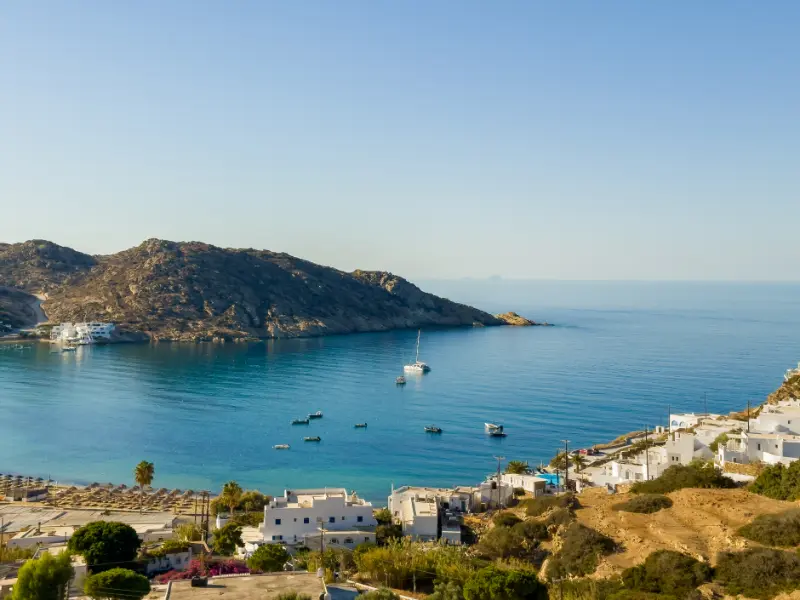
Author: Jessica

  • Kythnos Travel Guide: Kolona Beach, Villages, Hot Springs and a 5-Day Itinerary

    Kythnos Travel Guide: Kolona Beach, Villages, Hot Springs and a 5-Day Itinerary

    Kythnos is close enough to Attica for a relatively simple ferry trip, but it still feels understated compared with the headline Cyclades. The island combines whitewashed villages, dry valleys, small beaches and a long human history that is easy to miss if you visit only Kolona.

    This guide is designed for independent travellers who want a realistic pace. Instead of treating the destination as a collection of photo stops, the plan leaves time for beaches, meals, transport delays and the simple pleasure of returning to the same square or waterfront more than once.

    Why this destination is worth adding to a Greece trip

    Kythnos is close enough to Attica for a relatively simple ferry trip, but it still feels understated compared with the headline Cyclades. The island combines whitewashed villages, dry valleys, small beaches and a long human history that is easy to miss if you visit only Kolona. It is particularly rewarding if you already know the most famous Greek destinations and want a trip with a stronger local rhythm.

    The key is to match the destination to the right traveller. If your priority is nonstop nightlife, luxury shopping or a long list of major monuments, another Greek base may suit you better. If you value landscape, food, walking and days that are not over-scheduled, it can be an excellent choice.

    How to get there and plan the arrival

    Ferry connections vary by season and may use Lavrio or Piraeus depending on the service. Confirm the exact departure port before arranging an airport transfer. On arrival, Merichas is the main port and the practical transport hub for reaching Chora, Dryopida and beach areas.

    I would avoid booking a tight international-flight-to-ferry or long-distance-bus connection on the same day. Greek transport is generally straightforward, but weather, traffic and seasonal timetables can turn an elegant spreadsheet into a stressful holiday. One buffer night is often worth more than an extra attraction.

    Where to stay

    Chora (Messaria)

    The classic whitewashed capital, strongest in the evening when cafés and lanes become the focus. Choose this area if it matches the part of the trip you care about most; changing accommodation every night is rarely necessary.

    Dryopida

    A village with tiled roofs and a different architectural feel from chora. Choose this area if it matches the part of the trip you care about most; changing accommodation every night is rarely necessary.

    Loutra

    The northern seaside settlement associated with the island’s thermal-water tradition. Choose this area if it matches the part of the trip you care about most; changing accommodation every night is rarely necessary.

    Merichas

    Best for ferry convenience and straightforward access on arrival or departure days. Choose this area if it matches the part of the trip you care about most; changing accommodation every night is rarely necessary.

    Kanala

    A quieter southeastern base associated with the panagia kanala church and nearby beaches. Choose this area if it matches the part of the trip you care about most; changing accommodation every night is rarely necessary.

    Best things to do

    See Kolona from above and at water level

    The narrow strip of sand connecting landforms is Kythnos’ signature image. Boat access can be attractive, but road and walking conditions should be checked if arriving independently.

    Spend time in Dryopida

    The inland village makes the island feel more complete. Its streets, churches and local museum options are a useful counterweight to beach days.

    Explore Chora in the evening

    Rather than rushing through at noon, visit when the sun softens and the lanes become social spaces.

    Visit the Archaeological Museum

    The museum in Chora presents finds spanning thousands of years of occupation, including material from ancient Vryokastro and prehistoric Maroulas. Check current opening days before planning around it.

    Slow down in Loutra

    The harbour and thermal-water history make Loutra a natural place for a quieter day in northern Kythnos.

    Beaches and swimming

    Beach conditions in Greece are shaped by wind as much as by sunshine. A beach that is perfect one morning can be exposed the next day, so ask locally and keep an alternative coast in mind. Water shoes can be useful on pebbly entries, and shade should never be assumed.
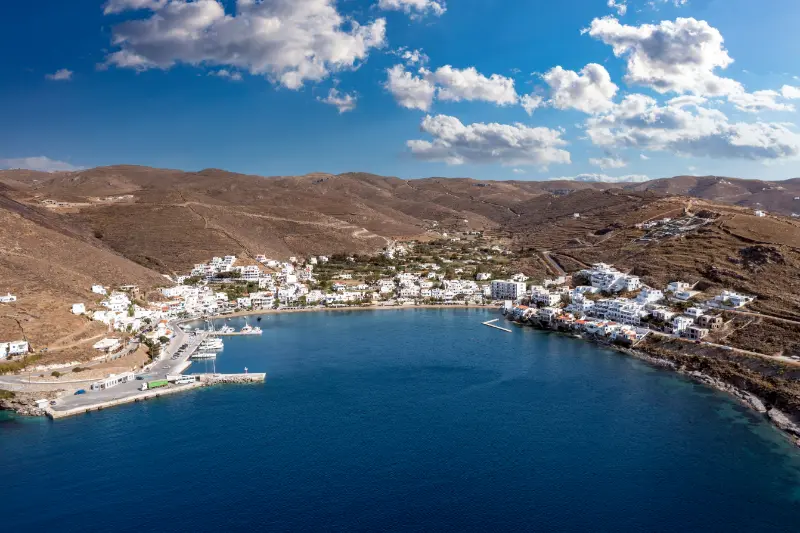
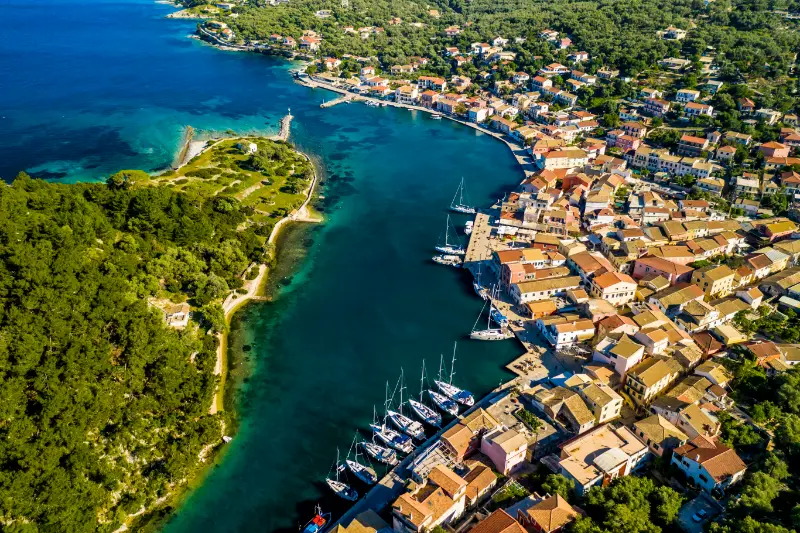
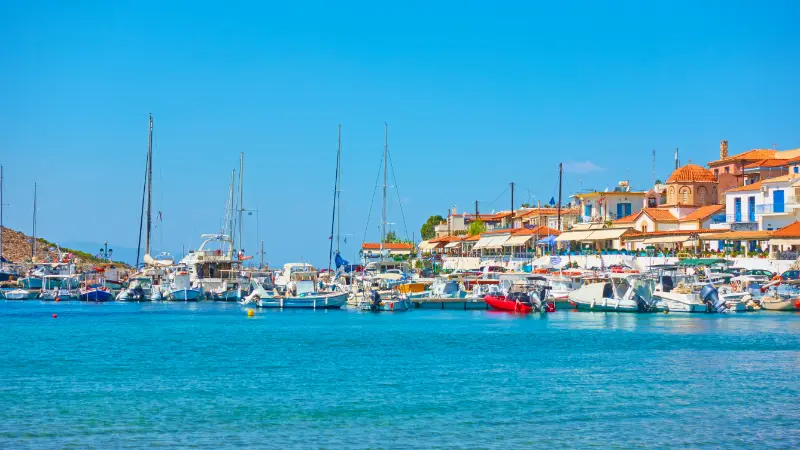
    Merihas Port Aerial Drone View Morning Greece Kythnos Island Cyclades

    Kolona

    The iconic choice, best approached with realistic expectations about summer demand. In July and August, arrive earlier if parking or limited shade is a concern.

    Apokrousi

    A useful beach to combine with the kolona side. In July and August, arrive earlier if parking or limited shade is a concern.

    Loutra beaches

    Convenient if you stay in the north. In July and August, arrive earlier if parking or limited shade is a concern.

    Kanala area beaches

    A good alternative for travellers exploring the southeast. In July and August, arrive earlier if parking or limited shade is a concern.

    Getting around

    For a short stay, the best transport choice depends on where you sleep. Central bases reduce the need for a vehicle, while beaches, trailheads and scattered villages often make a rental car useful. Before renting, read our guide to renting a car in Greece and driving in Greece guide.

    Do not rent a scooter simply because it looks convenient. Wind, uneven road surfaces, heat and unfamiliar traffic can make two-wheel travel demanding. Use only a vehicle covered by your licence and insurance, wear proper protection and choose the slow option when conditions feel marginal.

    What and where to eat

    Kythnos suits taverna-style eating: pies, local cheeses, grilled meat, legumes, fish and seasonal dishes. Try to eat in more than one village because Chora, Dryopida and the port have different rhythms. As on many smaller islands, opening patterns outside the core season can be limited.
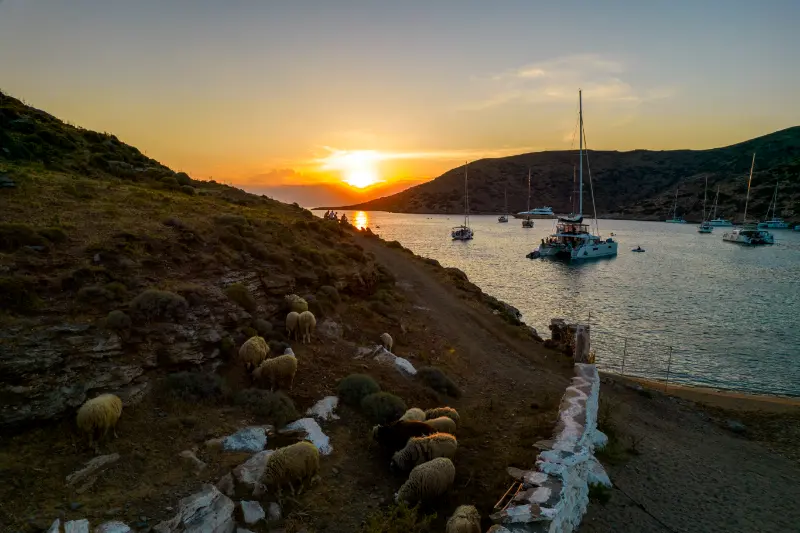
    Sunset Kythnos Greece

    A useful rule is to separate “view meals” from “food meals”. A waterfront table can be worth choosing for atmosphere, while a backstreet taverna may offer better value and a more local menu. Over several days, do both rather than expecting one restaurant to deliver every part of the experience.

    A realistic itinerary

    • Day 1: arrive at Merichas, settle in and spend the evening in Chora.
    • Day 2: visit Kolona and Apokrousi, keeping the schedule light so the beach is not just a photo stop.
    • Day 3: explore Dryopida and add a nearby coast or cave/museum visit if currently open.
    • Day 4: head north to Loutra, with time for swimming and a slow waterfront meal.
    • Day 5: explore Kanala and the southeast before returning to the port.

    The itinerary is intentionally not packed from breakfast to midnight. Build in one slow period every day. In Greece, the memorable part is often the hour you did not schedule: a swim after the wind drops, a village coffee, or a longer dinner because the light is beautiful.

    Best time to visit

    June and September are excellent for a balanced trip. July and August have the fullest island atmosphere but require more planning for rooms, cars and popular beaches. Spring appeals to walkers, while winter travel should be treated as a local-island experience rather than a conventional beach holiday.

    For any shoulder-season trip, verify accommodation, ferry or bus frequency and museum opening days before paying for non-refundable bookings. Small destinations can feel wonderfully local outside summer, but that also means fewer services designed specifically for visitors.

    Travelling without a car

    A car-free trip is possible if you choose a central base and accept that you will see less of the destination. Build days around walking, local buses, taxis and boats instead of trying to reproduce a driving itinerary. Our Greece without a car guide explains how to design the wider trip around that idea.

    Families, couples and solo travellers

    Families should prioritise simple transfers, shade and accommodation within walking distance of food. Couples often get more from a quieter village base and late dinners than from trying to visit every beach. Solo travellers benefit from staying near the main settlement, where transport and evening dining are easier without a car.

    For children, alternate sightseeing with swimming rather than scheduling several cultural stops in a row. For adults, remember that heat changes everyone’s patience and energy: a shorter plan executed comfortably is usually a better holiday than a “complete” itinerary completed exhausted.

    Budget planning

    The biggest variables are accommodation, vehicle rental and transport to the destination. Food can remain reasonable if you mix tavernas with bakeries and simple lunches. Book peak-summer rooms early, but compare cancellation terms rather than choosing the lowest headline price automatically. See our Greece on a budget guide for a broader strategy.

    What to pack

    Bring breathable clothing, strong sun protection, a reusable water bottle, swim shoes if you dislike rocky entries and at least one pair of footwear suitable for uneven lanes or trails. A light layer is useful on windy ferries and in shoulder season. For a complete checklist, use our Greece packing list.

    Responsible travel tips

    Water and waste management are real constraints in many Greek destinations. Use refillable bottles where safe, avoid unnecessary linen changes, never leave rubbish at remote coves, and stay on established paths in fragile landscapes. At archaeological and religious sites, follow local rules even when other visitors ignore them.

    Useful nearby guides

    If you are building a longer itinerary, these guides connect naturally with this destination: Kea travel guide, Serifos travel guide, ferry guide.

    For the wider trip, start with the Greece travel guide for first-time visitors and then use the 7-, 10- and 14-day Greece itineraries to keep transfer time realistic.

    Common mistakes to avoid

    • Trying to see every beach or village in one day instead of choosing a coherent area.
    • Assuming ferry, bus or museum schedules stay identical all year.
    • Underestimating heat, wind and the time needed for uphill walking.
    • Booking a rental vehicle before checking licence, insurance and parking conditions.
    • Leaving no flexibility for weather-dependent boat trips or outdoor plans.
    • Choosing accommodation only by price without checking how you will reach dinner, beaches and the departure port.

    Frequently asked questions

    Is Kythnos good for a first Cyclades trip?

    Yes for travellers who value simplicity and beaches more than famous nightlife or major monuments.

    Kythnos Merihas Greece

    How many days are enough?

    Four nights gives enough time to see the main villages and several coasts without rushing.

    Do I need a rental car?

    It is very useful for a five-day trip, especially if you want Kolona, Kanala, Loutra and scattered beaches. Check road conditions and rental rules carefully.

    Is Kolona the only reason to visit?

    No. Chora, Dryopida, Loutra and the island’s archaeological history give Kythnos much more depth than its most famous beach image.

    Final advice

    The best version of this trip is not the one with the most pins saved on a map. Choose a sensible base, protect the middle of the day from excessive driving or hiking, and leave enough space to repeat the places you genuinely enjoy. That slower rhythm is often what turns a Greece itinerary into a holiday rather than a logistical exercise.

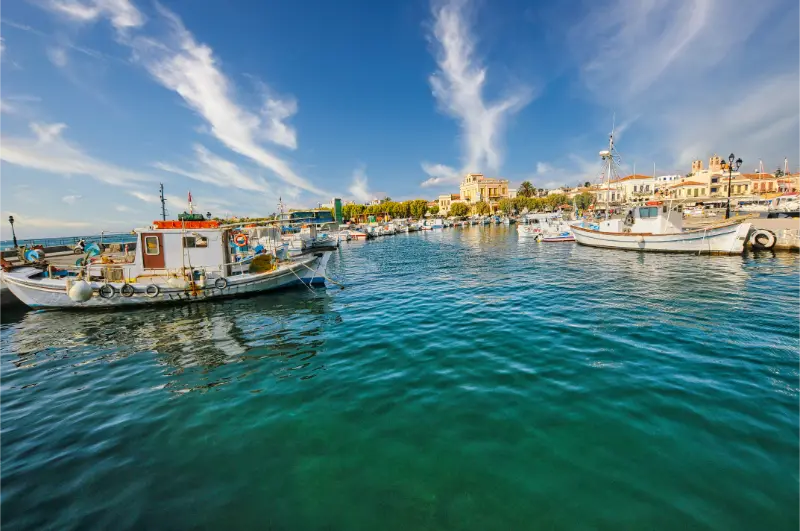
  • Aegina with Kids: Family Beaches, Easy Sightseeing and Practical Tips

    Aegina with Kids: Family Beaches, Easy Sightseeing and Practical Tips

    Aegina is one of the easiest islands to add to an Athens family trip because the ferry ride from Piraeus is relatively short and the island has enough variety for children without forcing long travel days. Beaches, ancient temples, a lively harbour, pistachio treats and short boat outings can be mixed into a schedule that still leaves time for naps and slow meals.

    The key is to resist the adult urge to ‘use the island well’ by seeing everything. With children, one beach plus one interesting place is usually enough for a full day. Base location matters more than hotel luxury: being able to walk to dinner or a swim can transform the whole trip.

    Quick planning summary

    QuestionPractical answer
    Best forTravellers who want an easy Saronic-island trip combining culture, food and sea
    Ideal paceOne major sight or area plus one beach/meal rather than an island-wide checklist
    TransportFerry from Piraeus; buses, taxis and rentals on the island
    Best seasonsLate spring, summer and early autumn; cultural trips work year-round

    Best family bases

    Aegina Town is easiest for ferries, supplies, restaurants and taxis. Agia Marina is stronger if your children want a beach every morning. Marathonas can be comfortable with a car, while Perdika suits older children who enjoy harbour life and boat trips. Souvala offers a quieter coastal base but should be checked for seasonal transport.

    Ask accommodation hosts very specific questions: distance to the beach on foot, stairs, road crossings, cot availability, refrigerator size and whether restaurants are open during your dates. A ‘five-minute walk’ can feel very different with a stroller and midday heat.

    Beaches for younger children

    Agia Marina and Marathonas are the first places I would compare because they offer easier beach-day infrastructure. Choose the part of the beach with a comfortable entry and stay close enough to shade, water and toilets. Sea conditions can change, so even a family-friendly beach needs active supervision.

    Avra near Aegina Town is convenient for a short swim rather than an all-day family beach. Moni can be fun with older children, but the boat crossing, limited shade and wildlife mean it needs more preparation.

    Making archaeology work for kids

    At Aphaia, give children a small mission: count columns, find the sea view or imagine how a temple on a hill would have looked to sailors. Keep the visit short in hot weather and reward it with Agia Marina beach. At Kolona, use the museum first or after the ruins depending on attention span.

    Do not expect young children to care about every date. A memorable story about a goddess, an ancient ship or Aegina’s old harbour is more useful than a lecture. The point is to make history part of the island day rather than a separate school assignment.

    Pistachios as a family food experience

    Aegina pistachios are one of the easiest ways to connect children with local food. Try plain nuts first, then compare ice cream, sweets or spreads. Be cautious with young children because whole nuts are a choking hazard, and of course avoid pistachio products in families managing nut allergies.

    Older children can enjoy choosing a small product to take home. Explain that the Aegina pistachio has PDO status and is tied to the island’s agricultural landscape; suddenly the roadside orchards become part of the travel story.

    Boat trips and Moni

    A short seasonal boat from Perdika to Moni can be exciting without taking an entire day. Ask about life jackets, shade, return time and boarding. Bring water and sun protection. If the sea is choppy or a child is tired, skip it without feeling that you missed the island.

    Boat days are easiest when nothing important is scheduled afterward except dinner. Do not plan the last Moni boat followed by a tight ferry back to Piraeus.

    Heat, naps and realistic pacing

    In July and August, do cultural visits in the morning and use midday for swimming, lunch and rest. Aegina is close to Athens but still has strong Mediterranean sun. Carry water, hats and a lightweight cover for religious sites. If a child normally naps, protect that rhythm rather than replacing it with another attraction.

    A two-night stay often works better than a rushed day trip for families. You can arrive, swim, sleep, enjoy one full island day and leave the next morning without turning the ferry into a stressful deadline.

    Responsible travel on a busy island near Athens

    Aegina’s proximity to Athens means visitor pressure can be concentrated on weekends and holidays. Use bins, reduce single-use plastics, respect archaeological barriers and avoid parking in ways that block village roads. On beaches without services, take everything you brought back out with you.

    Support local producers by checking provenance, especially for pistachios. In churches and monasteries, remember that worship takes priority over sightseeing. On boats and around wildlife, follow operator guidance and never feed animals for photographs.

    When to visit Aegina

    Aegina works year-round, but the experience changes by season. Late spring and September are excellent for combining archaeology, walking and swimming without the intensity of peak summer. July and August offer the warmest sea and the broadest seasonal service, but weekends can be busy because the island is so close to Athens. Winter is better for town life, food and cultural sites than for a classic resort holiday.

    For any season, check ferry schedules before booking accommodation. Aegina’s accessibility is a major advantage, but frequency and vessel type vary. On very hot summer days, place exposed archaeological sites early in the morning and save beaches or shaded lunches for midday.

    Useful Aegina guides to read next

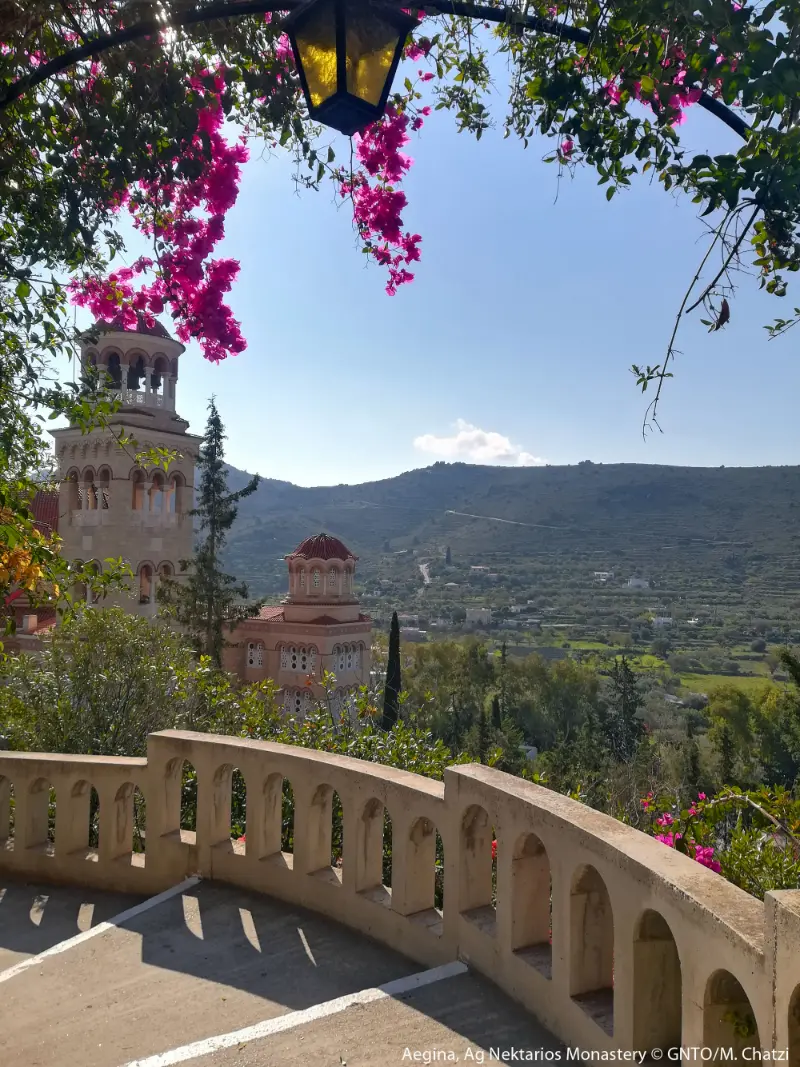
    Continue planning with Where to Stay in Aegina: Town, Agia Marina, Souvala or Perdika?, Aegina Food Guide: Pistachios, Seafood, Local Products and What to Try, Aegina Town and Kolona Guide: Waterfront, Archaeology, Markets and Where to Stay, Temple of Aphaia and Agia Marina Aegina Guide: Archaeology, Beach and Practical Tips, Agios Nektarios and Paleochora Aegina Guide: Monastery, Medieval Churches and Visiting Tips.

    Frequently asked questions

    Is Aegina good with toddlers?

    Yes, especially with a practical base and one major activity per day.

    Which beach is easiest for families?

    Agia Marina and Marathonas are good first options because of facilities and easier beach-day logistics.

    Is the ferry too long for children?

    The crossing is relatively short by Greek-island standards; choose the service that best matches your family’s comfort and schedule.

    Should we rent a car?

    It helps with child gear and flexible beach days, but Aegina Town plus buses/taxis can work for a short trip.

    Is Moni suitable for kids?

    It can be, particularly for older children, if sea conditions, shade and boat safety arrangements are appropriate.

    Check before you go

    Use Visit Greece for stable island information and verify beach, ferry and boat conditions close to your family’s travel date.

    Final planning advice

    Aegina rewards realistic planning more than aggressive sightseeing. Keep your transport simple, leave a buffer before ferries and choose one or two experiences that match the day’s weather. The island’s great advantage is that history, sea and food are close enough to combine without turning the trip into a race.

    If this is your first Saronic-island trip, use Aegina as an easy introduction rather than trying to prove how much you can cover. A slower lunch, one archaeological site and one swim often create a stronger memory than five short stops. Save something for the next visit; the island is close enough to Athens that returning is realistic.

    One more practical detail

    If you are combining Aegina with Athens, keep the arrival or departure day deliberately light. Ferry travel is usually easy, but port transfers, luggage and weather can still add friction. One waterfront walk and dinner on arrival is often a better start than trying to squeeze in a major site before closing time.

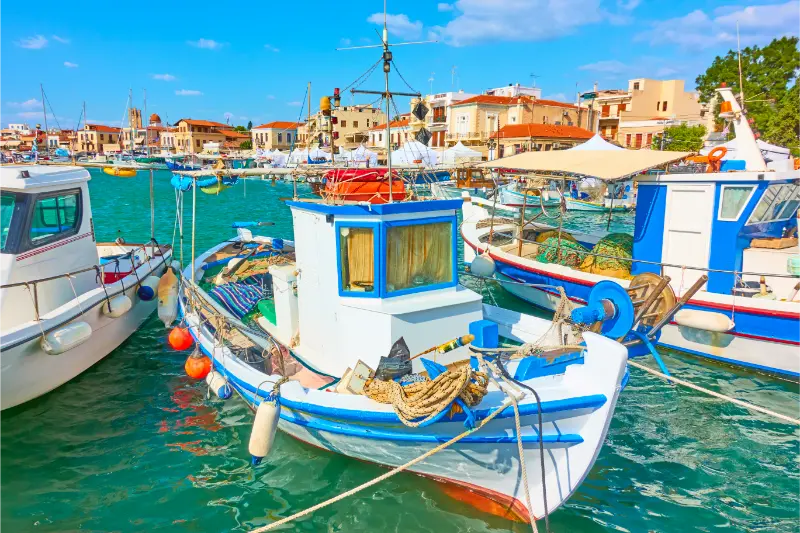
    Picturesque Fishing Boats Port Aegina Town Greece

    Extra planning note

    One detail I would confirm locally for this specific plan is the day’s transport and opening pattern. Aegina is close to Athens, which makes spontaneous travel tempting, but ferry arrivals, bus departures and seasonal businesses do not all follow the same rhythm. Saving screenshots of the latest timetable and one taxi contact can prevent a small delay from changing the whole day.

    Extra planning note

    For photography and comfort, early morning and late afternoon are usually more rewarding than the middle of a summer day. The island’s pale stone, pine-covered hills and harbour light can look flat at noon but much richer when the sun is lower. This also gives you a natural reason to reserve midday for lunch or swimming rather than another exposed walk.

    Extra planning note

    Budget planning should include island transport, not only ferry and hotel prices. A cheap room far from the places you want to visit can create repeated taxi costs, while a slightly more expensive central base may reduce daily spending. Compare the full trip pattern before deciding what counts as good value.

    Extra planning note

    If you are combining Aegina with Athens, keep the arrival or departure day deliberately light. Ferry travel is usually easy, but port transfers, luggage and weather can still add friction. One waterfront walk and dinner on arrival is often a better start than trying to squeeze in a major site before closing time.

    Picturesque Fshing Boats Port Aegina Town Greece

    Extra planning note

    One detail I would confirm locally for this specific plan is the day’s transport and opening pattern. Aegina is close to Athens, which makes spontaneous travel tempting, but ferry arrivals, bus departures and seasonal businesses do not all follow the same rhythm. Saving screenshots of the latest timetable and one taxi contact can prevent a small delay from changing the whole day.

  • Skiathos with Kids: Family Beaches, Easy Days, Boats and Practical Planning

    Skiathos with Kids: Family Beaches, Easy Days, Boats and Practical Planning

    Skiathos can be an excellent family island because it gives you a simple formula: one compact town, a bus corridor serving many beaches and enough boat trips to add adventure without changing hotels. The holiday becomes harder only when adults try to squeeze in every famous beach, hike and sunset regardless of children’s energy.

    For young families, I would prioritise Troulos, Agia Paraskevi and Koukounaries over difficult remote coves, then add one short cultural or boat experience at a time. For the broad island overview, start with my Skiathos travel guide. For the capital, harbour and evening walks, use the Skiathos Town guide; and for the island’s best-known south-west beach, see the Koukounaries Beach guide.

    Family choices at a glance

    NeedGood starting point
    Easy sandy beachTroulos, Agia Paraskevi or Koukounaries
    Car-free baseSkiathos Town, Troulos or Agia Paraskevi
    Short cultural stopBourtzi/Papadiamantis area in town
    NatureKoukounaries wetland and pine forest
    Boat dayShort coastal cruise in calm weather before committing to a full-day trip

    Choosing the right family base

    Skiathos Town works best if you value restaurants, stroller-friendly evening options and easy access to the port. Troulos and Agia Paraskevi work better when the beach should be outside the door. Koukounaries is excellent for beach-first families who are happy to travel into town only occasionally.

    Before booking, check stairs, hills, road crossings and whether the family room truly separates sleeping spaces. A beautiful hillside view can be inconvenient with a stroller and a tired child.

    The easiest beaches with children

    Troulos is officially described as a family beach with shallow water, while Koukounaries combines sand, facilities and easy bus access. Agia Paraskevi is another practical choice. My best beaches in Skiathos guide compares alternatives by family needs rather than scenery alone.

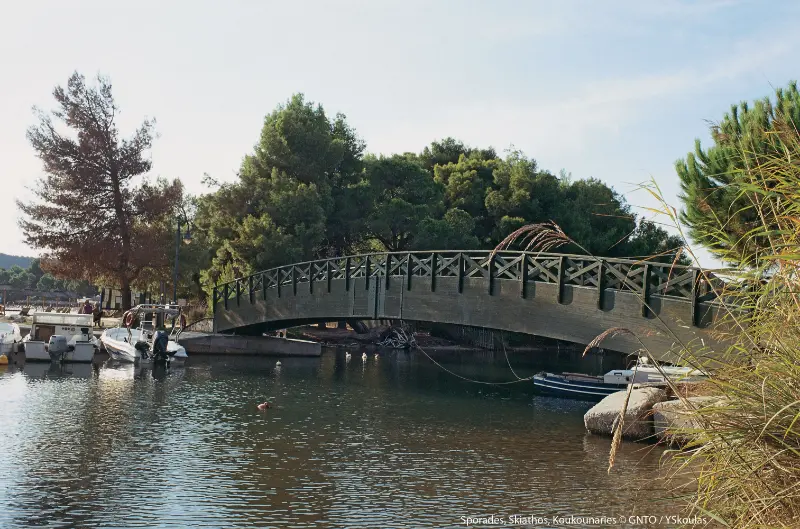
    Sporades Skiathos Koukounaries

    Shallow reputation is not a safety guarantee. Wind and swell change daily, so adults should inspect the water and keep non-swimmers within arm’s reach.

    Should families visit Lalaria?

    Lalaria is spectacular, but it is not the easiest family beach. Access is by boat, shade and facilities are limited, and pebbles can be uncomfortable for small children. Read the Lalaria guide and choose a shorter calm-weather boat if your children are new to sea excursions.

    If anyone is prone to seasickness, sit where the operator recommends, avoid a heavy meal immediately before departure and carry appropriate remedies that you already know are suitable for the child.

    Cultural stops that work with children

    Bourtzi is easy because it is close to the harbour and can be visited as part of a town walk. Evangelistria Monastery can be rewarding for older children when you explain the story of the Greek flag and the 1821 period before arrival. Keep the visit short and respectful.

    Kastro is more demanding because of uneven paths and exposure. For school-age children who enjoy walking, it can be excellent; with toddlers, a boat view of the coast may be more practical than the land approach. See the Kastro guide for terrain details.

    Heat, naps and the shape of the day

    In peak summer, build around the hottest hours. Use morning for a walk or cultural stop, lunch and shade in the middle of the day, and beach time later. A hotel close to the beach makes naps much easier than a property that requires two buses to reach.

    Carry water, hats, high-SPF sunscreen and a lightweight change of clothes. Do not wait until a child says they are thirsty; by then everyone is usually already hot and tired.

    Buses, strollers and taxis

    The 2026 bus network makes family travel possible without a car, but crowded peak-time buses are less comfortable with a stroller. Use the current official transport information and travel slightly earlier or later than the biggest beach-return rush when you can.

    A taxi is worth using for the airport with luggage, a late dinner or a hillside hotel. Family travel is not the place to turn every transfer into a budget challenge.

    A flexible 5-day family plan

    DayFamily-friendly plan
    1Settle in + short Skiathos Town/Bourtzi walk
    2Troulos or Agia Paraskevi beach day
    3Koukounaries + wetland/pine walk
    4Short boat excursion if calm; beach alternative if not
    5Evangelistria or another easy beach + final town evening

    Family mistakes I would avoid

    • Booking a beautiful hillside hotel without checking the walk to the road or beach.
    • Scheduling a full-day boat as the first sea experience for a young child.
    • Trying to hike Kastro in midday August heat.
    • Assuming every “family beach” is calm every day.
    • Packing each day with multiple beaches instead of allowing one long swim and a rest.
    • Planning the return flight immediately after a weather-dependent boat excursion.

    When to go and how to use the weather

    For Skiathos with Kids, I would treat the weather as part of the plan rather than background information. Skiathos is green, exposed to changing Aegean conditions and small enough that one coast can feel very different from another. In July and August the strongest sun usually falls in the middle of the day, so exposed walks and historic sites are more comfortable early or later. Spring and early autumn are particularly attractive for walking, while the sea remains the priority for most summer visitors.

    Wind matters even more than temperature. A calm morning can be ideal for the north coast, while a northerly wind can cancel small-boat departures or make open beaches uncomfortable. Check the marine forecast and ask local operators about the actual sea, not only the air temperature. If conditions are poor, switch to the south coast, town, a monastery or a forest walk and keep the exposed plan for another day.

    Food, water and a sensible pace

    Skiathos makes it easy to over-plan because distances look short. Leave time for a proper lunch, a swim and an unhurried return. On remote beaches and hiking routes, carry more water than you think you need; tavernas and beach bars are common on the developed south coast but not guaranteed on the north. A refillable bottle and a small snack are worth carrying even on a half-day outing.

    For meals, use the geography of the day. Eat near the beach or village you are already visiting instead of driving back to Skiathos Town for every lunch. In the evening, the town gives you the widest choice, but staying in Troulos, Agia Paraskevi or Koukounaries can be more relaxing if your hotel is on the west side of the bus corridor.

    Koukounaries Beach Skiathos Island Greece World Beach

    What to pack for this part of Skiathos

    • High-SPF sunscreen, a hat and enough drinking water for exposed stops.
    • Shoes with grip for paths, rocky viewpoints and historic sites; flip-flops are not hiking shoes.
    • A light layer for boat rides and breezy evenings, even in warm weather.
    • Offline maps or saved pins for remote beaches and trail junctions.
    • A small dry bag if the day includes a boat, tender transfer or swimming stop.
    • Cash as a backup for small seasonal businesses, although cards are widely used in tourist areas.

    A planning rule that saves time

    Group each day by geography. The south-coast bus corridor, the Koukounaries end of the island, the northern Kastro area and the town/monastery side each work best as separate clusters. Crossing the island several times in one day adds traffic and parking without adding much experience.

    Also keep the last day conservative if you have a flight or ferry connection. Boat trips can be delayed by weather, buses can run differently outside peak season and summer road traffic around town and the airport can slow unexpectedly. A relaxed final day near your departure point is a better insurance policy than squeezing in a remote north-coast beach.

    Local transport and timing checks before you leave

    For Skiathos with Kids, check the official Skiathos Transport information on the same day you travel. The network changed several times during the 2026 season, including an extension from Evangelistria toward Profitis Ilias and the Kastro junction, and a revised timetable valid from 18 September. That is useful progress for visitors, but it also means an old screenshot can be wrong. Save the current timetable offline, note the last useful return and allow extra time at busy beach stops when buses can fill quickly.

    Boat schedules deserve the same treatment. North-coast trips depend on sea conditions, and responsible captains may change the order of stops or cancel a landing. Keep one flexible day in the itinerary so weather becomes a planning variable instead of a crisis. If you have a flight or ferry the next morning, spend the final afternoon somewhere easy to reach rather than on the most remote excursion of the holiday.

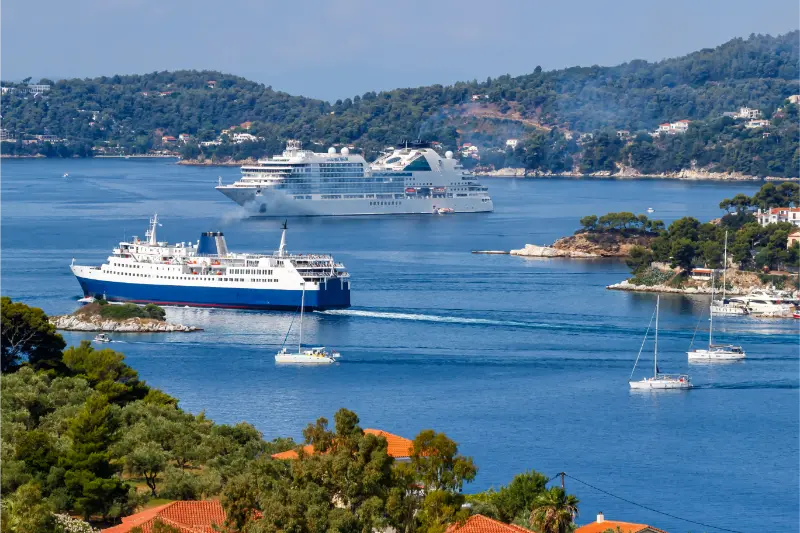
    Cruise Ship Ferry Boats Boat Mediterranean Sea Aegean Island Skiathos Greece

    Responsible travel on a small island

    Skiathos receives intense summer demand, yet many of its most attractive places are small beaches, forest paths and religious or historic sites. Use marked routes, take rubbish away from remote coves, respect private property and never remove stones or natural material from protected landscapes such as Lalaria. On organised beaches, use the bins provided and keep noise reasonable away from the main beach-bar areas.

    Wildfire risk is another reason to behave carefully in the dry season. Do not smoke on forest trails, do not park where vehicles block narrow access roads and follow any temporary closure immediately. These habits are simple, but they matter on a pine-covered island where a small mistake can have a large effect.

    Frequently asked questions

    Is Skiathos good for young children?

    Yes, especially if you choose a beach base on the south coast and keep transfers short.

    Which beach is easiest with children?

    Troulos, Agia Paraskevi and Koukounaries are practical choices because of sand, facilities and transport.

    Do families need a car?

    No. Many families can manage well with buses and occasional taxis.

    Is Lalaria suitable for toddlers?

    It is possible in very calm conditions, but the boat journey, pebbles and lack of facilities make easier south-coast beaches more practical.

    Is Skiathos Town good with a stroller?

    Many central waterfront areas are manageable, but narrow lanes, paving and accommodation steps can still require carrying.

    Final thoughts

    Skiathos works with children when you use its compact size to simplify the holiday, not to cram more into it. Choose one easy base, repeat good beaches without guilt and treat boats or historic sites as optional adventures around the family’s energy.

  • Zagori Road Trip: A Realistic 5-Day Itinerary Through Villages, Bridges and Vikos Gorge

    Zagori Road Trip: A Realistic 5-Day Itinerary Through Villages, Bridges and Vikos Gorge

    Zagori Road Trip is a useful way to experience a five-day mountain itinerary built around geographic clusters, so the UNESCO-listed villages, stone bridges, river and Vikos landscape can be experienced without spending the holiday constantly crossing the same roads. This guide is designed for travellers who want more than a list of sights: it explains how to sequence the day, where driving or walking time is often underestimated, and which details matter when you are actually on the ground in Epirus.

    For wider context, start with the Zagori Travel Guide and the Ioannina Travel Guide. If hiking is central to your trip, also use the Hiking in Greece guide. Those pages cover the broader region; this article stays focused on the practical choices that make this specific stop work smoothly.

    Quick planning facts

    • Zagori Cultural Landscape has been on the UNESCO World Heritage List since 2023.
    • The cultural landscape is defined by traditional villages, stone architecture, old paths and arched bridges as well as its mountain setting.
    • Mountain-road distances are deceptive: short kilometres can take much longer than expected.
    • Vikos Gorge deserves either a dedicated hiking day or a separate viewpoint day, not a rushed add-on.
    • Using two accommodation bases can reduce repeated driving across the region.

    Why this place deserves its own stop

    The main reason to include this stop is that it reveals a different layer of Epirus from the famous headline sights. A five-day mountain itinerary built around geographic clusters, so the unesco-listed villages, stone bridges, river and vikos landscape can be experienced without spending the holiday constantly crossing the same roads. The experience becomes much richer when you leave enough time for walking, food and the changing mountain light instead of treating the place as a roadside photograph.

    Zagori and the wider Pindus reward slow travel. Roads twist around valleys, parking in old settlements is limited, and weather can change the order of the day. I therefore plan by geographic clusters: one village group, one outdoor objective and one relaxed meal. That structure leaves room for an unexpected viewpoint, a local recommendation or a trail that takes longer than the sign suggests.

    Day 1: Ioannina to central Zagori

    Leave Ioannina after breakfast and enter central Zagori slowly. Use Monodendri or a nearby village as the first base. Spend the afternoon on the village, Agia Paraskevi and one gorge viewpoint rather than chasing every stop. This first day is about adjusting to mountain roads and the slower rhythm of the region.

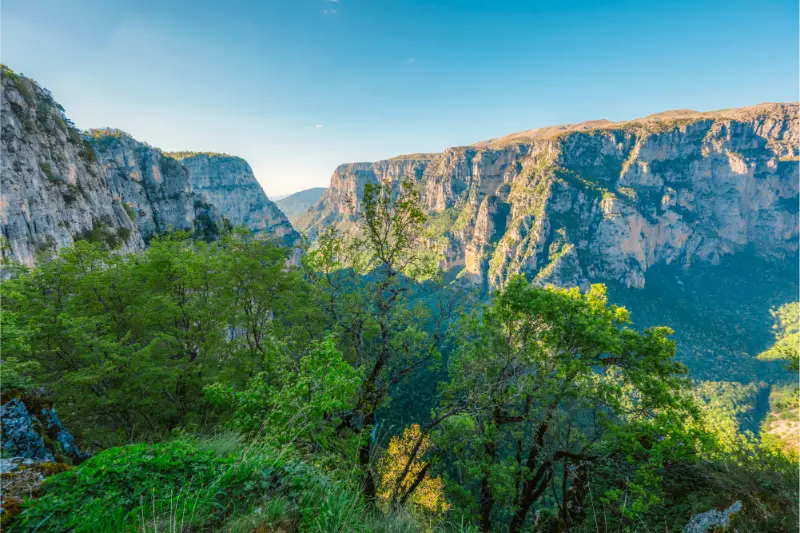
    Vikos Gorge National Park Vikosaoos Northern Greece Traditional Stone Building Monodendri Village Zagori Greece

    My approach here is to allow more time than the minimum. Even when the main sight takes less than an hour, the surrounding paths, views and village atmosphere are what make the stop memorable. If weather closes in, shorten the outdoor section rather than compensating by driving faster to the next place.

    Day 2: Kipi bridges, Kapesovo and Vradeto

    Focus on central Zagori’s stone infrastructure. Visit Kipi and two or three bridges, then continue toward Kapesovo. Active travellers can hike the Vradeto Steps; others can drive toward Vradeto and walk to Beloi in suitable conditions. Return before dark and leave room for a long village dinner.

    My approach here is to allow more time than the minimum. Even when the main sight takes less than an hour, the surrounding paths, views and village atmosphere are what make the stop memorable. If weather closes in, shorten the outdoor section rather than compensating by driving faster to the next place.

    Day 3: Aristi, Voidomatis and Papingo

    Move west toward Aristi and the Voidomatis. Choose rafting or a riverside visit, then continue to Megalo and Mikro Papigo. Sleep on the western side for the next two nights. This prevents a long evening drive back to central Zagori and lets you experience Papingo after day visitors leave.

    My approach here is to allow more time than the minimum. Even when the main sight takes less than an hour, the surrounding paths, views and village atmosphere are what make the stop memorable. If weather closes in, shorten the outdoor section rather than compensating by driving faster to the next place.

    Day 4: Papingo or Vikos hiking day

    Use the fourth day for the trip’s main outdoor objective. Strong hikers can plan a longer mountain route with current weather and trail information. Others can combine the Rogovou pools, Papingo walks and western Vikos viewpoints. Do not schedule a demanding hike and a long transfer on the same day.

    My approach here is to allow more time than the minimum. Even when the main sight takes less than an hour, the surrounding paths, views and village atmosphere are what make the stop memorable. If weather closes in, shorten the outdoor section rather than compensating by driving faster to the next place.

    Day 5: Konitsa or final viewpoints

    On the last day, choose Konitsa and the Aoos bridge, or revisit the part of Zagori you had to skip because of weather. This buffer is valuable: mountain trips improve when the itinerary has one day that can absorb changes. Return to Ioannina without squeezing in another distant destination.

    My approach here is to allow more time than the minimum. Even when the main sight takes less than an hour, the surrounding paths, views and village atmosphere are what make the stop memorable. If weather closes in, shorten the outdoor section rather than compensating by driving faster to the next place.

    How I would plan the visit

    The logic of this itinerary is geographic rather than a list of top sights. Spend two nights in central Zagori and two on the western side. That reduces backtracking and creates quieter evenings. If you only have four days, remove Konitsa or the dedicated hike; if you have six or seven, add a second hiking day or Tzoumerka rather than cramming more villages into each afternoon.

    The key is to preserve a margin. In mountain Greece, a 30-minute delay can come from roadworks, livestock, a photo stop, a slow lunch or simply a narrow road behind another vehicle. Building slack into the itinerary means you can enjoy those moments rather than treating them as problems. I also avoid scheduling a long transfer immediately after the main hike or outdoor activity.

    Where to stay

    Two bases are enough. Monodendri or nearby central villages make sense for bridges, Vradeto and southern Vikos viewpoints; Aristi or Papingo work for the river, western Vikos and high-mountain scenery. Changing hotels every night wastes time on luggage and check-in, while staying in one base can create unnecessary driving. Two plus two nights is the best compromise.

    Traditionally Houses Mountains Village Monodendri Zagori Greece Near Vikos George

    For booking, I pay more attention to parking instructions, heating, breakfast timing and road access than to a long amenities list. Historic villages often have pedestrian lanes and accommodation entrances that are not obvious from a map. A message to the property before arrival can save a stressful search with luggage on steep stone streets.

    Getting around and driving

    A car gives the greatest flexibility in this part of Epirus, but driving style matters. Mountain roads can be narrow, with blind bends, occasional animals and limited shoulders. Keep fuel comfortably above empty, download an offline map, and avoid relying on optimistic map-app journey times. After dark, familiarity with the route matters more than the number of kilometres.

    If you prefer not to drive, organised excursions, taxis and local transfers can cover some major sights, but they are not a complete substitute for a car when you want several small villages. For point-to-point hikes, pre-arranged transport is often more important than getting to the trailhead itself. Confirm the pickup plan before setting out.

    Food and local rhythm

    Build meals into the route rather than treating them as interruptions. Village tavernas and local products are part of Zagori’s cultural landscape. A substantial lunch after a hike and a relaxed dinner near your accommodation make more sense than long drives for a famous restaurant. Carry water and snacks because opening hours vary outside busy periods.

    Opening patterns are seasonal. A village that feels busy on an autumn weekend can be extremely quiet on a weekday outside peak periods. I do not assume that a café, petrol station or taverna shown online will be open at a precise hour. Carrying water and a small snack gives you the freedom to keep the day relaxed.

    Best time to visit

    Late spring and early autumn are excellent for most road trips and walking because temperatures are usually more comfortable than midsummer. Summer offers long daylight, but exposed paths can still be hot. Autumn colours are particularly attractive around the Pindus. Winter creates a completely different atmosphere, with snow possible at altitude and a much greater need to check tyres, chains, forecasts and road conditions.

    There is no single best month for every traveller. Hikers should prioritise stable conditions; photographers may prefer changing weather; families often value long daylight and simpler roads. Whatever the season, recent local information is more important than a fixed annual rule when mountains, rivers or snow are involved.

    Travelling with children

    Families should simplify the plan: keep the villages, river, bridge circuit and viewpoints, but replace long hikes with short walks. Changing accommodation only once helps children settle into the trip. Mountain roads can cause motion sickness, so allow stops and avoid planning the longest driving sections immediately after heavy meals.

    A useful family rule in Zagori is one major objective per day. Children often enjoy the bridges, water, village squares and short paths more than a long checklist of viewpoints. Build in warm food, toilet stops and time to play. If a route has exposure, fast water or loose stone, adult supervision matters more than the route’s reputation for being easy.

    Traditionally Houses Mountains Village Kipoi Zagori Greece Near Vikos George

    Photography without turning the trip into a photo shoot

    A five-day trip gives you the luxury of revisiting places in better light. Do not chase sunrise and sunset across the whole region. Photograph one village in the morning, bridges under soft cloud and Papingo in late-day mountain light. Bad weather can be visually excellent, but never let photography override trail or road safety.

    The best images often come when you stop looking for a single iconic frame. Stone walls, slate roofs, old paths, water and cloud layers tell the story of the region. Use safe pull-offs, never block a road or doorway, and remember that monasteries, churches and homes may have photography restrictions or deserve privacy even when no sign is posted.

    Responsible travel in the UNESCO landscape

    This part of Epirus is not a theme park: villages are lived-in communities and many trails cross a protected mountain landscape. Park only where you do not block residents or emergency access, keep noise low in village lanes, carry your rubbish out, and stay on established paths when the ground is fragile. In summer, fire restrictions can change quickly; in winter, snow and ice can turn an easy-looking road or path into a serious problem. Local advice on the day is more valuable than an old blog post when conditions are changing.

    UNESCO describes Zagori as a cultural landscape in which villages, stone bridges, paths, staircases, sacred forests and mountain terrain form one connected system. That is a useful way to travel here too: support local businesses, walk respectfully through settlements and avoid reducing the region to a collection of viewpoints. The character visitors come to see depends on villages remaining viable places to live.

    Common mistakes to avoid

    • Using one hotel for five nights and crossing Zagori repeatedly.
    • Planning every day around a long list of villages.
    • Attempting Vikos Gorge without transport and weather planning.
    • Driving unfamiliar mountain roads late after dinner.
    • Treating UNESCO Zagori only as scenery and ignoring its living villages and infrastructure.

    Most mistakes come from trying to make the day more efficient than the landscape allows. The cure is simple: fewer stops, earlier starts for outdoor activities, a clear parking plan and a willingness to change the route when weather or fatigue says so. In Epirus, a slower day often produces more memorable travel than a longer checklist.

    Official information and useful context

    For current destination information, consult the UNESCO Zagori Cultural Landscape. For the wider heritage context, UNESCO’s Zagori Cultural Landscape page explains why the villages, stone infrastructure and surrounding landscape are protected as one cultural system. Recheck opening hours, trail conditions and activity schedules close to your travel date.

    Frequently asked questions

    Is five days enough for Zagori?

    Yes. Five days gives you central villages, bridges, the Voidomatis, Papingo and either a major hike or Konitsa without excessive rushing.

    Where should you stay?

    Use two bases: central Zagori for Monodendri, Kipi and Vradeto, then Aristi or Papingo for the river and western side.

    Do you need a car?

    For an independent road trip, yes. Public transport is limited and the attractions are spread across mountain roads.

    Should you hike Vikos Gorge?

    Only if you have the fitness, equipment, weather and transport plan. The gorge is also impressive from viewpoints, so hiking is not mandatory.

    Can you add Meteora?

    Yes, but treat it as a separate travel day or next destination. Trying to combine Meteora with a full Zagori sightseeing day usually makes both experiences rushed.

    Final thoughts

    Zagori Road Trip works best when it is given enough time to feel like part of a mountain journey rather than another pin on a map. Keep the day realistic, connect it with nearby villages instead of distant attractions, and let food, weather and walking pace shape the itinerary. That approach is exactly what makes Epirus different from a fast island-hopping schedule.

  • Ithaca Hiking and Odysseus Sites Guide: Trails, Homeric Landscapes and Safety

    Ithaca Hiking and Odysseus Sites Guide: Trails, Homeric Landscapes and Safety

    Ithaca is one of the Ionian islands where walking is not an add-on but a way of understanding the landscape. Before roads linked every settlement, stone paths connected villages, farms, churches and bays across steep terrain. The Municipality has promoted a network of roughly 110 kilometres under the Ithaca Trails project, with routes across both the northern and southern parts of the island. That makes Ithaca unusually rewarding for travellers who want more than beaches.

    The first rule: separate literary Ithaca from archaeological certainty

    The island’s identity is inseparable from Homer’s Odyssey, and many places are associated with Odysseus, Penelope, the palace, the Cave of the Nymphs or ancient harbours. Some associations are traditional, some are linked to archaeological discoveries and some remain debated. A good hiking guide should preserve that complexity rather than presenting every signposted name as a proven location from the poem.

    Use the Homeric story as a lens through which to experience the terrain: the difficult ridges, hidden coves, caves and lines of sight help explain why the island has inspired identification and interpretation for centuries. For archaeological claims, rely on museum material and official site information.

    The municipal trail network

    The Ithaca Trails initiative describes a network of about 110 km, almost evenly distributed between north and south and connected into a larger circular concept. Actual route conditions depend on maintenance, vegetation, weather and recent use. Download maps before the trip and ask locally which sections are clear.

    Trail colour or numbering systems can be less obvious on the ground than on a website. Carry an offline map and do not continue blindly at an ambiguous junction just because a GPS line appears to cross private-looking land.

    Walking around Anogi and the central ridge

    Anogi is an excellent hiking base because it sits high in the island’s interior. Routes descend toward Kioni and connect with the central spine, offering views that reveal how narrow Ithaca is between east and west coasts. The village itself, with its old church and standing stones in the surrounding landscape, deserves time before or after the walk.

    Ithaca Kioni Greece

    Descending from a high village can feel easy at the start but creates the challenge of climbing back. If you plan a point-to-point route, arrange transport in advance rather than assuming a taxi will be waiting at the finish.

    Exogi, Stavros and northern archaeology

    Exogi and Stavros sit within the island’s strongest concentration of Homeric associations. Paths and minor roads link high viewpoints, archaeological areas and the coast at Polis Bay. This makes the north ideal for a mixed hiking-and-history day.

    The so-called School of Homer near Agios Athanasios has attracted archaeological interest and public attention. Interpretations connecting structures and finds with an Odyssean palace are not a simple settled fact. Visit with respect for the archaeology and read current official information rather than repeating the most dramatic claim as certainty.

    South Ithaca: Vathy, Perachori and coastal routes

    The south offers routes above Vathy, around Perachori and toward viewpoints over the great harbour. These walks can be easier to fit around a Vathy stay because you do not need a long transfer north. Some routes pass agricultural terraces, chapels and old paths that reveal a quieter working landscape behind the capital.

    If you want to combine hiking with a beach, choose one destination rather than planning three. A morning walk followed by Filiatro, Dexa or Sarakiniko is more realistic than crossing the island after a long hike.

    Heat is the main summer risk

    Ithaca’s trails can be brutally hot in July and August. Start around sunrise for longer routes, carry more water than you think you need and avoid exposed ridges in the middle of the day. Shade visible on a map may not exist where vegetation has changed.

    Do not depend on springs unless a reliable current source confirms they are flowing and potable. Carry electrolytes or salty food on long days and know the signs of heat exhaustion: headache, nausea, dizziness and unusual weakness are reasons to stop, cool down and reassess.

    Footwear, navigation and what to carry

    • Hiking shoes or trail shoes with reliable grip.
    • Offline map plus a backup battery.
    • At least 1.5–2 litres of water for a substantial summer hike, often more depending on heat and duration.
    • Sun hat, sunscreen and light long sleeves for exposure.
    • Small first-aid kit, blister care and personal medication.
    • Snacks and enough energy reserve for an unexpected detour.
    • A headlamp for long routes even if you plan to finish before sunset.

    Walking with children

    Choose short village paths, waterfront walks and easy shaded sections rather than committing the family to an exposed ridge. Children who enjoy hiking can handle more, but the limiting factor is often heat rather than distance. Make the destination tangible: a church square, a beach or lunch in Kioni works better than “we are walking for three hours because the route is famous.”

    A two-day hiking plan

    1. Day 1 north: start early near Stavros or Exogi, walk a selected marked route, add Polis Bay and finish with food in Frikes or Kioni.
    2. Day 2 central/south: choose Anogi or a route above Vathy, then spend the afternoon swimming close to your base.
    3. Keep one extra morning flexible in case wind, heat or trail conditions make your preferred route unsuitable.

    Respecting land and heritage

    Stay on established paths, close gates behind you, do not move archaeological stones and avoid entering ruined structures that look unstable. Wildfire risk is serious in Greek summers; never light fires and follow any official restrictions on access during extreme fire-weather conditions.

    The most responsible way to experience Homeric Ithaca is not to “collect” alleged locations but to walk slowly enough to understand the terrain that made the island a powerful literary symbol.

    Booking accommodation and activities

    For accommodation, compare places to stay in Ithaca on Booking.com. Check the exact village rather than booking from the island name alone: Vathy, Kioni, Frikes and the northern villages create very different daily logistics.

    Vathy Ithaca Island Greece Sunset

    For organised activities and excursions, use the widget below as a starting point. Availability on Ithaca is seasonal and inventory can be limited, so verify the meeting point, cancellation terms and whether transfers are included before paying.

    Official resources to recheck before you go

    For an official destination overview, use Visit Greece’s Ithaca page. It describes Vathy, the fishing villages, pebbled coves and the island’s walking character, and it is a useful starting point before checking local conditions.

    For beaches, the official Visit Greece beaches of Ithaca page covers Filiatro, Dexa, Gidaki, Platia Ammos, Afales, Sarakiniko and Skinos. For local notices, municipal services and seasonal announcements, check the Municipality of Ithaca.

    The Municipality announced the Ithaca Trails tourism network as approximately 110 km of routes. Check the current route page or local advice before departure because maintenance and access can change.

    More Ithaca guides for planning the same trip

    Continue with Vathy Ithaca Guide · Kioni and Frikes Ithaca Guide · North Ithaca Villages Guide · Best Beaches in Ithaca · Ithaca Hiking and Odysseus Sites Guide · Ithaca Boat Trips Guide · Ithaca Without a Car · Where to Stay in Ithaca · Ithaca with Kids · How to Get to Ithaca. Start with the Ithaca Travel Guide if you need the island overview before choosing detailed day plans.

    Wildfire restrictions and summer access

    During periods of very high fire danger, Greek authorities can restrict access to forests or nature areas. Check local announcements before an exposed summer hike. Even without a formal closure, strong wind and extreme heat are reasons to shorten the route.

    Never smoke on dry trails, never light a stove or fire, and do not park a hot vehicle over dry grass. Wildfire prevention is part of hiking safety, not a separate concern.

    After the hike

    Plan the recovery before you start. Leave clean water in the car, know where you can eat and avoid driving immediately after a long exposed route if you are dizzy or exhausted. A swim can feel wonderful, but cool down gradually and do not jump into deep water while overheated.

    Log any confusing junctions or damaged signs with a local tourism contact if there is a clear reporting route. Good trail networks remain useful because walkers communicate problems rather than creating unofficial shortcuts.

    Practical timing by season

    In May and early June, walking and village exploration are easier in cooler temperatures, but the sea is cooler and some seasonal services run less frequently. July and August bring the fullest transport and restaurant choice, along with stronger heat, parking pressure and demand for taxis and boats. September is often the best compromise for warm water and calmer roads, while October requires more careful checking of ferry frequencies and business opening days.

    Whatever the month, plan the following day with the actual wind and temperature forecast rather than using a fixed itinerary written weeks earlier. Ithaca is compact enough that changing from a north-coast beach to a Vathy day, or from hiking to a museum and long lunch, rarely ruins the trip. Flexibility is one of the island’s greatest advantages.

    Beach Of Gidaki On Ithaca Island In Greece

    Common planning mistakes

    The most common mistake is treating short distances as short journeys. Roads are narrow and winding, parking takes time and a spontaneous swim can easily add an hour. Do not schedule every meal, beach and village. Choose one main purpose for the day and let secondary stops remain optional.

    Another mistake is relying on a single old timetable or map review. Ferries, local buses, excursion boats and seasonal businesses change. Confirm anything time-critical close to travel and keep departure day simple. Finally, avoid judging the island only by famous names: a quiet unnamed cove or ordinary village square can be more memorable than a hurried checklist stop.

  • Paxos Without a Car: Buses, Taxis, Boats, Walking and the Best Base

    Paxos Without a Car: Buses, Taxis, Boats, Walking and the Best Base

    Visit Paxos without a car using buses, taxis, walking and boat transfers, with realistic advice on the best base, beaches you can reach and where car-free travel becomes difficult.

    Paxos is compact, but it rewards precise planning. Villages sit close together on a map while olive-grove lanes, steep western cliffs, irregular buses and boat-dependent sights can make two apparently simple days feel very different. This guide focuses on practical choices: where to base yourself, when walking is realistic, what changes with wind, and how to combine beaches, villages and sea excursions without turning the trip into a checklist.

    Aerial View Sailing Boats Turquoise Sea Paxos Greece

    Quick planning notes

    • Gaios is the easiest car-free base because ferries, the main bus stop, taxis, shops and excursion boats are concentrated there.
    • Public buses connect the principal villages and some beaches, but official tourism information warns that services are not very frequent.
    • Book taxis ahead for early ferries, dinner transfers and peak-August days rather than assuming one will be waiting.
    • Boat trips solve access to Antipaxos, the Blue Caves and remote coves more effectively than any road vehicle.

    Is a car necessary on Paxos?

    No. Paxos is small enough to enjoy without driving, particularly if you choose Gaios, Lakka or Loggos as a base and accept that you will combine several transport modes. The official tourism portal lists buses, taxis, boats, bicycles and walking as practical ways to move around. The limitation is frequency, not absence of transport.

    A car becomes useful when you want to visit multiple remote beaches in one day, stay in an isolated villa or return from sunset viewpoints after buses have finished. Car-free travel works best when your itinerary is slower: one village or coastline per day rather than five stops scattered around the island.

    Why Gaios is the easiest base

    Gaios concentrates the ferry harbour, the largest selection of groceries and restaurants, taxi availability and many excursion departures. You can walk to several nearby coves, take a bus north, join a boat to Antipaxos and return to dinner without arranging a vehicle. For a first car-free trip, this reduces the number of moving parts.

    The compromise is that Lakka and Loggos feel more intimate. If your priority is village atmosphere rather than transport efficiency, staying there is still possible. Just confirm how you will handle luggage on arrival and an early-morning departure, because the bus timetable may not align with your ferry.

    Using the public bus

    The public bus links the main settlements and selected beaches, but schedules change with season and are not dense enough to treat like an urban service. Photograph the timetable after arrival and identify the final return before leaving for the day. Build margin around ferry connections rather than planning to arrive at the port minutes before departure.

    Buses are most useful for straightforward village trips: Gaios to Loggos or Lakka, then walking locally. They are less effective for a custom beach-hopping day. If two people would otherwise make several taxi trips, compare the price of a one-day rental before deciding that car-free travel is automatically cheaper.

    Taxis: where they make the biggest difference

    Taxis fill the gaps left by buses and are especially valuable for luggage, evening meals in another village and one-way hiking routes. Official tourism information recommends booking ahead in peak season. Save several taxi numbers on your phone and ask your accommodation to arrange critical transfers such as an early ferry.

    Costs add up if you use taxis for every beach. A better strategy is to spend whole days in one area: taxi to Lakka, walk and swim around the north, then return once. This turns a potentially expensive sequence of short journeys into one useful transfer.

    Walking between villages and beaches

    Walking is a major part of car-free Paxos because the historic path network often feels more pleasant than the road. Loggos to nearby beaches is particularly easy to build into a day, and longer walkers can tackle sections toward Lakka or Gaios. Visit Greece describes a 12 km Gaios–Lakka route and a shorter 5 km Loggos–Orkos–Lakka option.

    Greece Picturesque Bay With Fishing Boats Paxos Ionian Islands

    Heat changes the calculation. A 3 km midday road walk with no shoulder can be worse than a longer shaded path at 8 a.m. Use offline maps, carry water and do not assume every apparent shortcut is public. For evening walks, take a torch.

    Boats as transport, not just excursions

    Boats are essential if you want Antipaxos, Blue Caves or inaccessible west-coast coves. Local transfers to Antipaxos function almost like seasonal sea buses, while excursion boats combine sightseeing and swimming. Renting a small boat can also expand freedom, but only if you are comfortable with the operator’s safety requirements.

    For car-free travellers, a boat day is especially efficient because it replaces the one category of attractions a car cannot reach anyway. Schedule it early in the stay so weather cancellations leave room to rebook.

    A sample four-day car-free plan

    Day one can stay around Gaios and nearby coves. Day two: bus to Lakka, swim at Harami and walk toward the lighthouse. Day three: Antipaxos and Blue Caves by boat. Day four: bus or taxi to Loggos, walk to Levrechio and Marmari, then return for dinner. This already covers the island’s main character without driving.

    If you have a fifth day, add a one-way hike or taxi to a west-coast sunset viewpoint. The key is not trying to reproduce a rental-car itinerary with slower transport. A car-free plan should use fewer bases and longer blocks of time.

    Accommodation and booking strategy

    Paxos has a limited accommodation supply compared with Corfu, and the most attractive village-centre rooms, waterfront apartments and family villas can sell early in July and August. Compare the exact location rather than only the property name: a room described as “Gaios” may sit well above the harbour, while a villa near Lakka may require a car or taxi after dinner. Check current Paxos accommodation on Booking.com.

    For a short first visit, prioritize convenience over a dramatic view. For a longer stay, a quieter villa can work well if you already know how you will reach groceries, beaches and evening restaurants. If mobility is limited, ask the host about gradients, stairs and the nearest point a taxi can reach; the island’s beautiful old lanes are not always stroller- or suitcase-friendly.

    Frequently asked questions

    Can I visit Paxos without renting a car?

    Yes. Base yourself in Gaios, Lakka or Loggos and combine buses, taxis, walking and boats. Gaios is the simplest for a first trip.

    Paxos Greece

    Are buses frequent on Paxos?

    No. The official tourism portal notes that public buses connect main villages and beaches but are not very frequent, so always check the current timetable.

    What is hardest without a car?

    Remote villas, multiple beaches in one day and late sunset viewpoints are the main challenges. Taxis or a one-day rental can solve those specific gaps.

    Useful official resources

    For information that can change after publication, check the Visit Paxos tourism portal, the official Paxos travel-information page and, for sea connections, the official getting-to-Paxos page. Hiking information is also available from Visit Greece. Ferry times and local transport can change with season, weather and operator, so verify the exact date before committing to a tight connection.

    Related Paxos guides

    A practical way to plan the day

    Build each day around one anchor rather than several fixed appointments. On a calm day, make the boat trip or exposed west-coast walk the anchor and keep the afternoon flexible. When wind is stronger, choose an east-coast beach, village lunch or short olive-grove walk. This approach suits Paxos because distances are small enough to change direction, while the most memorable experiences—clear water, cliff light, quiet lanes and village evenings—depend more on conditions than on an ambitious schedule.

    Keep water, sun protection, offline maps and a small cash reserve in your day bag. Mobile reception can vary near cliffs and remote coves, and not every beach has a bar or a reliable taxi pickup point. If you are using buses, photograph the current timetable after arrival and confirm the final return of the day. If you are using boats, ask what happens if wind forces a route change. Those simple checks remove most of the stress from an otherwise very easy island to enjoy.

    A final rule is to leave some room for repetition. Paxos is not an island where every hour needs a new attraction. Returning to the same waterfront for breakfast, repeating a beach that was exceptionally calm, or walking the same olive lane at sunset often produces a stronger sense of place than collecting ten different stops. The island is small enough that familiarity becomes part of the experience rather than a sign that you have run out of things to do.

  • Chania Old Town and Venetian Harbour Guide: Walking Route, History and Local Tips

    Chania Old Town and Venetian Harbour Guide: Walking Route, History and Local Tips

    Chania Old Town is the kind of place that rewards walking without a strict agenda, but a little structure helps you see much more than the famous waterfront. The Venetian Harbour is the visual centre, yet the real character is in the districts behind it: Topanas, the Jewish quarter, Kasteli and Splantzia, where Venetian, Ottoman and modern Cretan layers sit only a few streets apart.

    This guide focuses on a full day or two slow half-days in the historic centre. It works especially well if you are staying in Chania and want one day with no long drive. Pair it with the broader Chania Travel Guide for beaches and day trips, and use the Crete Travel Guide if you are deciding how Chania fits into a longer island itinerary.

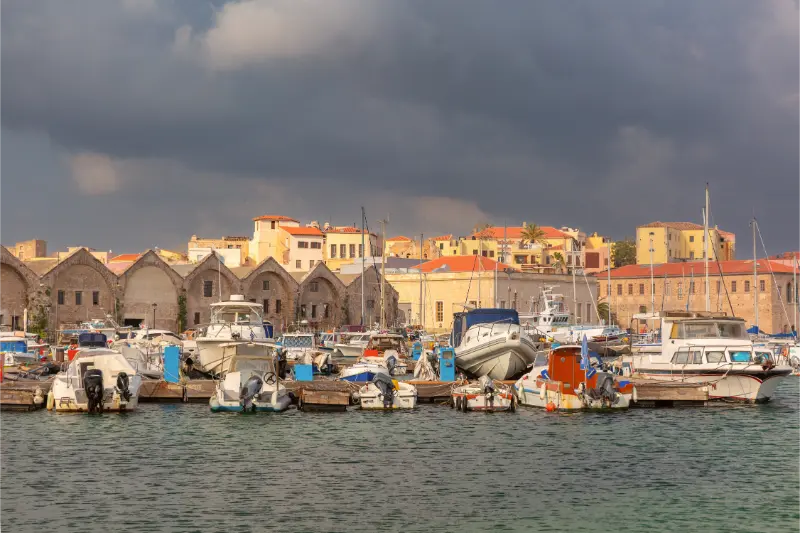
    Docked Sailing Yachts Venetian Harbor Chania Crete Greece With Cloudy Sky

    Why this place deserves its own stop

    The reason to stay rather than pass through is the rhythm of the place. A few hours shows the main sights; an overnight stay reveals the morning market, the evening promenade and the ordinary streets between attractions. That slower rhythm is what makes a travel guide useful rather than just a list of things to photograph.

    What to see and do

    Start at the Venetian Harbour

    The harbour is best understood early, before day-trip traffic and restaurant terraces fill the waterfront. Walk the curve of the port slowly and look back toward the old town rather than heading immediately for the lighthouse. The harbour was developed by the Venetians from the 14th century for trade and defence, and its long line of arsenals still helps explain why Chania became such an important maritime centre. Morning light is also kinder for photographs of the waterfront and the lighthouse.

    Picturesque Old Port Chania Crete Island Greece

    Walk through Topanas

    Topanas, on the western side of the old town, is one of the most atmospheric areas for unhurried walking. Venetian façades, narrow lanes, small hotels and restored houses create a quieter texture behind the harbour. Instead of following only the busiest shopping streets, take parallel alleys and allow yourself to loop back. This is where Chania feels less like a waterfront attraction and more like a lived historic neighbourhood.

    Cross into Splantzia

    Splantzia gives a different perspective on Chania. The district preserves strong Ottoman-era layers alongside churches and everyday residential streets. The square around Agios Nikolaos is a good pause point and an easy place to notice how different periods overlap. I like to use Splantzia as the transition between the busy harbour and the more local eastern side of the old centre.

    Climb to Kasteli Hill

    Kasteli is important because modern Chania sits directly over ancient Kydonia. Hellenic Heritage notes that the Minoan palatial complex lies partly beneath today’s urban fabric and has recently been included in the UNESCO World Heritage List with the other Minoan palatial centres of Crete. The surviving excavations do not look like a complete palace, so context matters; the hill is valuable precisely because it connects the modern city to a much deeper history.

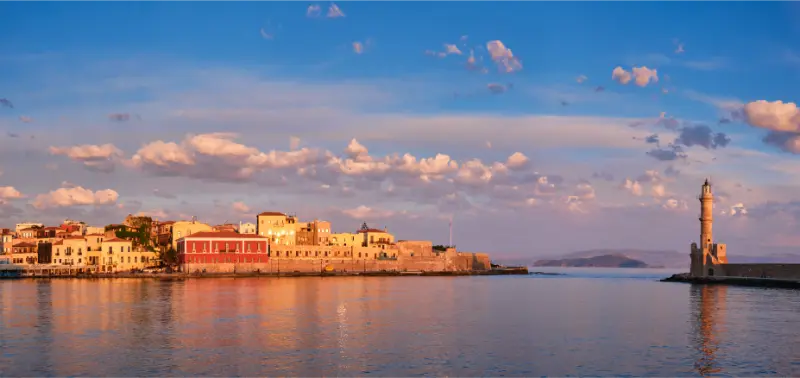
    Picturesque Old Venetian Port Chania Crete Greece With Waterfront Buildings Historic Lighthouse

    Finish toward the lighthouse

    The walk along the breakwater toward the Egyptian lighthouse gives the classic harbour panorama, but do it only in suitable weather. Wind and spray can make the exposed section uncomfortable, and there is little shade. Late afternoon is ideal when conditions are calm. If you do not want the full walk, the harbour-side viewpoints still give excellent photographs without committing to the entire breakwater.

    A realistic plan

    Part of the dayPlan
    Early morningHarbour waterfront, Firkas side and quiet photographs
    Late morningTopanas, Jewish quarter and Kasteli
    LunchOld Town or Splantzia, away from the busiest harbour tables
    AfternoonMuseum or shaded lanes, then Splantzia
    EveningHarbour and lighthouse views at softer light

    Use this as a framework rather than a timetable. Crete rewards flexibility: parking can take longer than expected, mountain roads slow down, a good lunch becomes part of the day, and heat can change the order of activities. The best itinerary is the one that leaves enough margin to enjoy the main experience rather than simply arriving at every planned pin on a map.

    How to get there and move around

    Chania Old Town is compact enough to explore entirely on foot. If you arrive by car, use a parking area outside the pedestrian core and leave the vehicle there. The most frustrating version of the day is trying to move the car between sights that are only ten minutes apart on foot. Comfortable shoes matter because stone paving can be polished and uneven.

    How to pace the visit

    Do not treat the historic centre as a checklist. A good walking day has pauses built into it: one museum or monument, one long section on foot, a proper lunch and a quieter hour late in the afternoon. That rhythm is especially important in Crete, where heat and bright light can make a route that looks short on a map feel much longer. Keep the most exposed walking for morning or early evening and use midday for food, museums or a shaded café.

    Parking and luggage

    If you are driving, decide where the car will stay before you choose accommodation. Historic cores often have narrow or pedestrian streets, limited access and parking that fills quickly in high season. A hotel that looks perfectly central can be awkward if you arrive with large luggage and a rental car. I prefer to park once, walk the old centre, and only use the car again when leaving for a day trip.

    Best time to visit

    April to June and September to October are especially comfortable for walking. July and August bring the longest evenings but also the greatest heat and pressure. In peak summer, make the old town an early-morning and evening experience and use the middle of the day for a museum, lunch or a nearby swim at Nea Hora.

    For any outdoor or archaeological visit, check the same-day forecast and the official operating information. Crete can have very local conditions: wind on one coast, heat in an inland valley and cloud over the mountains at the same time. Planning by region and keeping one backup option nearby is more effective than relying on a rigid island-wide schedule.

    Food and local rhythm

    Chania is one of Crete’s strongest food cities. Look for boureki, kalitsounia, dakos, local greens, cheeses and dishes built around good olive oil rather than choosing a restaurant only for its harbour view. Visit Greece highlights the depth of Chania’s local food culture, from stamnagathi and cheeses to tsigariasto and regional pies.

    One of my favourite planning rules in Crete is to protect lunch. Do not schedule every meal as a 20-minute gap between attractions. A proper stop gives you shade, hydration and a chance to ask local staff about road, wind or beach conditions. It also makes the day feel like a trip through Crete rather than a sequence of parking lots.

    How to combine it with nearby places

    If you have another half-day, walk or drive toward Halepa for the Archaeological Museum and a different architectural atmosphere. For beach days, use the Falassarna guide or Balos guide rather than trying to attach a distant famous beach to the same old-town day.

    If your route already includes two long drives, resist adding a third distant highlight simply because it is famous. Crete is large enough that geographic discipline improves almost every itinerary. A day focused on one corner of the island usually produces more time walking, swimming or eating and less time looking through a windscreen.

    Where to stay

    For most travellers this works best as a day trip from an established base rather than a one-night hotel change. Choose accommodation based on the wider region and your next day, not only this single attraction. If an early start matters, staying within 30–45 minutes can dramatically improve the experience and reduce the temptation to rush.

    Photography and timing

    The most flattering light is usually early or late, but photography should not dictate unsafe timing. On exposed roads, gorges and archaeological sites, practical considerations come first. Carry a phone or camera securely, avoid stepping backward near drops or uneven stones, and take a moment to look without a screen. The best photographs often come after you have understood the shape of the place.

    Common mistakes to avoid

    • Walking only the harbour and missing the neighbourhoods behind it
    • Driving into the old core without a parking plan
    • Eating every meal on the most tourist-heavy waterfront strip
    • Doing the lighthouse walk in strong wind without checking conditions
    • Trying to combine the old town with a distant west-coast beach on the same short day
    • Visiting only at midday in July or August

    Official information

    For current access, opening hours, tickets or regional information, check Visit Greece – Chania and Hellenic Heritage – Kydonia shortly before the trip. I use official pages for variable details because older travel articles can remain online long after rules have changed.

    Frequently asked questions

    How much time do I need in Chania Old Town?

    A full day is ideal for the harbour, several historic districts, a museum or long lunch and an evening return to the waterfront. Two half-days work even better if you are staying nearby.

    Is Chania Old Town walkable?

    Yes. The historic centre is compact and designed for walking. The main challenge is heat rather than distance, so plan shade and breaks in summer.

    Where is the best area for atmosphere?

    Topanas is excellent for historic lanes, while Splantzia feels more local and layered. The harbour is beautiful but it is only one part of the old town.

    Can I swim near the old town?

    Yes. Nea Hora is the easiest practical beach near the centre and works well after a morning of sightseeing.

    Is the lighthouse walk essential?

    No. It is scenic in calm weather, but the harbour is rewarding even without walking the full breakwater.

    Final advice

    Build this stop around one clear reason for going, then let the surrounding area add depth. That approach keeps the day realistic and usually creates better memories than a checklist. In Crete, distance, heat and road shape matter as much as the number of attractions on a map.

    For the wider picture, continue with Chania Travel Guide, Crete Travel Guide, Falassarna Beach Guide. These guides make it easier to connect this stop to the rest of the island without unnecessary backtracking.

  • Rhodes Old Town Guide: Walls, Palace, Street of the Knights and a Walking Route

    Rhodes Old Town Guide: Walls, Palace, Street of the Knights and a Walking Route

    Rhodes Old Town Guide is the focus of this guide. Rhodes Old Town is not a reconstructed theme park but a living fortified city where medieval, Ottoman, Byzantine and later layers sit on top of one another. UNESCO inscribed the Medieval City of Rhodes in 1988, and the scale of the walls, gates and street plan makes it one of the most rewarding urban walks in the Greek islands.

    The mistake is to enter through the nearest gate, follow the busiest shopping lane and leave after an hour. A better visit separates the monumental Upper Town from the more residential lanes, then returns in the evening when day-trip traffic thins and the stone streets feel completely different.

    At a glance

    Best forHistory, architecture, first-time Rhodes visitors and car-free stays
    Ideal time1 full day; 2 nights if you want early mornings and evenings
    UNESCOMedieval City of Rhodes, inscribed in 1988
    Car needed?No; the historic core is best explored on foot

    Why this place deserves time in your Greece itinerary

    A good visit is less about collecting landmarks and more about understanding how the destination works. Rhodes Old Town is not a reconstructed theme park but a living fortified city where medieval, Ottoman, Byzantine and later layers sit on top of one another. UNESCO inscribed the Medieval City of Rhodes in 1988, and the scale of the walls, gates and street plan makes it one of the most rewarding urban walks in the Greek islands.

    My planning approach here is simple: build the day around the strongest local experiences, leave breathing room for weather and crowds, and use nearby destinations only when they add something genuinely different. The mistake is to enter through the nearest gate, follow the busiest shopping lane and leave after an hour. A better visit separates the monumental Upper Town from the more residential lanes, then returns in the evening when day-trip traffic thins and the stone streets feel completely different.

    What to see and do

    Palace of the Grand Master

    The palace dominates the northern part of the Old Town and is one of the city’s defining monuments. Its current appearance reflects restoration and reconstruction as well as medieval history, so approach it as a layered building rather than expecting every stone to be untouched from the Knights’ period.

    Panoramic View Rhodes Old Town Palace Grand Master Dodecanese Islands Greece

    Allow time for interiors and exhibitions if they are open during your visit, then step outside and compare the formal architecture with the narrower streets nearby.

    Street of the Knights

    This stone-paved street links major buildings associated with the Order of St John and remains one of the clearest examples of the city’s Gothic character. Go early if you want to appreciate proportions and details without constant groups passing through.

    UNESCO highlights the inns of the different “tongues” of the Order along this axis, which is why the street is more than just a photogenic backdrop.

    Archaeological Museum and medieval hospital

    The museum occupies the former hospital of the Knights and is worth visiting even if archaeology is not your main interest. The building itself helps explain how the fortified city functioned, while collections widen the story beyond the medieval period.

    Use museums in the hottest part of the day, then return to outdoor walking later in the afternoon.

    Walls, gates and moat

    The fortifications define the city at a scale that is hard to grasp from inside the shopping streets. Walk outside sections of the walls or through the moat where permitted, and enter through more than one gate to understand how the city relates to the modern harbour and new town.

    Do not assume wall walks are always open; access can depend on restoration, events and seasonal arrangements.

    Lower Town and Ottoman layers

    South and east of the most famous Knights’ monuments, the Old Town becomes more mixed and residential. Mosques, fountains, small squares and houses show the centuries after 1522 and make the city feel historically continuous rather than frozen in one period.

    This is the best area for aimless walking. Put the map away for half an hour, then reorient at a major gate or square.

    Where to stay

    Inside the Old Town

    Atmospheric and ideal for evening walks, but check luggage access because taxis cannot reach every lane.

    Mandraki/New Town

    More practical for transport, beaches and modern hotels while remaining within walking distance of the walls.

    Near the harbour

    Good for ferry travellers and day trips, but choose carefully if nightlife noise bothers you.

    When choosing accommodation, look beyond the marketing label and check the exact map position, stairs, parking or transfer access, and walking time to the places you will use most. On Greek islands in particular, two hotels described as being in the same village can offer very different daily experiences because of gradients, pedestrian lanes or spread-out coastal development.

    How to get there and get around

    Rhodes Old Town is easy to reach from the airport by bus, taxi or transfer to the wider city, then on foot through the gates. If you have a rental car for the island, leave it outside the historic core and walk. The Old Town itself rewards slow exploration; a vehicle adds no value once you are inside.

    Rhodes Old Town Greece

    For short stays, it is usually better to choose one transport strategy rather than mixing a rental car, taxis and tours every day. If the destination is walkable, keep car days for the places that genuinely need one. If you do rent, photograph the vehicle at collection, understand fuel and insurance conditions, and never assume an attractive coastal track is suitable for a standard rental car.

    A realistic itinerary

    Morning

    Enter early, walk the Street of the Knights, visit the Palace of the Grand Master and continue to the Archaeological Museum.

    Lunch and early afternoon

    Move into quieter lower-town lanes for lunch, then use museums or shaded courtyards during the strongest heat.

    Late afternoon and evening

    Walk the fortifications or moat where access is available, exit toward Mandraki, then re-enter after sunset for dinner and a second walk through the illuminated lanes.

    Best time to visit

    Rhodes has a long travel season. Spring and autumn are particularly good for urban walking, while summer requires shade and an early start. In July and August, the Old Town can feel much calmer before 09:00 and after day-trip groups depart.

    Weather is only one part of timing. Ferry frequency, boat excursions, seasonal restaurants and opening hours can also change outside the main summer period. In peak season the opposite problem appears: almost everything is operating, but parking, restaurant reservations and popular viewpoints require more patience. Build flexibility into the plan rather than trying to optimise every hour.

    Food and evenings

    Avoid choosing a restaurant solely because it sits on the busiest tourist lane. Side streets and residential edges can offer a calmer meal. Rhodes has its own island food traditions, so look beyond generic Greek menus and ask for local dishes, cheeses and seasonal products.

    A useful rule for a better Greece trip is to separate the places you choose for a view from the places you choose for food. Sometimes they are the same restaurant, but not always. Walk one or two streets away from the most obvious waterfront or viewpoint, read the menu before sitting down, and leave room for a bakery breakfast, a simple taverna lunch and one longer dinner rather than making every meal an event.

    Practical tips for different travellers

    Couples

    Couples can make the destination feel more relaxed by avoiding the most obvious sunset rush and booking one slower evening with no transport after dinner. A room with a view is worthwhile only if you will actually spend time there; otherwise put the budget into location, a boat trip or a special meal.

    Families

    Families should check gradients, shade, beach entry and transfer logistics before booking. A beautiful old-town room can become inconvenient with a stroller, while a resort outside the centre may require repeated taxis. Keep the hottest hours simple and build in a swim, playground or rest period rather than expecting children to follow an adult sightseeing pace.

    Solo travellers

    Solo travellers benefit from walkable bases and public transport, but should still plan the last connection of the day rather than assuming buses or boats run late. Joining a small-group excursion can be useful for remote sights, while self-guided mornings are ideal for photography and museums.

    Road-trip travellers

    If this stop is part of a larger road trip, resist the temptation to check out every morning. Two or three nights in one base often saves more time than it costs because packing, parking and check-in repeatedly can consume the best hours of the day.

    Common mistakes to avoid

    • Spending only one hour inside the walls between a beach and a bus tour.
    • Assuming the Old Town is entirely medieval and missing its Ottoman and later layers.
    • Dragging heavy luggage through steep or cobbled lanes without checking hotel access.
    • Driving toward a hotel inside the walls without understanding vehicle restrictions.
    • Visiting only at midday, when heat and crowds are at their worst.

    How to combine it with the rest of Greece

    Use the Old Town guide alongside the Rhodes travel guide and Lindos guide for a complete island itinerary.

    People Hippocrates Fountain Rhodes Old Town Main Square Rhodes Greece

    The most efficient itinerary usually moves geographically rather than bouncing back and forth. Check ferry days, driving times and airport locations before fixing hotel dates. On an island trip, one extra night in a well-connected hub is often more valuable than adding another island simply to increase the destination count.

    FAQ

    Is Rhodes Old Town really UNESCO-listed?

    Yes. The Medieval City of Rhodes has been on the UNESCO World Heritage List since 1988.

    How long do you need?

    A full day is enough for the major monuments, but staying nearby for two nights gives you much better early-morning and evening atmosphere.

    Can you stay inside the Old Town?

    Yes, and it is very atmospheric. Check taxi access, stairs and luggage arrangements before booking.

    Is the Old Town free to enter?

    You can walk the streets freely, while individual museums and monuments may require tickets.

    Is it good at night?

    Yes. The historic centre becomes especially atmospheric after sunset, although the busiest restaurant streets remain lively.

    Final advice

    Plan enough structure to protect the important parts of the trip, but leave room to change the order when weather, crowds or local advice suggest a better option. That flexibility is often what turns a busy Greece itinerary into a trip that actually feels like a holiday.

  • Aegina Town and Kolona Guide: Waterfront, Archaeology, Markets and Where to Stay

    Aegina Town and Kolona Guide: Waterfront, Archaeology, Markets and Where to Stay

    Aegina Town is more than the place where the ferry drops you. It is the island’s best introduction because the harbour, market streets, neoclassical buildings, archaeological remains and everyday food scene sit within a compact area that can be explored on foot. If you are visiting Aegina for only one day, this is the natural starting point; if you are staying longer, it is also the easiest base for transport around the island.

    I would give the town at least half a day rather than walking straight from the ferry to a bus. Start with the waterfront while the light is soft, move inland through the commercial streets, visit Kolona when you still have energy, then return to the harbour for lunch or an evening stroll. The town’s appeal comes from the way modern island life overlaps with Aegina’s ancient and early-modern history.

    Quick planning summary

    QuestionPractical answer
    Best forTravellers who want an easy Saronic-island trip combining culture, food and sea
    Ideal paceOne major sight or area plus one beach/meal rather than an island-wide checklist
    TransportFerry from Piraeus; buses, taxis and rentals on the island
    Best seasonsLate spring, summer and early autumn; cultural trips work year-round

    Start at the harbour, but do not stay only on the waterfront

    The ferry arrival is part of the experience: boats, fishing craft, pistachio stalls and cafés immediately make the town feel active. Walk the seafront first to understand the layout, then turn into Aphaia Street and the parallel lanes. Visit Greece describes the town as retaining a grand character from its role in the early Greek state, and you can still read that history in coloured façades, iron balconies and public buildings.

    Picturesque Fishing Boats Port Aegina Town Greece

    The harbour is also your transport hub, so note the taxi rank, bus information and ferry departure point before you wander. This small step makes the end of a day trip much less stressful. If you are staying overnight, the centre works especially well for travellers who value restaurants and transport more than a resort beach outside the door.

    Kolona archaeological site and museum

    Kolona sits just north of the modern port and is one of the easiest archaeological sites to combine with an island-town walk. The surviving column gives the area its modern name, but the importance is broader: this was part of the ancient city, with remains connected to the sanctuary of Apollo and the maritime power of Aegina. The municipality also documents traces of the ancient military and commercial harbours along this stretch of coast.

    The Archaeological Museum of Kolona is particularly useful because it gives context to what can otherwise look like low walls and scattered masonry. The Ministry of Culture lists material from Prehistory through Late Antiquity and notes that the museum was founded in 1829, making it the first National Archaeological Museum of the modern Greek state. In 2026 the combined museum/site ticket is listed at €10; opening arrangements can change, so check before your visit.

    Kapodistrian Aegina and the first years of the Greek state

    Aegina served as the first temporary capital of the newly formed Greek state in 1828 under Ioannis Kapodistrias. That chapter explains why the town has public buildings and institutions that feel unusually significant for a small island port. You do not need to turn the day into a formal history lesson, but knowing this changes the way you see the streets around the centre.

    Look for the Kapodistrian landmarks as part of a wider walk rather than rushing between plaques. The goal is to connect the modern market, church squares and waterfront with the period when Aegina briefly sat at the centre of national political life. This is one reason the town rewards travellers who stay overnight instead of treating the island only as a beach escape.

    Markets, pistachios and an easy food walk

    Aegina’s market streets are ideal for a low-effort food experience. Pistachios are the obvious purchase, but compare plain roasted nuts with pistachio butter, sweets and pastries rather than buying the first bright package at the port. The island’s pistachio has Protected Designation of Origin status, so it is genuinely part of Aegina’s agricultural identity rather than just souvenir branding.

    I like to pair the market with a simple lunch: grilled fish, octopus, vegetable dishes and a pistachio dessert if you still have room. For a more detailed tasting plan, use the dedicated Aegina food and pistachio guide. If you are travelling by ferry, buy anything heat-sensitive near the end of the day rather than carrying it for hours in summer.

    Where to swim near Aegina Town

    Aegina Town is not the island’s strongest beach resort, but it does have convenient swimming nearby. Avra and Kolona are useful when you have only a few hours or want a quick swim before a ferry. Farther south, Marathonas offers a more classic beach stop and is easier to justify if you have a full day or are using a bus or taxi.

    For a beach-focused holiday, I would usually stay in Agia Marina, Souvala or another coastal base and visit the town as a cultural day. For a short city-and-island break, however, the ability to walk from your room to ferries, dinner and Kolona is a major advantage. The best beaches in Aegina guide compares the main options.

    Agia Marina Beach Aegina Island Greece

    Where to stay and who should choose the town

    Stay in Aegina Town if you are visiting without a car, arriving late, leaving early or planning frequent ferry connections. It is also the best base for travellers who like evening promenades, cafés and a wider choice of restaurants. Ask accommodation hosts how far the room is from the port on foot and whether stairs are involved; a property that looks central on a map can still sit up a slope.

    Choose another base if your priority is waking beside a broad beach or spending most days in the east of the island. Agia Marina puts the Temple of Aphaia and a resort beach closer, while Perdika offers a smaller fishing-village atmosphere. Compare them in the where to stay in Aegina guide.

    When to visit Aegina

    Aegina works year-round, but the experience changes by season. Late spring and September are excellent for combining archaeology, walking and swimming without the intensity of peak summer. July and August offer the warmest sea and the broadest seasonal service, but weekends can be busy because the island is so close to Athens. Winter is better for town life, food and cultural sites than for a classic resort holiday.

    For any season, check ferry schedules before booking accommodation. Aegina’s accessibility is a major advantage, but frequency and vessel type vary. On very hot summer days, place exposed archaeological sites early in the morning and save beaches or shaded lunches for midday.

    How to plan transport efficiently

    Think in zones. Aegina Town and Kolona are one zone; Aphaia and Agia Marina are another; Agios Nektarios and Paleochora form an inland cultural zone; Marathonas and Perdika form a south-coast zone. A good day normally combines places within one or two neighbouring zones instead of crossing the island repeatedly.

    Aegina Agios Nektarios Monastery

    Buses are useful but seasonal, taxis save time, and a rental vehicle creates flexibility for beaches and inland sights. If you are visiting only for a day, calculate how much of the visit you are willing to spend waiting or driving before choosing transport.

    Useful Aegina guides to read next

    Continue planning with Temple of Aphaia and Agia Marina Aegina Guide: Archaeology, Beach and Practical Tips, Agios Nektarios and Paleochora Aegina Guide: Monastery, Medieval Churches and Visiting Tips, Perdika and Moni Island Aegina Guide: Harbour, Boat Trip, Swimming and Sunset, Best Beaches in Aegina: 12 Beaches for Families, Swimming and Easy Day Trips, Aegina Day Trip from Athens: Ferries, One-Day Itinerary, Costs and Practical Tips.

    Frequently asked questions

    How long do I need in Aegina Town?

    Three to five hours is enough for a good first visit; an overnight stay lets you enjoy the harbour after the day-trip crowds leave.

    Is Kolona worth visiting?

    Yes, especially with the museum. It gives essential context to Aegina’s ancient maritime importance.

    Can I swim close to the port?

    Yes. Avra and Kolona are convenient options, though the island has stronger beach choices farther away.

    Is Aegina Town good without a car?

    It is the easiest base on the island for ferry, bus, taxi and restaurant access.

    What should I buy?

    Authentic Aegina pistachios and pistachio products are the obvious local speciality; check packaging and provenance rather than buying only by price.

    Check before you go

    For current archaeology information, check the official Archaeological Museum of Kolona page. For island background and transport context, use Visit Greece.

    Final planning advice

    Aegina rewards realistic planning more than aggressive sightseeing. Keep your transport simple, leave a buffer before ferries and choose one or two experiences that match the day’s weather. The island’s great advantage is that history, sea and food are close enough to combine without turning the trip into a race.

    If this is your first Saronic-island trip, use Aegina as an easy introduction rather than trying to prove how much you can cover. A slower lunch, one archaeological site and one swim often create a stronger memory than five short stops. Save something for the next visit; the island is close enough to Athens that returning is realistic.

  • Ios with Kids: Best Family Beaches, Easy Days, Transport and Practical Tips

    Ios with Kids: Best Family Beaches, Easy Days, Transport and Practical Tips

    Ios can work much better for families than its nightlife image suggests. The trick is to build the holiday around the island you experience in the morning and afternoon: sandy beaches, short distances, Chora’s lanes, simple museums and relaxed meals. You do not need to place children anywhere near the late-night bar scene to enjoy the island.

    For most families I would choose either Mylopotas for direct beach access or a quiet edge of Chora for transport and restaurants. The Where to Stay in Ios guide compares those bases, while this article focuses on daily family logistics.

    Ios Town Chora Village Ios Island Cyclades Greece

    Ios with kids at a glance

    Easiest beachMylopotas
    Best remote family dayManganari in calm conditions
    Easy culture stopArchaeological Museum in Chora
    Main challengeHeat, hills and late-night noise in central Chora
    Best strategyOne main activity per day plus swimming

    Mylopotas for families

    Mylopotas is the easiest family beach because food, shade options and transport are concentrated around one long bay. Arrive early for cooler sand and a calmer start. Walk the beach before choosing a spot so you can distance yourself from louder venues if that suits your family.

    Water conditions change, and no beach should be labelled permanently “safe for children.” Check wind, waves and local flags. My Mylopotas guide covers the beach in more detail.

    Manganari as an adventure day

    Manganari can be a highlight for older children because the journey makes it feel like an excursion. The sandy bays are appealing when the sea is calm, but parents need to plan transport, food, shade and the return before leaving the main visitor areas.

    With toddlers, the convenience of Mylopotas may outweigh the beauty of a longer south-coast outing. With school-age children who travel well, Manganari can be the memorable “big beach day” of the trip.

    Chora before nightlife begins

    Chora is lovely for families in the morning and early evening. Children can explore narrow lanes, windmills and church viewpoints while adults enjoy the architecture. Go before the late-night crowds and choose a restaurant outside the loudest bar streets.

    The Chora guide includes the museums and sunset areas. Remember that stairs are a real issue with strollers; a baby carrier may be more practical in the old lanes.

    Museums and culture on a hot or windy day

    The Archaeological Museum is small enough to work with children when you keep expectations modest. Pick two or three objects and connect them to the Skarkos settlement instead of trying to read every label. In 2026 the Ministry lists a €5 general ticket and free-entry categories under national rules; check the current details for children before visiting.

    The Gaitis–Simossi Museum adds contemporary art and is open seasonally. Its 2026 rules list free admission for children up to 12, making it an easy cultural stop for families. Temporary exhibitions change, so check what is on before promising a specific experience.

    Easy walks

    The windmills and Odysseas Elytis Theatre area give you views without committing to a long hike. The Agia Irini–Valmas route described by Visit Greece can suit active families with older children when temperatures are comfortable. Skarkos can also be combined with a short walk and a history story.

    For longer routes, use Ios Hiking Guide. In July and August, do not schedule exposed walks around midday simply because the distance looks short.

    Transport with children

    A car is not mandatory if you stay near Chora or Mylopotas. Seasonal buses handle the core corridor, and taxis can solve awkward journeys. Families should prioritise accommodation near a practical stop rather than saving a small amount on a room that requires a steep daily walk.

    The Ios Without a Car guide explains where public transport is strongest. If you rent a vehicle, request the correct child seat in advance and verify installation rather than assuming one will be available on arrival.

    Food with children

    Greek island eating is family-friendly when you use shared dishes. Bread, grilled meat, potatoes, pasta, simple fish, tomato, cucumber, yogurt and fruit make it easy to build a meal for different preferences. Dinner starts late in Greece, but you do not have to follow the latest local rhythm with tired children.

    Carry snacks and water on remote beach days. Waiting for a taverna to open or discovering that a seasonal kitchen is closed is a minor inconvenience for adults and a major problem with hungry children.

    Heat and sun strategy

    Plan the most active part of the day before 11:00, then move toward shade, lunch or swimming. The Cycladic wind can mask heat, so keep offering water. Use high-SPF sunscreen, hats and UV clothing for children who spend hours in the sea.

    In a heatwave, change the plan. A museum, long lunch and late-afternoon beach is better than forcing an itinerary because you prepaid for nothing. Family travel improves when the schedule remains flexible.

    A four-day family plan

    • Day 1 – settle in, short Chora walk, early dinner
    • Day 2 – Mylopotas beach with a long midday break
    • Day 3 – Manganari if transport and weather are good, otherwise another easy beach
    • Day 4 – Archaeological Museum, Skarkos and sunset before an early dinner

    Frequently asked questions

    Is Ios too much of a party island for families?

    No, provided you choose accommodation away from the loudest nightlife streets. Most family activities happen at completely different times of day.

    Which beach is best with young children?

    Mylopotas is the easiest logistically. Choose the day’s calmest section and supervise swimming based on current conditions.

    Do families need a car?

    Not for a short stay based in Chora or Mylopotas. A vehicle becomes useful if you want remote beaches and the north of the island.

    How many nights should a family stay?

    Four to six nights works well because it allows repeat beach days and avoids rushing. A two-night stop is possible but offers little margin for wind or tired children.

    Continue planning

    Use Best Beaches in Ios, Ios Without a Car and the main Ios travel guide to build a family itinerary around realistic travel days.

    Planning details that make a real difference

    Ios looks compact on a map, but the island is hilly and summer heat changes how long simple journeys feel. Group each day geographically instead of bouncing from the port to the north, back to Chora and then to the south. One beach area plus one cultural or evening area is usually enough. This reduces transport time and leaves room for swims, meals and the unexpected delays that are normal on an island.

    In July and August, protect the middle of the day. Use early morning for walking, archaeology or village exploration, then move to the beach, lunch or shade. September often keeps warm sea temperatures while making active days easier, but some seasonal services gradually reduce frequency. May and early June are attractive for walking and quieter travel, although the sea may feel cooler and not every beach business will operate at peak-summer hours.

    Blue Sea Blue Sky Ios Island Greece View Beach Sunrise

    Wind should remain a flexible part of the plan. The Meltemi can affect beaches, small boats and comfort even on a cloudless day. Ask locally which coast is behaving best rather than forcing a beach because it was written into the itinerary. This is also why cultural options in Chora are valuable: a windy morning can become a museum-and-village morning without feeling wasted.

    For money, carry a payment card plus some cash. Do not rely on a single ATM on the day of departure, and keep enough cash for a taxi if a card terminal fails. If you are travelling in peak season, reserve accommodation and important ferry connections early, but leave ordinary beach days flexible.

    How I would fit this into a first Ios trip

    On a first four- or five-night visit, I would give one full day to Mylopotas, one to Manganari or another remote coast, one morning to Chora and archaeology, and one flexible block to hiking, a boat trip or the north. Evenings naturally return to Chora for sunset and food. This structure shows both the social and quiet sides of the island without turning the trip into a checklist.

    Ferry times should shape the first and last day. If you arrive late, do not schedule a remote beach immediately; settle in, eat and walk through Chora. If you leave early, protect the final evening from transport stress by confirming the bus or taxi before dinner. The best island itinerary is not the one with the most stops, but the one that still feels enjoyable when wind, heat or ferry timing changes the order.

    What to look for in family accommodation

    For families, the most useful room features are often practical rather than photogenic: road-level access, a refrigerator, effective air conditioning, a shaded balcony, enough space to dry swimwear and a short walk to breakfast or a mini-market. Ask about steps before booking. A property can be only a few hundred metres from Chora on a map and still involve a climb that becomes tiring with a sleeping child.

    Noise is the other major variable. In peak summer, central Chora can stay lively well after midnight. Families who want village access should look at the quieter approaches rather than the core bar lanes. At Mylopotas, ask whether the property is close to a music venue or busy beach business. Reviews from the same season are more useful than a generic “quiet hotel” label.

    Health, ferries and backup plans

    Carry the everyday items you would not want to search for late at night: children’s sunscreen, any regular medication, basic pain relief you normally use, rehydration supplies and a small first-aid kit. Know where to seek local medical help and keep travel-insurance information accessible. If a child becomes unwell, simplify the itinerary rather than trying to preserve a prepaid schedule.

    Ferry days deserve extra snacks, water and a change of clothes in hand luggage. Wind can affect crossings, and even a normal journey can be tiring for young children. Keep the first island evening simple and avoid booking a non-refundable activity immediately after arrival. The same buffer on the final day reduces stress if transport timing changes.